{{ 'now' | timezone: 'America/New_York' | date: '%b %d, %Y' }} |
|
|
Welcome back to What I’m Hearing+, where we are definitely not
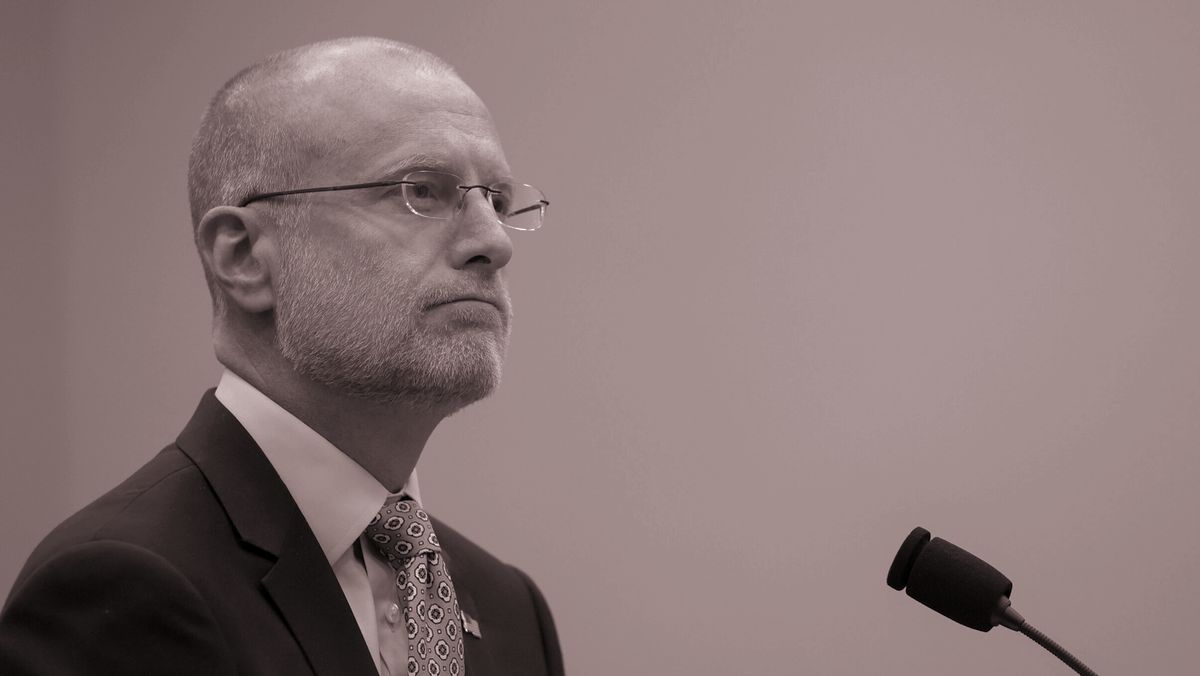
gambling on what Jimmy Kimmel will or won’t say on ABC tonight. But Eriq Gardner is here, and, among other topics, he is discussing some of the legal fallout of the Kimmel vs. F.C.C. situation, and, of course, the role that chairman Brendan Carr is playing. In Eriq’s view,
Carr isn’t nearly as powerful as he boasts on right-wing podcasts.
All yours, Eriq… |
|
|
A MESSAGE FROM OUR SPONSOR |
Watch the first two episodes of The Lowdown premiering tonight at 9PM ET/PT on FX, next day on
Hulu.
|
|
|

| Eriq Gardner
|
|
- Blake and Justin joust: For
those still following the Blake Lively–Justin Baldoni saga—that was a joke, all of you are—there was some movement last week. Baldoni brought in Alexandra Shapiro, a heavyweight appellate litigator whose client roster includes Sam Bankman-Fried and Diddy. Was Baldoni preparing to challenge a string of unfavorable pretrial rulings, from the dismissal of most of his counterclaims to an interesting
discovery decision last month?
That ruling, in particular, raised eyebrows. Judge Lewis Liman reviewed a Signal thread between Baldoni’s P.R. team as they gamed out the launch of a website showcasing documents from the case. Liman ruled that attorney-client privilege didn’t apply because not everyone in the group chat was actually represented by Bryan Freedman. A spicy decision, but probably not the reason for Shapiro’s arrival.
The real answer
seems to have come Monday evening. Baldoni’s team is challenging the constitutionality of California’s recently enacted #MeToo law, which gives a qualified privilege to individuals alleging workplace harassment. Lively is seeking attorney’s fees and additional damages under that statute, but Baldoni’s lawyers argue that the #MeToo law chills First Amendment rights, and also shouldn’t be applied extraterritorially to non-Californians over conduct alleged to have taken place on a New Jersey film
set. They also raise a thorny question: How can these so-called treble damages be calculated without a jury first determining a baseline of compensatory harm? It’s a set of issues built for appellate review, which suggests that Team Baldoni is gaming out the next stage of the war. - Fox News and the shadow of 2020: One of the more underrated, get out the popcorn Murdoch-related events comes in the form of a case brought by Fox
Corp. shareholders in Delaware’s Court of Chancery. The derivative suit targets Fox’s top brass and board for failing to rein in defamation risks, particularly after the 2020 election, when Fox News went a bit off the rails and ended up paying a nearly $800 million settlement to Dominion Voting Systems. Having survived a motion to dismiss, the case is now in discovery.
Now, Rupert & Co. are trying to shut it down by arguing that shareholders never formally
demanded that the board take action—a procedural gambit that hinges on whether such a demand would have been futile. That, in turn, depends on whether at least four of the eight Fox Corp directors at the time were truly “independent.” The wild card at the moment is Jacques Nasser, the ex-Ford C.E.O. with longstanding ties to the Murdochs, although the plaintiffs have hinted in a cheeky footnote that they’d question the independence of Paul Ryan, the former speaker of the House turned Fox board member, who attended Rupert’s latest wedding, went hiking with Lachlan in Aspen, and hunted elk at Rupert’s Beaverhead Ranch in Montana. You know, typical arms-length governance stuff.
As the parties prepare to brief the Delaware vice chancellor, the questioning has gotten personal—who Rupert eats lunch with, who attends the same country club, and other inquiries along the lines of “identify the individuals at the patio table in St.
Barts in winter of 2022.” Succession planning is also on the list of interrogatories. Whether any of this spills further into public view remains to be seen. - The WSJ rebuffs Trump: Speaking of Rupert, his Wall Street Journal has formally responded to Donald Trump’s lawsuit over the infamous Jeffrey Epstein birthday letter, which the president has denied composing. The Journal is
moving to dismiss Trump’s suit, arguing its reporting was accurate—the House Oversight Committee released the exact same illustrated birthday greeting—and, more to the point, that there’s nothing defamatory about someone sending a bawdy birthday note, particularly when the plaintiff once described Epstein as a “terrific guy.”
The Journal also argues that Trump hasn’t pled actual malice, and leans heavily on the usual First Amendment sermonizing about “meritless” lawsuits chilling
free speech. It’s mostly a by-the-numbers motion. The only real flair comes from the Journal’s request for attorney’s fees under New York and Florida’s anti-SLAPP statutes. So yes, there is a decent chance that Trump could end up writing a check to Rupert Murdoch. Of course, the timing is also interesting: Trump recently hinted that the Murdochs may be invited to the TikTok investment party. - A.I. music pirates?: This week’s most intriguing
A.I. litigation development comes from the ongoing copyright case brought by Universal Music Group, Sony Music Entertainment, and Warner Music Group against A.I. music generator Suno. The record labels claim that discovery proceedings have revealed that Suno scraped sound recordings straight from YouTube. (Here’s the court brief).
The music labels have spent
years dealing with stream-ripping tools and shady downloaders, but this is the first time they’ve encountered alleged piracy under the A.I. banner. They’re seeking to amend their complaint and add a claim under the Digital Millennium Copyright Act, invoking the anti-circumvention provision that YouTube itself has often used to enforce its download restrictions. I have a feeling that the provenance of training material may soon be just as litigated as its use. - Real
development hell: Following up on my earlier piece about Carl Rinsch—the writer-director facing criminal charges for allegedly taking a bunch of Netflix money and buying cars and crypto—the government this week mounted a vigorous
defense of its case. What stands out is how confidently prosecutors describe the matter as “not especially complex,” citing documents from an arbitration as a “substantial roadmap” to the facts.
That’s notable because, as I pointed out, it’s rare for a civil dispute between a filmmaker and a streamer to morph into a full-blown criminal prosecution carrying up to 90 years in prison. But the feds seem unbothered, arguing that Rinsch was paid millions by Netflix while offering little
more than vague reassurances that progress on his show was “awesome and moving forward really well.” A reminder to anyone tempted to rebrand vaporware as a visionary pitch: Streamers might let you disappear into development hell, but federal prosecutors might not. Meanwhile, an important hearing is set for next Tuesday. - Hulk lives on: Finally, Florida judge Tom Barber has cleared the release of Video Killed the Radio
Star, a documentary on the Hulk Hogan sex tape scandal—the repercussions of which brought down Gawker and introduced media watchers to Peter Thiel. The order backtracked a restraining order he issued earlier this month after Nick Hogan, the late Hulkster’s son, filed suit. The judge’s change of heart came last week after he learned that Nick hadn’t been established as a representative of the wrestler’s estate, and that the sex tape
excerpts in the documentary hadn’t come from Bubba the Love Sponge, who’d secretly recorded the original footage.
|
|
|
The F.C.C. chairman, who held up Shari Redstone’s Paramount sale and
isn’t done antagonizing Disney over Jimmy Kimmel Live!, has never seemed more emboldened as he wields the power of his agency to potentially silence media figures. But a closer reading of the situation suggests that he’s swerving out of his lane. |
|
|
According to conventional wisdom, F.C.C. chairman Brendan Carr is an efficient Trump
henchman, executing the president’s vendetta against the so-called liberal media. This view was reinforced last week, when Carr threatened ABC over Jimmy Kimmel on Benny Johnson’s podcast. (As the chairman growled to the conservative podcaster: “We can do this the easy way or the hard way.”) When the network promptly—and, as it turns out, temporarily—suspended Kimmel for his remarks about Charlie Kirk’s
alleged killer, many on both sides gave the win to Carr, now widely seen as Washington’s most powerful and feared regulator.
But allow me a contrarian observation: Carr may in fact be the weakest F.C.C. chairman in the agency’s history. After all, underneath all the bluster, the truth is that Carr presides over broadcast television at the very moment when consumers are abandoning it. His mandate over cable and satellite is narrower still, and his jurisdiction over the streaming
universe—where the real action lives—is nil. Meanwhile, a conservative Supreme Court has been busily trimming the sails of the administrative state. Just this week, two legal experts noted the F.C.C.’s waning influence and proposed rewriting the Communications Act, comparing congressional inaction to a computer owner refusing a software update: “At some point, the machine will fail,”
they wrote. |
|
|
A MESSAGE FROM OUR SPONSOR |
Watch the first two episodes of The Lowdown premiering tonight at 9PM ET/PT on FX, next day on
Hulu.
|
|
|
So how does Carr keep the illusion of clout alive? He barnstorms conservative media, making noise and playing
the heavy. With rare exceptions—like the fleeting leverage he held over Skydance’s bid for Paramount (which I flagged early and often)—he’s more Wizard of Oz than Genghis Khan, ruling through smoke and mirrors. Anna Gomez, the F.C.C.’s lone Democratic commissioner, underscored this after Kimmel’s suspension,
noting the agency lacks “the authority, the ability, or the constitutional right to police content.” At a conference on Monday, Carr himself appeared to retreat, suggesting his comments on the podcast had been misinterpreted.
Anyway, when it came to
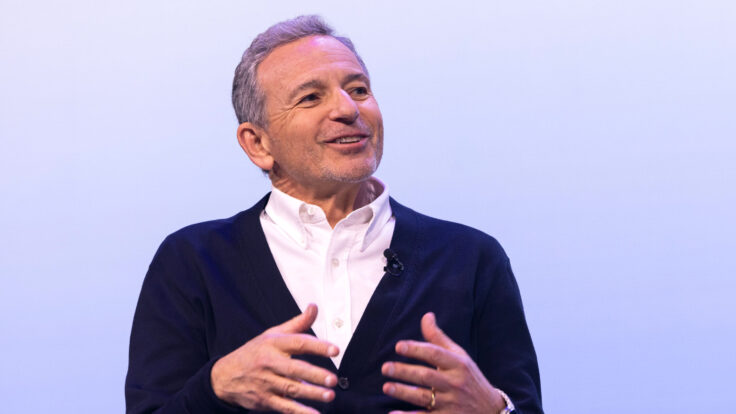
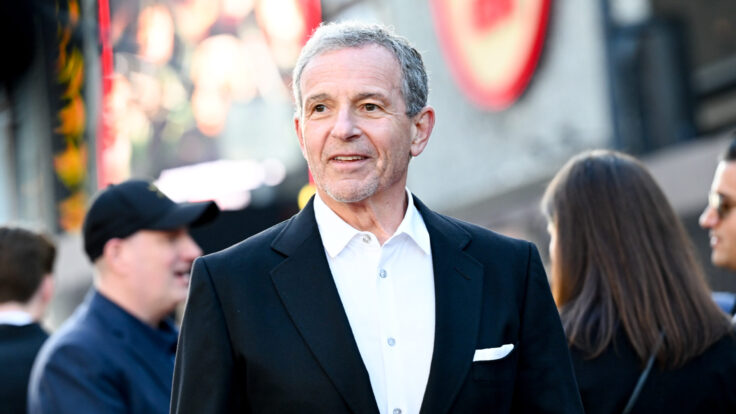
the Kimmel kerfuffle, a license review was doomed from the start. (Don’t get me started on the tomfoolery about the Justice Department’s supposed consent needed for the NFL-ESPN deal; in short, it has no unilateral say in the matter.) More than anything, Disney C.E.O. Bob Iger’s initial capitulation to affiliates and right-wing critics was an act of extreme political caution—a miscalculation that temperatures would cool with Kimmel on the sidelines. Obviously,
they didn’t. Iger never claimed the mantle of free-speech hero, but in the end, he came to his senses. |
Of course, Iger was nudged along by Nexstar, which controls 32 ABC affiliates and swiftly announced it would
preempt Jimmy Kimmel Live!. The company’s role is key to understanding why many assumed that Trump and Carr had leverage over Iger’s decision to bench his late-night host. After all, the Irving, Texas–based conglomerate is awaiting F.C.C. clearance on its $6 billion acquisition of Tegna, which would add 13 more ABC affiliates to its portfolio and create the nation’s largest local-TV empire, reaching more than 80 percent of U.S. households.
But concluding that Nexstar is
dutifully doing Carr’s bidding just to smooth over the Tegna merger is almost too cynical. There’s a simpler explanation: Nexstar’s leadership is deeply conservative, its objection to Kimmel is sincere, and that sort of impulse delights Carr. “Kimmel’s comments … are offensive and insensitive,” Nexstar broadcasting president Andrew Alford offered in a statement. “Continuing to give Mr. Kimmel a broadcast platform in the communities we serve is simply not in the public interest.”
Carr simply applauded from the gallery.
In other words, the causality likely runs the other way: Nexstar and Sinclair’s posture toward the Kimmel controversy is precisely the reason Carr has been eager to boost their profile—strengthening their hand in contract negotiations with national networks, enforcing a rule that allows local stations to preempt programming that doesn’t “serve the community,” and, most consequentially, scrapping the cap that bars any single broadcaster from
reaching more than 39 percent of U.S. households.
That ceiling could be shattered as soon as September 30, when the F.C.C. next meets. The vote, which Carr has been telegraphing for months, would clear the runway for the Tegna deal, Kimmel or no Kimmel. Litigation will surely follow, and everyone involved knows the ownership rule changes—and the
backroom discussions that produced them—will be raked over in court. |
There’s a final question worth contemplating: Has Nexstar made a colossal political miscalculation in the
Kimmel affair? After all, Carr is hardly the only law enforcement official with skin in this game, and it’s notable that the Tegna merger would reshape local broadcast markets, allowing state regulators free rein to challenge the deal. Colorado Attorney General Phil Weiser is already fretting over the deal’s consolidation of Denver’s 9News, an NBC affiliate, with Fox31, another local behemoth.
Other Democratic attorneys general with markets affected by a
Nexstar-Tegna tie-up include California’s Rob Bonta (Sacramento and San Diego), Arizona’s Kris Mayes (Phoenix), North Carolina’s Jeff Jackson (Charlotte and Greensboro–Winston-Salem), Connecticut’s William Tong (Hartford), New York’s Letitia James (Buffalo), Oregon’s Dan Rayfield (Portland), Michigan’s Dana Nessel (Grand Rapids), Illinois’ Kwame Raoul (Quad
Cities), and Brian Schwalb (Washington, D.C.).
It’s unlikely any of them is eager to consolidate power under a broadcaster that flexes its muscles on programming decisions. If they were looking for an excuse to go to court, Kimmel might be the opportunity. Another motivator might be Gavin Newsom’s post on X yesterday about a Larry Ellison TikTok deal: “The G.O.P. are buying up platforms to control the news and information you receive.
They are censoring you in real time.”
In 2019, when Nexstar was angling to swallow Tribune Media and create the country’s largest local television broadcaster, the attorneys general in Illinois, Pennsylvania, and Virginia joined the Justice Department and forced major changes in the deal. State A.G.s likewise helped derail Sinclair’s 2017 Tribune gambit, and Standard General’s 2023 bid for Tegna. In short, state enforcers remain a potent force, and it seems that everyone—from Nexstar’s
C-suite to the media class mesmerized by Carr’s anti-network theatrics—has forgotten they’re lurking in the background now, too. |
Thanks Eriq. I’ll see everyone on Thursday night.
Matt |
|
|
Puck founding partner Matt Belloni takes you inside the business of Hollywood, using exclusive reporting and insight to explain
the backstories on everything from Marvel movies to the streaming wars. |
|
|
A professional-grade rundown on the business of sports from John Ourand, the industry’s preeminent journalist, covering the
leagues, players, agencies, media deals, and the egos fueling it all. |
|
|
Need help? Review our FAQ page or contact us for assistance. For brand partnerships, email ads@puck.news. You received this email because you signed up to receive emails from Puck, or as part of your Puck account associated with {{customer.email}}. To stop receiving this newsletter and/or manage all your email preferences, click here. |
Puck is published by Heat Media LLC. 107 Greenwich St, New York, NY 10006 |
|
|
|