{{ 'now' | timezone: 'America/New_York' | date: '%b %d, %Y' }} |
|
|
Welcome back to What I’m Hearing+, the smarter, better-looking, and less-likely-to-be-indicted
cousin of the regular Monday and Thursday WIH emails. Eriq Gardner is back today with a new angle on the Sora A.I. dust-up—namely, who can actually sue Sam Altman & Co. for copyright infringement or other alleged crimes against rights-holders. Plus, news on the WB–Paramount South Park litigation, and CAA’s fight to keep its “underperforming” clients secret.
Discussed in this issue: Sam Altman, Jerry
Bruckheimer, Peter Micelli, Kerry Bensinger, Ryan Reynolds, Hernan Lopez, George R.R. Martin, Sidney Stein, David Ellison, Ruth Major, David Zaslav, George Wendt, John Musero, Trey Parker, Paul Clement, John Ratzenberger, Crispin
Glover, Paul Walker, Brad Smith, Elon Musk, and… Kim Dotcom.
All yours, Eriq… |
|
|
A MESSAGE FROM OUR SPONSOR |
Greatness isn't achieved in an instant. It's tested until there is no question — only performance. |
|
|

| Eriq Gardner
|
|
- CAA’s failure list to remain
secret: It looks like the town’s largest talent agency won a reprieve from having to reveal which of its clients it deems “underperforming.” On Monday, a judge declined to reopen discovery in the long-running lawsuit brought by John Musero, the former Columbia Pictures in-house lawyer turned screenwriter who sued the agency back in 2019 for allegedly helping two of its more powerful clients, producers Jerry Bruckheimer and Sascha Penn,
misappropriate his proposed TV project, Main Justice.
In March, L.A. Superior Court Judge Kerry Bensinger tossed Musero’s core misappropriation claim, but he allowed the writer to proceed on an alternate theory: that CAA had breached its fiduciary duty by essentially stopping to work for him in earnest. The evidence? Musero alleges that he was placed on CAA’s internal “underperforming” and “cutting” lists—the latter referring to the agency’s inventory of talent
it no longer wishes to represent. Then-department heads Peter Micelli, Brett Loncar, Ryan Ly, and Sonya Rosenfeld supposedly initiated the lists a decade ago. (Only Loncar, who represents Ryan Reynolds and Jason Bateman, is still at the agency.)
Since the ruling, Musero’s new attorney, Ruth Major, has been pressing for unredacted versions of the lists to
see who else landed in CAA purgatory, and she proposed a process to notify those unfortunate individuals before any names were made public. But the case’s new judge, Brock Hammond, just shut that down—ruling on Monday that the identities of other sidelined writers aren’t relevant to Musero’s claim.
A trial is scheduled for March. Expect CAA’s legal team to do everything it can to keep collateral damage to a minimum. After all, a peek into the agency’s internal
classifications could prove far more damaging than one disgruntled client. - More Trey and Matt mischief: Paramount may soon make a bid for Warner Bros. Discovery, a scenario first surfaced by my partner Kim Masters. But the two entertainment giants might also end up
squaring off in court over South Park. You’ll recall that Warner paid $500 million for exclusive streaming rights to the Trey Parker and Matt Stone series back in 2019, only to see several South Park “specials” debut on Paramount+. That didn’t go over well with David Zaslav & Co.
The case is still in the thick of discovery, and a trial won’t happen until May at the earliest. But on October 2, a New York appeals
court quietly tossed Warners’ unjust enrichment claim, under which the company was demanding a deep dive into Paramount+ viewership and profitability numbers. This followed Warners’ earlier defeats in fair dealing and consumer protection claims, leaving just one live cause of action: that Paramount tortiously interfered with the Parker-Stone contract by “diverting” content that should have been included in Warners’ exclusive deal and presumably broadcast on HBO Max. Whether that theory gets its
day in court may hinge on what happens next in mergerland. - Lopez on the pitch again: Is it actually illegal to grease foreign officials to score broadcasting rights? That question is knocking on the door of the U.S. Supreme Court thanks to Hernan Lopez, the Wondery podcast network founder and former C.E.O. of Fox International Channels. At Fox, Lopez secured media rights to several major South American soccer tournaments by
allegedly working federation presidents in Paraguay, Bolivia, Colombia, Venezuela, Peru, and Ecuador. This led to a federal bribery prosecution in 2023, a conviction, and then a legal roller coaster. Rather than sentence Lopez, who faced up to 40 years in prison, Judge Pamela Chen dramatically tossed the conviction. However, this past July, the Second Circuit reinstated it.
Lopez, presumably still flush from the $300 million Wondery sale to Amazon in 2020, is represented
this time by former Solicitor General Paul Clement. He’s now asking the Supreme Court to take another swing at the notoriously vague “honest services” fraud statute. Specifically, he’s asking the court to clarify that the statute doesn’t apply to foreign bribery, particularly when no U.S. public official is involved. Here’s the petition. The justices’
response is due by November 3, and the Trump administration is on the hook to reply. One imagines the president may feel a certain sympathy for Lopez’s position.
|
|
|
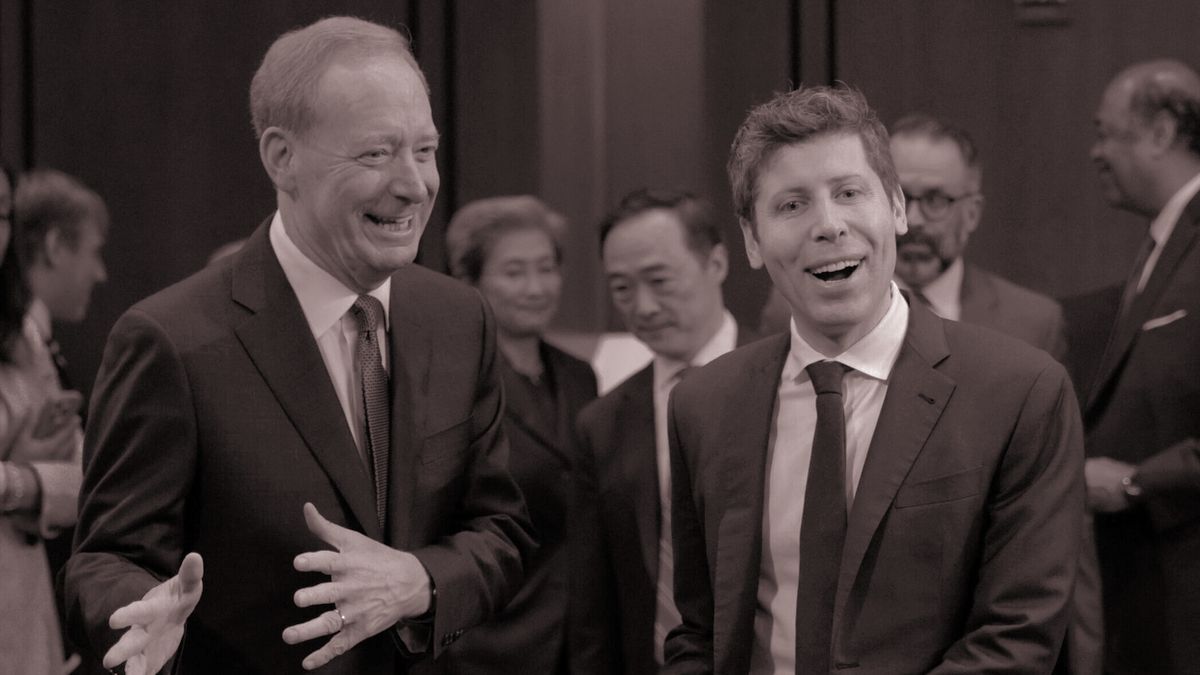
One area of the law likely to draw more fire is the messy question of
who has legal standing to object to A.I. outputs—an issue inflamed, of course, by OpenAI’s unveiling of Sora 2, which sent Hollywood into a familiar panic, scrambling to figure out how to opt out. |
|
|
In just the past few months, conventional wisdom has crept into the A.I. wars—namely, that the use of
copyrighted material to train A.I. models will eventually be blessed as “fair use.” But perhaps that conclusion is a touch premature. Yes, the courts may well end up there. (I’ve been saying that for years.) But the evidence that they’re already on that glide path is perilously thin. It rests almost entirely on two summer rulings—Bartz v. Anthropic and Kadrey v. Meta, both
out of San Francisco—while conveniently ignoring decisions that cut the other way. Chief among them is Thomson Reuters’s lawsuit against A.I. startup Ross Intelligence, which is now teed up to become the first appellate word on the issue after a U.S. District Court rejected Ross’s fair use defense and ruled that the company had infringed Thomson Reuters’s copyrights earlier this year.
Still, there’s no mistaking the recalibration among the plaintiffs’ bar. Litigators pressing copyright
cases against A.I. giants increasingly seem to be shifting away from “training” as their strongest hand, and pivoting instead to copyright claims based on outputs. Consider last week’s hearing in the consolidated lawsuit that book authors brought against OpenAI and Microsoft in New York.
I went to that hearing expecting to witness a spirited debate over substantial similarity—whether, for example, a prompt asking ChatGPT to outline the next Game of Thrones novel,
complete with George R.R. Martin’s characters and locales, crossed the copyright infringement line. OpenAI has moved to dismiss the plaintiffs’ case as insufficiently pleaded. But, regardless, the question of what exactly might constitute infringement in the world of output never quite took center stage at the hearing. Instead, Judge Sidney Stein found himself refereeing a more procedural fight: what it would mean, schedule-wise, if plaintiffs were
allowed to retool their theories midstream.
Both sides have been racing to complete discovery before February, with a summary judgment briefing set for next August, class certification in September, and a trial likely sometime in 2027. But as time drags on, the plaintiffs keep testing new angles, sometimes inspired by legal developments elsewhere. The latest gambit: claiming that OpenAI downloaded a pirated dataset of books, even if it never actually used the works to train its
models. It was a not-so-subtle nod to Anthropic’s $1.5 billion Bartz settlement, and OpenAI and Microsoft’s lawyers warned it would gum up discovery. “This is now a radically different case,” defense attorney Michelle Ybarra protested. “It will send us back to the drawing board.” |
|
|
A MESSAGE FROM OUR SPONSOR |
Greatness isn't achieved in an instant. It's tested until there is no question — only performance. |
|
|
Judge Stein, sympathetic but wary, didn’t disagree. Still, he seemed reluctant to fence the case too
narrowly, mindful that whatever happens here could set the tone for how courts handle A.I. for years to come. “Why shouldn’t we address this all now?” he asked. |
Justice moves at its own glacial pace, as anyone who’s ever watched a major case against a tech company
knows. One day, the entertainment industry is storming the barricades; the next, the world has moved on, and the legal detritus of a bygone era—think the criminal prosecution of notorious file-sharer Kim Dotcom—limps along in the background like some half-forgotten Cold War spy. Artificial intelligence is clearly here to stay. But it’s worth remembering that these A.I. battles are in their infancy, with legal theories emerging and fault lines taking shape that have yet to be
tested.
One area likely to draw more fire is the messy question of who has legal standing to object to A.I. outputs—an issue inflamed, of course, by OpenAI’s unveiling of Sora 2, which sent Hollywood into a familiar panic, scrambling to figure out how (or even whether) to opt out. Here’s a scenario I can imagine landing in court: An actress decides she doesn’t want her likeness in the system. The studio that produced her movie, however, is perfectly comfortable letting A.I. users
create fan works based on its intellectual property, perhaps even participating in OpenAI’s still-fuzzy plan to share revenue. The actress claims identity theft. OpenAI responds that it licensed the character fair and square. This is a collision that the entertainment industry has been sleepwalking toward.
Of course, the uneasy interplay between likeness and copyright isn’t new. In the 1990s, Paramount Pictures authorized a chain of airport bars modeled after
Cheers—complete with animatronic versions of “Norm” and “Cliff.” George Wendt and John Ratzenberger, who played the characters on the iconic NBC sitcom, promptly sued—arguing that the use of their doppelgängers amounted to a misappropriation of their likenesses. Paramount countered that the characters belonged to the studio, not the actors, and therefore weren’t protected by their rights of publicity. The Ninth Circuit Court of Appeals
revived the case after a district judge’s initial dismissal, setting the stage for a jury to decide just how closely those robots resembled the actors—considering everything from costume to context. The case was settled before trial.
These days, of course, animatronics are just creepy antiques. Which studios will take the lead—and risk the legal exposure—in
A.I. filmmaking? After all, David Ellison is looking to squeeze juice from his new acquisition and seems more than comfortable with the A.I. world. Notably, Paramount isn’t participating in Disney, Universal, and Warner Bros. Discovery’s copyright infringement cases against Midjourney, or their war against China’s MiniMax. If not Paramount, someone else will test the boundaries. Last year, Lionsgate licensed works—notably, franchise blockbusters John Wick and The
Hunger Games—to the A.I. company Runway to use for training its models, much to the chagrin of the creative community.
Hollywood has been here before, if in less technologically sophisticated ways. When Crispin Glover declined to return as George McFly for Back to the Future Part II, the producers tried to mimic him by piling prosthetics on another actor. (Glover sued Universal and
settled for a reported $760,000.) Less contentiously, when Paul Walker died in the midst of filming Furious 7, producers used C.G.I. to create a version of his face, which they imposed on body doubles played by two of Walker’s brothers. The Glover and Walker examples helped shape the collective bargaining talks between
guilds and producers that eventually led to A.I.-era guardrails, such as the SAG-AFTRA rule that any A.I. simulation of an actor during production of a movie and television show triggers bargaining and payments.
But what happens when the simulation is sanctioned by the copyright holder, such as a studio, and spun up by a third party using Sam Altman’s latest algorithm? So far, I haven’t seen Hollywood talent contracts meaningfully updated. Many still contain catchall
language granting rights “in any and all media now known or hereafter devised”—talk about a phrase begging for litigation. With another round of collective bargaining negotiations looming, maybe this will finally get its day at the table. More likely, the guilds and the producers will waltz around the A.I. licensing question and leave it to the courts, where, as ever, the wheels of justice turn however slowly. |
Meanwhile, A.I. companies are stockpiling insurance coverage—hundreds of millions of dollars’ worth— to
buffer against the coming wave of litigation, as reported by the Financial Times. You’ll be stunned to hear that the insurance industry is balking. And even if they were inclined to pay, it would never be enough. So companies like OpenAI and Anthropic are reportedly considering beefing up their litigation reserves, tapping investor funds to settle claims, and
setting up their own “captive” insurance vehicles to manage the mess.
Even then, it’s hard to imagine what sort of Herculean feat would be required to tame the legal storm on the horizon. This isn’t just about the first- and second-wave lawsuits brought by creators—the “training” cases, the output cases, the in-the-style-of cases like Andersen
v. Stability AI. It’s also about the nearly forgotten, but consequential, indemnification promises these companies made to their users. Microsoft president Brad Smith put it plainly: “If you are challenged on copyright grounds, we will assume responsibility for the potential legal risks
involved.”
So far, with the notable exception of Elon Musk in that Blade Runner dustup, users themselves have largely avoided becoming targets. That won’t last. The deep-pocketed, heavily insured sports world, for instance, seems an obvious candidate to be dragged into court. In recent weeks, I’ve visited multiple NFL stadiums, and the folks
running the Jumbotrons are already leaning hard on generative A.I. for hype videos and crowd-pleasing graphics. It doesn’t take much imagination to see where this is headed: a few errant pixels, a rights-holder with a good lawyer, and the opening act of what could be the longest and most expensive legal show on turf. |
Thanks, Eriq. I’ll see everyone on Thursday.
Matt |
|
|
Puck founding partner Matt Belloni takes you inside the business of Hollywood, using exclusive reporting and insight to explain
the backstories on everything from Marvel movies to the streaming wars. |
|
|
A professional-grade rundown on the business of sports from John Ourand, the industry’s preeminent journalist, covering the
leagues, players, agencies, media deals, and the egos fueling it all. |
|
|
Need help? Review our FAQ page or contact us for assistance. For brand partnerships, email ads@puck.news. You received this email because you signed up to receive emails from Puck, or as part of your Puck account associated with {{customer.email}}. To stop receiving this newsletter and/or manage all your email preferences, click here. |
Puck is published by Heat Media LLC. 107 Greenwich St, New York, NY 10006 |
|
|
|