 |
 |
|
Happy Tuesday, and welcome back to What I’m Hearing+, your value-add supplement to What I’m Hearing. A few people emailed me about the new CAA conflict-of-interest lawsuit filed by sports media personality Sage Steele, so today Puck’s legal expert Eriq Gardner offers his take. Plus he’s got an analysis of the Sony-Alamo Drafthouse deal and the latest at the cross-section of Hollywood and antitrust. Take it away, Eriq…
|
|
|
- Steele v. CAA: I’ve been scratching my head over the legal reasoning behind Sage Steele’s new lawsuit against CAA. From what the complaint lays out, the former SportsCenter host is claiming the agency violated its fiduciary duties by not defending her when ESPN benched her after she publicly criticized its vaccination policy. Sure, CAA also represents ESPN notables Adam Schefter and Adrian Wojnarowski, and wanted to preserve its relationship with the Disney network, but let’s face it: Hollywood is a small town where everyone’s interests are tangled, including Steele’s lawyer, Hollywood Reporter cover boy Bryan Freedman. (Have you heard about the alleged conflicts of interest and loyalty breaches in the A3 Artists Agency mess? You know the drill.) But does a talent agency’s legal duty really extend to throwing a fit every time a client catches flak? That seems like a stretch. Clearly, Freedman knows his stuff, but this suit feels more like a strategic jab to bruise CAA’s reputation than a robust legal challenge. Doesn’t Freedman also represent CAA’s arch rival UTA?
- The Ozy marathon: Do we really need a 10-week trial to unpack the accusations against Carlos Watson, the Ozy Media frontman who has been charged with puffing up his former company’s financials for investors and lenders? We’re not even at the halfway mark and Google chief Sundar Pichai has already dropped the (non-)bombshell that the tech giant did not float a $600 million acquisition offer. (After Watson’s attorney denied on social media that his client ever told anyone Google offered $600 million, the judge issued a gag order on the parties.) Eventually, it’ll be Watson’s turn to mount a defense, which includes pinning the blame on his right-hand man and Ozy co-founder Samir Rao, and possibly dragging a slew of celebrities through the Brooklyn courtroom. Seriously, his witness list includes Mark Cuban, Malcolm Gladwell, Alex Rodriguez, and Karl Rove. (Many of these notables appeared with Watson at Ozy Fest, a wannabe New Yorker Festival.) I’m hearing, however, that Semafor co-founder Ben Smith, who broke the story of Rao impersonating YouTube exec Alex Piper on a conference call with Goldman Sachs, isn’t likely to join the festivities.
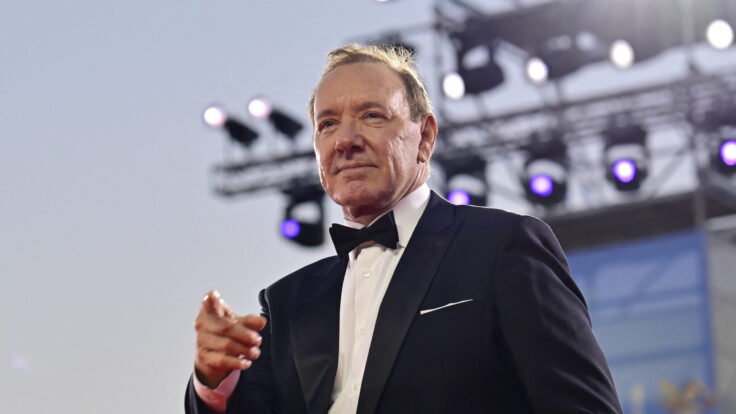
- Crocodile tears: For anyone who’s been closely following Kevin Spacey’s various legal sagas, it was a bit ironic to watch the disgraced actor tearing up in an interview with Piers Morgan over the crushing weight of his legal fees, just as a judge was considering how Spacey had wiped out $35 million of his debts. You may recall that back in 2022, Spacey was found financially liable to MRC II, the producer of Netflix’s House of Cards, for breaching his contract when he engaged in sexual misconduct on-set. Late last year, however, MRC II offered him an astonishing deal: If he would cooperate with its lawsuit against the show’s insurers—to collect on policies from Lloyds of London and Fireman’s Fund worth up to $150 million—it would forgive all but $1 million of the $36 million owed (a $31 million judgment plus interest), payable in installments through 2028.
Spacey got his settlement, but Fireman’s Fund then argued the deal negated MRC II’s right to insurance coverage. On June 4, Los Angeles Superior Court Judge Mark Epstein rejected the contention. (Epstein deferred the tricky question of whether the losses were due to a sexual disorder or the public uproar over the harassment allegations until a later date.) This week, they’re back in court to hash out when they might actually go to trial, which just means more legal expenses for Spacey, who is now contractually obliged to take the stand if called. Maybe this time around, Spacey will opt for more budget-friendly legal representation than his prior lawyer, Bryan Freedman.
|
| Deal of the Week: Sony’s Drafthouse |
|
| It’s been ages since a major studio directly ran a major chain of movie theaters, but that’s changing with Sony’s recent handshake deal with Alamo Drafthouse. Yes, the studio that brought you Bad Boys: Ride or Die and The Garfield Movie is about to stamp its name on 35 cinemas sprawled across 25 cities. But these aren’t your average multiplexes. And, of course, there’s more to the story of a studio owning a chain of theaters...
A few more words on this… |
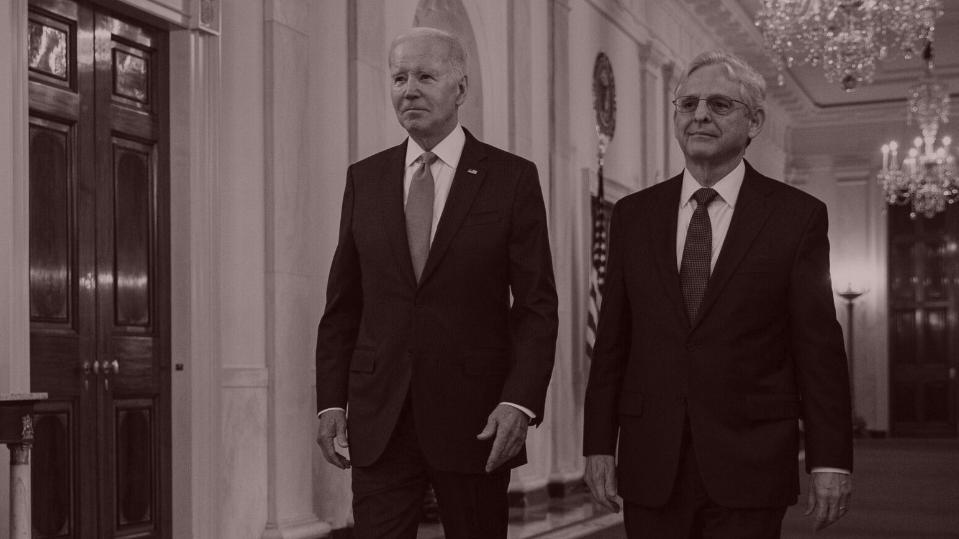 |
| Will Biden Block the Sony-Alamo Deal? |
| Inspecting the antitrust tea leaves surrounding the recently consummated Sony-Alamo Drafthouse deal. Are studio-owned theaters the future of the theatrical business, or is this arrangement merely a blip on the radar as we wade into an era of major regulatory shake-ups in Hollywood? |
|
|
|
| The news that Sony Pictures is acquiring Alamo Drafthouse predictably led to plenty of hot takes and hand-wringing regarding how Sony was allowed to buy up the boutique movie theater chain. Yes, there used to be restrictions on how studios package movies for theaters—the so-called Paramount Consent Decrees, which resulted from a 1948 ruling that busted up the Hollywood studio system by forcing studios to sell their movie theaters. What the decrees didn’t do, contrary to the conventional wisdom around the Sony-Alamo deal, was ban the studios from ever owning movie theaters. Nevertheless, most coverage of the Alamo acquisition breezily asserted that Sony’s deal was only made possible by the lifting of the supposed ban in 2020.
Of course, the “ban” has always been more fable than fact, up there with the notion that bats are blind or that the Great Wall of China is visible from space. In reality, Supreme Court Justice William Douglas ruled that the near-monopoly big studios exercised over movie distribution needed curbing, but nevertheless declared “We see no reason to place a ban on this type of ownership.” |
|
|
| Among other things, the decrees effectively prohibited “block-booking,” or the practice of studios forcing theaters to take their entire slate of films. This leveled the playing field and changed the landscape significantly, fostering a boom in indie and foreign movies—exactly the kind of content that Alamo Drafthouse embraces. (Notably, Sony is touting how Alamo is North America’s seventh-largest theater chain and shows more movies each year than any other chain.)
Anyway, the 2020 federal court order that officially ended the Paramount Decrees specifically clarified that entities like Disney, Universal, and Sony’s Columbia have always had the freedom to acquire theaters. Some have insisted that there was an unofficial ban. But it’s hard to imagine that Hollywood studios—with their teams of lawyers—would restrain themselves based on some sort of honor system. While fear of the antitrust cops may have been part of the equation, there were other reasons studios never got back into the theater business, like the financial lunacy of maintaining all that real estate by selling $10 buckets of popcorn.
Just prior to the 2020 court order, theater owners and Hollywood labor unions warned that ending the decrees could pave the way for the big studios to reclaim an outsize hold on the theatrical market. They argued this would degrade the already bad moviegoing experience and squeeze out indie films. That view didn’t prevail, because the industry had obviously changed significantly since the 1940s. Instead, a court agreed that some experimentation might be in order to counter new giants like Netflix and Amazon Prime Video. We’ve already witnessed innovations that were once unthinkable, like Taylor Swift’s deal with AMC Theatres to sidestep traditional studio distributors. This was a direct result of the relaxed rules.
Yet, this environment doesn’t mean that the Sony-Alamo deal should, or will, breeze through without review. On the contrary, it underscores the necessity for regulators to scrutinize M&A, assessing impact on a deal-by-deal basis to ensure the competitive integrity of the industry. From what I’ve gathered, the Sony-Alamo transaction will be submitted for antitrust evaluation. Sony will face a waiting period of at least 30 days before it can finalize the deal, during which the Department of Justice can examine the implications, especially how it might affect independent cinema. |
| The Biden Fin-Syn Scenario |
|
| All that said, I see no immediate signs the government will actually block Sony-Alamo. The acquisition does, however, raise questions about how regulators will respond to future dealmaking. What happens, for example, if Disney or Comcast decides to gobble up beleaguered AMC? That depends partly on who’s leading the D.O.J.’s Antitrust Division after the election. At the same time, it’s become harder to predict when and how regulatory agendas will split along partisan lines. After all, it was Trump’s antitrust czar, Makan Delrahim, who brought the first challenge to vertical integration in generations when he attempted, albeit unsuccessfully, to block the AT&T-Time Warner deal. (He also led the charge to revoke the Paramount Decrees.)
Consider the AMC hypothetical: Critics would argue that a studio owning AMC could marginalize competitors by prioritizing its own films. The studio would argue that competition from streaming platforms calls for innovative strategies such as lowering ticket prices—or even offering a unified subscription for streaming and in-theater viewing—to revive the box office. |
|
|
| If the Democrats maintain their power, I wouldn’t be surprised to see a push to introduce new limits tailored for the digital age. Over the past year, notably during the latter stages of the writers and actors strikes, more than one high-level lawyer whispered to me about efforts to get Joe Biden to resuscitate the F.C.C.’s 1970s-era Financial Interest and Syndication Rules (or “fin-syn”). These regulations, which started to be rolled back in the 1980s, played a similar role for the television industry as the Paramount Decrees did for movie theaters, limiting the ability of the networks to own and distribute TV programs.
There’s also a growing sentiment among some antitrust hawks that the entertainment sector would benefit if powerhouses like Netflix and Amazon were primarily distributors rather than producers. Independent producers would license content to the platforms while retaining ownership, preserving the ability to syndicate their shows elsewhere and (not incidentally) landing Hollywood writers back in the big money. This shift would be aimed at decentralizing the increasingly concentrated control over what audiences watch, echoing the original intent of the Paramount Decrees and fin-syn to foster a more diverse and competitive marketplace.
Right now, as Sony acquires Alamo, the notion of a major regulatory shake-up—like dismantling Disney+—feels like a galaxy far, far away. For such a seismic shift, we’d likely need new legislation akin to Senator Amy Klobuchar’s proposal aimed at preventing dominant platforms from favoring their own product. Moreover, an aggressive D.O.J. would be necessary. (It’s worth noting the D.O.J. is reviewing Venu—Disney, Fox, and Warner Bros. Discovery’s planned sports streaming bundle.)
Truth be told, I’d wager we’re more likely to see sporadic challenges to vertical integration and joint ventures than a wholesale return to an era of massive Hollywood divestitures orchestrated by the government. I think regulators will pick and choose their attacks, and certainly eye opportunities for message-sending cases, like the recent one targeting the Apple ecosystem. Of course, break-up attempts always remain on the table, as evidenced by the newest government case over Live Nation-Ticketmaster. Maybe there will be more action. Hollywood can consult the history books for guidance. |
|
|
| Okay, that’s it for today, I’ll be back Thursday with more What I’m Hearing…
Until next time,
Matt |
|
|
|
| FOUR STORIES WE’RE TALKING ABOUT |
|
|
|
|
|
 |
|
|
|
Need help? Review our FAQs
page or contact
us for assistance. For brand partnerships, email ads@puck.news.
|
|
You received this email because you signed up to receive emails from Puck, or as part of your Puck account associated with . To stop receiving this newsletter and/or manage all your email preferences, click here.
|
|
Puck is published by Heat Media LLC. 227 W 17th St New York, NY 10011.
|
|
|
|