Welcome back to What I’m Hearing+, hope everyone was able to enjoy the nice weekend despite the
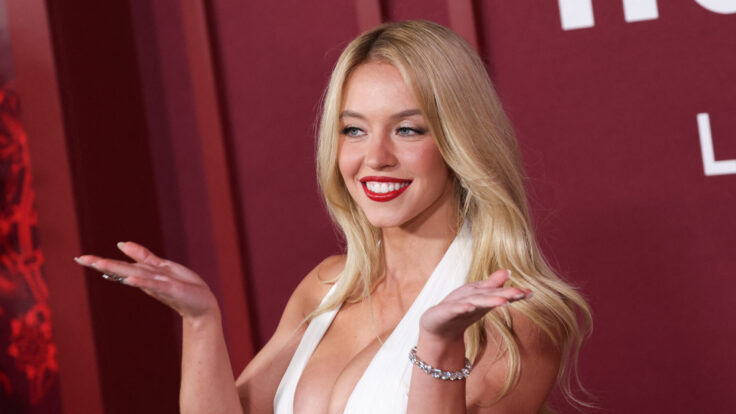
news that happened to break revealing Sydney Sweeney is “casually” dating notorious attention whore Scooter Braun. Note to Jen Millar and Scott Melrose at Paradigm: Shut this down immediately, it only ends badly for your top client.
Anyway, Eriq Gardner is back
tonight with a look at the totally bizarre criminal case of Carl Rinsch, the filmmaker who took $55 million of Netflix’s money to make a TV show and spent it on… not a TV show. Plus, a big deepfake ruling, Dershowitz craziness, and news in the war between CAA and its Range Media defectors… |
|
|
A MESSAGE FROM OUR SPONSOR |
STAR POWER
High achievement. Higher adrenaline. With a twin-turbocharged V8, the Range Rover Sport delivers
heart-pounding intensity on every drive.
EXPLORE |
|
|

| Eriq Gardner
|
|
- The latest in the CAA-Range
quagmire: Just before Labor Day weekend, CAA quietly lobbed yet another amended complaint at Range Media in the multifront legal slugfest over the quartet of defectors who bolted with allegedly confidential intel to help Pete Micelli launch his venture. Notably, the filing came just a few weeks after L.A. Superior Court Judge Mark Young, who has been overseeing CAA’s charge that Range is unfairly operating as an unlicensed talent agency, issued his first
substantive ruling, trimming some claims but allowing CAA to re-plead them.
So, what’s new here? For starters, CAA has dropped its tortious interference claim tied to agents’ confidentiality obligations—Young tossed that as preempted by a separate trade secrets theory. Instead, CAA is shoring up its weakest flank: the statute of limitations. Young essentially told the agency to explain why it took so long to piece together the scope of Range’s alleged theft. In response, CAA’s new
complaint has been padded with more detail about investigative roadblocks, arbitration discovery stonewalling, and newly surfaced evidence of incentives offered to defecting assistants—think promotions and even commissions—for supposedly smuggling out CAA’s trade secrets.
There’s also a rhetorical pivot. In the amended complaint, CAA is leaning harder into the idea that Range was never a management company at all, but rather “a façade for unlawful conduct,” with Micelli cast more
directly as the architect. The remedies section now appears to be a wishlist on steroids: Beyond clawing back commissions and halting poaching, CAA wants Range barred from procuring work for clients without a license, compelled to notify the state labor commissioner and its own clients about its alleged illegal conduct, and even forced to issue corrective statements to the press. (I reached out to Range’s litigators Orin Snyder and Ilissa Samplin, who responded,
“CAA is trying again to intimidate artists and scare its employees. … This isn’t about legitimate claims—it’s about abusing power and punishing former agents who challenged CAA’s unlawful equity cancellations.”) - A win for the deepfakes: A year ago, I flagged a challenge by conservative parodist Chris Kohls, known as “Mr. Reagan,” to AB 2839, California’s ban on distributing deepfake election content. It mattered, I wrote at the time, because courts were only starting to reconcile A.I. policymaking with the First Amendment, at a moment when fake-but-authentic-seeming expression was exploding.
Well, last week, U.S. District Court Judge John Mendez handed Kohls, fellow parodist Kelly Chang Rickert, and the Babylon Bee
a decisive win—permanently enjoining enforcement of AB 2839. California pointed to the law’s exemptions for parody and satire, but Mendez wasn’t buying it. He zeroed in on the fact that lawmakers were carving up acceptable and unacceptable categories of speech, something courts have traditionally viewed with suspicion. And this approach went quite far. Defamation and fraud laws, for instance, require demonstrable harm—like tangible damage to someone’s reputation or pocketbook. AB 2839, by
contrast, allowed anyone to sue over a deepfake “meant” to deceive, even if it didn’t injure a candidate, but merely rattled faith in the electoral process. This was too sweeping, Mendez said, and not narrowly tailored to the state’s interest.
The judge also rejected California’s disclosure requirement—the idea that parody is safe only if creators label their content as manipulated—as an impermissible form of compelled speech. His ruling concluded with a flourish: “Novel mediums of speech
and even low-brow humor have equal entitlement to First Amendment protection, and the principles undergirding the freedom of expression do not waver when technological change occurs.” - Dershowitz baits the Supremes: Alan Dershowitz, fresh off losing his defamation case against CNN over the network’s coverage of his punditry about Trump’s 2020 impeachment, is now
promising to lure the Supreme Court into revisiting the “actual malice” standard for public figures. Forgive me if I’m unmoved. I’ve already argued that overturning Times v. Sullivan wouldn’t necessarily spell doom for reporters; I’m
also unconvinced that the justices are eager to take this bait. Dershowitz may instead want to double down on his effort to get a Martha’s Vineyard farmers market vendor to sell him a pierogi.
Yes, the 11th Circuit’s ruling in Dershowitz v. CNN tees up the defamation issue rather cleanly—complete with concurrences parsing 250 years of American judicial history. But the Roberts Court’s appetite for shredding precedent is finite. If they’re feeling frisky, they might tinker with Humphrey’s Executor (1935), which limits the president’s ability to fire heads of independent agencies, or even Federal Baseball Club v. National League (1922),
the chestnut that handed MLB its antitrust exemption. Libel law reform, I suspect, is much farther down the batting order.
|
|
|
Is Carl Rinsch, the erratic auteur behind a big-budget unfinished
Netflix series, a calculating grifter who should spend 90 years in prison? Or is he merely a cautionary tale about reckless producing, ambitious prosecution, and the pitfalls of becoming a John Carreyrou protagonist? |
|
|
It’s easy to look at the criminal case against Carl Rinsch in New York and marvel at the
audacity of it all. In 2018, the writer-director secured $55 million from Netflix for a series called Conquest, and then allegedly blew a large portion of the budget on Rolls-Royces, a Ferrari, a smattering of real estate, speculative crypto bets, and even divorce lawyers. When federal authorities unsealed fraud charges back in March, the reaction was a knowing
chuckle. Hollywood, after all, has never lacked for audacious grifters.
And yet the case is not quite so straightforward. Yes, it’s difficult to fathom why Rinsch thought a million-dollar splurge on luxury bedding advanced his creative vision. But Conquest (originally titled White Horse) wasn’t some imaginary bauble. Rinsch had credible investors, including Keanu Reeves, whom he befriended after directing 47 Ronin for Universal. And Rinsch had
already spent years globe-trotting to film his saga of A.I. clones hiding in plain sight. When Netflix finally wrote off what was supposed to be a sci-fi tentpole, Rinsch hauled the company into arbitration, accusing it of breaching his contract. (With what money did he litigate, you ask? Netflix’s, naturally. And no, he wasn’t supposed to do that.)
Patty Glaser, one of Hollywood’s most formidable litigators, gamely argued that Rinsch had “final cut” and was therefore
entitled to deliver only half the story, with the remainder deferred to a second season. Predictably, however, he lost. The arbitrator was unmoved, citing his lavish spending, Netflix’s increasingly desperate interventions, and Rinsch’s peculiar behavior. According to the divorce case brought by his wife, it was around this time that Rinsch claimed to have uncovered secret knowledge about Covid transmission and electromagnetism.
Sure, Rinsch was irresponsible and eccentric, and had lost
his partners tons of money. But he didn’t quite fit the mold of Hollywood frauds: No ersatz producers peddling phantom financing, or Ponzi artists luring gullible millionaires, or even charlatans juicing budgets to milk tax credits. In arbitration, Netflix never even leveled a fraud claim (although it did wish to claw back some of its funding). |
|
|
A MESSAGE FROM OUR SPONSOR |
STAR POWER
High achievement. Higher adrenaline. With a twin-turbocharged V8, the Range Rover Sport delivers
heart-pounding intensity on every drive.
EXPLORE |
|
|
So why are federal prosecutors in New York pressing a criminal case? That’s part of what makes this Rinsch
disaster so extraordinary. Indeed, productions sometimes collapse, and the detritus often washes up in arbitration or civil court. Rarely, though, does it metamorphose into a criminal prosecution with the showrunner facing up to 90 years in prison. |
A few weeks ago, Rinsch shuffled into a Manhattan courtroom, courtesy of the American taxpayer. He is, by all
accounts, now broke. So the government picked up the tab to shuttle him cross-country for a perfunctory hearing before flying him back to Los Angeles. His public defenders, understandably, were wondering why any of this was happening in New York. In a recent motion to dismiss, or at least change venue, they noted dryly: “Aside from the fact that the saga of White Horse’s beleaguered production was publicized in The New York Times, it is inconceivable why the U.S.
Attorney’s Office for the Southern District of New York is prosecuting this case at all.”
Ah, but that 2023 New York Times story was no ordinary feature. “The Strange $55 Million Saga of a Netflix Series You’ll Never See,” was written by John Carreyrou, the Pulitzer Prize–winning journalist who exposed Theranos and helped
send Elizabeth Holmes to prison. When Carreyrou drops a blockbuster story, people in high places tend to notice. And sure enough, after his piece landed, the F.B.I. applied for a warrant to rifle through Rinsch’s email. The case is now being handled by the Southern District’s Complex Frauds and Cybercrime Unit, a prosecutorial shop that specializes in offshore asset-hiding and market manipulation—and, especially, cryptocurrency Ponzi schemes. In Rinsch, they saw a
whale.
Carreyrou’s article painted a vivid tableau of Netflix’s streaming boom hubris. Cindy Holland, then the company’s vice president of original content and now at Paramount, beat out HBO and Amazon in 2018 by writing Rinsch a fat check and handing him final cut. By then, Rinsch had already shot six episodes with funding from Reeves and 30West, backed by Texas billionaire Dan Friedkin. He had reels to screen and a script in hand—and, less reassuringly,
a history of disputes, including with 30West. Netflix waved off the red flags.
The alarm bells, however, only grew louder. On shoots in Brazil and Budapest, Rinsch’s conduct turned erratic. He flooded Holland with bizarre doodles via text, told his then-wife and producing partner, Gaby Rosés Bentancor, that airplanes were “organic, intelligent forces” and that he could predict lightning strikes. He demanded more funds. Crew members allegedly whispered about his
amphetamine use. Bentancor urged him into rehab. Eventually, Netflix saw no way forward with the production. Holland exited the company, other executives began receiving menacing emails (they consulted the Los Angeles Police Department at one point), and then there was the spending spree—which Rinsch later tried, unconvincingly, to claim was all part of the production.
Carreyrou’s narrative cut off before the arbitrator made her decision: an 80-page ruling, in May 2024. that parsed
Reeves’s texts and Netflix executives’ testimony, and ultimately ordered Rinsch to pay $8.78 million for breach of contract. Still represented by Glaser, he tried to get a Los Angeles judge to vacate the decision, claiming that the arbitrator showed bias against him because of his autism. Last November, that court swatted that effort aside, and Glaser withdrew. Netflix, which was owed more than $12 million (including legal fees), subsequently turned up the heat—hiring private investigators,
slapping liens on assets, and moving to interrogate Rinsch as a debtor. That’s when prosecutors dropped the hammer. Whether Netflix had any hand in nudging them along, the company won’t say. |
Prosecutors are now facing a volley of defense motions, ranging from the fanciful to the genuinely
intriguing. On the more quixotic end, Rinsch’s legal team, now led by Daniel McGuinness, is challenging 18 U.S.C. § 1957—the statute that makes it a crime to move dirty money through financial transactions—arguing it is unconstitutionally vague and offends basic due process. In their telling, the law could just as easily ensnare a Goldman Sachs executive who once bought Jeffrey Epstein’s townhouse, should the property ever change hands again. The aim here is
clear: to short-circuit the government’s argument that Rinsch committed financial crimes simply by shuttling Netflix’s millions between his own accounts.
I’m not especially impressed with that maneuver, which reminds me of Sam Bankman-Fried’s unsuccessful efforts to sell a judge and jury on the complexity of crypto and his Anthropic investment. But I do think a separate motion, aimed at forcing prosecutors to sharpen their fraud allegations, is worth watching. As the
defense puts it: “The government accuses Carl Rinsch of perpetrating a protracted fraud on the streaming giant Netflix by misrepresenting how certain funds … would be used. Yet despite alleging negotiations … the indictment fails to identify any material misrepresentation that Mr. Rinsch made with the specific intent to fraudulently induce Netflix to provide this money. The only specific communication the indictment does allege was sent well after Netflix provided the funds at issue.”
In
other words: Did Rinsch set out to dupe Netflix, or did he intend to make a series before his mind splintered and the money went elsewhere? His lawyers, for their part, intend to call Dr. John Mariani, who will testify that Rinsch suffered from a psychotic disorder worsened by prescription stimulants and the Covid shutdowns. Prosecutors will almost certainly counter with their own psychiatric expert, and they’ll need to show not just mismanagement, but deliberate
deception—willful concealment of losses and a pattern of spending that only ever enriched himself. This is no slam dunk in either direction.
The timing, too, is telling. Rinsch was charged at a moment of extraordinary tumult inside the Southern District—just after Donald Trump’s takeover of the Justice Department and an interagency fight over dropping the corruption case against New York City Mayor Eric Adams. Just a week before Rinsch’s indictment,
Katherine Reilly departed as chief of the Complex Frauds Unit. A few months later, Main Justice circulated a memo cautioning prosecutors not to overreach in white-collar cases, warning against punishing “risk-taking” or stifling “innovation.”
So where does the Rinsch case fit? Was it a relic of the old approach to white-collar enforcement, or a harbinger of the new one? Hard to say. But if this one doesn’t end in a plea bargain, I’ll be watching it with the same fervor as
I would a series about A.I. clones banished to a dystopian colony. The government will soon respond to Rinsch’s motions, and what they say may point to how prosecutors plan to police Hollywood’s next wave of financial fantasy. |
Thanks, Eriq. I’ll see everyone on Thursday.
Matt |
|
|
Puck founding partner Matt Belloni takes you inside the business of Hollywood, using exclusive reporting and insight to explain
the backstories on everything from Marvel movies to the streaming wars. |
|
|
A professional-grade rundown on the business of sports from John Ourand, the industry’s preeminent journalist, covering the
leagues, players, agencies, media deals, and the egos fueling it all. |
|
|
Need help? Review our FAQ page or contact us for assistance. For brand partnerships, email ads@puck.news. You received this email because you signed up to receive emails from Puck, or as part of your Puck account associated with {{customer.email}}. To stop receiving this newsletter and/or manage all your email preferences, click here. |
Puck is published by Heat Media LLC. 107 Greenwich St, New York, NY 10006 |
|
|
|