{{ 'now' | timezone: 'America/New_York' | date: '%b %d, %Y' }} |
|
|
Welcome back to What I’m Hearing+, the only media outlet not looking for an angle on the
Taylor Swift engagement. (Though please, Travis, for the love of God, get yourself a top family lawyer before you sign anything. I’ve got some names if you need them.) Anyway, we’re sold out for tomorrow’s live recording of The Town at the El Rey theater in L.A., so I’ll see everyone there at 8 p.m., and do stick around after the show to say hello.
Tonight, Eriq Gardner is here with a
provocative analysis of whether the Trump administration, fresh from taking a stake in Intel, could go after the copyright system and extract a government toll on film, TV, and music—especially if it is assisted by A.I. Plus, new legal developments for Village Roadshow and HGTV, and CAA’s latest litigation move… |
|
|
A MESSAGE FROM OUR SPONSOR |
|
|

| Eriq Gardner
|
|
- CAA is now suing Disney:
The legal comet trail of Harvey Weinstein’s misconduct continues to haunt Hollywood. The latest flare-up relates to Julia Ormond’s explosive lawsuit over Weinstein allegedly sexually assaulting her back in 1995. You’ll recall that Ormond had named as co-defendants Disney, which owned Weinstein’s Miramax, and Creative Artists Agency, which represented the actress, arguing they surely knew about the producer’s predatory ways. A few months ago, Disney settled with
Ormond for $5.75 million, according to a now-sealed court filing surfaced by an eagle-eyed Daily Mail reporter. But CAA, which remains a defendant, is now suing Disney in New York state court, claiming that if Ormond suffered abuse, it was proximately caused by misconduct or negligence by Disney and Miramax, and that CAA is therefore
entitled to indemnification should it be found liable. CAA’s decision to file a cross-complaint comes as a New York appellate court declined to toss the case, affirming the trial court’s decision to let Ormond’s negligence claims against CAA proceed to discovery.
- Anthropic’s settlement math: What’s the price for avoiding a jury on a question of A.I. theft—and are authors willing to take it? We’re about to find out. Anthropic, the Amazon-backed A.I.
startup, has settled the copyright lawsuit brought by a group of authors, including Andrea Bartz, Charles Graeber, and Kirk Wallace Johnson, who accused the company of illegally training its models on their books. In return, Anthropic will dodge a high-stakes December trial that would have assessed damages for creating a library of pirated works.
We’ll have to wait until next week to learn the details, but the deal flips the math behind
class certification. Previously, Anthropic wanted the smallest class possible to limit exposure. Now? The bigger the better, since broad coverage reduces the risk of future suits from other authors. Also worth watching: how much the plaintiffs’ lawyers carve out for themselves. Some authors could object to the payout structure, or even opt out entirely. - Village Roadshow gets the green light to sell: Today, a federal bankruptcy judge in Delaware
approved the sale of Village Roadshow’s studio business to Alcon Entertainment, despite Warner Bros. Discovery’s grumbling over a new player stepping into the shoes of one of its longtime co-financiers. Wayne Smith, the legal chief for Warners’ studio division, was all set to testify in opposition, but a last-minute détente cleared the way, with the hearing instead opening on a solemn note: a memorial to Alcon co-founder and FedEx chairman and founder Fred
Smith.
Still, the truce only goes so far. The parties are scheduled back in court in October in a higher-stakes battle over who controls sequel rights to The Matrix, Ocean’s Eleven, and other lucrative co-productions. - Update on the “ugly” litigation: Meanwhile, literally
one block away in another Wilmington courthouse, WBD is in trial over a different kind of legacy dispute: whether HGTV’s Ugliest House in America infringes the trademark “We Buy Ugly Houses,” owned by HomeVestors. The plaintiff—which hosts its own “ugliest house of the year” contest—is demanding a title change and a cut of profits, as I reported.
And what exactly is the
show bringing in? Well, it all depends on how you count. HomeVestors’s expert claims that the series netted $11.8 million in profit across four seasons. WBD, naturally, says it’s a money-loser. That’s because it’s only counting ad revenue—ignoring things like HGTV’s cable carriage fees and streaming deals with platforms like Hulu. And there’s a whole debate over whether to include the “expense” for promoting Ugliest House on Love It or List It and other HGTV series.
In
other words, a Hollywood accounting discussion is breaking out in the midst of testimony and arguments about whether anyone is really confused by the title of this show. HomeVestors, for one, thinks it strains belief that a network would greenlight another season of a show that’s bleeding red ink. Maybe David Zaslav can clear it up. - Newsmax vs. Nexstar?: It’s still a safe bet that Brendan Carr’s F.C.C. will greenlight
Nexstar’s $6.2 billion acquisition of its rival Tegna, even if he has to grant a waiver to bypass the 39 percent cap on ownership of TV stations. (If the merger goes through, Nexstar’s station ownership would cover 80 percent of the country, blowing right past the cap.) Which is why we might see a last-minute spoiler campaign from Newsmax, Chris Ruddy’s conservative network, which has a history of defending ownership limits in the name of “localism” and “viewpoint
diversity.”
It was Ruddy, after all, who helped kill the Sinclair-Tribune merger during Trump’s first term, another deal that would have created a local broadcasting behemoth. Lately, Ruddy has been fighting industry lobbyists who want the 39 percent cap erased altogether, and he just submitted comments to the F.C.C. directly referencing the Nexstar-Tegna deal. Ruddy argues that the F.C.C. lacks the legal authority to change the cap. As I
foreshadowed a couple of months ago, that argument will likely end up in court.
|
|
|
And now, onto the main event… |
|
|
After successfully squeezing Paramount, ABC, Nvidia, and Intel for
payoffs, public genuflection, and profit participation, the president is now working to assert control of the patent and copyright system, too. What’s to stop him from setting up a toll booth for Hollywood I.P.? |
|
|
Could the next Superman or Avengers movie help underwrite the national debt? Stay with me
here, because it’s not as outlandish as it seems. Last week, after Donald Trump boasted that Intel would hand the U.S. government a 10 percent stake—worth some $9 billion—as the price of receiving billions in grant money from the CHIPS Act, I started to connect some dots. Just today, when asked whether his administration would try to take stakes in other companies, Trump didn’t hesitate: “I want to try and get as much as I can,” he said. “There will be other cases.”
The
Intel deal, like Trump’s unorthodox arrangements with U.S. Steel, Nvidia, and AMD, got me thinking about a recent Wall Street Journal report that Howard Lutnick’s Commerce Department has been considering tweaks to the patent system. Instead of charging the usual maintenance fees—a few hundred
bucks here, tens of thousands there—the new plan would impose a levy of 1 to 5 percent of a patent’s value. In other words, a royalty to the U.S. government, possibly worth billions.
Not surprisingly, corporate America loathes the patent proposal. Lawyers doubt its legality, absent congressional blessing. But if the Trump
administration is willing to tax patents by fiat, why wouldn’t it take the next logical step and reengineer copyrights? What if the government announced that the only way to enjoy the protections of registration—public record of ownership, the right to sue for infringement—was to cede some of the fruits of those assets to Washington? |
|
|
A MESSAGE FROM OUR SPONSOR |
|
|
The notion that Trump might seize, as Groucho Marx might put it, the means of co-production
and turn copyright into a toll booth sounds far-fetched—a flagrant violation of the First Amendment, intolerable meddling in corporate America, etcetera. Surely, Congress and the courts would draw the line. But who are we kidding? This is a president who successfully extracted tribute from Disney and Paramount to settle nuisance lawsuits. When I floated the copyright idea to a few Hollywood policy insiders, some made nervous jokes about the D.O.J.’s inevitable battles over “Hollywood
accounting,” but nobody scoffed. |
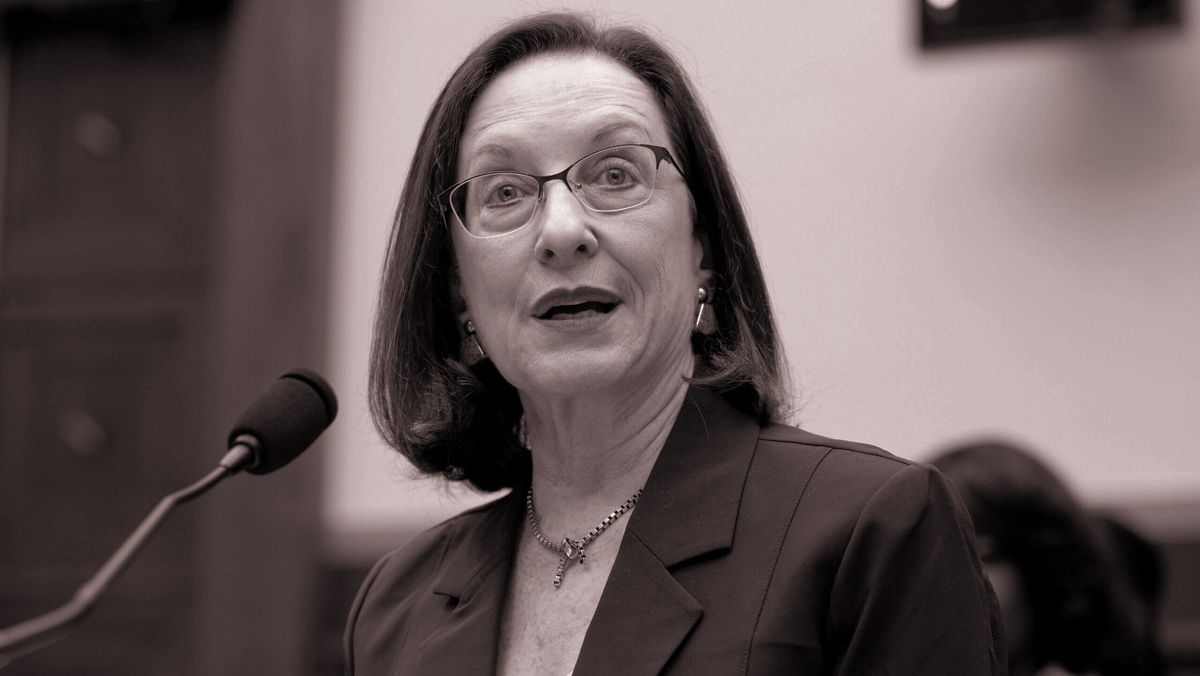
Back in May, Trump fired Shira Perlmutter as the Register of the U.S. Copyright Office. That
hardly makes her unique, given the president’s penchant for purging government employees. But, of course, hers was a particularly notable ousting, since the Copyright Office sits within the Library of Congress. Trump was flexing his muscle to dictate personnel inside a branch of government that’s arguably outside his reach.
Three months later, Perlmutter is barely hanging on to her seat, after losing her bid for reinstatement via a preliminary injunction. (At the moment, the Copyright
Office is under the ostensible authority of Todd Blanche—Trump’s former criminal defense lawyer turned deputy attorney general.) Perlmutter’s attorneys, led by Donald Verrilli, have warned the D.C. Circuit that if Trump’s “unlawful takeover” is allowed to stand, the Senate parliamentarian could be next on the chopping block. Worse still, they argue, it could pave the way for Trump to attempt to replace a sitting federal judge.
Perlmutter is now climbing
the appellate ladder, with the Supreme Court as possibly the ultimate destination. In Perlmutter’s bid for reinstatement, U.S. District Judge Timothy Kelly, a Trump appointee, allowed arguments over whether the Copyright Register is an executive or legislative role—or both, depending on the day—but ducked a ruling on the merits. Instead, he decided that her firing didn’t qualify as “irreparable harm,” citing a recent Supreme Court shadow-docket decision that has made Trump’s job
purges easier. In that case, which involved members of the National Labor Relations Board, the conservative justices reasoned that the government “faces greater risk of harm from an order allowing a removed officer to continue exercising the executive power than a wrongfully removed officer.” (In that ruling, the court added the Federal Reserve would be different, previewing
a legal fight that’s sure to come after Trump fired Lisa Cook yesterday.)
There’s an A.I. angle to all of this, too. As part of a recent push to be reinstated pending the appeal, Perlmutter’s attorney highlighted the timing of the president’s move against his client. “The president obstructed Ms. Perlmutter from performing her role as a key advisor to Congress just after she issued a report on the copyright implications for training generative artificial intelligence
models, just before the president launched his A.I. Action Plan and announced his view that copyright law should be no obstacle,” Verrilli wrote. “The dots are not difficult to connect. Ms. Perlmutter has been injured and her injury cannot be redressed later.” |
So, how could a Trump-compliant Copyright Office create the conditions for the government to shake down
Hollywood? When it comes to Trump’s position on A.I. and copyright, one concern is that the administration will lean on lawmakers and judges to declare that using copyrighted material to train bots qualifies as fair use. But what if the real play were grander? What if A.I.-authored—or A.I.-assisted—works got registered only on the condition that a percentage of their value flowed into public coffers?
Consider where things stand. The Copyright Office has been agonizing over whether A.I.
“authorship” is protectable. For now, the answer is no, only humans can be authors—with limited exceptions where human ingenuity does the heavy lifting, and the A.I. is merely a tool, duly disclosed on the application.
But imagine a more permissive approach: one that grants protection to A.I.-generated works while giving the public a stake, on the rationale that these models are trained on the entire human corpus of creativity. Debates would erupt over the feasibility of giving the
federal government profit participation in a copyright system that covers not just movies and television shows, but also journalism, music, and photographs. The conflicts are obvious, the accounting a nightmare. And because co-ownership conveys the ability to license, it’s pretty easy to imagine how spectacularly it could all go wrong.
Yet the political appeal is obvious: Cosplaying socialists could embrace it as redistributive justice, MAGA devotees as patriotic tribute, and Trump as a
new revenue stream—and a way to stick it to liberal Hollywood. You can almost picture it, the closing credits of a studio-released, A.I.-co-created blockbuster rolling across the screen with a new tag: in association with the United States government. |
Thanks, Eriq. I’ll see everyone on Thursday.
Matt |
|
|
Puck founding partner Matt Belloni takes you inside the business of Hollywood, using exclusive reporting and insight to explain
the backstories on everything from Marvel movies to the streaming wars. |
|
|
A professional-grade rundown on the business of sports from John Ourand, the industry’s preeminent journalist, covering the
leagues, players, agencies, media deals, and the egos fueling it all. |
|
|
Need help? Review our FAQ page or contact us for assistance. For brand partnerships, email ads@puck.news. You received this email because you signed up to receive emails from Puck, or as part of your Puck account associated with {{customer.email}}. To stop receiving this newsletter and/or manage all your email preferences, click here. |
Puck is published by Heat Media LLC. 107 Greenwich St, New York, NY 10006 |
|
|
|