 |
|
Good evening, and welcome back to What I’m Hearing+, your Tuesday bonus edition helmed by Eriq Gardner. A.I. is, of course, the story of the moment in entertainment, and nowhere is that story playing out more clearly than in the music business, which Eriq thoughtfully analyzes today…
But first…
|
|
|
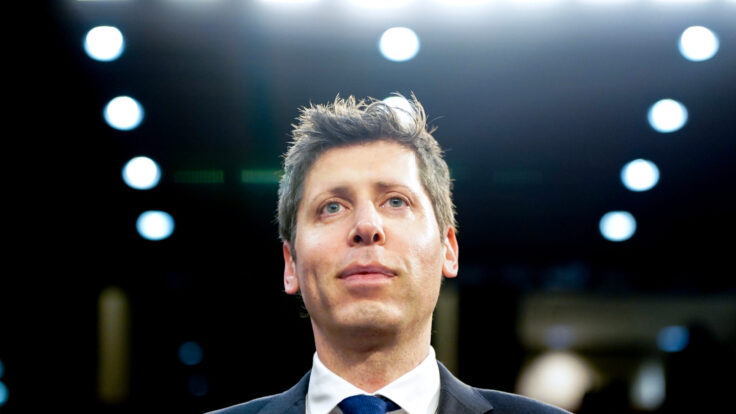
- Elon’s Ari assist: It’s hardly a shock that Elon Musk has decided to refile claims against Sam Altman over OpenAI’s decision to jump into bed with Microsoft. But the real eyebrow-raiser here is Musk’s choice of legal representation: Marc Toberoff.
What an incredibly bizarre client-lawyer pairing! Toberoff, of course, is famed for his deep expertise in the specialized niche of the termination provisions in copyright law—and he’s taken on Hollywood studios over properties like Superman, Top Gun, and the Avengers. However, Musk’s sprawling, 83-page complaint, which alleges everything from fraud to racketeering, is way outside Toberoff’s usual lane. The link between Musk and Toberoff is Ari Emanuel, the Endeavor C.E.O, who has personal and professional ties to both, and who made the introduction, per a source familiar.
- ABC vs. Trump: Even if a federal judge hadn’t greenlit Donald Trump’s defamation suit against ABC over George Stephanopoulos’s comments regarding the E. Jean Carroll case, the former president probably would have conjured another pretext to dodge a debate with Kamala Harris. Nevertheless, it’s worth underlining the peculiarity of U.S. District Court Judge Cecilia Altonaga’s July 24 ruling. Yes, Stephanopoulos did misreport the jury’s verdict, stating that it had found that Trump “raped” Carroll—however, I’d wager that most judges would acknowledge that his statements conveyed the gist of the verdict, which found Trump liable for “sexual abuse”—i.e, there was enough “substantial truth” in his remarks.
The ruling doesn’t just give Trump a convenient out from the debate—it also likely enables him to sift through ABC’s internal communications for signs of actual malice. This exploration will presumably be shrouded under a protective order, but it’s worth wondering if Trump would break confidentiality if he saw something politically useful.
- Shari v. Rhode Island: Shari Redstone has emerged victorious in the first legal skirmish triggered by her decision to offload Paramount to David Ellison’s Skydance. Late Friday, a Delaware Court of Chancery magistrate judge ruled that Rhode Island’s treasurer can’t pry into Redstone’s texts and emails during an investigation into potential fiduciary breaches. The ruling capped off a one-day trial, where Paramount’s legal team contended that Rhode Island lacked solid ground for suspecting misconduct.
Rhode Island had suggested that the sale process might have been rigged to favor Redstone at the expense of common shareholders, but Paramount successfully pointed to the precedent for controlling stockholders to command premiums when selling shares. Paramount also chastised Rhode Island for leaning heavily on news articles from the past few months that were anonymously sourced.
Despite this setback, Rhode Island is not relenting, having already appealed the decision. Meanwhile, Redstone is bracing for more shareholder grievances and discovery requests: She’s already facing another lawsuit challenging the transaction’s fairness, which is seeking to prevent the board of directors from finalizing the merger.
- The Google boondoggle: Once upon a time, given the historic friction between the entertainment and tech industries, champagne corks would fly in Hollywood after a blockbuster court ruling like yesterday’s, which found that Google violated antitrust laws by ensuring its search engine remained the default on Apple devices. Nowadays, though, the tension between the sectors has evolved, particularly in the production realm, and the entertainment industry will leave the champagne on ice while it parses a hefty, 277-page opinion that delineates when exclusive deals overstep legal boundaries. (Don’t hold your breath for Disney to ink any exclusive agreements for prime placement on Roku’s home screen anytime soon.)
As we await U.S. District Court Judge Amit Mehta’s decision on the appropriate remedies, it’s difficult to gauge the full implications. While sweeping measures like forced divestitures are possible, it’s also plausible that Mehta might lean toward canceling licensing deals or other mandates. These decisions will undoubtedly reshape some of the biggest and most important advertising markets.
Many insiders will be especially eager to see if the remedies will encroach on Google’s ambitions in the burgeoning A.I. ecosystem. Notably, this ruling dropped just as Google made news by acquiring the co-founders and team behind startup Character.ai, securing an equity buyout valued at a staggering $2.5 billion. It wouldn’t be surprising to see regulators follow up by taking a closer look at such dealmaking.
|
| And now onto another A.I. story… |
 |
| The Record Industry’s Full-Blown A.I. War |
| A pair of well-capitalized A.I. music startups have found themselves in the middle of a gnarly lawsuit against the industry’s biggest labels in a case that may set precedents across numerous creative industries. These suits will either be remembered as a power play, or a devastating blow to their own assets and their relevance to artists. |
|
|
|
| Just a few days ago, amid a barrage of lawsuits sweeping through the generative A.I. sector, a pair of music A.I. startups, Suno and Udio, found themselves facing massive copyright infringement claims from heavyweight record labels, including Universal, Sony, and Warner. The plaintiffs’ claims are somewhat straightforward: They argue that “synthetic musical outputs could saturate the market” and “directly compete with, cheapen, and ultimately drown out the genuine sound recordings.”
Instead of opting for a dismissal motion, however, both startups accepted the claims as laid out. It was a bold maneuver while defending against a lawsuit that could incur hundreds of millions, and perhaps even billions of dollars in damages, propelling these cases straight into the discovery phase and potentially triggering high-stakes trials in the near future.
This strategic antagonism is likely the handiwork of Suno and Udio’s counsel. Udio is represented by Quinn Emanuel’s Alex Spiro, known for his bulldog approach to defending high-profile clients like Elon Musk and Jay-Z, and who recently navigated Alec Baldwin to a dismissal of the Rust shooting case. Meanwhile, Latham & Watkins’ Andrew Gass and Sy Damle—who are quickly becoming go-to litigators for A.I. entities looking to defend themselves against the likes of The New York Times, Sarah Silverman, and Pulitzer-winning authors—are representing both defendants.
In their respective 12-page preliminary statements, Suno and Udio appeared less focused on procedural norms and more concerned with commandeering the narrative. They cast the labels as monopolistic antagonists, bent on stifling innovation in favor of market dominance, while championing the idea that A.I. has “democratized” creativity. “Where Suno sees musicians, teachers, and everyday people using a new tool to create original music,” the company said in its filing, “the labels see a threat to their market share.”
But perhaps the defense’s gambit has more to do with the plaintiffs, themselves. Unlike typical underdog creators or embattled media companies, these record labels are deep-pocketed adversaries who won’t be outmaneuvered financially. The attorneys for Suno and Udio may see an opportunity to portray these corporate giants as the aggressors—retorting with an accusation of copyright misuse, which essentially suggests antitrust abuse. Their preliminary statements offer a broader narrative for a jury to consider: These lawsuits aren’t about fear of piracy, but competition. |
|
|
| For the major record labels, the stakes in these A.I. cases are nothing short of existential. These lawsuits will either be remembered as a power play, fortifying their position in future licensing talks, or a devastating blow to their assets and their relevance to artists. For that reason, the music behemoths are treating A.I. as a potential Napster-scale disruption. Except, this time, it’s not a college dropout changing how music is distributed, but rather a band of Silicon Valley moguls aiming to redefine the creative landscape: In May, Suno announced a $125 million fundraise. Udio, which announced a smaller $10 million raise in April, counts the blue chip V.C. firm Andreessen Horowitz as an investor.
In mounting their defense, Sumo evoked Taylor Swift, and her now-famous decision to rerecord her classic tracks. In many ways, this case study demonstrates why the record industry titans are fighting a losing battle against A.I.-generated music. After all, if copyright laws accommodate Swift’s re-creation and release of songs that are nearly identical to the originals (despite Scooter Braun or some private equity fund clutching the old masters), how can a record label protest A.I. software that churns out pop star-esque tunes? Hasn’t the industry already resigned itself to the reality of cover songs and soundalikes?
But Suno and Udio push the argument even further. For much of the 20th century, they note, sound recordings didn’t even fall under the umbrella of federal copyright protection. That changed in the early 1970s, when Congress struck what they call a “compromise,” offering the record industry a shield against piracy—think bootleg tapes hawked from the trunk of a car—while ensuring that this shield didn’t stifle musical innovation. “Fast-forward to 2024 and the age of generative A.I.,” the statement contends. “The effect of this legislative compromise is that the outputs of tools like Suno … are not and cannot be even prima facie copyright infringements. The outputs generated by Suno are new sounds, informed precisely by the ‘styles, arrangements and tones’ of previous ones. They are per se lawful.”
Frankly, I find this historical narrative to be oversimplified. My own research suggests that the delay in granting federal protection to recordings was influenced more by the established tradition of songwriting, cultural biases against emerging Black jazz musicians, and the evolving commercial landscape ushered in by the advent of rock music. Nevertheless, it’s true that copyright protection afforded to sound recordings remains somewhat thin, which is what allows these A.I. companies to articulate a potentially persuasive case against record labels.
As for training, well, that’s a whole different story—and it’s likely the territory on which this A.I. battle will truly be fought. On the one hand, as the preliminary statement highlights, there are literally hundreds of versions of “Johnny B. Goode,” so what makes the record label so confident that Suno or Udio trained its models on the exact version that they own? Then again, the A.I. companies don’t exactly deny using copyrighted recordings. In fact, in another small dig at their opponents’ supposed aversion to competition, Suno’s lawyers added, “Irrespective of whether UMG’s particular version of ‘Johnny B. Goode’ was in Suno’s training data, many UMG recordings probably were given the massive size of the catalog UMG has assembled through decades of M&A transactions.”
Naturally, Suno and Udio fall back on a fair use defense, presenting their method of mining existing works to identify patterns in musical styles as “quintessential fair use.” They almost liken the process to an educational pursuit. Whether a jury will buy that analogy—equating A.I. training to a personal music masterclass—remains to be seen. A legal jam session for the future, no doubt. |
|
|
| I’m now closely tracking nearly three dozen copyright cases on the A.I. front, including class actions on both coasts, and most will likely turn on how judges and juries interpret the fair use issues. That means arbiters will be weighing the purpose and character of the use of creative material, the nature of the copyrighted works, the extent of the copying, and the impact on the market for the original works. With the possibility of multiple trials, 2025 is shaping up to be a pivotal year for the future of authorship, although we might see some critical decisions before then. For example, song publishers are seeking a preliminary injunction against Anthropic’s use of lyrics, with a hearing set for early October and a likely ruling soon after.
Another, potentially more significant, trial is kicking off in Delaware on August 26. At first blush, Thomson Reuters v. Ross Intelligence may seem far removed from the question of whether A.I. is taking over the cultural canon. The dispute concerns two systems for compiling and summarizing judicial opinions: Thomson Reuters owns Westlaw, which adds “headnotes” to rulings and organizes everything using a proprietary “key number system,” and Ross is accused of feeding this into its own A.I. system to train a “natural language search engine.”
However, the core issues of this case—what qualifies as original enough to merit protection, and how fair use applies—are the same as those in ongoing disputes over music, books, and news articles. More importantly, as the very first A.I. copyright case to go to trial, it will provide a unique glimpse into how these arguments play out before a jury. Much like Suno and Udio, Ross argues that the incumbent is simply trying to quash competition, that copyright protection for their opponent is minimal, and that any copying was minor and a transformative step toward a better method of communicating judicial developments. Surely, Reuters will counter by telling a jury about the substantial investment it makes, perhaps pointing to jobs on the line.
Predicting the outcome of a jury decision is always tricky, so I won’t speculate on who will win in Delaware. However, I’m confident that the verdict will reverberate. Many of the attorneys involved in higher-profile cases are watching closely to see which arguments stick and which don’t. You don’t need A.I. to understand why this decision will have a major impact. |
|
|
| Thanks, Eriq. Super interesting. I’ll be back on Thursday…
Matt |
|
|
|
| FOUR STORIES WE’RE TALKING ABOUT |
 |
| Tom Ford Trauma |
| A close look at Peter Hawkings’ abrupt ouster. |
| LAUREN SHERMAN |
|
 |
|
 |
|
 |
|
|
|
|
|
 |
|
|
|
Need help? Review our FAQs
page or contact
us for assistance. For brand partnerships, email ads@puck.news.
|
|
You received this email because you signed up to receive emails from Puck, or as part of your Puck account associated with . To stop receiving this newsletter and/or manage all your email preferences, click here.
|
|
Puck is published by Heat Media LLC. 227 W 17th St New York, NY 10011.
|
|
|
|