{{ 'now' | timezone: 'America/New_York' | date: '%b %d, %Y' }} |
|
|
Welcome back to What I’m Hearing+, the A.I.-enhanced and technologically superior version of WIH.
Today, we’re getting right to the main event: a very smart conversation between Puck’s Eriq Gardner, Julia Alexander, and Ian Krietzberg on the thorny legal questions surrounding A.I. as a tool for content creation. Outputs vs. inputs, music slop, and the very important Taylor Swift test—I learned a lot here…
First, a correction: Resident Evil is a Sony property, not Warner Bros. I mislabeled it as
Warners yesterday in the item about Zach Cregger’s deal. Apologies. Also, several people reminded me that War of the Worlds, the Ice Cube movie that debuted at 0 percent on Rotten Tomatoes and featured some very subtle Amazon product placement, was originally made by Universal and then picked up by Prime Video. Yes, that’s true. Still funny, though.
Now on with the show… |
|
|
The hand-wringing around artificial intelligence is typically focused on
the ways it will disrupt content production, but far less attention has been paid to how media platforms will decide to guardrail the technology. In this incisive conversation, Julia Alexander and Ian Krietzberg join Eriq Gardner to break down the legal considerations facing Hollywood, publishing, and the music industry. |
|
|
So much of the agitation surrounding A.I. and entertainment these days is fixated on content
production—how the technology is being used to generate images, music, videos, etcetera—and the creative class that it threatens to disrupt or displace. Far less attention has been paid to the media platforms—Disney, Netflix, and Spotify, sure, but also YouTube, and TikTok—that will ultimately decide what guardrails to place around the technology.
To explore that other side of the equation, I brought together Puck’s new A.I. correspondent, Ian
Krietzberg (sign up for his great newsletter here), and our resident streaming analyst, Julia Alexander, to discuss the future of A.I.-generated music, how algorithmic slop is infecting the internet, the I.P. headache of A.I.-personalized art, and more. |
The Taylor
Swift Test Case
|
Eriq Gardner: A few weeks ago, an A.I.-generated rock band called The Velvet Sundown crossed
1 million plays on Spotify, which raised several big questions. For one, what kind of A.I. policies does Spotify actually have in place?
From what I’ve heard, the company is currently in the midst of an internal review, which is likely to be an incredibly thorny process. It’s hard enough to even define what qualifies as “A.I.-created.” But from your perspective, Ian, what principles should a platform like Spotify be contemplating?
Ian Krietzberg: First,
there’s the issue of consumer trust. Until The Velvet Sundown was found out, there was no indication that their music was, as they put it in their revised Spotify bio, “generated with the assistance of artificial intelligence tools.” And there’s still no obvious label indicating that the music is A.I.-generated on either Apple Music or Spotify. Plus, the word assistance is also doing a lot of work here—we don’t know what systems were used, the training data or licensing
agreements for those systems, what components were recorded by a human, etcetera. Sure, many people don’t care about this stuff, but plenty are pissed, which is why Spotify is taking heat for not actively informing consumers about how the music was created.
The law is still unsettled as to whether the fair use doctrine protects training an A.I. model on copyrighted material. In the meantime, recent lawsuits suggest that rights-holders have stronger cases if they can prove
infringement in the output of a model, rather than getting hung up on training. But generative models aren’t yet capable of true creativity—they can only riff on the content they’re trained on. So you can foresee how anyone messing around with generative A.I. could get into trouble here. |
|
|
A MESSAGE FROM OUR SPONSOR |
Praised by critics as, “one of the most sophisticated, urgent and timely television shows in decades,” the second and
final season of ANDOR has redefined the possibilities of genre storytelling. Now Nominated for 14 Emmys® including Outstanding Drama Series. Join us for a first-come, first-serve, secret pop-up event. RSVP now. |
|
|
Eriq: I’ve always regarded music copyright fights as the gutter of entertainment law.
They’re maddeningly complex to litigate, the payoffs are uncertain, and only a tiny cadre of masochistic lawyers even bother. Most cases, frankly, are junk. That said, A.I. could make this corner of the law a lot more interesting.
You noted that similarity in output makes for a cleaner case. Traditionally, the opposite has been true—proving access has been the real tripwire. That’s why it’ll matter enormously which songs A.I. models have been trained on, what prompts the
producers are feeding them, and how those creative inputs shape the results.
And when the lawsuits inevitably come, the hitmakers won’t be the only ones in the crosshairs—plaintiffs will take aim at the deep-pocketed toolmakers and platforms, too. Spotify once relied on contract terms, and the Digital Millennium Copyright Act (DMCA), for shelter. But those protections may be eroding as new “soundalike” liability theories emerge. We’re on the cusp of some thorny, high-stakes disputes that
could make this gutter worth watching.
Another flashpoint involves how artist compensation works on platforms like Spotify and Apple Music, which allocate a fixed percentage of revenue to songwriters and publishers. That pool of money is zero sum. So when The Velvet Sundown racks up plays, it comes at the expense of, say, Guns N’ Roses. There’s already evidence
of A.I. being used to mass-generate songs to get on Spotify’s playlist of ambient sleep music. Given all this, you’d think Spotify would be especially vigilant about A.I. being used to game the system.
Ian: Except the incentive now is for streaming platforms to keep users engaged for as long as possible, either to serve ads or reduce churn. Sure, generative A.I. likely isn’t going to improve content quality, but it could massively increase the quantity.
If there’s an economic benefit to having more Velvet Sundowns, they’ll find a way to make that happen.
For what it’s worth, Spotify has said that the company itself isn’t interested in using A.I. to generate music. But I think part of the reason why they’ve been reluctant to prohibit—or even label—A.I. music is that, like other
streamers and publishers, they’re currently testing audience limits: Will users protest? What about artists like Taylor Swift? If there are economic penalties, Spotify would have to take the issue very seriously. But what if the response is a bit of outrage followed but nothing that really impacts metrics? Well, that might mean they keep opening the floodgates. |
Eriq: Julia, Axios ran a
piece the other day about how A.I.-generated “slop” is starting to ruin the internet, pegged to a viral video of rabbits jumping on a trampoline. I get how A.I. is reshaping open platforms like YouTube and Instagram, but it’s less clear to me whether it will affect closed ecosystems like Netflix and Disney+.
Julia Alexander: User-driven
platforms are trying to disincentivize A.I. slop from taking over people’s feeds, while at the same time incentivizing people to integrate generative A.I. features into their work. Google and Meta are eager to demonstrate the power of their A.I. tools. But “slop” doesn’t appeal to advertisers, and advertising accounts for about 75 and 98 percent of their respective businesses. They’re trying to find a balance, and for YouTube, that means allowing creators to use generative A.I. tools
while making more egregious (sloppier?) content ineligible for monetization.
Eventually, though, creators will inevitably make A.I.-assisted content that both users and advertisers do like—think Cocomelon or Bluey on steroids. That’s why Netflix and Disney are exploring how to use A.I. to produce work that meets company standards, but that can be created quickly and cheaply. Earlier this year, Netflix co-C.E.O. Ted Sarandos admitted that The
Eternaut, a sci-fi series from Argentina, used generative A.I. to create a scene featuring a building collapse. The big question, of course, is at what point this impacts conversations about ownership. If a movie is 55 percent A.I.-generated, is that still a Disney or Netflix property?
Eriq: There’s so much attention on whether A.I. training rises to infringement, but not nearly enough on the nuances of ownership. I’m waiting for the moment when David
Ellison, after he forges Paramount into an A.I. powerhouse, storms into court, saying, “This is ours. You stole it,” and the defendant fires back, “Actually, the A.I. made it for you—so it’s not yours at all.” That’s when we’ll see explosive legal battles.
Gatekeepers in entertainment have an important role to play in how this all shakes out. I’m curious whether you think platforms, as we discussed with Spotify, will move toward labeling A.I.-generated content. If they don’t, is
there a risk that trust in the platform starts to erode? |
|
|
A MESSAGE FROM OUR SPONSOR |
ANDOR delivers a riveting exploration of rebellion, sacrifice, and the human cost of resistance in the shadow of a
rising Empire. Vanity Fair hails its, “the best television of the year.” Now Nominated for 14 Emmys® including Outstanding Drama Series, Outstanding Directing, Outstanding Writing & more. Learn more about ANDOR. |
|
|
Julia: It all comes down to consumer expectations. On Instagram, YouTube, or TikTok—free
apps designed to alleviate boredom, which require nothing more than scrolling—the expectation is that the videos that appear in your feed won’t be the same caliber of entertainment as a Netflix show. Also, original content isn’t going to disappear even if A.I. slop proliferates, so users still have the freedom to scroll to the next video. But on streaming, we still expect a more premium experience, which is why Hollywood will be much slower to integrate consumer-facing generative A.I.
content.
My assumption is that executives at YouTube and Instagram are extremely wary of alienating people and advertisers, too. So I suspect you’ll see some suppression of the worst A.I. slop—at least, until they can collect enough data to understand people’s tolerances. But these are giant platforms that are hard to police: Meta’s family of apps reaches about 40 percent of the global population every day; YouTube has more than 2 billion monthly users. And we may already be on the verge
of an era when plenty of people can’t distinguish between A.I. and human-generated content. I’ve been fooled by two videos this week alone. |
Eriq: In the music business, there’s often stakeholders with layered—or even
contradictory—interests. With the estates of deceased artists, for example, you’ve now got rights-holders using A.I. to release “new” music from artists who can no longer consent. The family of the late America’s Got Talent star Jane Marczewski recently released an album of her music, three years after she died from cancer at age 31, using A.I. to help create vocals for songs she had composed. How should platforms like Spotify or Apple Music navigate
that?
Julia: This is one of the areas where market consensus, and public reaction, are probably going to drive many of the decisions that estates, rights-holders, and streaming platform executives make. And as you noted, there are a bunch of contradictory interests here. Estates and rights owners are incentivized to extract more value from the artist. Streaming executives may be incentivized to release A.I.-assisted songs to boost engagement, however marginally. But is
this something that fans actually want? My bet is on a backlash.
Eriq: The laws around impersonation are fast-changing, but if the artist is dead, and the estate gives the green light, I’m not sure there is any legal problem there, strictly speaking. But I still think ethical considerations matter.
Ian recently had a fascinating conversation
with Edward Saatchi, the C.E.O. of Fable Studio, who’s working on an app that he describes as the “Netflix of A.I.,” which will let users generate instantaneous, customizable video content inspired by real I.P. I’m skeptical about whether this pans out, but I also know that—for reasons I may never fully understand—kids love watching other kids play video games. So maybe an entire platform built around A.I. doing a mindmeld with traditional I.P. isn’t as farfetched as it
sounds.
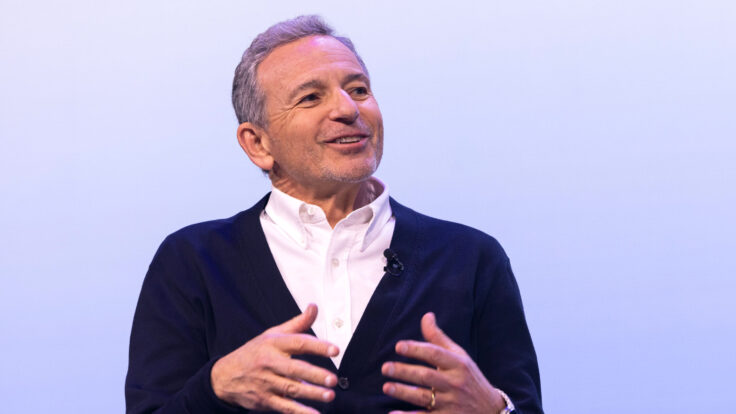
Julia: I think the biggest roadblock is brand protection from I.P. rights-holders. Take Disney, which Saatchi talks about as a potential collaborator. C.E.O. Bob Iger and his teams are already trying to figure out how to deal with generative A.I. creations where Darth Vader is swearing. There are Moana deepfakes. If people start using this technology at scale, what will it mean for the Disney brand?
Ian: There’s
also the simple fact that people largely prefer art that comes from other people. More to the point, they prefer to engage with content that’s good—unique, entertaining, moving, etcetera. By their very nature, generative A.I. models dull the outliers to create average output, based on their training data. My gut tells me that we might be reaching an inflection point where audiences demand mind-bending quality over truly overwhelming quantity.
Look at
The Velvet Sundown: Between May and July, the “band” released three full-length albums. That’s a lot of content. Personally, I would prefer that bands take their time between releases, especially if it means the music is going to be higher quality and more emotionally impactful. Matchbox Twenty, one of my favorite bands, took six years to release their first three records, but man are those records good. |
Thanks, Eriq and Ian—and Julia, who’s back tomorrow with an extra-special bonus edition of WIH+. I’ll be in
your inbox on Thursday as usual.
Matt |
|
|
Puck founding partner Matt Belloni takes you inside the business of Hollywood, using exclusive reporting and insight to explain
the backstories on everything from Marvel movies to the streaming wars. |
|
|
A professional-grade rundown on the business of sports from John Ourand, the industry’s preeminent journalist, covering the
leagues, players, agencies, media deals, and the egos fueling it all. |
|
|
Need help? Review our FAQ page or contact us for assistance. For brand partnerships, email ads@puck.news. You received this email because you signed up to receive emails from Puck, or as part of your Puck account associated with {{customer.email}}. To stop receiving this newsletter and/or manage all your email preferences, click here. |
Puck is published by Heat Media LLC. 107 Greenwich St, New York, NY 10006 |
|
|
|