 |
Welcome back to What I’m Hearing+, coming to you from Brooklyn for the next month, where I’ll celebrate the Super Bowl and the end of the NFL season—always a bittersweet day in my household—and prepare for the forthcoming White Sox season…
In tonight’s edition: Amid the Paramount Global feeding frenzy—check out excellent pieces by my partners Matt Belloni, Eriq Gardner, and Bill Cohan—I’m taking a closer look at Paramount+. Does the streamer have the right strategy? Should it leverage its I.P. more or develop more new shows? Or does none of it matter and it was doomed from the start?
But first…
- The Great Sports Rebundling: Disney, Warner Bros. Discovery, and Fox just announced that they are launching a joint streaming service this fall, a move that will potentially create a must-have bundle for sports fans. I’d love to give you some straight analysis, but the truth is there are more questions than answers.
Here’s what we know: The three companies will each own one-third of the new product, which is being built from the ground up, and it will include access to all the content that airs on ESPN, TNT, FS1 and 2, ABC, Fox, etcetera. Yes, that’s NFL, NBA, March Madness, MLB—pretty much all the sports (but, notably, not the CBS or NBC Sports games).
Here’s what we don’t know: What will this cost? Why are the companies owning this equally when Disney and Fox bring the NFL and Warner Discovery does not? How will this impact Disney’s rollout of a stand-alone, over-the-top ESPN product? And will the service eventually be integrated into the existing Hulu and Max apps for customers who have access to all of them? Also, how will ad revenue be allocated? What about customer acquisition and retention, especially if one service—say, ESPN—is responsible for most of the subscribers? Will these services be “sold” to customers via Amazon or Apple, or included within vMVPD options like Hulu With Live TV? Will Max shut down Bleacher Sports on Max? And most importantly: Who exactly is building the app? And who exactly is responsible for the strategic direction of the product?
Recall that in the early-to-mid-2010s, Hulu was late to the original content game in large part because its controlling owners—including some form of Warner Bros. Discovery, Disney, and Fox, ironically—couldn’t agree on how to best use the platform. What’s to prevent that from happening here? Another complexifier, of course, is whether WBD succeeds in re-upping its NBA rights deal, or whether WBD either acquires Paramount Global or is merged with Comcast’s NBCUniversal.
Having asked all that, this move makes a ton of sense for companies fighting over increasingly expensive sports rights, and trying to prevent seasonal customer churn. Now, these three companies will be able to capture many paying customers year-round, even if they are primarily fans of one sport. Just like cable does. But there is too much missing information to make sense of it all yet. All I can say is, I imagine former Hulu C.E.O. Jason Kilar’s phone is blowing up right now.
- Prime Video is huge in Japan: We have a pretty good understanding of how the streamers rank stateside, but emerging markets are a little harder to parse. New research from Media Partners Asia (via THR) suggests that Amazon Prime Video is killing it in Japan. Not only does the service outcompete local SVOD players, like U-Next, but it also has nearly three times more monthly active users (19.7 million) than Netflix (7.5 million). Not surprisingly, per the report, one of the biggest drivers of customer acquisition for both services is anime content.
- Netflix’s under-the-radar hit: Have you heard of the Netflix series Fool Me Once? The latest Harlan Coben murder mystery isn’t generating headlines, but it is apparently putting up Suits-like numbers. The British miniseries, which debuted on New Year’s Day to middling reviews, accrued more than 3 billion minutes streamed in its first week in the U.S. alone, according to Nielsen, on par with Suits in its Netflix heyday. It marked the largest Netflix original debut since before last year’s strikes. Fool Me Once also stayed on Netflix’s Top 10 chart for five consecutive weeks, and hasn’t fallen out of the Top 5. Not bad for a show that, depending on your algorithm, you may not have even noticed.
- Spotify’s Rogan play: What’s more powerful, the creator or the platform? Spotify is betting on the latter with its new $250 million, semi-exclusive, multiyear deal with Joe Rogan, which will allow the No. 1 podcast star to monetize his clips off-platform. In his past deal, Rogan was locked into Spotify, but this new agreement allows Spotify to sell ads and distribute The Joe Rogan Experience across platforms, while sharing revenue.It’s a smart bet on distribution over exclusivity, especially now that Spotify (like the rest of the streaming industry) is targeting profitability. Remember: Spotify is the largest podcast player globally, and it has double the market share of Apple Music. Those who want Rogan on Spotify will continue coming to the platform. Now Spotify can monetize listeners on other platforms, too. This seems like a smart decision, and more likely to pay off than Amazon’s $100 million deal for a MrBeast competition TV show. I can confidently predict that his fans won’t switch away from YouTube when it’s already serving them everything they need.
|
| And now, what’s going to happen to Paramount+? |
 |
| Paramount+’s Existential Questions |
| Sure, the streaming home of the Super Bowl, now being circled by numerous potential acquirers, has reined in its ambitions—decreasing spending and licensing its best content to its competitors. But the real challenge for Par+ comes down to its technology. |
|
|
|
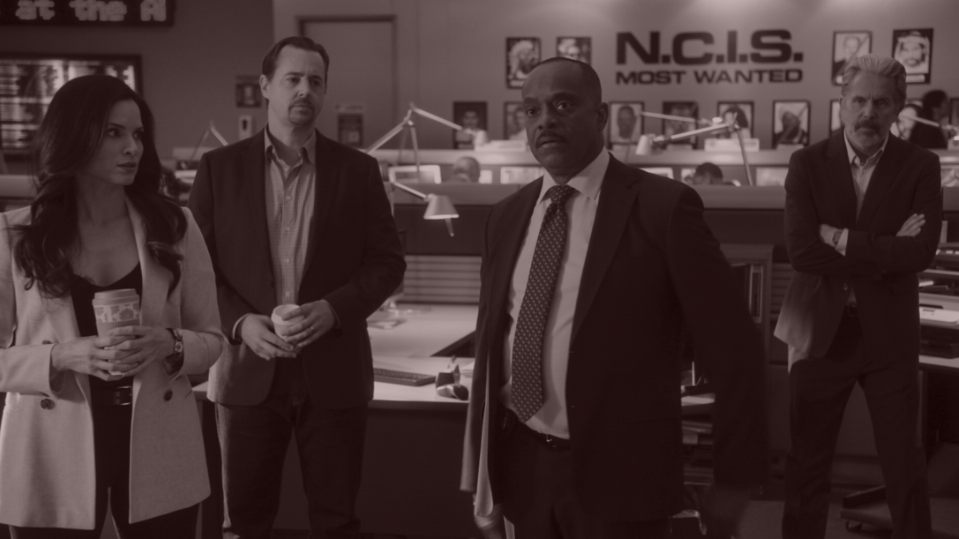
| Who is Paramount+ for, exactly? This question comes up all the time in conversation with streaming executives. It’s a fair question. Kids these days are turning to YouTube, not Nickelodeon, whose audience has shrunk more than 70 percent over the past decade. Many of the most popular CBS procedurals, like N.C.I.S. and Criminal Minds, are available (and more popular) on Netflix or Hulu. Fans of Yellowstone might subscribe for exclusive prequels like 1883 or 1923, but even Taylor Sheridan isn’t enough to sustain an entire streaming service.Also, for all the talk of being a global streamer, the company has started to pull back on international distribution and is once again in the licensing business, befitting its short-term economic needs. In fact, I’d argue it’s a move in the right direction—and I imagine that potential Paramount Global suitors, including David Ellison, the Apollo guys, and Byron Allen, probably feel the same way. So what does this mean for the future of Par+?
After all, its content is valuable, and sub growth and ARPU both exceeded analyst expectations last quarter, and the company has begun to pare its losses by pulling back on content spend. But relying on familiar I.P. from sole creators, like Sheridan, or reboots of popular series, like Criminal Minds, isn’t a long-term streaming strategy. (NBCUniversal’s Peacock and even Disney+ are facing similar issues, especially with subs who come for the Olympics or the latest Star Wars title and quickly churn back out.) The very fact that Paramount is attempting to cut its way to profitability gestures at the another existential question: In a future state, after Paramount is sold, should Par+ continue to exist or not? |
|
|
| Among the problems with Par+ is that much of its value derives from providing value to other platforms: not just the parent company’s linear channels, but even its streaming rivals. Par+ is now included with Netflix in a bundle from Verizon. It’s also included with a subscription to Walmart’s version of Prime, Walmart Plus. Paramount executives are also open to bundling Par+ with a pay TV subscription, similar to the deal Disney worked out with Charter last year.These bundles are sticky, and help to explain why Par+ has enjoyed consistent sub growth for the past several years—it’s currently at just over 63 million subscribers globally—while competitors like Disney+ have been stagnant. But in each of these cases, Par+ is essentially a discounted add-on, not the primary draw for subscribers.
In mid-2021, Paramount Global executives said they would stop licensing content to better position Par+ to compete. But less than two years later, economic realities scrambled that strategy, and those same executives committed to more licensing to generate revenue. C.E.O. Bob Bakish frames the issue differently, describing Paramount as a “cornerstone supplier”—a platform-agnostic content arms dealer that’s optimized to generate licensing revenue opportunistically. It’s not necessarily the wrong decision for Bakish and his team, who are under immense pressure to taper the streaming division’s multibillion-dollar losses. But it doesn’t position Par+ to be viewed as a differentiator in the market, in any capacity. If anything, its streaming product is now a differentiator for its rivals. To wit: All four Paramount Global titles that made Nielsen’s Top 10 streaming list for 2023 were on Netflix.
Right now, Par+’s most significant differentiator is sports, via its broadcast rights for the NFL, UEFA, Serie A, and various NCAA tournaments. The issue, of course, is that sports are also an add-on, sought out by short-term renters looking for a place to watch their favorite teams before moving on at the end of the big game or the season—and those customers are still mostly well-served by pay TV. Par+ will be the exclusive streaming home of the Super Bowl this weekend, which will bring in a crush of new customers (Peacock saw about 1.1 million customers join the service for the 2022 Super Bowl, according to Antenna). The bigger question for Par+—one that Peacock executives are also investigating, post-wild card game—is how many of those customers stick around after the first 30 days.
And while the retention rate of sports-oriented customers is higher on average than other content (Premier League fans had a 24 percentage point higher retention rate than the benchmark on Peacock, according to Antenna), the cost of those customers is obviously much higher if you consider the cost of those rights. (This, of course, is one of the motivations for the recently announced ESPN-Fox-WBD partnership.) Either way, Par+ still has the fourth-highest churn rate of all premium SVODs at nearly 8 percent—three percentage points higher than the average, and six percentage points higher than Netflix, which has no live sports. |
|
|
| When we talk about streaming, we tend to focus on content, for obvious reasons. But one of the most underappreciated components is technology. During the cable era, Paramount was merely a supplier; when Netflix stepped onto the scene, its executives saw it as an aggregator, but hadn’t yet visualized it as an app. (The time and effort that Netflix put into making its app work more like Instagram and YouTube, in terms of discoverability and navigation, is often overlooked.) There’s a reason that Netflix has headquarters in Hollywood and Silicon Valley: When you’re operating a streamer, you are both the supplier and distributor, the content and the tool.Netflix doesn’t simply posture as a tech company. The company’s research and development spending has steadily increased since 2010, hitting $2.68 billion last quarter. While still a fraction of what Netflix spends on content ($12 billion in 2023, and an estimated $17 billion in 2024), an 890 percent increase over 13 years is indicative of the importance Netflix places on how its content is delivered. Elsewhere, Disney paid $3.8 billion to acquire BAMTech to improve its streaming capacity. Warner Discovery spent its first several months post-merger working to reduce technological differentiators, including tools that worked on issues like preventable churn, which can be managed with better notification structures.
Paramount is planning to spend $6 billion on streaming content in 2024. But how much is being spent on technology to power the platform, or on juicing discovery, on filtering to specific interests, on keeping audiences engaged enough to come back? These are the key user questions when building a streaming platform from scratch. Older audiences who came from linear like being able to scroll to find something to watch; younger audiences who are growing up on TikTok and YouTube want content to seek them out. Streaming platforms require a bit of both.
Surfacing content based on a user’s input turned YouTube into a $9 billion-a-quarter advertising behemoth, with more than 500 million hours of content watched every minute. Netflix, at one point, ran more than 500 a/b tests every year to reduce “choice paralysis,” because if a product’s value is based purely on consumption, well, consumption has to actually happen. That use also trains machine learning tools to better understand, recommend, and entertain customers, to the point that they choose to come back each day. Netflix’s new co-C.E.O., Greg Peters, is a product guy; that should tell you everything.
For Paramount+, the platform itself has always felt like an afterthought. It was a piece of the future for a company that didn’t necessarily want to move on from the past—a metaphor, perhaps, for Shari Redstone’s own predicament. It shouldn’t come as any surprise that everyone looking into purchasing Paramount Global is thinking about whether Par+ fits into the bigger picture. It’s something that the streamer’s own executives never really seemed to figure out, either. |
|
|
|
| FOUR STORIES WE’RE TALKING ABOUT |
 |
|
 |
|
 |
|
 |
| Capitalist Tools |
| Digging into Forbes’ finances as it re-enters auction mode. |
| DYLAN BYERS |
|
|
|
|
|
 |
|
|
| Need help? Review our FAQs
page or contact
us for assistance. For brand partnerships, email ads@puck.news. |
| You received this email because you signed up to receive emails from Puck, or as part of your Puck account associated with . To stop receiving this newsletter and/or manage all your email preferences, click here. |
| Puck is published by Heat Media LLC. 227 W 17th St New York, NY 10011. |
|
|
|