 |
|
Welcome back to What I’m Hearing+, live from New Orleans, home of my favorite football team, the Saints, who just drubbed the Patriots 34-0, fomenting all sorts of Bill Belichick intrigue. A few Puck readers in the Big Easy have asked to get coffee, so if you’re around and want to meet up, send me an email.
This week, how the swing back toward studio-streamers licensing their content is primarily benefiting… Netflix, which has the money and scale (and strategy and head start) to beat the competition. But first…
- Max’s Cable Workaround: Tensions are flaring and sternly-worded legal letters flying after Warner Bros. Discovery put live sports on Max, via its new Bleacher Report add-on. As head of global streaming JB Perrette told my partner Matt Belloni on The Town last week, WBD views the move as additive for both Max and, potentially, for bundle providers like DirecTV, despite its protestations. But are sports streamers and cable customers really distinct audiences? Won’t simulcasting sports on Max incentivize more people to cut the cord?
On its face, the answer might seem like a resounding duh. But as with most problems in streaming, it’s not as obvious as it seems. Sure, an estimated 118 million viewers in the U.S. are expected to stream sports by 2025, a 71 percent increase over 2021, according to eMarketer. Currently, 39 percent of audiences consume sports via linear cable, skewing heavily towards Boomers and Gen Xers, while another 39 percent watch sports on ad-supported streaming platforms or social media, according to Trade Desk’s Future of TV report.
But sports audiences simply go wherever it’s easiest to watch games. And not all sports fans are alike. A few weeks ago, I noted there are many cohorts: casual fans that leagues and networks aren’t working hard to capture; hardcore fans tied to cable packages due to regional sports networks’ distribution agreements with their favorite teams; and passionate omnivore sports fans who are not devoted to any team in particular. Streamers are going after this final cohort, and believe they can capture them without cannibalizing cable viewership.
In short, as long as a fan’s sports needs are met on cable, there’s little reason to cancel the easy-to-navigate ecosystem. (Being a sports fan is expensive regardless of where and how you watch.) This may change as more games move exclusively to streaming platforms, or as certain streaming bundles improve navigation and discovery. But if you ask the majority of passionate fans who have cable whether they’re going to cancel anytime soon, the answer is likely no. Cable, for all its trouble, still has what they need. WBD and DirecTV should be able to come to an agreement that recognizes streaming isn’t likely to impact the linear audience… at least for now.
|
 |
| Netflix Lessons for the Max+ Era |
| Ted Sarandos once said his goal was to become HBO faster than HBO could become Netflix. Instead, it looks like Netflix is simply becoming cable… leaving every other streamer, once again, racing to catch up. |
|
|
|
| How badly did Wall Street misjudge Netflix? Over six months in 2021 and 2022, amid signs of slowing growth, investors dumped the stock en masse, erasing more than $200 billion in market valuation and sparking an industry-wide selloff in streaming companies… only for Netflix to come roaring back.
As it turned out, Netflix was the one company with the scale to emerge stronger, comparatively speaking, from the streaming wars. Paramount is a shell of its former self. Comcast’s Peacock losses hit $3 billion a year, more than triple what the company previously expected. Disney has narrowed its streaming loss to $500 million in its most recent quarter but is carrying tens of billions in debt. Max is finally making money, but Warner Discovery still carries $47.5 billion in debt. Netflix, meanwhile, is growing again and recently raised its outlook for free cash flow to $5 billion for this year.
The simplest explanation for Netflix dominance is that it’s easy. As TV content is partitioned across a dozen or so streamers, all of which are raising their prices, Netflix offers the closest thing to the traditional cable bundle: a data-enhanced mix of licensed content, originals, and enjoyable familiar fare—what Bela Bajaria calls “gourmet cheeseburgers”—all powered by seamless tech that breaks through for cost-conscious customers at scale. (Crucially, the one area Netflix doesn’t have a foothold is sports. Unlike its competitors, though, Netflix executives are trying to counter with sports-adjacent docuseries like Quarterback and the recently released, chart topping Beckham.)
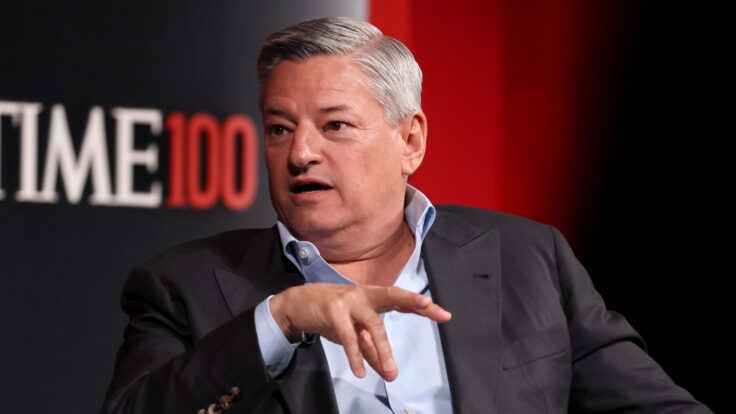
The more complicated explanation—and the more frustrating one for Netflix rivals—is that Ted Sarandos and Reed Hastings started with a massive first-mover advantage. In its first decade, Netflix exploded in popularity thanks in part to the hit shows it licensed: The Office, Friends, Lost, SpongeBob SquarePants, etcetera. It took years for Disney, Fox, NBCU, Paramount, Warners, and so on, to take the threat seriously, launch their own streamers, and begin clawing back content. From 2017 to the Great Netflix Correction of 2021-22, the studios spent tens of billions of dollars on technology and originals to bring audiences back to their own platforms.
Now, of course, it’s déjà vu all over again. Just look at some of the top performing Netflix titles in the U.S. over the past few weeks: Band of Brothers. Ballers. Suits. Grey’s Anatomy. Cocomelon. The Pacific. Insecure. Or some of the titles coming to Netflix: Dune. Super Pumped. Six Feet Under. Sure, Netflix is still producing tons of originals, which comprise more than 50 percent of its catalog in the U.S.—but it’s also absolutely swimming in licensed content.
The question for Wall Street, and for Hollywood, is not whether this strategic reversal for the studios compounds Netflix’s advantages (of course it does), but whether they’re hurting themselves. As usual, the answer is multifaceted, nonlinear, and anything but easy. |
|
|
| One of the most difficult lessons of the streaming era is that most titles, on their own, are simply not differentiated enough to convince a meaningful number of subscribers to leave platforms they’re familiar with to pay for something new. Sure, it’s a different story for more specific interest-based streamers, like Crunchyroll or Criterion Channel, where a handful of hits may be a tether to customers’ credit cards. But in general, the largest streamers—Disney+/Hulu, Max, Paramount+, etcetera—have achieved sufficient scale that customer acquisition and retention is at the programming slate level. It’s why we’re seeing so much bundling these days (Discovery content on Max, Showtime on Par+, Disney+Hulu, etcetera), why everyone is racing to get a piece of live sports, and why more consolidation is virtually guaranteed.
In fact, it was Netflix itself that helped validate the thesis—and Netflix is making the same bet again. Even as its “demand share” for originals loses steam in the U.S. (dropping from 40.2 percent total demand for original programming in Q2 2022 to 36 percent in Q2 2023, and down from more than 50 percent in Q1 2020), it still dominates domestic attention share, according to Nielsen, with more than 50 percent of all streaming view time each week over the last couple of years for originals and catalog content. Put another way, as Netflix has brought on additional licensed titles, demand for all available series and films has grown.
Indeed, the two SVOD platforms that capture the largest viewership share each month are Netflix (8.2 percent) and Hulu (3.6 percent), according to Nielsen. The only service that captures a larger share is YouTube at 8.8 percent, and that’s mostly free. What Netflix and Hulu have in common is they’re general entertainment offerings that combine a slate of originals with audiences’ favorite older shows and films. They’re not just hits-oriented, but they’re also occasion-based—i.e., when a viewer doesn’t know what they want to watch, but knows they can find something there. This is different from, say, Disney+, which is more event-focused (e.g. viewers coming specifically for a new Star Wars show or Pixar movie) and doesn’t have the same attraction as a general, four-quadrant service.
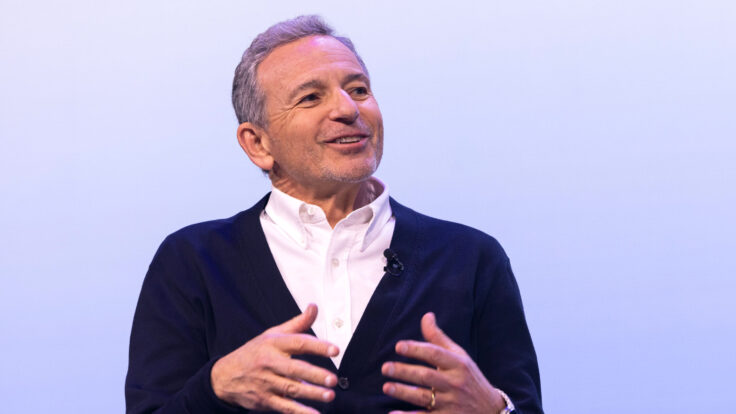
Disney C.E.O. Bob Iger wasn’t wrong when he warned that licensing to Netflix was akin to content arms dealing. But it’s an incomplete picture of how consumers actually behave. Most audiences aren’t lazy, per se, but they don’t want to jump around to find things. Netflix was built off the content of its partners, but its real strength has always been as the one service that provided most of what people needed at a low enough cost. Strong catalogs are crucial for scale-oriented businesses—especially when it comes to raising prices and managing churn.
The importance of scale versus exclusivity is especially top of mind these days, when so many P&Ls are glaring red. Put simply, almost every streamer but Netflix is currently overleveraged and must now focus on debt repayment as much as programming or innovation. Consumers face similar problems. Expenses for the average American have increased by more than 6 percent this year, and streaming prices are rising even faster. When TV research firm MNTN recently asked customers why they had canceled a streaming subscription, nearly 37 percent said they weren’t watching enough to continue paying. I heard the same lament this weekend from a friend, who said she loved Hulu but wasn’t watching it enough to continue paying for it, especially with higher prices kicking in on Thursday. |
|
|
| Does that mean all companies should just cede victory to Netflix? No. But it does suggest that, in an era where TV distributors are focused on maximizing revenue for all titles—and searching for platforms with the cash to absorb under-monetized inventory—Netflix is poised to recapture some of the audience it lost over the past few years. It’s a perfect case study in the eternal debate around whether content or distribution is king.
I noted in a previous story that it’s easier for Netflix to license a show like Suits each quarter than it is for a competitor to create its own Stranger Things. So in a sense, these sorts of trades are a win-win. WBD, NBC Universal, Paramount, and even Disney (outside of Marvel and Star Wars) are all looking for ways to generate cash while still investing in originals that can acquire new customers. By strategically licensing content, they can help pay down their debts, or curb their losses, with minimal damage to their brands. Nobody is canceling Max because Westworld is now on Tubi.
In fact, non-exclusive licensing can be a smart marketing strategy ahead of a new season or film. HBO chief Casey Bloys recently told Vox’s Peter Kafka that Max has actually seen an increase in viewership on its platform for series that are picking up speed on Netflix. And Warner Bros.’ Dune: Part One being on Netflix could help juice the theatrical box office for Dune: Part Two in the spring. Meanwhile, AMC+ is attempting to create a similar marketing funnel by licensing the first seasons of some of its hit shows on Max. Again, these arrangements can be a win-win.
That doesn’t mean the advantages accrue symmetrically. Licensing is a power move for Netflix because many series—especially HBO titles—are even more valuable on bigger platforms. For example, even though The Pacific is not a new title (it came out in 2010), it’s still “new to Netflix”—a unique phenomenon in which the platform’s mass audience, particularly younger viewers, suddenly “discover” old content. Shows like The Pacific aren’t going to bring in new subscribers, but they do help keep them glued to the platform instead of drifting elsewhere to find their next hit.
All of which gets back to that original question: Is a platform more important than its content? After all, one of the key lessons of Netflix’s success isn’t that consumers wanted more shows and more films across a number of streaming services, but that audiences coalesce around broad entertainment offerings at a fair price—a one-app experience, not unlike the cable bundle that streaming is ostensibly designed to replace. |
|
|
| FOUR STORIES WE’RE TALKING ABOUT |
 |
| S.B.F. on Trial |
| An inside exchange on the financial trial of the century. |
| ERIQ GARDNER & TEDDY SCHLEIFER |
|
 |
|
 |
|
 |
|
|
|
|
|
 |
|
|
|
Need help? Review our FAQs
page or contact
us for assistance. For brand partnerships, email ads@puck.news.
|
|
You received this email because you signed up to receive emails from Puck, or as part of your Puck account associated with . To stop receiving this newsletter and/or manage all your email preferences, click here.
|
|
Puck is published by Heat Media LLC. 227 W 17th St New York, NY 10011.
|
|
|
|
|