| Matthew Belloni
|
|
Welcome back to What I’m Hearing, working off my Thanksgiving turkey by ramping up to four days a
week on the WIH and WIH+ treadmill until the end of the year. Eriq Gardner is off this week, but Kim Masters will be here tomorrow, then Julia Alexander for a special Wednesday edition, and I’ll be back on Thursday with one of my favorite topics—the state of the talent agencies. (Reply to this email if you have thoughts!)
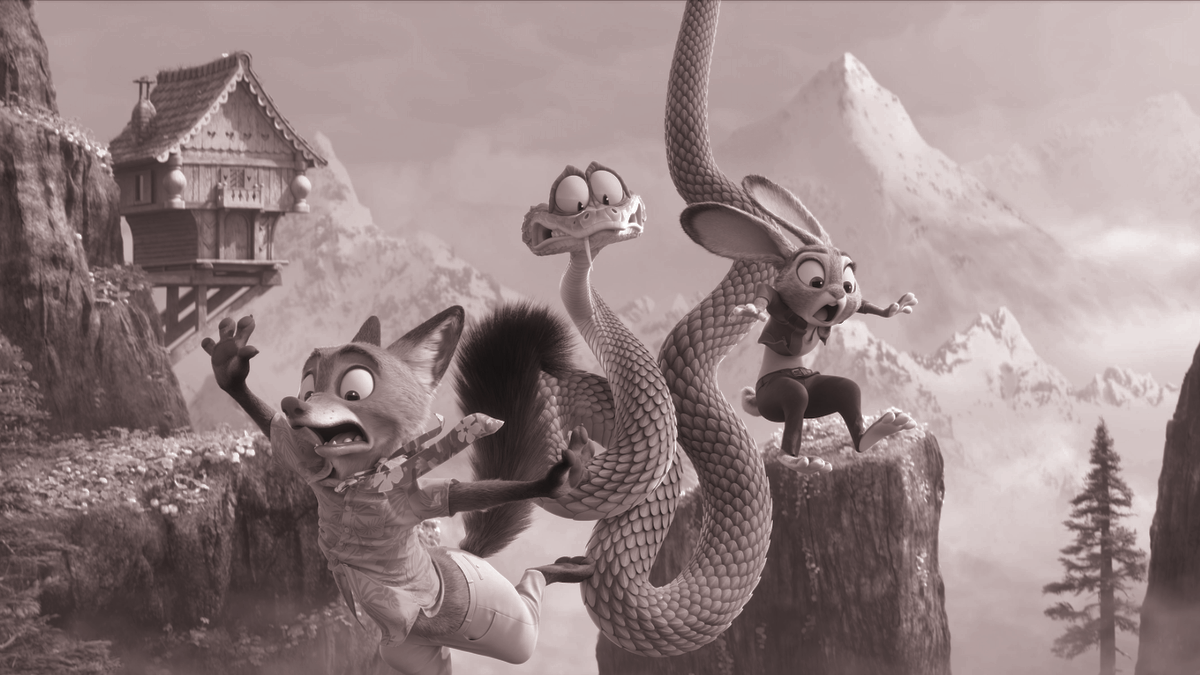
Tonight, it’s the massive Zootopia 2 debut, and how China delivered more than half of its $560 million
opening. Plus: the return of publicist news and notes from the Spin Doctor, and the 2025 edition of Spotify Wrapped for Hollywood executives.
Programming note: This week on The Town, Lucas Shaw and I debated whether Netflix would put Warners movies in theaters, James Cameron declared L.A. has better vegan spots than New
Zealand (Part 1, Part 2), and Chloé Zhao
explained her notes from Spielberg. Also, I updated the WBD
fire sale on CNBC's Squawk Box this morning. And my mere presence degraded this nice Vanity Fair Hollywood Issue portfolio pretty significantly.
Not a Puck member yet? Just click
here. Got a news tip or an idea for me? Just reply to this email, text me or message me on Signal at 310-804-3198.
Discussed in this issue: David Ellison, Josh D’Amaro, Steve Spira, Jafar Panahi, Mariah Carey, Andrew Ross Sorkin, Mike Ovitz, Tracey Vogt
Raab, Josh Gad, Melania Trump, Scooter Braun, James Cameron, Jay Penske, Brett Ratner, Conan O’Brien, Cindi Berger, Risa Heller, Ryan Murphy, Alan Nierob, Colleen Hoover, Jenna Klein, Michael Nyman, John Lasseter, Emily Feingold,
Sydney Sweeney, Joe Brumm, Denzel Washington, Olivia Nuzzi, and… Club Chalamet unmasked.
But first… |
Who Won the Week:
Jared Bush
|
Easy one. The Disney Animation chief creative officer is also the director (with Byron
Howard) of Zootopia 2, which delivered that $560 million debut, rave reviews, and a rare blockbuster that will likely earn more in China than the U.S. (More on that below…)
Stealth flex: John Lasseter. Sequels to his output while running Disney Animation and Pixar are basically keeping the lights on, as Disney has not created a new franchise in eight years—a time period that traces back to when Lasseter first went on leave amid accusations of
creepy behavior.
Runner-up: Jafar Panahi, director of It Was Just an Accident, whose Iranian conviction in absentia on charges of antigovernment activities was revealed by his lawyer today, just before he won three Gotham awards. It’s almost like Neon, which is behind Panahi’s Oscar campaign, timed that announcement perfectly.
Honorable mention: Steve Spira, the longtime Warner Bros. business affairs
chief, who is bailing three years after being wooed back to the studio by David Zaslav only to disagree with many, many of the management and deal decisions under the new regime.
Now a couple little news items….
Disney’s biggest TV star joins the flywheel: Disney parks chief Josh D’Amaro has recently been boasting about the A.I.-powered robotic Olaf, which can walk and talk and somehow sound like Josh
Gad, even in France. But a bigger flex is coming: Bluey, star of the perpetually top-ranked Disney+ show of the same name, will finally begin appearing as a costumed character in Disney parks, thanks to a new deal with Australian creator Joe Brumm and others. Remember, Disney doesn’t actually own its biggest streaming franchise, and Bluey previously appeared in an immersive attraction in her home country. But now a Disney-fied version (a little cuter, and, I’m not
joking, slimmer) will appear first at Disneyland and then the Magic Kingdom in Florida. Get in line now.
Ellison bails on Sorkin: Paramount owner David Ellison, billed as one of the headliners of Wednesday’s big DealBook conference hosted by Andrew Ross Sorkin and the Times, is pulling out, I’m told. Paramount declined
to comment, but I’m assuming it’s related to the Ellisons’ pursuit of Warner Bros. Discovery, which could decide on an exclusive suitor as early as this week. Either that or Ellison really doesn’t want to talk about his pending deal to distribute Brett Ratner’s Rush Hour 4. |
“I don’t want to be a 24-year-old white girl running Club Chalamet. I am who I am.” —Simone
Cromer, the 59-year-old (!) Black woman who runs the Timothée Chalamet superfan accounts, talking to the Journal about the social media presence that has made her one of the most powerful fan influencers.
Runner-up: “I can’t even recommend it anymore. I feel like
[the lawsuit] has overshadowed it. I’m almost embarrassed to say I wrote it.” —Colleen Hoover, talking to Elle about It Ends With Us. |
53 percent
Share of the 18-34 demo who watched the Dancing With the
Stars finale, the highest for a broadcast entertainment show since the Friends finale in 2004. [Nielsen, via ABC] |
|
|
A MESSAGE FROM OUR SPONSOR |
|
|
$1.4 billion
Stranger Things’ contribution to the U.S. G.D.P.
since its premiere in 2015, according to Netflix. [L.A. Times]
$78 billion
Estimated global sports media rights spend by 2030, up 20 percent from 2025.
[Ampere]
4,000
Planned employee reductions resulting from the ad industry megamerger of Omnicom and Interpublic. [Adweek]
Speaking
of Interpublic… |
Now over to the P.R. person I call the Spin Doctor for our monthly-ish look at what’s up in entertainment
publicity…
R.I.P. R&CPMK, PMK T.B.D.?: How well can a P.R. firm spin for itself? We got an answer when Interpublic Group announced the “sunseting” of R&CPMK, the mashup of venerable Hollywood publicity firms, as its talent business, led by Cindi Berger and Alan Nierob, joined former partner/rival Michael Nyman’s holding company, ACC. They’re calling it PMK Entertainment—Pat Kingsley (still alive!) must have
smiled. But astute observers have noted that the “old” entity, still controlled by IPG, is keeping most of the firm’s lucrative corporate clients, which have included McDonald’s, Toyota, Motorola, and MasterCard.
That unsexy business has accounted for up to 70 percent of the revenue of many big “celebrity” publicity firms in recent years, despite all the attention on star clients like Mariah Carey or Denzel Washington. Berger and Nierob have taken some of
the entertainment-related corporate accounts, like Tribeca Film Festival, the X Games, and Angel Studios, but for the most part they’ll need to build a Hollywood P.R. business without that corporate cushion, relying on a roster of mostly late-career talents, including Billy Crystal and Mel Gibson. (Berger’s longtime client list also included Robert Redford, who just died.) Talent fees have increased, as have the services offered, like
ancillary crisis P.R. and social media support. But the keys will be a) whether the new firm can sign developmental talent, and b) whether they can rebuild that sweet corporate business…
All’s fair in love and promo spend: Disney’s efforts to combat the historically bad reviews for Ryan Murphy’s All’s Fair with a tongue-in-cheek promotional campaign helped earn the Hulu show a second season. But not without a price tag that one source
pegged at nearly $50 million (another source said the number is slightly lower). That’s global, for both marketing and promo. But it was a campaign on par with the highest-priority Star Wars and Marvel series launches.
Comings, goings, and notable moves: CBS’s publicity operation was particularly decimated by the latest Paramount layoffs, with the entire New York P.R. department gone save for two execs and an assistant. Longtime network number two Tracey Vogt
Raab and syndication P.R. chief Leslie Ryan are both out. … Crisis specialist Risa Heller is handling author and (for now) Vanity Fair “West Coast editor” Olivia Nuzzi on behalf of her book publisher, Simon & Schuster. Ryan Lizza does not appear to be working formally with anyone, though he’s asked several N.Y. and D.C. flacks for advice. (Disclosure: Heller reps Puck but not Matt personally.) … Prime Video
quietly upped Jenna Klein to head of motion picture corporate comms. … Netflix is searching for two lieutenants to North American comms chief Emily Feingold, one in entertainment and one in business/corporate. Meanwhile the role above Feingold—exited last year by comms chief Rachel Whetstone, who made $6.9 million in 2023—remains vacant.
Now here’s Scott Mendelson on the ‘Zootopia 2’ numbers… |
|
|
Disney’s Thanksgiving smash notched a surprisingly outsize win in the fickle territory, but
studios shouldn’t mistake its success for a sign that the gaudy numbers of the 2010s are about to return—except, maybe, for Avatar: Fire and Ash. |
|
|

| Scott Mendelson
|
|
|
|
The big question after Zootopia 2 grossed nearly $560 million globally over the long Thanksgiving
weekend wasn’t: How did a sequel to a 9-year-old Disney toon net the fourth-largest worldwide opening ever? (It landed behind only Spider-Man: No Way Home at $600 million in 2021, Avengers: Infinity War at $641 million in 2018, and Avengers: Endgame with $1.2 billion in 2019, positioning it as the year’s most successful U.S. movie so far.) Instead, it was: Why did the breakout gross come not in North America, which delivered a strong but earthbound $158 million over
the five days, but in China, where it made $272 million over that same timeframe?
That’s a massive sum by the subdued expectations of 2020s Hollywood tentpoles, and sky-high even by the standards of the 2010s boom times. (The last two Mission: Impossible films earned less globally than their 2010s predecessors, partly due to far lower earnings in China.) In fact, Zootopia 2 was China’s second-largest Hollywood debut ever, behind only Avengers: Endgame’s
$330.5 million Wednesday-Sunday gross in 2019, and the seventh-largest opening in the country, period. If it performs well in its second weekend, it will likely pass Fate of the Furious ($393 million in 2017) to become the second-highest-grossing Hollywood export behind (again) Avengers: Endgame’s $632 million.
Beyond rave reviews and strong word of mouth for the animated allegory, the Zootopia 2 numbers also owed to the massive existing fandom for the
first film, which remains only the second original movie, alongside Avatar, to top $1 billion globally. Yes, City of Zootopia has been popular in Shanghai Disneyland since it opened just under two years ago. But that is because of the ongoing popularity of its source material. The first Zootopia debuted to just $24 million in 2016 but legged out a $235 million total. Until the first Ne Zha, in 2019, it was the all-time top-earning
animated film in China.
Why do the Zootopia films do so well in China? Some observers have suggested that its narrative—the story of Judy Hopps leaving her small town and finding success in the big city—resonated with generations of Chinese moviegoers amid a rapidly expanding and urbanizing economy. That certainly makes sense. (Concurrently, I can’t imagine authorities being too upset about a hit that trades in such aspirations while not also grappling with the
grimmer, more challenging consequences of economic migration.)
Beyond that specific appeal, Zootopia was as well-reviewed and well-received in China as everywhere else. It earned $341 million in North America, ranking among the very biggest Disney and/or Pixar original toons. So in this case, Zootopia 2 was a
much-regarded follow-up to a beloved original smash that played like a breakout sequel. Think Pitch Perfect 2 and Austin Powers: The Spy Who Shagged Me earning more than their predecessors in North America over their respective opening weekends. And in examples with higher overall earnings, Shrek 2 exploded out of the gate in 2004 with a near-record $128 million Wednesday-Sunday debut on the way to a towering $441 million in North America alone. So maybe it’s less
about what succeeds in China in 2025 than what worked for China in 2015, and the fact that Zootopia 2 is a pretty standard breakout sequel—one whose total ticket comps benefited from nine years of inflation, exchange rate changes, and increased theatrical capacity. |
Most of the Hollywood movies that have truly broken out in China have come from top-tier franchises that also
succeeded everywhere else—The Avengers, The Fast Saga, Jurassic World, etcetera. While Hollywood chased the Chinese box office in the 2010s, partially to make up for declining DVD revenue, the strategy was mostly about padding already excellent global grosses of successful worldwide hits. After all, Hollywood films usually accounted for only 25 percent of weekly ticket sales in China, as opposed to 50 percent or so in most other territories. |
|
|
A MESSAGE FROM OUR SPONSOR |
|
|
Even the MCU rarely needed China—Captain America: Civil War would have still grossed $965 million in
2015 without a penny of its $190 million from China. And franchises that overindexed in China, like Transformers and The Fast Saga, began to struggle as their sequels and prequels increasingly relied on the territory. In 2014, Transformers: Age of Extinction didn’t need its exceptional $322 million Chinese take, out of $1.105 billion, to qualify as a success. Cut to 2017, and Transformers: The Last Knight earned $228 million in China. That was not enough amid
a $605 million global cume to offset declines in nearly every other marketplace. Legendary and Warner Bros.’ MonsterVerse made sure that Godzilla x Kong, in 2024, was cheap enough that it didn’t have to equal the $188 million Chinese totals for Godzilla vs. Kong in 2021.
Then there were the films whose success in China led Hollywood to think that they were global hits. In most cases, those movies either didn’t merit a sequel (Warcraft, xXx: Return of
Xander Cage) or spawned one that underwhelmed in China (Terminator: Dark Fate, X-Men: Dark Phoenix). The others were essentially momentary mirages. Just because Alien: Romulus earned $110 million in China doesn’t mean Predator: Badlands would do likewise—it stands at just $14 million so far.
After all, exports that worked in China in the 2010s were usually culturally specific (Black Panther earned more there than the Guardians of the
Galaxy movies), aggressively weird (Venom), or unapologetically over-the-top (Aquaman). The same decade also saw the emergence of homegrown Chinese tentpoles, some of which were weirder (The Mermaid) or goofier (Monster Hunt) than others (Wolf Warrior II). It stood to reason that Chinese audiences showing up for a foreign film would want something that wasn’t a Tinseltown variation of what otherwise might be available locally, or comparatively
vanilla all-quadrant biggies. Then and now, Zootopia fits the bill.
Adding to its appeal, Zootopia was an original film for younger Chinese moviegoers. It wasn’t a decades-later Star Wars or another attempt to convince Chinese audiences to love American superheroes. To the extent that it’s pulling far higher grosses than the (still successful) Despicable Me and Minions flicks, this is the first Zootopia sequel, not the fifth or
sixth. |
Zootopia 2’s strong performance in China is both good and (kinda-sorta) bad news for the upcoming
Avatar: Fire and Ash. The original Avatar grossed $201 million in China in 2009. And in 2022, Avatar: The Way of Water earned $255 million—below what might have been expected given that Fast sequels and Avengers films regularly topped $350 million. How will the third Avatar perform?
James Cameron’s latest Pandora passion play benefits from Zootopia 2’s big bow in a few ways. First, nearly every
Chinese moviegoer who saw Zootopia 2 this weekend caught the Avatar 3 trailer. Also, it took some of the pressure off Fire and Ash, which now doesn’t have to perform like a Q4 theatrical savior on the Disney P&L.
Even if both Zootopia 2 and Avatar: Fire and Ash surpass Avengers: Endgame and Fate of the Furious in unadjusted Chinese box office revenue, they’ll remain exceptions to the rule. Since 2021, the majority of
once-aspirational Hollywood tentpole franchises have declined (Jurassic World), tanked (Ant-Man and the Wasp: Quantumania), or not played at all (Black Adam). Frankly, Hollywood should have always viewed the Middle Kingdom as found money—a message it should remember this week. |
Casey Newton notes that the music labels are caving in their copyright battles with A.I.
song-generation tools. [Platformer]
The Louis C.K. re-mainstreaming continues with a favorable New Yorker review of his latest stand-up tour and novel. [New Yorker]
Acquired’s
excellent episode on The Coca-Cola Company touches on that time in the ’80s when Mike Ovitz stole Coke’s ad business from McCann Erickson, and CAA then invented the Polar Bears. [Acquired]
Brian Phillips wins the Olivia Nuzzi–Ryan Lizza scandal coverage gold medal.
[The Ringer]
Caitlin Flanagan recalls seeing Jaws with her father at the Oaks Theatre in Berkeley (now a climbing gym) as she attends a 50th anniversary screening. [Atlantic]
Conan O’Brien amusingly grills Team Coco lawyer David Melmed over why he can’t sing Robert Palmer songs on his podcast without permission. [YouTube]
Sadly, Jay Penske’s Robb Report has taken down the gross web page charging $70,000 for “premier seating and
proximity to some of the biggest names in Tinseltown” at the Penske-co-owned Golden Globes. [NY Post] |
Last Monday’s report on Trump pressuring the Ellisons to distribute the Brett Ratner–directed ‘Rush Hour
4’ elicited more than a few responses over the holiday weekend…
“Does this make Brett Ratner the new Leni Riefenstahl?” —An executive
“I can’t be alone in noticing a trend in the coverage of all these #MeToo creeps sliming their way back into the culture. … You guys always refer to ‘the allegations’ and then quickly say ‘He denied wrongdoing’ or whatever and move on. It glosses over the details and allows people like David Ellison to
dismiss the claims against Ratner as part of a bygone era when Hollywood got too woke. (It’s not just you; you are actually better than most.) These ‘allegations’ should be included IN DETAIL in whatever article or newsletter you do about people like Brett Ratner. Natasha Henstridge [accused] Brett of forcing her to perform oral sex on him when she was 19. Olivia Munn [alleged] Brett masturbated in front of her. Others said Brett made women on his sets think
they needed to sleep with him to ‘get famous.’ THIS is the guy Ellison is now in business with.” —A filmmaker
[Ed. note: Ratner has denied any wrongdoing...]
“Now we know Larry is really running this company.” —Another executive |
It’s officially December, which means it’s Spotify Wrapped season, which means it’s time for me to ask
literary manager Matt Rosen (who has a great
Instagram account) to offer his second annual… |
Hollywood Executives’
2025 Spotify Wrapped
|
This year you passed on 1,604 spec scripts, up 25 percent from 2024.
You said, “Well, it’s gonna be
interesting” 280 times in staff meetings when discussing Skydance buying Paramount and potentially Warner Bros.
You lied about using ChatGPT to generate script coverage 104 times.
You used the word “undeniable” 14,590 times when describing in pitch meetings your companywide project mandate.
You fell asleep 910 times in cuts of movies and television pilots you later declared in meetings were “undeniable.”
You referenced “the good kind of A.I.” a total of 534 times in
staff meetings and lunches.
You responded 73 times in your family group chat to questions about why Sydney Sweeney is dating Scooter Braun.
You said “Man, Warner Bros. is absolutely crushing it with their slate” a total of 19 times while passing on the kind of movies that contributed to that slate.
You shook your head 51 times and whispered, “Yeah, this sounds about right” while watching The Studio.
You filled out the
application for a real estate license and almost hit send a total of 35 times. |
Have a great week,
Matt
Got a question, comment, complaint, or a better name for Melania
Trump’s production company than Muse Films? Email me at Matt@puck.news or call/text me at 310-804-3198. |
|
|
Need help? Review our FAQ page or contact us for assistance. For brand partnerships, email ads@puck.news. You received this email because you signed up to receive emails from Puck, or as part of your Puck account associated with {{customer.email}}. To stop receiving this newsletter and/or manage all your email preferences, click here. |
Puck is published by Heat Media LLC. 107 Greenwich St, New York, NY 10006 |
|
|
|