 |
 |
| Welcome back to a jam-packed What I’m Hearing, hitting midstride in the weirdest awards season ever. Oscar voting opened today, four days before the Emmys, which are on a Monday and taking place at a venue named after Peacock, an outlet that tied for 14th among nominated platforms. And for some reason, Jo Koy keeps doing media interviews about bombing at the Golden Globes, which basically guarantees that Emmys host Anthony Anderson will do bad jokes about Jo Koy’s bad jokes, and so on. It’s still only January.
As always, if you were forwarded this email, click here to become a stylish and attractive Puck member.
Let’s begin… |
|
|
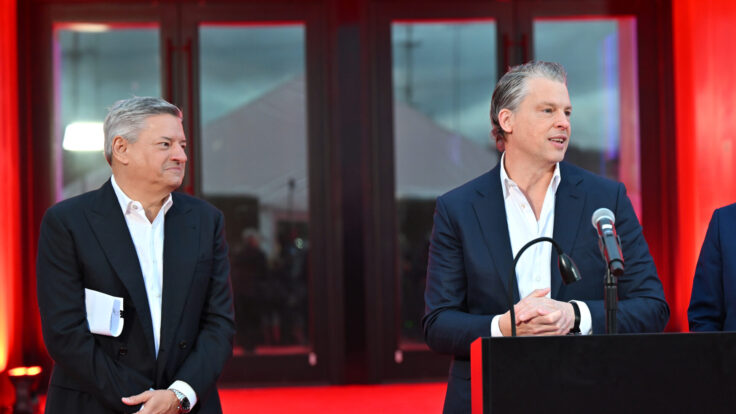
- Top Gun 3 Is Happening (Despite Tom’s W.B. Deal): Warner Bros.’ Mike De Luca and Pam Abdy got a nice press release out of giving Tom Cruise an office on the lot. But beyond making their boss David Zaslav (and CAA) smile, what did Warners actually achieve in the deal? The “strategic partnership” with Cruise is not exclusive, nor is it a first-look deal. He’s tied up on Paramount’s Mission: Impossible 8 for the rest of this year. And it hasn’t been reported yet, but Top Gun: Maverick co-writer Ehren Kruger is now officially at work on a follow-up to the 2022 megahit that will reunite Cruise with co-stars Miles Teller and Glen Powell, as well as producers Jerry Bruckheimer and David Ellison, and Joe Kosinski will either direct or produce. If that script comes together as expected, it could be Cruise’s next movie after M:I 8, or he might first do the Doug Liman space movie at Universal, which is still in active development (though NASA is involved, so who knows about the timing there). Either of those would push any Warners projects with Cruise into late 2025, 2026, or beyond.The question for Warners: Outside of his active franchises, is Tom Cruise still Tom Cruise? Maybe. He’s still got huge international star value, which most studios wouldn’t bet against. But he’s expensive, aging, and he hasn’t made an original movie since 2017’s American Made, which grossed just $134 million worldwide. And before that it was The Mummy and the Jack Reacher sequel, both of which disappointed. Kim Masters reported that the Warners deal comes with a green light on an unidentified thriller or a big-budget action franchise starter. Sure, fine. But at 61, Cruise would probably benefit from pairing a surefire winner in Top Gun 3 with something like what Robert Downey Jr. found in Oppenheimer: a showy character role in a filmmaker-driven pic that reminds everyone the franchise guy is a great actor—and paves the way for the next 15 years of his career. Maybe that’s what De Luca and Abdy have in mind. More likely, the W.B. execs and Cruise just want an Edge of Tomorrow prequel or Risky Business 2.
- Speaking of Paramount…: The Wall Street Journal put a story on its front page today that What I’m Hearing readers knew last month: David Ellison wants to buy Shari Redstone’s National Amusements to gain control of Paramount Global, which he would then merge with his Skydance Media. The Journal fills in that this could be an all-cash deal backed by Larry Ellison and his $130 billion fortune, which would solve a lot of the potential problems inherent in a transaction that would benefit the Redstones a lot more than the shareholders of Paramount, including Warren Buffett. One source close to the situation says there’s now a push at Skydance to get under the hood of Paramount as quickly as possible. After a couple weeks of due diligence, Ellison and Gerry Cardinale’s RedBird Capital team will know whether they are truly interested in making this happen. After all, with key debt payments coming up, and National Amusements being starved of its lifeblood in the dividend from Paramount, the clock is ticking on Redstone. (Skydance’s rep declined to comment).
- Amazon layoff intrigue: Fired without warning via email at 5:30 in the morning? If you didn’t know that Big Tech now runs Hollywood, the brisk and impersonal layoffs this week at Amazon’s studio group are as good a sign as any. Nearly two years after closing its $8.5 billion deal for MGM, and promising that the Amazon and MGM film units would remain distinct, that’s… not happening. It’s hard not to see the power dynamic at play in this latest of many, many reorgs at what is now Amazon MGM Studios. Mike Hopkins, overseer of Prime Video and the studio group, essentially wrested control of MGM TV from Jen Salke and her deputy Vernon Sanders. That unit, home to the MGM shows you’ve heard of, Wednesday (on Netflix), The Handmaid’s Tale (Hulu) and Fargo (FX on Hulu), will now report to Chris Brearton, a lawyer and decidedly non-creative deal guy who is aligned far more with Hopkins than with Salke and her creative folks. Let’s see how it plays out…
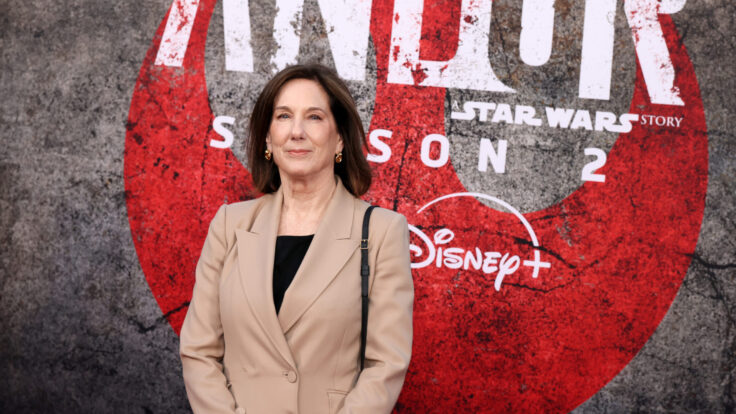
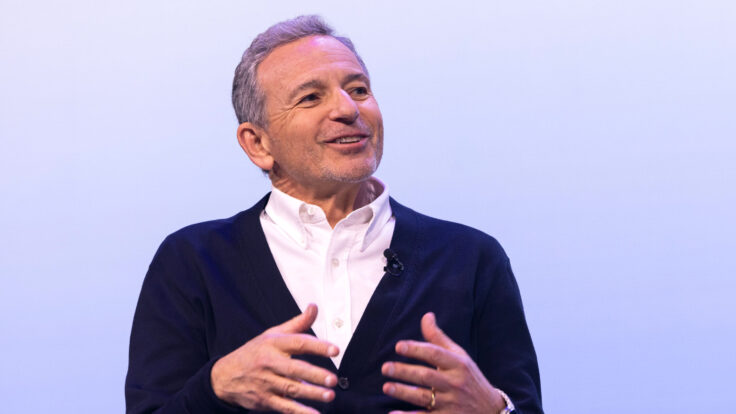
- Episode X: A New Hope for Kathy Kennedy and Lucasfilm: After all that Star Wars film development, a years-long process that included the Rian Johnson “trilogy” that never happened; the Game of Thrones guys doing whatever they were doing; the Rogue Squadron teaser video with Patty Jenkins in a pilot’s suit and rollerblades; the Kevin Feige flirtation; the hiring and then firing of Damon Lindelof on the Daisy Ridley project with director Sharmeen Obaid-Chinoy (which will likely still happen, as might movies from James Mangold and Dave Filoni)… after all that, Kennedy announced The Mandalorian & Grogu will be the first Stars Wars movie since J.J. Abrams buried the franchise with The Rise of Skywalker in 2019. Baby Yoda + Jon Favreau directing + Filoni producing is Kennedy and Bob Iger choosing the safest and most obvious direction to go: fan-favorite characters with huge merch value; bankable director; a roadmap for future movies beyond the Skywalker mythology. Sad and creatively uninteresting, but fiscally alluring and, in this environment, not surprising at all.
- A heartwarming strike story: Congrats to Taylor Santiago Berger, the young TV writer whose strike placard, “ChatGPT does not have childhood trauma,” went semi-viral this summer, including winning What I’m Hearing’s coveted Best Strike Sign award. I’m told she was recently staffed on the Peacock comedy series Twisted Metal.
- Box office over/under: Paramount’s Mean Girls musical that’s not being advertised as a musical is shooting for $30 million over the four-day M.L.K. weekend. I’ll take the over, judging by the super-strong awareness and interest numbers among women both over and under 25.
- Side note on release strategies: How smart would it have been if Focus Features had chosen a holiday platform release for The Holdovers, one that could have lured the adult crowd over Christmas—when even a no-stars slog like Clooney’s The Boys in the Boat grossed a surprise $35 million—and now capitalized on Paul Giamatti and Da’Vine Joy Randolph’s Globes wins (and those viral pics of him celebrating at the Westwood In-N-Out). Instead, Focus dropped the Alexander Payne pic in October, before the awards buzz heated up, and it grossed just $18.5 million domestic, likely leaving money on the table. (It’s now on Peacock.) Similarly, Jason Statham’s John Wick ripoff The Beekeeper is tracking in the high teens this weekend for MGM/Amazon, a decent opening, which makes it even stranger that the streamer/studio is keeping its similarly ass-kicking Roadhouse remake, starring Jake Gyllenhaal and directed by Doug Liman, as a streaming-only title in March. Money likely left on the table there, too.
|
| Now for a special treat… |
 |
| The Workers of Hollywood See A.I. Fights Ahead |
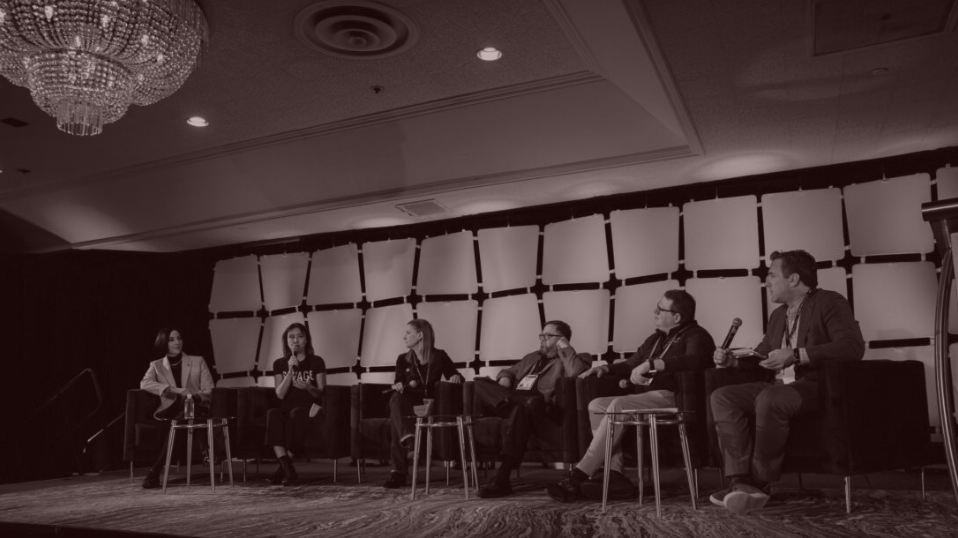
| For the first time since the strikes of 2023, the leaders of five major entertainment unions come together to debate the artificial intelligence threat, what they gained (and didn’t) by shutting down the industry, and the roadmap for negotiations in ’24: “Nothing is off the table.” |
|
|
|
I think most people in Hollywood are hoping to put the crippling labor unrest of 2023 completely behind them. Like Chris Evans with Ghosted or HBO with The Idol, we’ll all just pretend it never happened, and these next couple years will be free from work stoppages. I even predicted as much last week. But I’m now questioning that forecast after a panel I moderated on Tuesday at the Labor and Technology Summit at C.E.S. in Las Vegas with the leaders of the five most aggressive industry unions—including IATSE, the below-the-line crew union, whose current deal is up July 31; and the Teamsters, which represents everyone from on-set drivers to casting directors, and has several deals expiring this year.I know that’s the drill—it would’ve been weird if they hadn’ threatened to strike—but the same artificial intelligence issues that prolonged the WGA and SAG-AFTRA impasses haven’t gone away. Arguably, they’ve become thornier as the studios and streamers learn more about the technology and its ability to cut costs in a business where everyone is looking to cut costs. So what these union leaders say and do this year is as important to Hollywood as any studio mogul or movie star.
It was a really interesting discussion, so today I want to provide it to What I’m Hearing readers…
The participants:
- Duncan Crabtree-Ireland, the SAG-AFTRA national executive director and lead negotiator
- Lisa Takeuchi Cullen, WGA East president
- Lindsay Dougherty, Teamsters Motion Picture Division director and Western Region vice president
- Matthew Loeb, IATSE international president
- Meredith Stiehm, WGA West president
|
| Here’s the conversation, which I edited down for length and clarity… |
| A MESSAGE FROM OUR SPONSOR |
 |
| FOR YOUR CONSIDERATION
BEST ANIMATED FEATURE
2 CRITICS CHOICE AWARDS NOMINATIONS
BEST ANIMATED FEATURE
BEST ORIGINAL SONG
“This Wish”
Performed by Ariana DeBose
Music by Julia Michaels & Benjamin Rice
“Disney adds modern sparkle to a classic.” INDIEWIRE
“Ariana DeBose is a powerhouse.” USA TODAY “Enchanting.” THE WRAP
“A tune-filled, big-hearted storybook fantasy.” USA TODAY
100 Years of Disney Magic: Ariana DeBose, Director Chris Buck, Producer Jennifer Lee & the Filmmaking Team Discuss the Making of WISH
WATCH NOW
|
|
|
| Matt Belloni: Duncan and Meredith, why do you think A.I. was the last issue resolved in both the writers and actors strikes?Duncan: Because it was the hardest issue. These companies really didn't want to agree to anything, for two reasons. One, they don't actually know what they want to do. And two, they are super scared of what other tech companies who aren't part of the entertainment community, or part of these collective bargaining agreements, might do to compete with them.
Meredith: That was the reason A.I. was last on the table for us, too. And why they didn't even respond to our proposal for five months. We went on strike without them ever having acknowledged our proposal on A.I. So that signaled to us they really wanted to use A.I.
In these negotiations, did you say, “Listen, why aren't we both suing these companies? Why aren't we together working to stop these non-signatories from benefiting from our work?” Duncan is smiling.
Duncan: I mean, really, we are. That’s why we have the No Fakes Act, which is a piece of legislation that’s pending in Congress right now to grant federal rights for image, likeness, voice performance for individuals that don’t exist now. It’s not a lawsuit, because—not in the case of actors, generally—there’s not a copyright interest. But we’re 100 percent supporting those litigation efforts. And we strongly believe that training of A.I. systems should only be done with appropriate authorization from copyright holders—and also from, in the case of performers, anyone whose image, voice, likeness, or performance is being used.
Meredith: The night before we finally made a deal, I think it was Sept. 27, it was the last issue, and it was getting kind of contentious. At this point, it was just the leadership and the C.E.O.s. This one issue was sitting there, and it became clear none of us really understood what could happen. It also became clear that they were divided. The legacy companies were much less interested in using A.I. than Amazon or Apple. But the thing that brought us back from the brink was that we had this shared interest. Writers don’t have copyrights on screenplays or on television scripts. The studios own the copyright. So, actually, it’s their material that’s getting scraped and stolen for these language models. There wasn’t a direct conversation, like, “Hey, do you want to go in on a lawsuit together?” But we understood that we weren’t completely unaligned.
Matthew and Lindsay, all eyes are on you two now. And I want to hear from you about how you believe the deals that were struck in 2023 are impacting the IATSE and Teamsters negotiations in 2024.
Matthew: The studios are on notice that this is a crucial issue for us, and we’re going to fight very hard. [It takes] 13 unions in Hollywood to make a picture. Painters and carpenters and set dressers and editors and camera people and sound people and technical crafts. We’re going to look closely at the deals that were already made, but we have a pretty uphill climb as far as making sure that our folks are safe, secure and protected. I did go walk the [C.E.S.] floor this morning, and you hear them all say, “This is something that it takes 10 people to do now, but one person could do it after A.I.” So we’re almost an afterthought. We have never been able to get in the way of technology. That’s not how we view this fight. We have bargained for it over the years and gotten jurisdiction for most of the changes in technology. But this is happening already. They’re doing it without us, and they will find a way to try to go around us. So getting ahead of it, these fights that the guilds had last year paved the way for us. The studios are on notice.
Given the pain of the six-month shutdown, a lot of people say the industry can’t withstand another strike. What do you think when you hear that?
Lindsay: The companies can’t withstand another strike, let’s be clear on that. Especially Paramount. But we can bet on one thing, that the companies have not learned from their mistakes that they made with the Writers Guild and with SAG-AFTRA. We as Teamsters have been battling our members being replaced with technology throughout the years. The truck itself used to be a wagon, and our general president in the early 1900s saw that the motorized combustion engine was going to be invented, and we captured that work. Right now, it’s autonomous vehicles. And any time you say A.I, or anything like that, the studios… they don’t want to talk about it.
Just to be clear, you are prepared to strike if you can’t get the deal you want?
Matthew: Nothing’s off the table. We’re not gonna give up our strength and our ability [to strike] because everybody’s bank account got zapped because [the studios] were unreasonable for months and months. My folks aren’t gonna just settle. Folks are fed up. I don’t know what to call it—if it’s a post-Covid wake of dissatisfaction—but people are ready to fight. And the studios would be ill-advised to assume that they’ve weakened us to the point where we can’t.
Duncan: We will be there standing side by side with IATSE and with the Teamsters. The labor community in Hollywood is united like it has never been, at least in the 23 years I’ve worked at SAG-AFTRA.
Meredith: The support of the other unions up here was a game-changer for the writers. We are gonna be right there for them when they need us.
So if there is an IATSE or Teamsters strike, that means pencils up for writers? Your contract says you’re not able to do that.
Meredith: We know that we’re not allowed to do that. We tried to get that in our contract, and in the end, [we didn’t].
Lindsay: It’s okay, though. They can keep writing. Cause that shit’s gonna be shut down anyways if IATSE and Teamsters aren’t showing up to work.
Meredith: We wanted the right to have what the Teamsters have, the right to not cross picket lines. And before we took that off the table, we did ask Lindsay if that was okay, because we wanted her support. But an individual [writer] can decide to put pencils down if they want.
Duncan: We have a no-strike clause. I’m pretty sure IATSE has a no-strike clause, too. And during the writers strike, the industry was completely shut down. So the solidarity really has an impact.
Matthew: Without a camera, it’s radio. |
|
|
| When you were negotiating the A.I. language, how much did you fear what you were doing would quickly be obsolete?Duncan: Informed consent [for use of actor images] and fair compensation are concepts and principles that will always be needed. Yes, you may have to evolve the language. Just this morning, SAG-AFTRA announced a deal with Replica Studios, which is an A.I. company that’s creating digital voice replicas for use in the video game industry. That agreement is evolved from the language that we just negotiated in the TV/theatrical agreement with the major studios. Our goal, of course, is to continue evolving this language, setting new standards with employers, proving to the industry that real major employers who are on the cutting edge of this business can make ethical, fair, responsible agreements with talent. And that, frankly, talent is only going to work with companies who do that.
Meredith: We’re laying groundwork for our next negotiation, which at this point is only two years away. There are things we didn’t get that we’re gonna want to re-approach.
What will be your first priority with respect to A.I. in the next negotiation?
Duncan: Over the next two and half years, we’re gonna get a lot more clarity in terms of the intellectual property rights in material that’s been scraped, and that will be scraped, for generative A.I. systems. So depending on how that plays out, I have a feeling that addressing the training of G.A.I. systems will be an important topic. We’ve seen a lot of digital replication using other types of A.I. technology, but the real impact of generative A.I. in terms of performers is yet to be seen.
What’s the state of play right now on your legislative pushes? Given the increase in support nationwide for the labor movement, you would think that the legislative efforts would be more effective than in the past, but I don’t know if that’s the case.
Lindsay: You can certainly tell a lot about a politician [by] how they feel about labor, when they veto a bill—like [California Governor] Gavin Newsom did for the Teamsters [on requiring human drivers in semi trucks].
Has there been a recent legislative victory that you can cite?
Lindsay: No, because California was gonna be the one.
Newsom also vetoed the right to receive unemployment benefits during a strike.
Lindsay: Newsom should consider this [his] last term, and he’s done.
Well, unless he runs for president.
Lindsay: The Teamsters, we’re not gonna support him.
Duncan: If you look at the federal level, there was the White House executive order on artificial intelligence—that was really important. It, for the first time, really acknowledged the role of the Department of Labor in helping to lead the federal government’s response to A.I. And then there was the series of panels in the Senate, sponsored by Majority Leader Schumer. I know Meredith participated in one, I participated in one. There was actually consensus among all sides—the A.I. companies, the entertainment industry companies, and labor—about the need for this federal bill, the No Fakes Act, which provides image, likeness, voice performance protection. And then at the very last second, the [Motion Picture Association] tried to slide in this idea, “But actually, there should be an exception for internal use.” You know, for training. Because what this is gonna do is help control the use of image and likeness and voice and performance, and A.I. training as well, because of the nature of the legislation. It was just so telling that the industry companies will support this idea as a general rule, but they want an exception for their own internal use.
Lisa: There is a bill to amend the New York state film and TV tax credit to disqualify you from receiving those credits if you use A.I. in production to replace human jobs.
Where is that now?
Lisa: It is being debated.
I’ve heard this from many people: That the first fully A.I. narrative feature that catches on with consumers will likely come from a non-signatory company outside traditional entertainment. How do you deal with that?
Matthew: Well, you have to organize. Organizing has traditionally been the antidote to all of our issues. We have to protect the jobs of the people who have made careers that are in them now, but they may not be the same people in 25 years who are doing that work, and that will require organizing.
Lisa: A.I. is a great unifier. That’s what we found in our strikes. Not a lot of people understand A.I., but everybody fears it. Some people are excited about it, but everybody fears for their jobs. A.I. itself as a topic will continue to unify workers going forward.
Duncan: I have a slightly different take on it, Lisa. I think that A.I. is a natural unifier for people saying no to A.I. But it actually takes a lot of courage for union leaders to recognize that sometimes the perfect is the enemy of the good. And that if you say no to everything, you end up in a situation where you have made a lot of valid points pushing back on things, but you haven’t actually changed the direction that the industry is moving in. That’s something the Writers Guild accomplished, I think SAG-AFTRA accomplished it, and you don’t get to that result—certainly not in collective bargaining, and I don’t think in public policy either—by just saying no to everything. |
|
|
| You can watch the full discussion here. See you Sunday,
Matt
Got a question, comment, complaint, or a copy of the Michael Jackson movie script? Email me at Matt@puck.news or call/text me at 310-804-3198. |
|
|
|
| FOUR STORIES WE’RE TALKING ABOUT |
 |
|
 |
| Ackman’s Holy War |
| Inside Ackman’s viral pressure campaign against Business Insider. |
| DYLAN BYERS |
|
 |
|
 |
|
|
|
|
|
 |
|
|
| Need help? Review our FAQs
page or contact
us for assistance. For brand partnerships, email ads@puck.news. |
| You received this email because you signed up to receive emails from Puck, or as part of your Puck account associated with . To stop receiving this newsletter and/or manage all your email preferences, click here. |
| Puck is published by Heat Media LLC. 227 W 17th St New York, NY 10011. |
|
|
|