Welcome back to What I’m Hearing, officially headed to my secret summer bunker for a few weeks. But I’ll be working, so hopefully you won’t notice. TV Academy member reminder: Emmy voting begins today.
Discussed in this issue: David Zaslav, Ted Sarandos, James Gunn, Larry Ellison, Peter Safran, Gunnar Wiedenfels, Ryan Coogler, Rich Ross, Bill Lawrence, Maggie Gyllenhaal, Charlie Rivkin, Pam Abdy, Greg Peters, Channing Dungey, Taylor Kitsch, Mike De Luca, Rich Greenfield, and… a Krypto Labubu.
Still not a Puck member? Just click here. Got a news tip or an idea for me? Just reply to this email or message me on Signal at 310-804-3198.
Let’s begin…
|
- Why did Warners opt out of the A.I. suit?: I’m told that as recently as this spring, Warner Bros. Discovery lawyers were discussing with Disney and NBCUniversal a landmark lawsuit against generative A.I. company Midjourney. After all, the copyright infringement action over this “bottomless pit of plagiarism,” as yesterday’s suit calls Midjourney, focuses on the use of Disney and Universal franchise characters like the Minions, Star Wars droids, and Mufasa from The Lion King to train A.I. models. Warners’ DC heroes Batman and Superman would seem to fit there, and unlike Paramount (about to be owned by tech billionaire Larry Ellison) and Sony (a Japanese hardware company), Warners doesn’t have obvious conflicts.
Three sources told me that Warners bailed pretty far along in the process (one said the cost of the suit was an issue for the debt-laden company, though another denied that), while a fourth source characterized the inter-studio lawyer talks as only preliminary. Regardless, it means that, at least for now, one of Hollywood’s storied legacy studios will sit on the sidelines of an existential case that could determine whether professionally produced content will survive as a business. Disney, Universal, and WBD all declined to comment.
- A little more: Did you see the MPA’s weak-sauce statement on this case? “Strong copyright protection is the backbone of our industry,” reads the quote attributed to chief lobbyist Charlie Rivkin. “A balanced approach to AI that both protects intellectual property and embraces responsible, human-centered innovation is critical for maintaining America’s global leadership in creative industries.” So… no position on the merits of this case? No agreement with two MPA members that “piracy is piracy” and Midjourney is the “quintessential copyright free-rider”? Hardly the Jack Valenti, over-my-dead-body rhetoric one might have expected from an organization whose key—and some would argue only—purpose is fighting for I.P. rights. It’s hard to read that statement and not see the influence of recent MPA members Netflix and, especially, Amazon, whose larger business interests more closely align with A.I. companies. Remember, the seven members pay the MPA millions each year to lobby for their supposedly shared interests. That statement caused one traditional studio executive to ask me, “What exactly are we paying for?”
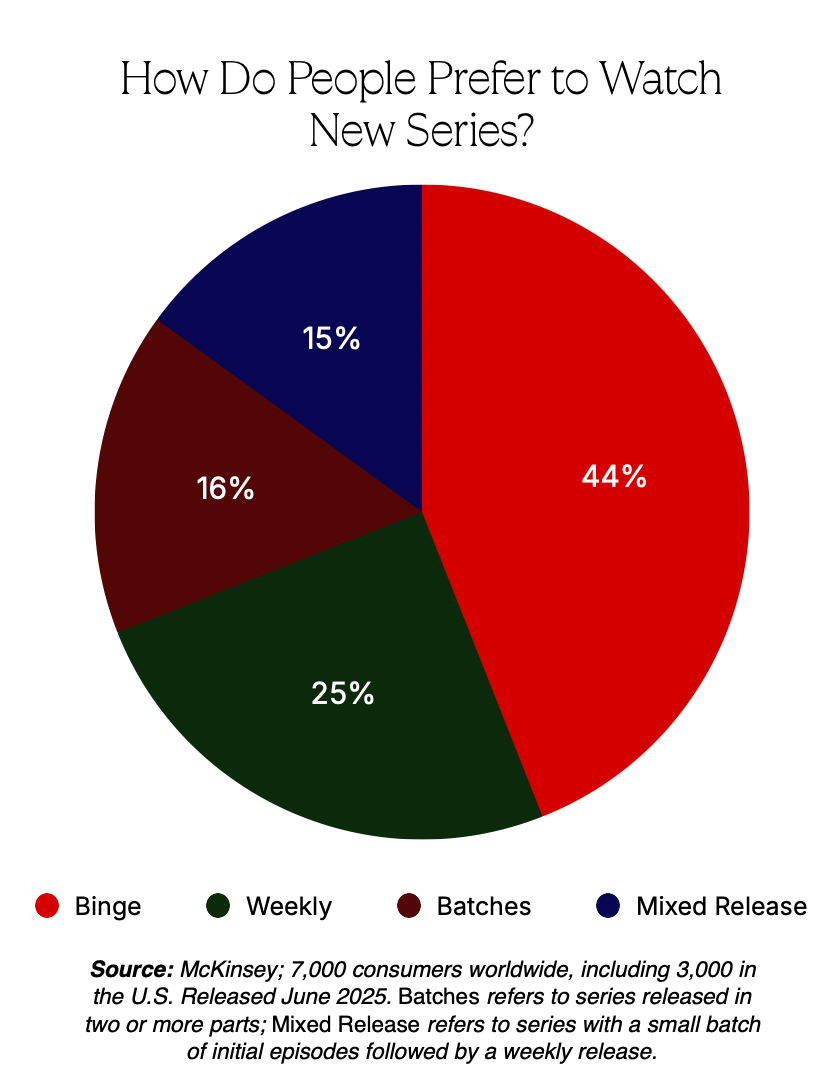
- Less than half of viewers want to binge: Netflix C.E.O.s Greg Peters and Ted Sarandos love to talk about how consumer-friendly their service is, with binge viewing usually a centerpiece. But McKinsey is out with a new survey showing only 44 percent of respondents prefer the all-at-once model. Lots of love for the hybrid models of either multi-episode drops or a few initial episodes followed by weekly…
|
- Box office over/under: Universal’s How to Train Your Dragon run-it-back is tracking to between $70 million and $75 million, so let’s set the line at $72 million, and I’ll take the over due to strong presales and some Lilo & Stitch spillover.
|
|
Okay, now on to more of the Warner Discovery circus…
|
|
|
|
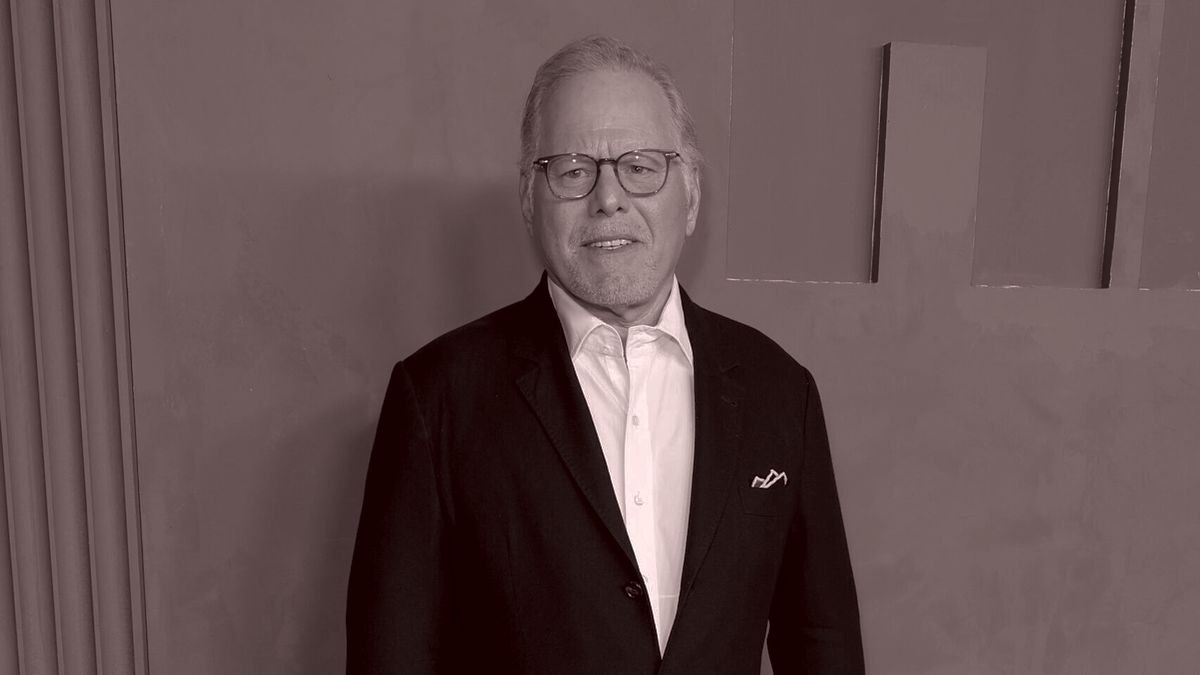
Superman (or any single movie) won’t move a media company’s stock price like its overall television business does. But now that David Zaslav is spinning off his linear assets, there’s about to be a lot more pressure on the film studio to perform.
|
|
|
|
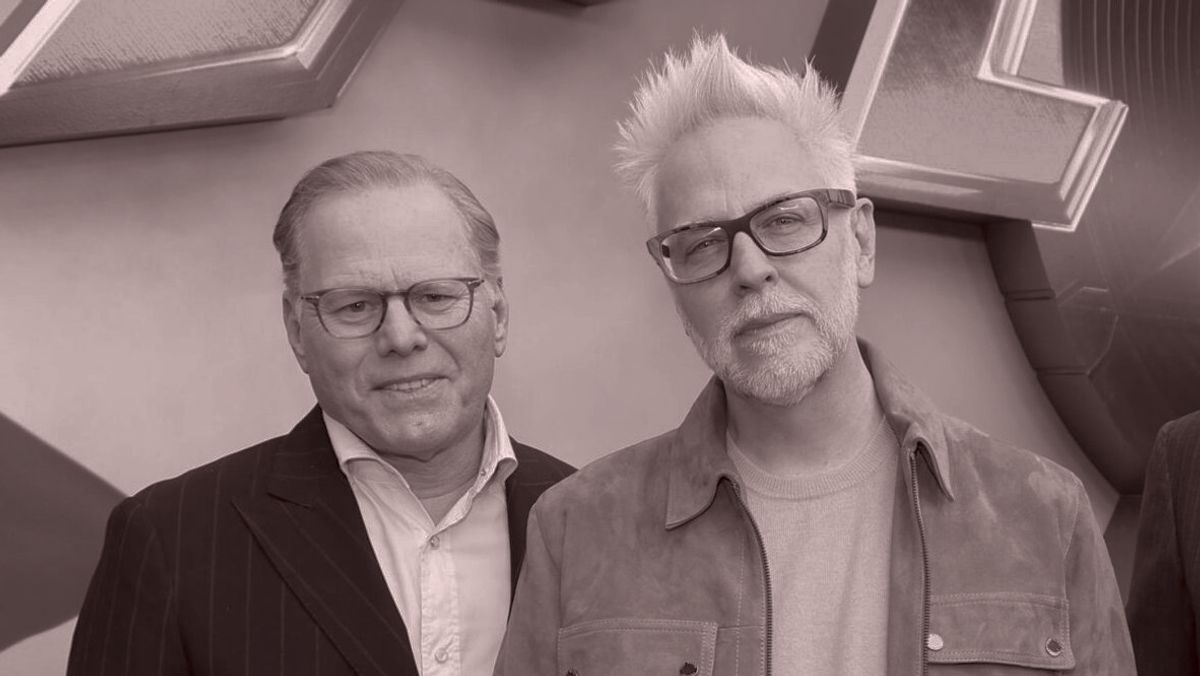
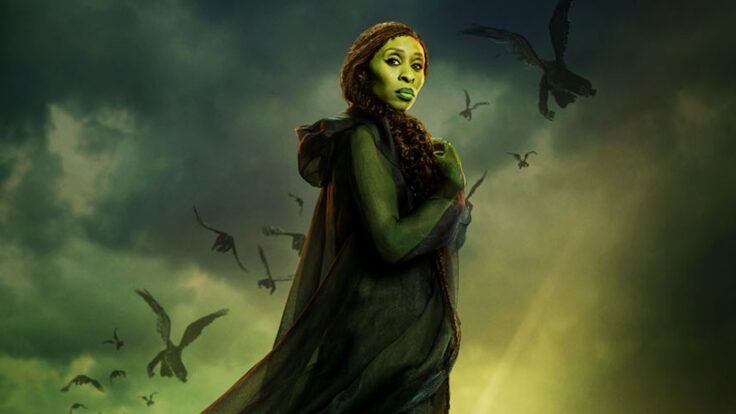
James Gunn locked his final cut of the long-awaited Superman last week, and Warner Bros. has started showing the $225 million reboot to talent and their reps during the past few days. It’s a huge movie for Warners and DC Studios, of course, with a commensurately sized marketing blitz and global press tour ahead of the July 11 release. (Look for Gunn and DC co-head Peter Safran in Beijing, trying to convince the Chinese to embrace the great defender of the American way.) The future of Warners’ DC universe—and the many sequels and spinoffs and Krypto the Superdog Labubus that C.E.O. David Zaslav would like to sell—depends on it.
But, if we’re being honest, even a movie as big as Superman isn’t that big a deal, at least not to the overall health of its current parent company, Warner Bros. Discovery. Unless the movie completely tanks, which is unlikely, Superman hitting or missing probably won’t have much impact on the company’s stock price. The open secret in Hollywood over the past 30 years is that no one movie, or even a string of them, really moves the overall needle. Hits help, obviously, and a pileup of flops can ding the bottom line and turn off investors. But while the high-profile film releases may get a ton of attention, it’s television and the recurring revenue model that actually powers the business.
|
|
|
|
A MESSAGE FROM OUR SPONSOR
|
|
Sponsors include Max, presenting the HBO Original The Penguin, starring Academy Award nominee Colin Farrell as Oz Cobb, A-K-A The Penguin. This eight-episode limited series continues the epic crime saga that began with the global blockbuster The Batman. Don’t miss the show everyone is talking about. Don't miss the series Variety is calling "MEZMERIZING & MASTERFUL". Eligible for Outstanding Limited Series and all other categories. The Penguin is now streaming on Max.
|
|
|
|
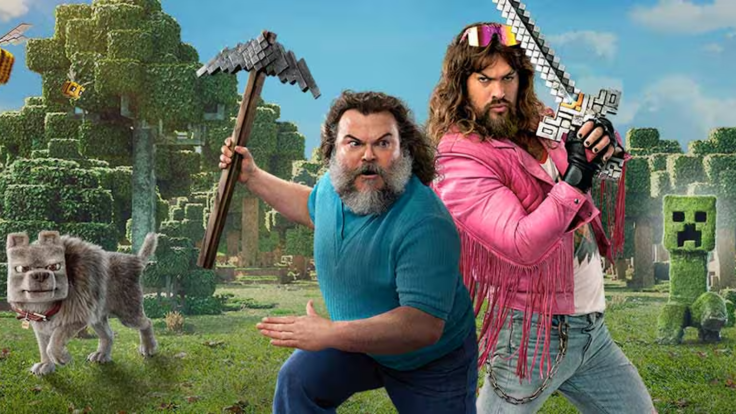
The Warner Discovery numbers bear this out. Last year, about $8.1 billion in adjusted EBITDA came from its TV channels business, Networks, while only about $1.7 billion came from Studios and $677 million from streaming (Direct to Consumer). When A Minecraft Movie opened huge in early April, the share price didn’t move. Same when Mickey 17 bombed. But when WBD’s March earnings revealed deeper-than-expected declines in revenue from TNT, CNN, and the rest of its cable networks, the stock dropped 5 percent. Investors are much more concerned with the ongoing melting of the linear ice cube than even a billion-dollar behemoth like Barbie.
It’s not just Warners. I remember, back in 2012, when Disney announced a $200 million write-down on the Taylor Kitsch sci-fi opus John Carter, which ended up costing more than $300 million and grossed just $284 million globally. Even that sort of embarrassing flop, which led to the exit of studio chairman Rich Ross and a complete pivot away from original tentpoles, barely dented the Disney share price. The stock was—and, to a lesser but still important extent, remains—powered by ESPN and its Media Networks unit, along with the theme parks.
But… what if a modern Hollywood conglomerate didn’t have a television business? What kind of pressure and prioritization would that put on the company? And would it ultimately change the movies, TV shows, and games that the company produced and distributed? Thanks to the split of Warner Bros. Discovery, announced this week, we’re about to find out.
|
As I noted on Monday, WBD will be cleaved into a Global Networks unit, run by current Chief Cost Cutter Gunnar Wiedenfels, which houses the cable networks and U.S. sports rights—the declining assets that still generate most of the company’s earnings. Zaslav is holding on to Studios & Streaming, which is Warner Bros. (film, TV, games, and, most important to him, Jack Warner’s desk), plus the streamer soon-to-be-once-again-called HBO Max, which comes with 122 million subscribers and the HBO linear revenue.
It’s similar to what NBCUniversal is doing, except that NBC and Bravo—and their revenue streams and synergies—are staying with the studio, which will be supported by Comcast’s other businesses, like broadband and theme parks. Zaslav doesn’t have those businesses, so he is foisting most of the debt that ultimately sank WBD onto Gunnar and the spinoff, which will hold a 20 percent stake in Studios & Streaming to help fund its operations.
The goal is to free the “growth” businesses in content production and digital distribution from the no-growth drags on the stock, so the “likely upside to Studio and Streaming can offset pressure at Networks,” as MoffettNathanson told its clients. That’s a fancy way of saying that Zaslav needs Warners and HBO Max to deliver more revenue in order for S&S to be self-sustaining and even grow, which puts even more pressure on the assets that used to be subsidized by the TV networks. “While WBD is shedding two-thirds of its earnings from businesses in secular decline (sorry, Gunnar), this leaves a much smaller earnings base for Studios & Streaming,” LightShed analyst Rich Greenfield emailed me today. “As a result, the financial impact of movie successes and failures will be far more pronounced and visible to investors than in the past.”
|
|
|
|
A MESSAGE FROM OUR SPONSOR
|
|
Sponsors include Max, presenting the HBO Original The Pitt. The series starring Noah Wyle, follows emergency department staff as they attempt to overcome the hardships of a single 15-hour work shift at the fictional Pittsburgh Trauma Medical Hospital all while having to navigate staff shortages, underfunding and insufficient resources. Don’t miss the series NPR is calling “EXCEPTIONAL... THE BEST NEW SHOW”. Eligible for Outstanding Limited Series and all other categories. The Pitt is now streaming on Max.
|
|
|
|
Exactly. Every Warner Bros. TV show, game title, and especially tentpole movie release just became more important. If Superman were coming out next summer, after the split closes, its performance would impact Zaslav’s bottom line a lot more than it will today. If Apple TV+ suddenly decides to stop buying Bill Lawrence shows or more Presumed Innocent from Warner Bros. Television, its leader, Channing Dungey, would be under more pressure after the split. Last year, a video game called Suicide Squad: Kill the Justice League flopped in epic fashion, torpedoing earnings at the games unit and leading to a $200 million write-down. This made headlines, but it certainly didn’t cause panic in Burbank. Post-split, a write-down of that size likely would.
That’s not to minimize the importance of streaming, the true growth business, which is finally profitable—though barely so, and after much cost-cutting. Zaslav says its adjusted EBITDA will rise to $1.3 billion for the current year as HBO Max launches in more countries. If he can’t turn streaming into a bigger and much more profitable business, the whole S&S side is kinda screwed.
|
|
After years as a supporting player in the WBD show, the Warners studio is now being elevated to a lead, and it’ll be interesting to see how film chiefs Mike De Luca and Pam Abdy respond. Remember, their strategy leans heavily on pricey, auteur-driven movies. Ryan Coogler’s Sinners worked ($358 million and counting on a nearly $100 million budget). But if September’s $145 million-budgeted One Battle After Another performs like every other Paul Thomas Anderson movie, that’s a money loser. Abdy recently slandered my colleague Kim Masters as “sexist” for daring to question the commercial prospects of The Bride, a troubled, $100 million-plus Frankenstein movie directed by Maggie Gyllenhaal. But that’s another big swing that might get a closer look by Zaslav when its performance would more heavily impact the rest of his company.
At Warner Discovery, Zaslav has largely left Mike and Pam to spend what they want in order to return the studio to glory, or whatever platitudes he used. But the Zaz-Mike-Pam relationship is said to remain frayed, in part because Zaz had soured on all the spending at a time when he’s been slashing everywhere else, and he was semi-openly putting out feelers to replace them before Sinners opened big. It’s logical to surmise that there will be tighter purse strings and fewer risky greenlights at a smaller company that is more impacted by the whiffs.
MoffettNathanson noted to clients this week that WBD is guiding only to around breakeven free cashflow for the S&S unit by the time the transaction closes. If the new company is indeed watching its cash even more closely, that’s gotta impact the movie strategy, right? Zaslav’s spending concerns will only grow if every flop resonates in a quarterly report. Ultimately, it will likely impact the type of movies Mike and Pam make, as well as Zaslav’s patience, if their greenlights don’t perform.
|
See you Monday,
Matt
Correction: I misspelled News Corp. C.E.O. Robert Thomson’s name on Monday. Apologies.
Got a question, comment, complaint, or dirty thoughts about Apple’s “haptic” F1 trailer? Email me at Matt@puck.news or call/text me at 310-804-3198.
|
|
|
|
Unique and privileged insight into the private conversations taking place inside boardrooms and corner offices up and down Wall Street, relayed by best-selling author, journalist, and former M&A senior banker William D. Cohan.
|
|
|
|
Puck founding partner Matt Belloni takes you inside the business of Hollywood, using exclusive reporting and insight to explain the backstories on everything from Marvel movies to the streaming wars.
|
|
|
Need help? Review our FAQ page or contact us for assistance. For brand partnerships, email ads@puck.news.
You received this email because you signed up to receive emails from Puck, or as part of your Puck account associated with . To stop receiving this newsletter and/or manage all your email preferences, click here.
|
|
Puck is published by Heat Media LLC. 107 Greenwich St, New York, NY 10006
|
|
|
|