 |
|
Welcome back to What I’m Hearing, and happy October to everyone not planning Barbie/Ken or Taylor/Travis Halloween costumes.
Programming note: This week on The Town: Lucas Shaw and I debated the deal points of the WGA settlement; union leader Adam Conover argued (loudly!) why it’s a victory; and Warren Littlefield looked back on NBC’s Must See TV (and how he used his O.J. Simpson pilot to subtly bully other networks). Subscribe here and here.
Was this email forwarded to you? Click here to become a Puck member.
Discussed in this issue: David Zaslav, Ellen Stutzman, Linda Yaccarino, Ari Emanuel, Gareth Edwards, Zack Stentz, Lina Khan, Ava Duvernay, Ted Sarandos, Elon Musk, Duncan Crabtree-Ireland… and Jim Dolan’s Vegas V.I.P. list.
But first…
|
| Who Won the Week: Ramsey Naito |
|
| The head of Paramount and Nickelodeon’s animation units now has two theatrical hits in a row with Teenage Mutant Ninja Turtles: Mutant Mayhem ($176 million worldwide) and this weekend’s Paw Patrol: The Mighty Movie ($23 million domestic), though both probably would have grossed more if the stars could promote them.
Runner up: Julia Boorstin, the CNBC reporter, whose on-stage interview with Twitter/X C.E.O. Linda Yaccarino—in which a rambling Yaccarino appears to be talking directly to her boss, Elon Musk, rather than any rational observer of the company—immediately enters the Corporate P.R. Disaster Hall of Fame. I’d recommend the whole video, and Peter Kafka has a good recap here.
Now, on to more of the WGA strike aftermath… |
| Post-Strike Reality: The TV Purge Begins |
|
| I know a lot of writers and reps who quietly breathed a sigh of relief when the studios opted to suspend, rather than terminate, their overall deals during the WGA strike. Months of zero pay would hurt, of course, but once the strike settled and the pain was over, the time off—and the studio checks—would just be added on to the end of their deals.
So, yeah, welcome to post-strike Hollywood. For most TV writers under contract, the studios have flushed those assumptions down the toilet. Less than a week after the WGA strike ended, hundreds of reinstated writers have been notified that their deals will not be extended. And when many of those deals expire, they will not be renewed. It’s bad. Texting with agents and lawyers this weekend, the estimates are anywhere between 60 percent to 80 percent of suspended writer deals have been impacted. One major employer, Universal Studio Group, extended none of its suspended writers.
So what’s happening here? A studio cash grab, of course. After all, for many writers on two or three-year deals, their guaranteed pay has just been reduced by a double-digit percentage, and it’s impacting writers at both the high and low end of the hierarchy. (Very few have language in their deals to prevent it.) That’s untold millions of dollars lost by writers. “The asteroid has hit,” the X-Men writer Zack Stentz tweeted today.
Yes, this market correction was coming even without a strike, a product of the macro forces that have put profitability pressure on the studios and streamers. If the Peak TV bubble has burst and, by most estimates, the number of scripted series will drop significantly from the 600 that aired last year, the trickle-down effect will necessarily hit writers at the deal level. Now it’s just coming more quickly because the studios have an excuse—the strike—to take five months off their deals.
They aren’t swearing off big-name writers, of course, they’re just saving money now by refusing to extend, and then deciding—when they need to, and after seeing who’s actually delivering for them—who they will re-up. That’s especially true for writers whose deals expire in 2024 or 2025. The business likely will change a ton over the next six months to two years, so executives want options on how they deal with people that they don’t totally love—which, unless you’re already making a hit show, is probably almost everyone.
This happened after the last strike, but not on this scale. That’s partly because the deals are so much bigger these days. (Your average mid-career writer on a three-year studio overall can make $3 million to $5 million a year these days, compared to $1.5 million back then.) And putting aside the WGA gains from the strike, there’s no denying that the five months off, during a time of major pants-wetting in both the linear TV and streaming businesses, gave everyone a moment to evaluate their own balance sheets. For many companies, that has turned into a quest to commission smaller and fewer talent deals.
That’s not necessarily the strike’s fault. But the WGA gains in minimums may add small but not-negligible cost pressure on the shows, which are already much more expensive to produce than even four or five years ago. Those gains in minimums, coupled with the culling of the overall deals, does seem like a slight redistribution of wealth, benefiting the lower-level writers and, the companies hope, their shareholders, at the expense of higher-level artists. That’s if there are shows for those lower-level writers to work on. By most predictions, there will be fewer.
Perhaps unsurprisingly, during a TIFF dinner I hosted last month in Toronto, one TV writer-turned-filmmaker discussed how his friends in television were asking about transitioning to movies. It seemed like an amusing roundabout, given that was the trajectory for decades—until Peak TV turned every working moviemaker into an aspiring television auteur. For the next couple years, at least, movies might be the new TV. |
|
|
“This current restrictive structure of Prime reflects a deliberate strategy by Amazon to artificially increase barriers to entry and competition. As one former Amazon executive explained in recalling Amazon's motivation for adding non-shipping services to Prime, ‘[a]ny competitor might launch a Prime shipping clone, or they could potentially build a new Netflix- type service, but it was unlikely that any one of them would be able to do both.’”
—From F.T.C. chair Lina Khan’s long-awaited antitrust lawsuit against Amazon. While few expect the F.T.C. to win the case, it’ll be interesting to see how Prime Video, the “Netflix-type service” referenced above, will play into the government’s arguments that Amazon systematically built up walls to keep out competitors.
And the second part of Jonathan’s analysis of the WGA deal… |
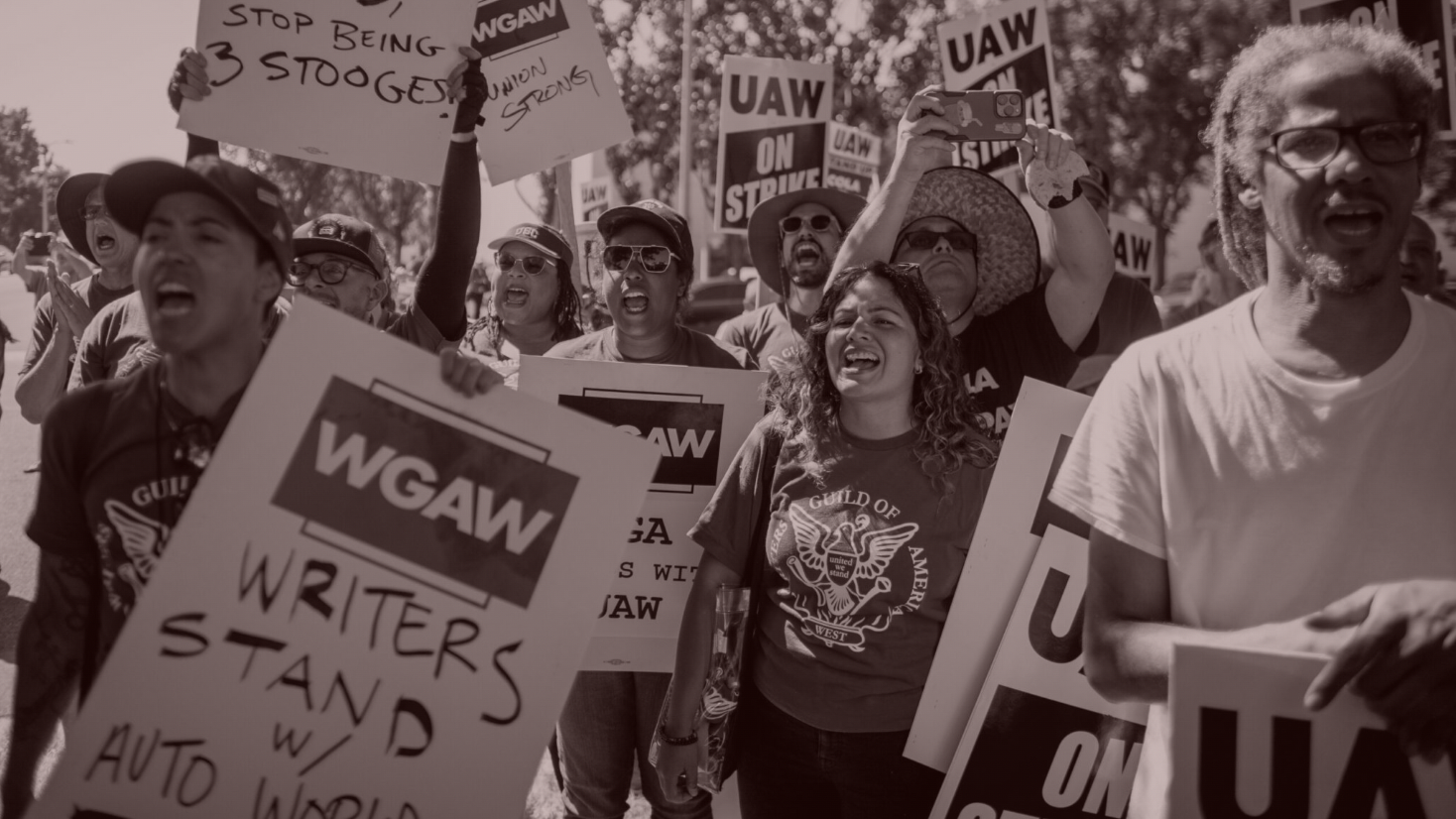 |
| The WGA Deal Ten Commandments, Part II |
| Five more takeaways after five months in hell, including the much-discussed performance bonus in streaming and why the wins in A.I. might be short-lived. |
|
|
|
| It’s been a week since the Writers Guild reached a deal with the studios. On Thursday, after combing through the 94-page contract between the two sides I broke down five of my ten biggest takeaways from the deal—the minimums, the staffing, what it means for the future of late night, the mini rooms, etcetera. Now, I’m back to offer my second handful of observations. Herewith, a close look at the final five gains achieved by the picketers. |
|
|
| 6. Foreign Streaming Residuals: Good, But No Better than DGA
Chalk this one up to the directors. The DGA achieved a significant increase in foreign streaming residuals this year, and the WGA basically said, We’ll have what they’re having. (See, pattern bargaining isn’t always a bad thing.)
Previously, the foreign residual for streaming products was calculated as an additional 35 percent of the domestic residual. But as domestic growth has slowed for the largest platforms, the action has shifted overseas. The new foreign residual reflects that: it scales based on the number of foreign subscribers, just as the domestic residual increases with domestic subs, and in all cases is higher than before. It applies to platforms that include a foreign service, such as Netflix, Disney+, and Amazon Prime Video. A different formula, based on license fees, applies when streaming shows made for platforms like Peacock are licensed to an unaffiliated foreign streaming service.
7. Viewership-Based Streaming Residuals: A Foot in the Door, But Will Actors Agree?
The streamers argued that it was a bridge too far, but in an era of data opacity, the WGA managed to achieve a viewership-based bonus residual for hit originals made for streaming (think of shows like Wednesday, not moved-over series’ like Suits). The bonus residual is straightforward: an additional 50 percent to the domestic and foreign residual. But what, exactly, constitutes a “hit”?
According to the contract, 20 percent of the platform’s domestic subscribers have to watch the series’ entire season (or the entire made-for-streaming movie) in the first 90 days of its release (or any annual anniversary thereof). Alternately, 40 percent of subscribers could each watch half the season or movie, or 60 percent of subs could watch a third, or… you get the idea: the viewership has to equate to 20 percent of viewers watching 100 percent of the season or movie.
While that seems like a high bar, the union was apparently given assurances that a substantial chunk of content makes the cut. But in any case, the residual may be small in aggregate. One source estimates the cost to the studios will be less than $5 million per year—if so, that’s basically a rounding error. But time will tell, and now that the structure is in place, it will likely be improved incrementally in subsequent triennial bargaining, although nothing is guaranteed.
The WGA also achieved access to viewership data, and the right to release “aggregated” data, meaning numbers not attributable to any one show or movie. But they can only access the unaggregated data on a limited, in-confidence basis, given the steamers’ fear of arming talent agents and attorneys with ammunition to seek higher compensation. The companies also fear revealing, at least in some cases, how few people are watching their shows. But those concerns are giving way to pressure from the guilds, and from advertisers, now that streamers have launched hybrid ad- and sub-fee-based tiers.
Hovering above all this is the actors’ guild, which wants a performance-based bonus residual calculated in a completely different fashion. Their proposal: “If the [product] is released to a new media streaming platform, Producer will pay to the cast on a pro rata basis an amount equal to 2 percent of the quarterly ‘Revenue Contribution’ as defined and determined by Parrot Analytics, which will be paid in addition to any other payment due.”
Note the key differences from the WGA approach: the residual is a share of the platform’s revenue; any product released to streaming, whether made-for or moved-over, hit or not, is eligible; and the union wants to use third-party analytics (Parrot was only one example of several possible services). All of these points have been strongly rejected by the studios, yet it’s not clear that SAG-AFTRA will compromise on them, except perhaps on the issue of third-party analytics, which was premised on the companies’ initial refusal to share data. Their negotiations restart tomorrow.
The biggest roadblock for SAG-AFTRA is accessing the platform’s revenue: the union wants to be closer to the source of the money (i.e., consumers), while the companies oppose exactly that. The AMPTP also notes that the producers, not the platforms, are the actual signatories to guild agreements, but of course that’s largely a matter of corporate structure, and mechanisms already exist for holding distributors such as platforms responsible for residuals. Still, this is likely to be a sticky wicket.
8. High Budget AVOD: Catching Up with FAST Streamers
This is yet another DGA accomplishment that the writers managed to achieve as well: establishing minimums and significantly improved residuals for product made for AVOD (ad-supported video on demand), although this applies to any new media product above a certain budget level (hence “high budget”) that is made for a platform for which the consumer does not pay.
That means original content made for FAST (free ad-supported streaming television) platforms like Tubi and Amazon FreeVee are included in the new provisions. That’s critical, given that consumer fatigue with shelling out for multiple paid streaming services is driving significant growth in FAST platforms as they re-create the free TV grid. Note that ad tiers on paid services like Netflix are not considered AVOD, because the consumer does pay for such tiers, albeit at a reduced rate.
9. A.I. Guardrails: Holding Back the Bots (For Now)
A year ago, only one candidate for the WGA West board or WGA East council even mentioned A.I. in their candidate statement, and even then it was just in passing. What a difference a few months makes. The WGA achieved some key protections against generative A.I. bots like ChatGPT, but there are some real gaps in those protections, too.
First: Article 72, which was added to the guild agreement, provides that A.I. is not a writer, and that therefore written material produced by A.I. or generative A.I. is not “literary material,” which is the guild term for covered work such as treatments or scripts. So if A.I. or generative A.I. rewrites a writer’s script, the rewrite doesn’t diminish the writer’s credit, residuals (which depend on credit) or contractual bonuses (such as sole credit bonuses).
It also appears to mean that if a writer is asked to rewrite a script written by A.I., the rewrite is considered an original script, not a rewrite, and the writer must be paid at least the minimum for an original screenplay or teleplay, not the lower minimum for a rewrite. But this isn’t entirely clear, because an example given in the new provision muddies the waters a bit. (See also the second protection below.)
The guild is protecting minimums. If a writer generally received overscale compensation for an original script, the above provision doesn’t stop the studio from offering only the scale minimum for an original script when the writer is asked to rewrite bot content. Moreover, since the studio is not prohibited from using generative A.I., there’s nothing here that prevents the companies from turning writers into rewriters of bot-generated material, sucking the life out of the profession, albeit with payment secured.
Second, if the studio furnishes a writer with written material produced by generative A.I. that has not been previously published or exploited, and instructs the writer to use that material as the basis for writing a script or treatment, the studio must disclose the generative A.I. authorship. The generative A.I. material also will not be considered “assigned material” for purposes of determining (and diminishing) the writer’s compensation; it will not be considered source material for purposes of determining (and diminishing) the writer’s writing credit and subsequent residuals; and it will not be the basis for disqualifying a writer from eligibility for separated rights (which are a host of special economic and other rights). These are significant protections. But it applies only to generative A.I., not A.I. generally, a distinction with potentially significant, if unclear, implications. And it applies only if the material has not been previously published or exploited, which creates a loophole regarding bot material that manages to get published.
Third, writers are allowed, but cannot be required, to use generative A.I., with the studio’s consent and in accordance with studio policies and rules. Such use will not detract from the status of the writer’s output as literary material.
Finally, the parties agreed to disagree on a significant issue, which is whether a writer’s material (past or present) can be used to train generative A.I. systems. The studios may soon be able to train generative A.I. systems on the tens or hundreds of thousands of scripts they own, advancing the software’s capabilities and moving us closer to the day when bots might indeed displace screenwriters, unless an arbitrator or Congress decides otherwise.
10. Everything Else: Small Victories, and a Concession or Two
The WGA achieved numerous smaller gains, but also agreed to a few minor gives. Residual bases for network and cable increased, and the domestic residual for streaming also increased, essentially following a pattern set by the DGA. Pension and health contributions for writing teams went up significantly. Television staff writers must now be paid for the scripts they write, in addition to being paid their weekly fees. Higher weekly minimums are established for writer-producers and story editors. Span protection, which provides extra compensation when TV writers work more than 2.4 weeks on a script, now applies to closed-end series as well as conventional series. High budget SVOD grandfathering, which allowed some series to pay residuals under a lower previous rate, is now eliminated.
And the minor gives? An additional promotional run for network television programs on linear television; a 3 percent increase in the thresholds after which additional foreign residuals are due; and that’s about it. Oh, and nearly five months of the strike, which for many meant no compensation at all and was scarcely a minor matter. |
|
|
| A weird weekend at the box office: Branded horror under-performed, Disney couldn’t launch a sci-fi spectacle, and Sony’s Dumb Money, which should have gone wide against zero competition last weekend, instead faced three studio openers and grossed less than The Blind, an indie biopic about the Duck Dynasty guy. [IndieWire]
As studio talks restart, SAG-AFTRA lead negotiator Duncan Crabtree-Ireland shares his strategy (and the meaning of his forearm tattoos). [NY Times]
Ari Emanuel’s Endeavor is among the possible bidders for golf’s PGA Tour, maybe even partnering with the Saudis. Given Ari’s past rejection of M.B.S. money, that would be some announcement photo. [Bloomberg]
A couple factual errors in this Scott Galloway column shooting down the WGA “wins,” but he’s right that the guilds are fighting tiny battles while the tech companies are winning the war. [No Mercy/No Malice]
Netflix is headed to trial in a defamation case over Ava DuVernay’s When They See Us, which Eriq Gardner thinks is a very big deal. [Puck]
Gareth Edwards tells Kim Masters in the nicest possible way that he wasn’t replaced by Tony Gilroy on Rogue One, thank you very f-ing much. [The Business] |
|
|
| Lots of messages about the WGA deal and Thursday’s analysis pieces, probably more negative than positive, which I’ve reflected below…
“I think most people who truly understand how the biz works are pretty underwhelmed by this deal, to be honest. The floor to qualify for the success-based residual is extremely high and is more in name only. True A.I. legislation was kicked further down the road and labeled as victory because the letters A and I were mentioned together. If the strategy was to get one's foot in the door on a number of key issues so that future generations can pay this off by asking for more, ok… but the result of the strike is way fewer shows and films will be made (due also to prevailing marketing conditions outside of the strike) and almost no writers will see the benefits of these ‘hard fought gains.’ It is pretty insane that the WGA cost us all $5-7 billion for such a nothingburger.” –A producer/executive
“The deal may not be perfect, but after 5 months, the WGA made gains no one thought they’d achieve. Collective bargaining clearly works. The strike worked. As we debrief about the last 5 months, any discussion of the pain suffered by so many in the industry due to the work stoppage is negligent if it ignores that this pain was inflicted by design—the AMPTP’s design—they revealed early on that this was a key part of the negotiating strategy.” –An actor
“Calling it a big win/success, then saying it’s basically the DGA deal with some element of ‘foot in the door’ is a bit false, no? I’m not hating on the WGA. I feel bad for them. They follow leadership like sheep. And ALL the press is congratulating them for selfishly TWICE upending the business—the result being a short-term endorphin rush to be able to say they have solidarity. Yet real financial gains are not present.” –An agent
“You know how Ellen [Stutzman, chief WGA negotiator] can tell this deal is transformational? Executives and agents keep trashing it in anonymous quotes to the media.” –A writer
“Don’t get the paragraph where you say the anger of the length should solely be directed at the AMPTP. The WGA literally will not talk to AMPTP as humans. They held to their Day One counter until this last round of negotiations. Every other guild actually talks to the AMPTP and that’s why their negotiations don’t take that long. SAG will be expedited because of back channeling convos that have been taking place. Everything they ‘achieved’ in this deal they seriously could have gotten without going on strike if they actually SPOKE to the AMPTP. The leadership has deluded their members into thinking the 5 month strike was worth it. And everyone is ok with that as long as they ratify.” –An executive
“WGA leadership don’t behave like business people and haven’t since they fired their agents and shifted the financial burden of package fees to their constituents. Had the tenor of their rhetoric through the trades, on social media, etc not been so vitriolic, this deal could have been done without a strike.” –A manager
“In your Sunday newsletter, you named three writers who were outspoken on Twitter. You passed judgment on the heft of their credits and then questioned their ability to get work after the strike. Why would you do this? It had echoes of the blacklist days of the late 1940s and early ’50s when actors, writers, and other Hollywood creatives were individually outed by reporters for their refusal to cooperate with HUAC. It felt like one of the uglier moments of the strike, honestly and it made me deeply uncomfortable.” –Another writer
“If this was the strike to dream big and go scorched earth with what the writers need and wanted, I think [there was a] missed opportunity not to explore the disappearance of net profits and ask for full transparency from studios when auditing the profitability of movies. This is real money that is left on the table and borderline fraud executed in broad daylight by the studios.” –Another manager |
|
|
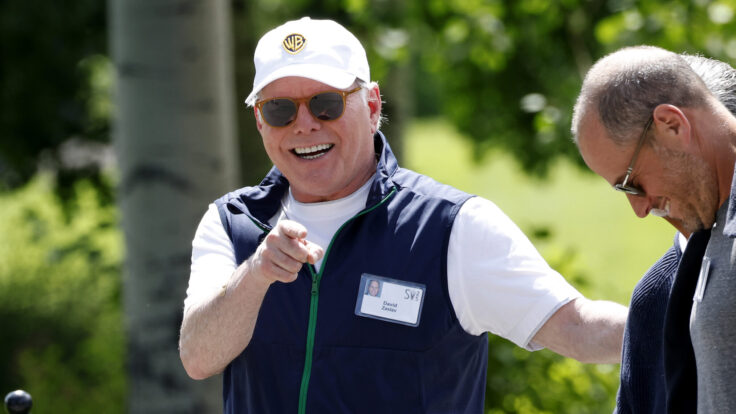
| A tipster spotted David Zaslav roaming the Bellagio casino in a CNN baseball cap on Saturday, which can only mean the C.E.O. class deemed the opening of Jim Dolan’s $2.3 billion Sphere venue worthy of a Vegas trip. In attendance with all the celebs to see U2, per sources: Netflix’s Ted Sarandos, Endeavor’s Patrick Whitesell, Apple’s Eddy Cue and Jamie Erlicht, Jeff Bezos, UTA’s Jeremy Zimmer and Rich Paul, Sheryl Sandberg, lawyer Allen Grubman (I saw Allen lunching with David Geffen last week at the Grill, probably a west coast swing), Robert Kraft, Fox Sports’ Eric Shanks, Live Nation’s Michael Rapino, Oprah (with Gayle!), Verizon C.E.O. Hans Vestberg, Redbird’s Gerry Cardinale, Apollo’s David Sambur, investment guru Paul Wachter, and Michael Kives (of course). |
|
|
Have a great week,
Matt
Got a question, comment, complaint, or a good Halloween costume suggestion for me? Email me at Matt@puck.news or call/text me at 310-804-3198. |
|
|
|
| FOUR STORIES WE’RE TALKING ABOUT |
|
|
|
|
|
 |
|
|
|
Need help? Review our FAQs
page or contact
us for assistance. For brand partnerships, email ads@puck.news.
|
|
You received this email because you signed up to receive emails from Puck, or as part of your Puck account associated with . To stop receiving this newsletter and/or manage all your email preferences, click here.
|
|
Puck is published by Heat Media LLC. 227 W 17th St New York, NY 10011.
|
|
|
|