 |
 |
|
Welcome back to What I’m Hearing, coming at you from L.A. before my summer relocation. Happy Father’s Day weekend to all the dads, mine included. And a reminder to TV Academy members that Emmy voting begins today. If you don’t vote, you can’t complain when everyone on The Morning Show gets nominated again.
And of course, if you were forwarded this email or are new to the WIH community, click here to become a Puck member.
Let’s begin…
|
|
|
- Sony will always have the Alamo: It typically takes a film executive about three seconds into a business conversation to start bitching about exhibition. Sticky floors, terrible service, corners cut everywhere. A full 30 minutes of ads, including an ad in-between the f-ing trailers, played before my screening of Kingdom of the Planet of the Apes at a Regal last weekend. So Sony’s move this week to buy Alamo Drafthouse and its 35 premium dine-in locations can only be a good sign for the future of cinemas, particularly if this deal gets other studios interested. (It’s also 100 percent on brand for Sony, which doesn’t own a streamer, and whose film chief, Tom Rothman, famously screamed, “Netflix, my ass!” at CinemaCon.)
In the four years since the government officially lifted the Paramount Decrees limiting Hollywood ownership of both distribution and exhibition, we’ve been waiting for a public declaration from a major studio that theaters—or at least a certain type of premium theater chain—is a business with a future. Will Sony leverage its assets to favor its own movies? I doubt it. Last weekend, AMC’s market share in the U.S. and Canada was about 25 percent; Alamo’s was 1.3 percent. So no, Sony still doesn’t want to piss off the big chains by, say, giving Alamo its movies first. In-theater promotions? Sure. I’m also betting Alamo will stop allowing ultra-short windows for indies—and since Sony pushed AMC to ban Netflix movies with tiny windows like the recent Hit Man, I’d suspect Alamo will soon do the same.
- Will Smith Watch ’24: Who’ll be the first to jump back into business with the Slap-tarnished Will Smith post-Bad Boys 4 success? Early contenders are Jonah Nolan and Lisa Joy, the Westworld and Fallout creators, who are in talks with Smith to topline a television project for their Kilter Films unit. Smith actually came to them with an idea for a series set in the world of A.I. It’s either limited or he would do Season 1 and hand it off. The Nolans had several meetings with Smith before Bad Boys opened to $107 million worldwide, so it’ll be interesting to see if he stays interested in TV when he and his Westbrook production company are offered more films.
- Jennifer Lopez reader service: Just because the Jam Session podcast publicly asked me to find out what J.Lo made for her acclaimed Netflix film Atlas: It was $16.5 million all-in (she produced too), per two good sources. That’s about what I expected.
- Box office over/under: The $85 million line on Inside Out 2 was raised to $90 million today, thanks to good reviews and strong presales. I’ll still take the over. I think this one could become the year’s first $100 million domestic opener.
|
|
|
| Show of hands: Who is more confident in the future of Paramount Global today than they were before the sale to Skydance Media fell apart on Tuesday? No, no, sit down George Cheeks, Chris McCarthy, and Brian Robbins—the newly elevated C.E.O.s are not allowed to vote. Everyone else? That’s what I thought…
Another $500 million in cuts and layoffs in the works? Yikes. An asset fire sale, with the added challenge of all the potential buyers being very aware of the desperation of the seller? Double yikes. Roger Goodell—I get it, you’re nervous that CBS won’t be able to make its $2 billion annual NFL rights fee payment, per my colleague John Ourand. From almost every angle, the prospects for one of Hollywood’s original studios and one of the great legacy media companies almost certainly grew darker this week. |
|
A MESSAGE FROM OUR SPONSOR
|
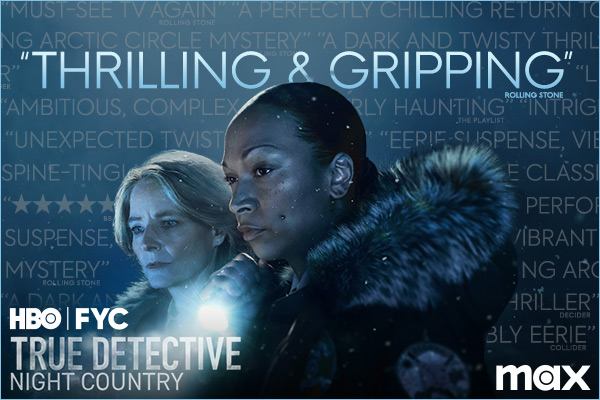 |
| For your awards consideration Max presents: The HBO Original Series True Detective: Night Country - When the long winter night falls in Ennis, Alaska, the eight men who operate the Tsalal Arctic Research Station vanish without a trace. To solve the case, Detectives Liz Danvers (Jodie Foster) and Evangeline Navarro (Kali Reis) will have to confront the darkness they carry in themselves and dig into the haunted truths that lie buried under the eternal ice. Don’t miss the series Rolling Stone calls “THRILLING & GRIPPING.” Eligible for Outstanding Limited Series and all other categories. |
|
|
| That’s not because David Ellison and his private equity backers were some white knight buyers. Ellison’s status as Son of a Very Rich Guy, and his mild success with Skydance, certainly didn’t guarantee he could steer what is essentially a dying television company into the digital future. The media coverage this week—yes, it seems like every outlet except maybe Garden & Gun has done the How The Deal Fell Apart story—clarified that the Skydance offer became progressively worse for Shari Redstone and her National Amusements as Ellison sought to head off litigation from the non-Redstone shareholders. (I recommend my partner Bill Cohan’s excellent breakdown of the breakdown, which really gets into the financials of the scuttled deal and how the negotiations went south.)
Ellison and RedBird Capital’s Gerry Cardinale also made what I’ll call a tactical error in not demanding that Charles Phillips, who was fired from Oracle by David’s dad Larry, recuse himself from the Paramount board’s special committee evaluating the deal. Phillips, whether or not he is eyeing the C.E.O. job for himself, is said to have been trash-talking the Ellisons from the beginning, and he had Shari’s ear during the process—especially at the end, when he was helping plan for the non-Skydance future. Phillips also helped do in C.E.O. Bob Bakish, who was fired amid the negotiations, and he even tried to move the final board meeting to approve the deal to an earlier time, when one director had a medical appointment, per two sources. Succession-style stuff.
Still, that’s a bit of a sideshow. The details of the deal were poised to be approved by the other members of the special committee until Shari, in true Redstone fashion, had her lawyers communicate the news that the whole thing was off. We can talk about outside influences and deal structures, but in the end, I think Shari simply didn’t want to sell her childhood home—and she didn’t think she needed to. The emotional connection mattered here—plus the self-interested people telling her to stay the course, and her desire to remain relevant to all her friends in media and politics. A powerful cocktail. (Reps for Redstone, Paramount, and the special committee declined to comment beyond their statements.)
While not perfect, Ellison did at least present a plan that could have saved Paramount as a stand-alone, mostly intact entertainment company. He was armed with Dad’s money and tech connections, some youthful ambition and enthusiasm for the business, and an experienced media operator in Jeff Shell, the former NBCUniversal C.E.O., who joined RedBird specifically with the Paramount acquisition in mind. For Hollywood to survive the digital era, its leading studios must double-down on storytelling expertise and learn how to become tech companies, right? Skydance could have credibly attempted to bridge that gap.
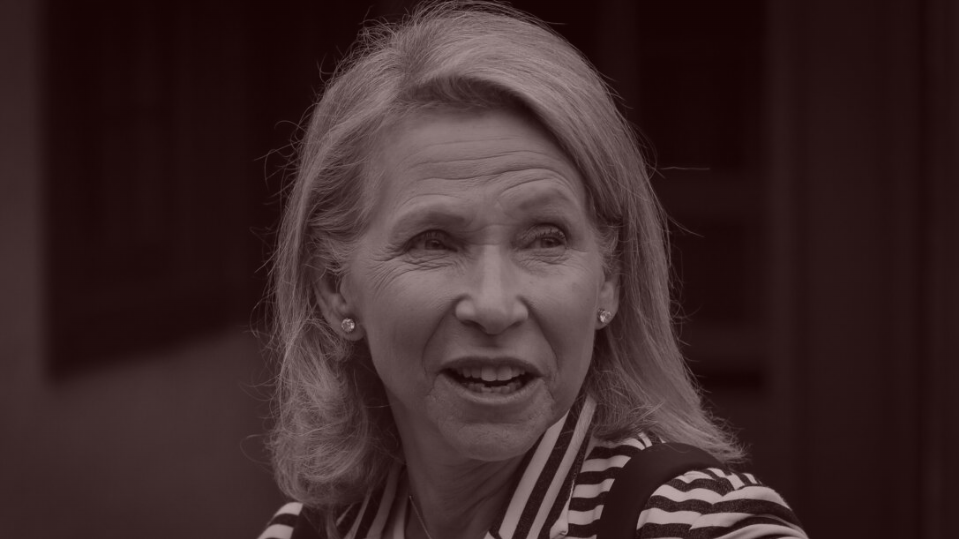
Now, instead, Shari chugs along alone (for now), having not fixed the company’s main problem: Shari. Think about it. She’s the 70-year-old legacy heir of a legacy media mogul—why is it a shock that she misjudged the streaming wars so badly? Yes, she inherited a devolving content business and a mountain of problems from her father and his henchmen, but it was Shari who made the mistake of installing Bakish and subsequently spending billions on a general interest streamer. It was Shari who could have overruled Bakish and made him sell Showtime for $3 billion when it was offered. Now, by putting the company up for sale, negotiating publicly for six months, and nuking a fully negotiated deal at the goal line, it’s Shari who has likely set Paramount on a downward spiral of chaos and uncertainty. Weak companies that call off transformative transactions at the last minute generally don’t get better in the aftermath. |
|
|
| Remember, Sumner Redstone never wanted things to play out this way. The late media mogul was pretty clear that his daughter shouldn’t run the empire he built. Back in 2007, when Sumner was merely 84 and still barking at Dan Tana’s waiters, he declared Shari had made “little or no contribution” to its success. He waffled a bit on this topic, but more often than not, his preference when he died or stepped down was to adhere to “the cardinal rule of good governance that the boards of the two public companies, Viacom and CBS, should select my successor.”
Alas, we all know what happened next. Sumner’s decline; the old-media corporate rot; the plain-sight looting by Viacom C.E.O. Philippe Dauman; the scheming girlfriends; Shari wresting the companies from Dauman and Les Moonves; Shari combining them in 2019; and now Shari trying to figure out how to survive in an industry that is demanding the consolidation of companies like hers. |
|
|
| The flashing signs: cratering television revenue; a subscale and unprofitable streamer, despite its 71 million subscribers; a film and TV studio that consistently underperforms peers and has allowed its biggest movie franchise, Mission: Impossible, to be hijacked by Tom Cruise, who delivered an installment last summer that was so expensive it grossed $567 million worldwide and lost more than $200 million in its theatrical run. (Now Mission: Impossible—Don’t Call It Dead Reckoning Part Two is running well over $300 million in production cost, I’m told.) Major debt payments are due next year, the company faces a potential downgrading of credit, and don’t forget the associated and ongoing brain drain.
Just today, Paramount lost its head of digital ad sales. David Lawenda is following Jo Ann Ross, the chairman of advertising, and a number of other top executives out the door. LinkedIn lists 272 separate open positions at Paramount Global, but do you know anyone great who wants one? With all this uncertainty and a likely bloodbath slash public auction on the horizon? Hires, to the extent they happen, will likely be those without other options, which will only further exacerbate that downward spiral. Look at what’s happening at Regal Cinemas, the teetering theater chain. It recruited a programming executive named Rob Westerling from Harkins Theatres, only for him to bail after just two weeks and return to Harkins. That’s what happens at troubled companies.
So yeah, the clock is ticking. Redstone was said to be concerned about the 12 to 18 months it might take to consummate the two-stage Skydance transaction. But any majority sale of National Amusements will still trigger extensive government review because it will transfer control of CBS, with its FCC license. Cutting bait now just prolongs that process, should an appropriate suitor emerge. All the while, Paramount has $14 billion in debt. National Amusements has about $200 million, and a big payment due in May. Estate taxes from Sumner’s 2020 death are due soon. Redstone “has walked away from a strategic deal that we believe would have improved Paramount’s outlook,” Wells Fargo analyst Steven Cahall wrote to investors. In her time atop Paramount, “we think Ms. Redstone has created a legacy of equity value destruction.” A legacy. Ouch.
Investors know this, and the stock has dropped 16 percent since the news broke Tuesday. It’s kinda amazing that the public market values Paramount—which includes the long-term NFL contract, all those movie and TV franchises, two growing streamers, and the still-big cable TV cash flow—at merely $7.2 billion, not including that debt. Remember, Paramount turned down $3 billion for Showtime, a brand it instead chose to murder, execution style, by starving it of content and folding it into Paramount+. Now the whole company is worth just two Showtimes and change. Remarkable.
The plan articulated by Shari and her three C.E.O.s—I’m definitely, 100 percent not calling them the Pep Boys, nor should you—might very well keep the company alive for a while by slashing more costs and employees and assets. Maybe one of the other suitors for just National Amusements—be it the Baby Geniuses producer Steven Paul and his backers, or Edgar Bronfman Jr. and Bain Capital, or even the Sony/Apollo deal that would merge the Paramount studio out of existence—will step up and give Shari what she needs to pull the trigger. Maybe the public implosion of the Skydance talks will bring new bidders, and she will prove us all wrong by extracting even more money for her diminishing assets. Or hell, maybe the Ellisons keep the dialogue going with Shari—after all, they’re still in business together on the Mission: Impossible and Transformers franchises—and re-emerge with a new proposal that wins her over.
Maybe. But bottom line, Paramount is almost certainly worse off now than if the Skydance deal had closed, and its 20,000 or so remaining employees are almost certainly better off if Shari Redstone finds a way to get herself out of this mess—and fast. “Sometimes in business life you just need to bring in a new team,” John W. Rogers Jr., the Ariel Investments co-C.E.O. and a big Paramount shareholder, told Bloomberg today. Shari has proven “not to be very good at governance or creating profits for shareholders.” |
|
|
See you Monday,
Matt
Correction: The TCA Awards doesn’t charge studios to participate, as I insinuated Monday. I should’ve instead mentioned Critics Choice events, which definitely do charge.
Got a question, comment, complaint, or ideas for other eating competitions that Netflix should air live? Email me at Matt@puck.news or call/text me at 310-804-3198. |
|
|
|
| FOUR STORIES WE’RE TALKING ABOUT |
 |
|
 |
| Sharinobyl |
| Detailing how the Skydance-Paramount deal fell apart. |
| WILLIAM D. COHAN |
|
 |
| Time Will Tell |
| Chronicling Will Lewis’s WaPo redemption rodeo. |
| DYLAN BYERS |
|
 |
|
|
|
|
|
 |
|
|
|
Need help? Review our FAQs
page or contact
us for assistance. For brand partnerships, email ads@puck.news.
|
|
You received this email because you signed up to receive emails from Puck, or as part of your Puck account associated with . To stop receiving this newsletter and/or manage all your email preferences, click here.
|
|
Puck is published by Heat Media LLC. 227 W 17th St New York, NY 10011.
|
|
|
|