Welcome back to What I’m Hearing, a little short tonight because of Yom Kippur. And speaking of
atonement, we need to dive deeper into Sora 2 and the latest step forward in A.I. video tech that squashes Hollywood and copyright law. I spent some time on the Sora app this week, and man, it’s a new world.
🏈⚾️ Also, there’s still some tickets available for Puck’s sports conference, In the Arena, which my colleague John Ourand is hosting in two weeks in New York with Adam Silver, Gerry Cardinale, Jay Marine,
and many more. Sign up here.
Discussed in this issue: Taylor Swift, Jenna Ortega, David Ellison, Sam Altman, Bari Weiss, Seth MacFarlane, Tom Cibrowski, Duncan Crabtree-Ireland, David Zaslav, The Rock, Bryan Cranston,
Aaron Moss, David Rhodes, and… Minions selling bananas in New York. |
- CBS
braces for the Bari bomb: No, David Rhodes isn’t joining CBS News when the new structure is announced next week. Talks with the veteran exec were definitely real, but ultimately, new owner David Ellison and lieutenant Jeff Shell decided to keep Tom Cibrowski in the top job as a measure of continuity, running most of the unit as the firebrand “editor-in-chief” Bari Weiss no doubt sucks up most of the
attention. Rhodes may still end up working with CBS, but it’s easy to understand the hesitation when Ellison’s idea of impartiality is to install a very public ideologue atop the best brand in TV news.
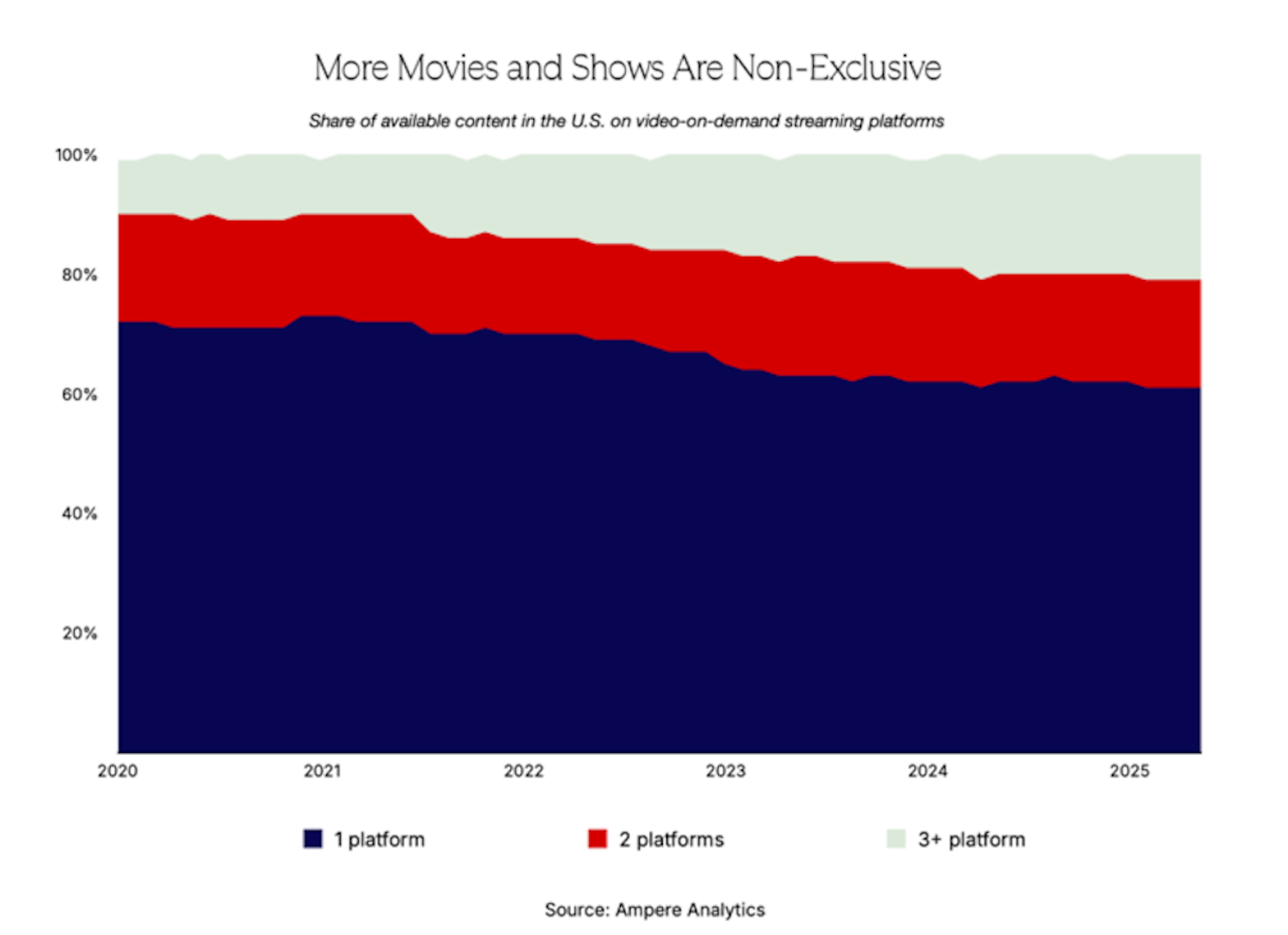
- Rise of the non-exclusive license: The license vs. hoard question is increasingly being answered with: How about both! New data from Ampere shows that about 40 percent of titles in the U.S. market were available on at least two services in
July—up from 27 percent five years ago. And 21 percent of all titles can be found on three different services, up from 9 percent in 2020. Ampere points to market consolidation and the “maturation” of the U.S. market—meaning David Zaslav and the rest of the Hollywood C.E.O.s are extracting as much value out of their titles as possible, even if it means sacrificing exclusivity.
|
- Box
office over/under: Tracking for Taylor Swift: The Official Release Party of a Showgirl has come down a bit lately, so I’ll take the under on $35 million. (Remember, her Eras Tour concert movie was predicted to open to more than $100 million but came in at only $92 million.) A24 is really pushing The Rock’s The Smashing Machine, which has fallen to a 70 on Metacritic after those euphoric (i.e., fake) festival reactions. I’ll take the under
on $15 million there.
|
|
|
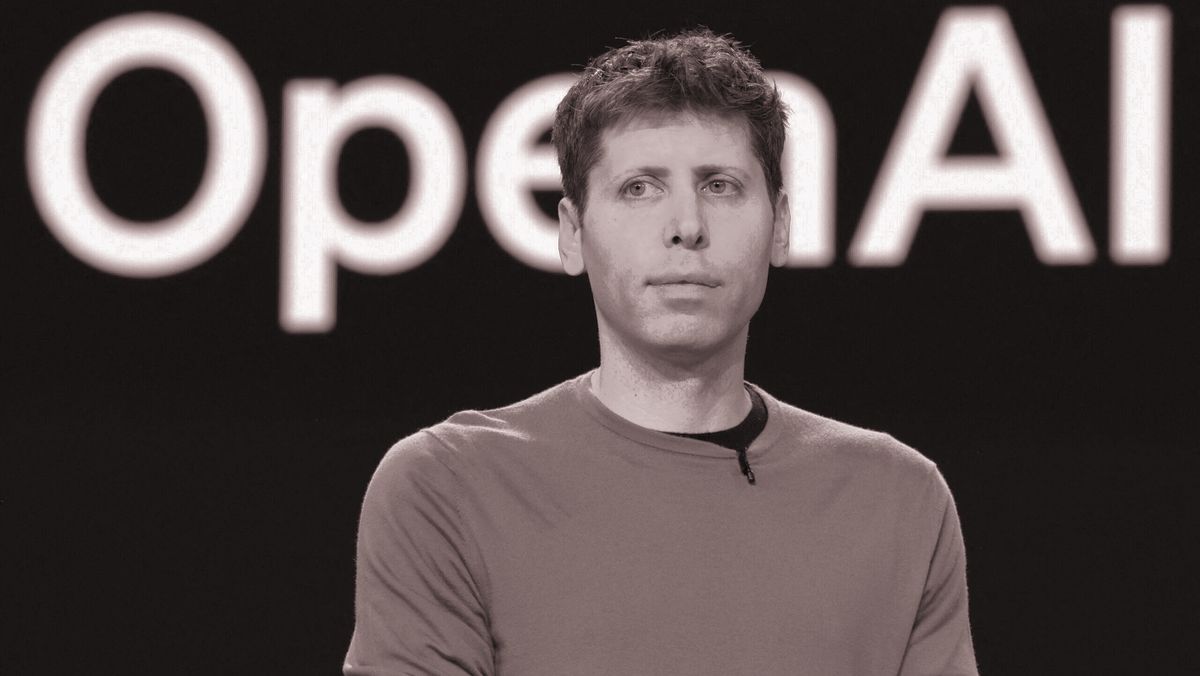
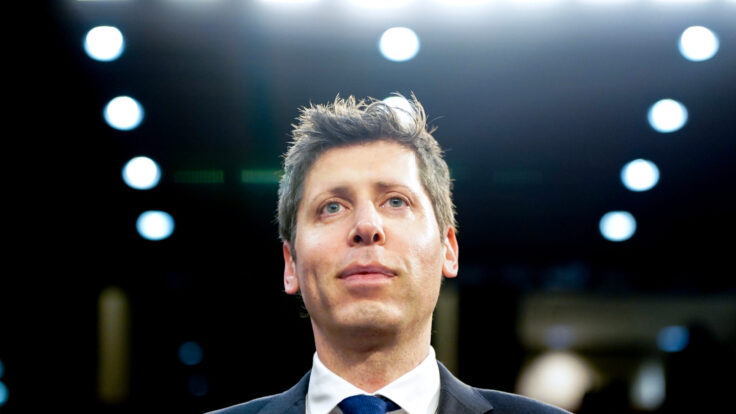
OpenAI’s new video generator, Sora 2, trained on copyrighted material
and celebrity likenesses, has thrust Hollywood into uncharted legal territory and put Sam Altman on a collision course with studios like Netflix and Disney. |
|
|
I’m old enough to remember the early days of YouTube, when its growth was fueled by permission-free clips
from The Daily Show and SNL’s “Lazy Sunday.” The Hollywood studios didn’t quite know what to do with this new, unapologetically infringing platform: sue, as Viacom did, or try to police and eventually make deals to promote and monetize the content. Two decades later, Google-owned YouTube is now the biggest media business in the world, and those once-dominant Hollywood studios are… not.
Has the entertainment industry learned anything from allowing Big Tech to dictate the
rules of online content exploitation? We’re about to find out. The A.I. revolution has reached its “Lazy Sunday” moment with Sora 2, which I previewed in this space on Monday and which has now officially launched—giving me, you, and everyone else the chance to create personal videos featuring copyrighted content. Want to see characters from Wednesday and Family
Guy having dinner? How about Cartman from South Park doing the “You can’t handle the truth!” monologue from A Few Good Men? Or Minions selling bananas in New York City? |
|
|
A MESSAGE FROM OUR SPONSOR |
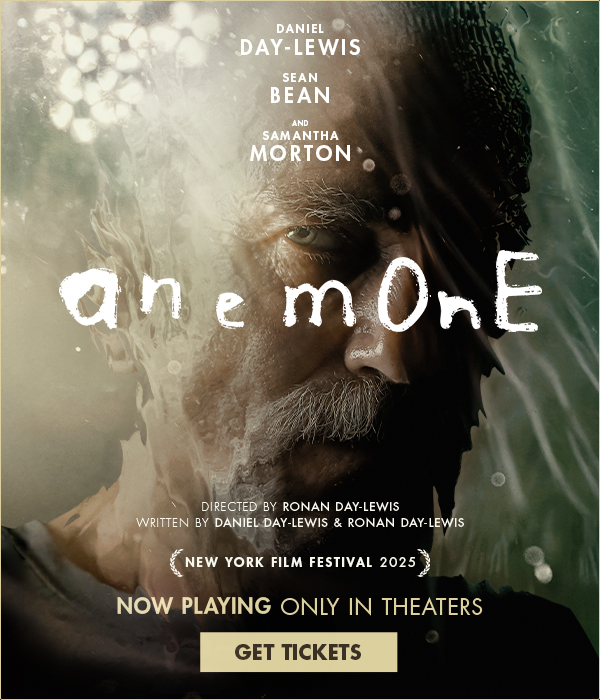
Three-time Academy Award winner Daniel Day-Lewis returns to the big screen in Anemone,
directed by Ronan Day-Lewis. Also starring Sean Bean and Samantha Morton. Anemone explores the complex and profound ties that exist between brothers, fathers, and sons. Now playing only in theaters. |
|
|
OpenAI is certainly not alone in pursuing a video-generation product that has been trained on hundreds of
thousands of videos and actor performances it doesn’t own. And Disney, Comcast, and Warner Discovery are already suing MidJourney, another A.I. company, among other efforts. But the new Sora is the most sophisticated version that I’ve seen, and a significant escalation in the legal stakes from simply serving up copyrighted images or memes on ChatGPT and other A.I. platforms. “This seems threatening on a level that is exponentially higher than with the images,” entertainment attorney
Aaron Moss, who runs the Copyright Lately blog and often represents content owners, told me yesterday. (The MPA, which is supposed to advocate for the studios, has been silent on Sora 2.)
Perhaps most offensive, studios that don’t want to help fuel OpenAI C.E.O. Sam Altman’s trillion-dollar dream of exponential growth and supplanting Google must opt out, which companies like Netflix and Disney are furiously attempting to do. As one example,
Disney’s correspondence with OpenAI this week specifically reminded Altman & Co. that “opt out” or not, the Mouse House has not granted permission for its content to be used as training material or as fodder for the output of those models, and Sora is committing copyright infringement on a mass scale.
But as my own somewhat surreal experience on the platform this week proved, that opt-out process is easier declared than done. Sora 2 is basically a rights-infringement machine, both
copyrights and, in some cases, individual rights of publicity for actors whose work has been sucked into Sora and spit out. And it’s unclear how any content owner can be expected to keep up with the company and an app that was the third-most-downloaded this week in the U.S., despite being available on an invitation-only basis.
To better understand what’s going on, I called up Moss yesterday, and he walked me through some of the key legal issues facing the studios and other content owners.
I also had SAG-AFTRA leader Duncan Crabtree-Ireland on The Town today to get a better sense of how the talent community can fight back. I’m excerpting both chats below, edited for length and clarity… |
First, My Talk With Duncan…
|
Matt Belloni: You’ve been talking to OpenAI since before the new tool was
released. Can you share some of those conversations?
Duncan Crabtree-Ireland: It’s really about the robustness of protections around name, image, and likeness use in Sora, and how to make sure that unauthorized, deep fakery, digital replication was not happening. I’d say there’s some success in that area. And then there’s some real challenges.
Well, the first
video I made yesterday was a prompt that said “Wednesday Addams having dinner with Peter Griffin from Family Guy and talking.” Boom, up popped Jenna Ortega, she looked almost real, and she was chatting with Peter Griffin in the style of their shows. And with
their voices—it was either Ortega, or something very similar. And it was Seth MacFarlane as Peter Griffin, or something almost identical. What do you do with that?
Any theory that this technology is not going to advance far enough to make it a serious threat to the legitimacy of content and to people’s control over their own image, likeness and voice [is wrong]. Look at where this technology is going. It is of real concern.
So let’s get into what you are doing
about it.
We’ve got to have new rights. The No Fakes Act, which is the bill that we’ve been pushing really hard in Congress, would create a new federally recognized intellectual property right in your face, your voice, your body—a consent right, and a compensation right, attached to any of those types of uses. That’s independent of copyright. So it’s not because there’s some copyrighted element that’s being reproduced, it’s because you, as a human, own the right to control the
use of your face, image, voice.
Obviously, there are First Amendment boundaries that are part of that bill. A lot of people think that they already have the right to control the use of their face. And the unfortunate reality is that unless you’re a super-famous celebrity and you have a Lanham Act [trademark] claim, or there’s a state right of publicity claim, you probably don’t have a really good claim. So this bill solves a lot of that.
OpenAI has taken the position that
likenesses are being dealt with differently than copyrighted materials. And when you go on the app, you have to give them permission and upload a photo of yourself to be ingested for what they call “Cameos,” or putting yourself in videos. If you try to make videos with real people and with most celebrities, they will tell you no. So that’s a win for you guys. But then there’s the Jenna Ortega example. She’s playing a character, and clearly they have trained the model on episodes of
Wednesday. What rights does Ortega have when she is now being manipulated to say things she or the character would never say?
That’s a great question. Jenna has given certain rights to producers of her projects. But under our collective bargaining agreement, they would not have the right to give some third party, like Sora or OpenAI, the right to digitally replicate Jenna without her separate permission and consent. |
|
|
A MESSAGE FROM OUR SPONSOR |
Three-time Academy Award winner Daniel Day-Lewis returns to the big screen in Anemone,
directed by Ronan Day-Lewis. Also starring Sean Bean and Samantha Morton. Anemone explores the complex and profound ties that exist between brothers, fathers, and sons. Now playing only in theaters. |
|
|
But what if OpenAI is just ingesting every episode of
Wednesday without the producers or Netflix even knowing or having control?
I’m assuming that’s exactly what is happening. If you’re not a signatory to a collective bargaining agreement, like one of ours, if there’s not a right-of-publicity claim under state law, if there’s not a Lanham Act [trademark] claim under federal law, which would have to be filed by the parties involved—then you don’t really have a legal
claim.
I’ve heard one theory that OpenAI wants to get sued. They are purposely putting this out there to hopefully generate a big, industry-wide lawsuit and maybe even a class action, and then it would cause this entire group of rights holders to be treated as the same in one case. Then they can get a settlement and an opt-in from this entire group versus having to get every single actor, artist, studio, character, participant, etcetera, to sign individual opt-ins. And at some
point, the industry will cheer and say We got a billion-dollar settlement from OpenAI, but the rules of the road will be established. Hollywood will be able to say We were right, but it will once again be left behind. And the business of A.I. will trudge forward with copyrighted materials. Is that the cynic’s view?
I’m not saying it’s not true, but I think it is the cynic’s view. |
Now Here’s
Moss With More on the Legal Issues…
|
Matt: The legal framework for A.I. that is being worked out by the courts
seems to go lighter on the input and focus on the output.
Aaron Moss: That is certainly where we seem to be trending. And then, of course, you have the issue of who’s responsible for the output. Is it the users or is it the platforms? Look, nobody’s giving up arguing that the training is not an infringement, but where you really take notice is when the output is
substantially similar [to copyrighted material] because that’s a much easier thing for everybody to grasp.
Or in the case of Sora, the output is often exactly the same thing. It’s the characters talking to each other.
I don’t even know where to start. It’s not simply that [Sora] has the ability to spit out fictional studio I.P. and everybody else’s copyrighted works, because we’ve seen that before. Where I think this is so
remarkable is the fact that OpenAI has not only created this tool, but has staked out a position that the tool does exactly what you and I both know it does. They are not only going to allow that to happen, but they’ve taken it upon themselves to decide that, if you use this Cameo system, [individual likenesses] may need to be verified. But they’re not going to take the same approach with the I.P. Varun Shetty, OpenAI’s head of media partnerships,
said the company is “working with rights-holders to understand their preferences for how their content appears across our ecosystem.”
Right. How about never? Is never good?
The starting point is, “So would
you like us to…?” It’s just bizarre. This is not traditionally, as you know, how copyright works. Traditional copyright is an opt-in system. The default prohibits the reproduction of copyrighted materials. Copyright holders have to affirm the legal permission, right?
You know that even if you just watch a Major League Baseball game.
Right. Now, I will say that the internet has at least normatively, if not legally, created an opt-out norm by virtue of being
designed as an open-architecture network, where users browse websites freely by default, unless site owners take affirmative steps to block access. And search costs are obviously reduced, which makes opt-out systems often more practical. There’s one case called Field v. Google that legally recognized opt-out permissions with respect to web scraping. That’s a very narrow situation, but it was kind of recognizing that the internet is different.
But [that’s] very different than
having essentially a TikTok social media feed where the default is that you get to pump out A.I. slop based on every copyrighted character that has not been affirmatively retracted by the copyright holder.
They’re clearly blocking some copyrighted materials while allowing others. I couldn’t make a video with Batman and Yoda riding a motorcycle. But Family Guy and SpongeBob and Cartman from
South Park were free to use when I tried.
There obviously is some system. Maybe it’s going to be like a [Digital Millennium Copyright Act]–style thing where you actually have to submit [a takedown notice]. That doesn’t make any sense to me.
Why not? That’s the system for YouTube: If you ask that infringing content be taken down, they take it down.
The DMCA does allow a safe harbor for
platforms when user-generated content is being submitted. But the DMCA is already going to apply. They have set up a platform that is in many ways just like Instagram and TikTok, if they want to take advantage of the DMCA safe harbor, they’re going to have to allow people to send takedown notices. But that does not take into account the fact that it’s not simply a platform, it’s also the developer of this content.
Right. They’re
trying to take the protection that is afforded a passive platform like YouTube and apply it to a content-generation machine that is perverting the copyrighted works.
Correct. And if they were simply a platform, if they said, Look, we have a new social media thing, and it’s people sharing stuff that they create themselves and then sending it through the social media feed, fine. But the only stuff you can share on Sora is stuff that is generated by their tool. So
they are not simply the platform. This is content that is being generated by the very tool that they created and trained on copyrighted material.
What do you think of my video of Peter Griffin from Family Guy sitting at the dinner table and talking to Wednesday Addams from the Netflix show?
There is no court on earth that would say that is not substantially similar. I was able to generate one based on Breaking Bad
where it wasn’t Bryan Cranston, but it was somebody that looked a lot like Bryan Cranston, sounded a lot like Bryan Cranston, and there was the R.V. and meth lab and all the recognizable elements. So yes, in certain cases, you may have an argument that the output is fair use. But none of these users of these tools have the God-given right to be able to generate fair-use material. The only reason that this stuff exists is because they’ve trained it on copyrighted works and they
have decided, apparently as a matter of policy, that they’re not going to put the guardrails on that they absolutely have the ability to put on.
Yeah. And what about the argument that the ultimate goal here is some kind of a legal war and negotiated truce that leads to a product that is not this, but will be something that favors them?
That [theory] sounds pretty reasonable to me, right? Because this is shock and awe, as far as I’m concerned. |
See you Monday,
Matt
Maya Tribbitt contributed research for today’s issue.
Got
a question, comment, complaint, or your own blatantly infringing Sora videos? Email me at Matt@puck.news or call/text me at 310-804-3198. |
|
|
Puck founding partner Matt Belloni takes you inside the business of Hollywood, using exclusive reporting and insight to explain
the backstories on everything from Marvel movies to the streaming wars. |
|
|
A professional-grade rundown on the business of sports from John Ourand, the industry’s preeminent journalist, covering the
leagues, players, agencies, media deals, and the egos fueling it all. |
|
|
Need help? Review our FAQ page or contact us for assistance. For brand partnerships, email ads@puck.news. You received this email because you signed up to receive emails from Puck, or as part of your Puck account associated with {{customer.email}}. To stop receiving this newsletter and/or manage all your email preferences, click here. |
Puck is published by Heat Media LLC. 107 Greenwich St, New York, NY 10006 |
|
|
|