 |
|
Welcome back to What I’m Hearing on a historic day in Hollywood. We’ll have ongoing analysis of the dual actors and writers strikes, plus we’ll do a bonus episode of The Town podcast tomorrow, and feel free to reach out with questions you’d like me to answer in this space.
As always, if you’ve been forwarded this email, become a Puck member here.
Let’s begin…
|
|
|
- CAA inches further toward sale: Remember in May when I told you that François-Henri Pinault, the French luxury goods billionaire and husband of Salma Hayek Pinault, was trying to buy CAA from its private equity owner TPG? Well, now talks have “intensified,” per a source close to the situation. No banks involved yet, and the sale could turn from a majority into a minority stake (or nothing at all), but I’m told the hope is the valuation would exceed $7 billion, and both sides would like this to happen. Pinault’s Kering, which is home to brands like Gucci, Yves Saint Laurent and Balenciaga, would blend nicely with star-studded CAA, which has been majority-owned by TPG since 2014, an eternity in private equity years. (A rep for TPG declined to comment. Usual disclosure: TPG is an investor in Puck.)
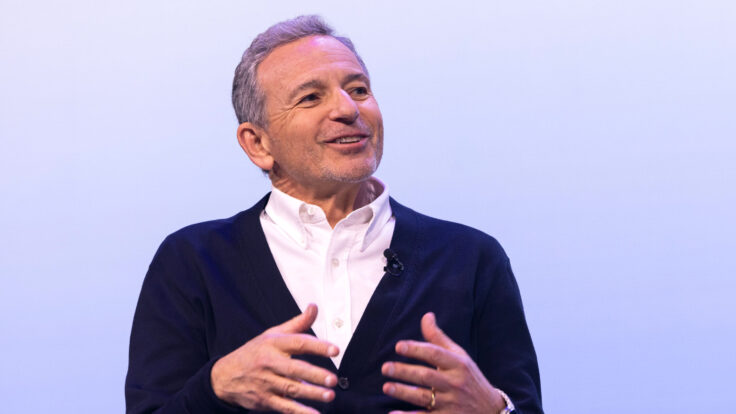
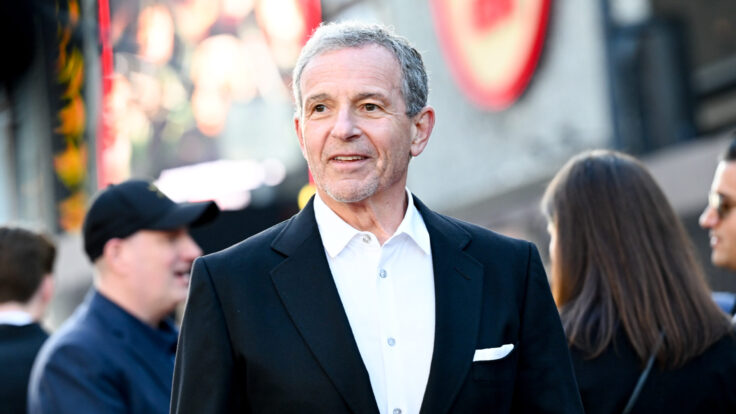
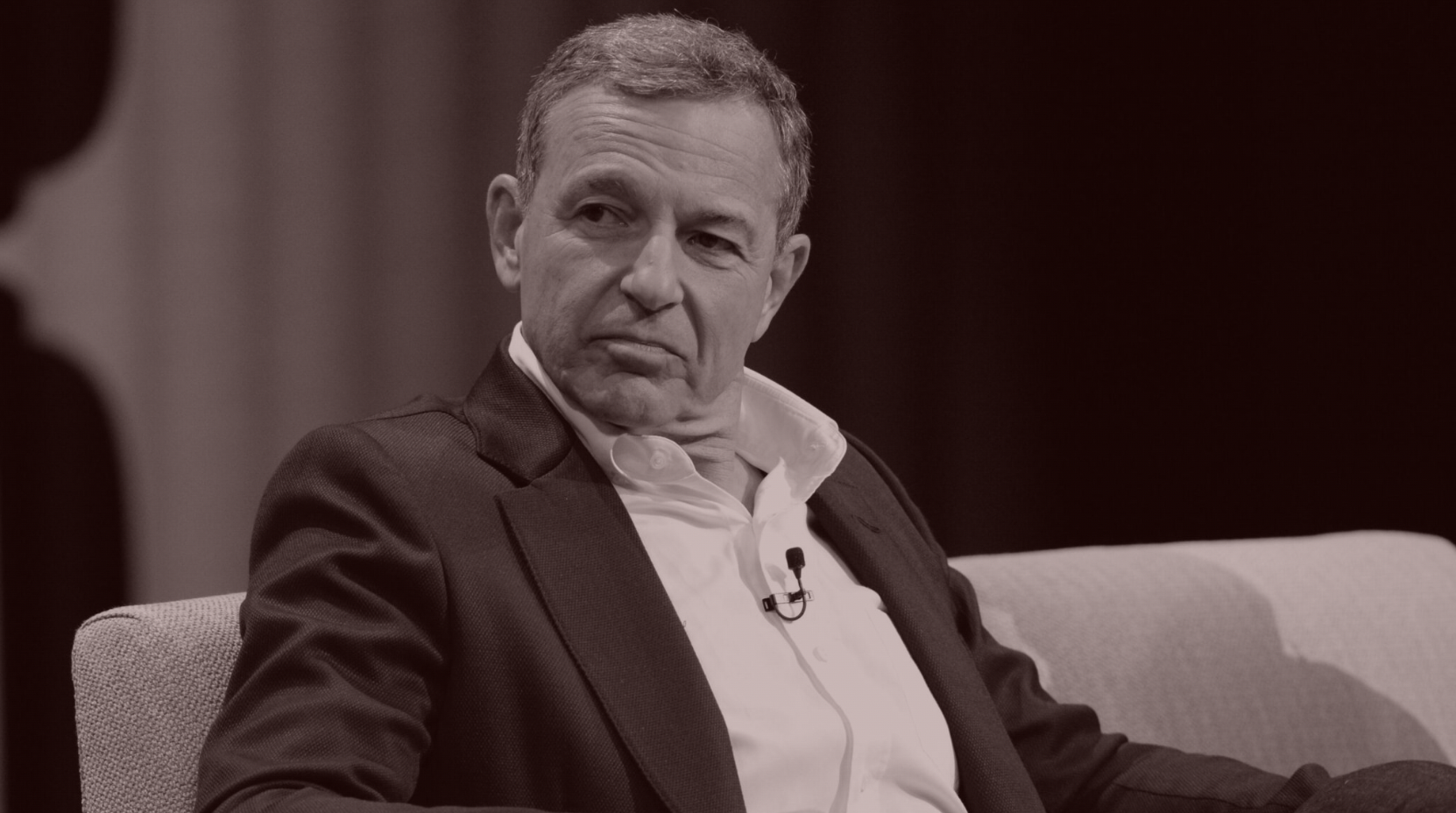
- Iger re-ups his re-up of his re-up after his many re-ups: Wall Street seems to love Bob Iger extending for two additional years at Disney, like we all knew he would. “We view this announcement as a positive as it provides Disney steady leadership as the company and industry manages through a turbulent transition period,” wrote BofA analyst Jessica Reif Ehrlich. That’s true, but let’s also acknowledge several failures here. I’ve ranked the Top 3:
3. The failure of Disney’s board, its chair Mark Parker, and specifically this blue-ribbon “succession subcommittee” we read so much about, to find someone—anyone—qualified and willing to take this job. Yes, Disney faces big challenges, as do most companies that have been disrupted by technology. Other companies have managed to find and promote fresh leadership to tackle them; Disney hasn’t.
2. The failure of the entertainment industry itself to produce quality candidates ready to lead Disney’s next era. Iger is at heart a linear TV guy, growing up at ABC and leveraging Disney’s cable bundle windfalls to spend $90 billion on strategic content producers. But that isn’t really an option now, and the guy charged with safeguarding the future of the world’s biggest entertainment company will be a 70-something man who whiffed on video games, overspent on streaming, and will be forced to cut ties with those same TV assets he thrived on.
1. The failure of Iger himself, who for years refused to groom and empower multiple potential successors. He told CNBC this morning that his brief retirement was “great,” but does anyone seriously think Iger believes that? Iger came back to Disney and is staying there not just because he feels the company needs him, but because he needs the company.
- Box office over/under: Mission: Impossible 7.1 opened Tuesday night, so I’ve got more guidance than usual on the $90 million tracking. Given the strong reviews and the Tom Cruise Top Gun halo, that still seems low, so I’ll take the over.
Now to the story of the day, and the year, and maybe the decade… |
 |
| The Nanny Steps All Over Bob Iger |
| An insider look at the deal points, red lines, and potential paths forward as SAG-AFTRA president Fran Drescher and the actors join Hollywood’s writers on the picket line and at the negotiating table. |
|
|
|
|
|
| Just for fun, let’s take a look at the latest amendment to Disney C.E.O. Bob Iger’s employment agreement, as included yesterday in an S.E.C. filing. There’s a line that seems relevant today, as SAG-AFTRA joined the Writers Guild on strike for the first time since 1960 over claims that include the lack of a success metric in their compensation. “Your target annual incentive bonus opportunity,” the Iger contract now reads, “shall be five hundred percent (500%) of your Base Salary as in effect at the end of such fiscal year.”
Yes, it’s a success metric, a pretty standard element of executive compensation, and one of several baked into Iger’s deal. It’s also the same kind of success metric that Iger is now calling “not realistic,” and that the other AMPTP studio members declined even to bargain over, according to sources at the negotiation table. And it’s one of the reasons that today epitomizes everything that has come to define this era of chaos, hypocrisy and class warfare in Hollywood.
There was Iger this morning on CNBC, fresh from the two-year contract extension we all knew would happen despite the fact that were told just seven months ago that it would definitely not happen, sitting authoritatively amid the picturesque Idaho mountains at Herb Allen’s billionaire summer camp, talking starkly about Disney’s new era of austerity: the painful but necessary layoffs, the dispiriting fact that Marvel and Lucasfilm should be making fewer shows, that Pixar movies should cost less; how ABC and the linear networks, the cash cows of a bygone era that allowed Iger to pull Disney away from the other studios, “may not be core” to the company. Dark stuff.
And then the dagger: “It’s very disturbing to me,” Iger said of the actors’ strike, literally looking down from his perch on a mountain. “We’ve talked about disruptive forces on this business and all the challenges we’re facing, the recovery from Covid which is ongoing, it’s not completely back. This is the worst time in the world to add to that disruption.”
No, Iger wasn’t wrong. But no, the optics were not great. And Iger, always a master of his own image, seemed to misplay the moment—even if he’s right about the dire situation that Disney and the other AMPTP companies face. He’s gotta know how each executive extravagance and tone-deaf comment has ricocheted around town and riled up the striking talent. Maybe Iger agreed to leverage his years of success and credibility to take the bullet for his fellow C.E.O.s. Warner Discovery’s David Zaslav surely loved that interview, because for once the knives were out for someone other than him.
Meanwhile, back in Hollywood, the town is burning to the ground: Film and TV shoots scrapped, premieres canceled or, in the case of Oppenheimer in London, abandoned half-way through, like the cops had shown up to a high school keg party. Agencies and management companies and P.R. firms and event planners and everyone else are now deciding who to fire or furlough if the actors are out for two weeks… four weeks… ten weeks… etcetera.
A blind-sourced piece of trade-media trolling, published on the eve of the SAG-AFTRA showdown, claimed the top studio executives wanted to starve the writers until they “start losing their apartments and losing their houses”—as if anyone even remotely close to AMPTP leadership would be dumb enough to leak those quotes and guarantee a shitstorm of anger throughout the creative community. It could be the silliest and most irresponsible thing to ever run on Deadline, at least since Monday’s assertion that the Barbie movie has “real potential come Oscar time.” But the writers believed it, and the quotes became a rallying cry, because they seemed right. “NEVER FORGET,” one actor’s sign read at the AMPTP headquarters last night, “they said making artists homeless is a ‘necessary evil.’” |
|
|
| So get ready for the actors to flood the zone. Their strike is on, and at 160,000 members, their union is 15x the size of the Writers Guild, with a lot more recognizable faces. When SAG-AFTRA members join the scribes en masse on Friday morning, the likely thousands of picketers are sure to put wind in the writers’ sails and add heft to both unions’ demands for higher wages, better streaming residuals, sustainable careers and protection from technological displacement.
Indeed, union negotiators were visibly frustrated as they left the AMPTP’s Sherman Oaks headquarters Wednesday night (technically, Thursday morning). SAG-AFTRA’s lead negotiator Duncan Crabtree-Ireland tells us that AMPTP president Carol Lombardini had been insulting, at one point saying that attempting further talks while the union is on strike was not an option. “The only way any strike ever gets resolved is by the parties continuing to talk and eventually reaching a deal,” Crabtree-Ireland says. “So their idea that there won’t be any discussion while there’s a strike is completely ridiculous and unrealistic.” A management-side source, who asked to remain anonymous, said that Lombardini has been misconstrued, and the AMPTP disputed the union’s account of the exchange.
In a sign of how bitter the dispute has become, another union source blasted the studio and AMPTP personnel as “underhanded” and “untrustworthy,” and charged that those personnel viewed labor as “uppity.” And that was 12 hours before SAG-AFTRA president Fran Drescher unleashed her fiery speech at union headquarters that electrified the press conference announcing the walkout. Who knew that Drescher was such an effective political speaker? “I cannot believe it, quite frankly, how far apart we are on so many things,” she said in that Nanny voice. “How they plead poverty, that they’re losing money left and right, while giving millions to C.E.O.s. It’s disgusting. Shame on them.” The actors exploded in applause and the assembled press seemed close to joining in. Nanny 1, Bob Iger 0. |
| The Issues and the Breakdown |
|
But do any of these optics actually matter? After all, driving the strike are bare-bones issues of compensation, precarity and technological displacement. And according to sources in the negotiations, at least five issues emerged as roadblocks.
- Minimums. The studios are offering a 5 percent increase in the first year of the contract, while the union, which initially sought 15 percent, is asking for 11 percent, to at least partially make up for two back-to-back years of high inflation. A management-side source confirmed the 5 percent and 11 percent figures.
- Streaming Residuals. The union and AMPTP have by and large agreed on the residuals improvements the DGA obtained in its recent deal, but the union also wants 2 percent of subscriber revenue to be shared with the cast of a successful show, with success measured by Parrot Analytics, an analysis firm that looks at viewership, social media engagement, and other factors, to determine “demand.” (Disclosure: Puck author Julia Alexander works there.) That proxy metric was proposed because the companies refuse to share their internal measurements, of course. But the studios declined to engage on that issue, and the management-side source asked how the producer of a show could be expected to share revenue earned not by the producer but by the platform (i.e., subscribers pay platforms; subscribers don’t pay producers).
- Artificial Intelligence. There was no agreement on regulating A.I. Crabtree-Ireland, speaking to Puck (see Q&A below), confirms the AMPTP did offer to require “consent” before an actor’s image or likeness could be used to create an A.I. actor. “But the devil’s in the details,” he said.
- Pension & Health Caps. These caps, which limit the amount of episodic television wage on which the companies have to pay P&H contributions, have not been increased since the last actors strike, in 1980. The union wants the caps raised by an amount equal to inflation since then. The studios, meanwhile, are offering a much smaller, $5,000 increase, said the union-side source.
- Audition Protection. The union wants various protections regarding auditions, and the studios are offering some but, said the union-side source, the studios insist that violations of the protections would not be subject to grievance and arbitration, making the new rules toothless.
|
|
|
| So now the question for actors, writers, and the rest of Hollywood becomes: Will picketing in synchrony shorten the journey to labor peace? Some think the shock and awe of watching two unions walk will jolt the studios out of a presumed complacency and spur the AMPTP to reach deals. First the actors, the theory goes, then the writers—or perhaps the other way around. The AMPTP and labor V.P.s could do deals with both unions concurrently, interweaving their talks—or by talking out of both sides of their mouths, which some laborites think is business as usual for management anyway.
Regardless of the details, the “shock and awe” theory requires us to believe that studio heads haven’t noticed or cared that the writers have been out for two months. They’re not that out of touch.
Rather, our sense is that the companies are staying the course, and will continue to, because they sense this juncture is as existential for them as for labor. Again, Iger isn’t wrong: Filmed entertainment is in a bad way. Theatrical box office is still down more than 25 percent from pre-Covid times and is unlikely to ever reach those numbers again. Linear TV is dying. And in streaming, competing with Netflix means building a global channel without the benefit of cheap money and being the first mover.
Yielding to the actors and writers now could be the beginning of rebalancing the respective power of labor and management. Hollywood has seen a decade of wild content production that masked a complete shift of the business model, a shift that Drescher and Crabtree-Ireland correctly point out has not been reflected in talent contracts.
Next year brings a brace of additional labor deal expirations—among them a SAG-AFTRA sequel, and its Netcode, which covers soap operas, late night shows, and hosts of reality and game shows. That’s small potatoes, but more critically, the IATSE and Teamster crew agreements lapse as well. A strike by either of these unions would similarly shut down the industry. IATSE is already making moves in the realm of A.I., pledging that the technology must be a tool, not a replacement, for workers. The Teamsters—truck drivers, notably—will no doubt have a corresponding concern—not about artificially creative generative A.I., but about self-driving vehicles, which utilize other forms of software wizardry. And both unions are likely to seek substantial wage increases as a catchup for inflation, just as SAG-AFTRA has.
So yielding to writers and actors could mean having to do the same next year with crew, drivers and performers again. That makes the current fight even more consequential for Bob Iger and the rest of Hollywood’s management class—and even more likely to drag on into at least the fall.
For more, I chatted with SAG-AFTRA’s Duncan Crabtree-Ireland this afternoon about the strike and what to expect next… |
| The Actors Enter the Strike Abyss |
|
| Duncan Crabtree-Ireland, the national executive director of SAG-AFTRA and chief negotiator for its collective bargaining agreement, was front and center today alongside SAG-AFTRA president Fran Drescher as the 160,000-member guild went on strike alongside the Writers Guild, grinding Hollywood to a dual-strike standstill for the first time since 1960. After a truly historic day, Crabtree-Ireland jumped on a Zoom with me to discuss how the guild ended up here, its forthcoming plans, and what the studio C.E.O.s had to say about specific proposals. This conversation is edited for length and clarity. |
|
|
| Matthew Belloni: Fran Drescher was very strong today, I want her to come and yell at my kid when he’s not listening. And you’ve got a lot of solidarity among members and with the Writers Guild. What’s your plan to maintain that solidarity in week two, week 10, week 20?
Duncan Crabtree-Ireland: To be an actor in this town is not an easy job. You have to be tenacious. You have to be persistent. And you have to be prepared to accept rejection over and over and again until you find success. I think those are exactly the qualities that make actors well suited to standing up for themselves and walking a picket line and doing what it takes to fight this strike.
When do you think negotiations will re-start? Tomorrow?
No, not tomorrow. I think it will happen eventually. I’m disappointed that when we said we were willing to continue talking, the companies said no and said it’s gonna be awhile before they’re ready to talk to us again.
But you weren’t willing to extend the deadline again.
That’s right. We extended for 12 days already. And, by the way, the only way any strike ever gets resolved is by the parties continuing to talk and eventually reaching a deal. So their idea that there won’t be any discussion while there’s a strike is completely ridiculous and unrealistic.
That gets to the leverage issue. You gotta admit that the leverage the union has these days is not quite the same as it was 15 years ago, when the fall schedule was everything and the late-night shows were so important. There’s a longer runway for these streaming services with global content pipelines and all the libraries on demand. The consumer is not gonna feel the strike as acutely as he or she would have 15 years ago.
That may well be true, but there’s another difference. Public support for labor unions and for collective bargaining is at an all-time high, far greater than it was 15 years ago. I have no doubt that there will be millions of people around this country who strongly support what we’re doing.
But does that matter? Other than riling up your own member, I wonder if it’s just noise.
I think it does matter because those are the customers these companies are trying to woo. Customers have an unprecedented array of choices for their entertainment, and if customers think that these companies are treating the artists that they actually care about unfairly, I 100 percent believe that that can influence the customer’s decision on what they choose to consume.
Are you calling for a Netflix boycott?
We’re not calling for any boycott of anyone at this point. My point is really deeper than that. It’s that consumers do care about what the companies that they buy products from do. I think we do have some leverage.
I’m not so sure whether people make a value judgment about the labor practices of the company that produces their favorite show. But I do think you guys have the ability to get a lot of attention for yourselves. Your members are huge public figures. Have you lined up big names for the first few days of the strike?
Yeah, we’ve been in contact with our members. There are a number of members who are very eager to be out there publicly. Over 2,000 members, many of whom are quite high profile, signed onto a letter of support.
Right, Jennifer Lawrence, Meryl Streep, a bunch of others.
Without naming any names, I will say I do not expect any lack of familiar faces on our picket lines.
Tom Cruise parachuting onto a picket line would get headlines around the world.
Yes, it sure would. We’ll relay that.
The studios put out a statement listing some of the things—in their words, obviously—that they offered, and one was an “unprecedented” right to consent to an actor’s likeness being used in creating a digital performer. Why was that not enough for you guys?
Well, first of all, you know, when you have no rules at all about something, literally anything you do is unprecedented. We put forward very detailed proposals on A.I. Those proposals involve consent for the creation and use of digital replicas, as well as proposals about how generative A.I. can be used and A.I. training processes. The companies have responded to a number of the proposals. The problem is the devil’s in the details. We had reached some agreement on consent, but from our point of view, it has to be informed consent. You know, consent cannot be a boilerplate provision.
Right, they put it in paragraph 35 of your original deal so you don’t really have a right of negotiation on that unless you are a huge star.
Correct. And also not even a right to really know what is being done with your digital replica. The way we see it is a digital replica is like a digital double of you, and you should have every right to know what is being done with that digital double and sign off of it just like you would if it was you doing it. Because it’s your face. It’s your body, it’s your voice. Anyone who sees it, if it’s a good enough quality, is gonna think that you did it.
And so our members deserve that right. [The studios] have not been willing to enshrine a sufficient level of informed consent. They haven’t been willing to provide for a clear and defined level of compensation for this stuff. And when you have to give this consent at the time of employment, our members have much less leverage to negotiate something.
People who don’t have sophisticated entertainment lawyers to redline that out of their deal.
Right. Or people who don’t have the leverage to get it redlined out of their deal, even if they’re lucky enough to have a good lawyer.
Where were you guys on getting some kind of a success metric attached to compensation?
Well, unfortunately, basically nowhere. We made a proposal on that in our initial package. We tried to talk about it every time we went across the table and in sidebars with them. Their only substantive response to that proposal was an attack on Parrot Analytics [the analysis firm suggested to measure success]. And you know, our response to that to them was it’s not about Parrot Analytics. The only reason Parrot Analytics is in that proposal is because we know how these companies are about transparency, and we know that it’s gonna be a huge uphill battle to get any of the streamers to agree to provide actual data on viewership.
We are not wedded to that one company or that one metric. The point is, we want a share of the revenue from streaming subscriptions, and we want it to be distributed to members based on the success of their projects within those parameters. Every time we talked about it, [they said] we’re not interested in discussing that with you. Up until the very last day, when Fran and I talked to multiple studio C.E.O.s directly.
In the tech community, and in the business community, there is the sense that the actors and writers are stuck in the nostalgia for the old days of Hollywood and are unwilling to engage with the future. We’re not going back to the days of The Nanny, where Fran Drescher had 28 episodes of a broadcast sitcom per season that paid her robust residuals forever. And that the sooner the guilds agree that that’s not the case anymore, the sooner they can work towards a new framework.
It’s the pinnacle of hypocrisy for people to say we are unwilling to change. We could have come in with a proposal saying, no A.I. We came in with four specific proposals on exactly how A.I. could be implemented in the industry. Same thing on streaming revenue share. That’s not us trying to turn the clock back on the old industry. We know that industry is gone. Our members experience it every day. But what is not fair is for these companies to unilaterally change the business model, which they have done, and then to say, but we don’t want to change your contract to reflect it. We want to keep you in the world of the ’70s while we’re living in 2023.
Well, Bob Iger says that’s not realistic.
I would welcome Bob to come actually participate in these negotiations. One of the problems is that we don’t have enough participation from people in the C-Suite.
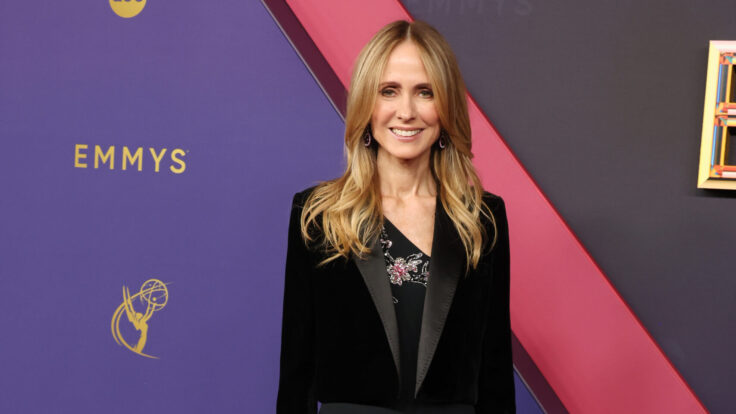
Iger seems to be delegating this to Dana Walden and Alan Bergman at Disney.
That’s what I understood, and it’s interesting to delegate it and then decide to comment on it.
Maybe he’s positioning himself to come in at the last minute and be the savior.
I would love that. The last word we got last night was that no one in that room has the authority to make a move.
You guys haven’t said what the parameters are gonna be for waivers. Will independent films still be allowed to use SAG-AFTRA actors?
I expect that the parameters for interim agreements—they’re not really waivers, they’re actually a full on interim agreement that those companies would need to sign—to be published today on our website.
So independent films that go to these film festivals in the fall: will their casts be allowed to promote on the red carpet and such?
If they are truly independent, if they pass our fingerprints test, and thereby get an interim agreement, yes, they’ll be allowed to promote them. Provided that the promotion is consistent with our rules.
I had thought perhaps the studios would want to do a deal with you guys to put more pressure on the writers. Now that the whole thing has blown up, do you expect some kind of macro deal with both guilds? Or maybe they go to the writers first and then come back to SAG.
I don’t know the inner workings of their thought process. I do think that while we have a lot in common with the Writers Guild in certain areas, the proposals that we’re working on and our constituencies are quite different, so I’m not sure that there’ll be some macro deal that could apply to both.
So Tom Cruise flies his jet over the Paramount lot, jumps out of the plane, parachutes and lands at the Paramount gate in front of the picket, everyone goes nuts and puts public pressure on the studios to settle, and the strike ends the next day…
Wouldn’t that be great? |
|
|
See you Sunday,
Matt
Got a question, comment, complaint, or a celebrity picket line wish list? Email me at Matt@puck.news or call/text me at 310-804-3198. |
|
|
|
| FOUR STORIES WE’RE TALKING ABOUT |
|
|
|
|
|
 |
|
|
|
Need help? Review our FAQs
page or contact
us for assistance. For brand partnerships, email ads@puck.news.
|
|
You received this email because you signed up to receive emails from Puck, or as part of your Puck account associated with . To stop receiving this newsletter and/or manage all your email preferences, click here.
|
|
Puck is published by Heat Media LLC. 227 W 17th St New York, NY 10011.
|
|
|
|