 |
|
Welcome back to What I’m Hearing, where I’ve been celebrating the end of the SAG-AFTRA strike by doing a bunch of media interviews telling people to stop declaring who won until we see the actual deal.
No offense to SAG-AFTRA or its talking points, but Jonathan Handel and I are reserving our analysis of the deal until Sunday, after we actually see the terms voted on by the national board tomorrow. Tonight we’ve got a look at the labor landscape post-strike and the potential next standoffs.
As always, if you were forwarded this email, click here to become a Puck member.
Let’s begin…
|
|
|
- Elon: The Movie, with A24 (really): Given that Steve Jobs, Walter Isaacson’s previous tech genius/madman biography, was made into a studio movie by Universal, it’s no surprise that his recent Elon Musk is also being optioned. But I’m told that A24, the indie powerhouse, not a traditional studio or streamer, won the bidding war. And Darren Aronofsky, one of my faves and the director of last year’s A24 hit The Whale, has come aboard as the filmmaker. I haven’t talked to Elon about this, but I’m guessing he would approve of this choice and is probably a big Requiem for a Dream fan.
So, who should star? That will depend on which part of Elon’s life they depict, but I’d pick Michael Fassbender if he hadn’t already starred in Steve Jobs. Leo DiCaprio could dust off his Blood Diamond accent, but A24 probably isn’t giving him $40 million, as I’m told Apple did for Killers of the Flower Moon. Paul Dano? Might be hard to build a movie around him. Shia LaBeouf would bring the right amount of batshit crazy, as might Joaquin Phoenix. Daniel Craig? Whale star Brendan Fraser? Miles Teller? Jesse Plemons? Tilda Swinton? Elon himself? Other ideas? (A24 didn’t respond.)
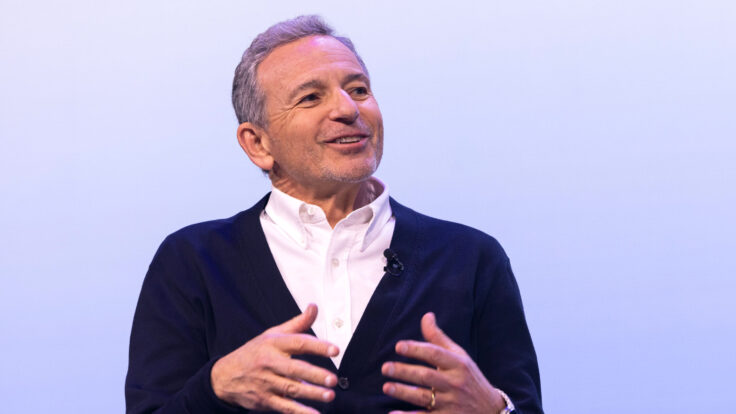
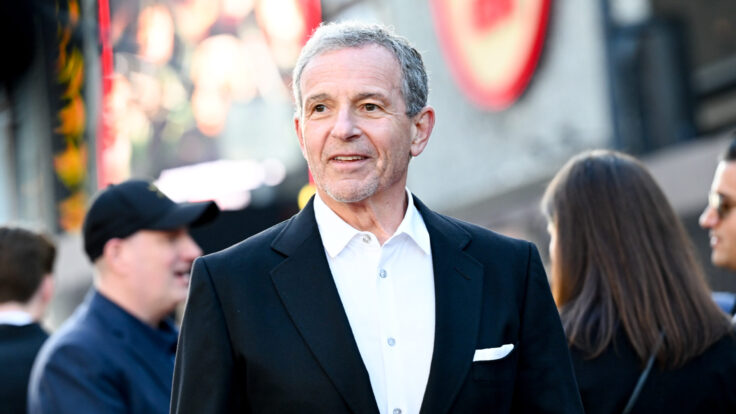
- Disney can’t just cut its way back: Wall Street is super horny for the latest cost-cutting porn out of Disney: C.E.O. Bob Iger raised his annual reduction total on Wednesday to $7.5 billion, up from the $5.5 billion target he set in February, and the stock popped about 7 percent. Remember, that includes a $4.5 billion cut to content spending, up from $3 billion, meaning an additional billion-five less in Star Wars shows and Hulu comedies and Searchlight movies and ABC spinoffs to long-running series you didn’t watch in the first place. Along with the recent price hikes in streaming, Iger’s message is basically: We’re making less and charging more.
Which makes sense, given his hand these days. Disgruntled shareholders Nelson Peltz and Ike Perlmutter likely high-fived each other on the Mar-a-Lago pickleball courts after they saw Iger’s comments, but while that strategy works in the short term—and Disney is hardly alone in pulling its productivity way back from the Peak TV heyday—Iger will soon need a message beyond the cuts. Of the four-pronged “building opportunities” that Disney outlined in its earnings reveal—“sustained profitability” in streaming; transitioning ESPN to digital; improving the “output and economics” of the film unit; and “turbocharging growth” at the parks—only one of them (the parks) is a narrative involving investment by Disney in its future. The rest all seem like retreats or salvage jobs. Sure, Disney is about to spend at least $9 billion for full control of Hulu, but that’s a distribution investment. Disney has milked the core content franchises of the Iger era for 15 years now, and even Iger has admitted the company’s creative engine has “lost focus,” at least in movies.
New franchise creation requires risk-taking and financial investment. “We were encouraged by Iger’s comments around also investing in original stories (e.g., upcoming film Wish),” wrote Raymond James analyst Ric Prentiss in a note today, “particularly given choppy recent results around major franchises (including very soft tracking for The Marvels this weekend).” Firing people and canceling projects is tough, but spending far less while also creating new and valuable I.P. is even harder.
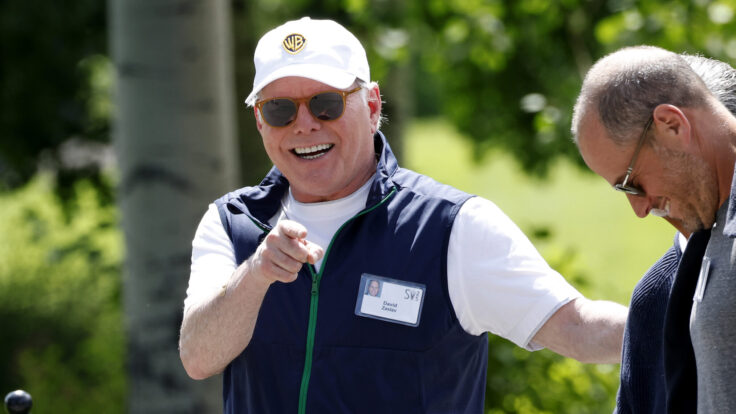
- Speaking of spending less: David Zaslav wishes cost cuts alone would juice the floundering Warner Bros. Discovery stock, which cratered nearly 20 percent yesterday when C.F.O. Gunnar Wiedenfels revealed weak ad sales and suggested it’s not getting better. Zaz trimmed expenses and threw another finished movie, the $70 million Coyote vs. Acme, into the studio’s locked early 2020s time capsule, not to be opened until WBD is sold or overcomes its crushing debt. It’s scary that Team Zaz is in the sort of place where a $30 million tax write-off is worth not even trying to make money on a movie that, unlike Batgirl or the Scoob! sequel, is supposedly commercial and good. “This makes me feel insane,” writer BenDavid Grabinski tweeted. “It’s a great fucking movie. It’s based on a huge IP. It’s a crowd pleaser. What are we even doing anymore?”
- Would someone please put A3 out of its misery?: It’s been quite a slow-moving car crash at the A3 talent agency over the past few months. Owner Adam Bold, the rich guy who bought the old Abrams Artists Agency with Robert Attermann and Brian Cho in 2018—right before Writers Guild members fired their agents over TV packaging, then Covid, then the twin WGA/SAG-AFTRA strikes—overspent and developed a reputation as a creep around the office. His deal to sell the unscripted and digital divisions to The Gersh Agency could close any day, but in the meantime, it’s been one agent exit after another. The latest, Jamie Pillet, who’s got a knack for finding young actors like Andrew Barth Feldman (No Hard Feelings) and Fred Hechinger (White Lotus), bailed for talks with WME and had to hire litigator Brian Turnauer when she found out Bold was pitching her to Gersh without telling her. It’s weird because last year it felt like A3 was actually doing well, then Bold started going rogue, fighting with his partners and employees. Plus, the strikes have been brutal for small agencies without diversified businesses. Little margin for error in the talent game these days. (Bold and Cho did not return my emails.)
- In other agency news: CAA continues to quietly trim agents, though in several cases, the agency is doing its thing where it gives people a little time to find a new gig. Dana Sims, Suchir Batra, and Chuck James are the latest to go, with James now becoming a manager. Sometimes at CAA, “becoming a manager” is like on Yellowstone where someone is “taken to the train station.”
- Great moments in marketing obfuscation: Congrats to Disney for one of the all-time bait-and-switches: about 20 seconds of Robert Downey Jr. and Chris Evans at the beginning of a promo for The Marvels, a movie that does not feature either of those actors. Not to be outdone, Paramount dropped a trailer for the Mean Girls musical that does not offer any indication besides a musical note in the logo that this movie is a musical, following the same hide-the-ball strategy that Warner Bros. is currently employing with Wonka. Great stuff, everyone.
- Box office over/under: Yikes. Tracking for The Marvels continued to drop this week and is now hovering around $60 million. Not great! I’ll still take the under, thanks to low presales and the fact that Disney was scared enough to release such a misleading trailer.
|
| Now on to the biggest news in six months… |
|
|
| How did you celebrate? It’s really hard to describe the level of jubilation around town a day after SAG-AFTRA agreed to a tentative deal with the studios. Mostly because this situation feels so foreign. Six long months. Strikes by two of the three above-the-line unions simultaneously. Countless jobs and paychecks lost, hot careers derailed, an estimated $6 billion erased from the national economy. And, tragically, Kim Kardashian was unable to post on Instagram about her appearances in American Horror Story and PAW Patrol: The Mighty Movie. We all suffered, some more than others.
But now, a summer and fall of constant anxiety and existential questions have given way to relief and—dare we say it, even with all the problems Hollywood still faces—momentary optimism? You feel it from everyone, from creatives to the C-suites to the talent agents and managers and assistants, to Pamela, the maître d’ at The Grill. Every actor simultaneously wants a job, a meeting, a revised shooting schedule—and publicity for anything and everything. It’s normal, or at least whatever passes for normal these days. A collective exhale.
But… (you knew a but was coming), as we all celebrate and wait for the details of the actual contract that will be revealed tomorrow, after the SAG-AFTRA national board approves the deal and sends it to the 160,000 members for ratification, it’s worth looking back at what just happened and ahead to the next bet-your-industry negotiations in just a few months. Yes, months, not years.
If one thing became clear during these standoffs, it’s just how broken Hollywood labor negotiations are. You see it on both sides of the table. For writers and actors, these negotiations weren’t just about making a little more money. Given how Netflix and the streaming revolution have upended the foundation of the industry, these strikes were considered existential, and issues like A.I. and minimum staffing in TV became not just about improving conditions for workers but about the ability to work—and make a living—at all. That was clear in talking last night to Duncan Crabtree-Ireland, the lead SAG-AFTRA negotiator, especially when it came to A.I. “This was not a situation where, ‘Okay, we’ll just kind of leave loopholes that can undermine everything that our members do and their existence in this industry, and then just try to deal with that later,’” he said.
In addition, the membership of the WGA and SAG-AFTRA has swelled in recent years, as have fears about the continued viability of the professions. Unlike the vast majority of labor unions, the composition of the above-the-line guilds is such that the majority of striking writers and actors did not work enough in the previous year to qualify for health insurance, reducing the financial cost of striking and hence, any incentive to compromise. It’s an uncomfortable fact, and it played a role in how the negotiations unfolded.
On the studio side, the dysfunction is even more apparent. Apple and Amazon scarcely belong in the same coalition as Disney, Paramount, or even Netflix. Tech giants have different businesses, different incentives, and different agendas. How long can Hollywood cling to the fiction that these eight AMPTP members have much in common besides wanting to pay less for creative work? |
|
|
| Carol Lombardini holds the title of president of the AMPTP, yet it became clear during negotiations that she lacked authority to say anything but no. There was no Writers Guild deal until the top executives of four of the key members got personally involved; no SAG-AFTRA deal until they attended meetings in person. It’s likely that next year’s fraught negotiations with the crew union IATSE, and Teamsters Local 399 (representing truck drivers who haul production equipment)—which are both expected to begin in the spring—will also fail until the top executives join their labor V.P.s and the AMPTP at the table. But will they?
For this year’s strikes, the AMPTP ran the same playbook as in previous walkouts: Starve labor into submission. Whether or not any studio functionary was actually reckless enough to tell a reporter that the strategy was to ice out writers and actors until they lost their homes and apartments, that was indeed an apt description. But it rested on the companies’ misreading of the moment, and their adversary.
The moment: Anyone who bothered to look would know the labor movement is ascendant right now in this country. The tea leaves began brewing a decade ago: Occupy Wall Street in the early 2010s; the WGA East and NewsGuild’s success in organizing millennial-heavy digital media shops starting in the mid-2010s; unionization at Starbucks and Amazon; the accelerating backlash to the growth of Big Tech; the WGA’s near strikes in 2017 and 2020; teachers’ strikes in Los Angeles and statewide in West Virginia, Oklahoma, Arizona, etcetera; the ongoing L.A. hotel workers’ strikes; and steady increases in public support for unions. And closer to home, the inability to get a Directors Guild deal done with the usual six months’ advance runway was a potent warning that this year would be different. The AMPTP either didn’t see that or didn’t think it mattered.
Their adversary: The WGA stood strong for two years in its battle against the talent agencies over TV packaging and content ownership. Leave aside arguments about the wisdom of the guild’s goals in that effort; the relevant takeaway here is that the union was unyielding, and its members maintained solidarity even after being ordered to fire their own agents—some of whom had been their advocates for decades. That campaign was fought not only for its own ends but also as a stepping stone toward striking against the studios and streamers. They built momentum.
The WGA also really leveraged social media for the first time, staying largely on-message during the strike and effectively managing their own members via fear of being called out for straying from the official position. The AMPTP, which has counted on union dissent in past strikes, instead found publicly unified memberships (even if, behind the scenes, that dissent was playing out via private text chains and backchanneling). The writers were often sanctimonious and sometimes bullying (especially to journalists), but the tactics were effective.
The actors were sending similarly strong signals. SAG-AFTRA has historically been more divided than the WGA, let alone the DGA, but when the industry’s largest union obtained a strike authorization by a landslide, high-turnout member vote, that signal should have been understood, too. And notwithstanding the factionalization, actors are inherently resilient in a war of attrition: Many already have second jobs, most are used to financial insecurity, and all of the rank and file are accustomed to soldiering on even in the face of repeated rejection. So the idea that management could simply starve the unions into submission was, from the start, a doomed mission to a dead planet.
Have the companies learned? We’ll soon see. The SAG-AFTRA NetCode (reality TV, soap operas, game shows, late night) expires June 30, and the IATSE crew agreements and Teamsters Local 399 truck drivers agreement expire July 31. At issue for all three contracts are basic wage increases. In addition, the NetCode and some of the IATSE local agreements implicate generative A.I. (think production design, editing, sound design, and even cinematography), while the Teamsters are concerned with a different sort of A.I.: the algorithms that enable self-driving trucks. We’ve heard that some studios, anticipating possible labor issues, are exploring more overseas production, beyond the coverage of IATSE. Some may be hesitant to even commit to production beyond this spring, for fear of more shutdowns.
Will the C.E.O.s once again sit out the talks until workers strike? Or will they—in 2024 and beyond—engage with workers promptly and as equals, perhaps avoiding more devastating walkouts? Crabtree-Ireland, in the chat last night, said he’s hopeful “that in the future, if there are challenging labor moments, that we keep the conversation going—instead of having the kind of just roadblocks that we had this time around.” It’s a choice, and the companies are at a crossroads. |
|
|
See you Sunday,
Matt
Correction: Michelle Williams won an Emmy for FX’s Fosse/Verdon in 2019, thus rendering incorrect my Thursday statement that a Grammy for Williams’ spoken-word performance of Britney Spears’ memoir would be her first step toward an EGOT. Apologies to Williams and to the EGOT community.
Got a question, comment, complaint, or Fran Drescher Nanny reboot fan fiction? Email me at Matt@puck.news or call/text me at 310-804-3198. |
|
|
|
| FOUR STORIES WE’RE TALKING ABOUT |
|
|
|
|
|
 |
|
|
|
Need help? Review our FAQs
page or contact
us for assistance. For brand partnerships, email ads@puck.news.
|
|
You received this email because you signed up to receive emails from Puck, or as part of your Puck account associated with . To stop receiving this newsletter and/or manage all your email preferences, click here.
|
|
Puck is published by Heat Media LLC. 227 W 17th St New York, NY 10011.
|
|
|
|