 |
 |
|
Welcome back to What I’m Hearing, I hope you’ve already started your Memorial Day weekend. (Judging by the sparse lunch crowd at The Palm on Tuesday, it appears many started waaay early.) Programming note: Sunday’s WIH will come on Monday night.
And, as always, if you’ve been forwarded this email, do yourself a favor and become a Puck member here.
Let’s begin…
|
|
|
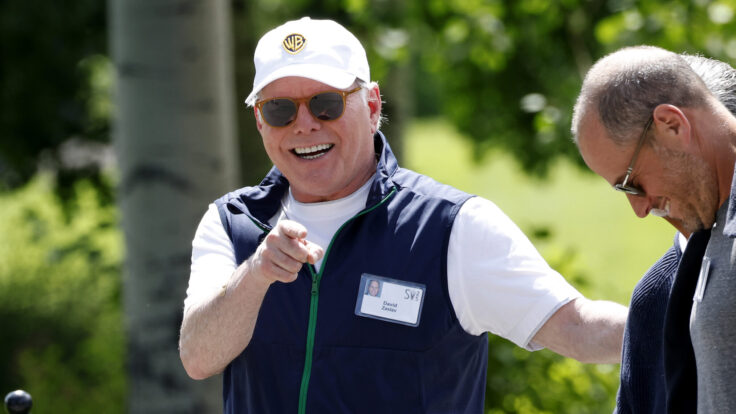
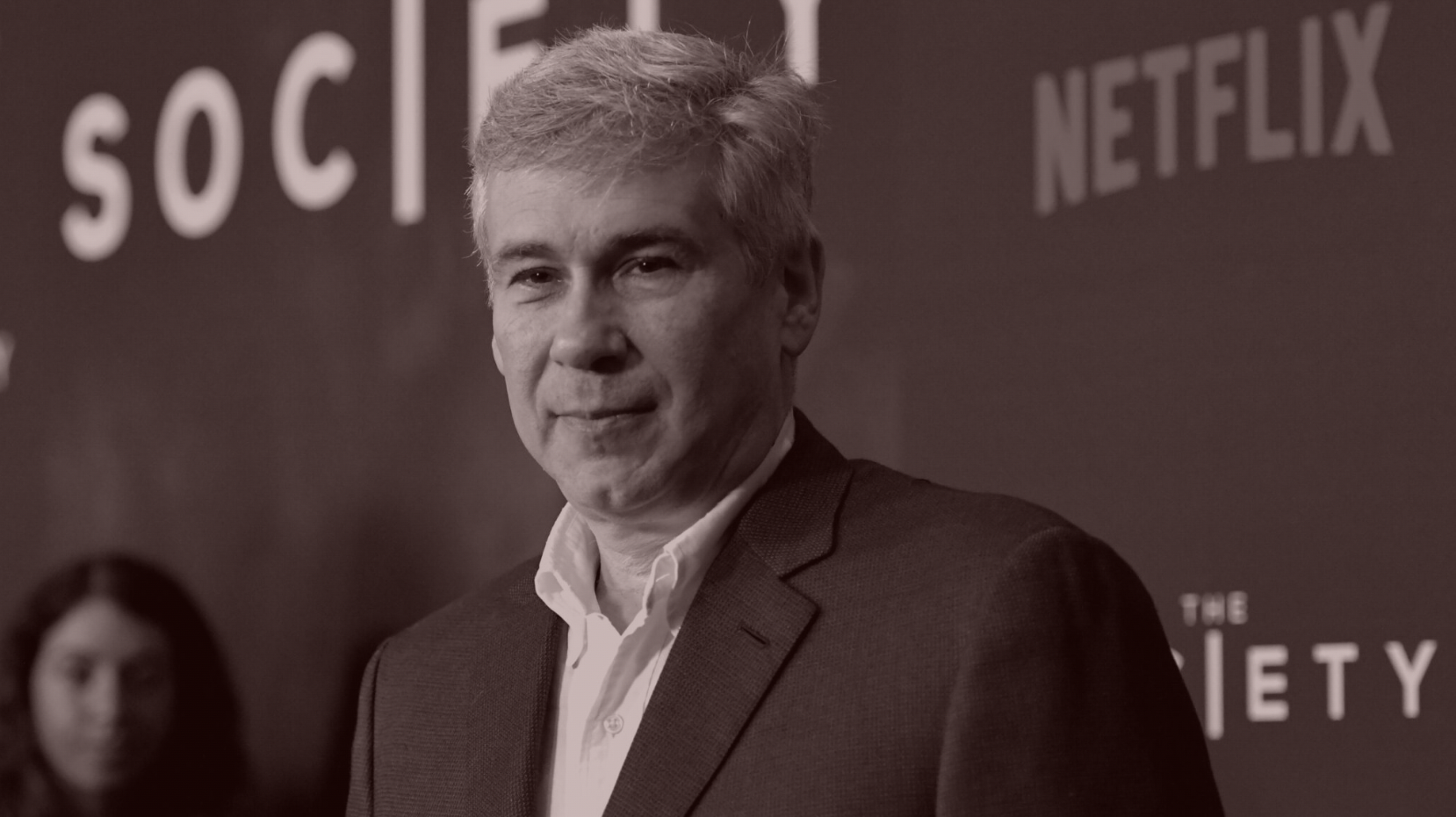
- Zaz’s week for the ages: A round of applause for Warner Bros. Discovery C.E.O. David Zaslav, who is on an all-time run of bad optics for a media executive amid financial and labor crises. Since Sunday, Zaz has:
- Gone viral for getting booed while wearing villainous dark sunglasses during a university commencement speech given amid Writers Guild picketers;
- Allowed himself to be photographed with a bottle of Dom Perignon at a lavish Hotel Du Cap party covered by multiple media outlets as his personal coronation. “Unofficially, it was the A-listification of Hollywood’s newest mogul,” the Times beamed.
- Announced at that same party that his friend (former longtime VF editor and Air Mail founder) Graydon Carter will be re-designing the Warner Bros. commissary with the architect Basil Walter. Red banquettes and Andre Carrilho murals are exactly what laid-off Warners staffers want to read about right now.
- Debuted a four-part docuseries about the 100th anniversary of Warner Bros. on the Max service. “Self-congratulatory, self-celebratory and as superficially amusing as any movie clip job can be,” declared the Journal. The paper added, “the fact that Mr. Zaslav is among the first living humans we see was hardly a random choice by director Leslie Iwerks.”
- Enraged both the directors and writers guilds by diminishing their contractual credits into an influencer-esque “Creators” grouping on the rebranded Max interface, forcing his P.R. team to craft a hasty apology and asking everyone to believe the change was an “accident.”
Did I miss something? Epic work, all around.
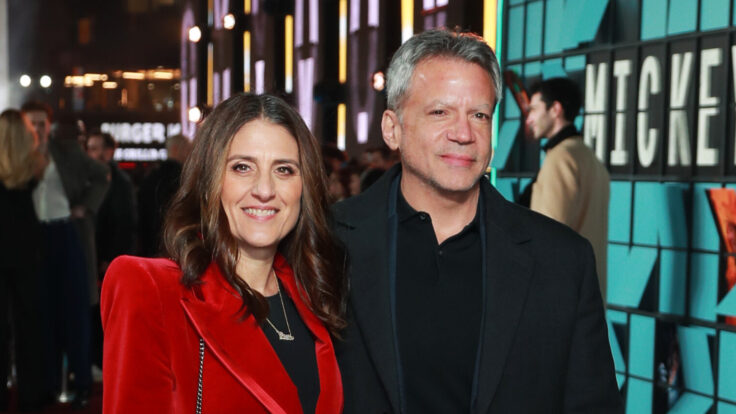
- Russo brothers losing co-founder: Mike Larocca, co-founder and vice chair of Joe and Anthony Russo’s prolific AGBO production outfit, is leaving, per sources. Company employees are being told tonight.
- Ryan Kavanaugh returns to movies (and litigation): When I saw Ryan Kavanaugh’s name pop up on a recent court filing, I thought of those TMZ “’Memba Them?!” posts. ‘Memba Kavanaugh’s foolproof formula for picking hit movies? The fawning media coverage of his private equity-backed Relativity Media? The 100 percent predictable implosion, lawsuits, bankruptcy, Kevin Spacey-led reboot, second implosion, and Kavanaugh’s eventual banishment from the business? Good times.
Ryan’s lately been reinventing himself with Triller, a social media service that—shocker—was accused of inflating its numbers and has sparked its own litigation. To add to that: Kavanaugh is now suing an ex-girlfriend and L.A. attorney Kirk Schenck for “extortion” over a sexual harassment and an unpaid wages complaint filed by Schenck’s client, a “jilted ex-lover” who worked on Triller’s broadcast of a Jake Paul fight, began dating Ryan, and is now suing him and others for $450,000 on top of the $100,000 he supposedly already paid her to go away.
Schenck allegedly threatened to turn the matter into a “child endangerment case” if Kavanaugh didn’t pay up. Schenck denies this, and his own 17-count civil suit on behalf of the unidentified woman claims Kavanaugh pressured her for sex and “would routinely demand [she] ingest illegal hallucinogenic psilocybin mushroom edibles.” Kavanaugh told me that’s false and he hates drugs.
It’s all kinda exhausting, as was covering Kavanaugh in the 2010s, so I’m not gonna go into the details. Email me if you want to see the court docs. I only mention the matter because Ryan reminded me that he’s getting back into movies with a label called The Quad, devoted to low-budget genre pics starring social media influencers. He says he’s currently “co-directing” a horror satire in L.A. called Skill House with Saw writer Josh Stolberg, starring TikToker Bryce Hall and 50 Cent. I’m sure that business will turn out great.
- Box office over/under: The Little Mermaid is tracking to $120 million for the four-day weekend, slightly higher than 2019’s Aladdin over the same Memorial Day stretch. That still seems a little low to me, so I’ll take the over, though Mermaid won’t get anywhere near The Lion King ($192 million) or Beauty and the Beast ($175 million), the highest openers of the recent Disney cash grabs—sorry, remakes—of the Katzenberg-era classics.
|
 |
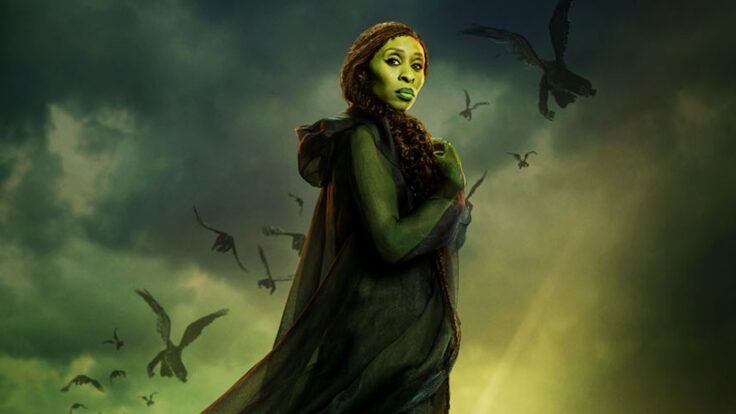
| Hollywood’s Writers-Strike Force Majeure Fantasy |
| The longer the work stoppage goes on, the more fears spread about studios cutting unproductive writer-producer deals, wiping the fiscal slate clean, and ushering in a new era of austerity. But how much of that will actually happen? |
|
|
|
| If you’re a striking Hollywood writer, maybe even reading this as you picket outside a studio while chanting a creative coupling of an expletive with the words “David Zaslav,” take a quick look to your left and right. If you’re one of the fortunate WGA members who is tied to a studio or streamer through a first-look or an overall deal, and have seen that deal suspended during the first few weeks of the strike, chances are that one of the similarly situated people in your immediate vicinity has not been suspended. Many have, and many haven’t, which has created this odd dynamic where some of even the most vocal WGA activists have lost their income by walking out, and others are essentially getting paid a ton of money to picket.
No shame there; in many cases, it’s up to the studios, not the union or its members, to determine what to do with paychecks during a strike. Under the Minimum Basic Agreement, employment agreements for WGA members are “automatically suspended, both as to service and compensation, while such strike is in effect.” That’s writers. But tons of writers are also producers and directors, of course, and in practice, most companies have kept paying their multihyphenates under term deals. |
|
A MESSAGE FROM OUR SPONSOR
|
 |
| For your Emmy consideration in Outstanding Talk Series and all other categories. “The Tonight Show Starring Jimmy Fallon” remains television’s landmark late-night talk show with a legacy that’s second to none and a digital footprint bigger than any of its competitors. Highlighted by original sketch comedy, conversations with the biggest stars as well as memorable performances by today’s hottest musicians and stand-up comics, “The Tonight Show” continues to deliver on its promise to entertain five nights a week. Watch “The Tonight Show Starring Jimmy Fallon” on NBC and Stream on Peacock. |
|
|
| It’s tough to generalize here—and yes, I know that most WGA members aren’t under any studio contract and thus don’t have the champagne problem of being suspended or terminated. But, for the most part, the deals built around TV development (meaning the writer-producer is being paid to come up with new shows) were suspended, some of them immediately after the May 2 strike. And those deals built around production, meaning the writer-producer is behind one or more shows that are actually happening, have not been suspended.
So if a show was either getting made, or about to get made, that likely means not suspended—with the studio hoping that the writer-producers will perform their production duties to get it made. Some have chosen to do so, even as WGA picketers have disrupted shoots and sent them mean tweets, and others have said they won’t. Of course, many of the guild’s biggest names, and highest earners, are these multihyphenates: meaning that the showrunner you recognize on the picket line—the one you might have super-casually asked if she’d like to hear the 30-second pitch for your coming-of-age dramedy set at a New England boarding school—is more likely to be still getting paid to be there. |
|
|
| Why? Beyond the hope that the active shows can finish, it’s an interesting question that gets to the heart of the talent dynamic at play during this standoff, and one that will become even more important as we head into the summer, when the prospect of termination, rather than suspension, becomes more real. After all, the writers are trying to inflict maximum pain on the studios by disrupting already-written shows and disallowing work that arguably falls outside past strike prohibitions. (Though, of course, my WGA friends still seem to be buying new Apple products and booking Disneyland trips and ordering groceries on Amazon.com, despite being on strike against those companies.) The guild has been relentless.
The studios could inflict massive pain on their writers by simply cutting everyone off—junior staff writers, first-time overall deal recipients, and name-brand showrunners. A few A+ talents, the Dick Wolfs and J.J. Abramses, have been able to negotiate strike protections into their deals, but that’s super rare. And, as I’ve mentioned, strike-busting is at its most effective when those with the most to lose actually start to lose it.
But… that discounts the politics of Hollywood. The studios can’t really go nuclear on the writers—or, at least, the studios are unlikely to do so unless the strike gets really bad—because, as the writers have collectively noted, they need the writers. Especially the top writers, even if they haven’t been as productive as desired. Not now, and probably not for a couple months. But this strike will end at some point, and most of the overall deals that made sense to Netflix’s Bela Bajaria and Warner Bros. Television’s Channing Dungey before the strike will still make sense to them afterwards. Not all, but most. If Amazon’s Jen Salke wants to work with Donald Glover or Jonah Nolan after the strike, why screw around with them now to save a few million bucks and jeopardize relationships with creatives who will always have opportunities?
That’s especially true for these executives whose entire value to their corporations is based upon their relationships with key people in the creative community. And it’s especially true at companies like Amazon and Apple, where the Hollywood money doesn’t really matter in the grand scheme. I talked to one business affairs executive this week who said his “fiscal fantasy” would be to simply cut every unproductive deal above $10 million and start over post-strike for Hollywood’s new era of austerity. But he knows that’s not possible. “This is a talent business,” he admitted to me, “and the talent is finite. We’d like to not piss off that talent if we can help it.” |
|
|
| The Force Majeure Strategy |
|
| That’s for now, obviously. And I don’t want to minimize the fact that the writer-producers whom the studios don’t really care about, the ones who rode the content bubble but aren’t productive, or whose deals no longer match their value—you know who you are—are becoming increasingly vulnerable as the strike drags on. Force majeure termination is governed by individual contracts, so it’s risky to generalize. (There’s a provision in the MBA, Section 7e, that also provides a path to terminate, yet that is seldom used.)
But most agents, lawyers and an executive or two I talked to this week don’t think the studios will even move to terminate deals until July or August, after a two-month suspension runway, and after it’s clear what the DGA and SAG-AFTRA are doing. And most think that when the studios do consider force majeure-ing writers, they likely won’t take a fiery blowtorch to their talent rosters. More likely, the cuts will be targeted and judicious.
That was the opinion of Sarah E. Moses, a litigator at Manatt who’s hosting a panel with me on this subject in a couple weeks, when I asked her yesterday. “Moreover, some contracts, and the force majeure provisions in them, may include a waiting period before the provision kicks in, or selectivity clauses that prevent a studio from suspending or terminating the contract unless the studio does the same for others similarly situated,” Moses added. “For all of these reasons, studios will probably take their time crafting a strategy for how to use force majeure to their benefit, if they decide to do so.”
If they decide to do so. Some might not even do it. Most, I think, will dabble, cull the herd a bit, send a message to the WGA leadership, just as they did in 2008, though likely not nearly on the scale that I think the studios would like the guild members to fear. It would be surprising if anyone attached to an active show had their deal terminated, for instance, or anyone with a proven track record who could generate interest on the open market. But if you’ve got a mid-level deal—like $3 million or $4 million a year—and you don’t have a greenlit show, or your current show is ending? You’re scared. Or you should be, as should non-writing E.P.s who aren’t involved in something big.
Why does any of this matter? In the streaming era, as traditional backend compensation has all but disappeared, these overall deals have replaced that money, basically becoming the backbone of high-end writer-producer compensation. The reward for creating a hit show is now the overall deal, not the points. And while, in previous generations of strikes, it wasn’t possible to cut off backend checks, now it is possible to go after the overall deal to inflict maximum pain. But in most cases, that’s probably the shortsighted move, one that could backfire come September, October, November, or whenever this strike finally ends. |
|
|
See you Monday,
Matt
Got a question, comment, complaint, or a spec pilot for a Tom & Greg spinoff? Email me at Matt@puck.news or call/text me at 310-804-3198. |
|
|
|
| FOUR STORIES WE’RE TALKING ABOUT |
 |
|
 |
| Bezos at Sea |
| A conversation encircling the latest mediaworld plotlines. |
| DYLAN BYERS |
|
 |
| Gorman’s Goodbye |
| Handicapping the Morgan Stanley C.E.O. succession odds. |
| WILLIAM D. COHAN |
|
 |
| Xi’s Peace Plan |
| The Blob is skeptical about China’s peacemaking abilities. |
| JULIA IOFFE |
|
|
|
|
|
 |
|
|
|
Need help? Review our FAQs
page or contact
us for assistance. For brand partnerships, email ads@puck.news.
|
|
|
|
Puck is published by Heat Media LLC. 227 W 17th St New York, NY 10011.
|
|
|
|