 |
|
Welcome back to What I’m Hearing, still cautiously optimistic about the SAG-AFTRA talks.
Congrats to my Puck colleague Julia Ioffe on the launch of her new narrative podcast, About a Boy: The Story of Vladimir Putin. It’s currently the No. 1 History pod on Apple, No. 40 overall, and well worth your time.
As always, if this email was forwarded to you, become a Puck member by clicking here.
Let’s begin…
|
|
|
- Stay calm, Beyhive: Sure, Taylor Swift: The Eras Tour may be on track to far outgross Renaissance: A Film By Beyoncé, but I’m told Beyoncé is getting the exact same deal terms from AMC Theaters as the Taylor Swift concert film. That means that 43 percent of the U.S. gross of Renaissance will stay with theaters (plus 100 percent of concessions), and 57 percent will go to Team Beyonce (with a small slice to AMC as the distributor). Hollywood studios get nothing.
- Sign o’ the depressing times at Miramax: We got a signal this week of how troubles on Wall Street and the cratering content market are trickling down to fewer movies. Brian Robbins, C.E.O. of Paramount Pictures, which owns 49 percent of Miramax (Qatar’s beIN has 51 percent), effectively pulled the plug on the unit and cut Bill Block, its C.E.O. Miramax will continue as a lucrative library, but the recent model—remakes like Confess, Fletch and He’s All That and lower level projects like Robert Zemeckis’s Here, which can be flipped to thirsty streamers or even go theatrical—doesn’t work when demand drops and streaming premiums go from 30 percent to 10 percent. This is the result when the bottom part of the market falls away.
- Box office over/under: Blumhouse’s The Exorcist: Believer is coming in waaaay below Universal’s expectation from when Donna Langley paid $400 million for the rights package and announced three movies. She no doubt saw an opening in line with the $76 million for 2018’s Halloween with Jamie Lee Curtis. But… I still think the brand, if not that low 22 percent RT score, will carry it past the $30 million tracking, so I’ll take the over.
Now for the most interesting legal fight in a while… |
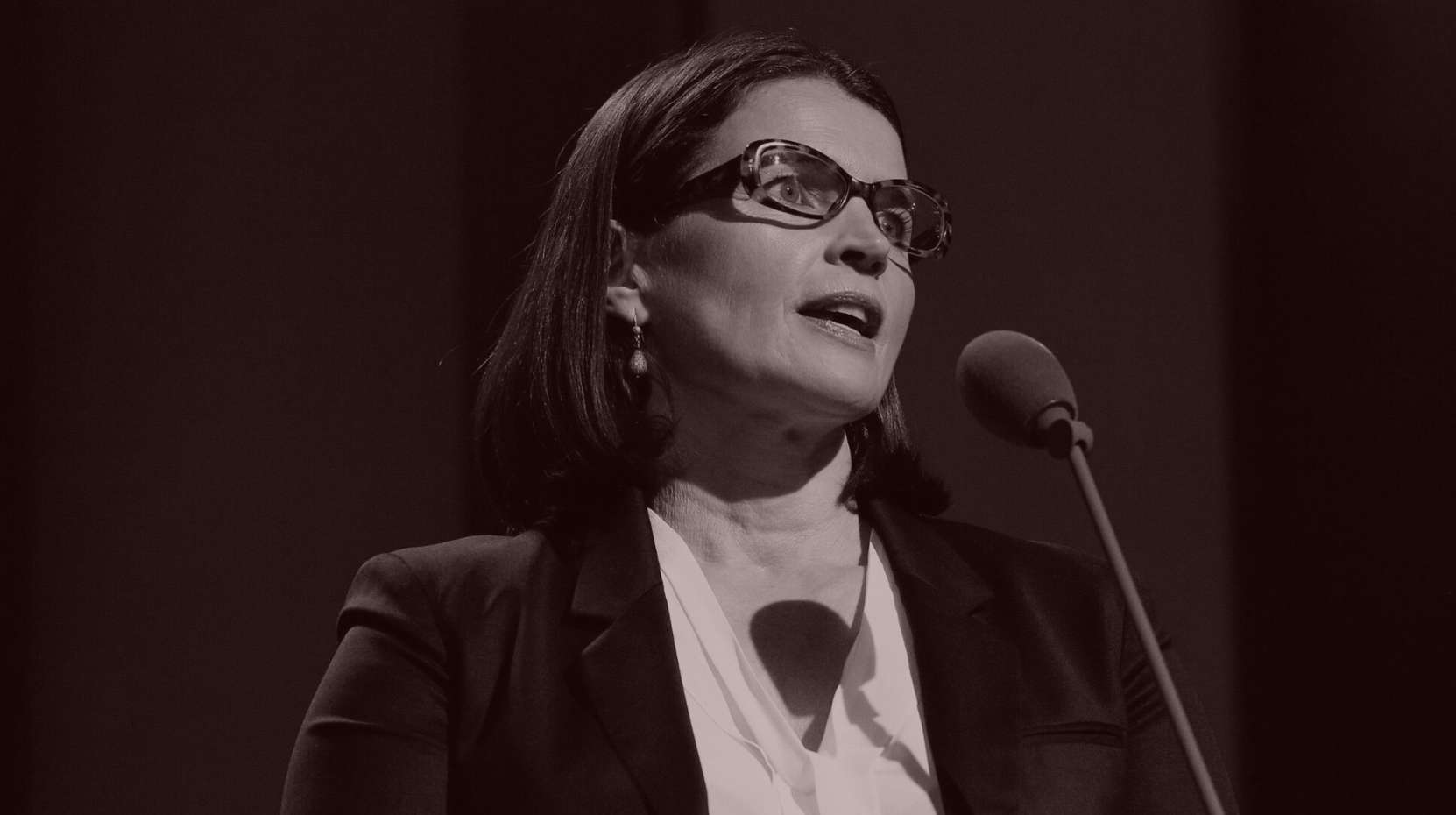 |
| The Harvey Weinstein Story That Hasn’t Been Told |
| Actress Julia Ormond’s lawsuit against CAA raises troubling issues about the alleged enabling of abuse in the pre-#MeToo era—murkier, both legally and ethically—and the key subjects are Bryan Lourd and Kevin Huvane, two of the most powerful agents in Hollywood. |
|
|
|
| Man, CAA really fired back at Julia Ormond, the British actress who sued the agency yesterday claiming her reps in the ’90s not only knew Harvey Weinstein was a predator when they sent her alone into meetings with him, but actively discouraged her from reporting the inevitable gruesome assault by the now-convicted rapist. Along with a blanket denial, the agency revealed publicly that Ormond’s lawyers wanted $15 million to settle, which CAA “immediately rejected,” and hired the Paul Weiss law firm, a veteran of #MeToo work for Fox News and others, which conducted an “investigation” that found “nothing to support Ms. Ormond’s claims against CAA.” Okay, then! Please disperse, nothing to see here, right?
Today I ran that statement by Kevin Mintzer, one of Ormond’s New York-based lawyers and a veteran of sexual assault litigation involving Weinstein and Jeffrey Epstein, and he chuckled. “The word ‘investigation’ in this context is not really correct,” he countered. “Their lawyers defending them looked into this on their behalf, and lo and behold, Paul Weiss said what [CAA] wanted them to say. It’s not particularly meaningful.”
That’s long been the complaint about these internal #MeToo probes by “independent” law firms—how independent can they actually be when they’re commissioned and paid for by the client, and it’s presumably a client whose business the firm would like to retain? Remember, Les Moonves was investigated and cleared by CBS before the explosive claims against him were made public. Even lawyers who are supposedly on the “right” side of these issues also enjoy keeping their high-paying clients happy. It’s still nuts that Lisa Bloom, the supposed women’s rights advocate and daughter of Gloria Allred, showed up at Weinstein’s side in the initial New York Times and New Yorker exposes to vouch for his behavior.
This CAA situation is doubly complicated because the behavior in question isn’t abuse but rather the alleged enabling of abuse—murkier, both legally and ethically—and the key subjects of this investigation are Bryan Lourd and Kevin Huvane, the agents who allegedly committed negligence and breached their fiduciary duty to Ormond, in 1995, when she says she was assaulted by Weinstein at a hotel in New York. Lourd and Huvane are both still co-chairs of the company and two of the most powerful agents in Hollywood. (Disney and Miramax are also defendants, as is Weinstein himself, but the other executives from the time are long gone.) When employees are investigated by outside law firms, those employees are sometimes asked to step down or pause their business during the process. That didn’t happen here, obviously.
This suit is even more complicated for a couple of reasons. While the allegedly enabling behavior by the CAA guys is very specifically outlined in the complaint, much of it is he said-she said, and at a time before all the incriminating emails and texts we expect today. To quote from the filing:
“Lourd and Huvane also told Ormond that if she took action such as going to the police, she may not be believed, and that she risked further angering Weinstein, who could be even more punitive. They also told Ormond that she could get a lawyer and seek a settlement, but they emphasized that she shouldn’t expect to receive more than $100,000, which they apparently believed was the going rate for being sexually assaulted by Harvey Weinstein. Lourd and Huvane advised Ormond to consider whether such a settlement was worth it given how much money she was making in film. Finally, they cautioned Ormond that she should not speak to people about what Weinstein had done because he would sue her for libel.”
No, not great. And it all sounds so similar to countless Weinstein victims over the past six years—except with two of the biggest agents in town specifically accused. Legally, if this case ever went to trial (there’s almost no chance of that happening), Ormond would need to show that CAA’s behavior sufficiently contributed to her being harmed, and that she suffered financial damage as a result. Considering that in 1995, Ormond was big enough for a two-picture Miramax deal, and yesterday I had to Google her to remember who she was, it’s pretty clear her career was damaged by something. Rosanna Arquette, Mira Sorvino, Ashley Judd—so many actresses of that era saw their prospects flatline after they upset the Weinstein machine. But is CAA responsible for that? “Had they taken reasonable action to protect their client, this would never have happened,” Mintzer told me.
Ormand’s lawyers specifically reject CAA’s suggestion in its statement that Ormond was trying to extort money in exchange for her silence. “Of course there was a substantial monetary demand, given the amount of damages to Ms. Ormond,” Mintzer continued. But, he said, “there was never an offer to resolve the case with an NDA. She’s not going to be quiet. That was never on the table.” Finally, he added, “They did not deny that Julia had reported this to them.” (CAA declined to make its lawyers available to respond, pointing to its public statement, which does say the claims generally are “baseless” and “without merit.”) |
|
|
| CAA’s in a tough spot here. We all knew Harvey was a monster, and for the most part, we did nothing until his power waned and that initial group of women came forward. It’s tough to dole out legal liability for that inaction years later, but… some of us knew more than others.
In the ’90s and ‘00s, CAA’s relationship with Weinstein was, for lack of a better word, special. Yes, all agencies suck up to studio heads, and there’s always been an implicit quid pro quo: I’ll deliver you talent for your movies, you keep my clients employed and, if possible, help me sign new ones. But CAA in the mid-’90s, as the Michael Ovitz era transitioned to the Young Turks, was infused with a certain ambition and swagger. It had the most movie stars, the kind that want to win Oscars, and Harvey was the most important person in the prestige movie business, which mattered a lot more than it does today.
The Weinstein factory—first at Miramax, with hundreds of millions of Disney’s dollars, and then at the independent Weinstein Co.—could deliver for CAA like nothing else. Harvey rewarded his friends and punished enemies, and CAA was certainly on the friend list. The agency went on to represent the Weinstein Co. They were tight.
So it’s not shocking that CAA has hovered in the background of the Weinstein story since it first broke six years ago next week. The agency popped up in the coverage at the time, in books written by Ronan Farrow and the Times’ Jodi Kantor and Meghan Toohey, and the Ken Auletta book from last year. We covered the agency’s role at THR when I was there and CAA had draped itself in the Time’s Up movement before that imploded. When it was revealed that Brad Pitt, a Lourd client, stepped in to protect Gwyneth Paltrow from Harvey, many of us asked: Are we to believe Pitt said nothing about Weinstein to his agents?
The Times drew the closest connection between CAA and Harvey with its famous story on the Weinstein Complicity Machine. That seminal #MeToo article reported “at least eight talent agents were told that Mr. Weinstein had harassed or menaced female clients, but agents there continued to arrange private meetings.” One former CAA client, the actress Mia Kirshner, went on the record about how her agents responded to her being abused. “I was told to forget about it; it was pointless to do anything about this,” she said.
For that story, Lourd was asked specifically if he was aware of Weinstein’s behavior with his clients. He declined to comment, citing “client confidentiality.” CAA, however, did say it was sorry in a statement: “We apologize to any person the agency let down for not meeting the high expectations we place on ourselves, as individuals and as a company.” That apology may read a little differently in light of the Ormond suit. “What were they apologizing for if they are completely innocent?” Mintzer asked me. Not a bad question.
Look, I’m no Pollyanna about this stuff. I know tons of behavior that was considered normal in Hollywood in the ’90s and 2000s would get you fired and canceled in two seconds today. The blame game these days can spiral out of control. But it’ll be interesting to see how the CAA leadership and its clients—especially the many, many prominent names who have spoken out against the horrors of Harvey—will respond, if at all, to the Ormond litigation as it proceeds. Will they believe a prominent accuser or their own agents?
Ryan Murphy, a Time’s Up ally who counts Lourd among his reps, was asked in 2018 about CAA’s role in the Complicity Machine: “I’m loyal to my friends,” he said, kinda dismissing the story. Yesterday I asked a rep for Salma Hayek if she believes Ormond. I don’t mean to put one actress on the spot, but Hayek is not only a CAA client, she’s also married to Francois-Henri Pinault, the agency’s new majority owner, and she wrote a Times op-ed in late 2017 about believing in women accusers. “I am grateful for everyone who is listening to our experiences,” she wrote in the piece. “I hope that adding my voice to the chorus of those who are finally speaking out will shed light on why it is so difficult, and why so many of us have waited so long.” (Hayek’s rep said she wasn’t available to comment; I also asked a Pinault rep for comment and got no response.)
CAA is the most powerful talent agency in Hollywood, and it’s been run exclusively by men since its founding nearly 50 years ago. Maybe it’s unfair, with 2023 hindsight, to judge the behavior of agents in the ’90s who were trying to help their clients succeed in an environment where monsters like Harvey Weinstein were the cost of doing business. But if I’m a big CAA client—Meryl Streep, Charlize Theron, Scarlett Johansson, any of the dozens of actresses who have spoken out on Weinstein and the Complicity Machine—I’m hoping this Ormand case proceeds at least to the discovery phase, so we see some evidence of what actually happened to her, and who might be to blame. Effie Blassberger, another lawyer for Ormond, put it more succinctly when we talked today: “Harvey has been held somewhat accountable for his actions. But CAA hasn’t.” |
|
|
See you Sunday,
Matt
Got a question, comment, complaint, or a Dodgers playoffs invite? Email me at Matt@puck.news or call/text me at 310-804-3198. |
|
|
|
| FOUR STORIES WE’RE TALKING ABOUT |
|
|
|
|
|
 |
|
|
|
Need help? Review our FAQs
page or contact
us for assistance. For brand partnerships, email ads@puck.news.
|
|
You received this email because you signed up to receive emails from Puck, or as part of your Puck account associated with . To stop receiving this newsletter and/or manage all your email preferences, click here.
|
|
Puck is published by Heat Media LLC. 227 W 17th St New York, NY 10011.
|
|
|
|