 |
|
Welcome back to What I’m Hearing, and the end of Week 1 of the apocalypse. You doing OK?
Let’s jump right in, and as always, if you’ve been forwarded this email, become a Puck member here.
|
|
|
- CAA’s client hierarchy on parade: Nice to see CAA’s Bryan Lourd out there picketing in New York now that his actor clients are on strike. But it does beg the question: Where was Lourd during the two-and-a-half months when it was just writers? Anyone who’s seen his star-studded call sheet probably knows the answer to that question, and unlike the WGA, SAG-AFTRA didn’t sue CAA to end its lucrative TV packaging business.
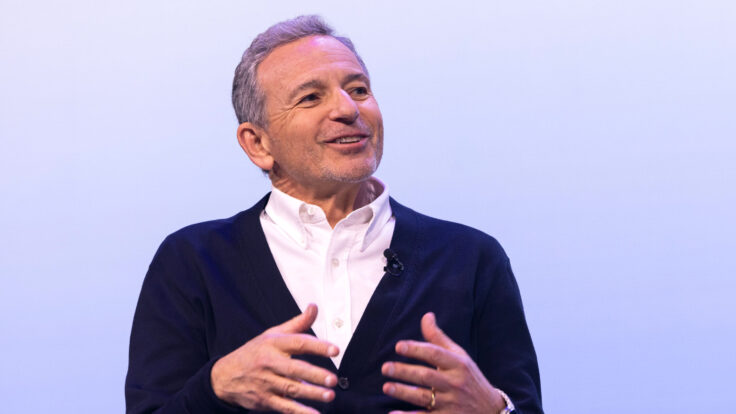
- What might Iger’s fire sale fetch?: Media I-bankers seem to be salivating over Bob Iger’s decision to auction off—or at least entertain offers for—Disney’s TV networks. But valuing those outlets is an inexact science, especially since their subscriber numbers are in perpetual decline. After asking a few analysts and banking sources for internal numbers, here are some ballpark estimates—emphasis on the ballpark, because there are so many variables, and many involved here have an incentive to overvalue. But they’re still interesting:
ESPN (Hearst owns 20 percent): $30 billion to $45 billion. One valuation a source saw is based on 8x the linear channel EBITDA plus $215 per subscriber for ESPN+, which equals around $41 billion.
ABC: $7.9 billion
A+E Networks (50-50 owned with Hearst): $6.8 billion
FX: $4.5 billion
ABC’s owned and operated TV stations: $4.1 billion
National Geographic (27 percent owned by National Geographic Society): $3.5 billion
Freeform: $1.5 billion
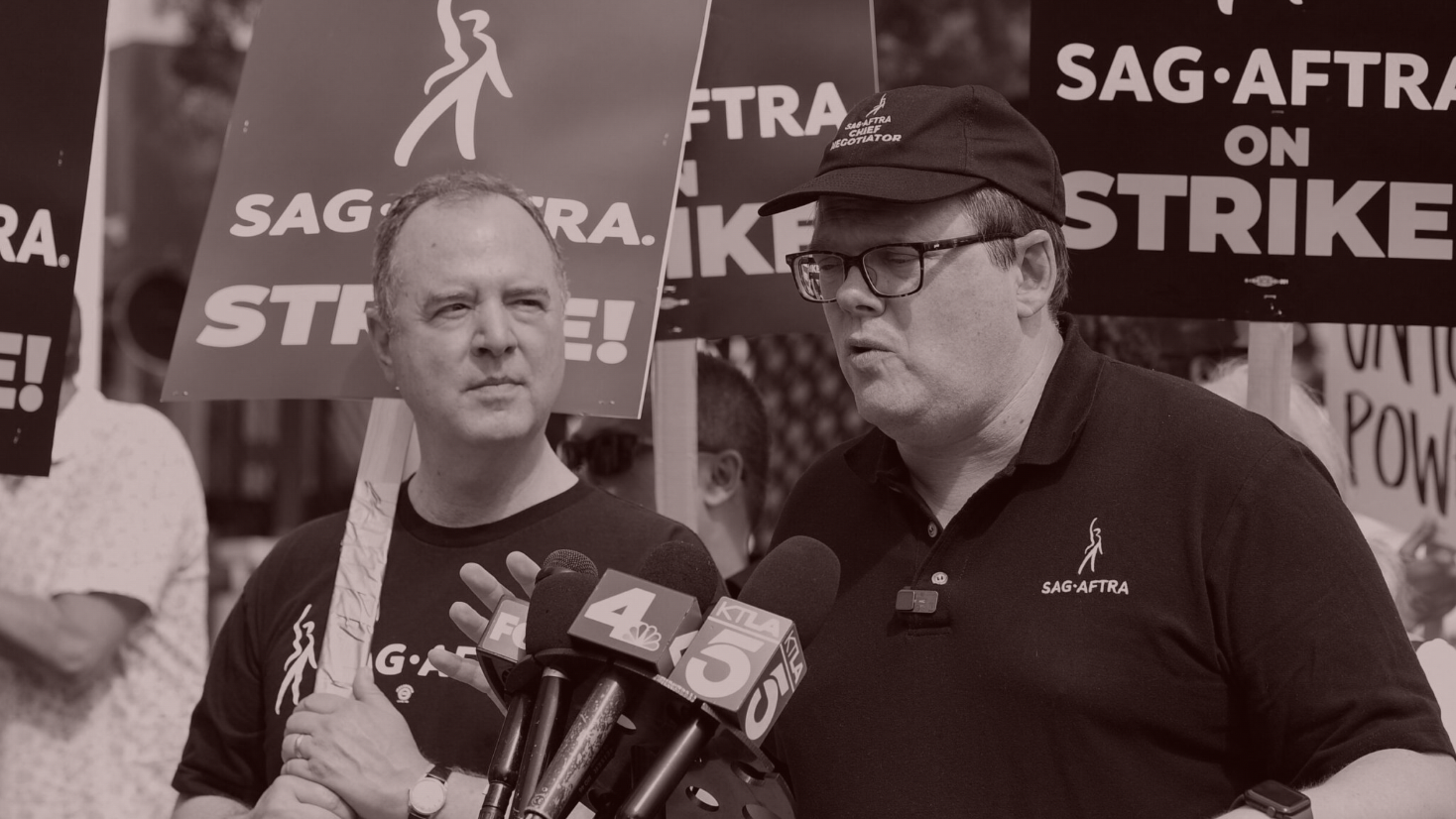
- All the world’s a stage for SAG-AFTRA: I’ve learned from a union source that since the SAG-AFTRA strike began last week, president Fran Drescher and top negotiator Duncan Crabtree-Ireland have talked to media outlets from 96 countries. Plus, wire services like AP, Reuters and France’s AFP are distributed in virtually every nation. Drescher, the face of the strike so far, has been courted for long profiles by multiple national magazines and TV outlets. SAG-AFTRA is now trying to balance between leveraging the interest to spread its message and ensuring that the media attention isn’t too much about Drescher herself. —Jonathan Handel
- Box office over/under: It’s here! Barbie vs. Oppenheimer vs. Mission Weekend 2 vs. whatever in Q’s name is going on with Sound of Freedom. Warners is laughably lowballing on Barbie ($75 million? Really guys?), especially given the extraordinary pre-sales, positive reviews, and social media frenzy. But even the $110 million tracking seems off. I’m taking the way over, and I think it could get to $140 million, $150 million, or even more. Oppenheimer is at $48 million, including all those IMAX screens. I’ll take the over there too.
|
 |
| Can Anyone Win Hollywood’s Labor Summerslam? |
| With Netflix pulling away in streaming and L.A.’s mayor poised to jump into the fray, the incentives for the studios and talent guilds to make a deal become even more complicated. |
|
|
|
| It’s funny how everyone in Hollywood now thinks they have the solution to end the strikes. On phone calls and over meals, whether it’s executives or lawyers, picketing WGA strike captains or talent agents with nothing to do, so many people seem convinced that they have come up with the perfect compromise.
Emotions may be boiling over to the point where misinformation is flying around town and nobody in power is even talking about resuming talks; to the point where NBCUniversal allegedly trimmed the tree shade near Barham Boulevard; and where Fran Drescher, the SAG-AFTRA president turned organized labor folk hero, thought it was cool to ask if Disney C.E.O. Bob Iger is an “ignoramus” during a livestreamed chat with Bernie Sanders. |
|
|
| Regardless, I keep hearing, If only I could get them in a room… Or better: If I can just bypass these Labor V.P.s and take my idea straight to the C.E.O.s, this would all end… At Tower Bar last night, I half expected our waiter to announce, “Yes, the lobster tacos are delicious… and if the actors are willing to accept a reduced foreign AVOD residual, the studios may punt on generative A.I. Would you like another martini?”
No matter that many of these people (well, not the waiter) are the same executives and guild activists whose intransigence led to the work stoppage in the first place, and whose blame-game theatrics seem to be making the division worse—whether it’s Iger’s or Barry Diller’s condescension from Sun Valley, or Drescher’s performative outrage to whatever media outlet will listen. I know, I know: this is Hollywood, everyone’s crazy, but the supposed adults in the room are now acting like children. We’re not too far from that Martin Sheen scene from Apocalypse Now —“Who’s the commanding officer here?” asks Sheen in the heat of battle to a soldier, who responds, “Ain’t you?”
What’s clear from this first week of Labor Summerslam is that both sides need to bring the temperature down a lot. At this point, everyone understands the respective positions. The blast radius on the work stoppage is claiming more and more actual livelihoods, and it’s about to get way worse. Deal terminations are coming. Smaller agencies and management firms have started laying off staff members. And the summer 2024 blockbuster season is imperiled, which could bring down the already-teetering movie theater industry. Meanwhile, judging by the stock market this week, Wall Street wants the studios and streamers to heal this self-inflicted wound fast. But how? |
|
|
| As smart as everyone in town thinks they are, it seems obvious that some outside neutral figure needs to step in as a peacemaker of sorts. The days of Lew Wasserman, Sid Sheinberg, or even Iger as a respected statesman have disappeared like meaningful backend participations. So who? Kim Masters reported this week that federal mediators were working with both sides long before that panic button was pushed at the SAG-AFTRA deadline, so perhaps they’re a potential answer. Are professional dispute resolution experts enough, though? Especially when they didn’t work the first time?
I’ve learned that L.A. Mayor Karen Bass, at the urging of her Hollywood allies, has quietly been familiarizing herself with the strike details and begun positioning herself as a potential dealmaker—talking both with the guilds and the C.E.O.s, like Netflix’s Ted Sarandos and Sony’s Tony Vinciquerra, who several sources say has emerged as a thoughtful and pragmatic voice behind the scenes. Local congresspersons Adam Schiff and Katie Porter, both of whom are running for U.S. Senate, have picketed alongside the striking talent, and Gov. Gavin Newsom has essentially done nothing except volunteer to step in if asked.
But Bass, while definitely backed by labor during her tenure in Congress and her 2022 mayoral campaign, issued a recent statement on the SAG-AFTRA impasse that was careful to acknowledge that both the striking guilds “deserve fair contracts” and “a strong business sector is essential for our city.” That wasn’t a coincidence. Bass also got involved to help resolve the recent L.A. public teachers strike. Might she be a potential answer? |
|
|
| Another theory I hear a lot is that the studio-streamers are never going to all agree on these issues, especially data transparency and A.I., and the guild should just try to pick off AMPTP members one by one with individual deals. That worked in the Writers Guild action against the talent agencies over TV packaging, with the smaller, more desperate shops folding one by one until WME and CAA could no longer hold out.
But the AMPTP is much stronger than the flimsy Association of Talent Agents, which the WGA refused to recognize. The AMPTP has existed specifically to negotiate labor deals for decades, and its members all signed a contract saying they would bargain together, so a member resigning or being expelled would be unusual. (The AMPTP did not get back to me on this issue, which its rep definitely didn’t want to talk about, but I’m told resignation requires a long notice period.) |
|
|
| Still, it’s not like the AMPTP is a cemented-in-stone coalition. Netflix only joined in 2021. Paramount and Universal actually bailed on the AMPTP in the ’70s and then later rejoined. And it’s clear that these companies have less to do with each other’s businesses than at any point in the studio cartel’s history. Netflix is the only pure-play streamer. Apple and Amazon make their money elsewhere. Paramount, NBCUniversal, and Disney own streamers of varying size and success but are still invested in the linear TV bundle. And Sony doesn’t even have a major platform.
The AMPTP has always been a group of allies, not partners, and it’s a more tenuous coalition than ever, especially as the streaming-first companies actively try to put the studios out of business. If the guilds want to hold strong on the transparency issue, maybe the traditional AMPTP members go their own way and come to a compromise. It almost certainly won’t be a 2 percent cut of revenue for streaming shows, but maybe there’s a path toward more viewership transparency. And if so, maybe the guilds can simply ice out Netflix or Amazon or Apple or whoever balks until it agrees to their demands. Sure, that $17 billion in annual Netflix content spend would be tough to sacrifice, but the fact remains: Netflix can’t grow without using SAG-AFTRA members at some point. That’s more leverage than perhaps some are acknowledging.
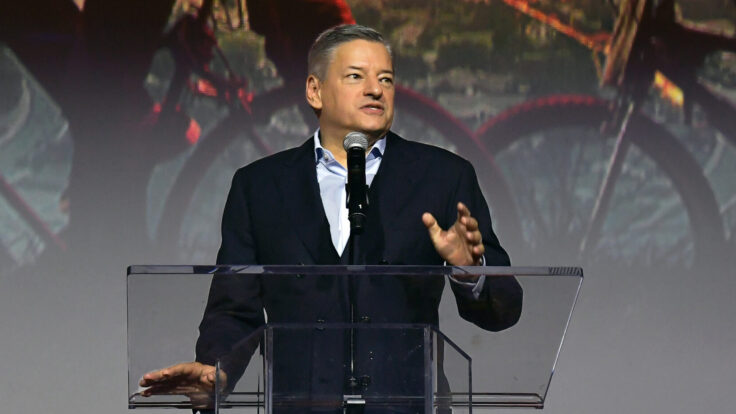
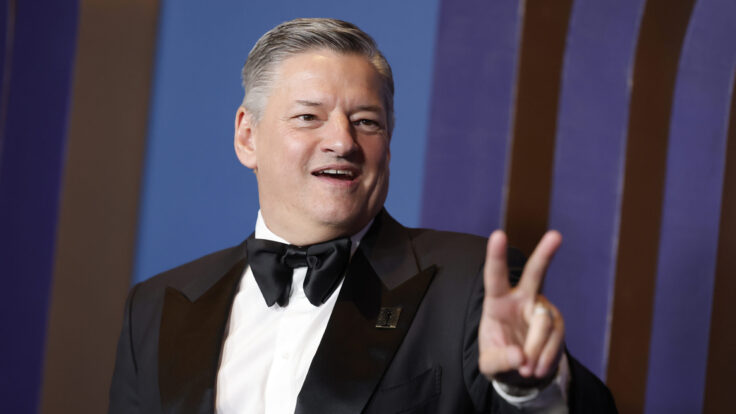
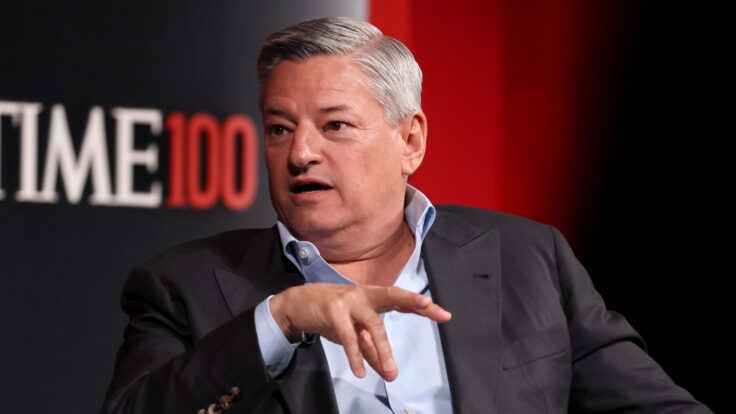
On yesterday’s Netflix earnings call, Sarandos felt the need to say, “This strike is not an outcome that we wanted.” (Side note: Who is Ted kidding with the “I was raised in a union household” line? It may be true, but the dude now makes $50 million a year, most of which is based on performance metrics that incentivize him to keep expenses, like labor costs, under control.) Ted was clear he’s anti-strike because he also revealed that the strike has been good for Netflix, at least in the short term. The company is pulling away in streaming, supercharging its profitability with lower costs and growing its subscriber count to 238 million worldwide.
The analyst Rich Greenfield put it starkly to CNBC: Netflix made $6.5 billion last year, excluding interest, taxes, and non-cash charges, while the newer services at Disney, Paramount, and NBCUniversal lost more than $8 billion. Big difference! The market punished Netflix for softer than expected guidance, but the fundamentals at Netflix are perhaps stronger than ever. And its larger business interests are now almost totally divorced from its AMPTP coalition “partners.”
The strike has helped that effort, boosting Netflix’s free cash flow this year from $3.5 billion to $5 billion while punishing the Fall TV seasons of its rivals. It’s not just the delayed shows; broadcast networks face an extinction-level event if their few remaining viewers don’t return for their favorite procedurals and sitcoms in 9 or 10 months. “This is going to hammer the ratings when shows are back on,” Warren Leight, the SVU showrunner and WGA activist, predicted to Joe Adalian today. And given the drops in recent years, TV may never recover.
So Netflix, Amazon, and Apple are incentivized to dig their heels in, especially on the data transparency issue. (Though, according to negotiation sources, the streamer-studios like Paramount are also wary of transparency, lest the market freak out when it sees how few people actually watch most shows.) If the streamers prevent any kind of quick resolution, and lean into their libraries and international content, their U.S. rivals will further atrophy out of relevance, if not existence.
Or maybe that Netflix profit surge will have the opposite effect. Analyst Michael Pachter, the longtime Netflix bear-turned-bull, came on The Town today and argued that Netflix might actually break from the AMPTP to settle first —and screw over the rest of the industry in the process. If Netflix is now making so much money in streaming, he argued, it could afford to give the talent more of what they want, which would in turn blow away the traditional rivals, which would be forced to accept onerous terms they couldn’t afford.
That’s a sinister plot, and it might blow up in Sarandos and co-C.E.O. Greg Peters’ faces. After all, Ted was elected chair of the Academy Museum board of trustees and considers himself a part of the Hollywood community, even as Netflix works to undermine the financial model underpinning all those movies in theaters that the museum celebrates. So I don’t see Netflix breaking away like that on its own.
Big picture, the fear for the talent guilds on strike should be that they are holding out to win the labor battle but will sabotage themselves in the larger war for a viable entertainment business. Despite the vitriol and grandstanding and scare tactics, the guilds and the companies aren’t actually that far apart on the key issues. “They’re already 80 percent there,” one veteran labor dealmaker said to me today. “And the 20 percent is easily doable.”
Two things are always true about strikes: There’s a beginning and an end. What happens in the middle is important, of course—whether it’s Drescher and the guilds loudly pressing their income-inequality case, or the studios noting that the top actors are just as highly-paid as those C.E.O.s, while recognizing that a greater level of data transparency just might be the cost of doing business in Hollywood. But the strike will end, that’s an inevitability, and how it ends is the only thing worth talking about. |
|
|
See you Sunday,
Matt
Got a question, comment, complaint, or your own solution to settle the strikes? Email me at Matt@puck.news or call/text me at 310-804-3198. |
|
|
|
| FOUR STORIES WE’RE TALKING ABOUT |
|
|
|
|
|
 |
|
|
|
Need help? Review our FAQs
page or contact
us for assistance. For brand partnerships, email ads@puck.news.
|
|
You received this email because you signed up to receive emails from Puck, or as part of your Puck account associated with . To stop receiving this newsletter and/or manage all your email preferences, click here.
|
|
Puck is published by Heat Media LLC. 227 W 17th St New York, NY 10011.
|
|
|
|