 |
 |
|
Welcome back to What I’m Hearing, and thanks to the surprising number of 40-something men who reached out to say they also enjoy Taylor Swift. Judging by my Instagram feed during Swift’s L.A. shows this weekend, one of her key demos seems to be Everyone I Know.
Programming note: I’m on CNBC at 6:50 a.m. eastern tomorrow morning. I also popped by The Press Box podcast to talk Mayer/Staggs at Disney. Plus, this week on The Town: Lucas Shaw and I debated strike strategies, Rebecca Keegan broke down the Barbie Effect on female filmmakers, and Rich Greenfield wondered whether Disney should start putting Marvel shows on Netflix.
Was this email forwarded to you? Click here to become a Puck member.
Discussed in this issue: Carol Lombardini, Ellen Stutzman, Bethenny Frankel, Tony Segall, Jimmy Pitaro, David Goodman, Meredith Stiehm, David Miscavige, Ted Hope, George Kliavkoff, Bryan Freedman…and Tom Selleck’s hairpiece.
But first…
|
| Who Won the Week: Nobody (or maybe strike pessimists) |
|
| What a bust. Friday’s meeting to discuss a meeting between the AMPTP and Writers Guild turned into a Master Class on how to not negotiate. Jonathan Handel has a more nuanced analysis below of where the strike stands, but it’s clear that nothing will happen until both sides become willing to compromise on the few issues that matter. Still, here are three less pessimistic takeaways:
1. This week will be crucial: If the two sides agree to meet again this week—despite the AMPTP claiming certain issues are “nonstarters,” and despite the WGA rhetoric about the studios’ “anti-union playbook”—then a path to a deal still exists. If they don’t, I’m afraid they won’t get back together for weeks and weeks.
2. If you actually read the WGA negotiating committee’s Friday message to members, it’s less pessimistic than much of the news coverage, and it says the committee is “willing to engage with the companies and resume negotiations.”
3. As I wrote on Thursday, the fact that the C.E.O.s overruled their own lead negotiator and asked for a WGA meeting suggests an actual desire to resolve this. That’s still not nothing.
Now another strike angle… |
|
|
| I know this weekend’s movies were being closely watched in marketing and distribution circles because they’re the first big studio releases to open without promotion from striking actors. And… both Ninja Turtles 7 ($43.5 million) and Meg 2 ($30 million) did fine. Neither was particularly star-driven, and TMNT is a huge brand, though you hire Seth Rogen, Ice Cube, Jackie Chan, Rose Byrne, Ayo Edebiri, John Cena, and Paul Rudd for your voice cast because they’ll promote. Paramount definitely thinks the film would have opened higher with Rogen, who co-wrote and produced, out there stumping.
Still, will this weekend give distributors more confidence to move forward with fall and holiday releases even if the strike drags on? It seems like a case by case situation. MGM’s Challengers was a no-brainer to push because that movie has no lure except Zendaya, but do the prestige movies need their stars? Probably. October horror titles like The Exorcist and Five Nights at Freddy’s don’t require a lot of promo, but Warners is freaking about Dune: Part Two, which is pre-branded but would definitely benefit from Zendaya, Chalamet, Austin Butler and Florence Pugh. Does The Marvels need Brie Larson and Sam Jackson? How about Hunger Games and that young cast? The bigger-budget plays likely do need stars to achieve the necessary awareness. But if you push, how do you avoid getting stuck in a logjam of releases in early or mid-2024? Tough calls.
So far, Sony is the only major to delay its big-budget releases, Kraven the Hunter and the Ghostbusters sequel, and it pushed a couple ‘24 titles (though, let’s be honest, Spider-Verse 3 was never going to make its March date anyways). We’ll see if others follow. This weekend showed that for the right movies, staying put doesn’t necessarily lead to failure. Unlike during Covid, the audience is still available, even if the actors aren’t. |
| Quote of the Week (Ted Hope edition!) |
|
| Hope, the former Amazon Studios film chief and Substacker, dropped dozens of quotable zingers as part of a bullet-pointed presentation called “50 Proofs That The Cinema Apocalypse Is Upon Us” at the Locarno Film Festival. My top 5:
5. “Denying back-end participation is a violation of human rights.”
4. “Only 41 percent of eligible DGA members bothered to vote on their new union contract. If the DGA can’t be troubled to even vote electronically, does anyone really care about our industry?”
3. “Claw back rights: If a right is not utilized, why grant it?”
2. “The streaming ecosystem may eventually shrink to 4 major platforms. Then we’d have sacrificed cable only to replace it with a broadcast-style monopoly.”
1. “The streamers pay everything that’s made ‘like it is a hit’ (or did) … except for the hits.” |
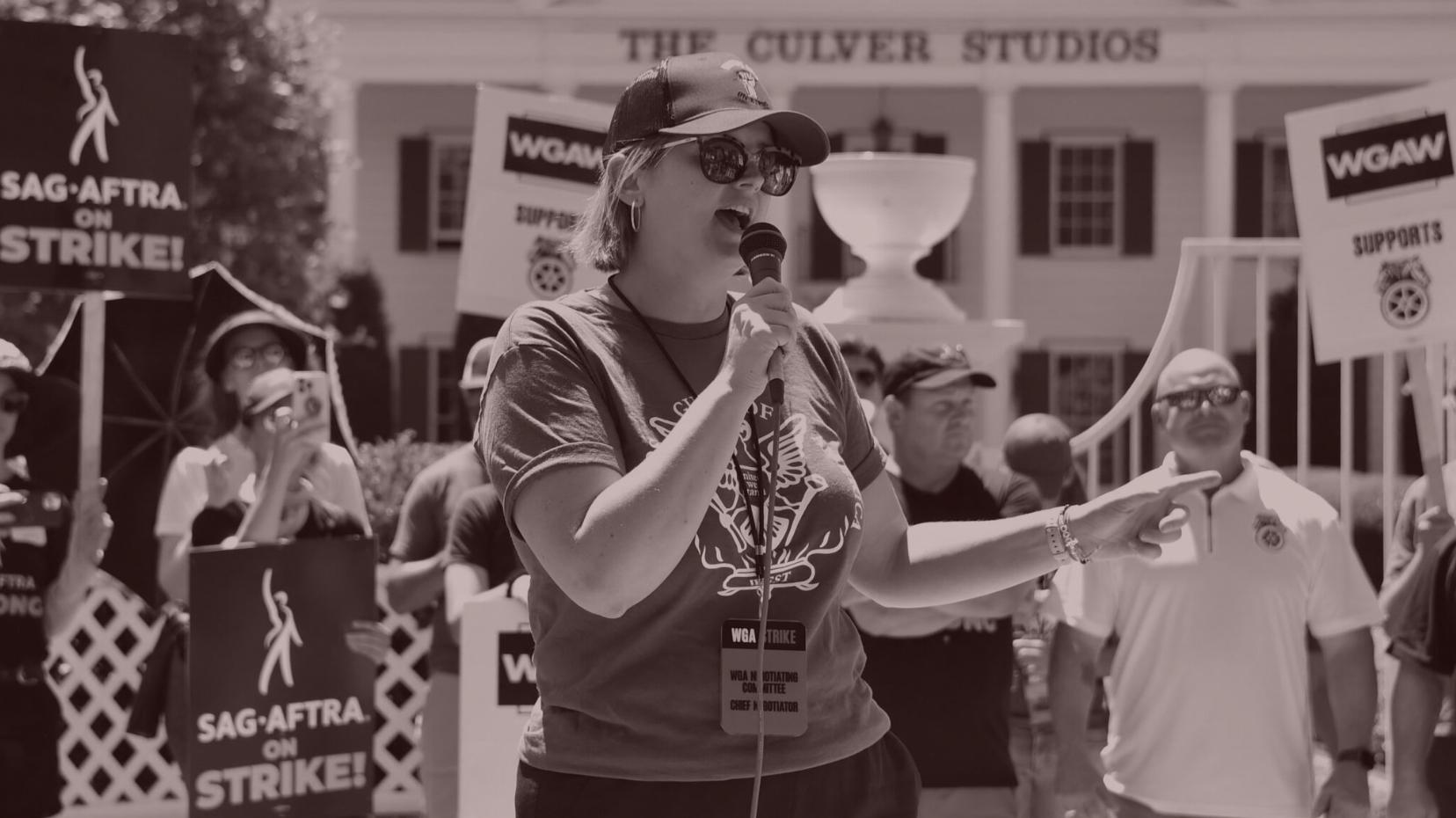 |
| The Writers Will Script This Strike Ending |
| With the AMPTP chief reluctant and the Writers Guild recalcitrant, Friday’s meeting was doomed from the start. A historical look at why Hollywood union bargaining is so difficult. |
|
|
|
| When I first joined the Writers Guild’s legal staff, in 1993, my onboarding memorably featured an orientation video with black-and-white footage of the 1950s blacklist, and that extolled the courage of writers who resisted. An us-versus-them ethos pervaded the reel, and on some level, that worldview still persists 30 years and two industry-halting strikes later. Writers have never forgotten a classic studio mogul’s alleged characterization of screen scribes as “schmucks with Underwoods,” a reference to a contemporaneous typewriter. (Today’s version would be “schmucks with Final Draft.”) Alas, from the Golden Age of Hollywood to the boom of Peak TV, writers have seldom felt respected.
A major talking point in the ’07-’08 strike was what the WGA called “the hated DVD formula,” an ’80s-era scheme that sweeps 80 percent of revenue into studio pockets before calculating the residual—a deeply unfavorable deal for creatives, despite an initial logic grounded in the high cost of manufacturing video cassettes. Even after VHS was supplanted by DVDs, which cost pennies to make, the formula was never renegotiated, and labor lost out on what could have been hundreds of millions of dollars in residuals. |
|
A MESSAGE FROM OUR SPONSOR
|
 |
| The 48th season of “Saturday Night Live” is now nominated for 10 Emmy® Awards, including Outstanding Scripted Variety Series. A television staple since 1975, “SNL” satirizes pop culture and politics as no other series can. With original sketches, cutting-edge filmed pieces, celebrity hosts and chart-topping musical guests, the iconic late night franchise remains a place where history and headlines are made. |
|
|
| Of course, the writers haven’t forgotten. And now they’re emboldened by a leadership team made up of strike and anti-agency veterans, like WGA president Meredith Stiehm and past presidents Patric Verrone and David A. Goodman. They know Hollywood’s collective bargaining agreements are like roach motels: contract clauses check in, but often don’t check out. That’s why today’s language is so important: it sets the constraints that labor will likely have to live with for decades.
With members maintaining solidarity on picket lines, and buttressed by a once-in-a-lifetime sister union strike, the WGA is acutely aware that its power has reached a zenith. It’s extremely unlikely that the membership will authorize another work stoppage in three years, which means the WGA would have to wait several more negotiating cycles before recapturing the leverage it has in this moment. For guild officers and board members, who likely would have sought a strike in 2020 were it not for Covid, squandering that leverage via a premature compromise—even if it puts a hemorrhaging entertainment industry back to work—would constitute no less than a betrayal.
That set the stage for last week’s doomed meeting. AMPTP president Carol Lombardini didn’t want to reach out to the Writers Guild at all, even for a “talk about talks.” And once her C.E.O. bosses instructed her to set a sit-down, the guild quickly doused expectations by publicly predicting that the studios and streamers would employ “their tired anti-union playbook.”
When the meeting arrived, WGA chief negotiator Ellen Stutzman and general counsel Tony Segall told Lombardini there would be no further negotiations unless the companies were willing to engage with all of the guild’s demands, including mini-room staffing and success-based streaming residuals, which Lombardini refused to entertain, according to the WGA negotiating committee. The guild’s demands have now expanded to include increased benefit-plan funding and “the right for individual WGA members to honor other unions’ picket lines.” This solidarity clause would open the door for writers to continue standing with striking actors even after the WGA reaches an agreement. Neither of the other above-the-line guilds have such a provision.
But by holding firm and upping the ante, the WGA made it immeasurably easier for Lombardini to push back next time one of her studio bosses suggests engaging with the writers. Nonetheless, the WGA’s post-meeting dispatch to members was less pessimistic than media coverage would suggest: it attacked the AMPTP’s refusal to engage on key issues, but the negotiating committee also seemed open to restarting formal negotiations. This upcoming week will be a crucial litmus test. Has progress been made, or is everything back to square one? |
|
|
| Despite the well-chronicled roadblocks, many in the talent community remain baffled that the two sides can’t put aside their grievances and make a deal. Hollywood is a dealmaker’s town, and as a transactional entertainment lawyer, I understand the frustration. But this complaint rests on an erroneous premise: that collective bargaining is similar to one-on-one dealmaking. In fact, the dynamics are quite distinct.
In a typical transaction—a talent deal, a production-financing-distribution agreement, a strategic alliance, etcetera—the opposite sides are (usually) collaborative as well as competitive. They work together to find the deal, with each side exerting leverage and trying to frame the pact in its favor. While rhetoric can get heated, a calm-but-firm approach often prevails. These deals are reached in private, and clients tend to respect and empower their reps. When the deal is at last reduced to paper, good lawyers usually follow numerous drafting conventions, which facilitate clarity and precision.
But little of this pertains to collective bargaining, especially during a strike. Union lawyers have thousands of clients, not just one—the WGA has 11,500 members and SAG-AFTRA is 15 times larger. Those members will not initiate—let alone sustain—a strike without being galvanized by heated public rhetoric from guild leaders and high-profile members. Moreover, a union lawyer has no way to speak in confidence to their 80-member negotiating committee, let alone thousands of members, given the threat of press leaks. Negotiations are conducted by professional legal counsel as well as the union’s negotiating committees—and far from being truly cooperative bargaining partners, management attorneys and union counsel maintain a more inherently adversarial relationship across the table than transactional attorneys.
Even the attorney-client relationship on each side is unusually strained. For the union, there is always a tension between members—who are typically not professional negotiators—and the union’s staff, which includes union lawyers, who seldom have experience working the contracts they’re negotiating. This divergence of skills and experience can create notable stress between staff and the negotiating committee.
On the management side, the attorney-client relationship is also fraught. Labor V.P.s are often seen by their bosses as a necessary evil, and don’t enjoy the same respect as business and legal affairs attorneys doing deals with high-priced talent. As a result, the V.P.s are generally more empowered to say no than yes. And the AMPTP is an additional level removed from studio C.E.O.s, which is why Lombardini told WGA leaders on Friday that she would need to run the proposals by her bosses. Moreover, the AMPTP president represents not just one client, but a fractious group of eight studios and streamers, all with diverse interests. Remember, Lombardini reached out to the WGA not because she wanted to, but because she was told to.
Adding to the complexity, the AMPTP operates on the basis of unanimity, which means that Lombardini and her staff must reach an agreement that satisfies all eight negotiating companies. SAG-AFTRA’s negotiating committee, which operated by majority vote in the recent past, now also requires unanimity. Naturally, this requirement has the potential to throw a monkey wrench in labor dealmaking. |
|
|
| Unruly Documents Complicate Negotiations |
|
| Finally, there’s the contracts themselves. Hollywood’s union agreements differ significantly from transactional contracts in ways that can hamper triennial collective bargaining. Transactional contracts are usually better written: defined terms are capitalized, used consistently, and generally mean what they appear to mean; time periods, effective dates, and end dates are usually explicit; the language is often precisely crafted; provisions are relevant to the deal at hand; and contracts seldom exceed 60 pages or so. They are usually “integrated” agreements, meaning that they capture the deal terms without any need to reference the parties’ conversations, emails or other materials.
In contrast, Hollywood collective bargaining agreements run to hundreds of pages—and several thousand pages in aggregate across the relevant unions. Defined terms are usually not capitalized and often have meanings at odds with plain language; effective dates and applicable time periods are often unclear; imprecise phraseology abounds; and irrelevant clauses may remain long past their sell-by dates. Parsing ambiguous provisions frequently requires referencing materials that aren’t even readily available, except to specialists, such as notes taken during the bargaining process, arbitration decisions, or “shop knowledge” that exists only inside the heads of experts. Different guilds and studios may also have varying interpretations of identical language.
My law students sometimes ask why parties don’t simply scrap these documents and start from scratch. It’s an understandable question, but that sort of page-one rewrite would disrupt settled expectations, impair the precedential value of past arbitration decisions, and require one party or the other to spend its bargaining capital (and both parties to spend negotiating time) on non-substantive revisions. Thus, even new language becomes mired in old conventions. Add to that, the new provisions—that is, the 50-page M.O.U.s that emerge from successful bargaining—are written by dueling committees rather than a pair of transactional lawyers. Taken together, the result is a morass that becomes a rickety foundation for bargaining in subsequent contract cycles.
So where do things stand now? In short, nowhere good. All three parties appear dug in. Writers, actors, directors, production crews, adjacent businesses and many others are without income. Summer movie slates are in jeopardy, as is the TV season. The Venice-Telluride-Toronto film festival trifecta is poised to be actor-less, and the longer the strike endures, the more fall and even holiday-season films will be pushed into 2024, squandering the Barbenheimer box office momentum.
Thus L.A., the land of endless summer, is now seemingly also the land of endless hot labor summer. And if Friday’s star-crossed meeting signals anything, it’s that there will likely be significantly more pain and fatigue on all sides before a resolution is reached. Whoever has the gold usually makes the rules, but this time the unions are determined to flip the equation. |
|
|
| I’m told litigator Bryan Freedman is hearing from tons of potential plaintiffs after sending NBCUniversal a litigation hold letter alleging reality TV stars are subjected to “intentional infliction of emotional distress, fraud, distribution of revenge porn, and false imprisonment,” Class action? Unionization drive? A pre-lawsuit settlement for Freedman client Bethenny Frankel? [Vulture]
ESPN’s strategy might be to muscle in on local sports amid the meltdown of the RSN model, but Jimmy Pitaro “isn’t interested in paying a big fee for the media rights.” I’m sure he’s not! [WSJ]
The Pac-12 conference is on the verge of extinction about a decade after signing the richest TV deal in the history of college sports. Truly breathtaking incompetence by commissioners Larry Scott and now George Kliavkoff. [Athletic]
The best line in the wild Leah Remini lawsuit against David Miscavige and Scientology has gotta be her (non-comprehensive!) list of those that have been declared “Suppressive Persons” enemies of the Church: “The United States Government, including the Internal Revenue Service, the Federal Bureau of Investigation, United States Attorneys, 29 elected officials, the American Medical Association, the National Institute of Mental Health, Pulitzer Prize winning reporters, stand-up comedians, cartoonists, university professors, district attorneys, judges, other law enforcement, social media users with as few as ten followers, and a mother in Clearwater, Florida who was concerned about her son’s welfare, to name just a few.” [Read the complaint]
More: Eriq Gardner will have more on the Remini war and that crazy Lizzo suit (including her litigator Marty Singer’s likely defense) in tomorrow’s Rainmaker email. Sign up here.
Ethan Strauss examines the “Great Vaguening” of streaming ratings, which has led to the impression that “sports are more popular than ever, even if they’re not.” The answer: More transparency! [House of Strauss]
If this labor stuff can be resolved, Blue Bloods will return for a 14th season(!) only because the entire cast took a 25 percent pay cut. Don’t worry, Tom Selleck’s hairpiece budget remains fully funded. [NYT] |
|
|
| No surprise: it’s strike strike strike in my inboxes, this week focused on the Friday WGA sit-down and SAG-AFTRA’s interim agreements. Examples:
“The WGA leadership has crossed the Rubicon. This is like dealing with the Japanese near the end of WWII. Never surrender, kamikaze lunacy. What do the studios have to do here, threaten to terminate every single overall deal out there, and fire every writer in town permanently, like Reagan with the Air Traffic Controllers in '81?! Fire them all, and set up a new writer ‘casting call’ to replace them... ? Or maybe just start one by one terminating them and just move offshore. In any event, more extreme measures need to be taken. It’s like dealing with Col. Kurtz in the compound.” –An agent
“You are honestly the only person I trust for strike news. The trades, god bless them, aren’t equipped to handle a story like this, they just print whatever the executives tell them. Every headline, every characterization, everything is designed to paint the writers as screaming crybabies who are shutting down an industry while the executives are the victims.” –A writer (and former journalist)
Editor’s note: I’ll have more on this topic on Thursday.
“Your optimism about the strike is misplaced. These are unions that have been hijacked by members who do not work and do not have anything to lose if this strike lasts into next year. I, on the other hand, have had no say in a strike that has put me out of work indefinitely. –An IATSE member
“How can SAG-AFTRA in good conscience give interim agreements to A24, Lionsgate, etc and then tell actors they’re not allowed to even read a script submitted to them by a writer or director that isn’t set up or for that matter has no producer attached.” –A manager
“I think you’re missing the most important aspect of all of this. And that is whenever these strikes settle, the writers & actors will return to a business that is half the size as it was just in December 31, 2022. 599 scripted shows are quickly on their way to 300 and probably 250. So once they settle the strike, there will be proclamations of victory and solidarity and unprecedented gains. But the unfortunate fact is that they (and everyone else who works on set or post) have already lost a great deal and they won’t be getting it back.” –Another agent
“How long must this charade go on before we bring in an outside force to settle this fight? It’s beyond time for that.” –A lawyer |
|
|
Have a great week,
Matt
Got a question, comment, complaint, or knowledge about the whereabouts of former WGA lead negotiator David Young? Email me at Matt@puck.news or call/text me at 310-804-3198. |
|
|
|
| FOUR STORIES WE’RE TALKING ABOUT |
|
|
|
|
|
 |
|
|
|
Need help? Review our FAQs
page or contact
us for assistance. For brand partnerships, email ads@puck.news.
|
|
You received this email because you signed up to receive emails from Puck, or as part of your Puck account associated with . To stop receiving this newsletter and/or manage all your email preferences, click here.
|
|
Puck is published by Heat Media LLC. 227 W 17th St New York, NY 10011.
|
|
|
|