 |
 |
|
Happy Passover and Easter from What I’m Hearing, and happy one-year birthday to the Warner Bros. Discovery merger! Ahead of Wednesday’s likely rebranding of HBO Max as Just Max, Elizabeth Warren and three lawmakers celebrated by calling on the Justice Department to unwind the deal. How did you celebrate?
Programming notes: This week on The Town, Lucas Shaw and I broke down Endeavor’s WWE deal, Dave co-creator Dave Burd explained his bizarre path to TV stardom, and my Puck colleague Tara Palmeri played the long game on Disney vs. Ron DeSantis. Subscribe via Spotify or Apple!
Discussed in this issue: Kathy Kennedy, Nancy Meyers, Jen Salke, Lena Waithe, Ben Affleck, Antoine Fuqua, Ari Emanuel, Sharmeen Obaid-Chinoy, and Phoebe Waller-Bridge’s money for nothing.
But first…
|
| Who Won the Week: Shigeru Miyamoto |
|
| Not hard. The “Spielberg of video games” now has a hit movie franchise after Super Mario Bros.’ wild $377 million global 5-day opening (including $204.6 million domestic), a testament to the power of his Nintendo I.P. Per sources, the game company financed half the movie’s $100 million budget and gets 50 percent of profits after Universal (and its Illumination division) recoup their costs.
Runner up: Phoebe Waller-Bridge and Lena Waithe, who made a combined $76 million off their recent Amazon Studios overall deals while producing exactly nothing, per Kim Masters’ new report. Man, we’re gonna look back on the days of streaming windfalls and laugh.
More Amazon: I discussed the spending spree and what top executives Mike Hopkins and Jen Salke have to show for it with Kim on The Business here.
First a little news item… |
| We’ll Always Have Paris Paramount |
|
| Actually, we won’t. At least not for a while, if ever. After weeks of pitches by CAA, I’m told the clock has run out to salvage Paris Paramount, that much-discussed $130 million Nancy Meyers rom-com. The official cause of death, at least for the foreseeable future, is the dreaded scheduling conflict, this time with star Scarlett Johansson’s other projects. But Meyers’ first movie as a director in a decade has been on life support for more than a month, since when I first reported on the Netflix standoff after Meyers asked to increase the budget to $150 million. And in my experience, if there’s demand for a movie, stars can be replaced quickly.
When Netflix film chief Scott Stuber finally passed, CAA’s Bryan Lourd and team full-court shopped it, with Warner Bros. (and Warner Bros. Discovery C.E.O. and Meyers superfan David Zaslav) expressing interest. But conversations dragged, ScarJo had other obligations, and the window to make the movie with her this summer closed. Meyers and CAA are hoping to revive the semi-autobiographical project later, leaving all of us with the hope of finally seeing what a nine-figure kitchen looks like. |
|
|
“I learned one thing about creative people my whole life: You cannot give them an open credit card…”
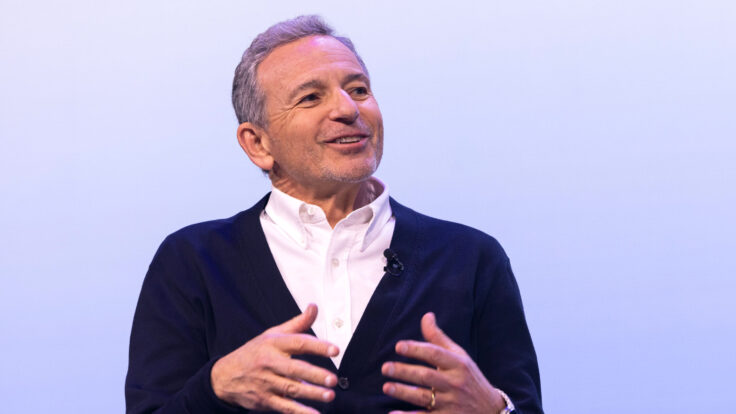
–Ike Perlmutter, the recently fired Marvel executive, who for some reason decided to vent (and attack C.E.O. Bob Iger’s spending) to The Wall Street Journal.
Runner up: “Kevin Feige’s project was something announced in the press, or I guess, fandom, but there was…nothing ever got developed… It’s not an abandoned project, it just didn’t happen.”
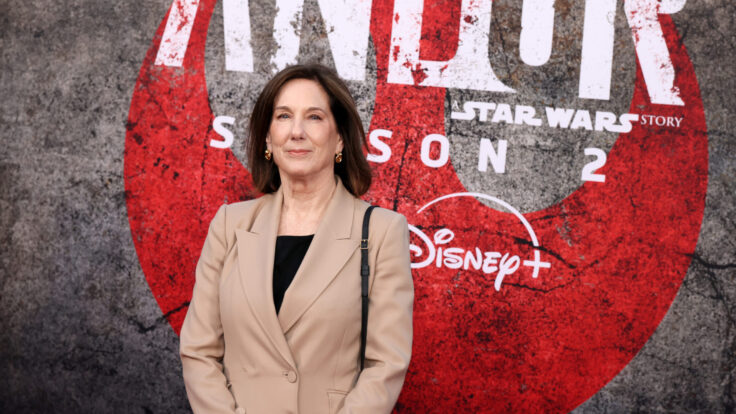
–Kathleen Kennedy, the Lucasfilm president, downplaying the Marvel chief’s recently backburnered project to the fan media at Star Wars Celebration.
A little more on this… |
|
|
| Um, who is Kathy kidding? A lot of rolled eyes at Marvel this weekend because A) the Kevin Feige Star Wars project was (and still is) very much real, and B) Kennedy was not only aware of it, she actually received periodic updates on its status, including when Marvel go-to Michael Waldron was hired to write it. In fact, far from being something announced “in the press” or the “fandom” (whatever that means), it was actually Alan Horn, Kennedy’s boss when he was running Disney’s film group, who announced the project himself, in 2019. “With the close of the Skywalker Saga, Kathy is pursuing a new era in Star Wars storytelling,” Horn told THR at the time. “And knowing what a die-hard fan Kevin is, it made sense for these two extraordinary producers to work on a Star Wars film together.”
If that quote sounds like a delicate balancing act to placate Kennedy, it definitely was. According to sources, Kathy was never enthusiastic about the Feige project, and I suppose I get it. Even after some recent Marvel stumbles, Feige is by far the most powerful creative executive at Disney. His success in Kennedy’s sandbox would be hugely embarrassing for her, especially given all the problems on the Star Wars films going back to J.J. Abrams’ rush-job on The Force Awakens, the mid-shoot firings of directors Phil Lord and Chris Miller on Solo, the pre-production firing of Colin Trevorrow on The Rise of Skywalker, all the filmmakers that have come to develop at Lucasfilm with much fanfare and departed after a frustrating process, and the other failures of franchise management that I’ve written about.
The comparison is actually pretty stark: Since Lucasfilm’s 2019 release of Rise of Skywalker, Feige’s Marvel has made eight movies that grossed more than $6 billion worldwide, despite the pandemic challenges and the same Disney+ series commitments that Lucasfilm has. Indiana Jones 5 is coming in June, and Kennedy announced another round of projects at Star Wars Celebration, including Daisy Ridley returning for the Sharmeen Obaid-Chinoy-directed project developed by Damon Lindelof and Justin Britt-Gibson but now written by Steven Knight. Yet there’s still no Star Wars film ready for an official greenlight, perhaps pushing the next installment into 2026, a full seven years after Rise of Skywalker.
For those still keeping score, the announced projects from Patty Jenkins, Rian Johnson, and the Game of Thrones guys are all either scrapped or back-burnered. Now it’s Obaid-Chinoy, James Mangold, who’s made the new Indy, and Dave Filoni, of the Mandalorian and Ahsoka series, plus Taika Waititi and Shawn Levy. Let’s see how many of those projects actually happen, and if they don’t, how many Kennedy will selectively forget to have developed in the first place.
Now to the first part of an existential look at both the studio and talent side of film… |
|
|
| So, here’s a good example of why everyone in the movie business wants to jump off the Hollywood sign: If Warner Bros. spends $130 million on an adult drama, then opens it to $20 million domestic over a five-day holiday weekend, the knives come out. That’s an outright flop, an embarrassment never to be mentioned in a Burbank commissary, even if the movie goes on to generate decent viewership on HBO Max, Warners’ sister streaming service. In fact, I can’t really cite a recent example of this happening at Warners because its executives know better than to make $130 million adult dramas without genre elements or known I.P.
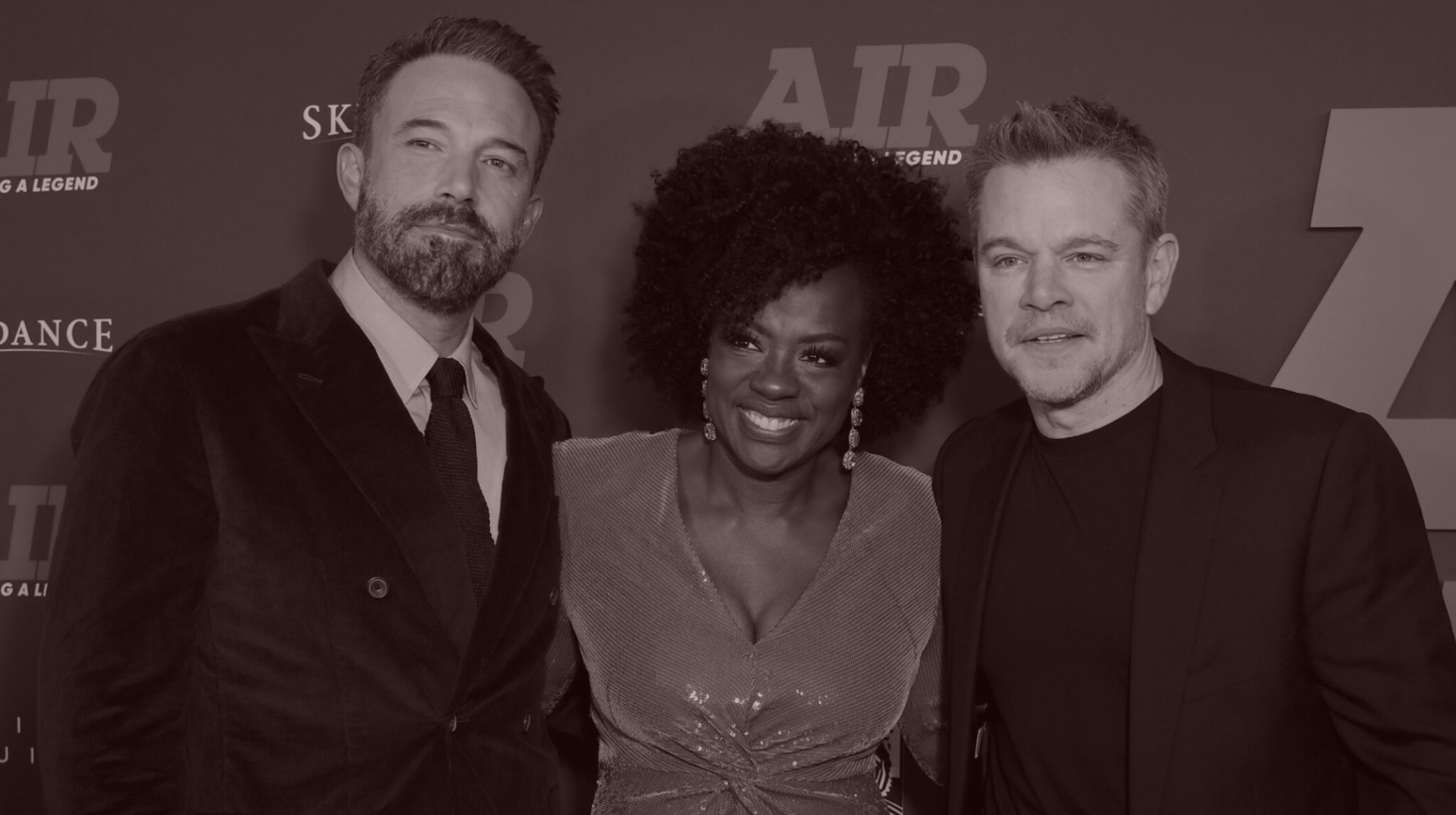
But check out today’s media coverage of Air, the Ben Affleck-directed adult drama starring Matt Damon and friends, which Amazon snapped up before production began for, yes, $130 million, and opened to $20 million over the five-day holiday. “A solid result for an R-rated drama,” raved Variety. “A great start,” beamed Deadline. “What the hell?” declared me before I slammed my head against my MacBook.
Now, we all know money means very little to Amazon Studios, or at least content isn’t the company’s core business, as it is for, say, Warner Bros. Discovery, even though Amazon C.E.O. Andy Jassy is laying people off these days. Amazon also isn’t alone in wildly overpaying for movies that no traditional studio would touch (cough… Netflix, Apple… cough). The recent death of the $130 million Nancy Meyers rom-com, which Netflix passed on after the ask of a $20 million budget increase, is a good example of how few options are available for movies of a certain cost and potential audience. But in theatrical terms, Air is a $130 million release that, even with tens of millions of dollars in marketing and great word-of-mouth, will likely top out at less than half that in U.S. theaters. Not a hit. |
|
A MESSAGE FROM OUR SPONSOR
|
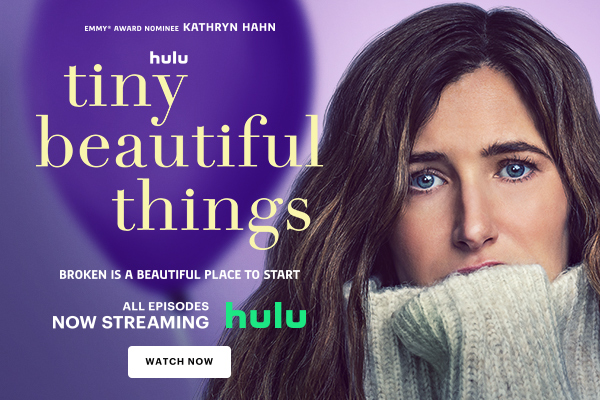 |
Based on Cheryl Strayed’s New York Times Best Seller, the new Hulu Original Series Tiny Beautiful Things takes us on a raw and honest journey of self-discovery, where the past is essential to understanding the present. From Executive Producers of The Morning Show, Little Fires Everywhere, and Big Little Lies, Tiny Beautiful Things stars Emmy Nominee Kathryn Hahn. Tiny Beautiful Things is now streaming only on Hulu.
|
|
|
|
|
| Yet, just like those Warner Bros. movies on HBO Max, Air will likely do very well on streaming. (Amazon hasn’t said, or even decided, when that will be.) But unlike Warners movies that underperform theatrically given their budgets and do well on HBO Max or other home video windows, Air will probably be considered a big hit. But is it? Should it?
True, Amazon wasn’t exactly boasting to trade reporters about that sky-high acquisition cost, and the producers’ actual outlay to make the movie was about $90 million, still a lot for a story about marketing but not shake-your-head astronomical. The way the deal went down was Peter Guber’s Mandalay had the script, Air Jordan, by Alex Convery (Affleck and crew basically re-wrote it, I’m told) and went to Skydance via its relationship with Skydance Sports head Jon Weinbach, who then got the life rights from Sonny Vaccaro, Damon’s character. Skydance lured Affleck, who said he could make the movie for $90 million under his new company, Artists Equity (more on that on Thursday). Then Amazon paid Skydance the $130 million, Affleck got the very generous budget that he wanted—this is definitely the most expensive movie shot mostly in an office building—and the extra $40 million was divvied up between producers and rights holders. Affleck also baked in profit participation for some of his key people, all on Amazon’s dime.
The movie turned out great, so congrats to everyone that got Amazon to pay for it all. The industry enthusiasm over Air is probably due to excitement that Amazon pivoted to give Affleck’s well-reviewed crowd-pleaser a run in 3,500 domestic theaters. The beleaguered theater chains are certainly loving it. And deep down, Hollywood people want these kinds of movies to work in theaters. Or maybe the economics of streaming are so opaque now that nobody really knows how to apply the traditional box office metrics when a streamer does a theatrical exclusive, so we just assume if it does O.K. for the kind of movie it is, it’s a hit.
After all, the thinking around town these days has shifted from all-in-on-streaming to the notion that theatrical gambits should be celebrated because, in success, they help the streamer justify the cost of production. And even if they fail, the theatrical release still provides the necessary marketing to let everyone know about the movie—and the actual business is in the service, anyway. “Amazon is taking a swing,” Kevin Wilson, Amazon’s distribution executive in charge of the Air release, told Variety. “But I don’t think you can replace what Air has gotten this weekend in terms of publicity, word-of-mouth and marketing from going to theaters.”
Marketing from going to theaters. That’s the key phrase, and Wilson isn’t wrong, of course. Study after study shows that viewership of films that debut in theaters with studio-sized campaigns tend to perform much better on streaming, just as they did for decades on television and pay cable. Since the advent of the VHS cassette, theaters have basically fueled home entertainment, where the studio accountants (and profit participation litigators) know to look for the real money. You can make your numbers on theaters, of course, but the open secret has always been that the high-profile misses often become profitable pretty quickly downstream thanks in large part to that awareness.
It worked back when DVDs were floating Hollywood, and it’s why the Netflix Top 10 is now filled with licensed theatrical star vehicles from five or 10 years ago. People remember them, so they click. And it’s why Amazon’s decision to pour tens of millions of dollars into P&A for Air will likely do wonders when it drops on Prime Video, even if the economics of the theatrical release don’t really make sense on their own.
So what is the right amount to spend on a movie when the goal is a decent theatrical run, which is really meant to fuel robust streaming? What, exactly, is the right calculus to declare a hit? Nobody seems to know, not even Amazon, with its vast resources and data. Remember how everyone made fun of career TV executive Jen Salke when she won the top Amazon content job and went on a $50 million Sundance spending spree, only to see those movies, like Mindy Kaling’s Late Night and Brittany Runs a Marathon, bomb in theaters? “It was like, why would we put ourselves through that step if it’s going to tear down the film and require us to double our investment in marketing to get to Prime to kind of turn that story around?” Salke told the Times this week. That doesn’t sound like someone who sees the value of a theatrical release.
But now Salke has changed her tune, no doubt influenced by having a fun, commercial drama in Air, big stars like Affleck and Damon to promote it, and Amazon’s fresh acquisition of MGM, with its recent hit, Creed III. It’s worth remembering that most of the MGM movies released in its final years under Anchorage Capital were pricey adult dramas like Air, except not particularly crowd-pleasing—Licorice Pizza and House of Gucci and Bones and All, among others, that did not make money in theaters, given their budgets.
Would those MGM movies now be declared hits under Amazon? Probably, as long as the marketing made us all remember them.
On Thursday: Affleck and Damon’s Artists Equity company and the talent piece of the movie business. |
|
|
|
|
| Jim Rutenberg connects Rupert Murdoch’s rise as an American press baron to the protections against defamation claims afforded to the U.S. media in New York Times Co. vs. Sullivan, the same precedent Murdoch is now relying on to beat the $1.6 billion Dominion case. [NYT]
Bonus: I’m a featured voice in the new season of Audible’s Bitter Blood podcast series on the Murdoch dynasty, offering my thoughts alongside narrator (and Succession co-star) Alan Ruck. [Audible]
Nobody seems to believe the made-up $21.4 billion valuation that Ari Emanuel slapped on the combined WWE and UFC, but who cares. The only thing that matters for this deal is whether Ari and WWE C.E.O. Nick Khan can find bidders to run up the price of expiring broadcast deals with Fox and NBC Universal, and later with Peacock. [CNBC]
My unsolicited predictions: 1) ESPN bids for a piece of the U.S. WWE rights, maybe for ESPN+, which is already in business with Endeavor’s UFC; 2) Fox won’t be able to overpay, given its potential exposure in the Dominion litigation; and 3) Combined UFC/WWE pay-per-view events are a no-brainer.
Related: Ari doesn’t own WWE just yet, but given his war with Kanye West over antisemitism, some Hollywood Jews wonder why he hasn’t said anything about the recent Auschwitz promo gaffe. [NBC]
Ten million viewers for an NCAA women’s basketball final couldn’t have come at a better time. [Axios]
Harvey Weinstein flew first class from L.A. to New York this week, just like the old days. [TMZ] |
| Showtime’s Latest Show on the Scrap Heap |
|
| We’re so desensitized these days to finished shows getting scrapped after they’re made that it hardly registered when King Shaka, a nearly $100 million limited series, went poof this week at Showtime. It’s now in the dreaded “will be shopped” purgatory that keeps every producer’s Lexapro prescription current. This show was never going to be a priority of the new Chris McCarthy-led Showtime—it would be difficult to refashion a period piece about the Zulu king into a Billions spinoff—but after chatting with several people in the show’s orbit this week, it’s pretty clear this thing was bad.
Some blame showrunners Tolu Awosika and Olumide Odebunmi, others say director Seith Mann delivered an un-airable first episode. But the project has been troubled for months, and when Showtime creative executives screened the first episode in March, they freaked out and recommended to McCarthy that they pull the plug, according to three sources. CBS Studios, the sister studio that produced the project, actually agreed, as did producer Antoine Fuqua, who clashed with the creatives from the outset. The Paramount Global suits knew that if they killed the show before the quarter ended on March 31, they could take an immediate write-off and an impairment charge. That won’t get their $100 million investment back, but maybe another outlet will be willing to pay the $10 million to $12 million needed to finish and air it. Another sign of the times. |
|
|
| Light feedback this week thanks to the holidays, so here are a few context-free highlights from random messages I’ve received lately…
“Somebody should buy the governor a pacifier and a baby rattle.”
“What you miss about WWE is that Vince has left time bombs all over the company to detonate when he dies. The company won’t outlast him.”
“Logan will either die or be comatose before the Gojo deal closes because that’s exactly what happened to Rupert with the ‘sailing accident’ before Fox/Disney.”
“What the hell was that movie? Somebody should just explode DC Comics and build it from the ground up.”
“Great job on Lauren Sanchez. Now do the Russo brothers.”
“I just saw your picture. You don’t sound anything like that.” |
|
|
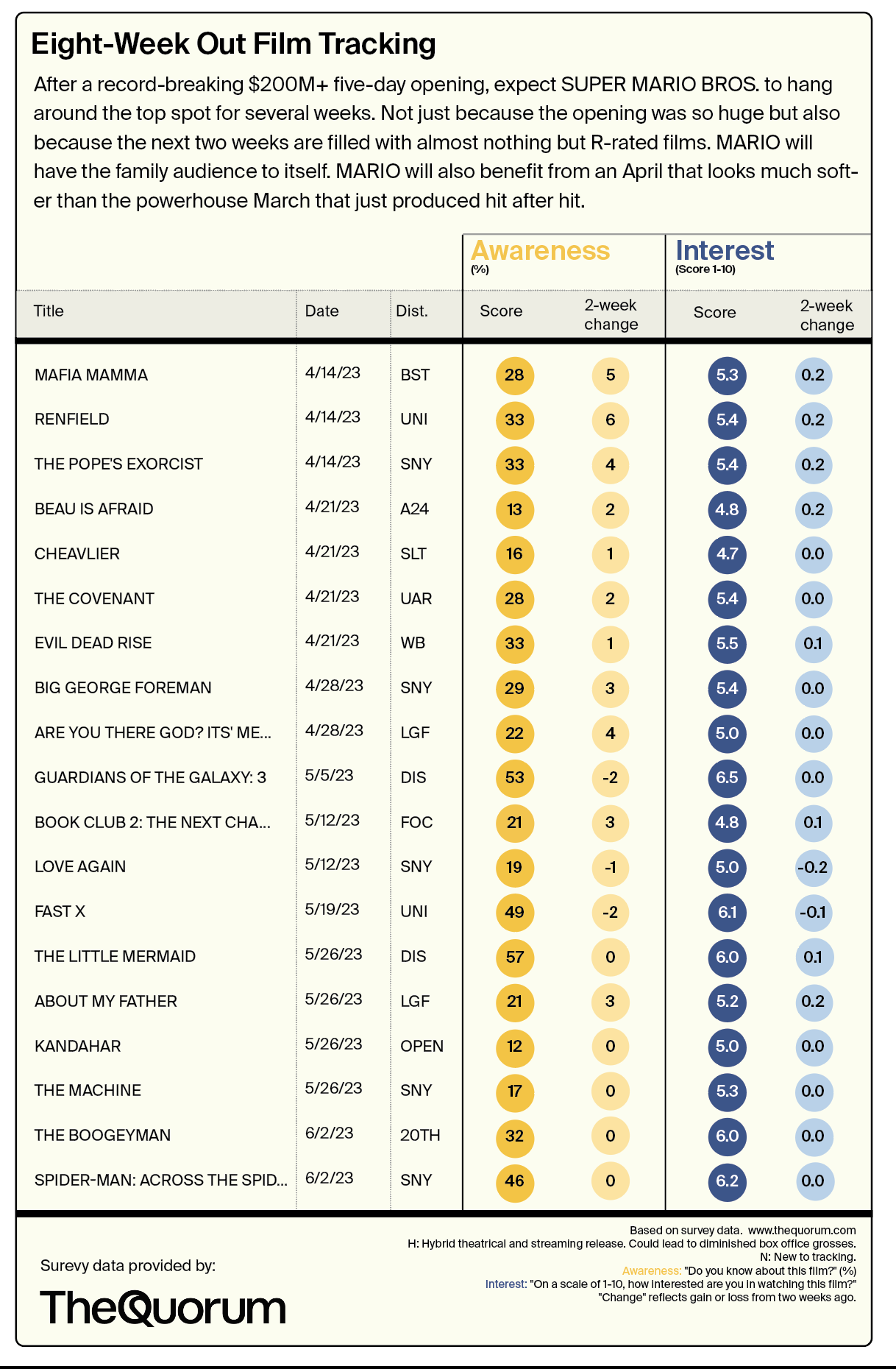
| Universal needs to raise those numbers on next weekend’s Renfield, but April’s lack of non-R-rated competition bodes well for its Super Mario Bros., in the new Quorum film tracking chart… |
|
|
Have a great week,
Matt
Got a question, comment, complaint or something fun in your Easter basket? Email me at Matt@puck.news or call/text me at 310-804-3198. |
|
|
|
| FOUR STORIES WE’RE TALKING ABOUT |
 |
| Lichtology 101 |
| On CNN’s subtle pivot and new intrigue from Ari Emanuel’s combat deal. |
| DYLAN BYERS |
|
 |
| DeSantis Donor Quakes |
| A Florida dispatch on G.O.P. megadonors & Youngkin’s golden opportunity. |
| TARA PALMERI |
|
 |
|
 |
| Streaming Money Squeeze |
| Entertainment guru Matt Ball dissects the next front in the streaming wars. |
| JULIA ALEXANDER |
|
|
|
|
|
 |
|
|
|
Need help? Review our FAQs
page or contact
us for assistance. For brand partnerships, email ads@puck.news.
|
|
|
|
Puck is published by Heat Media LLC. 227 W 17th St New York, NY 10011.
|
|
|
|