• Washington
  • Wall Street
  • A.I.
  • Hollywood
  • Media
  • Fashion
  • Sports
  • Art
  • Join Puck Newsletters What is puck? Authors Podcasts Gift Puck Careers Events
  • Join Puck

    Directly Supporting Authors

    A new economic model in which writers are also partners in the business.

    Personalized Subscriptions

    Customize your settings to receive the newsletters you want from the authors you follow.

    Stay in the Know

    Connect directly with Puck talent through email and exclusive events.

  • What is puck? Newsletters Authors Podcasts Events Gift Puck Careers
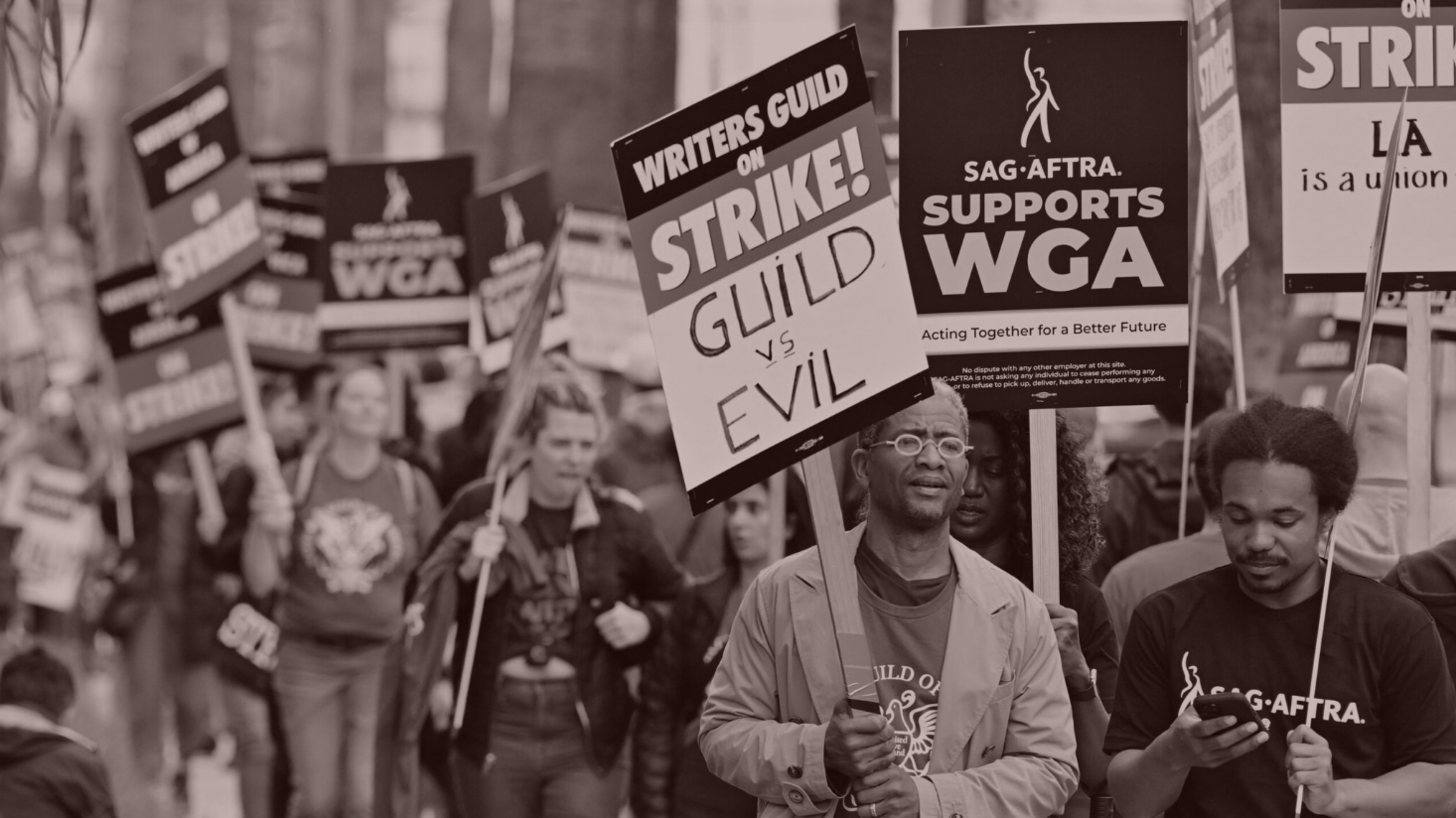
Welcome back to What I’m Hearing, and the end of Strike Week 1. Thanks to all who have submitted pics for our Best Strike Sign contest. You’ve got until Friday to send me your favorites, then I’ll put my top 5 to a reader vote and crown the winner with status-defining Puck merch.
 ‌ ‌ ‌ ‌ ‌ ‌ ‌ ‌ ‌ ‌ ‌ ‌ ‌ ‌ ‌ ‌ ‌ ‌ ‌  ‌ ‌ ‌ ‌ ‌ ‌ ‌ ‌ ‌ ‌ ‌ ‌ ‌ ‌ ‌ ‌ ‌ ‌ ‌  ‌ ‌ ‌ ‌ ‌ ‌ ‌ ‌ ‌ ‌ ‌ ‌ ‌ ‌ ‌ ‌ ‌ ‌ ‌  ‌ ‌ ‌ ‌ ‌ ‌ ‌ ‌ ‌ ‌ ‌ ‌ ‌ ‌ ‌ ‌ ‌ ‌ ‌  ‌ ‌ ‌ ‌ ‌ ‌ ‌ ‌ ‌ ‌ ‌ ‌ ‌ ‌ ‌ ‌ ‌ ‌ ‌  ‌ ‌ ‌ ‌ ‌ ‌ ‌ ‌ ‌ ‌ ‌ ‌ ‌ ‌ ‌ ‌ ‌ ‌ ‌  ‌ ‌ ‌ ‌ ‌ ‌ ‌ ‌ ‌ ‌ ‌ ‌ ‌ ‌ ‌ ‌ ‌ ‌ ‌  ‌ ‌ ‌ ‌ ‌ ‌ ‌ ‌ ‌ ‌ ‌ ‌ ‌ ‌ ‌ ‌ ‌ ‌ ‌  ‌ ‌ ‌ ‌ ‌ ‌ ‌ ‌ ‌ ‌ ‌ ‌ ‌ ‌ ‌ ‌ ‌ ‌ ‌  ‌ ‌ ‌ ‌ ‌ ‌ ‌ ‌ ‌ ‌ ‌ ‌ ‌ ‌ ‌ ‌ ‌ ‌ ‌ 
What I'm Hearing

Welcome back to What I’m Hearing, and the end of Strike Week 1. Thanks to all who have submitted pics for our Best Strike Sign contest. You’ve got until Friday to send me your favorites, then I’ll put my top 5 to a reader vote and crown the winner with status-defining Puck merch.

Programming notes: This week on The Town, Lucas Shaw and I dove deep into the writers strike issues, I grilled WGA negotiator Adam Conover, and Scott Mendelson and I showed no mercy in ranking movies on the Summer Blockbuster Confidence Scale. Subscribe here and here.

🚨🚨Inner Circle event: Puck contributor and entertainment labor expert Jonathan Handel and I are doing an off-the-record call with Inner Circle members this Friday at 1 p.m. PT. Join us! And if you’re not an I.C. member, you can upgrade here.

Discussed in this issue: Lina Khan, Kevin Costner, Taylor Sheridan, Tyler Perry, Chris McCarthy, Tucker Carlson, David Zaslav, Lisa Takeuchi Cullen, Bob Bakish, the Murdochs… and a Scientology dog murder allegation.

But first…

Who Won the Week: Russell Hollander
With the WGA and studios not even talking, the Directors Guild’s lead negotiator is suddenly the most powerful person in Hollywood. If he makes a deal that sets a template for SAG-AFTRA and the WGA—assuming writer-specific demands like mini-rooms and span protection can be worked out, which is still a big if—the strike could end this summer. If not, it may be months and months.

Runner up: The Fox News leaker, for providing a steady stream of delightfully embarrassing Tucker Carlson clips to Media Matters. Fox’s cute cease and desist letter barely bothered to care, lacking even legal citations.

Before we dive into the strike, a little news update…

Costner Won’t Give Yellowstone an Answer
If you’re curious whether the relationship between Kevin Costner and the producers and cast of Yellowstone has improved lately, Paramount declined to give Costner a courtesy heads up before the announcement Friday that the biggest show on TV is ending in November. So… not great. Per multiple sources involved in this high-stakes, months-long standoff, Costner, who’s busy shooting the sequel to his still-undated Horizon film, hasn’t agreed to return at all for the final episodes, which were being written by co-creator Taylor Sheridan prior to Monday’s WGA strike and were planned for a summer and fall shoot.

Over the past couple months, various Costner scenarios have been floated, per sources close to the production. Paramount’s Chris McCarthy and Yellowstone producer David Glasser suggested anywhere from 30 days to 45 days of shooting; Costner’s team has countered with a range from one week to three weeks, with the latest interactions suggesting the lower end of that timeline. Paramount has been waiting a while for Costner’s lawyer, Howard Kaplan, to provide a final answer on what Costner is willing to do, so McCarthy just decided to announce the end date for the episodes, the first few of which have been written with flexibility to allow for various levels of Costner involvement (or non-involvement). Remember, this show was supposed to air its 5B season in June. Given how long Costner has jerked around the show’s creatives and executives, I’d probably do the same.

One amusing wrinkle: I’m told Costner, who’s making $1.2 million per episode this season, won’t commit to returning until he finds out and is comfortable with how his John Dutton character is written out of the franchise. Costner is pretty savvy, and he wants to prevent what Shonda Rhimes did to Patrick Dempsey, killing off the race car-driving Grey’s Anatomy star in an F-you car accident. So Sheridan may not be able to dispose of his Western-loving leading man via a kick from an angry horse.

As for Matthew McConaughey, the potential lead of the follow-up series, he’s pretty much in, I’m told. This unnamed spin-off will be the first with Yellowstone in the title, and thus the first show with that valuable moniker on Paramount+ in the U.S., not Peacock. But Paramount can’t announce McConaughey until executives figure out the shooting schedule and other logistics for Yellowstone: McConaughey, and that’s dependent on both the WGA strike and on Costner and his ongoing Yellowstone tantrum. (A rep for Paramount and Costner’s litigator Marty Singer both declined to comment.)

Quote of the Week
“They are counting on that pride for us to accept poor pay, poor working terms, and the end of term employment.”
–Lisa Takeuchi Cullen, the WGA V.P., responding on CNN to its parent company C.E.O David Zaslav’s claim that the writers’ “love for the business” will resolve the strike.

Runner up: “Your Majesty, you can be my wingman anytime.” –Tom Cruise, to King Charles, in a pre-taped coronation video that may set a new standard for cringeworthiness.

Writers Strike Questions: The Netflix Precedent & the ‘Munich’ Strategy
Can showrunners be forced to work? What side are the trades really on? Will the DGA save the day? And other pressing concerns from the front lines of the writers’ strike.
MATTHEW BELLONI MATTHEW BELLONI
The first week of what will likely be a months-long Hollywood writers’ strike has ended with tons of unanswered questions. Should TV showrunners be forced to perform producing duties while on strike as writers? Does Netflix stretch credibility when it says there’s no precedent for sharing in the success of its shows? Should WGA members trust what they read in the trades? And how does this all end?

With so much info and misinfo swirling around town, I thought it would be helpful for Puck labor expert Jonathan Handel and I to answer some questions from readers and sources…

Struck companies like Disney and HBO are sending scary lawyer letters telling showrunners that they must continue to perform producing duties while on strike as writers, but the WGA is saying they don’t have to—and that they shouldn’t. Who’s right?

Jonathan: Staff writers dream of adding “producer” to their title, but this week, being a hyphenate became a headache for some. As Matt first revealed on Thursday, Disney has been sending pretty aggressive letters insisting that showrunners and other writer-producers perform non-writing duties during the strike—even if the WGA punishes them for it. That, and the follow-up trade coverage, led to a Saturday morning overflow meeting in Beverly Hills in which the guild said these showrunners didn’t have to perform.

A key issue: The union has no jurisdiction over most producing functions, but so-called “(a) through (h)” services are prohibited by WGA strike rules. Those services include cutting shows for time; writing bridging material necessitated by cutting for time; changes in stage directions; reassignment of lines due to cast changes; changes for continuity or clearance; minor dialogue adjustments; and changes due to unforeseen contingencies. This is according to the guild’s collective bargaining agreement (Article 1.C.1.a(a)-(h)).

If performed by “an employee who is not employed as a writer,” those services are not subject to the guild agreement and do not transform the employee into a writer. That makes it sound like these aren’t “writing services” and perhaps could be performed by writer-producers acting in their capacity as producers. Hence the studio argument that a writer-producer under contract must perform (a)-(h) services if asked, strike or no strike.

The WGA insists, however, that these nonetheless are writing services. Article 1.C.1.a doesn’t explicitly say that. But the section does contain a reference to “writing services (other than those specified in (a) through (h) above),” which supports the guild position. Complicating the analysis, though, another provision of the agreement, Article 1.B.1.a, contains an identical (a)-(h) enumeration applicable to theatrical films—and those (a)-(h) services are explicitly described as “writing services.” Does that mean we should infer the same of the television (a)-(h)? Or should we treat the omission as indicating that television (a)-(h) services should be conceptualized as non-writing services?

Your guess is as good as mine. If TV (a)-(h) are writing services, they’re verboten, upon pain of discipline. If not, refusal could lead to the studio holding the showrunner in breach—and maybe even terminating their deal. Talk about a mess.

On that front, we keep seeing shows in production that are “shut down” by guild picket lines. What does this mean? Is this a temporary distraction or will these shows not resume until the strike ends?

Matt: That appears to be highly dependent on the productions themselves. Many showrunners, like the Duffers on Netflix’s Stranger Things and the team on HBO Max’s Hacks, have said that they can’t separate writing from producing, so they have stopped production altogether. That’s more common on comedies, so I’d expect to see most of those shut down. But dramas can continue shooting, and indeed many have, with the showrunner either participating as a producer or simply leaving and letting the shoot proceed without any WGA members on set. I’m told the guild has been specifically targeting shows to try to convince them to stop. But as for whether a showrunner can be forced to participate in their show, see above.

The studios and streamers are in such different businesses now. That fact seems like it will make a macro deal with the writers and other guilds far more difficult. Why don’t the guilds just pick the studios off one-by-one and make individual arrangements?

Matt: Ah, a variation on the Munich strategy. Sounds smart, right? What does NBCUniversal care about data transparency? Netflix, Amazon, and Apple aren’t even studios in the traditional sense, so why should the WGA or the other guilds treat them the same as Warner Bros. Discovery? If one company is digging in hard on mini-rooms or A.I., just target the weakest links in the AMPTP that care less about that stuff—Paramount? Sony?—and close deals there. Once the intransigents start losing projects and subscribers to rivals, they will eventually cave, right?

It’s not totally out of the question. From everyone I’ve talked to on this subject, there’s nothing codified that says the WGA has to negotiate exclusively with the AMPTP, and certain studio members might eventually see an advantage in going rogue. In fact, during the WGA’s recent campaign against the talent agencies, the Writers Guild took the position that the Association of Talent Agents—the official trade association for agencies—was not a legitimate representative body for the negotiations. The WGA instead went full Eric Bana in the Spielberg film, methodically picking off the smaller agencies, then the mid-tier shops, then the three majors, once CAA, WME, and UTA were isolated and even losing a few clients to rivals like Verve and ICM Partners that had signed.

But… don’t count on this scenario. First off, the AMPTP, with its decades of precedent as the sole labor negotiating body for the studios, is not the ATA. And while the eight or so major studios and streamers dominate the AMPTP, there are actually hundreds of guild signatories that are represented in the negotiations. The labor-negotiation exemption to antitrust law allows the AMPTP to exist for the exact purpose of simplifying the process. Going individually would be a recipe for chaos.

Plus, even if it could negotiate separately, the WGA would have little interest in doing so because it would then have to explain to members why they got something at Warner Bros. that they didn’t get at, say, Netflix. They want all members to enjoy the same conditions regardless of where they work, and negotiating jointly with all the studios is the best way to accomplish that, even if it might take longer to close a macro deal.

In fact, before Netflix agreed to join the AMPTP in early 2021, the guilds would negotiate deals separately with Netflix and then go to the others because they needed unity among the employers. So while each studio and streamer has its special interests, they agree to speak with one voice, and the guilds agree to honor that. At least for now.

In the early days of Netflix streaming, didn’t Reed Hastings and Ted Sarandos pay to license content on a per-stream basis? Meaning content owners would get paid more based on how the programming performed on the service. If so, how can Netflix claim now that there’s no precedent for paying the WGA members based on the success of their shows and movies?

Matt: That’s true; according to Netflix, the very early licensing deals for streaming were variable and did pay content owners per stream. We’re talking in 2007 and 2008, long before originals like Lilyhammer and House of Cards were first ordered in 2011. But it was a pretty different situation from today’s Netflix, and not easily applicable. In those days, streaming numbers were tiny, and since Netflix started as a DVD-by-mail business, it offered big incentives to companies like Disney to do deals. As Netflix grew, those incremental arrangements were converted fairly quickly to blanket licenses. And here we are.

You were at the trades for the last WGA strike. Is it true they favor the studios over the writers because the studios cut the big advertising checks?

Matt: That was never my experience in 14 years at Hollywood Reporter, though I was always aware of the perception. Hell, Nikki Finke built her entire Deadline business on convincing WGA writers that the trades were out to get them. Outlets that are entirely dependent on company advertising—including, ironically, Deadline now—will necessarily have a compromised relationship with those companies. But in today’s social media-driven media cycle, individual journalists—especially trade journalists, who rely on access—are terrified of being targeted, which is what the writers have been doing to articles and tweets that stray from their messaging. So if anything, the trade writers are probably siding with the writers, while the business side executives are probably Team Studios. You’ve really got to not care about being attacked if you want to stay neutral.

What will end this strike? The last one ended when the Directors Guild made a deal that served as a template for the WGA. The DGA begins negotiations this Wednesday and they have a one month window before SAG-AFTRA talks start June 7. Will a DGA deal end this strike too?

Jonathan: Probably not, actually. For one thing, pre-negotiation meetings last fall and last week did not go well, so there’s a possibility the DGA won’t achieve a deal in advance of June 30, when their contract (and the actors’) expires. Speed bumps aside, they probably will reach a deal, which will serve as a template for residuals and probably for minimum wages. Unfortunately, that doesn’t address the hardest WGA questions: mini rooms, minimum staffing, and duration of employment. Those issues are writer-specific.

Also, the 2007-08 strike lasted 100 days, meaning that the studios had already exercised force majeure terminations of nonproductive overall deals, saving them tens of millions of dollars. In the current strike, that opportunity to save money and articulate a narrative of fiscal discipline to Wall Street won’t be reached until the first week of July.

And don’t forget the role the Oscars played in resolving the last strike. In January 2008, the actors boycotted the Golden Globes in solidarity, turning it into a sad press conference. The studios and ABC, which broadcasts the Oscars, wanted to avoid the same fate for what was then TV’s second-biggest broadcast of the year. Paradoxically, the WGA probably didn’t want to destroy the Oscars either, not only because writers win awards but also because the guild had few further tools at its disposal, and strike fatigue was setting in. And so the strike settled in February.

But this year is different. There are no Oscars in the summer. The writers and actors have humbled the MTV Movie and TV Awards, but who cares? Maybe the Emmys in September will serve as an impetus for a deal, but awards shows in general are not as important as they once were. And if you win a statuette? It just might be presented by a FedEx driver at your door.

Why isn’t my agent bringing me donuts or LaCroix on the picket line?

We can’t help you there.

Paramount Can’t Sell BET Fast Enough
This week’s stock swan dive adds a bit more urgency to the fire sale of “non-essential” assets at Paramount Global. Simon & Schuster is back on the block, according to C.E.O. Bob Bakish, and I’m told the push to offload a majority stake in BET Media Group is picking up momentum. Paramount and its bankers at Siebert Williams Shank & Co. and JP Morgan have received more than 50 inquiries about the assets, per sources, though formal bids are still forthcoming, and initial inquiries can be for a variety of reasons, including future modeling by entities with no intention to actually bid.

Banking sources say Paramount thinks it can get a deal that values the assets at more than $3.5 billion—remember it’s the BET network and its studio, plus the BET+ streamer and VH1. One underreported aspect of this sale: A Black buyer would benefit from lucrative advertiser earmarks for Black-owned businesses, something BET could never take advantage of under Paramount, even though its whole business is targeting Black viewers. One banking source predicts the premium could be as much as 20 percent because selling to Tyler Perry, Bryon Allen, Diddy, or another Black-owned business would allow the assets to benefit from deeper partnerships with advertisers. Paramount, which wants to remain a minority owner, would obviously benefit too. (It declined to comment.)

My Reading List…
So a $114 million domestic opening for an A-level Marvel sequel is considered okay now? You don’t make a third Guardians of the Galaxy and slot it with an early May release to open to $73 million less than Doctor Strange 2 last summer, and waaay less than the $170 million of Guardians Vol. 2, adjusted for inflation. [Indiewire]

As I predicted on The Town last month, Tucker Carlson wants to get out of his pay-or-play deal and appear on a Fox News rival before the 2024 election. Democracy is now counting on the pettiness of the Murdochs. [NY Times]

F.T.C. chair Lina Khan wants to regulate A.I., and she compares its power to social media companies, which “ended up concentrating enormous private power over key services and locking in business models that come at extraordinary cost to our privacy and security.” [NY Times]

My colleague Bill Cohan tries to figure out why in the world Warren Buffett’s Berkshire Hathaway bought all that Paramount Global stock. [Puck]

The lead singer of the Mars Volta still fears for his life after cutting ties with the Church of Scientology, which he claims murdered his family dog with rat poison. [LA Times]

Nick Cannon makes $100 million a year?!? I’m gonna need a PwC audit on that figure. [LA Times]

The Feedback
The strike filled all my inboxes, of course. A reminder: This section is moderated and heavily edited; I include comments that are smart and add to the conversation. No personal attacks or venting (unless it’s really funny)…

“You nailed it. The writers can scream all day on social media and CNN, it just makes them look childish, which will incentivize the DGA to play the adults in the room and make a deal.” –An executive

“I would be very curious to see if some of the more business-savvy writers (Aaron Korsh, J.C. Chandor, Lisa Joy, Koppelman/Levien, etc.) can get on CNBC/Bloomberg and start to compete with the studio C.E.O.s for airtime. Interfering with the investor base right now would rattle the studio heads big time and take the fight to them in a pretty visible way.” –An investor

“Doesn't surprise me at all that the companies didn't counter on the A.I. issue. The suits actually believe there is a path to having A.I. generate content and they want it bad. I’m a writer and a card-carrying WGA member. I don’t think A.I. is going to take my job away anytime soon. Or probably ever. But the guild is right to be pushing on this. The companies would love nothing more than to find a way to push a button and pop out scripts. And I have no doubt that there are product and tech teams at each and every one of them actively working on this as we speak.” –A writer

“Can [the writers] call for a wider public canceling of subscriptions to the streamers? A boycott of studio content? At first blush it seems like it wouldn't have much effect, but... what if it did? Labor issues have a huge national profile, and the average viewer would happily cancel the 5 subscriptions they use sometimes and keep only the one that has the library they like. Are Netflix and the like going to push through their password sharing crackdown now?!” –A coordinator

“Brilliant idea asking the studios to return the package fee money [they received when the WGA banned that money going to agencies]. Can they also reimburse me for the commissions I now pay my agent?” –Another writer

“This message from the WGA to Blacklist users feels wrong. I know the WGA has strict requirements about who it admits, requiring writers to have already done a certain amount of professional work. So to bar people from access to WGA-level pay while also barring them from selling their work (when they are potentially more in need of money as amateur writers) seems harsh and anticompetitive. Basically enforcing a strike on an entire industry, even those who don’t receive any benefit from it.” –A lawyer

“How come the unions don’t join forces to negotiate? The studios are all represented by a single entity. It’s not like the [NFL] quarterbacks union negotiated separately from the kickers union. It’s right there in the name: UNITED Auto Workers. IATSE and SAG-AFTRA union consolidation has definitely helped those guilds.” –An executive

Finally…

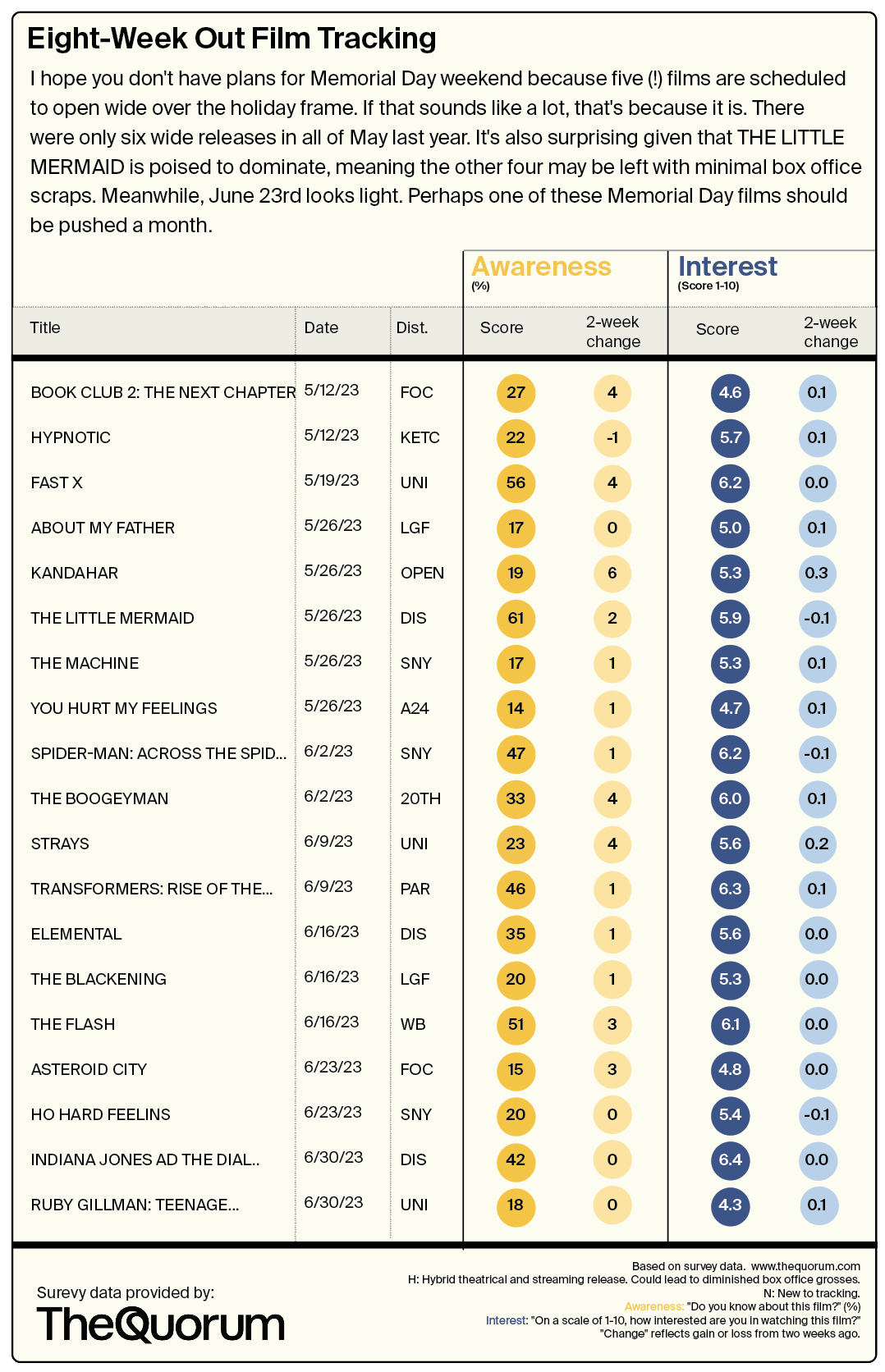
Why are four films taking on The Little Mermaid and the second weekend of Fast X over Memorial Day? Maybe one or more of those should move to late June, according to the latest Quorum early tracking chart…

https://puck.news/
Finally finally…some fun stuff

Congrats to Brillstein talent managers Cynthia and Andrea Pett for the successful return on Saturday of Rock4EB, which raised more than $1 million to fight epidermolysis bullosa with a pretty fantastic Brandi Carlile concert at Marc Gurvitz’s Malibu house. MC Judd Apatow got a laugh out of me for this line: “It’s always been Brandi Carlile’s dream to perform in the backyard of David Spade’s manager.” … Another congrats to Bad Robot president and C.O.O. Brian Weinstein for raising $4 million at the 20th Anniversary event at Cipriani Wall Street for the Opportunity Network, which he co-founded. Honoree Trevor Noah brought down the house. … Concierge services are selling tickets to Vanity Fair’s Cannes party, so you know when you ask who the hell all these random people are.

Have a great week,
Matt

Correction: I said Apple “cut” a dozen TV deals on Thursday, but I meant suspended. We’re not to the cutting stage yet.

Got a question, comment, complaint, or an invite to your strike party? Email me at Matt@puck.news or call/text me at 310-804-3198.

FOUR STORIES WE’RE TALKING ABOUT
CNN’s Trump Revival
CNN’s Trump Revival
Plus, whispers from the Tucker Bunker.
DYLAN BYERS
Gershkovich Swap Crisis
On the dour mood inside the White House.
JULIA IOFFE
Iger vs. DeSantis
Iger vs. DeSantis
Inside the legal battle for Reedy Creek.
ERIQ GARDNER
Trump in New Hampshire
On Trump’s primary odds, DeSantis’s stumbles, and Youngkinology.
TARA PALMERI
Puck
Facebook Twitter Instagram LinkedIn

Need help? Review our FAQs
page
or contact
us
for assistance. For brand partnerships, email ads@puck.news.

Puck is published by Heat Media LLC. 227 W 17th St New York, NY 10011.

SEE THE ARCHIVES

SHARE
Try Puck for free

Sign up today to join the inside conversation at the nexus of Wall Street, Washington, A.I., Hollywood, and more.

Already a member? Log In


  • Daily articles and breaking news
  • Personal emails directly from our authors
  • Gift subscriber-only stories to friends & family
  • Unlimited access to archives

  • Exclusive bonus days of select newsletters
  • Exclusive access to Puck merch
  • Early bird access to new editorial and product features
  • Invitations to private conference calls with Puck authors

Exclusive to Inner Circle only


Latest Articles from Hollywood

MELANIA documentary
Matthew Belloni • May 8, 2023
Can ‘Melania’ Open?
On top of the $40 million Amazon ponied up for Brett Ratner’s docu-hagiography, the studio is spending another $35 million to open it in 27 countries, including a splashy Kennedy Center premiere to be attended by top executives. But for all the expense, Melania is for an audience of one.
Ted Sarandos
Matthew Belloni • May 8, 2023
Movie Theaters Want a Ted Sarandos Blood Oath
Regal’s Eduardo Acuna goes public with his pitch for Netflix to sign a 10-year binding pledge with the Trump D.O.J. (and other ideas), ensuring Sarandos won’t go back on his recent promise to give Warner Bros. movies a 45-day window. Offering Greta Gerwig’s ‘Narnia’ a wide release would help, too.
Ted Sarandos
Matthew Belloni • May 8, 2023
How Netflix’s Sony Deal Explains Its Warners Pursuit
The streamer's new global agreement with the studio, valued at up to $8 billion, puts a public value on its slate. Now apply that math to its potential Warners takeover.


Kathleen Kennedy
Matthew Belloni • May 8, 2023
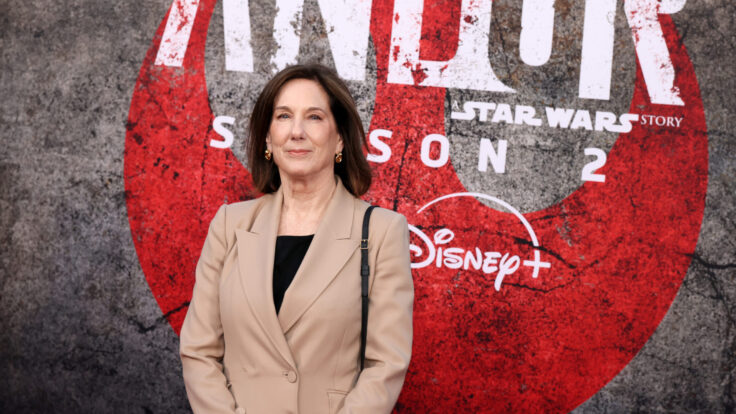
Kathleen Kennedy’s Final Episode
As president of Lucasfilm, the producer oversaw five Star Wars films, a wave of TV shows…. and a galaxy’s worth of abandoned projects and jilted filmmakers. With her exit finally official, is the franchise better off now than it was 14 years ago?
Bob Iger
Julia Alexander • May 8, 2023
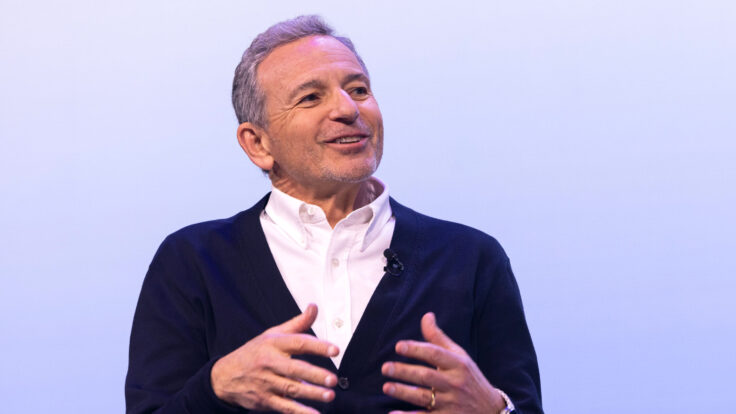
The Math Behind Combining Hulu and Disney+
The long-ordained integration of Disney’s two streaming services is being heralded inside Burbank as a transformational moment for both. But will the merged platform really be more than the sum of its parts?
Kevin Spacey
Eriq Gardner • May 8, 2023
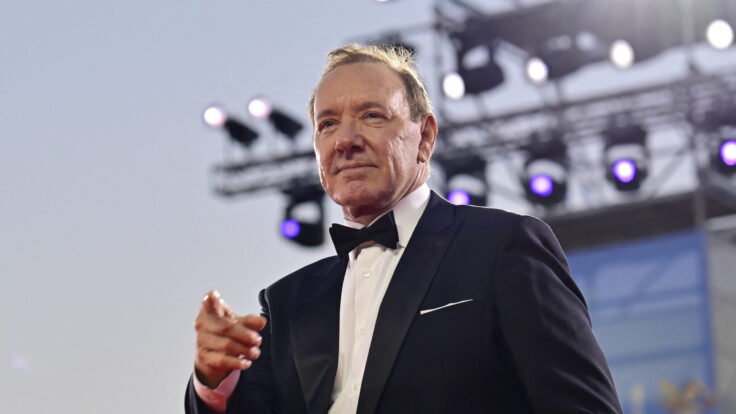
Kevin Spacey’s $80M Legal House of Cards
The disgraced actor is soon expected to sit for a brutal cross-examination in the rare Hollywood insurance dispute that has actually made it to trial. A potentially huge payout hinges on whose version of House of Cards’s ending prevails.


John Landgraf
Kim Masters • May 8, 2023
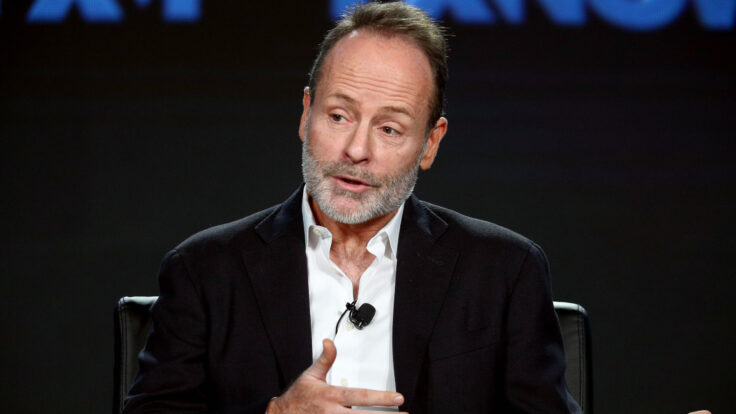
Can John Landgraf’s Slow TV Model Survive?
The oracle of Peak TV is at an inflection point as Disney+ absorbs Hulu and the chase for prestige gives way to the tonnage model.


Get access to this story

Enter your email for a free preview of Puck’s full offering, including exclusive articles, private emails from authors, and more.

Verify your email and sign in by clicking the link we just sent.

Already a member? Log In


Start 14 Day Free Trial for Unlimited Access Instead →


Latest Articles from Hollywood

Dana Walden
Matthew Belloni • May 8, 2023
20 Surefire, 100 Percent Probable Hollywood Predictions for 2026 (Part Two)
StrikeWatch ’26, a bizarre Michael Jackson record, and the future of Disney’s Dana Walden (if she’s C.E.O. or not) in the second act of the town’s favorite prognostication of the year ahead.
a minecraft movie
Scott Mendelson • May 8, 2023
It Was One Box Office Battle After Another in 2025
With Hollywood’s annual output back to resembling its pre-pandemic levels, some clear trends emerged: Kids showed up, horror hit more often than it didn’t, and the superhero slump is real. How might it all apply to 2026 and beyond?
Ted Sarandos
Eriq Gardner • May 8, 2023
Netflix’s Game of Antitrust Chicken
If the streaming giant wins Warner Bros., the feds will almost certainly present their next hurdle. And the Trump Justice Department might ask some questions that Netflix would like to avoid.


Sydney Sweeney
Matthew Belloni • May 8, 2023
20 Surefire, 100 Percent Probable Hollywood Predictions for 2026 (Part One)
The town’s favorite year-ahead forecast returns, with input from some of my best sources—plus a few celebrity Puck friends. The future of ‘Star Wars,’ Instagram Reels, ‘Rush Hour 4,’ and Sydney Sweeney foretold in the first of two parts…
Bryan Lourd caa
Eriq Gardner • May 8, 2023
The CAA-Range Finale, Zaz’s $500M Beef & Trump’s Media Damages Calculator
A look ahead at the most consequential media lawsuits and legal crises that will come to their conclusion in 2026.
Pam Abdy, Mike De Luca
Matthew Belloni • May 8, 2023
Hollywood’s Heroes of the Year Are… The Warner Bros. Duo
In 2025, Mike De Luca and Pam Abdy went from dead executives walking to a six-month stretch of blockbusters and Oscar contenders that silenced the town and offered a middle finger to their boss, David Zaslav. In an era when I.P. has taken over Hollywood, and their studio has been sold to Netflix (or Paramount?), they decided to go out swinging…


sam altman
Matthew Belloni • May 8, 2023
Hollywood’s Villain of the Year Is… Sam Altman
A year before the OpenAI C.E.O. gets the ‘Social Network’ movie treatment, the slop-ification of entertainment took a major leap in 2025 thanks to a copyright infringement hub called Sora 2 and Altman’s brazen courtship of Disney.
Get access to this story

Enter your email to get access to one article and free previews of our private emails from Puck authors and editors.

OR

Already a Member? Sign in


Latest Articles from Hollywood

Oscars
Matthew Belloni • May 8, 2023
The Oscars-YouTube Brand Problem
The streamer’s bold bid to host the Academy Awards offers maximum reach for a show that was becoming minimally niche, but mixing prestige and base populism has its potentially problematic downsides.
Ted Sarandos
Kim Masters • May 8, 2023
Does Anyone Believe Ted Sarandos on Theaters?
As the streamer’s winning bid to secure WBD faces regulatory scrutiny and a hostile offer from Paramount, Ted Sarandos insists that Netflix is committed to a standard theatrical window for Warner Bros. movies. Is it enough to earn Hollywood’s loyalty?
bob iger
Eriq Gardner • May 8, 2023
Disney’s Sora Wager & Hollywood’s Next A.I. Legal Battles
A field guide to the A.I. cases and deals that will shape 2026, including Disney’s recent peace treaty, the Elon-Altman feud, the next round of labor negotiations, the whole ScarJo voice issue, and many more…


david zaslav
Matthew Belloni & William D. Cohan • May 8, 2023
Who Wants Warner Bros. More?
Battle lines have been drawn over David Zaslav’s Warner Bros. Discovery, and both Netflix and Paramount think they have the winning formula. Will the Ellisons get to $34 a share? Can Netflix counter? Is Larry really “backstopping” all the equity? Or is the game already rigged?
Alan Horn and Rob Reiner
Kim Masters • May 8, 2023
Alan Horn Remembers Rob Reiner
The longtime exec paid tribute to Reiner, his onetime partner in Castle Rock Entertainment, and explained why the director dedicated their first movie together to his father.
Ted Sarandos, Greg Peters
Julia Alexander • May 8, 2023
Why Netflix Needs Warner Bros.
Prior to its $83 billion deal to acquire the studio and HBO Max, the streamer had never spent more than $700 million on an acquisition. But Netflix saw an opportunity to own, not license, a significant chunk of its content—and, perhaps more importantly, to block David Ellison from taking it away.


wicked cynthia erivo
Matthew Belloni • May 8, 2023
Can Media Coverage Buy an Oscar?
Every year, awards contenders and pretenders have been mounting unbridled and financially unchecked press campaigns in the hopes of boosting their chances. A new data analysis reveals that they maybe shouldn’t have bothered.


  • Terms
  • Privacy
  • Contact
  • FAQ
  • Careers
© 2026 Heat Media All rights reserved.
Create an account

Already a member? Log In

CREATE AN ACCOUNT with Google
OR YOUR EMAIL

OR

Use Email & Password Instead

USE EMAIL & PASSWORD
Password strength:

OR

Use Another Sign-Up Method

Become a member

All of the insider knowledge from our top tier authors, in your inbox.

Create an account

Already a member? Log In

Verify your email!

You should receive a link to log in at .

I DID NOT RECEIVE A LINK

Didn't get an email? Check your spam folder and confirm the spelling of your email, and try again. If you continue to have trouble, reach out to fritz@puck.news.

CREATE AN ACCOUNT with Google
CREATE AN ACCOUNT with Apple
OR USE EMAIL & PASSWORD
Password strength:

OR
Log In

Not a member yet? Sign up today

Log in with Google
Log in with Google
Log in with Apple
Log in with Apple
OR USE EMAIL & PASSWORD
Don't have a password or need to reset it?

OR
Verify Account

Verify your email!

You should receive a link to log in at .

I DID NOT RECEIVE A LINK

Didn't get an email? Check your spam folder and confirm the spelling of your email, and try again. If you continue to have trouble, reach out to fritz@puck.news.

YOUR EMAIL

Use a different sign in option instead

Member Exclusive

Get access to this story

Create a free account to preview Puck’s full offering, including exclusive articles, private emails from authors, and more.

Already a member? Sign in

Free article unlocked!

You are logged into a free account as unknown@example.com

ENJOY 1 FREE ARTICLE EACH MONTH

Subscribe today to join the inside conversation at the nexus of Wall Street, Washington, A.I., Hollywood, and more.

START 14-DAY FREE TRIAL

  • Daily articles and breaking news
  • Personal emails directly from our authors
  • Gift subscriber-only stories to friends & family
  • Unlimited access to archives
  • Bookmark articles to create a Reading List
  • Quarterly calls with industry experts from the power corners we cover