 |
|
Welcome back to What I’m Hearing. I’m home in L.A. after a great Puck event before the White House Correspondents’ Dinner. (Nice Times coverage here, if you scroll past Bryan Lourd’s plaid suit.) Great meeting so many D.C. readers interested in Hollywood.
Another Puck event: If you’re in New York for the TV upfronts, I’m sitting down on May 14 with Charlie Collier, president of Roku Media, for “cocktails and conversation.” Click here if you’re interested in attending.
Programming note: I’ll be back on CNBC’s Squawk Box tomorrow at 8:40 p.m. ET discussing Paramount. On The Town, Tubi C.E.O. Anjali Sud explained its recent viewership surge, Bill Cohan and I debated which buyer is best for Paramount, and Aaron Sorkin revealed that he’s writing a movie connecting Facebook, misinformation, and January 6. Subscribe here and here.
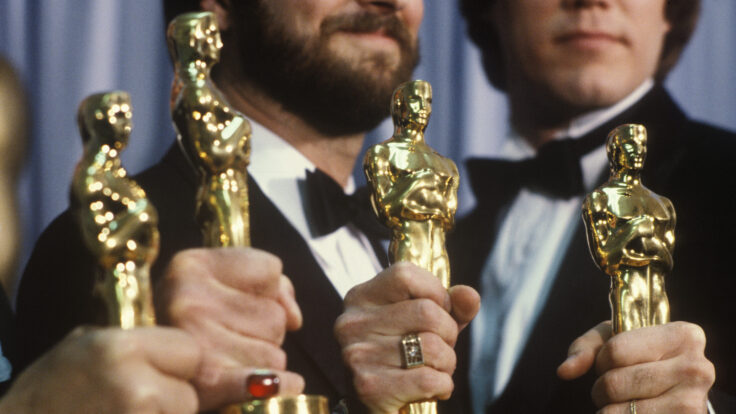
Speaking of the Sorkin project…: Aaron isn’t providing any further details, but I did find out that Sony optioned the Facebook Files series of articles from The Wall Street Journal more than a year ago. The studio is looking to lock up a bunch of Facebook-related literary materials for a potential sequel to The Social Network, Sorkin’s Oscar-winning collaboration with David Fincher. Fingers crossed on that one.
Not a Puck member yet? Click here to fix that problem. Got a news tip or an idea for me? Just reply to this email.
Correction: Before we start, I screwed up the numbers in Thursday’s item about Ari Emanuel’s compensation. It’s a combined $84 million for 2023 ($19 million at Endeavor, $65 million at TKO), not $149 million. Still a monstrous payday, but decidedly less so. Apologies.
Discussed in this issue: Shari Redstone, Jeff Shell, Bob Bakish, Jerry Seinfeld, Bob Iger, Sydney Sweeney, Harvey Weinstein, Philippe Dauman, and… Randall Emmett’s fake name.
But first…
|
| Who Won the Week: Geneva Robertson-Dworet and Graham Wagner |
|
| Taylor Swift’s chart dominance is much less surprising than a breakout hit series on Prime Video. The Fallout creators, with help from producer-directors Jonah Nolan and Lisa Joy and fans of the video game, delivered 1.2 billion minutes watched last week, per Luminate—about double the next-highest original show (Netflix’s Baby Reindeer). |
|
|
“Disorientation replaced the movie business.”
—Jerry Seinfeld, promoting his new movie in GQ by declaring that nobody cares about movies anymore.
Runner-up: “Sometimes you just have to lean into it a bit—and it worked wonderfully.”
—Glen Powell, on faking a real-life romance with Sydney Sweeney to promote Anyone But You. (I will admit I fell for this one.)
Now my take on the firing of yet another Hollywood C.E.O. … |
 |
| Not Great, Bob Bakish! |
| A corporate eulogy for a Redstone yes-man as Shari finally turns on the guy she plucked from obscurity and empowered through Paramount’s troubled foray into the streaming wars, until he quietly sought to sabotage her planned sale to Skydance. |
|
|
|
| The Palm Beach outpost of New York’s French restaurant Le Bilboquet is just off the appropriately named Worth Avenue, and if you’re there in the early evening these days, you may spot Philippe Dauman and his wife among the tanned and aged clientele. Dauman, of course, is the villainous former Viacom C.E.O., who extracted more than $500 million in compensation from a legacy media company he systematically managed into the ground, before he was finally exiled to Florida (and the Hamptons) in 2016—with a $72 million kiss-off.
A personal lawyer and consigliere to the company’s controlling shareholder and architect, Sumner Redstone, Dauman steered Viacom as a cheerleading yes-man to his elderly boss, who was preoccupied by two young girlfriends and slowly losing his mind—a terrible combination made worse when Dauman eventually turned against the Redstones and attempted to hijack the entire enterprise from Sumner’s daughter, Shari. In the process, he manipulated earnings to juice the stock price (and his comp), mortgaging the future and remaining willfully blind to the digital transformation that would ultimately doom the company.
So no, Bob Bakish, Dauman’s successor for the past seven years, was not nearly that bad. And in many ways, Bakish, who was officially fired and replaced today by a trio of underlings as Shari attempts to offload the entire company, was destined to fail as C.E.O. thanks to the decisions of the past. But Bakish was a different kind of yes-man, for a different kind of Redstone, happy to pretend the empire wasn’t just a dying television company in the eyes of investors. In the process, he fed Shari’s mistaken belief that she, like her father, was a visionary media mogul, and that she was playing the same game as Netflix or Disney—until Bakish, too, turned on his benefactor and was shown the door with $51 million in go-away money. The Redstone way. |
|
|
| In 2016, Shari plucked Bakish from the company’s international operation and empowered him to first run Viacom and eventually the combined company, dubbed Paramount Global, as a milquetoast antidote to both Dauman and the hard-charging and insubordinate Les Moonves at CBS, with whom she was jockeying for power. That was before Moonves’ dramatic #MeToo exit, as Shari was emerging the victor in the boardroom and courtroom wars for her father’s empire. And Bakish seemed to be exactly what she wanted: calming, professional, management consultant-y. He may have played in an MTV house band earlier in his career, but he was certainly no showman.
“When I was asked to serve as interim C.E.O. in 2016, I thought it would be a month-long gig,” Bakish wrote in his farewell note to employees today. I think most of Hollywood agreed; few outside Viacom or the international TV community had even heard of him eight years ago. I certainly hadn’t. But unlike the cronies from Shari’s dad’s circle, Bakish was loyal to her. He did what she wanted, he was unflashy and wonkish on the financials—and, to most who interacted with him, he was charisma-free, unlike her spotlight-stealing father.
For some reason, despite their tortured relationship, Shari cares very much about Sumner’s legacy. In 2000, amazingly, Viacom was the highest-valued collection of media assets in the world, and in many ways, Shari has operated Paramount Global as if it remained one of the great American companies, as opposed to an also-ran that lost the youth audience to the internet and, more recently, has lost half its value in a year. After all, despite the troubling headlines about cord-cutting, in Shari’s view, Paramount was still making movies with Tom Cruise, and CBS was still No. 1 on broadcast, just like in 2005.
The delusion continued: Bakish was perfectly happy re-combining Viacom and CBS when many wondered openly why the sick child (Viacom, home of the profitable but cratering cable TV brands) should share a bedroom with the kid who was doing okay (CBS, home of the NFL and hit shows). But Shari believed the combined company could compete in streaming, and cable distributors would still pay for Viacom networks that mostly aired reruns of Ridiculousness and SpongeBob SquarePants if they were again packaged with CBS. In a 2018 trade profile, Bakish was still talking about the strength of the cable brands and barely mentioned streaming. But in 2019, he paid $340 million for the ad-supported streamer Pluto TV. And with Shari’s encouragement, in 2021, Bakish charged headlong into the streaming wars, quixotically taking on the established streamers with Paramount+, an “all-in” relaunch of CBS All Access. Despite worsening economics from cord-cutting, and an I.P. cupboard depleted by two decades of neglect, Sumner’s daughter—so often underestimated, including by Sumner himself—was officially competing with Netflix and Disney. |
|
|
| The fundamental flaw in that strategy wasn’t believing that Paramount could be competitive in general interest streaming. It was believing that Paramount could do so in the short window before its linear TV business sucked such aspirations into an entirely predictable black hole of debt service and reduced dividends.
Put aside the billions it has lost over the past three-plus years, and the still-hilarious fact that due to bungled dealmaking, the company’s biggest show, Yellowstone, streams on arch-rival Peacock. Paramount’s streaming business, anchored by Paramount+, lost only $286 million this quarter as it hit 71 million subscribers. It’s on track to become profitable in the U.S. by next year, the company says. Maybe that’s rosy-eyed B.S., and certainly all those free subscribers from its deal with Walmart do pad the numbers.
But the losses have been getting smaller, and the CBS sports content, especially the NFL, is a differentiator for Par+, as today’s Super Bowl-spiked earnings showed. “Lost in the shuffle was a strong operating quarter with consolidated revenue growth, increases in both DTC subscribers and ARPU, and margin expansion ahead of consensus estimates,” Guggenheim analyst Michael Morris wrote. The truth is, maybe with more time, the Bakish strategy for Paramount would have at least salvaged the company before Shari decided to cut bait.
But he didn’t have that kind of time. In the short term, it’s now pretty clear that a better strategy for Paramount probably would have been to keep CBS All Access as a digital repository for CBS content, and then license everything else out. Taylor Sheridan, a crown jewel at an arms-dealer studio, could have become one of the biggest creators on Netflix and Amazon. Paramount’s movie studio could have a Sony-style output deal with Netflix or Max, thus backstopping the inevitable box office flops. Showtime and BET, the only cable brands in its portfolio that still actually matter, could have been sold off for billions when the suitors came calling. That “mountain of content,” as the Paramount+ ads clumsily advertise, could have generated a mountain of cash instead of a mountain of streaming losses.
When did Shari realize this? We know she began engaging with David Ellison at Skydance in the fall of last year. But I’m told she started to turn on Bakish earlier, about a year ago, when he slashed the Paramount quarterly dividend, thus starving Redstone’s National Amusements Inc. of its lifeblood. The stock tanked, while analysts and people like me were questioning why the heck the company wouldn’t take $3 billion for Showtime from former top exec David Nevins, who must find today’s news that Bakish got fired in part for not doing his deal very amusing. (The Journal reported that Bakish also turned down Blackstone’s $5.5 billion to $6 billion cash offer for Showtime back in 2021, a truly staggering error given that the asset these days is worth… what, exactly?)
Interestingly, in February of ’23, when I wrote a “eulogy” for Showtime after Paramount gutted it, I got a call from Redstone’s personal P.R. person complaining about the characterization. It was as if Shari didn’t realize that Bakish and his cable TV hatchet man Chris McCarthy had essentially killed the brand by slashing its programming, folding its app into Paramount+, and rebranding the whole offering as “Paramount+ With Showtime.” It was over, I wrote, but nobody seemed to have informed Shari.
But she eventually figured it out, and the Shari-Bob relationship apparently soured further this year after Paramount’s debt rating was cut to junk by S&P. Then came word from Shari’s spies that Bakish, even as he earned a meme-inducing $31 million last year despite the stock slide, and a total of about $150 million since 2017, was openly trash-talking her dalliance with Skydance, which would pay a hefty $2 billion for National Amusements but leave the Paramount Class B shareholders without such a premium on their shares. Two sources told me that Bakish and his banker buddy, Aryeh Bourkoff, actively engaged with Apollo, which ended up offering $26 billion for Paramount—a deal Shari clearly doesn’t want, or doesn’t think is real, or both. If you’re Shari, you can’t have your C.E.O. scheming against the deal you want to make, especially if there’s an independent committee of the board tasked with evaluating the options and endorsing what’s best for the company. (Bakish, through a Paramount rep, declined to comment.) |
|
|
| In addition, you might say the text chain struck again. George Cheeks and Chris McCarthy, the TV chiefs, and Brian Robbins, who runs the film studio, have maintained a dialogue and an alliance throughout the Paramount corporate chaos. It’s widely speculated that the trio helped orchestrate the ouster of Nevins, the former Showtime and Paramount+ leader. And at least one of them apparently expressed doubts about Bakish’s leadership to the board, which immediately got back to Shari. Given her other concerns, that’s a dagger.
And it jibes with everything I’ve heard lately out of Paramount, which has always been a snake pit of agendas, backstabbing, and frenemies. (Ironically, Bakish helped tame some of that toxic corporate culture when he arrived.) Now the trio represents an “office of the C.E.O.,” which certainly doesn’t seem like a long-term strategy.
But at least until the Skydance and Apollo scenarios play out, they need to feign business as usual. Today’s unfortunately timed earnings call bordered on farce. It lasted about seven minutes, perhaps a new Guinness record for most awkward brush-off to investors and analysts, the leaders took no questions, and they simply read from a short press release. Then the Mission: Impossible music played; I kid you not, this bordered on a Succession “We Here for You” moment.
Since the new three-headed C.E.O. declined to detail their supposed “long-term plan” for the company, some might wonder whether it exists only in their fantasies, alongside the proverbial girlfriend in the Niagara Falls area. But in their defense, it’s not exactly the best time to detail any plan for Paramount, given the Skydance deal on the table, and Apollo (with potentially Sony Pictures) waiting in the wings. Paramount also hasn’t announced a new carriage deal with Charter, an urgent issue given the current deal expires tomorrow. According to my sources, the trio did present a longer-range plan to the board this past weekend, but I assume we won’t see what that is unless and until the sale doesn’t happen. (My partner John Ourand reported tonight that all sides expect to sign a Charter extension tomorrow—a promising sign that a deal is imminent.)
And how does all this impact those potential sale talks? The Ellison camp seems to be annoyed by all the noise—and they blame the Bakish camp for some of the media leaks. There’s also some confusion over whether the Paramount special committee will let the impacted shareholders vote on Sunday’s revised offer, which would add $3 billion to the mix to shore up the company’s balance sheet and increase payouts for those Class B shares. Given the short exclusive window for Skydance ends May 3 (if it’s not extended), I’m betting we see a resolution in the next week or so. Ellison has done a lot to make this happen, but I could also see him walking away and trying to buy something else, especially given the cranky investors that bought into a controlled company and are now complaining that Shari is—wait for it—exercising her control.
If Skydance falls apart, maybe Apollo steps in, maybe not. But even if Shari allows that to happen, it’s not clear that deal would pass muster with regulators. Then? The stock would likely tank, and the shareholders would riot for real. In short: a mess.
All of which raises the question: Given the seismic changes in the business and the baggage left by Sumner and Dauman, was Shari f-ed on Paramount from the beginning? Or was there a way out that she and Bakish couldn’t find? We’ll probably never know, though I lean toward the latter. There were always going to be casualties of the streaming revolution, and given Paramount Global has been one of the most chaotic and unfocused companies over the past two decades, it’s not a shock that Shari finds herself in this sad situation. But she sealed her fate by betting that Paramount in the digital age could be the same kind of Big Media company that her father built and presided over in a former era. Going much smaller was the move. Maybe Sumner’s girlfriends, had they pried the company from him, would have figured this all out… |
|
|
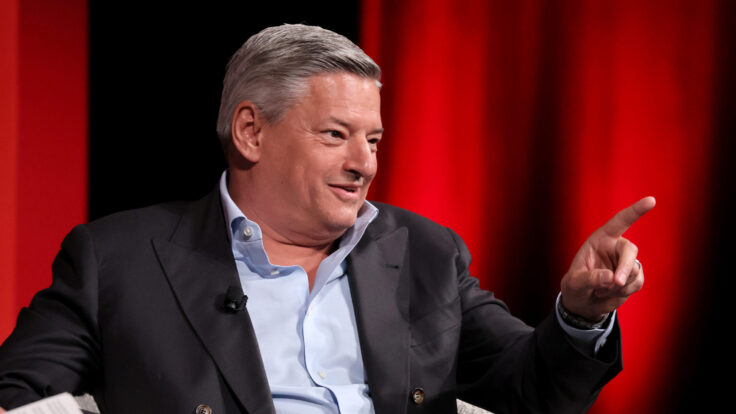
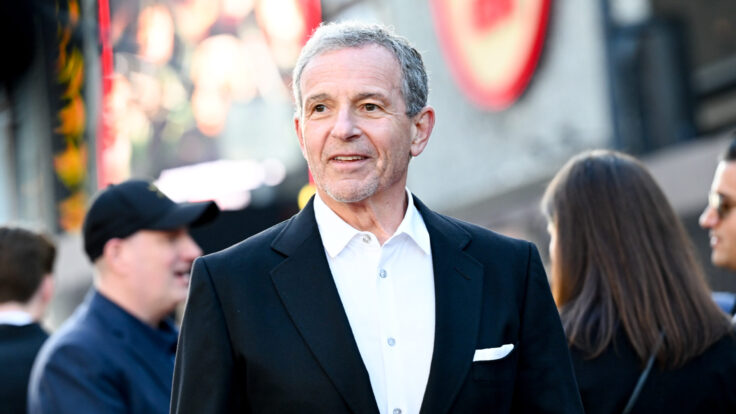
| Bob Iger and the Netflix co-C.E.O.s saved more than $1 million each using their corporate jets for personal use in 2023 than it would have cost them out of their own pockets. Phew! [WSJ]
If you’re furious at the New York appeals court for overturning the Weinstein conviction, Ronan Farrow has a good explanation of the Molineux rule. [New Yorker]
Plus: Kim Masters and I discussed the ruling and a potential split between N.Y. and California courts. [The Business]
If Apollo has its way, its Legendary studio would be merged with Paramount and possibly Sony Pictures, but until then, Legendary C.E.O. Josh Grode insists he’s hunting for his own acquisitions. [Bloomberg]
Way more than you ever wanted to know about the balding, middle-aged lawyer who for years wrote the Crazy Days and Nights gossip blog—and the bizarre affair that ended up outing him. [Vulture]
Finally, someone connected all these okay-but-not-great TV shows to the algorithm and its imperative to show you a version of what you’ve already watched. [NY Times]
Casey Newton parses the legal arguments for forcing a TikTok sale. [Platformer]
Randall Emmett is really giving sleazy movie producers a bad rap, this time changing his name on his latest movie to avoid scrutiny amid a trail of lawsuits and abuse allegations. [LA Times] |
|
|
| My debate with Bill Cohan on the best path for Paramount sparked some thoughtful responses. A few highlights…
“Is it just me, or is the Paramount merger hilariously similar to Succession? Paramount is the legacy media brand, like Waystar Royco, that is choosing between two bidders. One family company wants to make it great again (Skydance in Paramount's case, Pierce Global Media in Succession). The other wants to tear it to shreds for profit (Apollo private equity in Paramount’s case, GoJo in Succession) but is offering more money.” —An executive
“I haven't seen any coverage of the Paramount saga that discusses Apollo’s problems with the F.C.C. national broadcast ownership cap. I am not saying that some version of the deal can’t get approved, but I don't see that the Biden-appointed F.C.C. would let it happen without a divestiture of enough of the 13 Apollo/Cox or the CBS-owned and -operated stations to get under the statutory national ownership cap. (CBS is right up against the 39 percent national cap; Apollo is the attributable owner of the Cox Media Group, which has an audience reach of 10 to 15 percent, depending on how you count.) Since a deal likely wouldn't get to the F.C.C. for approval much before the end of the year, they might be betting on Trump winning the election, but I can’t imagine the money people would finance anything premised on the election outcome.” —A lawyer [Note: Bill Cohan discusses this issue in the latest Dry Powder email.]
“Not for nothing Matt, but Tony Vinciquerra and Tom Rothman have done a pretty good job at Sony. Yes, [merging Paramount and Sony Pictures] is one less studio, and there will be a lot of blood on the floor, but as operators they’re much better than David Ellison. [Jeff] Shell and [Jeff] Zucker are terrific in TV, but it’s not like Sony Pictures Television is a slouch.” —Another executive
“Apollo vs. Ellison for Paramount is shaping up like an East Coast vs. West Coast ’90s rap battle. Biggie vs. Tupac. Someone should tell both parties they ended up being murdered.” —An investor |
|
|
| See if you can figure out why Bob Marley: One Love did exponentially better last weekend, including on April 20… |
|
|
Have a great week,
Matt
Got a question, comment, complaint, or a legal defense fund for the college guy tracking Taylor Swift’s jet? Email me at Matt@puck.news or call/text me at 310-804-3198. |
|
|
|
| FOUR STORIES WE’RE TALKING ABOUT |
|
|
|
|
|
 |
|
|
|
Need help? Review our FAQs
page or contact
us for assistance. For brand partnerships, email ads@puck.news.
|
|
You received this email because you signed up to receive emails from Puck, or as part of your Puck account associated with . To stop receiving this newsletter and/or manage all your email preferences, click here.
|
|
Puck is published by Heat Media LLC. 227 W 17th St New York, NY 10011.
|
|
|
|