{{ 'now' | timezone: 'America/New_York' | date: '%b %d, %Y' }} |
|
|
|
Welcome back to another very special Wednesday edition of What I’m Hearing, today
with Kim Masters and Bill Cohan. Kim takes a hard look at the recently announced 60 percent production rebate offered by Saudi Arabia, and reveals shooting in the kingdom is not exactly what it seems. Plus, as the Ellisons put together their complex financing for the $111 billion WarnerMount merger, Bill analyzes the looming debt question.
Over to you, Kim and Bill…
Mentioned in this issue: Larry
Ellison, David Zaslav, Xavier Becerra, Abdullah bin Nasser Al-Qahtani, Anthony Mackie, Gavin Newsom, Neill Blomkamp, Mohammed bin Salman, Greg Silverman, Ben Kingsley, Gerry Cardinale, Alan Ritchson, Tom Steyer, Rupert Wyatt, Steve Hilton, and more.
|
|
|
|

| William D. Cohan
|
|
- Inside
WarnerMount’s $49B debt blockbuster: Whatever reservations Hollywood may have about the Paramount–Warner Bros. Discovery merger, the $111 billion deal is cruising toward the finish line… and Wall Street is ready to supply the capital. A grand total of 18 banks are gearing up to raise some $49 billion in debt from across three markets: investment-grade bonds, high-yield bonds, and institutional first-lien loans. The underwriters have not yet formally marketed the debt—that
process will start probably in June—but the incoming, unsolicited interest has been high, or so the banks want everyone to believe.
At the moment, it looks like $30 billion will find its way into the investment-grade bond market, about $7 billion will go to the first-lien loan market, and the remaining $12 billion to either the high-yield bond or second-lien loan market. Barring an unforeseen macroeconomic event, the underwriters appear very optimistic that the $49 billion of new debt
will be a blockbuster.
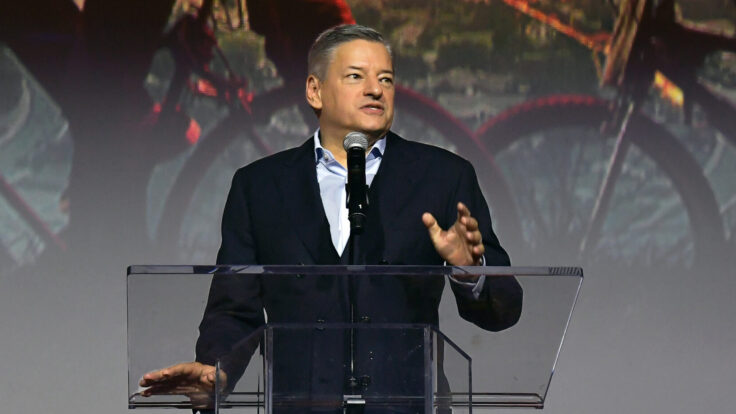
Of course, part of that enthusiasm derives from the fact that Larry Ellison—and, to a far lesser degree, Gerry Cardinale’s RedBird Capital—has agreed to underwrite $47 billion in new equity financing, no matter what. Yes, Larry will be trying to get several Middle East sovereign wealth fund partners to help, but he is nevertheless on the hook for all the equity—thanks to Warners C.E.O. David
Zaslav & Co.’s clever negotiation with Paramount earlier this year. What’s more, if solvency ever becomes an issue during the financing, Larry has agreed to inject even more equity: Originally, the merger required $57.5 billion in new debt financing before that figure was reduced to $49 billion. It’s almost enough to make investors overlook the fact that both S&P Global and Fitch have assigned the pro forma WarnerMount capital structure—which will emerge with a combined $79
billion in debt—a junk credit rating.
But the Ellisons seem to be working hard to appease the credit-rating agencies’ concerns about the nearly $80 billion of the combined companies’ debt. In a recent filing with the S.E.C., the Ellisons disclosed that Paramount “communicated” to various ratings agencies that it is the Ellisons’ and RedBird’s “plan and commitment” to “delever below a net debt to adjusted EBITDA multiple of 3.75x by fiscal year 2028 and a net debt to adjusted EBITDA
multiple of 3.0x by fiscal year 2029, and that they will take steps to deliver the deleveraging targets.” The Ellisons also made commitments to how quickly WarnerMount would achieve $1.8 billion of the $6 billion of expected “synergies” in the first year post-closing and $4.2 billion in the second. Noted, David! (Usual disclosure: Through a recent transaction, RedBird is a minority investor in Puck; Zaslav became a de minimis investor through the same deal.)
|
|
|
|
A MESSAGE FROM OUR SPONSOR |
Starring Sterling K. Brown, Julianne Nicholson, and Shailene Woodley, Hulu’s drama series PARADISE is filled with
nail-biting twists and turns as the series’ world ambitiously expands outside the bunker. Variety calls the new season “Exquisite,” and the San Francisco Chronicle says it “moves the heart without insulting the intellect.” PARADISE is for your Emmy® consideration in all eligible categories, including Outstanding Drama
Series.
Watch The Trailer Here |
|
|
|

| Kim Masters
|
|
- News shows; short
shrift: The guilds and studios won a great victory last summer when Gavin Newsom signed California’s rebate legislation into law, boosting the annual cap from $330 million to $750 million for five years. The program has enabled The Pitt, to give just one example, to shoot in Los Angeles, generating lots of jobs. But studios and others in the industry were disappointed, to say the least, when not a single new television show received a credit in the latest
funding round because the money had run dry. Netflix was among those who came up empty after submitting applications for two projects, and same with NBC’s The Rockford Files, which obviously needs to be in L.A.
In response to my query, the California Film Commission noted that it is “statutorily required to accept recurring TV into the program, which limited us in accepting any new TV. … The good news is the program is popular and the interest kicked off strongly in
application window one and remains strong.” The film commission is also moving up the window for applications for the next tranche of funding from July to June 15, so relief can come a little sooner.
Still, industry insiders say this is proof that the funding is inadequate. “It’s better than nothing, but it still isn’t enough,” said one talent rep. “There’s the macroeconomic climate, the studios chasing margins—that’s not going to change. People are having to leave this business and the
city. It’s a crisis. Look at New York and New Jersey. They’re booming, and I ask myself, why couldn’t it be Los Angeles?”
Among the top gubernatorial candidates, Republican Steve Hilton has pledged to convene a special legislative session to overhaul the California Film Commission and expand credits to cover above-the-line salaries. As for the Democrats, Tom Steyer supports an uncapped film tax credit program, while Xavier Becerra backs
policies including local permitting reforms and partnering with the federal government to create a nationwide production subsidy. Still, noted one below-the-line source, “There’s clearly not enough money to support the production that would like to come here. Not a single new show—people are going to be absolutely furious.”
|
|
|
|
Now more from Kim on some farther-flung rebate issues… |
|
|
|
Saudi Arabia has been offering generous rebates to lure productions to
the Gulf. But even before the region experienced war and instability and spending slowed, some producers had been left holding an empty bag. |
|
|
|
At Cannes a couple of weeks ago, Saudi Arabia announced that it would increase its
rebate to as much as 60 percent for movie and television projects that filmed in the country. Amazing, right? That would seemingly be the most generous incentive program in the world, far higher than the 25 to 40 percent offered by some European countries and even the 50 percent that Qatar announced last November. But instead of uncorking the champagne, one producer who has shot in the kingdom said that when he and his associates heard the news, “We started laughing.”
Laughing
through tears, that is. The producer had shot a low-budget film in Saudi Arabia for the local market, expecting to take advantage of the previous 40 percent Saudi rebate. But many months later he’s gotten nothing—and he is not alone. While waiting, “you’ve got to find the money elsewhere,” he said. “It ruins your finance model.” |
|
|
|
A MESSAGE FROM OUR SPONSOR |
Chase Infiniti stars in THE TESTAMENTS, Hulu’s new coming-of-age drama series set in the world of The Handmaids
Tale. Variety calls it “an exemplary follow-up to the original series,” and a “magnificent coming of age story.” Also starring Ann Dowd and Lucy Halliday, THE TESTAMENTS is for your Emmy® consideration in all eligible categories including Outstanding Drama Series.
Watch The Trailer Here |
|
|
|
Another producer, who shot a midbudget independent film in the country and has waited
even longer for the rebate, said that many projects get loans to cover the financing gaps and are left paying interest without knowing when or if they will receive the rebate money. And even while filming was underway, eligibility rules for the rebate kept shifting. Meanwhile, Saudi officials who carried out audits to determine eligibility for the rebate didn’t always understand the filmmaking process. “It’s very new for them,” this producer said. “If you want to create a friendly filming
environment in a country that was closed for a long time, it takes time.” But in terms of getting the rebate, “I’ve lost hope, honestly,” this person said. Saudi film officials did not respond to my attempts to reach them. (The Eid holiday is underway.)
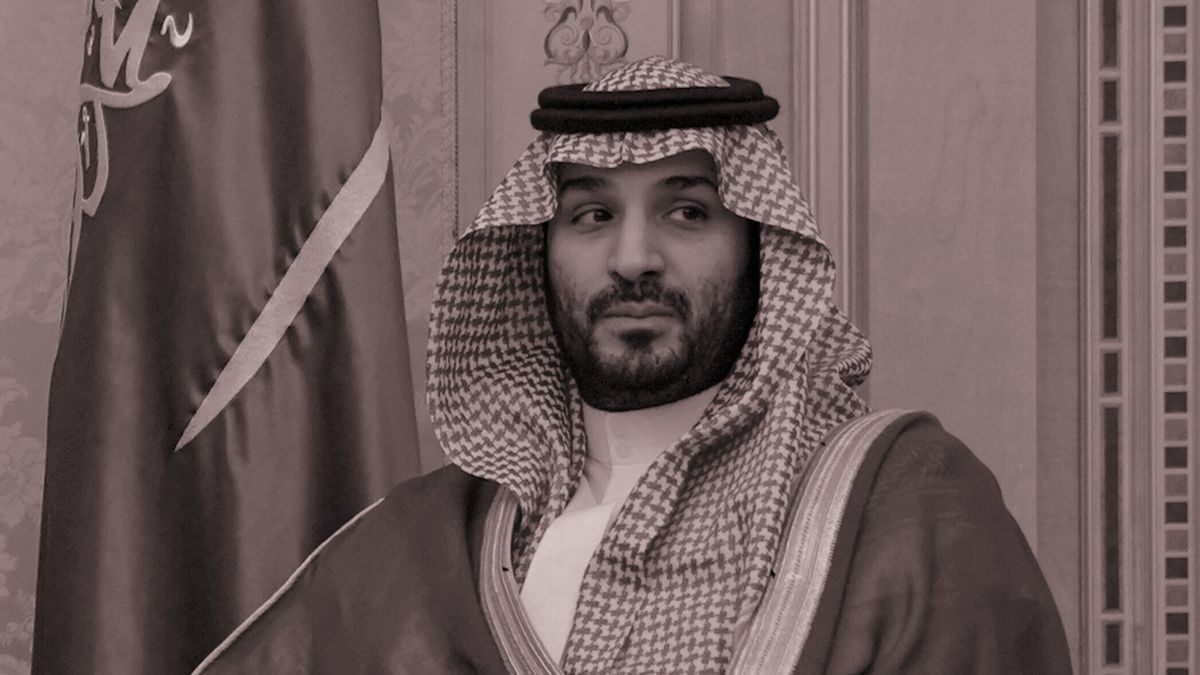
For years now we’ve been told that Crown Prince Mohammed bin Salman is a big movie fan, and he wants to diversify his country’s economy to reduce its reliance on oil. He’s also trying to overcome that murdered-journalist
issue. Given Hollywood’s increasing desperation for money and the lure of the kingdom’s wealth, some U.S. and foreign producers have tested the waters in recent years. Several have told me that the experience was rough. In 2023, AGC Studios abruptly shut down preproduction of the $25 million thriller They Found Us, set to be directed by Neill Blomkamp, the South African filmmaker behind District 9 and Chappie. The film was supposed to
shoot at the production hub in Neom, M.B.S.’s $500 billion “smart city.” (That project has since been dramatically scaled back.) At the time, AGC praised its “collaborative and reliable” Saudi partners. But before AGC could even get into wrangling for an expected 45 percent rebate, a source said, the Saudis generated a “deluge of other bureaucratic, legal, and banking problems … that nobody on the ground there was equipped to anticipate or handle.”
In June 2024, producer Greg
Silverman was about to start filming Motor City with Reacher star Alan Ritchson under a deal that he believed would provide about half of the project’s $42 million budget. He had already announced a 10-picture deal with Saudi support (which was subsequently scaled back to four pictures, though Silverman still hopes for more). But then it became clear that the Saudi financing was not going to materialize. Silverman’s company underwent a major
contraction, and the production wound up shooting entirely in New Jersey on a curtailed schedule; the film is set for release in July. Silverman told me he was inspired by that hair-raising experience to come up with a solution to make the rebate process work more smoothly. |
Saudi Arabia has had its own disappointments. State-owned MBC Studios provided most of
the financing for the epic Desert Warrior, billed as the first U.S. film to shoot at Neom. With a budget of $170 million, according to a source, the Rupert Wyatt–directed film, starring Anthony Mackie and Ben Kingsley, bombed resoundingly last month, grossing just $742,066 worldwide. Now a knowledgeable source tells me the Saudis have dropped Unbroken Sword, another planned big-budget project meant to film at another city-sized
development project, Qiddiya City. Other sources say producers are still working on the financing.
In announcing the 60 percent rebate on May 15, Saudi Film Commission C.E.O. Abdullah bin Nasser Al-Qahtani seemed to address these concerns obliquely, promising measures to make Saudi funding faster and more
predictable. “The announcement represents an extension of the kingdom’s vision to build a sustainable film sector rooted in empowerment and partnership,” Al-Qahtani said in a statement.
One producer who has filmed in the country remains skeptical for the short term but expressed hope for better days ahead. “It’s going to take a while, but down the line it’s going to get fixed,” he said. Another agreed, with one major caveat. “They want to do big films, but they don’t want support for the
voices that they are not controlling,” this person said. “Art is a dangerous tool.”
Of course, shooting in the Middle East generally is not too appealing at the moment, though sources tell me that U.S.-led Iranian strikes have been targeted, and that life in places like Qatar and Saudi Arabia is proceeding more normally than most Americans might believe. But insurance is all but impossible to get, and some productions have been moving to Morocco or other countries that haven’t been
disrupted by war. Meanwhile, Saudi Arabia has clearly been cutting back on certain ambitions, as players on the LIV Golf circuit can attest.
This kind of thing has some observers wondering how smoothly that Middle East financing for the WarnerMount deal is going. But as my partner Bill Cohan noted above, Larry Ellison has agreed to underwrite $47 billion in new equity financing, no matter what. So it’s all good, right? Right? |
Now for Silverman’s solution: After what he acknowledged was a “bumpy start” in Saudi
Arabia with Motor City, the producer told me he has since established “a Saudi Arabian concierge services company” called Caravan. The idea is to help U.S. and international producers arrange financing against various rebates and incentives, with the company ensuring—for a fee—that the Saudis are getting “all of the ancillary benefits of having these productions come to the kingdom,” which includes providing training for local crewmembers.
Based in Riyadh and Los Angeles, Caravan
is staffed by former production, legal, business affairs, and finance execs from Silverman’s production company, Stampede, in partnership with Sherborne Media, which provides advances against Saudi rebates and incentives. Caravan will also manage training programs that are critical to getting the rebates.
Silverman said that Stampede shot Chasing Red in Saudi Arabia, and rebates and incentives were paid on time and in full with Caravan’s help. Caravan also
arranged job training for a small group of locals, he said. “Everybody is getting what they want. We got a great movie, the Saudis got a production that would have shot elsewhere, and 16 young people got trained to be viable crewmembers for the next production,” Silverman said.
A source with knowledge of the region told me “the intent sounds right,” but given the challenges of dealing with the Saudi government, he would be surprised if the plan works on a sustained basis. “I’d love to see
it in operation,” he said. “If they can get it right, that would be amazing. But I would put that down as a maybe on the reality scale. I don’t see [the situation] changing. The bureaucracy is so bad.” |
Thanks, Kim. I’ll see everyone tomorrow night.
Matt |
|
|
|
Puck founding partner Matt Belloni takes you inside the business of Hollywood, using exclusive reporting and
insight to explain the backstories on everything from Marvel movies to the streaming wars. |
|
|
|
Ace media reporter Dylan Byers brings readers into the C-suite as he chronicles the biggest stories in the
industry: the future of cable news in the streaming era, the transformation of legacy publishers, the tech giants remaking the market, and all the egos involved. |
|
|
|
Need help? Review our FAQ page or contact us for assistance. For brand partnerships, email ads@puck.news. You received this email
because you signed up to receive emails from Puck, or as part of your Puck account associated with {{customer.email}}. To stop receiving this newsletter and/or manage all your email preferences, click here. |
Puck is published by Heat Media LLC. 107 Greenwich St., New York, NY 10006 |
|
|
|
|