• Washington
  • Wall Street
  • A.I.
  • Hollywood
  • Media
  • Fashion
  • Sports
  • Art
  • Join Puck Newsletters What is puck? Authors Podcasts Gift Puck Careers Events
  • Join Puck

    Directly Supporting Authors

    A new economic model in which writers are also partners in the business.

    Personalized Subscriptions

    Customize your settings to receive the newsletters you want from the authors you follow.

    Stay in the Know

    Connect directly with Puck talent through email and exclusive events.

  • What is puck? Newsletters Authors Podcasts Events Gift Puck Careers
Hello, I'm Matthew Belloni, and this is What I'm Hearing...
 ‌ ‌ ‌ ‌ ‌ ‌ ‌ ‌ ‌ ‌ ‌ ‌ ‌ ‌ ‌ ‌ ‌ ‌ ‌  ‌ ‌ ‌ ‌ ‌ ‌ ‌ ‌ ‌ ‌ ‌ ‌ ‌ ‌ ‌ ‌ ‌ ‌ ‌  ‌ ‌ ‌ ‌ ‌ ‌ ‌ ‌ ‌ ‌ ‌ ‌ ‌ ‌ ‌ ‌ ‌ ‌ ‌  ‌ ‌ ‌ ‌ ‌ ‌ ‌ ‌ ‌ ‌ ‌ ‌ ‌ ‌ ‌ ‌ ‌ ‌ ‌  ‌ ‌ ‌ ‌ ‌ ‌ ‌ ‌ ‌ ‌ ‌ ‌ ‌ ‌ ‌ ‌ ‌ ‌ ‌  ‌ ‌ ‌ ‌ ‌ ‌ ‌ ‌ ‌ ‌ ‌ ‌ ‌ ‌ ‌ ‌ ‌ ‌ ‌  ‌ ‌ ‌ ‌ ‌ ‌ ‌ ‌ ‌ ‌ ‌ ‌ ‌ ‌ ‌ ‌ ‌ ‌ ‌  ‌ ‌ ‌ ‌ ‌ ‌ ‌ ‌ ‌ ‌ ‌ ‌ ‌ ‌ ‌ ‌ ‌ ‌ ‌  ‌ ‌ ‌ ‌ ‌ ‌ ‌ ‌ ‌ ‌ ‌ ‌ ‌ ‌ ‌ ‌ ‌ ‌ ‌  ‌ ‌ ‌ ‌ ‌ ‌ ‌ ‌ ‌ ‌ ‌ ‌ ‌ ‌ ‌ ‌ ‌ ‌ ‌ 
What I'm Hearing

Happy Sunday, hope you had a nice weekend. We’ve welcomed a lot of new members lately, so a reminder that you can manage which Puck authors and emails you receive by going to this link. Try someone new! I recommend Tara Palmeri, our latest hire, whose The Washington Mall is already the talk of the town.

Discussed in this issue: Jeff Sagansky, Melissa McCarthy, Dana Walden, Tosca Musk, Kevin Mayer, Bob Chapek, Jessica Reif Ehrlich, Kevin Beggs, Rick Caruso, and a Scientology E-Meter.

But first…

Who Won the Week: Tom Cruise
I know, I did Top Gun: Maverick already, but the stunningly small 32 percent second weekend drop ($86 million), a record low for a movie that opened to more than $100 million, can’t be ignored. At $550 million, it has a real shot to get to $1 billion now, as I predicted on The Town.

Runner up: Rich Gelfond, the IMAX C.E.O., for capturing $62.7 million of the Top Gun gross, and about 13 percent of all domestic box office for the film so far ($40 million).

Quote of the Week
“We are in a golden age of content production and the dark age of creative profit sharing.”
–Jeff Sagansky, the media investor and former television executive, bemoaning, in a National Association of Television Program Executives speech, the hoarding of value by streamers that pay “cost plus” fees up front and eliminate backend payments.

Runner up: “We have never had this level of information and data since the media business was started. So is it remotely equitable that the producer gets bought out in perpetuity only because these streamers/studios have colluded to prevent you from enjoying the backend?” –Also Sagansky, in the same speech.

Second runner up: “The creative community—the producers, writers, actors and directors, and dare I say the talent agencies—have to go to the Justice Department and Congress to argue against this anti-competitive behavior.”
–Still Sagansky, imploring a push for federal intervention.

A little more on this…

As someone who has written about the value shift from creators to distributors in the streaming age, I find it kinda hilarious to see people up in arms after Sagansky’s speech. It hasn’t exactly been a secret. Netflix, and then the other companies, successfully convinced the agencies that the “cost plus” model was great for talent because they get more money up front, so why risk a potentially unsuccessful project? Plus, bigger buyout deals mean bigger agency bonuses this year, and guilds that could say their members were increasing their take-home pay this year.

But, as Sagansky noted, those creators “get paid just once upfront—10 or 20 percent more than your usual producer fee, and would never again get paid for all those billions of views, all that relicensing revenue, all that advertising revenue that was embedded.” The brass ring of ownership—the Norman Lear money, the Aaron Spelling 123-room-house money, the Tom Werner buy-the-Red Sox money—that’s almost impossible to achieve in the current TV business. No wonder agency phones were ringing so much after Sagansky’s comments.

For those interested in the benefits of profit participation vs. buyouts, I’ve discussed it here and here and here. Last year, I even suggested a return to some version of the fin-syn rules that prevented networks from owning production studios. But I knew then, just as I know now, that that’s never going to happen, at least not in the current political and regulatory environment. Could you imagine the Capitol Hill reaction if Hollywood people started asking for financial relief?

If you think about it, the agencies were actually out front on this issue with their owned-and-operated studios, which were shut down by the Writers Guild—well, not shut down, but a forced divestiture of all but a passive 20 percent stake—due to conflicts of interest. The goal of Endeavor Content and CAA’s Wiip was to wrap production infrastructure around talent to turn them into studios that could own their shows. It was a work-around to combat the trend toward fully-integrated global streamers owning everything—with the agencies sharing in that windfall, of course. Those companies are still out there, and, as we discuss in the conversation below, there will always be a need for high-quality content. You just need a ton of leverage these days to get paid fairly.

Plus, the consumption of TV also isn’t quite the same today as during the heyday that Sagansky remembers. Series don’t generally last for more than a few seasons, the cost of production is astronomically higher, shows don’t repeat as well (with exceptions), and the business these days generally rewards the higher-quality content, rather than the mass producers for the masses.

So yes, the distributors (Netflix, Apple, Amazon, Disney) are becoming more self-contained and global, and that’s a bad thing for talent. What’s not as clear is how to fight back. I’m not sure I totally agree with Sagansky’s run-to-the-Feds argument.

SPONSORED BY HULU
SPONSORED BY HULU
How to Succeed Amid the Great Streaming Correction
I recently chatted with a trio on the frontlines of the content wars about the future of Disney+, what a recession would mean for development (and bidding wars), The Great Netflix Correction, and what Wall Street got wrong about Hollywood.
MATTHEW BELLONI MATTHEW BELLONI
A few hours before investor-producer Jeff Sagansky went off on the streaming business model at last week’s NATPE conference, I had a great conversation about the transformation of the content business with a few people in the middle of it all: Kevin Mayer, the former Disney executive who co-founded the Blackstone-backed Candle Media, which has bought all or part of Reese Witherspoon’s Hello Sunshine, CocoMelon studio Moonbug Entertainment, Will Smith’s Westbrook (ouch), and the ATTN media company, among others; Jessica Reif Ehrlich, the longtime media analyst and managing director at Bank of America Merrill Lynch; and Kevin Beggs, chairman of Lionsgate Television Group. We talked about what the Great Netflix Correction means for content producers, how Hollywood would hold up in a recession, and whether the age of bidding wars is over. They agreed to let me run excerpts below that have been edited for length and clarity.
Matt Belloni: This panel was supposed to happen in January in Miami. I basically threw out my outline because everything has changed in the past five months. We’ll get into that but Kevin, you’ve bought very disparate businesses. What’s the through line? Like, are there synergies or are they just silos that you’re going to package together?

Kevin Mayer: There are synergies. We’re going to keep the creative energies and the distinct creative approaches separate. But just like at Disney, you buy brands, and the monetization can be centralized—distribution, sales, some of the production facilities and production financing, H.R., all the back office stuff. But [creatively] there is some synergy between the two groups. Reese Witherspoon has a great idea for a kids book called Busy Betty. We're going to make that into a series and she's working directly with Moonbug to bring it out on YouTube. There is a tight integration between these companies.

Belloni: The market is really starting to question the trajectory of these global streaming companies. Kevin Beggs, would you say that’s a vindication of the arms dealer strategy? Lionsgate is spinning off Starz, and that will leave you a pure arms dealer. You think the current market is an opportunity for that approach or is this just a blip?

Kevin Beggs: I think it's a little bit of a blip, in some ways. The pure arms dealer approach is proving to be really smart. Sony is sitting atop the smart list right now. We've had the best of both worlds with Starz as a partner and first mover, but we’re not obligated to only work there. We have shows on 25 different platforms.

But our job is to find hits. There's a lot of conversations about the walled garden. They go up around these big companies, and, in general, they would prefer to keep everything in-house if they can. But the hits aren't always there, despite 200 overall deals. We have Ghosts with CBS and it's a fantastic, successful comedy coming from our partnership with the BBC, and underlining the importance of I.P.

Belloni: But the point of vertically integrated media companies is to not have to buy from studios like yours. Yet they do. Is it just talent, or what is it that a content studio can bring to the table that's going to put it over the top?

Beggs: It’s talent, it’s timing. It’s no different than the broadcast world was, or the larger cable world was. Somebody’s winning, somebody's struggling, somebody is trying to come back. We're most interested in the challenger brands that are in comeback mode. They have huge needs. When we placed Weeds with Showtime, nobody would work at Showtime, including Paramount, which owned Showtime. That was an opportunity for little Lionsgate. I'm sure I was not the first call on that agent’s list. And I didn't take his call for like three days because all I remember from that particular agent was that he yelled all the time. But it worked out because at that moment, they needed us.

Mayer: Walled gardens aren't so much that the streaming services don’t buy outside of that ecosystem, it means they won't sell outside. It guarantees access to the parent company's product. It’s not sufficient, typically, to fill out the entire streaming service. Hulu was part of the portfolio that I ran at Disney. That was majority-licensed content; even Disney+ licenses content from third parties. That's why independents are so valuable. It's the only source to buy great product, because the big guys aren't licensing. And that's part of our thesis.

Belloni: Jessica, what are you hearing about the investor appetite for streaming businesses? There’s so much doom and gloom right now.

Jessica Reif Ehrlich: We know what's happened. Netflix came down from $700 [per share] to under $200. Disney's down about 40 percent. The one that’s down the least of all the traditional media companies is Fox because they don't have a streaming platform.

Belloni: How dare you! Fox Nation!

Ehrlich: They're not losing billions of dollars in streaming, like the others are. The focus now is What’s the business of streaming? What are the margins going to be? It’s not just about subs at any cost. There’s no credit anymore, there’s no ‘sum of the parts,’ that’s just gone. And in that regard, Netflix is really at a disadvantage versus the traditional studios, because think about what the studios have: I.P. that consumers know; the platforms… so they can not only cross promote, but they can use the content in different places, which is amazing. They have advertising businesses. So it's very easy for them to do either SVOD or AVOD. I don’t want to pick on Netflix—you could say the same for Amazon or Apple—but each show is a new shot. Each show has to be marketed. And I can't think of a film on Netflix.

Belloni: Right, everyone in town always says, try to name three Netflix movies.

Beggs: Bird Cage. Red Notice.

Belloni: It was Bird Box. [Laughs.] You get my point. This issue of the total addressable market for streaming keeps coming up because the Netflix thesis depended upon these 700, 800 million, maybe a billion people out there that were going to subscribe to premium subscription services. What is the current thinking on TAM?

Ehrlich: It's not a number. The ARPU [average revenue per user] in each country is so different. Like India, with 50 cents ARPU, the economics of that vs. the U.S. is so different.

Belloni: But the Street didn’t think so. The Street wanted a global sub number.

Ehrlich: But that was so backward looking.

Belloni: And now the correction. These services are talking about not winning the spending war. We're not going to spend like Netflix has spent. Does that worry you guys as content creators?

Beggs: It does. First of all. I think what you're seeing with some of the pruning, if you will, at Netflix, it’s things that don't have the utility.

Belloni: Like, maybe, Harry and Meghan as creators?

Beggs: I won’t comment on that. But the things that matter, they are going to continue to spend on. Netflix is the incumbent, everyone is coming after them. I don't see a slowdown in the spend. It will be judicious. Fewer things will just be vanity.

Belloni: But are we gonna see fewer bidding wars?

Mayer: I don’t think so. You need to have very of-the-moment content to acquire subscribers, and then you need to have a lot of content to keep subscribers. Moonbug, for instance, is massive retention programming. Kids watch and watch and watch. So for the good stuff that really drives and keeps subscribers, that is going to become more and more valuable over time. At Disney, we were always a believer in doing fewer things better. That's a good mantra for all of us.

Belloni: What should Disney do in India? Bob Chapek keeps saying Disney will get to 230 to 260 million subscribers in two years, yet about a third of the current 138 million subs come from India, where they pay almost nothing, mostly to watch cricket. Do you think Disney should spend big to renew cricket or be realistic about getting to that sub number without it?

Ehrlich: There’s a set of games before the championship, and then there’s the championship. They want to get one of those packages, and there’s a lot of competition. But I don’t see Disney paying at any price. It just doesn’t make sense.

Belloni: They’ve telegraphed that, but Chapek isn’t backing away from that 260 number, which will probably be impossible if they don’t have those rights.

Ehrlich: You may be correct on that. If they have to back away from that number, great, so what? We’ll see how that market develops. Look at Warner Bros. Discovery. They still haven’t rolled out globally. They are spending rationally. They have great content, great I.P., some of it’s never been developed. If they really focus on the brands and develop their key properties, this could be explosive.

Belloni: I think [W.B.D. C.E.O.] David Zaslav agrees with you.

Ehrlich: But he has to execute.

Belloni: We've seen over the past five years, an incredible level of investment by private equity in the content business. A lot of that was dry powder sitting around. But now, in this new environment, do you guys see the same appetite for outside investors?

Mayer: If our case is any indication, I guess the answer would be yes.

Belloni: Blackstone would do that deal now?

Mayer: Yeah, I'm sure they would. They are very thesis-driven investors. One of the things that we saw eye-to-eye on is the underlying growth in content and the profitability. We’re still out there looking for great deals. Probably a bit of a repricing, given the marketplace.

Belloni: How so?

Mayer: Well, the market has come down. So the public comps and multiples, which you can point to in a private deal, have moderated. As a buyer, that's a good thing. We still have a lot of dry powder.

Beggs: The content business historically has always been really sexy, and there's been waves of investors. There's some smart money and then there's sometimes some dumb money.

Belloni: There’s so much debate over whether companies should offer one global, unified streaming service or continue to offer multiple brands, like combining Disney+, Hulu and ESPN+ in the U.S. Which is the right approach?

Mayer: At Disney, we always thought brands matter. The old bundling [via cable and satellite] is, you have to buy everything. I think that’s done, and thankfully so. But the new bundling, where you offer people the opportunity for a lower price or convenience to take different brands, at their choosing, there’s a lot of wisdom in that approach, and I think it’s worked well for Disney. I don’t think there’s any overriding need to take those services and make them into one.

Belloni: This is all heading toward a re-bundling, right? Apple or Amazon will say, Give us a hundred bucks and you get everything.

Mayer: At your option, yes. It’s not a forced bundle, it’s an optional bundle. There has to be a difference between what cable was.

Belloni: Seems like we're headed for a recession. How do you think that will play out across the content universe?

Ehrlich: Usually there's an opportunity in a recession for those who can be a little bit more aggressive, but this is an unusual economic period because you have so much pent up demand. Disney's per capita [revenue in the parks] is up 40 percent. I haven’t seen that in my decades following the company. And they’re going to raise prices. The demand is insane.

Belloni: The traditional thinking on how recessions impact Hollywood is that people still need to entertain themselves. But these companies have become so wrapped up in streaming, and inflation or a recession might hit the number of subscriptions people have and their price sensitivity. So is this recession perhaps different?

Ehrlich: We’re seeing [subscriber] churn pick up, so whether it's HBO or Disney, the strategy of releasing one [episode] per week, I think that’s really smart. It keeps consumers engaged and on the platform. There will be a handful of streaming services that people will subscribe to, and now we have the onslaught of AVOD and FAST [free, ad-supported, streaming TV] services.

Mayer: In recessions, we didn’t see a massive decrease in subscribers to pay TV. So I expect it to be a moderate effect. It will be noticeable, but will pass.

ADVERTISEMENT
ADVERTISEMENT
My Reading List
Top Gun: Maverick accounted for 75 percent of the total weekend box office, and that’s a huge problem. [Indie Wire]

Fuel for the ongoing is-our-content-woke-enough-or-too-woke debate: A.O. Scott ponders TGM and whether Hollywood’s output is really all that liberal. [NYT]

Most outlets did the will-Johnny-or-Amber-work-again story, and Spotted Media piled on with a survey saying that 86 percent of people who were aware of the case don’t want Depp to be dropped from future productions, while two-thirds said Heard should be dropped. [LAT]

Not mentioned in this interview with Melissa McCarthy and her husband/unfortunately frequent collaborator Ben Falcone: Their new Netflix sitcom—starring, created by, and written entirely by Falcone—was “temporarily” shut down halfway through the 16 planned episodes and never resumed. So, canceled while it shot. [THR]

Netflix tweaked its measurement metric, and the result will push Stranger Things even higher on its charts. I’m starting to think it’s unwise to trust streaming services when they release their own consumption data. [CNET]

Elon Musk’s sister, Tosca, has raised $22 million for Passionflix, a “sexy Hallmark Channel” streaming service for romance and erotic shows. I guess that makes more sense than buying Twitter. [NYT]

The libertarians at Reason dive deep into Disney’s Reedy Creek Improvement District, which “has offered a glimpse of what's possible when land development is governed by a private company with a long-term stake rather than the political whims and interests of elected officials.” [Reason]

Hold on to your E-meter: Scientology is fundraising off the success of Top Gun: Maverick. [Tony Ortega]

My Puck colleague (and unofficial Venice Beach mayor) Peter Hamby goes for a stroll on the boardwalk with Rick Caruso for this column on the L.A. race that is pitting Ted Sarandos, Dana Walden and Jay Sures against Jeffrey Katzenberg, Ari Emanuel and Matt Johnson. [Puck]

The Feedback…
Some interesting responses to my Thursday take on the Disney-fication of the Warner Bros. film studio. Some examples…

“Mike De Luca and Pam Abdy are high if they think David Zaslav will tolerate overpaying CAA directors to make bloated festival movies at Warner Bros. There should be a trap door in the executive building in Burbank that is triggered the first time Paul Thomas Anderson or Joe Wright gets a call.” –An executive

“I think Zaslav sees in [De Luca and Abdy] a direct connection to fancy filmmakers because he wants… to be considered an old school Hollywood mogul, a patron of the art of cinema, who can get all the A list stars to come over when he moves into Bob Evans’ old house. That’s more fun than making Discovery shows, and he thinks he won’t be taken seriously as the Discovery guy. Also, he can’t get credit for HBO because Casey Bloys is already doing a good job. But changing Warners lets him rebrand himself and get invited to the Met Ball and Vanity Fair party, and of course being thanked at the Oscars. That’s less of a business plan than a perk of the job. Mike and Pam are charming, and charmed him, and he thinks they are the maître d’s who can give him the best table in the Hollywood hierarchy.” –A producer

“Nobody is talking about the fact that DC just fundamentally can't be run the same as Marvel. Disney owns all of Marvel with no partners. Warner Bros. has producers and other entities attached to different parts of its I.P. They can't make whatever they want. Disney literally can put together a 15-year plan and nobody can say a thing.” –Another executive

“Most of the producers and executives who are laughing at Zaslav wanting DC to become Marvel were the same assholes who were predicting Marvel would lose all of its collateralized characters to the bank because no one was interested in seeing Thor, Captain America, and Iron Man.” –Another producer

ADVERTISEMENT
ADVERTISEMENT
Finally…
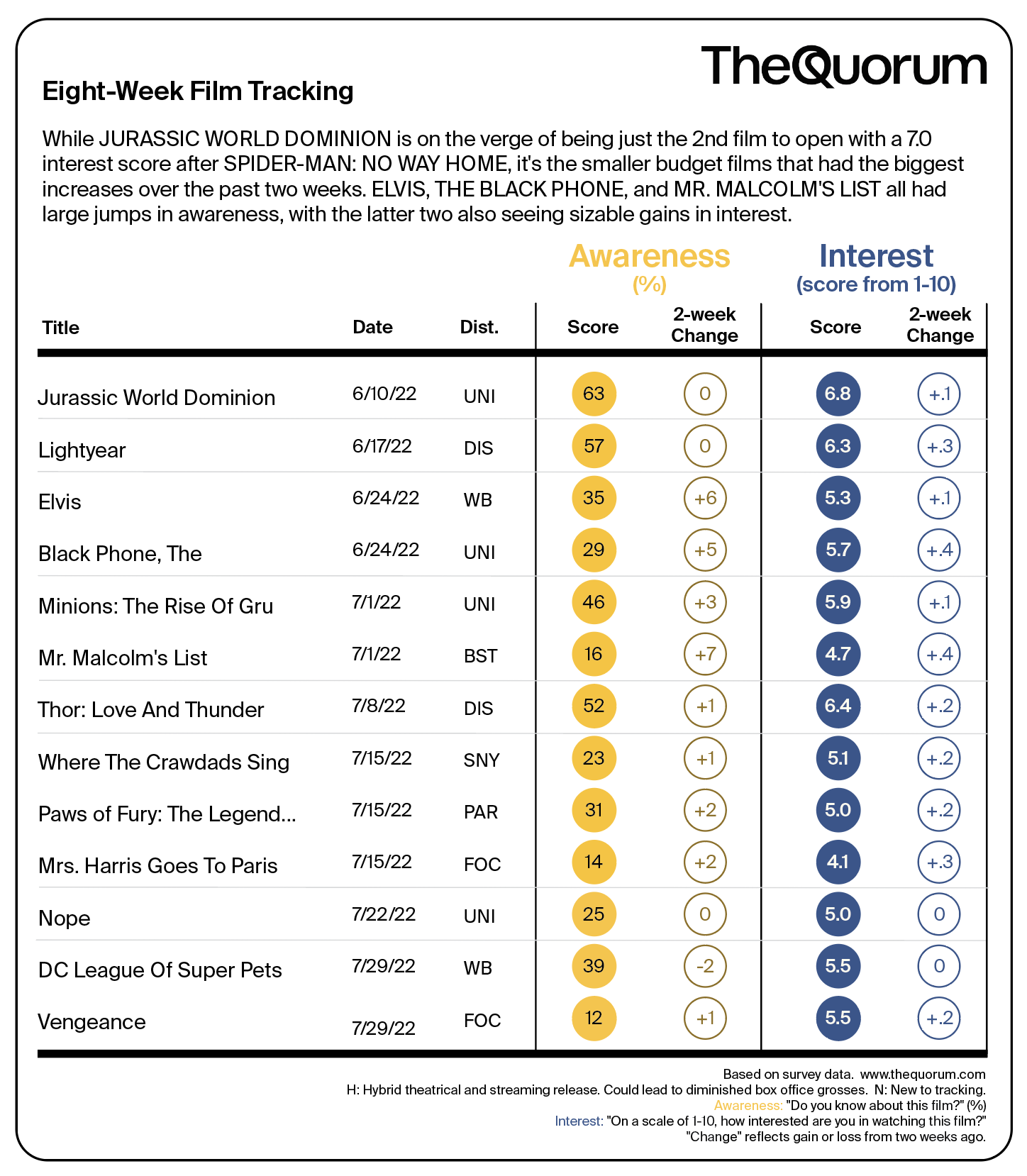
Those Elvis ads are starting to impact awareness for the Baz Luhrmann extravaganza (and other summer movies), in The Quorum’s latest tracking chart…
$(image_link)
Have a great week,
Matt

Got a question, comment, complaint, or a prediction of the dino-kill count in the new Jurassic World? Email me at Matt@puck.news or call/text me at 310-804-3198.

FOUR STORIES WE'RE TALKING ABOUT
The Rick Carushow
The Rick Carushow
L.A.’s surging mayoral candidate has a deceptively conventional political message.
PETER HAMBY
Corporate Referen-duh
Wall Street gossips are already speculating about Jamie and Sheryl’s next moves.
WILLIAM D. COHAN
Roberts & Licht Chatter
A conversation circling Comcast HQ and the depths of CNN.
DYLAN BYERS
The Biden Whisperer
The Biden Whisperer
Anita Dunn is employing new optics tactics to give Biden a much-needed lift.
TARA PALMERI
swash divider
Facebook Twitter Instagram LinkedIn
You received this message because you signed up to receive emails from Puck

Was this email forwarded to you?

Sign up for Puck here

Sent to


Unsubscribe

Interested in exploring our newsletter offerings?

Manage your preferences

Puck is published by Heat Media LLC

64 Bank Street

New York, NY 10014

For support, just reply to this e-mail

For brand partnerships, email ads@puck.news

SEE THE ARCHIVES

SHARE
Try Puck for free

Sign up today to join the inside conversation at the nexus of Wall Street, Washington, A.I., Hollywood, and more.

Already a member? Log In


  • Daily articles and breaking news
  • Personal emails directly from our authors
  • Gift subscriber-only stories to friends & family
  • Unlimited access to archives

  • Exclusive bonus days of select newsletters
  • Exclusive access to Puck merch
  • Early bird access to new editorial and product features
  • Invitations to private conference calls with Puck authors

Exclusive to Inner Circle only


Latest Articles from Hollywood

MELANIA documentary
Matthew Belloni • June 6, 2022
Can ‘Melania’ Open?
On top of the $40 million Amazon ponied up for Brett Ratner’s docu-hagiography, the studio is spending another $35 million to open it in 27 countries, including a splashy Kennedy Center premiere to be attended by top executives. But for all the expense, Melania is for an audience of one.
Ted Sarandos
Matthew Belloni • June 6, 2022
Movie Theaters Want a Ted Sarandos Blood Oath
Regal’s Eduardo Acuna goes public with his pitch for Netflix to sign a 10-year binding pledge with the Trump D.O.J. (and other ideas), ensuring Sarandos won’t go back on his recent promise to give Warner Bros. movies a 45-day window. Offering Greta Gerwig’s ‘Narnia’ a wide release would help, too.
Ted Sarandos
Matthew Belloni • June 6, 2022
How Netflix’s Sony Deal Explains Its Warners Pursuit
The streamer's new global agreement with the studio, valued at up to $8 billion, puts a public value on its slate. Now apply that math to its potential Warners takeover.


Kathleen Kennedy
Matthew Belloni • June 6, 2022
Kathleen Kennedy’s Final Episode
As president of Lucasfilm, the producer oversaw five Star Wars films, a wave of TV shows…. and a galaxy’s worth of abandoned projects and jilted filmmakers. With her exit finally official, is the franchise better off now than it was 14 years ago?
Bob Iger
Julia Alexander • June 6, 2022
The Math Behind Combining Hulu and Disney+
The long-ordained integration of Disney’s two streaming services is being heralded inside Burbank as a transformational moment for both. But will the merged platform really be more than the sum of its parts?
Kevin Spacey
Eriq Gardner • June 6, 2022
Kevin Spacey’s $80M Legal House of Cards
The disgraced actor is soon expected to sit for a brutal cross-examination in the rare Hollywood insurance dispute that has actually made it to trial. A potentially huge payout hinges on whose version of House of Cards’s ending prevails.


John Landgraf
Kim Masters • June 6, 2022
Can John Landgraf’s Slow TV Model Survive?
The oracle of Peak TV is at an inflection point as Disney+ absorbs Hulu and the chase for prestige gives way to the tonnage model.


Get access to this story

Enter your email for a free preview of Puck’s full offering, including exclusive articles, private emails from authors, and more.

Verify your email and sign in by clicking the link we just sent.

Already a member? Log In


Start 14 Day Free Trial for Unlimited Access Instead →


Latest Articles from Hollywood

Dana Walden
Matthew Belloni • June 6, 2022
20 Surefire, 100 Percent Probable Hollywood Predictions for 2026 (Part Two)
StrikeWatch ’26, a bizarre Michael Jackson record, and the future of Disney’s Dana Walden (if she’s C.E.O. or not) in the second act of the town’s favorite prognostication of the year ahead.
a minecraft movie
Scott Mendelson • June 6, 2022
It Was One Box Office Battle After Another in 2025
With Hollywood’s annual output back to resembling its pre-pandemic levels, some clear trends emerged: Kids showed up, horror hit more often than it didn’t, and the superhero slump is real. How might it all apply to 2026 and beyond?
Ted Sarandos
Eriq Gardner • June 6, 2022
Netflix’s Game of Antitrust Chicken
If the streaming giant wins Warner Bros., the feds will almost certainly present their next hurdle. And the Trump Justice Department might ask some questions that Netflix would like to avoid.


Sydney Sweeney
Matthew Belloni • June 6, 2022
20 Surefire, 100 Percent Probable Hollywood Predictions for 2026 (Part One)
The town’s favorite year-ahead forecast returns, with input from some of my best sources—plus a few celebrity Puck friends. The future of ‘Star Wars,’ Instagram Reels, ‘Rush Hour 4,’ and Sydney Sweeney foretold in the first of two parts…
Bryan Lourd caa
Eriq Gardner • June 6, 2022
The CAA-Range Finale, Zaz’s $500M Beef & Trump’s Media Damages Calculator
A look ahead at the most consequential media lawsuits and legal crises that will come to their conclusion in 2026.
Pam Abdy, Mike De Luca
Matthew Belloni • June 6, 2022
Hollywood’s Heroes of the Year Are… The Warner Bros. Duo
In 2025, Mike De Luca and Pam Abdy went from dead executives walking to a six-month stretch of blockbusters and Oscar contenders that silenced the town and offered a middle finger to their boss, David Zaslav. In an era when I.P. has taken over Hollywood, and their studio has been sold to Netflix (or Paramount?), they decided to go out swinging…


sam altman
Matthew Belloni • June 6, 2022
Hollywood’s Villain of the Year Is… Sam Altman
A year before the OpenAI C.E.O. gets the ‘Social Network’ movie treatment, the slop-ification of entertainment took a major leap in 2025 thanks to a copyright infringement hub called Sora 2 and Altman’s brazen courtship of Disney.
Get access to this story

Enter your email to get access to one article and free previews of our private emails from Puck authors and editors.

OR

Already a Member? Sign in


Latest Articles from Hollywood

Oscars
Matthew Belloni • June 6, 2022
The Oscars-YouTube Brand Problem
The streamer’s bold bid to host the Academy Awards offers maximum reach for a show that was becoming minimally niche, but mixing prestige and base populism has its potentially problematic downsides.
Ted Sarandos
Kim Masters • June 6, 2022
Does Anyone Believe Ted Sarandos on Theaters?
As the streamer’s winning bid to secure WBD faces regulatory scrutiny and a hostile offer from Paramount, Ted Sarandos insists that Netflix is committed to a standard theatrical window for Warner Bros. movies. Is it enough to earn Hollywood’s loyalty?
bob iger
Eriq Gardner • June 6, 2022
Disney’s Sora Wager & Hollywood’s Next A.I. Legal Battles
A field guide to the A.I. cases and deals that will shape 2026, including Disney’s recent peace treaty, the Elon-Altman feud, the next round of labor negotiations, the whole ScarJo voice issue, and many more…


david zaslav
Matthew Belloni & William D. Cohan • June 6, 2022
Who Wants Warner Bros. More?
Battle lines have been drawn over David Zaslav’s Warner Bros. Discovery, and both Netflix and Paramount think they have the winning formula. Will the Ellisons get to $34 a share? Can Netflix counter? Is Larry really “backstopping” all the equity? Or is the game already rigged?
Alan Horn and Rob Reiner
Kim Masters • June 6, 2022
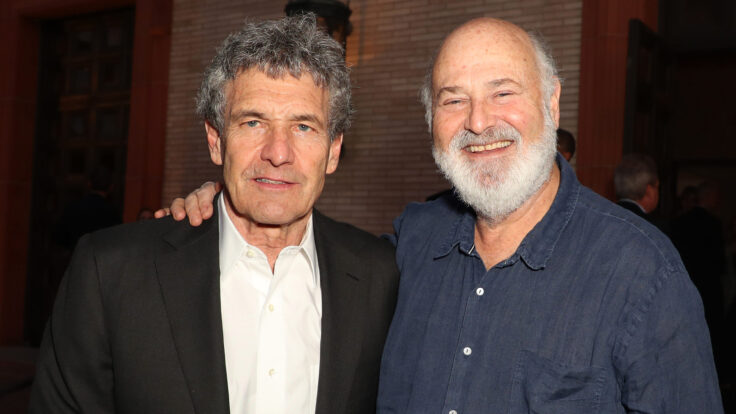
Alan Horn Remembers Rob Reiner
The longtime exec paid tribute to Reiner, his onetime partner in Castle Rock Entertainment, and explained why the director dedicated their first movie together to his father.
Ted Sarandos, Greg Peters
Julia Alexander • June 6, 2022
Why Netflix Needs Warner Bros.
Prior to its $83 billion deal to acquire the studio and HBO Max, the streamer had never spent more than $700 million on an acquisition. But Netflix saw an opportunity to own, not license, a significant chunk of its content—and, perhaps more importantly, to block David Ellison from taking it away.


wicked cynthia erivo
Matthew Belloni • June 6, 2022
Can Media Coverage Buy an Oscar?
Every year, awards contenders and pretenders have been mounting unbridled and financially unchecked press campaigns in the hopes of boosting their chances. A new data analysis reveals that they maybe shouldn’t have bothered.


  • Terms
  • Privacy
  • Contact
  • FAQ
  • Careers
© 2026 Heat Media All rights reserved.
Create an account

Already a member? Log In

CREATE AN ACCOUNT with Google
OR YOUR EMAIL

OR

Use Email & Password Instead

USE EMAIL & PASSWORD
Password strength:

OR

Use Another Sign-Up Method

Become a member

All of the insider knowledge from our top tier authors, in your inbox.

Create an account

Already a member? Log In

Verify your email!

You should receive a link to log in at .

I DID NOT RECEIVE A LINK

Didn't get an email? Check your spam folder and confirm the spelling of your email, and try again. If you continue to have trouble, reach out to fritz@puck.news.

CREATE AN ACCOUNT with Google
CREATE AN ACCOUNT with Apple
OR USE EMAIL & PASSWORD
Password strength:

OR
Log In

Not a member yet? Sign up today

Log in with Google
Log in with Google
Log in with Apple
Log in with Apple
OR USE EMAIL & PASSWORD
Don't have a password or need to reset it?

OR
Verify Account

Verify your email!

You should receive a link to log in at .

I DID NOT RECEIVE A LINK

Didn't get an email? Check your spam folder and confirm the spelling of your email, and try again. If you continue to have trouble, reach out to fritz@puck.news.

YOUR EMAIL

Use a different sign in option instead

Member Exclusive

Get access to this story

Create a free account to preview Puck’s full offering, including exclusive articles, private emails from authors, and more.

Already a member? Sign in

Free article unlocked!

You are logged into a free account as unknown@example.com

ENJOY 1 FREE ARTICLE EACH MONTH

Subscribe today to join the inside conversation at the nexus of Wall Street, Washington, A.I., Hollywood, and more.

START 14-DAY FREE TRIAL

  • Daily articles and breaking news
  • Personal emails directly from our authors
  • Gift subscriber-only stories to friends & family
  • Unlimited access to archives
  • Bookmark articles to create a Reading List
  • Quarterly calls with industry experts from the power corners we cover