 |
 |
|
Welcome back to What I’m Hearing, coming at you from Miami Beach, where I’m doing a speaking engagement. The latest on SAG-AFTRA negotiations from Jonathan Handel: “I’m told that the parties are still talking in small groups or sidebars, with SAG-AFTRA waiting on AMPTP responses to its A.I. proposals. There is also believed to be no agreement yet on success-based residuals or a basic wage increase, and a deal between the parties is not likely to close tonight, even if the AMPTP does supply responses. Those responses would then have to be evaluated by the union.” So, talks continue on Friday…
As always, if you were forwarded this email, click here to become a Puck member.
Let’s begin…
|
|
|
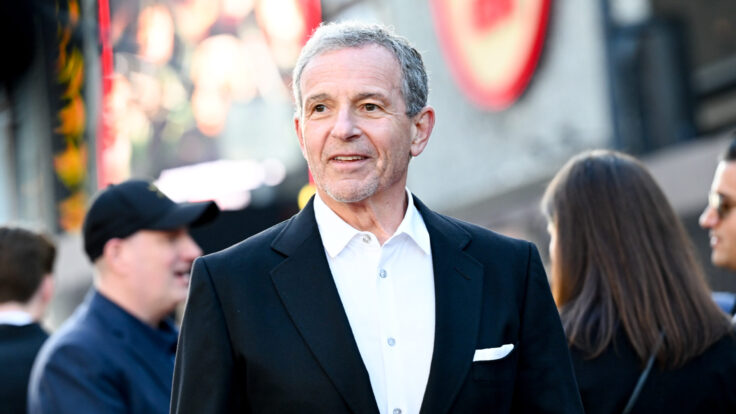
- Bob vs. Brian—The Hulu joust begins!: It’s fun to see Disney and Comcast in old-fashioned spin mode now that Bob Iger has committed to buying the last 33 percent of Hulu at a “floor” valuation of $27.5 billion, subject to an appraisal process that will almost certainly increase the price. If you believe Disney, Hulu is basically a disposable content pipeline, just ignore those 48 million subscribers, the $11 billion in revenue, and the thriving advertising business. Plus, look at the pathetic media valuations these days! The streaming services are basically worthless as a percentage of a company’s overall market cap.
But if you listen to Comcast and its C.E.O. Brian Roberts, Hulu is among the most valuable assets in media. “It’s the No. 2 AVOD, SVOD service behind Netflix [in the U.S.],” Roberts said in September, presumably in his best P.T. Barnum voice. “The No. 1 company has a $200 billion valuation in the market today.” Go on… “No one’s ever sold a pure play streaming asset that’s in this kind of position. That’s a scarce kingmaker asset, whoever would get that.”
A kingmaker! Disney and Comcast each hired bankers to appraise the asset, but the value will almost certainly be determined by a third bank when the first two can’t get within ten percent of one another. They will run a hypothetical auction valuing Hulu as it exists today (meaning with all the content). Given all the elements, I agree with my colleague Bill Cohan that a valuation in the low $30 billion range makes sense.
- It’s Not TV, It’s HBO Executives Scheming to Slime Critics Who Dared Criticize HBO Shows: Casey Bloys rightly fell on his sword and apologized this morning for ordering anonymous Twitter drive-bys on critics like Rolling Stone’s Alan Sepinwall. The truth is that many film and TV companies create fake accounts and attempt to manipulate the conversation online around their content. Vulture reported recently on how studios game Rotten Tomatoes, and a tipster reminded me that Josh Goldstine and Matthew Cramer, then Sony marketing execs, were suspended two decades ago for creating a fake critic named “David Manning” who really loved Sony turds like Vertical Limit and Hollow Man. (Funny enough, Goldstine now runs marketing for Warner Bros., thereby making him Bloys’ corporate cousin.) It’s only surprising that Bloys, the HBO C.E.O., would stoop to such petty shenanigans.
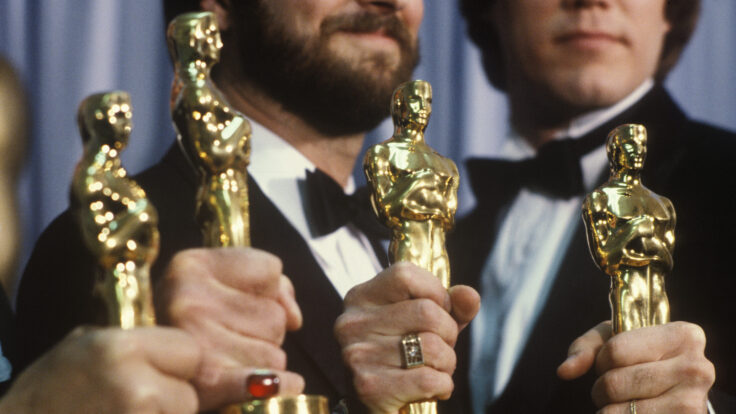
- Gaming the saddest Oscar season: Nov. 1 traditionally ramps up the awards race, but this year? Low wattage so far. Bradley Cooper would very much like us all to be talking about Bradley Cooper and his Leonard Bernstein movie, Maestro, but the strike has forced him to eschew most press opportunities—though he couldn’t resist showing up in the audience at the New York Film Festival last month, which he apparently OK’d in advance with SAG-AFTRA. Emma Stone also got the thumbs up to attend Telluride “as a fan”—the only “fan” with a splashy premiere, Poor Things, that positioned her nicely for a second best actress Oscar. Stone also introduced a film at NYFF, a short that happens to have been directed by Yorgos Lanthimos, who made Poor Things, which—have I mentioned this?—is positioning Stone nicely for a second Oscar.
It’s all become kinda ridiculous. Timothée Chalamet is set to host SNL next week. Not to promote Wonka, mind you, even though that big-budget Warner Bros. movie comes out a few weeks later. It’s for his fashion campaign, we are told, just like his recent GQ cover. Please. Let’s see if Warners buys a Wonka ad during that episode.
This charade ends immediately with the strike, and thank God. The only people upset about the return of narcissistic actors to the Oscar gravy train might be the filmmakers and below-the-line craftspeople that have been treated like stars this season at campaign appearances, in trade press, and at film festivals. Soon the real stars can do what they were actually paid for—not to act, necessarily, but to get people to see these awards movies.
- CBS’ 12:35 gambit: Congrats to comic Taylor Tomlinson for snagging the CBS post-Colbert job, though After Midnight hasn’t yet answered the only question that matters: Why, exactly, does this exist? Turning the timeslot over to affiliates to air cheaper reruns of Two and a Half Men would likely generate similar ratings, at a lower cost. So… Tomlinson needs to create online traction to add value. I’m told that despite the timeslot fanfare, that’s the actual goal of this show. We’ll see…
- Speaking of stand-up comics: If you work at Netflix and were watching The Tonight Show on NBC last week (a small cohort, I know), you might have recognized Leslie Liao, a funny comic who performed. She’s also a human resources executive at Netflix, where she’s worked for the past six years while quietly pursuing her side hustle. Given her career momentum, Liao might soon need to give her two weeks notice to…maybe…herself?
- Box office over/under: This would’ve been the Dune: Part Two weekend. Instead, the tracking on Sofia Coppola’s Priscilla is so low ($4 million) that I’m basically forced to take the over. Given Internet boyfriend Jacob Elordi’s involvement, I’m betting this will be much bigger on streaming.
Now, as the strike likely winds down, a look into the immediate future… |
 |
| Hollywood’s Post-Strike Hellscape |
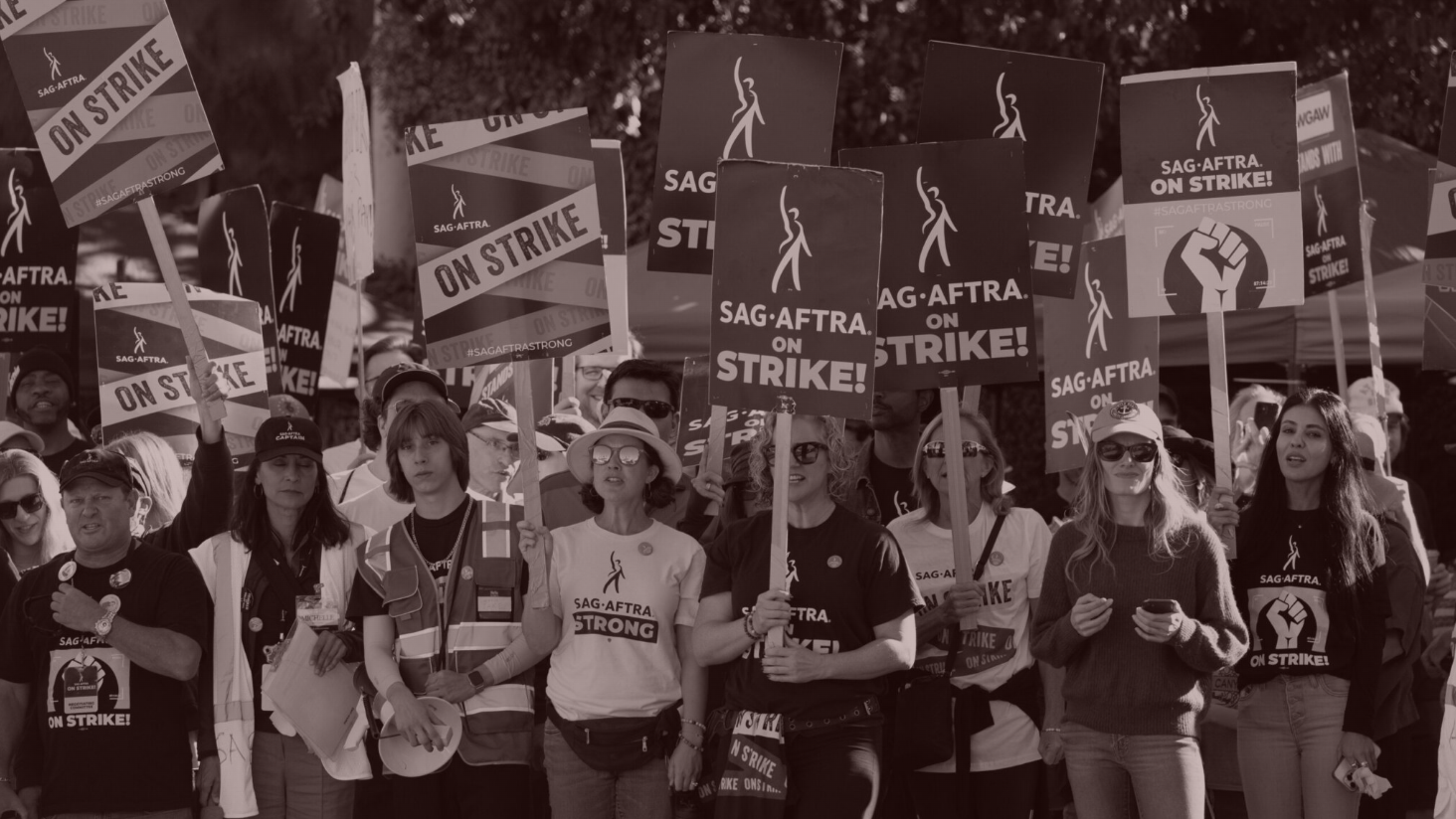
| What should be a time of relief and celebration as the SAG-AFTRA negotiations near their end is more akin to what soldiers experience in countless war movies—the horrors of battle are giving way to the equally grim reality of the new world for which they fought. |
|
|
|
| Call it what you’d like—the home stretch, the final countdown, the fourth hour of Killers of the Flower Moon—but barring some catastrophic breakdown or another time-suck proposal from George Clooney, the SAG-AFTRA strike is almost, finally, over. Jonathan Handel and I will analyze the deal points once they’re announced, hopefully before Sunday, but in conversations around town this week, it seems as if people are already looking beyond the strike.
Unfortunately, that’s not a picturesque view. What should be a time of relief and celebration in Hollywood is more akin to what soldiers experience in countless war movies—the horrors of battle give way to the equally grim reality of the new world for which they fought. The post-strike Hollywood landscape may at least function, but it will be markedly scarier than even pre-strike Hollywood—a world where the Peak TV bubble had burst, studios were trying to make fewer things and spend less, and the diminishing economics of streaming for everyone besides Netflix were causing an industry-wide freakout that everyone kinda forgot about while they freaked out about the strike. In short, the bad is about to be really bad.
That’s not to minimize the pain of the shutdowns: the industry suffered an estimated $6.5 billion in economic loss (it’s likely way more); all those layoffs and furloughs and the projects not ordered; and the further disruption of the theatrical movie business, which is still reeling from Covid. Also: The freaking Palm closed in Beverly Hills. So many people have been hurt by these strikes, and the vast majority of them are not among the 175,000 members of the Writers Guild and SAG-AFTRA, who will benefit from the resulting deals. Their suffering, largely undiscussed in the media since it doesn’t fit the narratives of either side, will also be a legacy of this lost year.
But now, here we are, and the changed post-strike entertainment business is about to reveal itself. I’ve been chatting about this subject with a ton of executives, producers, representatives and talent over the past few weeks, and I came up with a few signposts for this new era. |
|
A MESSAGE FROM OUR SPONSOR
|
 |
| |
|
|
| The Chaos, the Slashers, and the Burners |
|
| The second order effects of the strike have already emerged. Now, we may be seeing an unintended third wave of consequences. Ironically, some projects might not happen because the strike ends and so many are racing to commence all at once. For instance, we’re already seeing a full-on scramble to secure sets and soundstages. Actor schedules, which are hard to manage in normal times, are gonna be a nightmare to handle now. Imagine the complications inherent in re-assembling casts on shows and movies that have been shut down for months while also honoring commitments to projects that are scheduled to shoot in the new year. Not to mention crews, post-production, craft services, everything.
That’s just the short-term logistics. Bigger picture, the drastic cost-cutting at the traditional studios and networks, and even the belt-tightening at Netflix and the other pure-play streamers, will be felt everywhere. The key question around town is now: Do we need this? Followed by: No, really, do we actually need this? Projects are already being scrapped—some of them partially-shot— and overall deals killed, as I’ve written about. Just today, Starz went from saying Let’s make three seasons! of Ava Duvernay’s romantic drama with Joshua Jackson and Lauren Ridloff, to now saying Actually, let’s make zero seasons, even though it had started production pre-strike. Budget issues have been cited, along with the fact that DuVernay lost her overall deal with Warner Bros., the show’s producer, and thus her focus was elsewhere. Regardless, you don’t take a project to Starz unless everyone else has passed, so it’s doubtful this show lands elsewhere.
Ava’s deal is just one of the big overalls that are likely going away without replacements. J.J. Abrams—perhaps the king of the overall era for being paid the most for someone who makes the least—is already taking meetings to find a post-Warner Bros. salvage for his Bad Robot, and it likely doesn’t include the dozens of employees that it currently carries. (Free advice, J.J.: Just go make something great.) Pure development deals will likely be reduced to almost nothing, meaning you’ve gotta make a hit to get paid. In the process, say goodbye to hundreds of millions of dollars in the entertainment economy.
On that note, another note about the downsides to all this cost-cutting. Hollywood was once a producer-driven business—a place where professional creative managers made movies and delivered them to studios for a price. But that is rarer and rarer these days, despite success stories. For instance, last weekend’s big hit Five Nights at Freddy’s was a producer-driven project, via Jason Blum and his Blumhouse. Universal has supported (and profited from) Blumhouse for years, and a movie that some at the studio considered unreleasable opened to $80 million domestic. So was Super Mario Bros., probably the second biggest hit of 2023. It was overseen by Chris Meledandri at Illumination, another well-paid producer at Universal. Now, coming out of this strike, producers are bracing to be increasingly minimized or undermined—even if they generate the material themselves. The downside might be the next big hit.
At the same time, orders for new TV projects have been really slow. That’s due not only to the general reluctance to spend money, but also the fact that nobody at the studios and networks really knows what the hell they will have for 2024. HBO just pushed the third seasons of The White Lotus and Euphoria to 2025. (House of the Dragon, which kept shooting thanks to that weird loophole, will be ready for summer 2024.) Paramount+ delayed Yellowstone until November, which I’m sure is strike-related but I’m choosing to believe is a big f— you to Kevin Costner because the new episodes will arrive well after his pricey Western movie Horizon opens in June in theaters, thus denying him promotion. Downsizing, downsizing, downsizing. The adjustment of the strikes has become a template for a potential new normal after a decade of unprecedented growth. “We’ve given the networks a pause to consider their spend and their buys, and their strategy simply means LESS,” one agent texted me. |
|
|
|
|
| I was on Peacock last night and came across Wolf Life Me, a werewolf rom-com dramedy(!) starring Josh Gad and Isla Fisher. I’d never heard of it, which is fine, but Fifth Season (formerly Endeavor Content) had made a second season of this show for Peacock and an Australian network. It struck me as something out of the just-ended era, where purpose is found after greenlight,. No way that gets made post-strike.
You notice this kind of stuff all over. It’s amusing to see the Bill Burr movie Old Dads atop the Netflix Top 10 chart for the second week in a row. That movie would’ve been a no-brainer for a streamer and maybe even a theatrical studio during the heyday. But WME’s Ari Emanuel, who represents Burr, basically had to strong-arm Netflix film chief Scott Stuber to pick it up after tons of places passed.
Burr shot the movie for Miramax on a low $12 million budget, then they shopped it first to Amazon, hoping to get theatrical and a big buyout. Amazon passed. As did Netflix. Hell, Paramount+ passed. Then Ari went back to Netflix, which was once a reliable buyer of movies for the budget plus a 20 or 30 percent premium. But now, Stuber eventually agreed to take the movie but barely gave Miramax C.E.O. Bill Block any premium. With exceptions, of course, the streamers don’t want to overpay for movies from outside studios. The days of Air—where Ben Affleck, Matt Damon, producer David Ellison, and RedBird Capital all got double digit payouts on a movie that cost around $30 million to make and Amazon bought for a cuckoo-sounding $130 million—are kinda done. Still, Old Dads got made, now it’s a Netflix hit, and Burr is working on the script for his next movie. A happy ending. |
|
|
| Kristen Bell and Dax Shepard’s baby products line recently went bankrupt, potentially owing up to $100 million to creditors. Jessica Alba, star of countless financial magazine covers, has seen her Honest Co. stock drop 90 percent from its 2021 I.P.O. Beachbody, the fitness app that former Disney execs Kevin Mayer and Tom Staggs merged into their publicly traded investment vehicle, is virtually worthless after trading at more than $14 a share in early 2021. Remember the SPAC craze? I was just looking at a late 2021 announcement by UTA of a $200 million entity to pursue video game investments. Wound down with nothing, as did countless others.
My point: The prospects of the Hollywood multi-hyphenate are more challenged these days. There’s less fall-back, fewer other businesses, or at least a tougher climate in which to cultivate them. Ryan Reynolds may be successfully leveraging booze brands or phone lines or whatever cryogenic de-aging machines are working magic on his beautiful face, but with higher interest rates and a blase stock market, the business climate for such endeavors is not nearly what it was even a year ago. And at the same time… |
|
|
| IATSE is next. I’m told the below-the-line union is hoping to begin negotiations on a new three year deal in March, just a few months from now. Guild members have suffered mostly in silence as the above-the-line unions shut the town down, so what is to stop IATSE from returning the favor? Is it not as deserving of a fair deal? The reality is that the growing labor movement in the U.S. could impact Hollywood off-and-on for years to come, turning Hollywood into a European airport and putting the studios right back in this precarious spot soon and often.
Which brings us back to the existential crises on display in this long, hot, strike-addled summer and fall, and perhaps the biggest issue of all: Of the eight key AMPTP members in these SAG-AFTRA and WGA talks, the task of finalizing the deals fell to the four top executives of Disney, Warner Discovery, NBCUniversal, and Netflix, those with actual skin in the game. Three of the remaining companies—Apple, Amazon, and Sony—primarily operate in non-entertainment businesses, and the other one, Paramount, probably won’t live to see the end of the three-year deal being negotiated. That fractured dynamic isn’t changing, and unless the AMPTP dissolves or changes its members, we could be right back in standoff mode very soon. |
|
|
See you Sunday,
Matt
Got a question, comment, complaint, or some extra Fun Size Peanut M&Ms? Email me at Matt@puck.news or call/text me at 310-804-3198. |
|
|
|
| FOUR STORIES WE’RE TALKING ABOUT |
|
|
|
|
|
 |
|
|
|
Need help? Review our FAQs
page or contact
us for assistance. For brand partnerships, email ads@puck.news.
|
|
You received this email because you signed up to receive emails from Puck, or as part of your Puck account associated with . To stop receiving this newsletter and/or manage all your email preferences, click here.
|
|
Puck is published by Heat Media LLC. 227 W 17th St New York, NY 10011.
|
|
|
|