Welcome back to a special Sunday edition of What I’m Hearing. Reminder to TV Academy members: WWIII might be starting, but Emmy voting ends tomorrow.
Programming note: This week on The Town, test screener Kevin Goetz revealed that an angry filmmaker once tried to rough him up. And my debate with Lucas Shaw over the most undercovered narratives of ’25 (so far) posts tomorrow. Subscribe here and here…
Not a Puck member yet? Just click here. Got a news tip or an idea for me? Just reply to this email or message me on Signal at 310-804-3198.
Discussed in this issue: Ted Sarandos, MrBeast, Zack Van Amburg, Shonda Rhimes, Bob Iger, Alex Cooper, Steven Cahall, Amy Poehler, Danny Boyle, Donna Langley, Kevin Mayer, Adele, Dean DeBlois, Dhar Mann, Byron Allen, Pete Docter, Jonathan Nolan, Neal Mohan, Nelson Peltz, Jamie Erlicht, Peter Sohn, Pedro Pascal, Ms. Rachel, the Bezos- Sánchez nuptials and… the Labubu-verse.
But first…
|
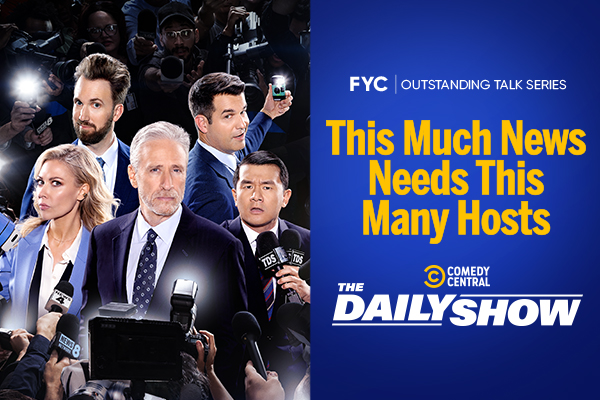
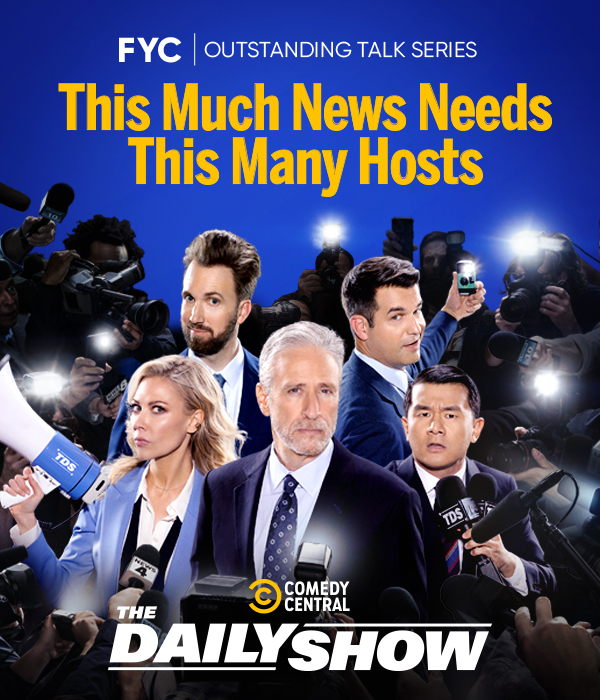
But… an honorable mention for George Gountas, the Daily Show lighting designer who won a Pedro Pascal lookalike contest and got Jon Stewart to interview him about it.
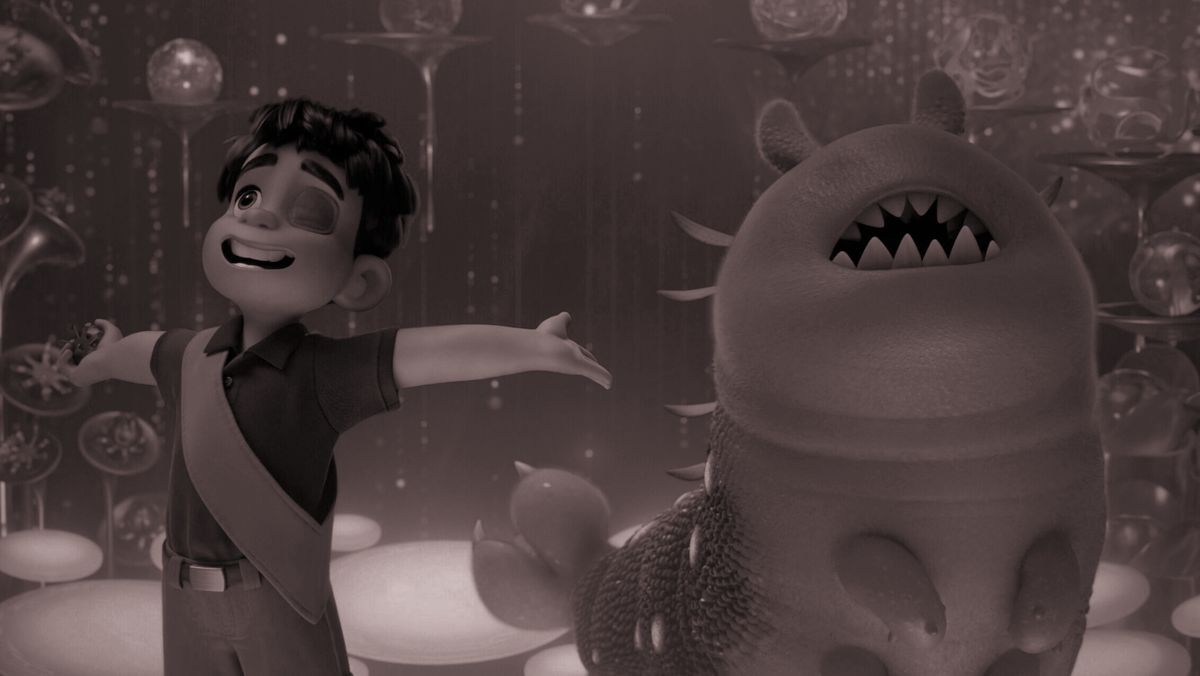
And maybe a delayed win for Peter Sohn, the Elemental director, who was basically drowned in the Emeryville Marina in 2023 for delivering Pixar’s worst domestic opening at $29.6 million… a number that handily beat Elio’s $21 million.
Speaking of Elio…
|
Let Someone Put the I.P. in Pixar
|
|
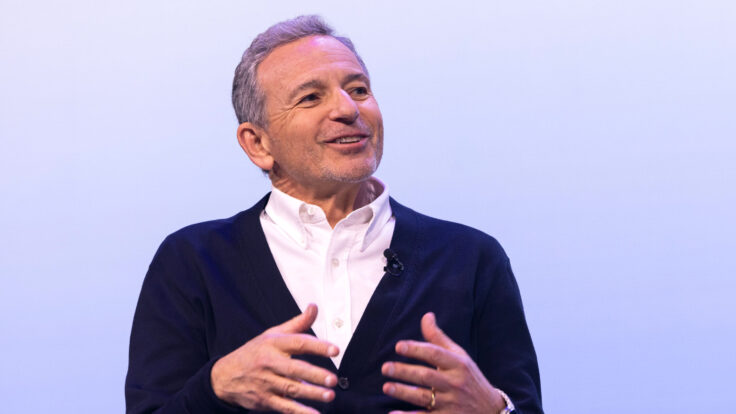
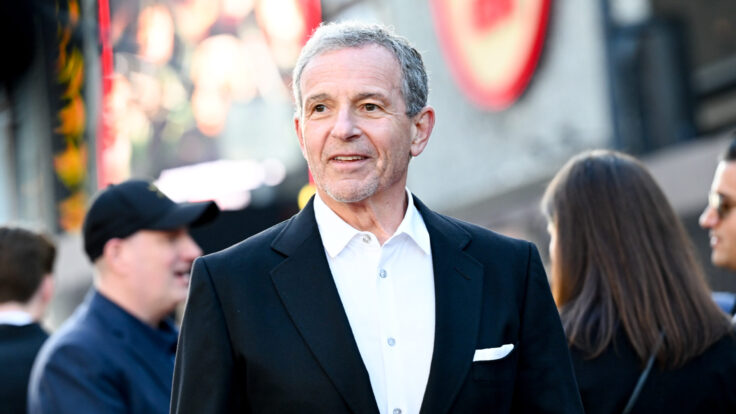
Elio came in even lower than Disney feared, with a more anemic $14 million overseas, despite strong reviews. Disney C.E.O. Bob Iger punted it from last March, fearing a costly bomb detonating in the middle of his proxy fight with Nelson Peltz. Then it was moved a week to avoid How to Train Your Dragon—especially embarrassing because Universal took the Disney remake playbook and used it to steal the spotlight from a Pixar original.
Since Coco in 2017, no original animated film has grossed $500 million worldwide. And yet Pixar’s Pete Docter and Jim Morris continue to make only wholly original films, which have struggled despite large budgets, and sequels to its biggest hits, which have thrived (Lightyear notwithstanding). What about a middle ground? Shouldn’t Pixar—as much as the industry loves its original storytelling—at least take a stab at adapting high-profile outside I.P.?
I get it. Pixar is purposely not Illumination, which has eagerly leveraged popular material like Super Mario Bros. and Dr. Seuss and dozens of pop songs (Sing) and is currently developing a Barbie animated movie. Universal’s DreamWorks Animation regularly adapts popular books, too. Disney, by contrast, likes to fully own its movies to wholly exploit them as toys and dark rides and $12 Lightning McQueen popsicles that ruin your kid’s dinner aboard the Disney Dream. Pixar has never needed outside I.P.
So don’t replace originals, just experiment with a big book or a specific toy property that speaks to a talented filmmaker. I’m betting Pixar could probably do something as interesting with Barbie as Greta Gerwig did, and the built-in audience would help it avoid the Elio problem. It’s not exactly sacrilege. Disney is already releasing a theatrical movie based on Bluey, a property it doesn’t own, though that’s being made by outside producers. The alternative, it seems, is to continue making originals, praying for long-tail word of mouth to eke the movie into profits (Elemental), or lean on endless sequels to older movies to float the company until there are no more sequels to be made.
|
Quote of the Week (Appropriation Apologist Edition)…
|
|
“It wouldn’t even get financed. Even if I was involved, I’d be looking for a young Indian filmmaker to shoot it.”
—Danny Boyle, saying he wouldn’t make his Oscar-winning Slumdog Millionaire today because of “the cultural baggage we carry.”
Runner-up: “We all played people that we should not have played.”
—Amy Poehler, expressing regret on her podcast for SNL characters like Michael Jackson and Yoko Ono that she “misappropriated.”
Speaking of appropriation…
|
Should Netflix Pillage YouTube?
|
|
Steven Cahall thinks so. In a note to clients this week, the Wells Fargo analyst argued why “shorter form content could be Netflix’s next big investment.” Citing the S.V.O.D. success of traditional-length shows from YouTubers MrBeast and Ms. Rachel, Cahall went a step further. Unlike those two, whose Amazon and Netflix pacts are non-exclusive, he suggested that exclusive multiyear deals with top creators for shortform content would be a “growth path that broadens Netflix’s engagement.”
It makes sense. Having vanquished its Hollywood competitors, and with growth slowing, Netflix is increasingly chasing YouTube, the clear leader in time spent. Why not just treat digital rivals like the broadcast networks of 2017 and throw Shonda-level cash at big creators to set them up on Netflix? That would be expensive, given what top YouTube and TikTok talent are making. And the big names might be reluctant to stop posting on the platforms that made them rich. MrBeast, for example, has said YouTube will remain his priority, despite his Prime Video show.
|
|
|
|
A MESSAGE FROM OUR SPONSOR
|
|
|
But the so-called “streaming wars” are becoming a two-horse race for first place, as Netflix co-C.E.O. Ted Sarandos indicated with his “killing time” knock on YouTube. Neal Mohan, the YouTube C.E.O., was characteristically diplomatic when I asked him about that last month, saying the audience decides how it spends its time. On that engagement front, even a few nine-figure creator deals are still probably more efficient than whatever Ryan Murphy or the Russo brothers have sucked out of Netflix. “We think exclusive creator deals at a premium—reminiscent of Netflix’s showrunner deals from a decade ago—would be attractive content ROIs, and far cheaper vs. sports,” Cahall wrote.
I do think that to maintain its brand, Netflix would need to position this creator content as the “premium” version of YouTube. Better than free, basically, or the cream of the digital crap—sorry, crop. Maybe offer it via a separate tab or interface, so Dude Perfect isn’t sitting next to a $200 million Martin Scorsese movie. But picking off top creators to populate a Netflix shortform hub seems like the natural next step in helping a TV-centric platform compete more on mobile and tablets—and, as the data has shown, young people are watching more shortform on bigger screens, too. “While not all engagement is equal, and not all YouTube content is suitable for Netflix, we do think there is complementary programming to Netflix’s originals and library,” Cahall wrote.
|
6
Global top 10 streaming shows of 2024 that premiered in the 2000s or earlier, including Grey’s Anatomy (2005), Friends (1994), and Dexter (2006). [ Digital i]
69 percent
Share of YouTube viewers who watch on mobile devices. Only 16 percent use TVs, but that audience accounts for 42 percent of estimated minutes watched. [Tubular Labs]
8.2 million
Subscriptions across Sub-Saharan Africa that Netflix will gain thanks to its new partnership with France’s Canal+ . [ Ampere Analysis]
260 million+
People who will stream TV and movies this year, with nearly all of them watching content on YouTube. [ EMarketer]
400 percent
Recent increase in pay for Dallas Cowboys cheerleaders (one said she made $15/hour plus appearance fees in 2024, and another said the new wage is more than $75/hour), as revealed in their Netflix show. [ NYT]
Now here’s Scott on the major takeaways from the first half of 2025…
|
|
|
|
A timely 2025 midyear health check on the theatrical business, which is outpacing 2024 but behind 2023, as the industry plays with old formulas to manufacture new hits. So far, with a strong incoming late summer slate, $4 billion domestically looks like the floor.
|
|
|
|
This summer weekend, which is almost the midpoint of the calendar year, is as good a time as any to take stock of how the box office is faring so far in 2025. And, once again, the industry will be left scrutinizing conflicting signals about the health of the market, what’s on trend with audiences these days, and where it’s all headed. To wit: This weekend, we saw Danny Boyle’s 28 Years Later, the third installment in a zombie franchise that kicked off in June 2003, rampaging to some $60 million globally, half of that in the U.S., while Disney/Pixar’s Elio floundered with a $35 million global opening. In the past, you’d expect no problem with a summertime pairing of a Pixar movie with an adult-skewing genre flick—Finding Nemo next to The Italian Job; Wall-E with Wanted, etcetera. But the meaning of what qualifies as “theatrical” has changed. Perhaps Disney/Pixar animated originals no longer have the juice.
Other old standbys, such as Marvel and DC superhero films, have lost their power over audiences, too. Or have they? On July 11, Warner Bros. will release Superman, the studio’s third attempt in less than 20 years to revive the DC title. Two weeks later, Disney’s Fantastic Four: The First Steps will be Hollywood’s fourth attempt since 1995 to turn the Marvel team into a legit franchise.
The good news is that both are reportedly tracking for $125 million-plus opening weekends. The bad news is that, once upon a time, Fox’s 2015 “dark ’n’ gritty” Fantastic Four reboot was tracking for a ~$40 million debut before opening below $28 million, while 2013’s Man of Steel soared to $128 million (at the time, the second-best non-sequel launch ever) before crashing to Earth. Simply put: Trust but verify.
But the general decline of superhero movies and original toons is more of an issue for the studios than the theatrical ecosystem as a whole. Disney, for example, has almost certainly weakened the potential theatrical power of its I.P. by placing so much genre content on Disney+. It also can’t coast on 2010s nostalgia forever, especially since it has released almost nothing in the 2020s (Encanto? Free Guy?) that might inspire nostalgia during the 2030s. Though that will likely be a problem for Bob Iger’s successor—or the successor after that—to solve.
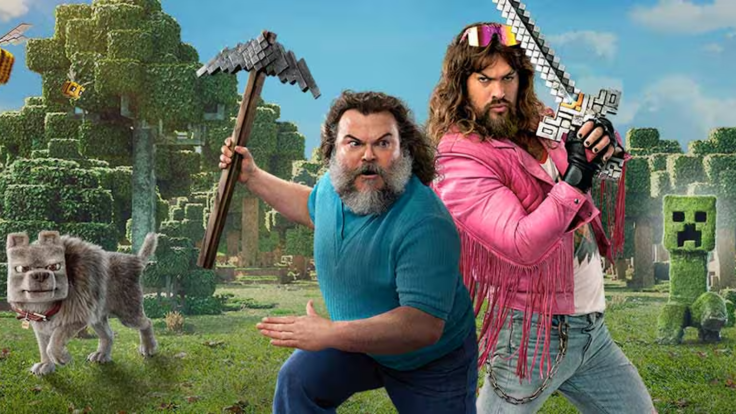
Other studios have done a better job of planning for this inevitability. Sony, for instance, is primarily out of the non–Spider-Man superhero business. And while Warners is hoping Superman soars, it can still squeeze tentpole-sized grosses from new franchises like A Minecraft Movie. Universal, for its part, would prefer that Illumination not live and die by Despicable Me and Minions, but the strong global gross ($375 million and counting) for How to Train Your Dragon means Donna Langley & Co. might be looking at a profitable new live-action subgenre via DreamWorks Animation remakes.
Of course, not every beloved character is so easily resuscitated, and the strength of individual remakes depends on the execution as much as the popularity of the underlying I.P. Yes, live-action redos are clearly “hot” again, with the one-two punch of Lilo & Stitch (currently closing in on $1 billion worldwide) and How to Train Your Dragon (targeting a $600 million global finish). Those two films have made Dean DeBlois, who directed both the original Dragon and Lilo (with Chris Sanders) and the Dragon remake, among the hottest names in town. But just because audiences flocked to Beauty and the Beast or The Little Mermaid (which grossed $295 million in North America) does not mean they’ll show up to Dumbo or Snow White. So hold your space horses on that Treasure Planet redo.
|
|
|
|
A MESSAGE FROM OUR SPONSOR
|
|
|
|
Likewise, even How to Train Your Dragon is potentially unique in the DreamWorks library. It’s a beloved and acclaimed animated gem set in the (mostly) real, human world. The good news is that, with How to Train Your Dragon 2 set for June 2027, Universal can take its time figuring out if it can a) commercially justify remakes of Monsters vs. Aliens or The Prince of Egypt, and b) artistically justify the “live-action” elements of Kung Fu Panda and Shrek.
Meanwhile, Lilo & Stitch was the only 2000s-era Disney toon (sans Pixar’s Toy Story) that has remained as popular as the “Renaissance-era” (1989-94) releases. So it’s not a shock that a redo would hit pay dirt, and it’s a good omen for next year’s Dwayne Johnson–starring Moana remake, as well as the eventual/inevitable revamps of Frozen and Tangled (though the latter was shut down after Mermaid failed to perform internationally). But beyond that, Disney has mostly run out of animated films whose theoretical live-action remakes can reasonably expect top-tier box office.
|
|
Now that we’re halfway through the year, there’s plenty of data to occupy the bean counters and prognosticators. So far, raw domestic earnings sit around $3.85 billion—up nearly 20 percent year over year, but down from two years ago. The summer season, in particular, so far accounts for $1.54 billion—26 percent above last year’s season-to-date totals. We can thank both the actual tentpoles that dropped in May, as well as the strong holdover business into June from A Minecraft Movie and Sinners.
Still, we’re down from the same point in 2023, when the domestic box office had already surpassed $4.2 billion. That year started out with holdover business from Avatar: The Way of Water and aspirational grosses for M3GAN ($91 million domestic) in the early days of January. Looking back, however, what really stands out is the contribution of a robust March slate—which, after being the norm in the 2010s, became the exception. March 2023 served as the early-bird tentpole season, including both successes (Creed III, Scream VI, John Wick: Chapter 4), and whiffs (Dungeons & Dragons, Shazam: Fury of the Gods). Then April featured a stellar performance for The Super Mario Bros. Movie, with $575 million in North America, leading up to the conventional summer season.
Anyway, the Covid-era theatrical recovery should have occurred two years ago. However, dual labor strikes kneecapped the otherwise business-as-usual slate in late 2023 and early 2024. This year, however, the number of viable August releases, like The Naked Gun and Freakier Friday, suggests we should avoid a post-July collapse akin to 2022 and 2023. Unless two of next month’s three biggies (Jurassic World: Rebirth, Superman, and Fantastic Four) wipe out and nothing in August clicks, $4 billion domestically looks like the floor.
Theaters are still coping with fewer annual releases from most of the major studios, compared to the previous decade. For instance, Warners has just 12 set for all of 2025, compared to 20 in 2016. Likewise, Sony has 12 or so wide releases slated for this year, compared to nearly 20 in 2016; and Disney’s 20th Century label has six on the schedule for 2025, versus 17 in 2014, back when it was still 20th Century Fox.
Neon and A24 are doing their part to fill the gap, but their pseudo-arthouse flicks tend to earn closer to $20 million than $70 million. We’ll see if Amazon MGM Studios’ ambitious upcoming slate of studio programmers will make them a new Fox, or the next STX.
Nevertheless, the ongoing, now decade-long migration of audiences toward all-inclusive tentpole films—often but not always family-friendly franchise flicks like Wonka and Moana 2—along with increasing ticket prices, has offset some of the revenue decline from fewer releases. Indeed, average ticket prices—due both to inflation and the growing prevalence of pricier P.L.F. auditoriums—have risen from $7.96 in 2012 to $11.31 in 2024. For example, a Sunday evening ticket for 28 Days Later in Akron currently costs $11.07 on a standard screen, while a Cinemark XD ticket will run you $14.42.
Admissions may never return to the 1.3 billion ticket high-water mark of the 2010s, let alone match the record 1.6 billion tickets sold in 2002. Instead, the hope for theaters is that a steady upswing in per-consumer revenue (pricier tickets + fancier food + uh… sexier popcorn buckets?) can make up some of the difference. After all, a large soda purchased during Superman will cost the same as one purchased during Eddington. But the truth is that AMC, Regal, et al. are still dependent on overperforming super-smashes. Yes, we’ve seen a few such annual releases big (Spider-Man: No Way Home) and small (Longlegs) going back to Godzilla vs. Kong in early 2021. But relying on multiple Sinners-sized miracles is a hard way to live.
|
Netflix has never been shy about its goal to replace all of cable television worldwide. Neither have YouTube and Amazon. Hosting France’s TF1 network suggests that the Netflix plan could include many of those replaced networks. [ NY Times]
Attention, parents who keep Paramount+ for Paw Patrol: Go ahead and cancel. It’s on Netflix for the first time in the U.S. in July. [ What’s on Netflix]
Kevin Mayer is admirably candid about the disappointment of Candle Media, especially Reese’s Hello Sunshine: “Still profitable — not terrible, but it wasn’t worth what we paid. That’s obvious at this point.” [ Semafor]
Maybe not all of these celebrity mobile phone services will work? [ WSJ]
Doug Shapiro’s “Next Disruption of Media” presentation at the recent A.I. on the Lot event features some startling predictions of what’s about to happen to Hollywood. [ Mediator]
The Lakers’ relationship with Hollywood plays a starring role in its path to a $10 billion valuation in the Buss family sale. [ LA Times]
Finally a Forbes “richest” list I kinda believe. Top digital creators are usually more than happy to discuss their wealth. Top 5: MrBeast, Dhar Mann, Jake Paul, Rhett & Link, and Alex Cooper. [ Forbes]
The definitive how did Lauren Sánchez end up marrying Jeff Bezos article. [ The Cut]
Related: If you don’t have food stylists, drapery artists, and video mapping, are you even getting married? [ WSJ]
Also related: Kudos to Adele, the only performer deemed “unbookable” for top-tier weddings.
How has nobody announced a Labubu movie? The Labubu-verse is just sitting there. [ Vulture]
|
|
Thursday’s Mail Room column prompted a potpourri of responses. Some examples…
“Why the hell did Apple decide to invest in big-budget movies for a service they market as premium? Why didn’t they follow the A24 and Neon formula? They seem to be doing well with TV shows. They could just follow a hybrid of HBO and Neon—make good shows and documentaries, some high-quality, midbudget original films, released for three or four weeks in theaters, and throw in a few dozen licensed and ‘curated’ films to keep the engagement going. For Apple, it would be a minimal cost to build a cinema brand for the kind of audience that uses Letterboxd.” —A professor
“Apple probably needs to hire someone with a strong movie background to run its studio. Zack Van Amburg and Jamie Erlicht are TV execs. They have done great at Apple with TV series. Bad track record with movies.” —An analyst
“Jonah [Nolan] has never directed a movie! One of these [prospective Bond filmmakers] is not like the others.” —A producer
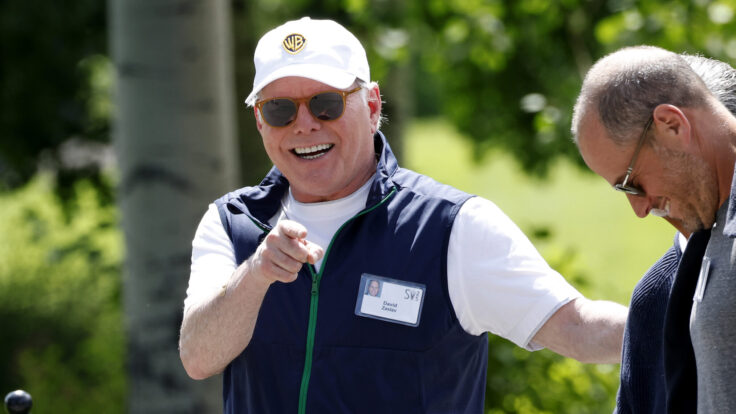
“Just add [Alcon’s Village Roadshow deal] to the long list of things Warner Bros. should be investing in but isn’t because it is being crushed by the debt of [the Discovery deal]. Zaslav said he was saving [the studio] but he was actually killing it slowly.” —A writer-producer
“[The agent who suggested selling sitcoms to broadcast] doesn’t know what he’s talking about. CBS is now paying $1.8 million per episode for their newest sitcom, DMV, which is being shot in Montreal. That’s where our business is heading. They replaced @Midnight with [the syndicated] Byron Allen. CBS is now Comedy Central. Pathetic. That is what you should be writing about.” —An agent
|
|
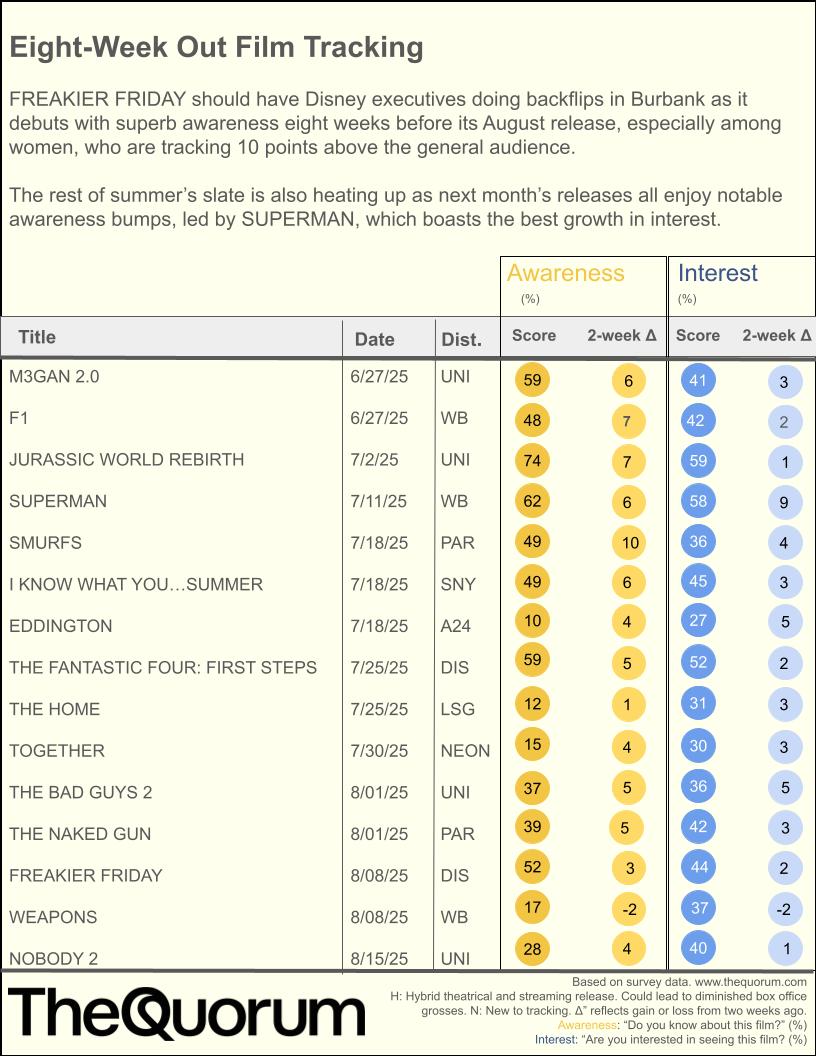
Disney’s Freakier Friday is looking like a strong late-summer entry, especially among women, according to the latest early film tracking chart from The Quorum…
|
Have a great week,
Matt
Got a question, comment, complaint, or other agents who don’t know what they’re talking about? Email me at Matt@puck.news or call/text me at 310-804-3198.
|
Need help? Review our FAQ page or contact us for assistance. For brand partnerships, email ads@puck.news.
You received this email because you signed up to receive emails from Puck, or as part of your Puck account associated with . To stop receiving this newsletter and/or manage all your email preferences, click here.
|
|
Puck is published by Heat Media LLC. 107 Greenwich St, New York, NY 10006
|
|
|
|