 |
 |
|
Welcome back to What I’m Hearing. I hope everyone enjoyed a nice Thanksgiving explaining to relatives why Yellowstone is not on Paramount+. It’s now officially Tom Cruise coconut bundt cake season. I’m not on the coveted cake gift list, so please send me pics of yours, and I promise not to make my own inferior version like I attempted last year.
Programming note: This week on The Town, Lucas Shaw and I dissected the Moana 2 numbers and Disney danger signs for ’25, and Denis Villeneuve explained why he wanted to fly to L.A. and yell at George Lucas after seeing Return of the Jedi. Subscribe here and here.
’Tis the season to gift your entire team a Puck membership! Give What I’m Hearing plus all our other authors covering fashion, media, sports, art, finance, and politics by clicking here. Got a news tip or an idea for me? Just reply to this email or message me on Signal at 310-804-3198.
Discussed in this issue: Bob Iger, Marc Platt, David Ellison, Bob Gersh, Ted Sarandos, Donna Langley, Taylor Sheridan, Charles Lenhoff, Margot Robbie, Tom Hanks, Jason Kilar, Ron Burkle, Ron Meyer, Eddie Murphy, Stacey Snider, Manohla Dargis, Shari Redstone, Lauren Roseman, Maverick Carter, Ms. Rachel, and… the SNL 50th cover.
But first…
|
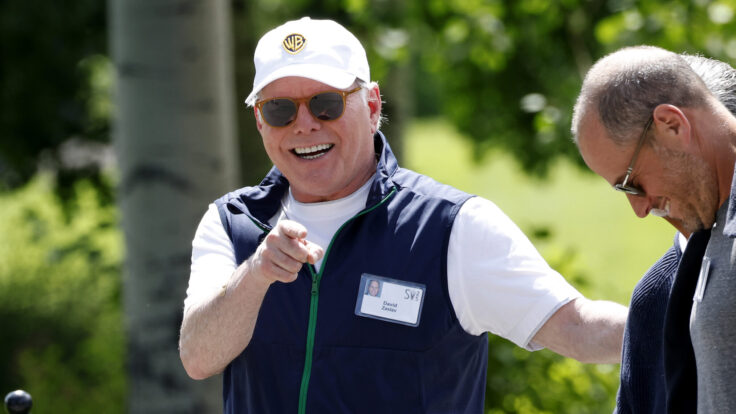
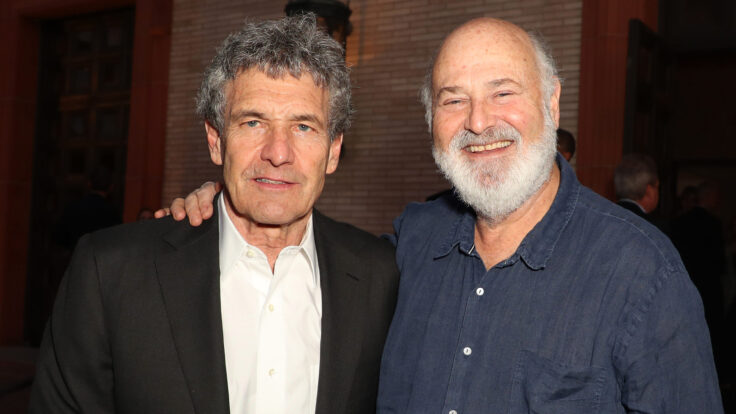
| Who Won the Week: Alan Bergman |
|
| He may be an extreme long-shot horse in the C.E.O. succession race, but the Disney film chief’s record $389 million global debut for Moana 2, first developed as a series for Disney+, might be the greatest pivot/salvage in movie history.
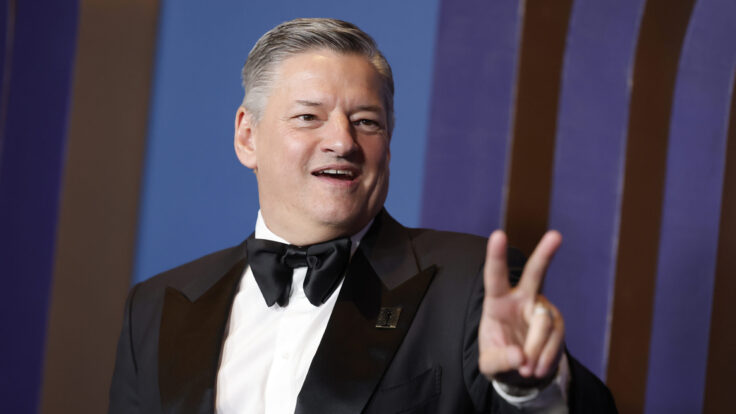
Shot: Let’s put this wild weekend at the box office in terms Netflix co-C.E.O.s Ted Sarandos and Greg Peters can understand. Nearly 30 million people saw one of either Moana 2, Wicked, or Gladiator II in the U.S. and Canada this weekend, per Screendollars. Multiply that by the average running time of the films (136 minutes), and it’s 4.1 billion minutes watched. Compare that to the top three English-language films on Netflix for the full week of November 18-24 globally—The Merry Gentleman, Hot Frosty, and Spellbound. Together, they delivered 3.39 billion minutes watched, so an average of 1.1 billion minutes, which is about one-quarter the domestic in-theater time over five days. And the Netflix stat is worldwide.
The economics are different, of course. Wicked, Gladiator II, and Moana 2 together cost at least $550 million to produce and hundreds of millions more to market, far more than the two quickie Christmas movies and a Skydance animated pic on Netflix, which markets its films far less. Netflix movies are also co-viewed by many at home. But domestic audiences alone paid a collective $389 million to see the theatrical movies over the five days, and each will have a long life on their respective streamers. Something to remember next time Sarandos says Netflix delivers the largest possible audience for movies.
Chaser: But… even after this record Thanksgiving, the 2024 domestic box office is still running 11 percent behind last year and 27 percent off the 2019 total at this point. Survive to ’25 remains the goal.
Runner-up: Ron Meyer and Stacey Snider, the former Universal execs, who first acquired film rights to the Wicked novel for producer Marc Platt back in the ’90s, before the stage musical existed. That deal led to Universal (with a $10 million investment) and Platt co-producing the Broadway show, along with David Stone, and quietly reaping a hefty share of the $5 billion in tickets sold worldwide. And now, more than 25 years later, a movie blockbuster—which, of course, is also juicing grosses for the stage play.
Now a little agent news… |
| Gersh Is Buying a Sports Agency |
|
| When the 75-year-old Gersh Agency took on its first major investor last year in Crestview Partners, I figured it was a step toward Bob Gersh & Co. trying to grow via acquisitions. After all, as the agency business has diversified and consolidated around three giant players in CAA, Endeavor/WME, and UTA, Gersh has remained primarily a mid-tier television and film shop—to the extent the mid-tier still exists. And we know how difficult those businesses are these days. It doesn’t have music touring, like rivals IAG or Wasserman, or a sports representation business like the one ICM Partners acquired via Stella Sports, which it then leveraged to sell itself to CAA. |
|
A MESSAGE FROM OUR SPONSOR
|
|
|
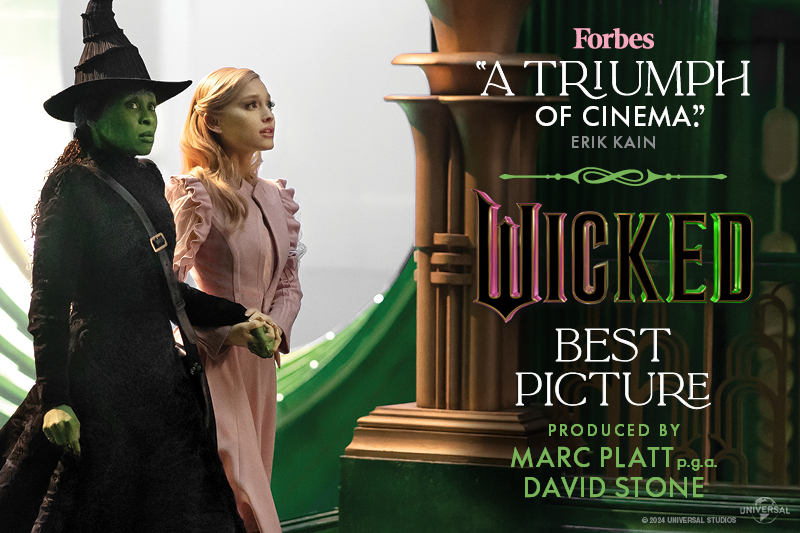
NOW PLAYING IN THEATERS
Starring Emmy, Grammy and Tony winner and Academy Award® nominee Cynthia Erivo and Grammy Award winner Ariana Grande.
From Director Jon M. Chu comes the cinematic adaptation of the beloved musical, the untold story of the witches of Oz.
GET TICKETS
|
|
|
| Now I’m told Gersh is closing a deal to acquire You First, the Madrid-based sports and branding agency. It’s got 22 offices in 14 countries and about 300 employees—roughly the same size as Gersh—and it reps clients in soccer, basketball, and other areas, including sports leagues and teams. C.E.O. Juan Aisa, a former pro hoops player in Spain and France, co-founded the company in 2002. A small step, but a welcome one at a time when the Big Three are increasingly dominating. (Gersh and Crestview declined to comment.) |
|
|
“I like to say that it’s for sanity and vanity purposes.”
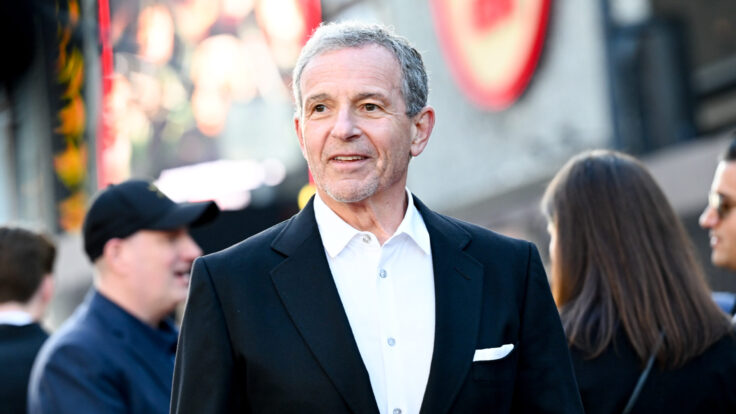
—Bob Iger, the 73-year-old Disney C.E.O., discussing his daily workout regimen with the In Good Company podcast.
Now let’s solve a mystery of the Paramount sale… |
| Ron Burkle Wanted to Swap Yellowstone for Paramount… |
|
| Of the many questions raised and answered in Paramount Global’s recent proxy filing ahead of its sale to the David Ellison family, the “Party F” issue has remained a mystery. If you recall, several bidders for Shari Redstone’s media empire were referenced only as capital letters, and while most were easily identified—everyone from Apollo to (gulp) Byron Allen—Party F was never discussed in the media and was described intriguingly in the proxy as a private equity firm focused on middle-market companies that would contribute “an entertainment studio” it owned for a 19.9 percent stake in Paramount. As my colleague Bill Cohan noted, Party F also asked in a February letter to Redstone and C.E.O. Bob Bakish that Paramount end its dual-class stock structure and offered to pay shareholders for their voting rights, effectively making Party F the new owner simply by contributing its “entertainment studio,” plus a bunch of cash (about $1.5 billion, I’m told).
According to two sources familiar, that bidder was billionaire investor Ron Burkle’s Yucaipa Companies and 101 Studios, the Burkle-backed producer of Yellowstone and other Taylor Sheridan shows that air on Paramount platforms. I’m told that Bakish asked Burkle and 101 C.E.O. David Glasser to bid via the 101 equity and cash, and they sent at least three separate letters—the February overture, followed by one in April, and another in June focused on National Amusements, the Redstone family holding company. One scenario had the Burkle group essentially propping up Redstone, who would keep control of the company.
Alas, the various proposals went nowhere. And once Ellison and RedBird Capital got serious with Shari over the summer, Burkle & Co. stepped back. Ron, the controlling shareholder of Soho House, is said to be tight with the Ellisons, who own the property that Soho leases in Malibu. That relationship wasn’t worth jeopardizing over a Paramount bidding war against one of the world’s richest families. (A Burkle rep declined to comment.) |
|
|
| I’ve questioned why the successful unscripted production company Fulwell73 would merge with LeBron James’s money-losing SpringHill Entertainment. Now Lucas Shaw reveals last year’s SpringHill loss was $28 million. [Bloomberg]
More: Like I said, a lifeline. And LeBron hates the bad press that laying off some of SpringHill’s 200 employees would generate. Now, he and C.E.O. Maverick Carter can downsize the company under the cover of the Fulwell merger, saving face and (hopefully) riding out the content recession.
Ms. Rachel, basically Taylor Swift for toddlers on YouTube, is getting rich on toys. [NY Times]
There’s something nostalgic and comforting about Good Morning America staffers freaking the fuck out about losing the linear ratings race to NBC’s Today. [Status]
Does the Trade Desk’s move into connected TV ad infrastructure signal an increased interest in acquiring Roku? Guggenheim’s analysts think maybe so. [Guggenheim]
Ben Mezrich may be a total fraud as a journalist, but he shamelessly reverse-engineers his book proposals into movie deals before critics can pan them, so who cares? Certainly not Hollywood. [Vulture]
Manohla Dargis put Megalopolis on her top 10 list of 2024, an act of trolling so blatant it would make any Fox News pundit proud. [NY Times]
Love this 60-person, five-panel (!) cover of New York for the Saturday Night Live 50th anniversary. We did the 40th when I was at Hollywood Reporter (also twin N.Y. and L.A. shoots), and the months of coordination took years off my life, so hopefully Lorne will give SNL P.R. chief Lauren Roseman a nice Christmas gift. Notable no-shows: Dan Aykroyd, Bill Murray, Chris Rock (who’s hosting December 15), Will Ferrell, Adam Sandler, and Eddie Murphy. I also figured Tom Hanks, the first inductee into the Fiver-Timers Club, would make time for this. Who won the shoot? Maybe Laraine Newman, who I’m told brought a shirt from the 1975 season. [NY Mag]
Now for Scott Mendelson’s analysis of Moicked, or Glawickoa, or Wickana—whatever you want to call this weekend’s huge box office haul… |
 |
| The Lessons of Wickana |
| Five sure-fire takeaways from the largest Thanksgiving box office on record, including Disney’s resurgence, the reframed success of ‘Gladiator II,’ and a new weekend calibration for ‘Wicked: Part One.’ |
|
|
|
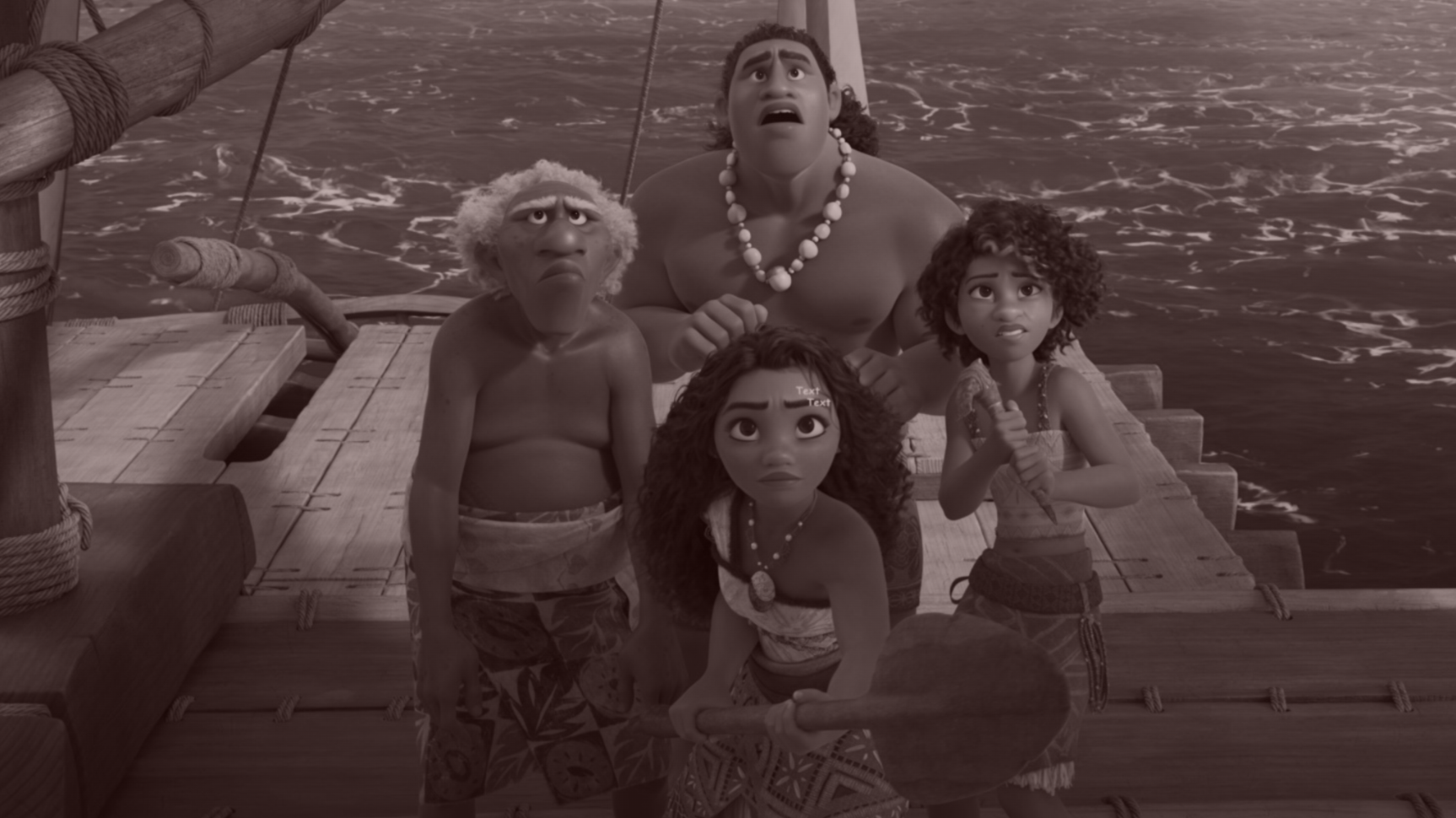
| Theaters finally have something to be thankful for: This weekend’s lineup set a new Thanksgiving record with around $427 million in North America for the five days. It was mostly driven by two family movies, Moana 2 and Wicked: Part One, which pulled in best-case-scenario box office despite opening almost concurrently. Disney’s Bob Iger and Alan Bergman clearly made the right call with Moana 2, which was originally a streaming series before Disney opted for a theatrical sequel that hauled over $225 million from Wednesday to Sunday, nearly doubling Frozen II’s $125 million take over the long weekend in 2019 (it had opened the previous Friday).
Likewise, Donna Langley’s decision to move Universal’s bewitching musical up to the pre-Thanksgiving weekend to position it as the season’s YA fantasy tentpole paid off. Wicked: Part One continued to play like Harry Potter and the Twilight of the Hunger Games, notching an $81 million second weekend and $118 million from Wednesday to Sunday. That was down just 28 percent from its $112.5 million opening, the smallest second-weekend drop-off ever for a $100 million-plus opener.
In the end, two kid-friendly, female-centric musical empowerment fantasies earned a combined $344 million over the holiday. It wasn’t a Barbenheimer-style cultural event, which makes the numbers arguably at least as impressive. Moreover, the double-barreled success illuminates several realities about the current box office environment. |
|
|
| Hollywood should no longer fear scheduling multiple big films near one another—as long as their demographic bases are complementary but don’t entirely overlap. Moana 2 and Wicked shared elements and themes that defied box office gravity merely through respective consumer interest. Just as the likes of World War Z could thrive alongside Monsters University in previous years, there was even room for Paramount’s Gladiator II—also in its second weekend—to earn another $44 million. In fact, the R-rated action-drama has already earned $111 million domestically and $320 million worldwide. (It opened internationally two weeks ago.) If audiences want to see a film, or two, or three, they’ll find the time. |
| 2. Theaters Are Revenue Drivers |
|
| Since the end of the pandemic, the controlling narrative of the theatrical business has been its inability to return to pre-Covid levels of box office, itself the result of many factors—fewer productions, sending movies to streaming, the strikes, etcetera. But the yearly domestic and international cumes obscure the fact that major theatrical releases regularly perform at or above pre-Covid levels. Since early 2021, when Godzilla vs. Kong and A Quiet Place Part II played about as well as would have been expected in non-Covid circumstances, we’ve seen new box office opening weekend records for almost every major holiday—Easter, Memorial Day, Independence Day, Labor Day, and now Thanksgiving. In fact, seven of the top 20 all-time domestic and global grossers have been released since Spider-Man: No Way Home premiered almost three years ago. |
|
|
| The theatrical potential of the franchise-friendly tentpole is as strong as ever, and there’s also still room for smaller breakouts like Free Guy, Everything Everywhere All at Once, It Ends With Us, and Longlegs. Yes, the industry slate is still skewed toward all-quadrant, family-friendly franchise films that can justify an afternoon out with the kids, and there’s still the matter of retraining audiences to come out for mainstream awards contenders like Conclave (a relative success at $31 million domestic, but it would have arguably earned far more in a less event-film-focused ecosystem).
But Hollywood got the message when it comes to franchises and I.P.: That’s why Margot Robbie accepted less upfront cash so Wuthering Heights could become a Warner Bros. theatrical release rather than a Netflix Original. And that’s why Iger and Bergman decided not to forgo box office revenue for Moana 2, which will still pull good-to-incredible numbers on Disney+. During Covid, executives like WarnerMedia’s Jason Kilar convinced the industry that streaming versus theatrical was a binary choice. In reality, it never was, and the zero-sum mentality did harm to both ecosystems. |
| 3. The 10-Day Opening Weekend |
|
| We should measure the strength of a pre-Thanksgiving opener not just by the Friday-Sunday gross but by the overall 10-day haul, which allows for post-release factors like word of mouth. Folks who wanted to see Gladiator II and Wicked: Part One but lacked the time for both last weekend made at least some effort to catch up over the holiday. Ditto those who only wanted to see one but didn’t mind waiting for the holiday weekend—or the Monday to Wednesday corridor, which many kids now have off from school. We’ve seen this extended frame phenomenon play out in recent years with Frozen II (a $130 million opening weekend and then a $125 million Wednesday-Sunday) and The Hunger Games: The Ballad of Songbirds and Snakes (a $45 million debut, followed by $42 million during the long holiday weekend). |
| 4. A Good-for-Theaters-Bad-for-Studios Box Office Success |
|
| Gladiator II has earned $320 million worldwide so far, with a conventional rate of descent suggesting a $175 million domestic and $440 million worldwide finish. I’d expect longer legs and a possible $500 million-plus finish due to decent word of mouth (a 4/5 on PostTrak was apparently more representative of consumer buzz than the B CinemaScore) and the near-total lack of tentpole-sized, adult-skewing and/or non-fantastical action movies due out between now and Captain America: Brave New World on Valentine’s Day. But with Gladiator II’s $250 million budget, even the best-case scenario might not be good enough.
However, the strong reviews, solid buzz, and solid box office numbers affirm that moviegoers are buying what 87-year-old Ridley Scott is selling. If Gladiator II doesn’t qualify as a rate-of-return theatrical success, it should still qualify as a bad-for-the-studio-but-good-for-theaters situation. We saw that last year as well when pricey Disney flops like Indiana Jones and the Dial of Destiny still put more butts in seats than some of their rivals’ box office successes. Multiplexes will take The Little Mermaid ($570 million) over Five Nights at Freddy’s ($291 million) all day long, even if Mermaid didn’t pencil out for Disney because it cost so much.
If theatrical success is now valued mainly for its ability to extend and increase a film’s long-term earning potential across platforms and ecosystems, Gladiator II should be a highlight on Paramount’s P&L for years to come, even if it doesn’t break even via theatrical revenue alone. |
|
|
| With the largest global animated opening of all time at $389 million, it’s pretty likely that Moana 2 will become Disney’s third $1 billion-plus earner of 2024, alongside Inside Out 2 and Deadpool & Wolverine. Even if Mufasa: The Lion King doesn’t follow suit next month—and, yes, Alice Through the Looking Glass and Maleficent: Mistress of Evil both earned noticeably less than their predecessors—Disney has reclaimed its tentpole dominance.
But the company is relying heavily on 2010s nostalgia. Audiences showed up for new installments of Disney’s most popular films from the past decade (as well as follow-ups to previously Fox franchises like Deadpool, Alien, and Planet of the Apes), but it’s been 20 years since Disney’s last successful new-to-cinema live-action franchise, National Treasure. (Though if Wild Hogs 2 does gangbusters, I guess it’ll only have been 18 or 19 years.) Moreover, Pixar’s Coco—released over Thanksgiving 2017—remains Hollywood’s last non-sequel, not-based-on-previous-I.P. animated film to top $500 million worldwide.
I cannot overstate the extent to which Elio, the original Pixar sci-fi fantasy set to open June 13, is Disney’s most important movie next year. The current Moana 2/Wicked: Part One matchup implies that, if it’s any good, Elio could suffer minimal damage from opening on the same day as Universal’s How to Train Your Dragon live-action remake. Elemental earned $342 million overseas, which was on par with the $220 million–$370 million likes of Cars, Wall-E, Brave, Monsters Inc., and The Incredibles. It was the domestic gross—just $154 million—that fell short of the customary $200 million–$240 million North American totals, inflation notwithstanding, for the average Pixar non-sequel.
If Elio can hold firm overseas and play like one of those prior classics in North America, then Disney will at least have a Pixar original that performs like a Pixar original. Remember too that Coco only topped $800 million because of its sky-high—and now highly unlikely—$189 million from China. Without that boost, the Thanksgiving 2017 release would have ended up in the $530 million–$660 million ballpark alongside successful Disney toons like Big Hero 6, Ralph Breaks the Internet, Tangled, and Moana.
Perhaps Covid-era movies like Encanto and Soul—along with possibly Luca, Raya and the Last Dragon, and Turning Red—would have been box office triples or outright home runs in other times. Perhaps Disney never really stopped making all-quadrant, globally appealing original animated films but rather, temporarily undercut the distribution method that made them possible. And with a firm 60-day window and presumed goodwill from Inside Out 2 and Moana 2, maybe Disney will discover, to paraphrase a line from that other Thanksgiving franchise, that it had the brains, heart, and courage to successfully release blockbuster animated originals all along. |
|
|
| No feedback today, but a few weeks ago I noted that I’ve come to suspect many Writers Guild members, now obliged to pay commissions to their agents, regret their union’s decision to force talent agencies to end television packaging. In response, a TV writer told me to read the long-titled new book Hollywood Hustle: The Talent Agency Business and Antitrust Price-Fixing: A Historical Record of the Rise and Fall of TV Packaging.
It’s a self-published “journal” by the retired agent Charles Lenhoff, who sued the major agencies in 2015 for allegedly conspiring to set onerous packaging fees and force smaller shops out of business. Lenhoff lost, but his effort, along with an influential column by the former agent Gavin Polone (that I actually edited), laid the groundwork for the WGA’s successful crusade against the agencies.
I don’t agree with many of Lenhoff’s contentions about the market for representation in entertainment, but Hollywood Hustle is a pretty interesting read for anyone curious about how money is made in TV, how it was divvied up for decades, and what the end of packaging means for both talent and their negotiators. Plus, when I called up Lenhoff this weekend to tell him I liked the book, he dropped this (unconfirmed) bomb: “I know for a fact that there is packaging still going on,” he told me. “That’s all I’m gonna say about that.” |
|
|
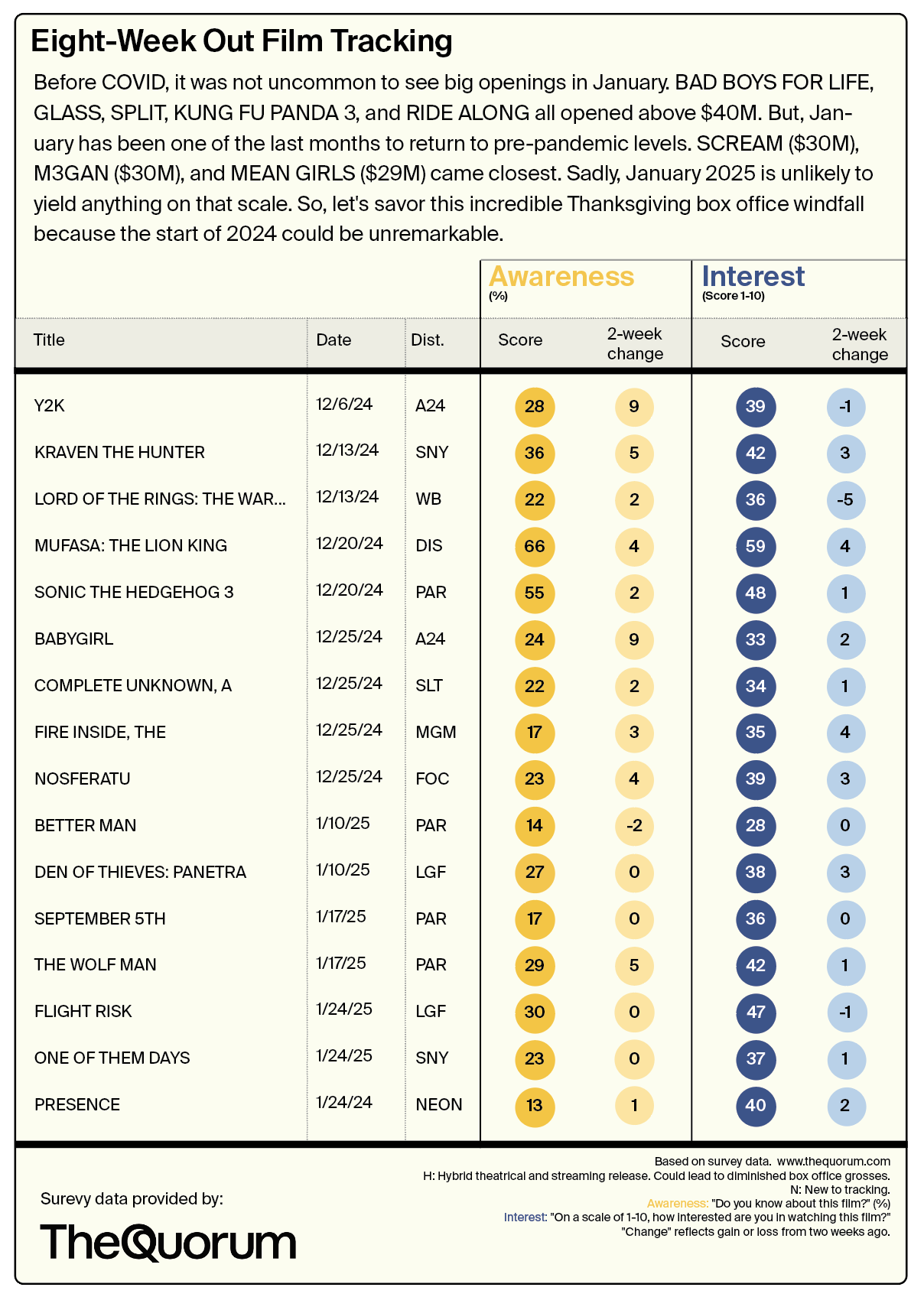
| Enjoy the holiday box office because January, which had turned into a lucrative launchpad pre-Covid, is looking especially bleak this year, according to The Quorum early tracking chart… |
|
|
Have a great week,
Matt
Got a question, comment, complaint, or suggestions for who else should die on Yellowstone? Email me at Matt@puck.news or call/text me at 310-804-3198. |
|
|
|
| FOUR STORIES WE’RE TALKING ABOUT |
 |
| Elon’s DOGE-ball |
| The headwinds facing one of Musk’s initial DOGE targets. |
| ABBY LIVINGSTON |
|
 |
| Magritte Heat |
| Revealing the behind-the-scenes choreography at Christie’s. |
| MARION MANEKER |
|
 |
|
 |
|
|
|
|
|
 |
|
|
|
Need help? Review our FAQs
page or contact
us for assistance. For brand partnerships, email ads@puck.news.
|
|
You received this email because you signed up to receive emails from Puck, or as part of your Puck account associated with . To stop receiving this newsletter and/or manage all your email preferences, click here.
|
|
Puck is published by Heat Media LLC. 227 W 17th St New York, NY 10011.
|
|
|
|