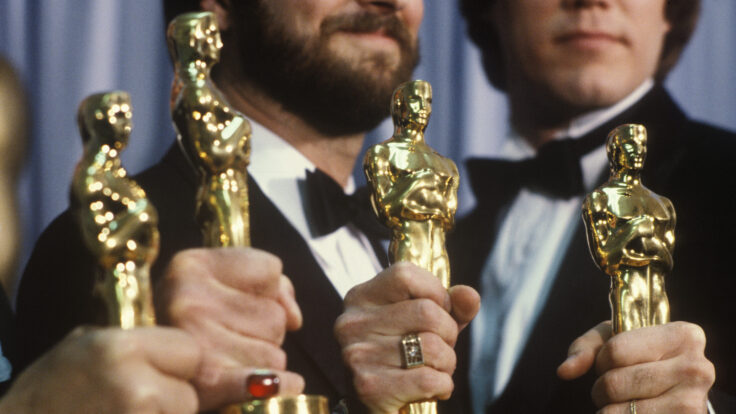
Welcome back to What I’m Hearing, barely able to type after a loooong Oscar weekend and
CNBC at 4:25 a.m. In the room, I thought the show played great, and Conan hit far more often than he missed, though I keep hearing from viewers who thought the whole thing—especially the presenters—was kinda flat on TV. We’ll see about ratings tomorrow.
Tonight, some final notes on the Oscars (and the quiet flexes), my take on today’s Disney content-side
reorg, and Julia Alexander looks at the future of Roku, everyone’s favorite Airbnb streaming platform.
Programming note: This week on The Town, Lucas Shaw and I debated Universal’s new windowing strategy, Amelia Dimoldenberg
explained how to get young people to care about the Oscars, and new Vanity Fair editor Mark Guiducci revealed how he wants to cover Hollywood.
Subscribe here and here. Also I talked WarnerMount tea leaves on Kara Swisher’s podcast
(here), and with Peter Kafka (here).
Not a Puck member yet? Just click
here. Got a news tip or an idea for me? Just reply to this email, text me, or message me on Signal at 310-804-3198.
Mentioned in this issue: Josh D’Amaro, Michael B. Jordan, Anthony Wood, Sean Shoptaw, John Landgraf, Gerry Cardinale, Lauren Sánchez, Gunnar Wiedenfels, Debra OConnell, Timothée
Chalamet, Dana Walden, Jane Fonda, Casey Wasserman, Phil Sun, Roger Lynch, Jeff Bezos, Sam Altman, Kaitlan Collins, Guy Oseary, Beyoncé, Jessie Buckley, Jason Weinberg, Mike De Luca, Pam Abdy, Amy Madigan, Sara Murphy,
Ted Sarandos, Charles King, Rich Greenfield, David Ellison, Brian Roberts, Greg Peters, Andy Jassy, Peter Supino, Ynon Kreiz, Charlie Collier, Anjali Sud, Don Lemon, Adam Lewinson, Daniel Radcliffe, Lisa Holme, MrBeast,
Phil Rosenthal, and… Pete Hegseth.
But first… |
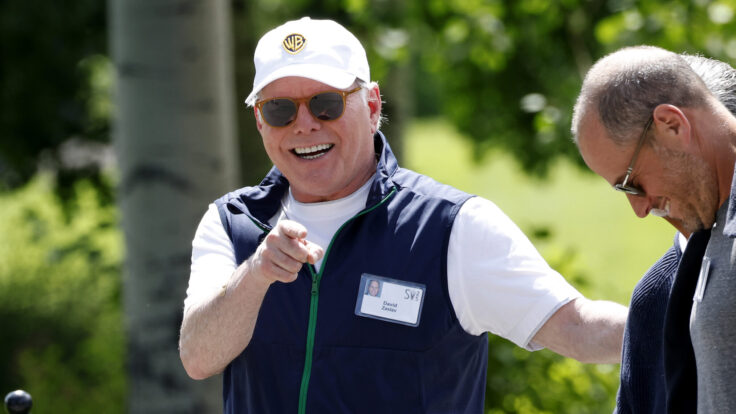
Who Won the Week: David Zaslav
|
Of course! Nothing follows a dominant Oscars for Warner Bros. quite like a Monday morning S.E.C.
filing clarifying exactly how many hundreds of millions of dollars the C.E.O. is taking out of the auctioned-off company as he pats his subjects on the head with a nice email.
The total payout for Zaslav—who, as a reminder, has run
Warner Discovery for less than four years and failed to meet revenue or profit targets he promised—is $551.4 million in cash and equity, plus $335.4 million in tax reimbursement that will decline in value the longer the deal takes to close. Likely not quite the $800 million we all hoped he’d get, but still a very respectable grift. (Usual disclosure: As a result of Puck’s acquisition of Air Mail, Zaslav is a de minimis investor.)
Runners-up: The Zaslav C-suite
capo payout numbers are equally soul-crushing—sorry, empowering based on all that market value creation—and worthy of listing: |
-
JB Perrette, head of streaming: $142 million
- Bruce Campbell, chief revenue and strategy officer: $121.5 million
- Gunnar Wiedenfels, C.F.O.: $120 million
- Gerhard Zeiler, international chief: $82.6 million
|
Plus, don’t forget the deal jockeys: |
-
Allen & Co.: $100 million
- JPMorgan Chase: $90 million
|
Second runner-up: Debra OConnell. The Disney veteran emerges as the big winner in
today’s content division shake-up, gaining full greenlight power and oversight of all the TV/streaming brands except FX (that stays with John Landgraf). Minus control of the direct-to-consumer business, OConnell is essentially stepping into the TV shoes of Dana Walden, who now oversees all content across the company.
More Disney: Forget who’s getting what TV oversight. The big news today was buried in paragraph eight of the press release: Disney
is moving games into its entertainment division, and Sean Shoptaw, head of games and digital entertainment, is now considered a content executive under Walden. (Games was previously housed in consumer products.) Given how much emphasis new C.E.O. Josh D’Amaro has placed on Disney’s interactive future and its partnership with Epic Games, which is developing a Disney universe connected to Fortnite, this is maybe the biggest signal yet of changes coming to
the company. Imagine if D’Amaro can turn Disney+ into a home for not just movies and TV but other interactive elements like shopping, socializing, scrolling, and yes, gaming, all under the Disney brand halo—a real game changer (sorry, bad pun). |
255 percent
Increase in Oscar market volume on Kalshi from 2025 ($29.6 million) to 2026
($105 million). More action was placed on best actor than on best picture. [Kalshi]
35.7
Average minutes per day that users spent on the microdrama app ReelShort in the fourth quarter of 2025, more than Prime Video (26.9 minutes), Netflix (24.8 minutes), and Disney+ (23 minutes). [Omdia/Sensor
Tower]
$2.3 billion
Film and TV production spend in Georgia last fiscal year, down almost 50 percent from a peak of $4.4 billion in 2022. [AP News]
$276,465
Average annual household income of a Broadway theatregoer in the most recent season.
[Broadway League] |
“The sooner David Ellison takes over that network, the better.”
—Pete Hegseth, the Fox
News personality turned Defense secretary, whining about Iran war coverage on CNN and probably not doing Ellison a favor in his effort to persuade Democratic attorneys general to bless the Paramount–Warner Bros. merger.
Runner-up: “I slept with the guy who created [CNN]. I have a personal stake in it.”
—Jane Fonda, Ted Turner’s ex, explaining why she wore a “Block the Merger” pin to Oscar parties.
More: It wasn’t just
Ellison that passed on Oscar weekend events. (He was at his dad’s tennis tournament in Indian Wells, where, unlike at the Oscars, Sinner took the top prize.) The entire Paramount leadership collectively decided not to go out, either. They spun it as letting the Warners people have their big moment before the merger disruption begins, but as the two quotes above indicate, Paramount and Ellison are now an issue, something that most people in town have an opinion
about.
Plus, the Jeff Shell thing…: Predictably, Shell fired back today against accuser R.J. Cipriani, whom the Paramount president paints as a schemer who leveraged a mutual connection in lawyer Patty Glaser to attempt to extort money. Eriq Gardner will have more on this tomorrow, but here’s the full complaint.
Random Oscar notes: In all, 17 co-stars and collaborators, including Billy Crystal, participated in that nice tribute to Rob and Michele Reiner. Beforehand, I’m told everyone gathered in the show producers’ office—some had never met each other—and exchanged a ton of great stories about the Reiners. … Yes, that was Casey Wasserman at the Vanity Fair
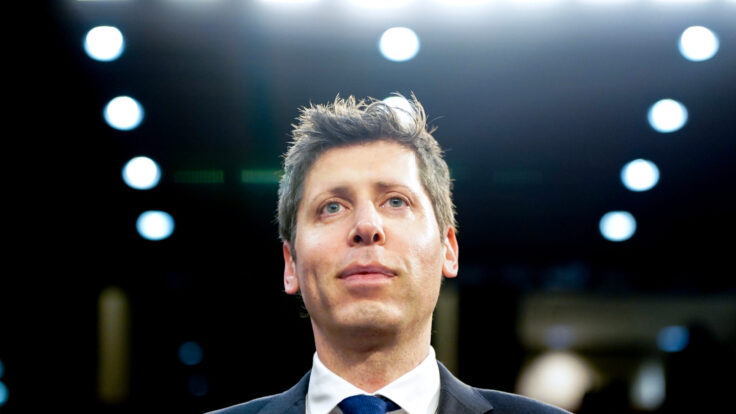
viewing dinner, sitting with Condé Nast C.E.O. Roger Lynch and Mattel’s Ynon Kreiz. … Apologies to Jeff Bezos and Lauren Sánchez, but the title of most odious billionaire at that party is now held by OpenAI’s Sam Altman. (Also, an observation: Kaitlan Collins seems to have taken the Don Lemon crown of CNNer who most enjoys flying to L.A. for parties.) … Far fewer A.I. ghouls at
the Guy Oseary–Madonna party, and from people I talked to, just as many stars—though Beyoncé and Jay-Z’s event got Taylor and Travis. … Among the quieter Oscar flexes, law firm Johnson Shapiro Slewett & Kole picked up both best actor and actress wins for clients Michael B. Jordan and Jessie Buckley. … Congrats to manager Jason Weinberg,
who got himself seated in the front row for the second year in a row (both times next to client Demi Moore). … By my count, Warners’ Mike De Luca and Pam Abdy were thanked from the stage four times (Coogler, Jordan, Madigan, and One Battle producer Sara Murphy), beating out God and Ted Sarandos. But David Zaslav was thanked by a winner—once, a
quick “and David”—from Coogler. … Nice to see producer Charles King post a smiling pic with Jordan from the Warners party, given MBJ’s recent exit from the King-backed M88 when his manager, Phil Sun, bailed. … Paramount may have been shut out entirely, but board member Gerry Cardinale scored a tangential win with Hamnet, which was produced and financed by Neal Street Productions, owned by All3Media, a portfolio company of
Cardinale’s RedBird IMI. … No disrespect, but I think we’re all ready for the Heated Rivalry guys to go away for a while.
Okay, enough Oscars, now here’s Julia… |
|
|
|
The ubiquitous free streaming service that comes preinstalled on a third of TVs could
massively amplify distribution for a company like Comcast, Netflix, or even the world-conquering WarnerMount. But did Ellison already miss his moment? |
|
|
|
Roku, the oft-forgotten stepchild of the streaming wars, has had something of a glow-up since it launched in
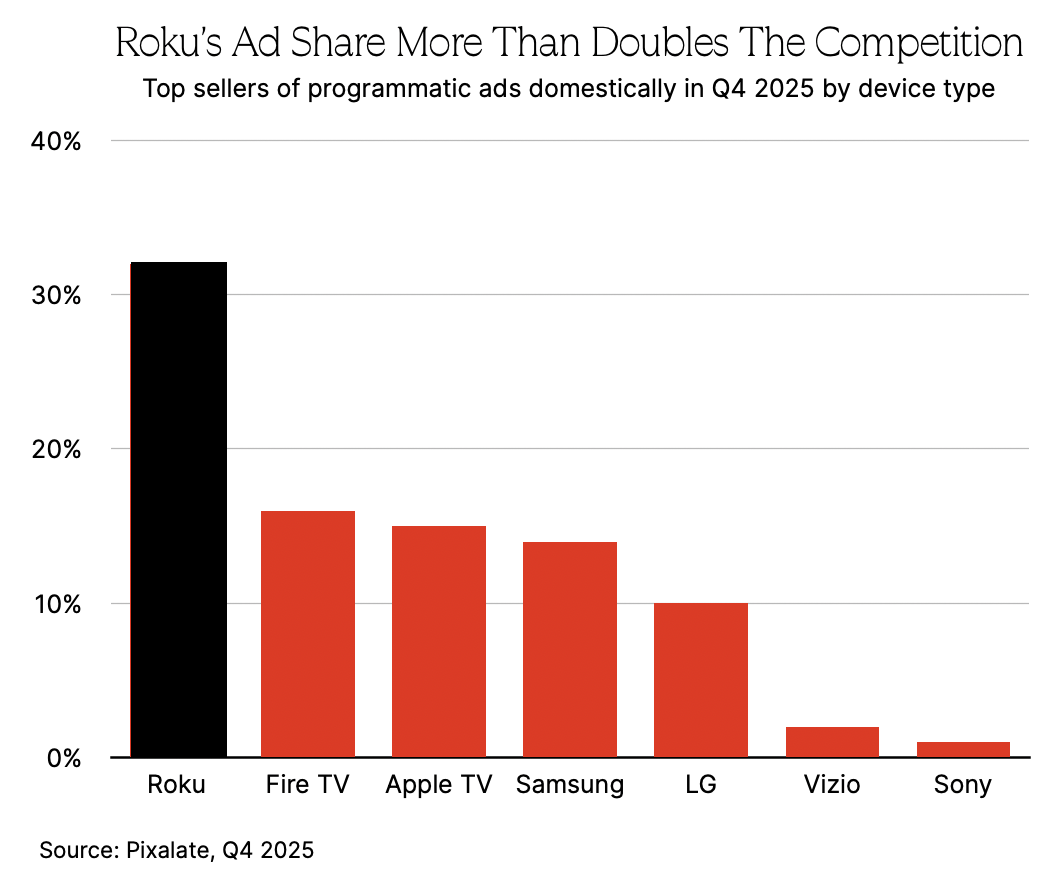
2008. Founder and C.E.O. Anthony Wood conceived of the company as a cheap set-top box, created in partnership with Netflix, to bring streaming into millions of homes. Nearly two decades later, Roku has evolved into something else entirely: a practically ubiquitous streaming operating system that comes preinstalled on nearly one-third of all smart TVs, and reaches more than 90 million households. (Its next-largest competitor, Amazon Fire TV, doesn’t even come close.) The Roku
Channel, which offers free, licensed content as well as the ability to subscribe to other streamers, is the second-fastest-growing platform behind YouTube, with more than 145 billion streaming hours in 2025. Also in 2025, Roku was profitable for the first time since the Covid era.
So… is anyone going to acquire it? After all, controlling Roku might address many issues that merely buying content cannot. As LightShed analyst Rich Greenfield put it to me the other day, there
is tremendous power in owning a consumer’s journey from the moment he or she powers up the TV, to the content that’s displayed, to what they end up watching. “If I were David Ellison, I would have bought Roku,” Greenfield said. “More so than I would have gone after Warner Bros. Discovery. If you’re playing from behind in streaming, how could you turbocharge yourself overnight? It’s sexy to buy content, but you may get a lot more by buying a TV O.S.”
At a time when
everyone in streaming wants scale, or to increase their distribution, is it simply a matter of time before the likes of Paramount–Warner Bros. or Comcast come sniffing around Roku? Or are there hidden red flags that are preventing potential acquirers from making a move? |
Buying Roku, which generated more than $4 billion in platform revenue last year and $88 million in profit,
wouldn’t be cheap. Assuming a premium of 30 percent on its current market cap of around $14 billion, Roku could cost in the range of $18 billion or more. Nevertheless, there are a handful of potential buyers who suddenly have a lot of spare change rattling around their pockets. Brian Roberts, C.E.O. of Comcast, received his $9 billion farewell gift from Disney’s Bob Iger in the final Hulu sale, and Greg Peters and Ted Sarandos
at Netflix just got a tidy $2.8 billion breakup fee thanks to Paramount stealing away WBD. Even Amazon’s Andy Jassy, despite his focus on growing Prime Video (and his own Fire OS business), might view $18 billion as an acceptable price to effectively control the streaming user experience in the U.S., should the government allow it.
There could be other synergies, too. The Roku app is a discovery hub that surfaces third-party content, a tollbridge when users sign up for
other streaming apps through its interface, and an advertising platform that allows Roku to take both a cut of revenue from its partners and provide its own marketplace with better targeting. And because Roku software comes preinstalled on so many TVs, its customer-acquisition funnel is powerful: In Q1 2025, more than 33 percent of all new streaming customers came in through subscription aggregators, like the Roku Channel and Prime Video Channels, up four percentage points over
two years, per Antenna. |
But Roku also faces stiff competition. Wolfe Research analyst Peter Supino argues that
Roku’s three main value propositions—its ability to influence consumer behavior, license and distribute content, and leverage better ad targeting—aren’t fully differentiated, and its licensing business is easy enough to replicate. Roku does have a strong advantage by virtue of being preinstalled on so many TVs, but that moat isn’t unbridgeable. To wit: Walmart’s 2024 acquisition of TV maker Vizio, which uses its own OS, sent Roku’s stock tumbling—logical, given that Walmart had accounted for 40
percent of Roku’s device revenues through the first nine months of 2023, MoffettNathanson’s Michael Nathanson wrote at the time. Roku’s stock, while still down significantly from its 2021 highs, has begun to rebound somewhat lately—up around 36 percent in the past 12 months.
Meanwhile, Amazon has quietly built an indispensable position in the premium “channels” business: Nearly 90 percent of customers who subscribed to Paramount+, Apple TV, HBO Max, or Crunchyroll through Prime last year
wouldn’t have subscribed otherwise, per Antenna. And while Amazon and Apple have existed in the channels aggregation business for years, top Google executives haven’t tried to hide their recent ambitions to make YouTube a one-stop shop for both ad-supported and premium video. |
Still, there are few companies that might be interested in what Roku offers. Google and Apple already have
their own technologies in the space, and have demonstrated little appetite for additional acquisitions. Microsoft has deprioritized the TV environment as Xbox shrinks as a share of the business. That leaves three likely synergistic buyers: Netflix, Comcast, and Paramount.
Netflix is the least obvious fit. With an 8.5 percent share of all U.S. TV viewing time—nearly double its nearest S.V.O.D. competitor, per Nielsen—and a churn rate of just 2 percent, Sarandos and Peters don’t
need Roku to solve a distribution problem. Buying Roku, Supino recently argued, “would be a statement of anxiety”—a defensive move that is “hypothetically possible and strategically reasonable,” but unlikely given Netflix’s current position.
Comcast is a more natural fit, but it is already pursuing a version of this strategy. It bought set-top box Xumo in 2020 for reportedly north of $100 million, with the goal of marketing premium streaming services to viewers and to better
compete in the growing FAST market. But Xumo has yet to break through—as Greenfield put it, “When’s the last time you heard someone say ‘Xumo’ without a ‘Huh?’ at the end?” If Comcast sees Roku as a better way to build out its own subscription add-ons business that could compete against Amazon through a better integration with Peacock, a strategic pivot the company is reportedly exploring, Roberts might, as Supino said, “appreciate the analogy of Roku to his cable business of yore.” But again,
it wouldn’t come cheap.
And then there’s Paramount. Ellison is already deep in debt from his pending Warner Bros. Discovery acquisition, facing down an expensive NFL rights negotiation, and navigating the integration of two large content businesses. The chicken-and-egg problem is real: If all that content can’t reach the right audiences—if people can’t find certain shows because the discovery and delivery mechanism is broken—does having it all matter? A combined Paramount+ and HBO Max may
not move the needle on its own. Most analysts I spoke to agreed that Roku could be a meaningful accelerant for Ellison’s ambitions—just probably not at $18-plus billion.
Still, these are content companies run by executives who will view any acquisition at least partially through the lens of added libraries to satiate subscribers and sell ads against. A few years ago, it seemed like Roku’s main content strategy was picking up all the unsuccessful shortform series and films that
Quibi left behind—like that bizarre three-parter where Rachel Brosnahan develops a deep emotional connection to her gold prosthetic arm. Weird that it didn’t do gangbuster numbers on Roku!
In 2022, Roku brought former Fox Entertainment C.E.O. Charlie Collier aboard as its president of media, but the company hasn’t really spent much time building up its library of originals, especially when compared to what Anjali Sud and Adam
Lewinson are doing at Tubi, Roku’s biggest FAST competitor. (One outlier was the “Weird Al” Yankovic biopic satire starring Daniel Radcliffe that won an Emmy.) Instead, when it comes to original content, Roku’s newish head of content, Lisa Holme, is building on the idea that Wood and Collier have developed over the past few years: supplementing big event TV that people are using their Roku devices to find, and building
programming around that behavior. But the focus seems to primarily be on licensing more premium content, partnering with new talent (MrBeast launched his FAST channel with Roku in 2023), and, of course, selling ads.
It could be that Roku, while enticing, still isn’t differentiated enough for a major acquisition, especially by key content players who have to pony up for expensive sports rights and the best creatives. But another roadblock to acquisition is the consensus
that Roku doesn’t actually need to sell. Its profit is up 15 percent year over year, premium partners are increasingly seeking out aggregators like the Roku Channel, and it remains well ahead of the domestic competition in connected TV ad share while also expanding internationally. None of that guarantees Roku’s continued ascent, but Wood is in a far stronger position than he was 10 years ago. A decade from now, he may be the one doing the acquiring. |
Why Timmy lost.
[Vulture]
Lauren Sherman says Chanel won the Oscars red carpet, but “it was pretty good for Dior, too.” [Puck]
Oscar darling Neon makes most of its money from non-Oscar horror
movies. [Bloomberg]
The exact quote you don’t want entered into evidence in your antitrust trial over concert ticketing: “These people are so stupid. I almost feel bad taking advantage of them BAHAHAHAHAHA.”
[Pitchfork]
Thanks to Phil Rosenthal’s food show (and before that, LeBron’s The Shop), “moving to YouTube” has overtaken “will be shopped elsewhere” as the preferred term for “canceled.”
[THR]
Wave goodbye to the dream of SAG-AFTRA striking a new studio deal before the Writers Guild starts dropping bombs. [L.A.
Times]
Oh cool, debt-laden Paramount’s annual $2.1 billion check to the NFL could soon rise above $3 billion. [CNBC]
Of all these “future of Hollywood” predictions, “A.I. test audiences” but not A.I. cowardly development executives?
[WSJ]
Taco Bell and Peacock threw a “celebrity humiliation ritual” and somehow I wasn’t invited. [Vulture] |
Readers had thoughts on the Oscars and my Awards Season Awards, as well as Kim’s reporting on producers
J.D. Lifshitz and Raphael Margules. Some examples…
“Oscars time. I’m at a major airport. Not on a single airport bar TV. All showing NBA. Not streaming on a single person’s screen in the terminal. Not chosen on live TV on the plane. Lots of Reels though.” —An executive
“These [Awards Season Awards] never cease to amaze me. The egos and vanity on display year after year… for what? Show me an R.O.I. on flying these people all over the world to shake hands and get them
to press play on their screeners.” —An analyst
“An F.Y.C. billboard about how [Neon’s] F.Y.C. billboard didn’t work? Now we’ve seen everything.” —A producer
“Our industry is being destroyed by cynical I.P. plays, not to mention an older class of executives who refuse to get out of the way, and I couldn’t be more grateful that people like J.D. and Rafi are still willing to champion original movies they believe in. It’s impossible
to do what they’re doing without having sharp elbows and being relentless, and they haven’t simply laid down when the old guard tries to take advantage of them. That has likely rubbed some people the wrong way, but personally, the polite, ‘I’m just gonna keep my head down and try not to rock the boat’ genre of executive is exactly why I think there is such a stark lack of originality in movies these days.” —A manager |
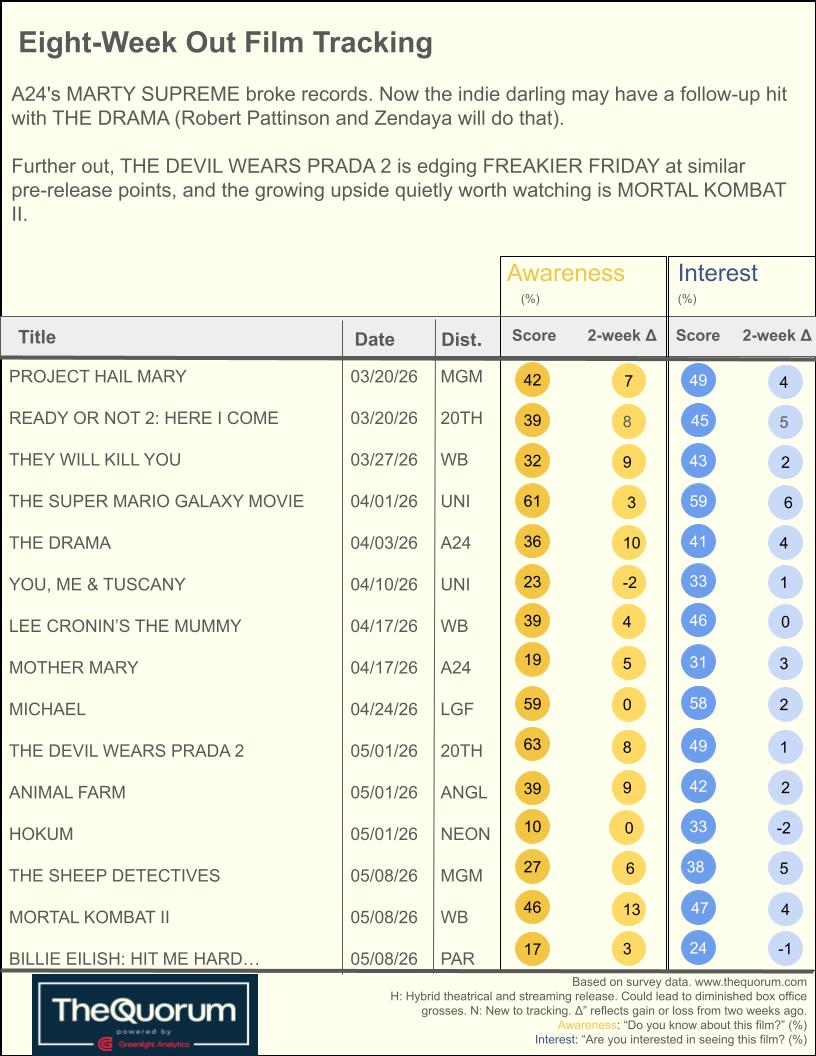
Even before last night’s Anna Wintour sponcon at the Oscars, Disney’s Devil Wears Prada
2 is signaling strong interest and awareness, according to the latest early tracking chart from The Quorum… |
Have a great week, Matt Maya Tribbitt contributed research for this issue. Got a question, comment, complaint, or a
towed car? Email me at Matt@puck.news or call/text me at 310-804-3198. |
|
|
|
Puck fashion correspondent Lauren Sherman and a rotating cast of industry insiders take you deep behind the scenes of this
multitrillion-dollar biz, from creative director switcheroos to M&A drama, D.T.C. downfalls, and magazine mishaps. Fashion People is an extension of Line Sheet, Lauren’s private email for Puck, where she tracks what’s happening beyond the press releases in fashion, beauty, and media. New episodes publish every Tuesday and Friday. |
|
|
|
Ace media reporter Dylan Byers brings readers into the C-suite as he chronicles the biggest stories in the industry: the future
of cable news in the streaming era, the transformation of legacy publishers, the tech giants remaking the market, and all the egos involved. |
|
|
|
Need help? Review our
FAQ page or contact us for assistance. For brand partnerships, email ads@puck.news.
You received this email because you signed up to receive emails from Puck, or as part of your Puck account associated with {{customer.email}}. To stop receiving this newsletter and/or manage all your email preferences, click here. |
Puck is published by Heat Media LLC. 107 Greenwich St., New York, NY 10006 |
|
|
|
|