Welcome back to What I’m Hearing, and happy Labor Day weekend to everyone, even the losers timing
standing ovations at Venice. (At least Cannes has a history of performative approval; Venice is just clapping!) Anyway, WIH is off on Monday so I can unplug a bit. Hope you will too.
🙏🙏 Thanks to everyone who came out to the El Rey theater in L.A. last night for our sold-out live taping of The Town. Our excellent guest was my good friend Adam Aron, chairman and C.E.O. of AMC Theatres and former WIH
Villain of the Year. Bloomberg’s Lucas Shaw, in an outstanding shirt, was also great. The episode will post on Monday, and I put some fun photos on my Instagram.
💫💫 I’m gonna try to incorporate a few new features into WIH this fall, one of
which is a recurring segment/column on publicists called Spin Doctors. If you’ve got a tip (agency hires and fires, power struggles, or interesting backstories on public positioning—or blowups) send it along to SpinDoctors@puck.news.
Tonight, insights from a surprising new study about Gen Alpha and moviegoing, with a cameo from KPop Demon Hunters. Plus, New Paramount goes shopping (again),
the Oscar Festival-o-Meter, and the Directors Guild responds to the ridiculous face-swaps in the A.I.-assisted Wizard of Oz.
Discussed in this issue: David Ellison, Ted Sarandos, David Zaslav, Dan Lin, Dana Goldberg, Jim Dolan, Austin Butler, Scott Stuber, Victor Fleming, Darren Aronofsky, Pam
Abdy, Josh Greenstein, and… Munchkin Zaslav.
Still not a Puck member? Just click here. Got a news tip or an idea for me? Just reply to this email or message me on Signal at 310-804-3198.
Okay, let’s begin… |
- Ellison’s
latest game I.P. play: Last week, I noted that new Paramount owner David Ellison wanted Street Fighter to be the first movie in theaters from the studio’s pending output deal with Legendary Pictures. Now, per two sources, Paramount is negotiating to acquire film rights to an even bigger game property: Call of Duty. No talent is attached yet (agents, prep your pitches!), and the first-person shooter I.P. seems pretty tough to adapt, but it’s said to be a
priority for Ellison and his studio chiefs, Dana Goldberg and Josh Greenstein, and an indicator of the kind of youth-skewing game franchises he wants to pursue. Back in 2015, Activision announced a CoD “cinematic universe,” but by 2020 those plans had fizzled. Now Ellison is hoping that Paramount, home of Sonic the Hedgehog movies, can become a bigger player in the difficult, yet potentially lucrative, game-to-movie business. Paramount is
keeping quiet about this one.
|
|
|
A MESSAGE FROM OUR SPONSOR |
STAR POWER
High achievement. Higher adrenaline. With a twin-turbocharged V8, the Range Rover Sport delivers
heart-pounding intensity on every drive.
EXPLORE |
|
|
- The
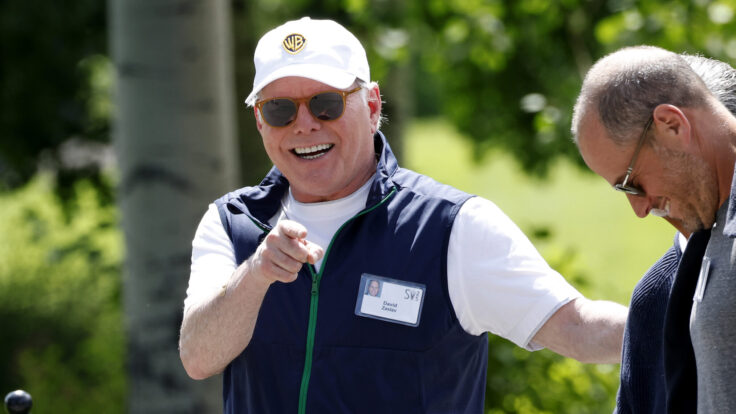
Wizard of Zaz: Seriously, what was Jim Dolan thinking? The cable TV heir/sports executive/rock guitarist/proprietor of the Las Vegas Sphere must have known that the A.I.-altered cut of The Wizard of Oz would draw fire from film preservationists and artists’-rights activists—which it now has. Then today, hours before the premiere of the Sphere version, he revealed that he and David Zaslav, C.E.O. of Oz owner Warner Bros. Discovery,
had been inserted into the film. “[They] replaced the faces of two very short, two-second characters in the movie with mine and David,” he told reporters. “I challenge you to find it.”
A Munchkin Zaslav?! Yikes. If you’re curious what, say, the Directors Guild of America might think about
using A.I. to alter Victor Fleming’s iconic film to create an inside joke between two media C.E.O.s, so was I. “The DGA has a long history of protecting the integrity of a filmmaker’s original work when it comes to issues like colorization, sanitization, and now A.I.,” a rep for the guild told me tonight. “There is no legitimate or creative use of A.I. that would call for digitally inserting two studio executives into one of the greatest films in cinematic history—especially two
who had no role in the original project.” Exactly.
A Warner Bros. rep insisted that Zaz didn’t know about the face-swapping bit until today, when Dolan mentioned it. Hmmm. Do we believe that? He and Dolan are buds. This never came up at a Knicks game? Regardless, Warners film co-head Pam Abdy is in Vegas for the premiere tonight—can’t wait to ask her what she thought of the boss’s performance. - Oscar spreads the love around
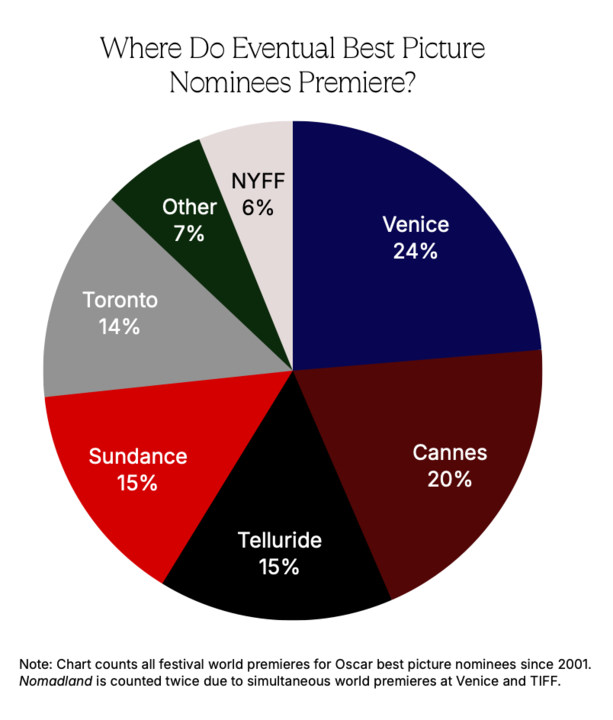
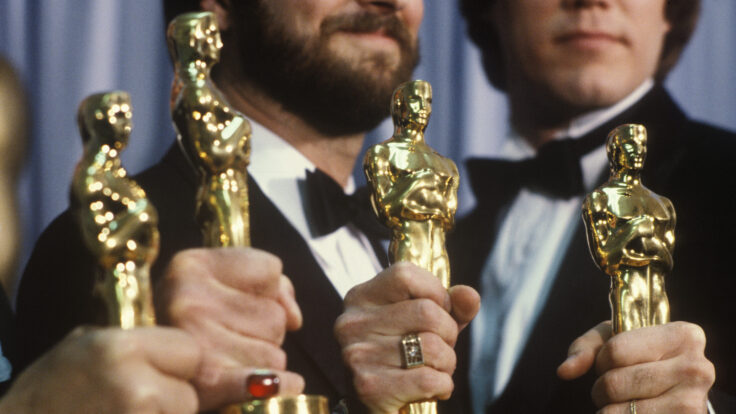
festivals: With Venice kicking off last night, the media narrative seems to be that the Italian festival is now the best place to launch awards hopefuls. (This despite last year’s eventual Oscar winner, Anora, debuting at Cannes.) I was curious about the numbers, and it turns out Venice is only slightly ahead of Cannes and the others in best picture nominations since 2001.
|
- Box
office over/under: We’re all pretending the War of the Roses remake doesn’t exist, so let’s focus on Sony’s Caught Stealing, which is tracking to about $9 million for the four-day weekend. I’ll take the over, thanks to Aronofsky cinephiles and fans of Austin Butler’s exercise regimen.
|
Now on to the main event… |
|
|
According to a new study from NRG, the under-15 crowd loves movie theaters, which represent
an exotic and alluring escape to a generation whose upbringing has taken place entirely in front of screens and devices, and whose socialization metric has never been anything other than digital. |
|
|
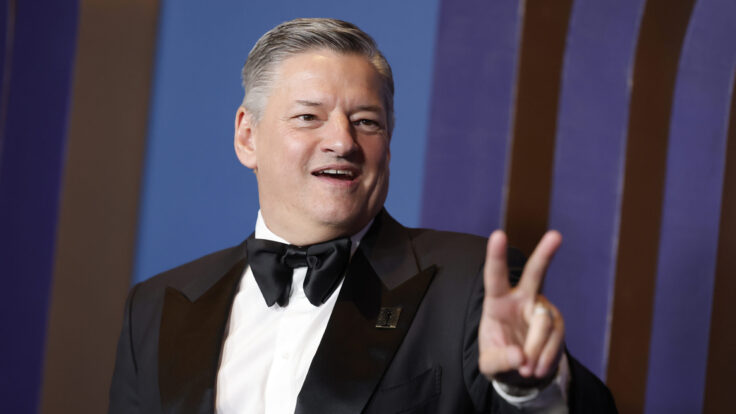
Netflix co-C.E.O. Ted Sarandos has been waiting years for validation in the movie business.
He has spent hundreds of millions of dollars chasing an elusive Oscar for best picture. (He’s in Venice this week to launch the latest campaigns.) He joined the board of the Academy Museum despite the fact that, last time I was there, it didn’t seem to honor a single movie that debuted on TV or home video. Unlike his streaming rivals, Sarandos has released viewership data so that we can all see that his movies are popular. And he has continued to authorize projects—first via film chief
Scott Stuber and now Dan Lin—that will have no meaningful impact on Netflix viewership, but may boost the artistic cachet of the service. This week, Netflix bought a documentary short about the childhood bedrooms of school-shooting victims—a worthy subject, of course, but also another obvious play for an Oscar nomination.
Yet outside of awards season, Netflix remains a villain of sorts in the film business for eschewing theaters, and an occasional
laughingstock for its constantly flowing aqueduct of instantly forgettable movie product. Even its all-time top 10 list is filled with the kind of B-level star vehicles (Bird Box, Back in Action) and Kirkland-brand blockbusters (Red Notice, The Gray Man) that can easily be explained away by real movie people as celebrity clickbait or quirks of the algorithm. In film, Netflix may generate engagement, but it has yet to generate respect.
That’s
one of the big reasons why the outsize success of KPop Demon Hunters was so remarkable. As the animated musical hit 236 million views this week and grossed nearly $20 million during a two-day multiplex stunt, it became a legitimate theatrical-style phenomenon, in addition to the most-watched movie ever on Netflix. And judging by my conversations with movie people over the past few weeks, it has also managed to break through the industry cynicism. It’s a franchise starter, a
watercooler talking point for families and young people—the rare movie that has impacted other areas of entertainment, namely the Spotify and Billboard music charts. Halloween is next.
Yesterday, at my kid’s Back to School night, his fourth-grade teacher promised a Demon Hunters karaoke party if the class behaved. When she called the movie “the new Frozen,” the parents laughed in agreement. Netflix is finally stealing from Disney’s own backyard, launching an
actual family-film juggernaut that, if handled correctly, will generate revenue and continue to influence the culture for years. And it did so with an animated musical that Disney would never have made, and in a summer when the company that invented the family-franchise business flopped so spectacularly with Elio.
So, why did Netflix put Demon Hunters in theaters? I asked this question on Monday, and ran through the obvious answers—namely, marketing for the sing-along
version and a flex to show the power of Netflix. But there’s something deeper about the appeal of movie theaters to young people who want to legitimize and celebrate their fandom, something that Netflix—despite having created this phenomenon on its service—knows matters. It raises the question of how much Netflix, in its quest to own the next generation of movie fans, will incorporate theaters and other real-life experiences into that plan. Now, I think they will. |
|
|
A MESSAGE FROM OUR SPONSOR |
STAR POWER
High achievement. Higher adrenaline. With a twin-turbocharged V8, the Range Rover Sport delivers
heart-pounding intensity on every drive.
EXPLORE |
|
|
To that point, National Research Group is about to release a report called Gen Alpha Saves the Box Office?—a
deep dive on what young people (basically those born after 2010 or 2011) think about movies and the moviegoing experience. And it’s got a surprising thesis: Gen Alpha loves movie theaters. |
“Moments That Allow Them to Log Off”
|
I know this is sort of antithetical to the industry narrative of the past decade. As home TVs have grown
larger, streamers have bypassed theaters with original films, and kids have become addicted to phones and iPads, moviegoing has become an “outdated” institution, as Sarandos has said, destined not to disappear entirely but to steadily lose relevance. Studios need to “meet the next generation where they are,” people say, and to survive, theaters should start adapting to the preferences of young people, allowing phones and talking and social media and such. One recent trial involved an A.I.
chatbot that viewers could interact with through their phones during a screening.
But what if that’s all a misread? My annual surveys of high-school kids consistently demonstrate that they prefer movie theaters. And this NRG report on Gen Alpha suggests that movie theaters represent an exotic and alluring escape to the generation whose
upbringing has taken place entirely in front of screens and devices, and whose vehicles for socialization have largely been digital. Much more so than for Gen Z or Millennials, the generations whose lives have been shaped by their phones but who also largely knew a time before them. “If anything, the amount of time that members of Gen Alpha spend staring at their phones and tablets appears to have made them deeply appreciative of those moments that allow them to log off, disconnect, and enjoy
the real-world company of friends and family,” the study reports.
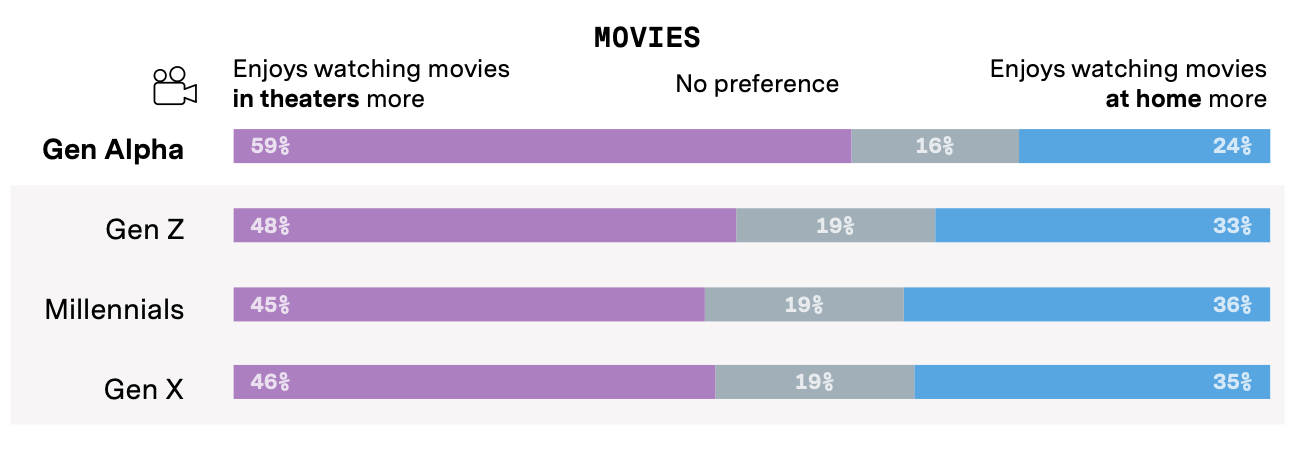
That includes going to movie theaters. About six in 10 Gen Alpha respondents said that they enjoyed watching movies in theaters more than at home—while just a quarter preferred the couch-bound experience. That makes them 14 percentage points more likely than Millennials to choose the theatrical experience over streaming. |
Millennials have a lot more stuff going on in their lives than kids under 15, of course. But the demo shift
does kinda make sense. Millennials and older Gen Zers spend hours and hours a day in front of screens, and the allure of a personalized experience is strong because they couldn’t always watch whatever video they wanted at whatever time. For Gen Alpha, by contrast, there’s little novelty or excitement in a movie night at home. “By extension,” the study notes, “that makes the experience of physically leaving the house and going to watch a movie in theaters feel all the more special.”
I
definitely see that in my 9-year-old. Still, Gen Alpha seems to be just like other demos in that they want moviegoing to feel like an event—“in-person experiences that feel heightened, special, and social. Experiences, in other words, that can’t be replicated at home or on their phones,” the study reads. But for Gen Alpha, unlike the older cohorts, going to a movie with friends can itself eventize a movie. More than half of Gen Alpha (55 percent) said that they preferred going
to theaters with a large group, compared to only 40 percent of Gen Zers and 31 percent of Millennials. Again, seeing friends is generally a lot cooler when you’re 12 than when you’re 32. But Gen Alpha is also so used to media and entertainment being a solitary endeavor that they’re prioritizing connection at the movies, rather than escapism or the scope and quality of the presentation. That may be a generational difference. |
So, if the shared experience is so important, how can Hollywood take advantage? The study predicted that the
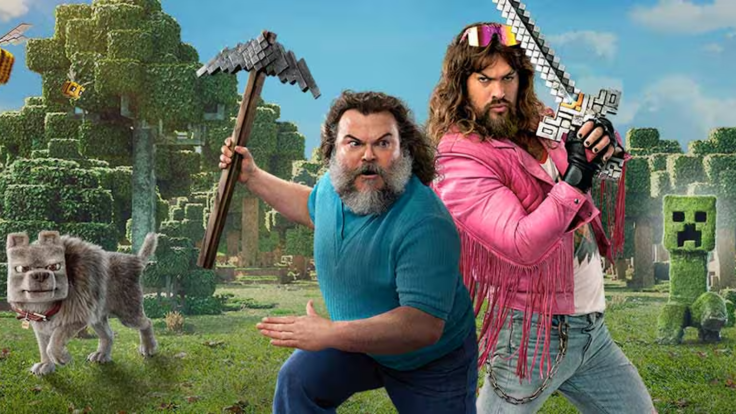
most successful Gen Alpha movies will be rooted in digitally native I.P.—video games, social gaming platforms like Minecraft and Roblox—that leverage community, and those whose marketing campaigns help kids to show off their fandom and identity. The study asked respondents to name the franchises “my friends are talking about.” Here’s the Gen Alpha ranking:
1. Roblox
2. Minecraft
3. Fortnite
4. Grand Theft
Auto
5. Pokemon
6. The Avengers
7. Mario Bros.
8. Spider-Man
9. Lego
10. Madden NFL
11. Sonic the Hedgehog
12. Wicked
13. Spider-Verse
14. EA UFC
15. Squid Game
16. Five Nights at Freddy’s
17. Wednesday
18. Among Us
19. Stranger Things
20. Batman
Lots of social gaming at the top of that list. Not a lot of traditional Hollywood movie franchises outside of the superheroes. And Wicked is likely there
because it inspired a vibrant fan community led by social media. Gen Alpha is thinking about movies as cultural moments to be shared. More than six in 10 want to see a new movie on opening weekend, and a plurality say they want to see it in a busy theater. By contrast, only 20 percent expressed an interest in a theatrical experience that involved using their phone. “In other words,” according to the study, “they’re actively seeking out the buzz, excitement, and energy of a communal
experience.”
Which brings us back to putting KPop Demon Hunters in theaters. The sing-along was communal, shareable, and filled with the energy of a fan base that had been mobilized online (via Netflix) yet still wanted to express that fandom in real life. And in doing so, the franchise was further solidified as a franchise—especially to the youngest fans. According to the NRG study, here’s the percent of respondents “very interested” in attending sing-along movie screenings in
the future:
Gen Alpha: 29 percent
Gen Z: 23 percent
Millennials: 21 percent
Gen X: 16 percent
So that’s what Netflix is doing with the Demon Hunters sing-along, that’s why it is moving so quickly to create Netflix House I.R.L. experiences, and why it will likely do more ancillary stunts in movie theaters in the future. Ted Sarandos may see movie theaters as a threat to Netflix, but he also sees their value to Netflix properties. And there’s a lesson
far beyond Netflix. Multiplexes of the future should probably be designed as social spaces, not just a collection of rooms in which to passively watch a film. Maybe add photo booths, hangout zones, or post-movie activities that give groups more opportunities to make their trip to the movies feel like an event.
Theaters and studios have focused a lot on how to make the theatrical experience more like the comforts of home. But what if the answer is to make it
distinctly not like home? Some 54 percent of kids expressed an interest in 3D or V.R. experiences in theaters. Almost as many said they’d be drawn in by screenings that feature special effects like wind or moving seats. “These preferences point to a hunger for sensory engagement— moviegoing as an immersive experience, not just an act of content consumption,” the study suggests.
Despite the stereotypes about them, the next generation of consumers isn’t demanding that their devices
be integrated into every one of their entertainment experiences. When they go to a movie theater, they may be looking for a break from that—something that feels real, collective, and present. Those that deliver this experience will be rewarded. |
See you next Thursday,
Matt
Maya Tribbitt contributed research for today’s
issue.
Got a question, comment, complaint, or other movies you’d like to see David Zaslav face-swapped into? Email me at Matt@puck.news or call/text me at 310-804-3198. |
|
|
Puck sports correspondent John Ourand and a rotating cast of industry insiders take you inside the executive suites and owners
boxes where the decisions that shape the entire sports business are made. You’ll hear interviews with players, network execs, and everyone in between. The Varsity is an extension of John’s private email for Puck by the same name. New episodes publish every Wednesday and Sunday. |
|
|
The ultimate fashion industry bible, offering incisive reportage on all aspects of the business and its biggest players.
Anchored by preeminent fashion journalist Lauren Sherman, Line Sheet also features veteran reporter Rachel Strugatz, who delivers unparalleled intel on what’s happening in the beauty industry, and Sarah Shapiro, a longtime retail strategist who writes about e-commerce, brick-and-mortar, D.T.C., and more. |
|
|
Need help? Review our FAQ page or contact us for assistance. For brand partnerships, email ads@puck.news. You received this email because you signed up to receive emails from Puck, or as part of your Puck account associated with {{customer.email}}. To stop receiving this newsletter and/or manage all your email preferences, click here. |
Puck is published by Heat Media LLC. 107 Greenwich St, New York, NY 10006 |
|
|
|