 |
 |
|
Welcome back to What I’m Hearing, home from Sundance with the usual runny nose and cough. Apologies for sending this on a Friday morning instead of Thursday evening. I got a new MacBook and the migration of all my data landed me with a loooong appointment at the Genius Bar.
🙏 Thanks to everyone who came to Monday’s live taping of The Town in Park City, and to our surprise guest, Sundance Institute C.E.O. Joana Vicente. We had a blast and it was great meeting everyone. We’ll definitely do more.
As always, if you were forwarded this email, click here to become a Puck member.
Let’s begin…
|
|
|
- As the Paramount Global Turns…: It’s diligence time as David Ellison’s Skydance team is set to begin examining the books of the Shari Redstone empire next week, per three sources. More than six weeks after I first reported Ellison’s interest in gaining control of Paramount Global via an acquisition of its parent, National Amusements, Inc., it’s still not clear how deep the Skydance bankers and lawyers will be allowed to dig into either. LightShed analyst Rich Greenfield claimed yesterday that buying NAI “appears to be” a prerequisite to fully examining Paramount’s books, which sounds like it would scare away a lot of potential buyers. I haven’t heard that, but regardless, we should have an answer in the next two weeks about the seriousness of these Ellison talks.
- Stewart’s lifetime of Zen: Speaking of Paramount, Jon Stewart’s surprise deal to return to The Daily Show is giving him something unique in late night: immortality. Well, at least financial immortality. Stewart is signed to host the Comedy Central show on Mondays through the November election, and to executive produce through at least 2025. In addition, I’m told his contract grants him a perpetual E.P. credit and fee for as long as TDS exists, even after Stewart leaves, and even if it airs somewhere other than Comedy Central and/or Paramount+. Not bad!
- More Stewart: In case you’re wondering, yes, his contract also contemplates and protects him in the event of a change of control at Paramount Global, the show’s troubled parent company. And while Stewart got extensive consultation rights on selecting a new host after November, the final decision ultimately lies with Paramount’s Chris McCarthy.
- Who dares ignore Joel Silver?: Famously mean producer Joel Silver already suffered the indignity of being fired off the Amazon film Play Dirty for alleged verbal abuse. Now eagle-eyed viewers of the trailer for Road House, Silver’s other Amazon movie, have noticed that he’s missing from the credits card—despite Silver’s lawyer insisting back in November that the producer was “not relieved of his duties” on the Jake Gyllenhaal remake. Thankfully, I’m told, the insult is temporary. Amazon says the omission was due to limited space on the trailer’s title card, and Silver will be included on the poster and all further credits.
- More Road House: Director Doug Liman has clearly been reading WIH and agrees with my sentiment that Amazon should give Road House a theatrical release. But there’s a certain irony to Liman going public with a threat to boycott its SXSW premiere in a screed on Deadline that claims he “signed up to make a theatrical motion picture” when the official announcement of the film back in 2022 makes no mention of theaters but does say it “will stream on Prime Video in more than 240 countries and territories worldwide at release.” And where did that announcement appear? On Deadline, of course.
- Oscar noms talking points: I’m kinda dreading the next six weeks, as the Oscars Industrial Complex pretends there’s an actual race for best picture. Maybe Chris Nolan will shock everyone by unleashing a fascist tirade at the DGA Awards (I doubt it!), or a rival campaign will dig up some other bombshell dirt on Oppenheimer (pun intended) that changes the consensus. But man, this race feels over.
A couple more brief points:
—Why am I so confident? Oppenheimer is the only contender not to whiff in any of its wishlist categories, going 13 for 13. Barbie showed weaknesses with several constituencies, and Killers of the Flower Moon couldn’t even get Academy faves Leonardo DiCaprio and Eric Roth nominated.
—Warner Bros. will now likely run its Argo campaign playbook, stoking outrage over the Greta Gerwig and Margot Robbie snubs in order to generate a grassroots protest vote for Picture. I don’t think it will work, though. When Ben Affleck was overlooked for director, Argo was up against the likes of Zero Dark Thirty and Silver Linings Playbook, not a billion-dollar phenomenon like Oppenheimer.
—If everything plays out as expected, all eyes will be on the Makeup & Hairstyling category. That is now Netflix’s best and probably only shot at a non-shorts win despite 18 nominations. And weirdly, Bradley Cooper’s nose in Maestro is up against Golda, another film with extensive nose work. Will the schnozzes cancel each other out and deliver the award to Oppenheimer?
—I’d like to thank the Academy for not nominating Saltburn.
|
| Now on to the story of the week…. |
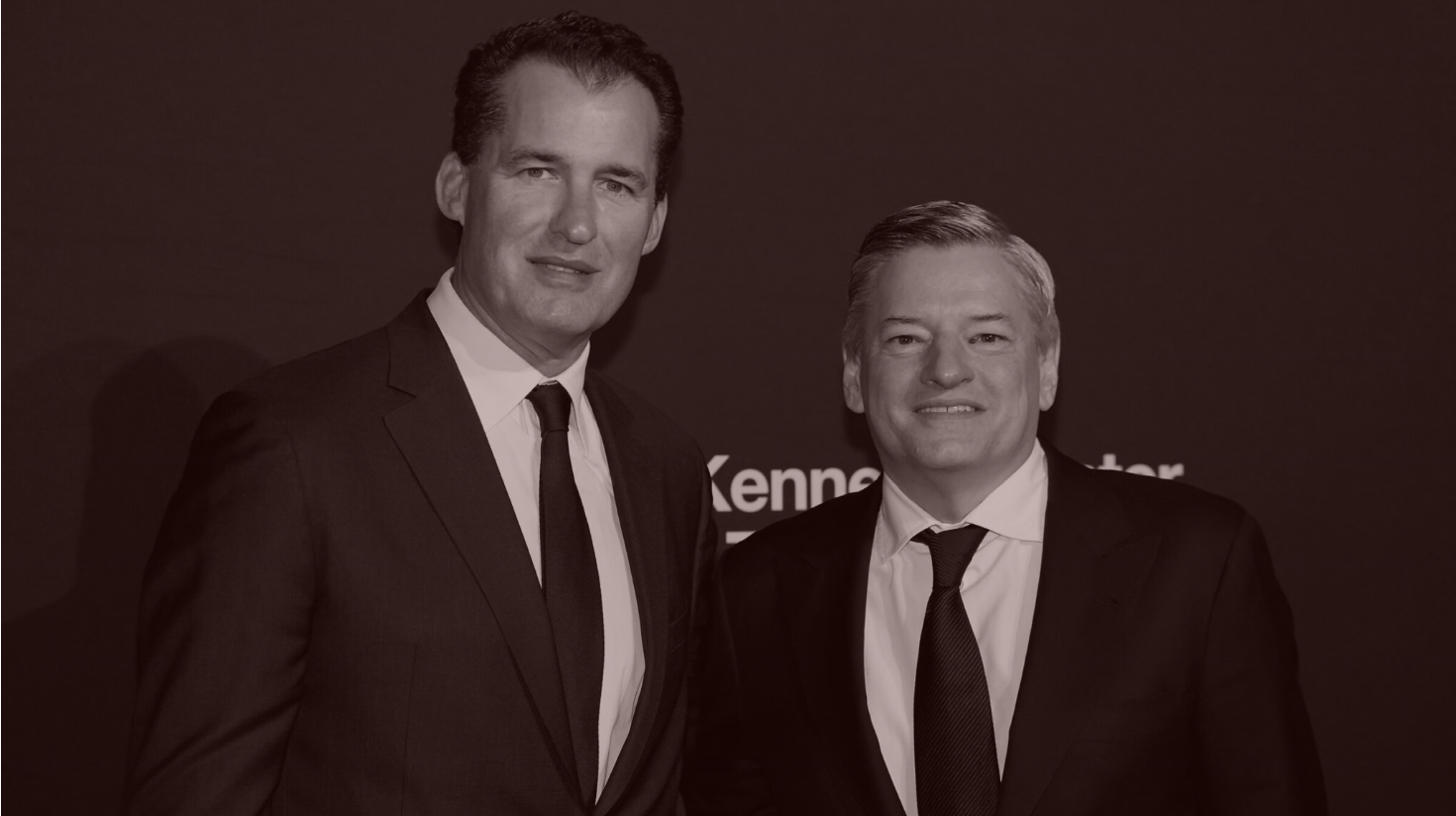 |
| Netflix Wrestles With Its Age of Empire |
| A $5 billion WWE deal and the exit of film chief Scott Stuber mark an inflection in the streaming wars as Ted Sarandos consolidates the market—adding live sports, producing fewer original movies, and absorbing content from the rivals Netflix is leaving behind. |
|
|
|
| The biggest sharks know where to find the most food. I remember back in February 2017—it was Oscar week, I think, because I was at one of those dumb parties that exist only so that East Coast brand sponsors and media people can feel glamorous—when the news broke that Ari Emanuel had finally hustled a buyer for The Irishman. Martin Scorsese, Ari’s client, was somewhat hilariously insisting on digitally de-aging several elderly actors in his gangster opus, a plan that Paramount and STX Entertainment, the project’s backers, correctly assumed would bloat the budget far beyond reason (and ultimately never look quite right). Studio heads don’t get fired for not making a movie. They do get fired for making a movie like The Irishman.
But Ari knew Netflix’s then-content chief Ted Sarandos was standing at a critical crossroads. Ted wanted a big, prestigious film to announce, and he actually kinda needed one. The Netflix streaming service was launched on reruns and old movies from legacy studios. Then in 2011, Emanuel helped sell Sarandos a pricey House of Cards original series, produced by his client Media Rights Capital. It worked, ushering in the Streaming TV Era that Netflix dominated.
But four years and about 80 million subscribers later, Netflix had entered a new phase. Its customers loved Hollywood movies, and now the legacy studios were finally beginning to withhold those titles—Disney’s Bob Iger would announce only a few months later that Marvel movies would leave Netflix for the nascent Disney+ service. Emanuel knew that Sarandos needed to convince top filmmakers to make high-end TV movies for Netflix. And if that meant indulging Martin Scorsese more than $225 million to create a silly-looking Robert De Niro with a thirtysomething face and an old man gait, so be it.
Supply met demand, The Irishman moved to Netflix, and Ari got a big check. Then, three weeks later, Sarandos announced that Scott Stuber, the producer and former Universal studio chief—an old-school schmoozer with top-level talent relationships—would lead the growing film unit. All at once, Netflix entered its Movie Era.
What followed was one of the wildest and, in retrospect, ridiculous seven-year spending sprees in the history of Hollywood. By 2022, Netflix was releasing 85 original movies a year, all while overpaying talent up front to buy out their backends. At that insane pace, many of the Stuber films felt about 80 percent finished—like the production executive in charge hadn’t yet given back her notes. Some, like the $200 million star vehicles Red Notice and The Gray Man, played like unintentional parodies of better movies released in theaters. Others, like Alejandro G. Iñárritu’s Bardo and Noah Baumbach’s White Noise, were expensive and middling vanity projects from awards-bait filmmakers given carte blanche despite no other buyers being interested—the movie-studio equivalent of a smash-and-grab robbery.
But some deals did exactly what Sarandos wanted, like overpaying to pick off the buzziest titles at Sundance, or dropping more than $450 million to steal two Knives Out sequels from Lionsgate. (It will never not be funny that C.E.O. Jon Feltheimer announced the sequels on an earnings call and referred to the property as “a new Lionsgate franchise,” only to see CAA promptly sell them to a higher bidder.) These moves, along with the volume play and luring “theatrical” talent with buyouts, effectively starved Sarandos’s studio and exhibition rivals of top-tier product while convincing casual movie fans to abandon movie theaters in droves. A win-win for Netflix.
At the same time, many of those Stuber films—from directors like Alfonso Cuarón, Adam McKay, Jane Campion, David Fincher, and now Bradley Cooper—put Netflix on the map as a place where A-level filmmakers felt okay making TV movies. And thanks to the Netflix largesse and the biggest and most aggressive awards marketing operation ever assembled, Stuber’s unit became an Oscar magnet. Amazingly, Netflix still hasn’t won best picture—Sarandos’s nightmares certainly begin and end with Tim Cook and Eddy Cue hoisting Apple’s Oscar for CODA—but on Tuesday, the company scored another 18 nominations, second only to Disney among entertainment conglomerates.
You see where I’m going here: On Monday, Stuber announced he will leave Netflix in March. The next day, Ari Emanuel—yes, that same Ari, like an obscenity-spewing Forrest Gump of entertainment, popping up during every meaningful news event—unveiled Netflix’s first massive foray into live sports. In 2025, WWE Monday Night Raw will move to Netflix for up to 10 years (there’s an opt-out after 5 years), for a cool $5 billion. Three transformational moments for Sarandos, three big meals for Ari, and now a third Netflix Era that will likely impact all of Hollywood. |
|
A MESSAGE FROM OUR SPONSOR
|
 |
|
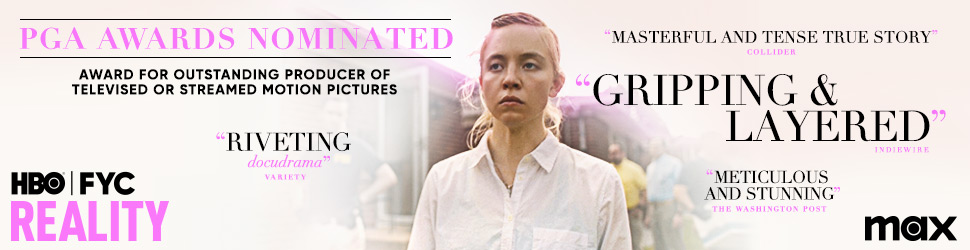
“ FOR YOUR CONSIDERATION – REALITY”.
Starring Sydney Sweeny and written and directed by Tina Satter. PGA Nominated for outstanding Producer of Televised or Streamed Motion Pictures. Reality is now streaming on Max.
|
|
|
|
|
| In the end, it was a cordial conversation, according to two well-placed sources. Whether Stuber is jumping voluntarily or fleeing his own execution, he, Sarandos, and content chief Bela Bajaria all agreed it was time. Stuber never believed in making 85 films a year. He’d been around long enough—and run another film studio that put out less than a third of that volume—to know that the quality necessarily suffers with that sort of conveyor belt.
Internally, it was no secret that Stuber wanted Netflix to employ a version of the Apple and Amazon film strategies: Fewer releases, maybe 20 a year, some with higher budgets or franchise potential that would be given marketing and meaningful theatrical windows, which would then generate higher engagement on the service. Sarandos and Bajaria—Stuber’s boss since last January—wanted none of that, even though Netflix loses many coveted projects over the theater issue. Chris Nolan wouldn’t even consider Netflix when he auctioned the right to make Oppenheimer. At Sundance this week, I talked to two separate filmmakers who feared having to take a Netflix deal if no theatrical distributor stepped up.
That’s what Stuber faced. So he could try and fail to change things internally, he could leave the company, or he could continue as is and end up sitting across from Sarandos in a crowded restaurant, just like Cindy Holland, the former TV head, did right before Sarandos fired her. He’s been poking around for independent financing for a new venture since at least last spring, according to one source familiar with his efforts.
On Netflix’s earnings call, on Tuesday, Sarandos insisted that the movie strategy will not change despite Stuber’s exit. “Our original films outperform those licensed films, and they do uniquely distinguish us from the competition,” he said. That may be true, but it’s pretty hard to reconcile those comments with the reality of what Netflix is doing. It’s already releasing far fewer films, probably under 40 this year, and not just because of the strikes.
Stuber told the Times last year and Variety in November that he made too many movies. Now, in deal after deal, Bajaria is leaning into licensed movies from those same studios that once pulled their content but are now so desperate for cash that they’re helping Netflix grow. And Sarandos can’t stop proselytizing about the joys of selling off content. He praised it again on Tuesday, and last month he said licensing is “the more natural state of the business.” Hmmm. It’s so natural that Netflix refuses to do it!
What Ted actually means is he’d prefer Bela to continue cherry-picking Suits, Sex and the City, Dune: Part One, and everyone else’s content to boost their own subscribers without having to spend to make so many originals that may or may not get traction. When perusing the Netflix Top 10 films list, it often becomes apparent that all of them are from outside studios. After a while, it’s easy to ask, Why does Netflix make original movies at all? |
|
|
| By all accounts, Bajaria really wanted this WWE deal. Obviously, she didn’t know that founder Vince McMahon would be accused of egregious sexual assault and trafficking in a lawsuit two days after getting into business with WWE, so we’ll see how that plays out. (McMahon has denied the claims.) But Bela knows Netflix has exited its Movie Era and is now entering its Engagement Era… or maybe it’s Live Era… or the Sell You Stuff Era.
Whatever we call it, the Holy Grail, as Puck’s Julia Alexander has noted, is not just subscriber growth but time spent on the platform. The goal is to seed and monetize the lucrative advertising tier. So rather than falling asleep again trying to finish Leave the World Behind (guilty as charged), Bajaria would prefer that I watch hours and hours of pro wrestling… or a full series… or a reality competition.
To that end, a Morgan Stanley report called the WWE deal a “seminal moment” for sports. And not just because Raw is basically doubling its license fee of about $250 million per year on NBCUniversal’s USA Network (though some international rights make this an inexact comparison). Netflix is officially in the live sports business, as everyone suspected they would be, even though Sarandos insists he’s not. No, he maintains, pro wrestling is “sports entertainment” or “the drama of sports,” whatever that means. “I wouldn’t look at this as any sort of change to our sports strategy,” he said. Okay… maybe choreographed bodyslams aren’t technically competition, but as a media product, WWE is definitely sports.
It’s actually better than regular sports leagues, which are seasonal. WWE airs live 52 weeks a year, so that’s 150 hours of programming for $500 million a year, about 3.5 percent of Netflix’s total $17 billion annual content spend, or about the cost of two Zack Snyder movies. Sarandos always said he didn’t want live sports because they’re very expensive and Netflix couldn’t own the content. Yet here he is paying a lot to rent all those lubed-up wrestlers from Ari Emanuel. He’s in the sports business. No shame, Ted.
Emanuel also really wanted this Netflix deal, especially after investors weren’t thrilled with his recent move of WWE Smackdown from Fox to USA. “It strengthens the brand on a global basis with that relationship,” he told CNBC of Netflix. During the negotiation, I’m told, the Endeavor team presented Bajaria with data showing Netflix and WWE have an 80 percent audience overlap in the U.S. Plus, wrestling fans tend to follow the content wherever it airs, meaning the other 20 percent will likely pay for Netflix, and many of them will probably flock to the cheaper advertising tier.
That’s important, of course, because Netflix only has 23 million subscribers on the ad tier worldwide, though that’s up from 15 million in the fall. On Tuesday, Netflix announced that it added 13.1 million more customers in the fourth quarter, a huge burst thanks to the password-sharing crackdown, bringing the overall total to 260 million. The service is growing (subs up 13 percent from this time last year), profitable (net profit for the quarter rose to $938 million), and pulling away from rivals, which now seem content to license everything but their studio water towers to help Netflix fill its moat. |
|
|
|
|
| Bigger picture, I think we can trace this all back to the Great Netflix Correction—that early 2022 realization on Wall Street that the leading streamer might not be a rocket-ship growth machine. Before the stock collapse, the Sarandos and Reed Hastings mantra was to spend more and more on content to generate more and more subscribers. According to that strategy, making dozens of big films a year made sense.
But when growth slowed, that expensive strategy—the 85 films, overpaying for iffy projects, etcetera—needed to be reconsidered. Netflix leveled off the content spend and began pulling operational levers it had previously ignored, like building an ad tier, cracking down on password sharing, and maneuvering to increase time spent on the platform. Bajaria got that same $17 billion or so to spend, but it had to go further and deliver stronger engagement, which reduces churn and increases ad value.
In other words, probably more TV series and fewer, cheaper films. More international, more sports and sports-adjacent programming, and more licensing, with an assist from Warner Bros. Discovery C.E.O. David Zaslav and all the other desperate media leaders. Since Sarandos moved film under Bajaria, some high-profile bigger-budget film projects have been scrapped, like planned movies from Nancy Meyers and Adam McKay. Original movies won’t go away on Netflix, of course—the data shows people do sign up for the latest Julia Roberts or Kevin Hart films—they’ll just be fewer, more middling, more TV-ish, and will exist to complement the real business, which is now increasing engagement across series, international, and live programming.
Which brings us back to Scott Stuber. Nobody ever leaves these jobs by choice, the saying always goes. Having covered countless glossed-up firings, forced retirements, and “transitions to producer,” that’s often true. In a business defined by a daily parade of no, Stuber was making about $18 million a year to say yes. And with that volume of output, he was arguably the most powerful person in the film business.
But I’m not sure that old saying is still true, at least not for everyone. Creative executive jobs have morphed into a series of interdepartmental offsites and constant cost-cutting and McKinsey strategy reviews. Fifteen years ago, top executives who lost their perch likely would have taken another job. Now, Peter Rice (Disney), Jeff Zucker (CNN), and David Nevins (Showtime) raise their own money, and do their own thing.
A close Stuber friend thinks he probably would have left Netflix early last year if not for the strikes—it wasn’t a great time to start a new thing. And speaking of, no, his start-up money isn’t totally lined up yet. But he’s telling people it’s happening, and the goal is to develop, produce and possibly finance both film and television. More akin to the model at Peter Chernin and Nevins’ North Road or David Ellison’s Skydance than the usual kiss-off producer deal. We’ll see if that happens.
As Netflix enters its Engagement Era, it will be interesting to see who Bajaria gets to run the film unit, and whether the slate will be further diminished, or just focus on lower and mid-budget TV movies. Already, the usual carousel of over-50 executive names—Emma Watts, Stacey Snider, Toby Emmerich, etcetera—are being floated. Maybe, though, now’s the time to take a chance on someone new. Original movies will almost certainly play a less important role in the overall Netflix strategy for the next few years. That might be the exact environment for someone to come in and make some particularly great stuff. |
|
|
See you Sunday,
Matt
Got a question, comment, complaint, or a Colman Domingo project you’d like to announce? Email me at Matt@puck.news or call/text me at 310-804-3198. |
|
|
|
| FOUR STORIES WE’RE TALKING ABOUT |
|
|
|
|
|
 |
|
|
|
Need help? Review our FAQs
page or contact
us for assistance. For brand partnerships, email ads@puck.news.
|
|
You received this email because you signed up to receive emails from Puck, or as part of your Puck account associated with . To stop receiving this newsletter and/or manage all your email preferences, click here.
|
|
Puck is published by Heat Media LLC. 227 W 17th St New York, NY 10011.
|
|
|
|