 |
|
Welcome back to What I’m Hearing, coming at you this week from a secret summer hideaway with nearly zero cell reception, so apologies if I haven’t returned your call or text. Thanks to Puck’s streaming data guru Julia Alexander for taking the reins tonight, I’ll be back on Sunday refreshed and with a cool new Barbenheimer neck tattoo.
As always, if you’ve been forwarded this email, become a Puck member here.
Let’s begin…
|
|
|
- Netflix’s real A.I. motive : Striking actors and writers have turned A.I. into a compelling Hollywood villain, but the truth is that it’s neither the bane of humanity nor the great savior—at least not yet. Yes, Netflix listed $900,000 A.I. positions, but the company isn’t interested in hiring million-dollar A.I. experts to replace stars and creators. It wants more efficiencies (like how it currently uses algorithms for thumbnail cover generation to increase viewership) and to expand its gaming capabilities. To that end, Netflix is competing with companies like Google, Meta, and Microsoft in this space. And while that viral post lists $900,000 as the high end of the “overall market range” for similar roles in Los Gatos, Netflix and its rivals will likely pay more to compete for top A.I. talent. —Julia Alexander
- Publicists are special, say publicists: Labor strikes shut down businesses, that’s sort of the point. Yet some Hollywood talent P.R. firms are complaining openly about their businesses being impacted during the actor and writer strikes. No matter that the entire entertainment sector—agencies, management firms, hairstylists, take your pick of service providers—are out of work and firing employees. This week the publicists leveraged their relationships with the trades to publicly vent about their meeting with SAG-AFTRA’s Duncan Crabtree-Ireland as “disturbing,” “shitty” and “pretty horrific.” Really? A big chunk of the value of actors to studios is their promotional value, so cutting that off makes perfect sense for the guild and its members, who are—remember?—the clients of these publicists. Work stoppages suck for everyone, and SAG-AFTRA interim agreements aren’t perfect (more on that Sunday), but maybe these publicists should direct their anger at someone other than their own clients’ union.
- Box office over/under: It’s time for Haunted Mansion, aka The Movie That Killed Wedding Crashers 2. (Remember when UTA pulled Owen Wilson at the last minute to replace its other client Seth Rogen in Mansion?) The tracking is $30 million, so I’ll take the under. Barbenheimer is bulldozing everything, and moviegoers seem to be sniffing out and punishing paycheck movies this summer. Man, I’m old enough to remember when Disney trampled all over other studios’ summer movies, not the other way around.
|
 |
| The Netflix Pricing Wars |
| After a decade of phenomenal growth based on a single offering, a content bazooka, and an indifference to password sharing, Netflix’s next theater of growth all comes down to nailing multiple price points—including a possible free tier—and deploying its vaunted algorithms across the spectrum. |
|
|
|
| Hollywood analysts, myself included, spent much of the past week poring over Netflix earnings—noting, for example, that the average revenue per member (ARM) slipped three percent year-over-year, which helped explain why the stock dropped eight percent (alongside weaker revenue guidance). But that’s not the real story about Netflix. As the company implemented its password crackdown this quarter, C.F.O. Spencer Neumann said it made the deliberate decision not to raise prices again across its various tiers. At least not yet.
A decade after truly taking Hollywood by storm with enormous content spends and audacious deals with creators, Netflix’s next era of growth will depend less on splashy overalls or Bela Bajaria’s gourmet cheeseburgers than on something more prosaic: pricing. In the U.S., for example, Netflix is introducing cheaper ad tiers, cracking down on account sharing, and likely preparing more price hikes to continue profiting off its members even if growth stalls.
Netflix needs to mitigate churn in saturated regions and scale its cheaper ad tier to charge the CPMs necessary to make up that revenue. This growth will be key outside of the U.S., where average revenue per member is lower and cost-conscious consumers make actual household penetration even harder. It’s more important to get them onto Netflix than making large amounts of revenue off them.
It’s difficult to ascertain how many lower-tier customers Netflix will need to make the math work, but it’s certainly more than the five million monthly users the company announced during its upfronts in May. Keep in mind that while the ad tiers were counted as part of Netflix’s reported ARM this quarter, it wasn’t material enough to offset annual losses in that category. That tells you something already, even if it’s still early days.
Indeed, the company now offers a premium ad-free experience, a lower-priced plan with advertising and, of course, the option for multiple users on a single account to individualize their offering—the streaming version of a mobile phone family plan. This strategy isn’t novel. Netflix aims to capture more revenue from higher-income households (who don’t mind paying more to avoid advertising) while also monetizing cost-conscious consumers (ads in exchange for a lower price) and making freeloaders (college kids, your cousin Tom) pay up. It’s a version of the same strategy that nearly all the big streamers are experimenting with these days. But Netflix, with its nearly 240 million subscribers, will be the one company to truly set the market. |
|
|
| Netflix constantly changes its collective mind, but its latest pricing strategy is an attempt to separate Netflix subscribers into two primary camps: ad-free (premium) and ad-supported (basic). Customers can choose a Standard or Premium ad-free plan ($15.49 or $19.99), or a Standard ad-supported plan ($6.99). About 18 percent of new subscribers to Netflix chose the ad-supported tier in the U.S. this year, according to research firm Antenna, which looks at purchasing data from millions of customers. As of October 2022, the majority of customers selected the basic, ad-free tier ($9.99) that will no longer exist as it’s replaced by the premium tier and the ad-supported version, also according to Antenna. In other words, Netflix is forcibly pushing customers to higher revenue plans by removing plans that, while popular, aren’t in the best interest for Netflix’s revenue growth. Smart. Pricing power is predicated on strong demand, and Netflix is showcasing that power.
These days, Netflix is betting that a substantial portion of those sharing a plan—and getting kicked off—will either be added to a friend or family plan (for an additional $7.99/month) or adopt the advertising option, which executives hope will generate 10 percent of total revenue in the coming years. But it’s a slow transition. And to make the math work, Netflix needs to raise the cost of its pricier ad-free plan while making it simple for price-sensitive users to downgrade to the ad-supported tier.
The exact pricing and marketing between the two will be key to maximizing revenue. Right now, Netflix’s ad tier actually generates higher ARM than its standard ad-free plan, according to Neumann, which is part of the reason the company just killed off its cheapest ad-free plan. The company needs a clearer price differential that allows Netflix to milk as much money as possible from consumers who want an interruption-free experience, while slowly gathering data regarding how many commercials the lower-tier consumer will be willing to endure. Netflix won’t see the effect right away: existing customers get to keep the basic tier until they change plans or cancel. But the impact should be felt over the coming quarters.
Of course, this strategy has risks, especially in the U.S., where customers have more options. In particular, the result may come down to how these customers typically engage with Netflix and what kind of programming they enjoy. Netflix knows this as well as anyone. The company maintained the largest on-platform demand share (16 percent), but dropped from Q1 2023 after the platform lost certain titles, like Puss in Boots (the original) and amid increased competition from combined platforms, like the new Max, according to data from Parrot Analytics, where I work as director of strategy.
On-platform demand share often translates to where consumers are spending the vast majority of their time. If Netflix is able to maintain the balance between titles that acquire customers across each tier and retain them, it can scale its ad-supported platform while maintaining strong perceived value for core premium and ad-free standard members, which is the largest group of customers, even with price hikes. I was pleasantly surprised that the company mentioned the paid sharing plan in its earnings report; that seemed like an encouraging sign that it’s gaining traction in the marketplace.
The company also has an insidious advantage: Netflix continues to dominate its streaming rivals in the war for eyeballs, claiming 8.8 percent of all viewing time in the month of June, according to Nielsen, up from months before. Meanwhile, for the first time in decades, broadcast and cable viewing is about to drop below 50 percent of all U.S. household viewing, according to Nielsen. |
|
|
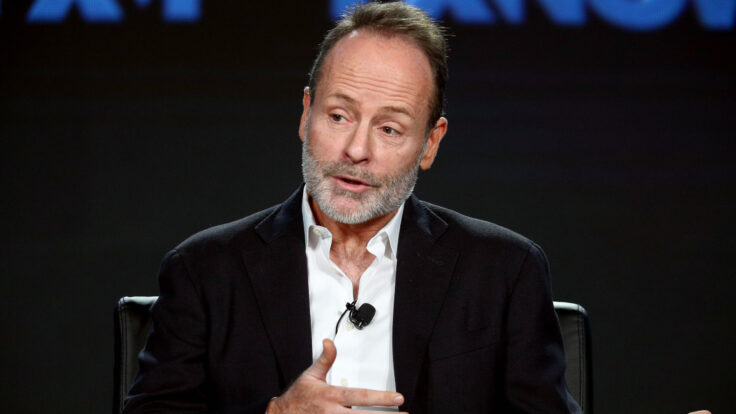
| One potential area of vulnerability for Netflix is the growth of free ad-supported television (FAST) competitors like Tubi and Pluto TV, as well as pressure from YouTube, the largest video streaming platform with more than two billion monthly active users. After all, the vast majority of TV viewing these days, as FX’s John Landgraf has noted, is lean-back or passive viewing, which is catnip for advertisers and more affordable for consumers. If the average number of streaming products per household decreases due to costs, customers are likely to balance a combination of premium, cheap, and free programming.
If Netflix wants to continue to increase revenue and scale overall engagement in increasingly saturated territories, like the U.S., the company will eventually need to deploy its own top-of-funnel FAST play: an ad-heavy version of the service that is accessible without a paid account and carries a fraction of the catalog. It’s an idea that Netflix executives are already contemplating, at least according to their own comments. In January, co-C.E.O. Ted Sarandos said he was “open to all different models that are out there right now,” and was “keeping an eye on [the FAST] segment.”
Furthermore, this is where Netflix’s vaunted algorithmic combination of licensed and original programming could truly find its groove. Demand for Suits, the old Meghan Markle show, was relatively dormant when it was on Peacock. After Netflix picked it up, demand jumped to 25x the average of all shows in the U.S., putting it in the top 0.2 percent of all series. The first season of Suits has sat on Netflix’s Top 10 list for the past four weeks. It was also the No. 1 overall streaming series on Nielsen the week of June 19, beating out a new Marvel series (Secret Invasion) on Disney+ and FX/Hulu’s acclaimed second season of The Bear.
Netflix has the ability to create zeitgeist moments for new shows (Squid Game, Bridgerton) and licensed series (Suits, Manifest), alike. Now it just needs to fully develop the multi-tiered strategy to exploit these different forms of content where they are most valuable. Suits, like Grey’s Anatomy and S.W.A.T and Young Sheldon, is a show that people return to time and time again. It may not bring them into a platform, but it will prevent them from canceling. It will also engage viewers across longer periods of time, which is key to advertisers.
Everyone wants to know if Netflix’s advertising tier and paid sharing will work. On the one hand, television and advertising go hand-in-hand. Netflix’s decision to create two separate streams will theoretically help scale the service in emerging markets, improve average revenue per member, and reduce churn. On the other hand, however, Netflix has spent years training audiences to not deal with ads.
But, in the end, the number of subscribers choosing the ad tier in the U.S. is still relatively low and, yes, it’s still young, but advertising isn’t a new concept. If Netflix can’t get customers to choose the ad tier—and, therefore, can’t deliver upon promises to advertisers, and must increase prices in order to create stronger, consistent profit—then the conversation about Netflix might be a harsher one year from now. And, let’s be honest, it will be harsher for everyone else, too. If Netflix can’t figure this out, who can? |
|
|
See you Sunday,
Matt
Got a question, comment, complaint, or a suggestion for who should direct the inevitable Bratz movie? Email me at Matt@puck.news or call/text me at 310-804-3198. |
|
|
|
| FOUR STORIES WE’RE TALKING ABOUT |
|
|
|
|
|
 |
|
|
|
Need help? Review our FAQs
page or contact
us for assistance. For brand partnerships, email ads@puck.news.
|
|
You received this email because you signed up to receive emails from Puck, or as part of your Puck account associated with . To stop receiving this newsletter and/or manage all your email preferences, click here.
|
|
Puck is published by Heat Media LLC. 227 W 17th St New York, NY 10011.
|
|
|
|