 |
 |
| Welcome back to What I’m Hearing, and happy Mother’s Day weekend to all the moms, especially mine...
🚨 I’m doing a Reddit AMA tomorrow at noon Pacific on the r/boxoffice page. I’ve never done one before, so come say hello, ask a nice question, and please don’t flame the chat with Planet of the Apes A.I. porn GIFs. Thanks!
As always, if you were forwarded this email or are new to the WIH community, click here to become a Puck member. |
|
|
- A little Apple follow-up: After I wrote on Monday about Apple TV+ and the heightened scrutiny of its movie strategy, a couple people reached out with an interesting wrinkle. It’s hard for Eddy Cue, Apple’s services S.V.P., to criticize the poor performance of the films under content chiefs Zack Van Amburg and Jamie Erlicht because Cue himself has been super-involved. On Argylle, for instance, Cue developed a relationship with filmmaker Matthew Vaughn and brought that project to Apple as a pure commercial play. And when it flopped, I’m told he took responsibility internally. (Apple declined to comment.)
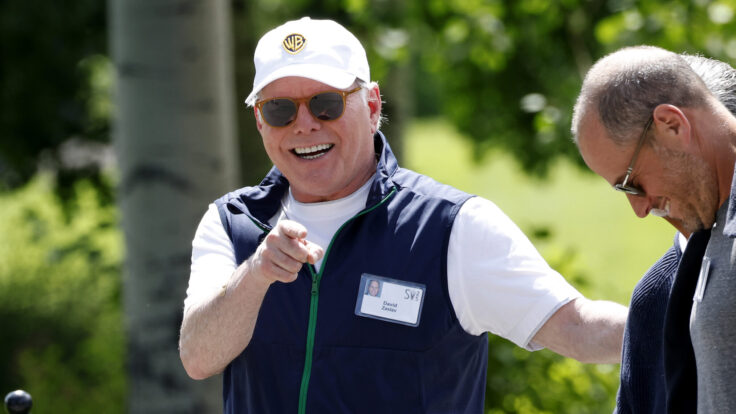
- Zaslav’s bundle bungle: Warner Bros. Discovery’s $50 million man David Zaslav missed his earnings projections today, and the one positive bit of news brought its own red flags. CNBC reported that Disney will act as the “distributor” of the new Disney+/Hulu/Max bundle, paying WBD a portion of the fees it collects. So, Disney takes the lead, Disney owns the customer relationship, and thus only Disney is truly direct-to-consumer with this product. I get it, WBD needs bundling to work, so it’s probably worth concessions to get into bed with Disney. But this is not exactly a power move for a company that says it wants to be one of the survivors of the transition from linear to D-to-C.
- Speaking of Zaslav...: My colleague Dylan Byers already noted the utter lunacy of Zaz declaring at the Milken summit that “all C.E.O.s need to be paid in alignment with shareholders” when his contract was specifically changed to pay him even if shareholders suffered. It’s actually very Trumpy:“The majority of compensation should be aligned with the performance of the stock. If the stock does well, then the C.E.O. really should do much better. And if the stock doesn’t do well, the C.E.O.s should not. And so, I think alignment is critically important.”
Warner Discovery stock closed today up 3 percent today for reasons that aren’t totally clear (another Lord of the Rings? The Gollum movie we were all demanding? Really?), but is down almost two-thirds in two years. And since 2021, when the WarnerMedia-Discovery merger was first announced, Zaz has been awarded nearly $350 million in compensation. Let that sink in.
For no reason, a couple unsolicited name suggestions for the D+/Hulu/Max product:
- The Not Netflix Bundle
- MoanaMax
- Throuple+
- DisneyZaz
- Disney+Nudity
|
- So, it’s like three episodes of Yellowstone…: Yes, it’s true. Warner Bros. confirmed to me that Horizon: An American Saga, Kevin Costner’s $110 million vanity—sorry, passion—project, clocks in at a robust 181 minutes. Sure, why not? Coincidentally, that’s the same 3 hr 1 min running time as Dances With Wolves, though that was way back in 1990, and that movie wasn’t followed by a sequel six weeks later.
- More Costner: Horizon isn’t hitting U.S. theaters until late June, after its big Cannes premiere on May 19 (sneak a snack in your tux). But I’m told filming is set to begin on Horizon Part 3 before the first movie comes out. Has a third film in a big-budget series ever started shooting before audiences have determined whether there’s even demand for a second one? The Lord of the Rings trilogy, based on a beloved book. Anything else?
- Bad optics, even for Cannes: Of all the yacht party invites floating around in the run-up to the Cannes film fest, the reception co-hosted by Thomasville Pictures and producers Ryan Smith and Allen Cheney might be the tackiest. Smith and Cheney were producers on Rust, whose star, Alec Baldwin, is about to stand trial for involuntary manslaughter over the tragic death of the film’s cinematographer. But at Cannes, it’s business (and partying) as usual for them, apparently. Yikes.
- Box office over/under: The Fall Guy kicked me around last week, so I’m less confident in taking the over on $50 million for Disney’s Kingdom of the Planet of the Apes. But I’m doing it anyway based on those presales and the past three Apes all opening well above that threshold.
|
| Now let’s go behind the scenes of a brewing battle… |
 |
| The Coming Comp War at Netflix |
| The leading streamer is about to once again try to upend the way Hollywood talent is paid. Will the industry let it this time around? |
|
|
|
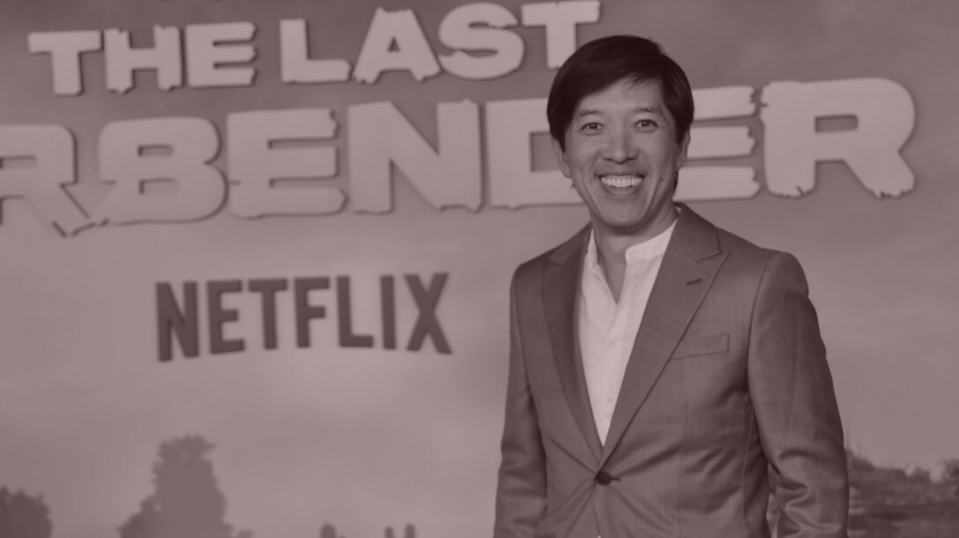
| If you ask me, the most interesting hire at Netflix in recent months hasn’t been Dan Lin, the much-heralded producer who now runs the film unit. It was an obscure yet well-regarded executive named Jun Oh, whose move from Skydance Media wasn’t even announced publicly. Oh ran business affairs and international for David Ellison’s company, and when he starts later this month, his title at Netflix will be head of business affairs, film. Pretty standard, but what makes Oh interesting is the mandate given to him, as well as to his B.A. counterparts in the television division: Change the way talent is paid by Netflix.This shouldn’t be a big surprise. Netflix, like fellow streaming natives Apple TV+ and Amazon Prime Video, has been telegraphing for a while that big shifts are coming to its compensation system. Netflix currently “overpays” talent up front and buys out backend revenue. So stars get their quotes plus a hefty buyout to match what they might have made elsewhere in success. Producers are typically on a “cost-plus” model, meaning Netflix pays the cost of the movie or show plus a negotiated premium. I’ve written about this system a bunch, including its pros (cash money now) and cons (lots of singles and doubles… almost no home runs), and the fact that switching from contingent, incentive-based comp to a strictly fee-for-service economy shifts risk and can fundamentally change how creative people approach their work—potentially leading to less effort, and a worse product.
The buyout model, and its fat cousin the “megadeal,” has also led to some astronomically high up-front paydays for top stars and creators. It’s still amazing that John Krasinski made $2.5 million an episode for Season 3 of Jack Ryan. That’s one reason why talent (and their agents) like this model; the money is guaranteed and comes in now, eliminating what I’ll call the “execution risk.” Buyouts also boost the agents’ upfront personal cuts, rather than forcing them to wait for a potential stream of revenue later—by which point that agent may have even left the agency. |
|
|
| It’s also why a movie like the Russo brothers’ upcoming The Electric State, which would have been budgeted at less than $200 million at a traditional studio, can end up costing closer to $300 million at Netflix. Dwayne Johnson, Ryan Reynolds, and Gal Gadot, God bless them, collectively contributed more than $100 million in above-the-line costs on 2021’s Red Notice before a frame of footage was shot. A typical studio movie, with bonuses tied to theatrical box office, would need to achieve blockbuster status to generate those kinds of paydays.Understandably, Lin and his new boss, Netflix chief creative officer Bela Bajaria, would like to change those economics. At least that’s the message Lin has been communicating on his recent roadshow to the agencies and management companies. He’s got many priorities, of course. He wants I.P.-driven projects, expressing incredulity that Netflix has not invested more in content based on known brands and franchises. And while he wants four big event movies a year that can be marketed heavily, like the upcoming Narnia movie from Greta Gerwig, Lin also wants to focus on fewer, mostly lower- and mid-budget movies, rather than those massive talent grabs (Don’t Look Up) and franchise plays (Extraction) of the Scott Stuber era, back when Netflix was establishing itself in film.
Over and over, the cost management issue keeps coming up with Lin, according to reps and producers I’ve talked to. One of Lin’s first big meetings in the job was with Kathryn Bigelow, who wanted to direct a hot script by former NBC News president Noah Oppenheim (he also wrote Jackie) about how the White House reacts in real time to ballistic missiles headed for America. Sounds very cool, but Bigelow is said to have been annoyed when Lin joined the Zoom and immediately told her the project was too expensive and too long; he wanted to know how she might bring down both the budget and length. That’s definitely not the Stuber-era Netflix of largesse and deference to an Oscar-winning filmmaker, though I’m told Bigelow has since worked out the budget issues and she’s signed to make the movie as one of Lin’s first greenlights. (Netflix declined to comment, but I’m told the project will be announced at its upfront next week.) |
|
|
| A shift to performance-based compensation is key to that push for austerity, especially if, as my partner John Ourand reported tonight, Netflix is seriously pursuing a pricey pair of NFL Christmas games. But a mandate is easier issued than executed. A big reason why Netflix was able to pierce the Hollywood studio oligopoly and offer its members original content that was just as pedigreed as that found in theaters or on cable, was because its deals were perceived as so damned generous. Back in those early days, Ted Sarandos was so affable in meetings and so respectful of the incredible talents of the filmmakers and showrunners that he dreamed of working with… and, by the way, he was willing to pay incredible sums up front, very few questions asked.No matter that we all kinda knew, implicitly or even from explicit conversations, that the buyout model didn’t make sense long term. Sarandos & Co., all safe inside their Trojan horse, didn’t need it to make sense for longer than it took to grease enough talent with the billions of dollars in low-interest debt to generate hundreds of millions of subscribers. In the process, Hollywood helpfully played along, abandoning its own sturdy business model to operate on the economic terms that Netflix pioneered. In retrospect, it was all so obvious.
But Netflix is no longer the interloper paying extra for access to the V.I.P. section. The streaming wars are over, Netflix won, and, just like Amazon’s dominance in retail, the 270 million Netflix subscribers now provide leverage with which to squeeze everyone in the supply chain. Or so Netflix hopes—hence wanting to walk all those generous deals back, or reserve them for the true V.I.P.s. It has experimented in the past, but the push started for real with revealing consumption data in December, a warning shot to the talent behind underperforming content: Party’s over. And now, after stops and starts, it’s Oh’s job to come up with a performance-based deal structure that the town will tolerate. |
|
|
| Should talent compensation be dictated by viewership? The new guild rules provide bonuses for contributors to the top-performing content, but a Bloomberg analysis found that less than 5 percent of Netflix shows and movies would qualify. How about starts? Completion rates? Maybe the so-called “efficiency” metric of cost vs. performance? Customer acquisition? Apple TV+, in its talks with the agencies, has emphasized the importance of that latter metric, according to one source in the meetings. It’s all kinda up in the air, made more difficult by the fact that Netflix abhors transparency that doesn’t benefit Netflix—though Lin, in his meetings with reps, has admitted that the company will need to be more transparent to better align pay with performance. The subscription business is just so different from a traditional studio business that can assign a P&L on each movie or show. So the big agencies and law firms want a voice in how these new form deals are constructed before they are imposed on talent unilaterally.How should Netflix assess the value of a specific project? For instance, if Netflix is a closed ecosystem without theaters or other windowing, and if the company is now making a lot fewer films, doesn’t the value of each film necessarily go up? And if so, shouldn’t the talent involved in making each film be compensated for that increase in value?
Netflix doesn’t offer theatrical releases, so Bajaria and Lin need to be careful not to bulldoze with onerous deals that alienate the talent that can easily set up shop somewhere that does offer theaters. We all take for granted that A-level film directors are willing to work for Netflix. But it’s a television network, and if it starts offering TV movie money, it will only work with TV movie talent.
Maybe that’s fine for Netflix. Lin notably reorged the film unit from budget-based to genre-oriented silos—more of a TV way of thinking about development, with sci-fi/fantasy (Ori Marmur overseeing), drama-thriller (Kira Goldberg), comedy (Jason Young), and YA/faith/holiday (Niija Kuykendall). Predictably, those execs aren’t too pleased with their more limited purviews, and the silos have already led to conflicts over projects that straddle genres. I’m told Lin also just hired producers Jon Silk and Jiao Chen to join as directors (Netflix’s term for development executives), and Lin has been talking to bigger-name execs about coming over in a No. 2, head of production-type role, with the current team presumably reporting to this person, not Lin. Further turnover seems likely.
But the opportunities at Netflix are unmatched in streaming, with those 270 million subscribers and the ability to create hits like no other distributor except perhaps a global theatrical release with $100 million in marketing. So Netflix will always have leverage. And Lin and others there have been saying that they want this shift to performance-based compensation to be revenue-neutral, meaning that overall, they aren’t paying talent less, they’re just paying differently—and rewarding those whose projects perform.
Fine. But come on, you don’t make this change to keep your costs the same, you do it to save money, or at least to stop wasting it. Netflix wants to reduce up-front payments, knowing that talent will likely not make them up on the backend, and be fully assured that those who do get paid will actually move the needle.
We know this is true because it’s the way the rest of Hollywood operated for decades… until Netflix came along and decided everyone should be paid like their projects were already hits. Now, having thoroughly disrupted Hollywood from the outside, Netflix has somewhat hilariously discovered the old model wasn’t so bad after all. The question that’s about to be answered over the next few months is, Will Hollywood let them go back? |
|
|
| See you Monday,
MattGot a question, comment, complaint, or a petition to reinstate the Kim Kardashian boos in the Tom Brady roast? Email me at Matt@puck.news or call/text me at 310-804-3198. |
|
|
|
| FOUR STORIES WE’RE TALKING ABOUT |
 |
| Zaz NBA Odds |
| Annotating David Zaslav’s Milken stem-winder. |
| DYLAN BYERS |
|
 |
| Estée Hypotheses |
| Reading the Estée Lauder Co. post-earnings tea leaves. |
| RACHEL STRUGATZ |
|
 |
|
 |
|
|
|
|
|
 |
|
|
| Need help? Review our FAQs
page or contact
us for assistance. For brand partnerships, email ads@puck.news. |
| You received this email because you signed up to receive emails from Puck, or as part of your Puck account associated with . To stop receiving this newsletter and/or manage all your email preferences, click here. |
| Puck is published by Heat Media LLC. 227 W 17th St New York, NY 10011. |
|
|
|