Welcome back to What I’m Hearing, still fully operational without my involvement. I’m basically
British now, or at least a citizen of London restaurants, so all future emails will arrive from Sir Matthew, Duke of Dishoom.
Today, our data guru Julia Alexander is here with an analysis of Netflix’s latest engagement numbers. Should Ted and Greg be concerned? All yours, Julia, I’ll be back on Monday…
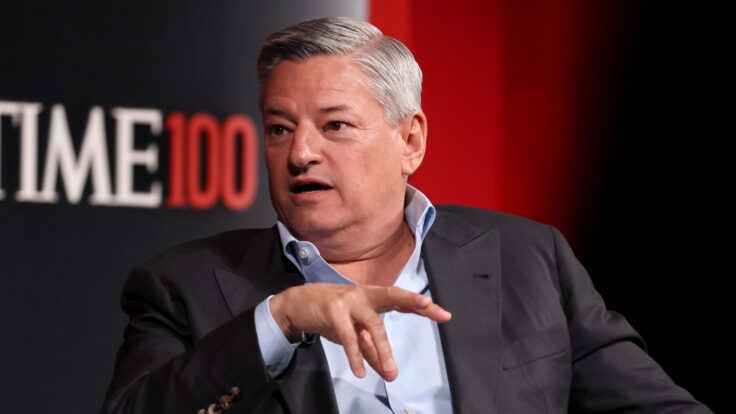
Discussed in this issue: Amy Reinhard, Ted Sarandos and Greg Peters,
Elizabeth Stone, Chris Ripley, Mark Lazarus, Brian Roberts, Chacko Sonny, Joseph Staten, Rebecca Kutler, and more…
Not a Puck member yet? Just click here. Got a news tip or an idea for me? Just reply to this email, text me or message me on Signal at
310-804-3198
|
- An
MS NOW vibe check: As D-day approaches in Versant’s spinoff from Comcast, the new company is in the midst of a big, $20 million marketing campaign to reintroduce MSNBC as MS NOW. It’s easy to be cynical, but as Dylan Byers reported yesterday, the mood among the MS crew is mostly chipper, at least for now. “Most of the sources I spoke to there this week said they were optimistic about the network’s new independence and even invigorated by the quality of the new studios and the esprit de corps among their colleagues,” Dylan wrote. “For months, MSNBC president Rebecca Kutler and her boss, Versant C.E.O. Mark Lazarus, have sold the cable spin as
the dawn of the network’s golden age—noting that MSNBC can now invest its $500 million-plus annual profits back into itself, funding new digital products and live experiences—and the staff mostly seems to have chugged that Kool Aid.”Longer term, of course, the liberal news network still faces real problems. “Brian Roberts offloaded his declining cable assets for a reason, and MS NOW’s path toward a robust post-linear future is a long putt,” Dylan continued. “In essence,
Kutler & Co. would need to sustain linear profits amid industry decline and use that capital to transform their still-archaic digital product into a pillar of progressive media—a tall order for a cable news company that draws around a million mostly septuagenarian viewers every night while younger audiences get their Mamdani discourse fix from other sources on other platforms.” Sure, nearly 3 million people tuned into MSNBC for election night coverage, beating out Fox News in a
rare ratings upset, but there’s a difference between being home to national intrigue during a uniquely special election and keeping that audience coming back night after night. Not even Mamdani is going to fix the biggest problem facing cable TV news: cable.
- Disney-YouTube unintended consequences: As the standoff between YouTube TV and Disney grinds on, and YouTube TV subscribers experience one blacked-out game after another, my partner John
Ourand called attention to yet another wrinkle. “Just hours after I wrote about how local broadcast groups, like Sinclair or Nexstar, were frustrated by the Disney blackout on YouTube TV, Sinclair C.E.O. Chris Ripley took his grievance public and called on regulators to step in,” John wrote. “The gripe centers on the difference between traditional distributors like Comcast or DirecTV, and virtual ones, like YouTube TV or Hulu+Live TV. In a dispute with Comcast, for
example, Disney can only pull its owned-and-operated stations. While in a similar dispute with YouTube TV, it can pull all ABC stations, even affiliates owned by other broadcast groups.”On Sinclair’s earnings call yesterday, Ripley… let it rip. “Disney/ABC and other networks should not be able to dictate to us whether we can or cannot distribute content to YouTube TV or even Hulu and Fubo, which, coincidentally, are now also owned by Disney,” he said. “Particularly concerning is
that consumers are now being forced to buy more streaming services from one of the parties in the dispute to get the content that they literally already paid for.”
This is likely to get uglier before reaching an inflection point and resolution. But I think that Disney’s actual leverage here isn’t simply yanking all their stations and sucking it up amid the outcry. Instead, what if they started pulling content not only from YouTube TV but YouTube, itself. Obviously, the leverage
in this dynamic accrues to Google over time, but Disney has some levers right now—especially given how much sports fans rely on the YouTube platform for their interstitial sports fixes between games.
|
|
|
A MESSAGE FROM OUR SPONSOR
|
“Lynne Ramsay’s extraordinarily vivid filmmaking unlocks a whole new level of
fearless, full-body commitment from Jennifer Lawrence”
– Sight and Sound
“Burns with punk ferocity. It's impossible not to be hypnotized”
– Los Angeles Times
“Robert Pattinson and Jennifer Lawrence are outstanding”
– The Wrap
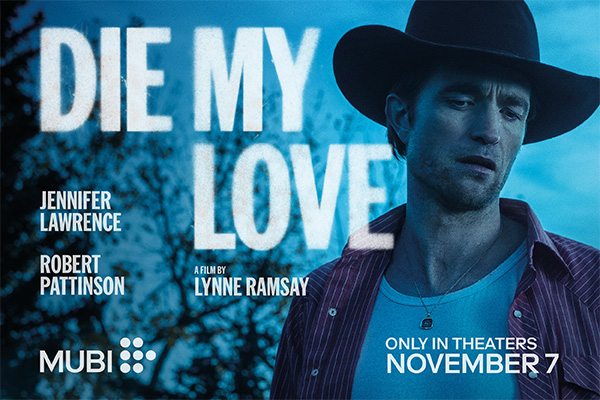
From renowned filmmaker Lynne Ramsay, DIE MY LOVE is a visceral and uncompromising portrait of a woman engulfed by love and madness. Jennifer Lawrence is nominated for Outstanding Lead
Performance at the 2025 Gotham Awards for the film that premiered at the 2025 Cannes Film Festival.
Only in theaters November 7. Get Tickets at diemylovefilm.com
|
|
|
- Netflix’s
new math: Amy Reinhard, Netflix’s head of advertising, announced today that Netflix now has 190 million global monthly active viewers on its ad tier. That’s impressive—with a few asterisks. The shift to measuring “viewers”—as opposed to “users,” the more industry-standard term—is intended to capture all engaged people in the room watching a given piece of content. The new system defines a monthly active viewer as a subscriber who has watched at least 60 seconds of ads per
month, multiplied by the “estimated average number of people within a household.”If you think it sounds like the Netflix team is essentially guessing how many people may be in the room, you’re not alone. Michael Mulvihill, president of insights and analytics at Fox Sports, and a ratings hawk on social media, tweeted that if Fox Sports used the same
approach to measure the World Series, “It would inflate reach by 70 percent.” I look forward to seeing everyone else’s revised and totally proprietary audience metrics in the months ahead.
|
And speaking of Netflix mystery metrics…
|
|
|
As the O.G. streamer approaches the upper limits of subscriber saturation, and daily screen
time rates threaten to plateau, Netflix is expanding beyond live sports into video podcasts and video games in a bid to own every waking hour of your day.
|
|
|
Trying to find a weakness in Netflix’s business model is like aiming for the thermal exhaust port on the
Death Star. The company was closing in on 100 million U.S. and Canadian subscribers at the end of 2024, when Ted Sarandos and Greg Peters decided to stop reporting that number to focus on revenue and engagement. (Netflix is now hawking a new metric that reveals how many people are watching ads.) We don’t officially know whether Netflix is still adding net users in the U.S., but we do know that the service has the most-loyal customer base of any
streamer: Only about 2 percent cancel in any given month, far better than the industry average. On its earnings call last month, executives announced a quarterly profit of $2.55 billion.
But competition for time spent, the all-important metric that every executive across Hollywood and Silicon Valley obsesses over each week, is stronger than ever. And on that score, Netflix appears to be reaching the upper bound of just how many eyeball-hours it’s humanly
possible to capture.
In the first half of 2024, subscribers watched 94 billion hours of Netflix content, up from 90 billion over the previous six months, but total hours stalled out in the second half of last year. And while viewing reaccelerated in the first half of 2025, every incremental hour gets a little harder to hold. In the U.S., Netflix’s most mature market, viewing as a percentage of total TV time has grown by less than half a percentage point year over year, according
to Nielsen. Meanwhile, YouTube has grown its share by two percentage points.
It’s an issue that’s clearly on the minds of company executives. Peters spent a significant portion of the company’s latest earnings call bragging that audience engagement in the U.S. was up 15 percent since 2022. Elizabeth Stone, the company’s chief technology officer, recently opened up about the streamer’s new engagement experiments, including more testing of shortform video, revamped kids’
profile menus, and the impacts of audience interactivity features like live voting.
Obviously, engagement is at least partially dependent on the popularity of new content. Just last quarter, Netflix was under pressure after reporting mere 1 percent growth in engagement year over year. Then it dropped KPop Demon Hunters, now the most watched movie ever on the streamer. According to Parrot Analytics, the animated blockbuster slash cultural phenomenon drove a significant
percentage of Netflix’s engagement into Q3—months after it was released. (If you left your house at all on Halloween, this may not shock you.)
|
|
|
A MESSAGE FROM OUR SPONSOR
|
“The most extraordinary filmmaker. One of the greatest alive.”
– DIE MY LOVE producer Martin Scorsese on Lynne Ramsay
“Radical”
– Vanity Fair
“A must-see thriller
spectacle”
– Collider
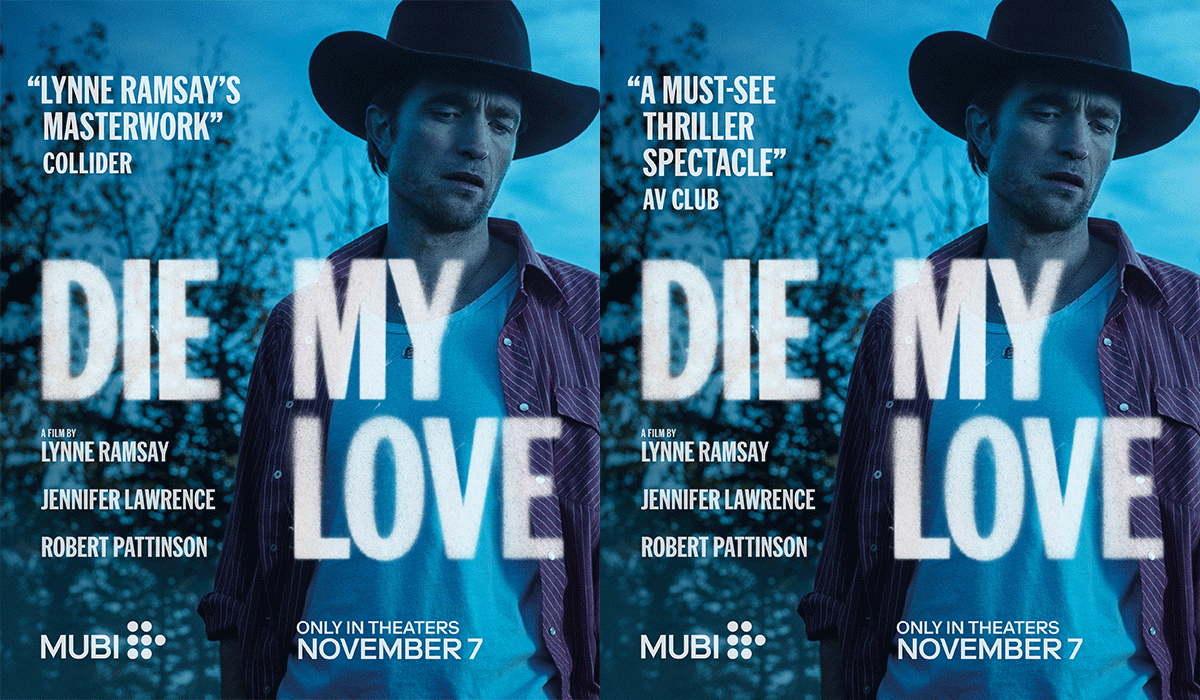
Lynne Ramsay’s masterwork DIE MY LOVE opens this Friday, November 7. Lawrence and Pattinson play a passionate couple who, after moving to an isolated house in the country, find their relationship unraveling following the birth of their first child. Get Tickets at diemylovefilm.com
|
|
|
Of course, breakout global hits aren’t a sustainable long-term strategy. Perhaps anticipating investor
concerns, Sarandos made a point on last month’s earnings call to note that no single title typically accounts for more than 1 percent of total hours watched. That’s one benefit of Netflix’s superscale. The downside, however, is that it becomes harder and harder to move the growth needle. Obviously, it’s not enough to just have more content—it needs to be better, and more engaging, too.
|
The Billion-View Opportunity
|
Netflix is no longer just competing with cable, or even other streamers: It’s also competing against TikTok,
video games, live sports, podcasts, and, as Reed Hastings famously once said, sleep. So Netflix is looking to win more hours in the day not just by adding content, but by expanding its offerings. It already has some live sports (the Christmas NFL games) and other appointment viewing (the recent Canelo-Crawford fight) aimed at stealing engagement from cable TV and rival streamers. But Netflix is also beginning to encroach into less familiar
territory.
At Bloomberg’s Screentime conference last month, Peters announced that the company was getting into “social gaming” in a big way, with party games like Boggle and Pictionary, where users can use their phones as controllers while the action unfolds on their TV screen. More recently, Netflix announced a partnership with Spotify to bring video podcasts into its app—a shot directly across YouTube’s bow.
Netflix’s past ventures in the gaming space have been relatively
lackluster. Games are—right now, today—available to anyone with a Netflix account for no additional charge, and yet less than 1 percent of Netflix subscribers reportedly play them. Now, the company has decided to shift its gaming ambitions. Over the past year, Netflix has shut down two of its in-house studios: Boss Fight Entertainment, which was behind the Squid Game mobile game; and its AAA gaming studio, internally named “Team Blue,” which was led by major gaming figures including
Overwatch executive producer Chacko Sonny and Halo creative lead Joseph Staten. Instead, it’s focusing its gaming efforts where Netflix already holds considerable consumer attention: the TV.
The bigger opportunity, in my view, is the Netflix-Spotify partnership. (The streamer is reportedly in talks with SiriusXM, too.) Video podcasting drives more than 1 billion views on YouTube each month, representing hundreds of millions of hours of
engagement. It’s a format (people on-screen, talking) that audiences have been tuning into since the dawn of television. And it’s a far cheaper experiment than buying up more sports rights or producing their own steady stream of topical fare. Plus, the involvement of The Ringer—which has multiple shows covering sports and the entertainment industry—offers Netflix some unique synergy opportunities.
Of course, Netflix will need to prove that its audience wants to engage
with this type of content. (Netflix has its own podcasts, but they’re not predominantly featured on the platform… and I don’t think anyone at Netflix would argue they matter all that much.) And it took YouTube years to build its dominance in podcasting. Netflix may have a solid investment thesis here, but it remains to be seen whether viewers watching A House of Dynamite will also want to tune in to see two people talking about the movie on The Big Picture. (N.B.: The
Ringer produces The Town, Matt’s podcast.)
Still, it’s not hard to envision the flywheel that’s spinning in Ted and Greg’s heads: I.P. on Netflix, podcasts that deepen the fandom, then recommendations for similar content, or a game of Boggle with the family. A few years ago, we may have called a version of Netflix that offers podcasts, games, and sports “Netflix+” or “Netflix Premium” at a higher price point. The fact that Sarandos and Peters are hellbent on ensuring it’s all
just “Netflix” says it all.
|
Thanks, Julia. See you Monday,
Matt
Got a question, comment, complaint, or pointers for my high
tea with Queen Camilla? Email me at Matt@puck.news or call/text me at 310-804-3198.
|
|
|
Need help? Review our
FAQ page or contact us for assistance. For brand partnerships, email ads@puck.news.
You received this email because you signed up to receive emails from Puck, or as part of your Puck account associated with {{customer.email}}. To stop receiving this newsletter and/or manage all your email preferences, click here.
|
Puck is published by Heat Media LLC. 107 Greenwich St., New York, NY 10006
|
|
|
|