 |
|
Hello and welcome back to What I’m Hearing. Was this email forwarded to you by your smarter friend or colleague? She’s not actually that smart, she’s just got a Puck membership, which you can have too by clicking here.
Let’s begin, so we can all get back to watching today’s Jan. 6 hearing highlights…
|
| SPONSORED BY AMAZON PRIME VIDEO |
 |
|
|
|
|
| Parsing the Netflix shrinkage: Netflix laid off about 300 people today, or what it said was 3 percent of its workforce. But by putting a percentage on it, Netflix revealed that it has actually lost way more people this year, through a combination of layoffs and people leaving on their own. Doing some iPhone calculator math, 300 is 3 percent of 10,000. And in its annual report, Netflix revealed that its employee headcount was about 11,300 on Dec. 31. So if Netflix has around 9,700 employees now and it had around 11,300 on Dec. 1, that’s a reduction of about 1,600, or 14 percent, in 2022. And that’s not even including the freelancers that have been cut. Ouch.
Studios vs. SCOTUS: Either tomorrow or Monday is impact day for the Supreme Court’s abortion bombshell, and the Hollywood studios seem ready for the repeal of Roe vs. Wade. Reps for Netflix, Comcast, Warner Bros. Discovery, Sony, and Paramount Global, all told me they are joining Amazon in offering to reimburse travel expenses for employees in states that ban abortion who wish to end a pregnancy. Netflix, for instance, says its U.S. health plan now covers travel for “cancer treatment, transplants, gender-affirming care, or abortion,” with a $10,000 benefit per employee or dependent per service. All eyes will be on Disney, of course, given its volume of Florida employees and its new status as playtoy of right-wing politicians. The company wouldn’t comment when I asked about its policy, but I’m told by a good source that its employees—including the thousands in Florida—almost certainly will be reimbursed for abortion travel. Wonder what Ron DeSantis will think of that.
As for the rest of Hollywood, it’ll be interesting to see how many stars and companies will join the Writers Guild in calling for studios to yank filming from states that ban abortion, if that indeed becomes an option. Red states like Georgia, Texas, and, yes, Florida, all host significant studio productions. This could get ugly very quickly.
Elvis has left the box office: The fact that we’re debating whether Warner Bros.’ big summer movie will or won’t open to $30 million domestic this weekend is not great for the studio. True, Covid pushed DC’s Black Adam to fall, but the beauty of having recently exited the Toby Emmerich regime is that if Elvis fails, it will officially be nobody’s fault.
Agencies ghosting M.P.T.F.: Here’s a pretty shocking stat: None of the major talent agencies contributed to the Motion Picture & Television Fund’s big 100th anniversary event last week, I’m told. Zero. Agencies have never been the biggest backers of the M.P.T.F, which operates the retirement community filled with former clients of these same agencies. But they do typically participate in fundraisers like the annual Night Before and Evening Before, and most of the major studios (minus Sony and Amazon) lined up to support the 100th anniversary. Speakers at the event, which did raise about $2 million even without the agencies, included Jodie Foster (CAA), Adam Scott (UTA), filmmaker Billy Ray (CAA), and… you get the point. (Reps for the M.P.T.F. and the Big 3 agencies declined to comment.)
There’s Always Rush Hour 4: As the Academy rolls out the results of the board of governors election, let’s pour one out for Brett Ratner, who ran in the directors branch and didn’t quite make the cut. |
|
|
| Over the past couple months, a group of prominent TV writers has been meeting with a very specific goal: Not getting screwed in the next Writers Guild negotiations. It’s a loose, informal collection, I’m told, including a couple W.G.A. board members. In a recent email that was forwarded to me, the group was described as “concerned writers who want to make sure our union goes into this next negotiation with a clear understanding of the problems, and hopefully arm them with some winnable solutions.” They’ve been strategizing with key agents and lawyers, reviewing contracts, and generally collecting data in advance of what most insiders believe will be Hollywood’s most contentious labor negotiations since the crippling strike of 2007-08.
I’m guessing that you, like me, are generally bored by the triennial back-and-forths between the various guilds and studios that, at least since 2008, inevitably lead to an 11th-hour deal with modest gains for the talent. But there is every reason to believe this upcoming battle—the writers’ contract expires May 1, 2023, followed by the Directors Guild and SAG-AFTRA on June 30, although the DGA likes to negotiate first, probably this fall—will be especially brutal. The writers last re-negotiated in 2020, when the prospect of a strike at the height of a pandemic shutdown seemed absurd. So Hollywood’s most cantankerous union hasn’t really gone to war since 2017, and think about where the entertainment industry was back then: Netflix had less than 100 million subscribers, Disney+ was but a twinkle in Bob Iger’s eye, Time Warner and 21st Century Fox both thrived as standalone companies, and HBO was considered a TV channel.
That seems quaint these days. Peak TV may have given the screenwriting community 560 scripted series, but consolidation and the Netflix-style streaming model has eaten the entire business, shifting seasons from 22 or 13 episodes to 10 or 8 or even 6 episodes, all but eliminating backends, and curbing opportunities for even fully-employed writers to make a good living and advance. The list of union grievances is long and detailed. That’s partly because of the power that these vertically-integrated companies wield today, and also because W.G.A. executive director David Young has been obsessed with other, arguably less important crusades, like waging war against its members’ own agents over packaging fees and content ownership. Often the guilds settle for increased minimums and royalty payments, rather than targeting the fundamental shifts in how professionally-produced content generates money. The result: For writers, it’s truly the best and the worst of times. |
| ADVERTISEMENT |
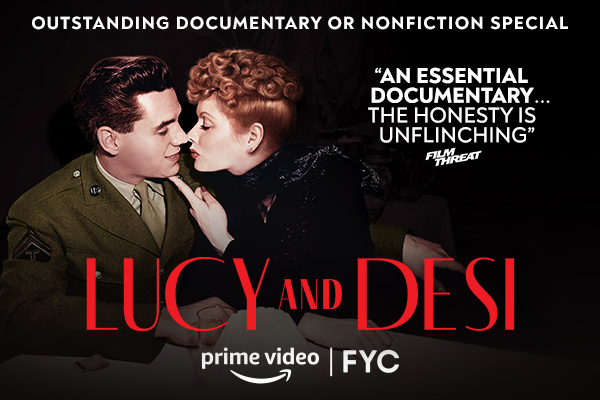 |
| Prime Video presents the Emmy® eligible documentary, LUCY AND DESI. From director Amy Poehler, LUCY AND DESI explores the unlikely partnership and enduring legacy of one of the most prolific power couples in entertainment history. Lucille Ball and Desi Arnaz risked everything to be together. "A marvelous love letter" regards Deadline, "Amy Poehler directs a touching documentary portrait."
For your consideration in all categories including Outstanding Documentary or Nonfiction Special. LUCY AND DESI is streaming now on Prime Video.
|
|
|
| And it might be about to get a lot worse. The Great Netflix Correction is causing everyone to rethink the volume of pricey scripted content, and given the low stock market and high interest rates, the studios have many legitimate reasons to cry poverty during union negotiations. That $220 billion in worldwide content spend estimated for this year is almost certain to decrease in the next few, especially on the scripted side. Netflix co-C.E.O. Ted Sarandos hit Cannes Lions this week to tell the ad industry to ignore his dismissals of their business for the past 20 years and to embrace Netflix as an ad platform. (When I asked one Cannes regular how Ted’s talk went over, he texted me the eye roll emoji). But it’s unclear whether the ad tier will become the short-term boost that Netflix or the other streamers need to make up for slowing sub numbers. Wells Fargo analysts, for instance, are predicting that of the 100 million Netflix subscribers expected on the ad tier by 2025, 85 percent will be existing customers looking to pay less. Not great!
So while the union fights are only part of a larger streaming war, they are certainly playing a unique and possibly substantive role. In conversations I’ve had with agents and lawyers in the past few weeks, it feels like momentum is growing at the guild level to take aggressive positions. With high inflation and a looming recession, people feel the balance of power tipping even further toward the studios, and 2023 might be the last chance for writers and the others to step on the see-saw before it becomes permanently out of reach. (The W.G.A. declined to comment.) |
|
|
| Part of the new unease is coming from the recent comments by former CBS and Sony executive Jeff Sagansky, who seems to have lit a fire under the talent community with his public evisceration of the “cost plus” buyout model favored first by Netflix and now by most streaming-focused distributors. Sagansky’s concerns, which have prompted much debate at the guilds and agencies, are more focused on the higher-end talents, the ones with leverage. But the themes apply to all levels of the Hollywood food chain.
If you missed it, he basically said at a public conference what many of us have been discussing for awhile now: That the distributors have used “streaming” as an excuse to pay a little more up front temporarily in exchange for permanently and fundamentally altering the value chain and sucking billions of dollars away from creators:
“Is it remotely equitable that the producer gets bought out in perpetuity only because these streamers/studios have tacitly colluded to prevent you from enjoying the backend? Did the Producers Guild or Directors Guild or Writers Guild or SAG-AFTRA ever negotiate with these media behemoths to end the more than 50 years of backend ownership?”
Sagansky called on Congress and the Justice Department to step in to “level the playing field,” but he knows that’s never going to happen. The best hope for change are the only groups with actual power over the studios: the talent guilds that can shut the whole town down. That’s why he invoked them. What if, for example, instead of asking for increased wage minimums for the lower-tier members, the W.G.A. or D.G.A. put the entire cost-plus model for all of its members on the table? That’s probably extreme, and arguably outside the scope of guild purview, but so was agency packaging. And there are tons of other “innovations” in the TV business over the past decade that have worked to limit what talents are paid. Now is probably the time for the unions to pay attention and to think big.
This is all pretty abstract, so let’s get into specifics. In the past few years, many streamers and studios have switched to weekly writer fees, rather than episodic fees that were based on the old 22-episode seasons. In theory, that’s better for writers because so many shows now require tons of work for not that many episodes. But outlets like Disney+ and Netflix are often limiting the weeks of work, and taking writers off projects before they proceed to production, which saves money but limits fees and the producing experience that many writers covet.
The so-called “mini-room” has been a target of W.G.A. anger for a while now. In fact, the incognito writers group said in the same email I received that it is “attempting to find potential solutions to the out-of-control industry practice of ‘pre-writing’ mini-rooms that undercuts writers quotes at all levels and the WGA’s own rules…” Mini-rooms started as a creative approach when a network wasn’t sure it wanted to greenlight a show. Writers were paid scale for a few weeks—not their quotes—to figure out what the show will be, perhaps even breaking the season’s storyline or even writing a couple scripts. Then, upon greenlight, the real room would take over, often with the same people.
Fine, right? But now the mini-rooms often supplant the traditional rooms. Here’s how it works: Say you’re doing a 10-episode series for Marvel or Amazon. If you paid 10 writers to make them on an episodic basis, at, say, an average of $25,000 per episode per writer, that’s $2.5 million in writers fees for the season. But if you take eight of those writers, give them $10,000 a week for a 10 week mini-room, then cut them off and hire a couple more experienced writer-producers to actually make the show at, say, $40,000 an episode, that’s $1 million for writers and $800,000 for the writer-producers, or $1.8 million on fees for the same series. That’s $700,000 in savings for Disney+ or Amazon, which is pretty significant at scale, given the volume of shows we’re talking about.
This kind of stuff has exploded over the past five years. I’m told Amazon has even done 20-week pre-greenlight rooms for the second seasons of shows. In addition to the pay issue, writers hate that they don’t get actual producing experience. Some of them are able to negotiate for title bumps, but they essentially bounce from mini-room to mini-room; they aren’t moving up the totem pole. And the result is that only a select few people know how to actually run a show these days. |
|
|
| This is just one example of how things have gotten worse while they have gotten better for writers. Residuals are another example. I was talking about this with Jonathan Handel, a labor attorney and my former Hollywood Reporter colleague, who wrote a book on residuals, or the downstream revenue that is shared per guild rules. He’s also looking ahead to the coming union negotiations, and wondering how much the seismic shifts in Hollywood will be reflected in the way talent is compensated. “The whole residual system is built on two assumptions that are starting to crumble,” Handel told me. Those assumptions? “That when you make something, it’s for a single platform initially and is then re-used; and that the media you’re releasing in have stable, discrete definitions.”
That means the residual system isn’t really designed for movies that drop on Disney+ the same day as theaters. At the same time, what is the definition of an outlet like, say, HBO? The Directors Guild, for instance, has negotiated for fantastic fixed residuals from “pay TV” outlets. But is that what HBO is today? The linear channel is, sure, but all the HBO content is also on HBO Max, which is a streaming service. Streamers use an entirely separate (and less favorable) residual scheme based not on how many people consume the content but on the number of subscribers. For that reason, Warner Bros. Discovery would very much like to reclassify HBO as a streamer. That will be a big point of contention for the directors, as will a document called “Side Letter 15,” which dates back a decade and a half and relates to how digital revenue is accounted for, and which the directors would like to revisit.
All of this is complicated, but the takeaway is that the talent community in general, and the Writers Guild in particular, are pretty pissed about the way the streaming ecosystem is treating them. The entertainment business is changing under everyone’s feet. Everyone is nervous about how it will impact them. And it will likely take some of the top-earning people getting involved to influence who benefits long term from these new compensation systems, which the streaming companies would very much like to become permanent. It may be too late to change the fundamentals at this point, but at least the writers seem like they are girding for a fight. |
|
|
See you Sunday,
Matt
Got a question, comment, complaint, or ideas for which global calamity Sean Penn should visit next? Email me at Matt@puck.news or call/text me at 310-804-3198. |
| ADVERTISEMENT |
 |
|
|
|
|
|
| FOUR STORIES WE'RE TALKING ABOUT |
 |
| Trump's DeSantis-itis |
| After a rocky primary season, Trump has DeSantis and his expanding $124 million war chest on the brain. |
| TARA PALMERI |
|
 |
| The Long Road to Moscow |
| Conscientious objectors who initially fled Russia are wending their way back home. |
| JULIA IOFFE |
|
 |
| Disney's Wall Street Bulls |
| A conversation circling the Wall Street-Disney love affair. Plus, predictions ahead of Sun Valley. |
| DYLAN BYERS & WILLIAM D. COHAN |
|
 |
| Rising Zoomers |
| A major polling project is trying to forecast the looming political influence of Gen Z. |
| PETER HAMBY |
|
|
|

|
|
|
| You received this message because you signed up to receive emails from Puck
Was this email forwarded to you?
Sign up for Puck here
Sent to
Unsubscribe
Interested in exploring our newsletter offerings?
Manage your preferences
Puck is published by Heat Media LLC
64 Bank Street
New York, NY 10014
For support, just reply to this e-mail
For brand partnerships, email ads@puck.news |
|
|