 |
| Welcome back to What I’m Hearing, coming at you from the most upscale frozen daiquiri bar at Caesars Palace. Are you here in Vegas? Come see me at the CinemaCon “Industry Think Tank” program on Wednesday, with AMC’s Adam Aron, Bill Kramer of the Academy, and Disney Studios’ Cathleen Taff.
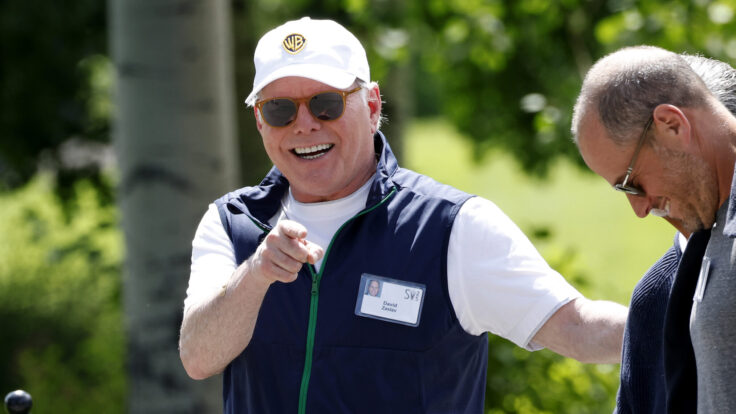
🎂🎂 I didn’t plan it this way, but the first Monday WIH coincides with the two-year anniversary of Warner Bros. Discovery. Uh…Congrats? Many have suggested this is a good milestone for C.E.O David Zaslav, who’s been freed from the Reverse-Morris Trust handcuffs and can wheel and deal with potential suitors. Yes, but… a transformational deal with Zaz on top now seems unlikely, given the interest rate and regulatory environment.
Plus, WBD isn’t exactly in the financial shape he wanted by now. The share price is down 66 percent from April 8, 2022, with EBITDA well below those lofty initial projections. With debt reduced to “only” about $40 billion and the TV business in free fall, analyst Michael Nathanson warned today that Warner Discovery “may still be forced to explore divesting assets” (he suggests CNN… you listening, Jeff Zucker?), or “it may become the subject of an activist campaign looking to break up the company.” Not great, but that’s probably not happening this week. So if you see Zaslav at his usual table at the Polo Lounge (you will; that’s the whole point of his table), congratulate him—and all of us, really—on making it this far.
Programming note: On The Town, Lucas Shaw and I parsed the low-key winners and losers of Q1, WWE’s Nick Khan walked me through the $5 billion Netflix deal, and documentary legend Sheila Nevins didn’t seem too concerned about true crime and access paydays. Subscribe here and here.
Was this email forwarded to you? Click here to become a Puck member. Got a news tip or an idea for me? Just reply to this email.
Discussed in this issue: David Zaslav, Neal Mohan, Don Hankey, Ayo Davis, Adam Aron, Ari Emanuel, Shari Redstone, Egon Durban, Joel Silver, David Ellison, and… Taylor Swift vs. Bob Iger.
But first… |
| Who Won the Week: Caitlin Clark |
|
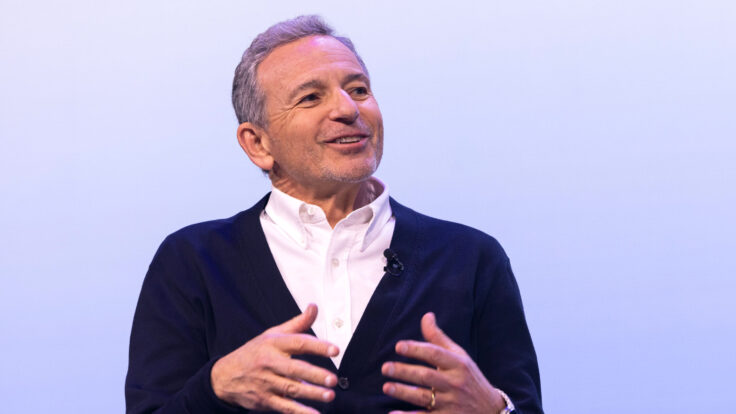
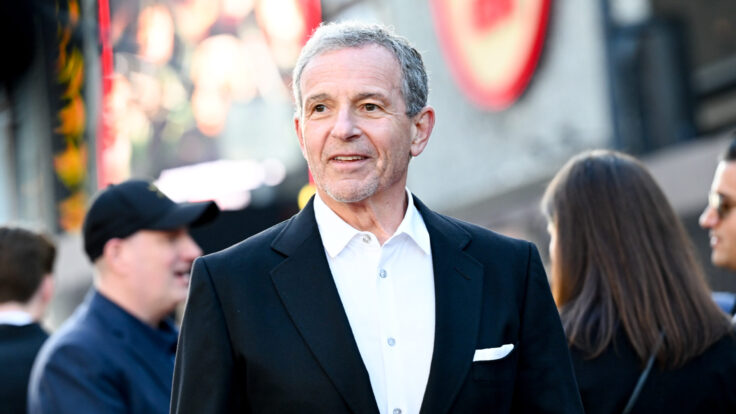
| I know, the Iowa basketball star didn’t even win the Women’s March Madness championship. But the 18.7 million people who watched the final—by far the largest audience for any U.S.-only women’s sporting event and likely beating tonight’s men’s final—mostly tuned in for her.Runners-up: Bob Iger and Nelson Peltz. Yes, both. Iger for vanquishing his 81-year-old rival by keeping pretty much all his major shareholders in line. But…
1. Peltz got 31 percent of the vote without suggesting a single original idea, a clear rebuke of the botched succession process that got Disney into this situation in the first place.
2. The Disney stock dropped 3.1 percent on the vote news, suggesting the market kinda wanted Peltz and fellow Ike Perlmutter puppet Jay Rasulo to win seats.
3. Peltz got himself a platform and at least the appearance of authority on all things Disney, so the media will likely call him up every time something bad happens. Especially if the board drags its feet on succession…
The consolation prize: Plus, I’m told Max still hasn’t committed to a U.S. air date for Peltz Beckham vs The Wedding Planners, the very important Discovery+ docuseries about the litigation surrounding Nelson’s actress/filmmaker daughter’s wedding to Brooklyn Beckham. Why? Why?!? |
|
|
| “When a creator uploads their hard work to our platform, they have certain expectations. One of those expectations is that the terms of service is going to be abided by. It does not allow for things like transcripts or video bits to be downloaded.”
—Neal Mohan, the YouTube C.E.O., blasting OpenAI after reports suggested it would use YouTube videos to train its text-to-video A.I. modelsUmmm… Hollywood executives will be excused for doing a spit take just now. It’s pretty rich for the leader of YouTube—which, remember, first gained traction via unauthorized uploads of copyrighted videos like The Daily Show and SNL’s “Lazy Sunday”—to now wag his finger at A.I. companies building a business on the back of “his” content. To this day, there are millions of copyrighted videos still on YouTube without permission. I’m certainly not backing Sam Altman here, but I’m really hoping YouTube sues, just like Viacom did in 2007 over those Daily Show clips, so the internet can throw the “get with the future” line at those old-school legacy dinosaurs working at… Google.
Now a dispatch from CinemaCon that will probably not win me many friends at the blackjack tables… |
 |
| Why Haven’t More Movie Theaters Closed? |
| The U.S. is clearly over-screened, with the new normal of moviegoing falling far behind all the available theaters. What’s needed is a wholesale murder of the multiplex, so why won’t that happen anytime soon? |
|
|
|
| Here’s a question that will almost certainly not be asked this week at CinemaCon, the big movie theater pep talk/convention in Las Vegas: Why are there still more than 38,000 movie screens in this country? Seriously, though, per the most recent National Association of Theatre Owners count, it’s 38,000 screens!After all, this is a simple supply and demand question, right? Domestic box office peaked at $11.9 billion in 2018, but in the more than five catastrophic years since, the number plunged to $2.1 billion in 2020 and came back only to around $9 billion in 2023. Projections for 2024, hobbled by the impact of the dual strikes, are a little more than $8 billion, a year-over-year decline, not a rebound. Some analysts are predicting $9.3 billion for 2025 as the movie pipeline restocks—a bullish projection, and yet still nowhere close to that nearly $12 billion threshold. Showing movies in theaters and overcharging people for cold nachos is still a real business, but if you know someone who actually thinks pre-pandemic numbers are possible, I’ve got a silver mine in Nevada I’d like to sell you.
In most businesses, when demand drops that dramatically, the oh-shit button is smashed, sirens go off, and a large retrenchment occurs. Traditional retailers, for instance, shuttered 4,600 stores in this country last year, up 80 percent from the year before. When Jennifer Lopez couldn’t sell out her latest tour, she made the embarrassing but prudent decision to scrap a bunch of shows.
Despite that box office dip, however, the number of U.S. screens is down only about 12 percent when compared to the same period since 2019, per the research firm Omdia. And ticket prices are up to an average of more than $10.50. So for theaters, if you add in increased concessions sales and other merch, the number of tickets sold—i.e., the butts in all these seats—is down way more than even the financials suggest. It’s as much as one-third lower last year than in 2019, according to The Numbers, which tracks such data. Yikes. |
|
|
| Consumer habits have pretty clearly changed since Covid, and one genre after another is becoming less “theatrical,” with large-format screens taking a bigger and bigger chunk of the receipts. The latest: Horror titles are struggling, a truly… horrific development for the business. But the theaters mostly just chug along—raising prices, declaring bankruptcy (Regal owner Cineworld closed about 75 of its 505 U.S. locations as it emerged from Chapter 11 last summer), complaining about lower margins, and, in some instances, actually trying to diversify.Still, when I posed the contraction question to a few exhibition experts in the week leading up to CinemaCon, they all leaned on the specific quirks of the theater business. Yes, closing venues would likely render the remaining locations fuller and more profitable. But as the Journal recently noted, movie theaters are unique in the real estate world. Many landlords, especially at shopping malls, are willing to reduce rents rather than let an anchor tenant close. AMC, the largest chain, run by my buddy Adam Aron, has about 8,200 screens in the U.S., and about half of those are in malls, where tenants often have covenants that reduce their rents if an anchor leaves. About 10 percent of AMC leases come up each year, I’m told, and about a quarter of those are with landlords that, when push comes to shove, will lower the rent. (AMC declined to comment.)
So they persist, rather than consolidate, even though the theater chains know they’re in a bad spot. AMC, for instance, closed 150 theaters in 2020, while opening 60 new theaters with more PLF screens and other amenities that make them higher grossing. They’re getting more money out of each patron, thus rendering each seat less necessary. Others are following the lead of a new Cinemark location in El Paso that features kiddie play areas, a bowling alley, games, a climbing wall, dining, and, oh yeah, a seven-screen movie theater. Cineworld’s new C.E.O., Eduardo Acuna, has announced big post-bankruptcy upgrade plans as well.
But repurposing existing theaters is expensive and risky for these chains, which are already overleveraged. So they mostly keep their heads in the sand, praying for more big-budget studio product, as Aron was doing in L.A. meetings last week. Michael O’Leary, head of the National Association of Theatre Owners, puts the onus on the studios, as usual. “The number will go up and down over time, but if we have the product to get into the theatres then the number of theatres in this country are sustainable,” he told Screen International today.
But there’s no guarantee that’s going to happen. The streaming-first era is over for the traditional movie studios, but that doesn’t mean the volume will necessarily ramp up. They’re all cutting costs. And the theatrical plans seem tenuous at Amazon and Apple, two rich tech companies that have dabbled in theaters. Amazon pledged last year to release “five to ten” movies a year theatrically, yet it’s not really doing that, and its most commercial play in a while, the Road House remake with Jake Gyllenhaal, went directly to Prime Video. Neither company is presenting its slate here at CinemaCon.
One expert I polled said he believes the new normal for box office is closer to 2024 than 2023—or around $8 billion a year, which would be disastrous for the theatrical business. Could AMC finally go bankrupt? Aron has managed to escape that fate via his meme stock shenanigans and several cash raises, diluting all those Ape investors in the process. He may or may not be delaying the inevitable, while also, somehow, taking home a pay package that rose to an unbelievable $25 million last year. (Adam quickly pointed out on Twitter that his actual take-home was much less than that, and he begged his board to pay him less this year. What a guy!)
AMC may be able to tread water and divest assets, especially overseas, though it’s doubtful anyone would pay a decent price. Alamo Drafthouse has been trying to interest bidders for months now, even approaching the traditional studios, I’m told. No takers at Apple, nor Amazon, and certainly not Netflix. None of these chains has sold for a reason.
So business as usual continues, with this as a likely scenario: Theaters get just enough business this year, and in 2025, to convince lenders to renegotiate their financials and survive. But that won’t solve their long-term problems, nor bring new players into the business, nor encourage the necessary contraction of theaters. And it is necessary. You’d think private equity firms like Apollo would smell blood and pounce, but currently there’s not as much cash being generated as at, say, a Paramount Global, and the valuation of an AMC or Cineworld might not drop enough to make it worth the time and resources as a total turnaround.
The result could be a sort of zombie business, not dead enough to be reinvented but not robust enough to enable the owners to transform the multiplexes into entertainment centers with fewer screens and more to do. Meanwhile, the studios will continue to stand by and watch the destruction happen, collecting their 65 percent rental fees on big opening weekends and hoping the entire exhibition business doesn’t implode beneath them. Good times. |
|
|
| Cue the disgruntled Paramount shareholders trying to stop Shari Redstone’s sale to Skydance. Will Larry Ellison just have to write them all big checks? [NY Post]America’s “wonderful web of film festivals” is starting to unravel, says former Amazon film chief Ted Hope. [Hope for Film]
If Don Hankey, the L.A. billionaire who provided Donald Trump’s $175 million appeal bond, sounds familiar, that’s because he also loaned tens of millions of dollars to sleazebag producer Joel Silver in the mid-2010s. [LA Times]
Eriq Gardner has one of the wildest profits lawsuit stories in a while. [Puck]
Warner Bros. is quasi-threatening The People’s Joker, a just-released trans coming-of-age movie that reframes the DC Comics character, despite a thorough vetting by the respected Donaldson Callif Perez firm. [NY Times]
How BBC Studios makes a killing off the $2 billion asset Bluey, and how Disney’s consumer products division had the chance to get merchandising and theme park rights but passed. Ooof! [Bloomberg]
A related note to Disney TV’s Ayo Davis: Never publicly refer to a hit show as “an important piece of business,” especially when courting an already-rich creator to make more episodes.
Now that Curb Your Enthusiasm has ended, let the Emmy campaign really begin with this great Wesley Morris essay. If Curb can’t win a single series Emmy, why does the TV Academy even exist? [NYT Mag]
In heartwarming talent agent news, about 20 minutes after my colleague Lauren Sherman included the GoFundMe for Beverly Hills shoe-shiner Gustavo Martinez in her Line Sheet email, Ari Emanuel joined his WME colleagues in donating thousands of dollars to get him a new apartment. [GoFundMe] |
|
|
A mixed bag of responses to recent items today, including Disney’s shareholder vote, Endeavor’s go-private transaction, and the Paramount/Skydance deal talks…“We are three full months into 2024 and there have been more ads and coverage for Disney’s proxy fight than anything they are releasing this year. A sad state for such a strong creative brand of the last 100 years to be reduced to touting a Moana sequel and a Lion King spinoff that no one asked for. The best entertainment they seem to be able to offer is a couple of octogenarian multimillionaires battling it out in the press for board seats. This instead of actually focusing on how to keep their brand fresh and original, which could [gasp] be the reason why Disney was so valuable in the first place. Not a unique-to-Disney issue, but man, we need some fresh blood across the board in Hollywood.” —A (younger) executive
“Great story on the Disney board fight… I have never seen such aggressive outreach. They got my parents’ home phone number to track me down, even though I haven’t lived there for over 10 years!” —A Disney shareholder
“The Endeavor situation is the definition of failing up. Ari failed. Patrick [Whitesell] failed. [Mark] Shapiro especially failed because he was brought in only to manage this mess of other companies. But ultimately this is Egon [Durban’s] fault because Silver Lake created and enabled this disaster. Here’s hoping his investors take note.” —A WME employee
“The bonuses for selling off assets they just cobbled together is really fucking tacky.” —Another executive
“On Endeavor/Silver Lake, what do you think about this for the ‘asset sale bonuses’:
-
- IMG has to be the over $3 billion sale. (Wrinkle is what happens with what was IMG Models, now WME Fashion, and IMG Licensing. Both subsidiaries are the moneymakers, but Endeavor will want to keep those.)
-
- Makes sense that Endeavor combined OpenBet and IMG Arena a month or two ago, which should bump the valuation of the combined entity to over $1 billion. Perhaps this is the over-$2 billion sale.
- On Location was valued at $660 million in 2020 and has just grown since, plus hospitality is hot right now. Guessing this is the over-$1 billion sale.
|
| My question for you: What does Silver Lake do with the sub-$1 billion Endeavor assets? Just sell everything they can if there’s a profit to be made?” —Another executive“Props to you for being at the forefront of Skydance/Paramount. David Ellison owes you a trip to Lanai for the media push.” —That same executive
“Re: Skydance deal for NAI. Are we really being asked to believe sophisticated investors like Mario Gabelli didn’t understand the dual-class share structure of Paramount (formerly Viacom)? Come on. Nobody complains about these super-voting share classes on the way in, but they whine on the way out. Maybe just avoid them. It's a big universe of stocks out there. Nobody forced Mario to buy Viacom in 1987.” —A writer-producer |
|
|
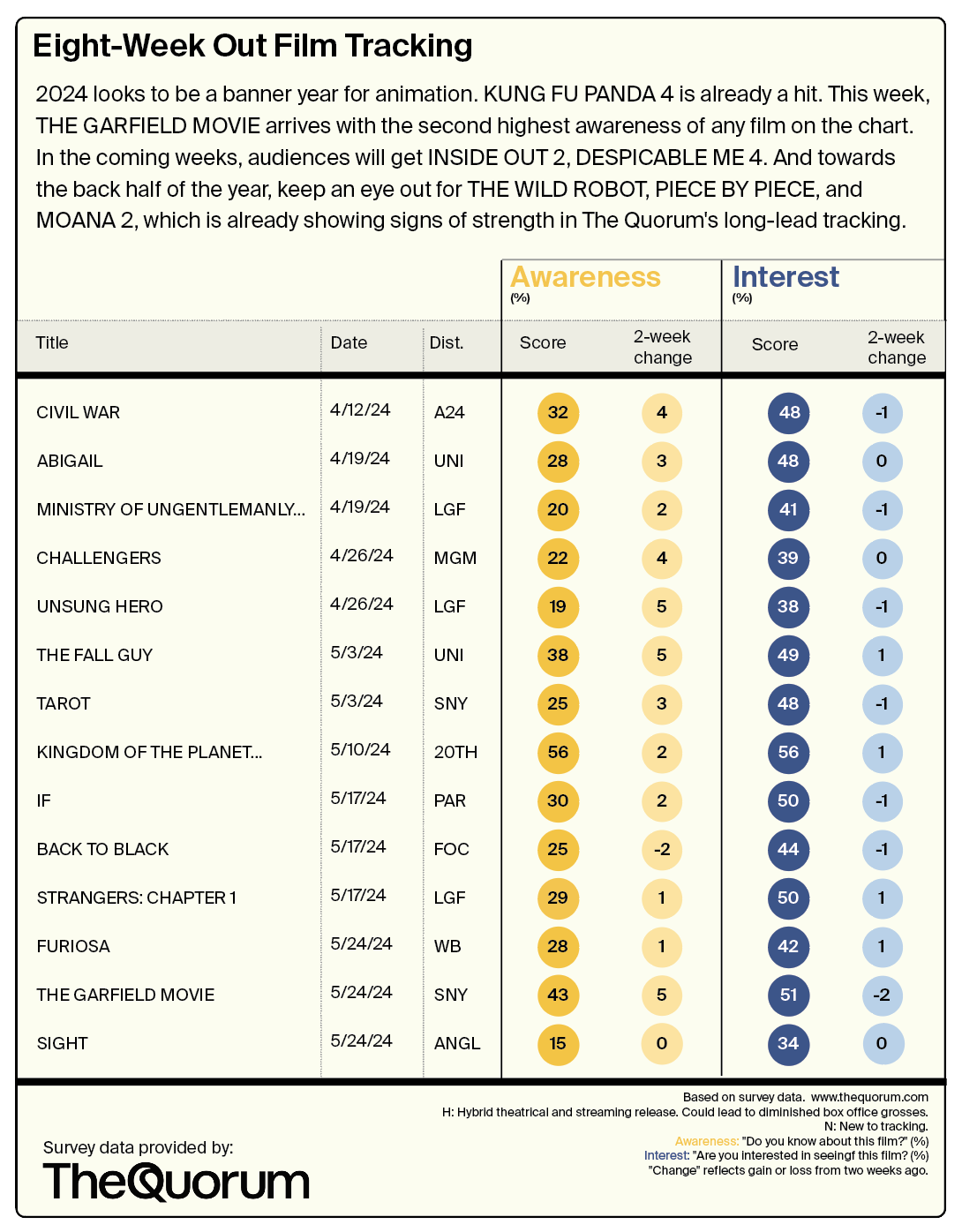
| Prepare to hear a lot about Chris Pratt becoming the king of I.P.-driven animation as The Garfield Movie arrives strong on The Quorum early tracking chart… |
|
|
| Finally Finally… one fun thing… |
|
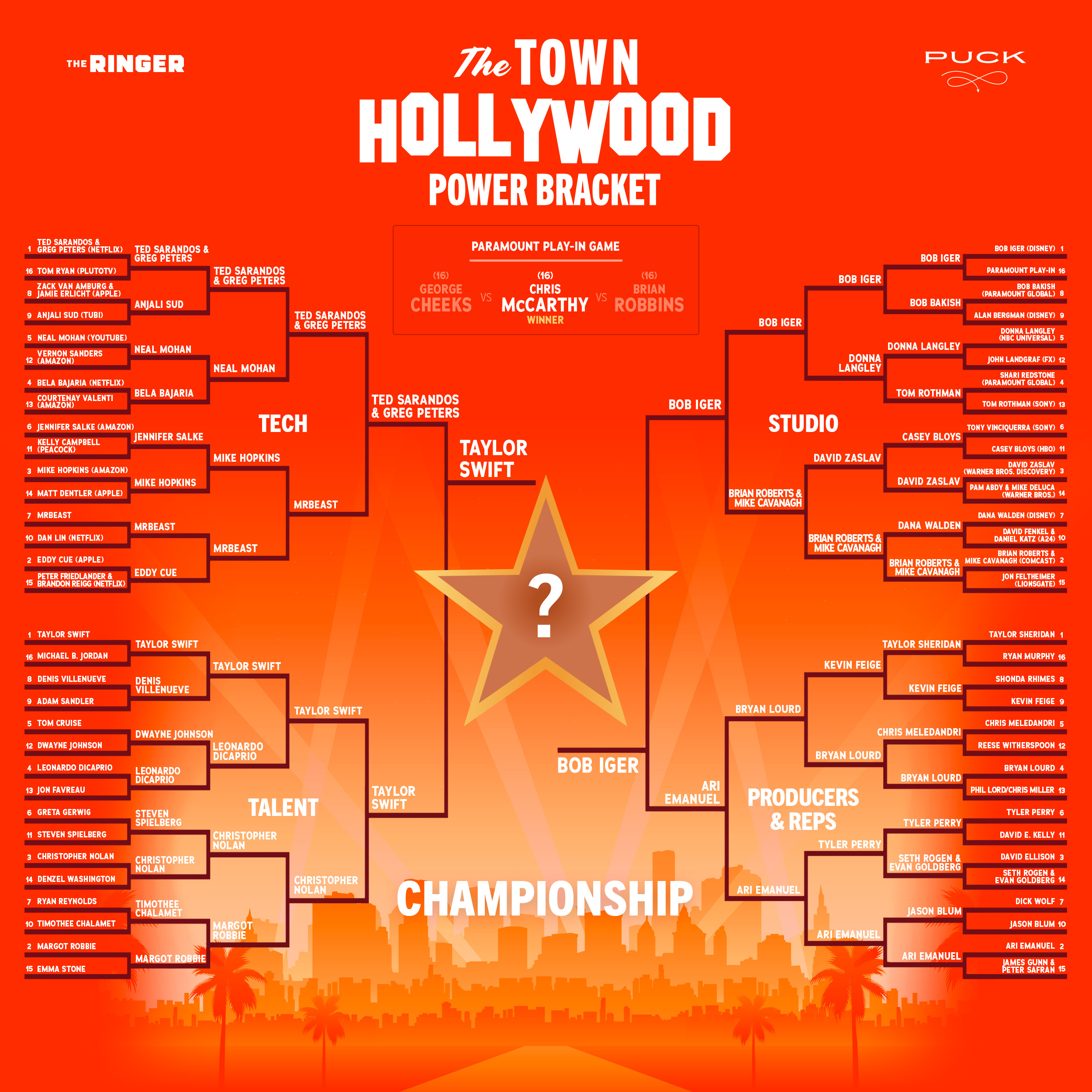
| The people have voted, and Taylor Swift and Bob Iger both crushed their competition to reach the championship of The Town’s Hollywood Power Bracket. Click here or go to @mattbelloni on Twitter/X to vote for the winner… |
|
|
| Have a great week,
MattGot a question, comment, complaint, or tickets to Criss Angel: Mindfreak? Email me at Matt@puck.news or call/text me at 310-804-3198. |
|
|
|
| FOUR STORIES WE’RE TALKING ABOUT |
 |
|
 |
| Altered Carbon |
| Spotlighting green shoots in the global war against carbon emissions. |
| BARATUNDE THURSTON |
|
 |
|
 |
| The Perfume Wars |
| A close look at the lucrative business of fragrance dupes. |
| RACHEL STRUGATZ |
|
|
|
|
|
 |
|
|
| Need help? Review our FAQs
page or contact
us for assistance. For brand partnerships, email ads@puck.news. |
| You received this email because you signed up to receive emails from Puck, or as part of your Puck account associated with . To stop receiving this newsletter and/or manage all your email preferences, click here. |
| Puck is published by Heat Media LLC. 227 W 17th St New York, NY 10011. |
|
|
|