Welcome back to What I’m Hearing, Tuesday edition, shepherded by Eriq Gardner.
Tonight, he’s got an interesting look at the unintended consequences of Trump’s war on the media—as well as the very Trumpy legal strategy of California’s Gavin Newsom. Plus, Ari Emanuel’s favorite lawyer, and the life rights battle that could help define what “life rights” actually means.
All yours, Eriq (and send him tips at Eriq@puck.news).
Not a Puck member
yet? Never too late. Just click here.
Mentioned in this issue: Amy Kristin Sanders, Jesse Watters, Elon Musk, Kathleen Williams, Don Lemon, Neil Gorsuch, Yvonne Gonzalez Rogers, Thomas Tull, Hannah Natanson, Ari Emanuel,
Clarence Thomas, David Korzenik, Melania Trump, Roberto Clemente, John Wayne, Sam Altman, Mark Walter, Jared Birchall, Jeffrey Epstein, Teresa Beaudet, Sean Lugg, Gavin Newsom, Marc Toberoff, Kash Patel, Jonah Hirsch, Brendan
Carr, Michael Wolff, John Roberts, and more… |
|
|
|
A MESSAGE FROM OUR SPONSOR |
Set in the year 2120, the planet’s greatest threat is discovered after a mysterious space vessel crash-lands on Earth. Created for
television by Emmy® winner Noah Hawley, FX’s Alien: Earth stars Critics Choice® nominees Sydney Chandler and Babou Ceesay. Now nominated for three Gotham TV Awards, including Breakthrough Drama Series. For your Emmy® consideration in all Drama categories, with episodes now streaming on Hulu and Hulu on Disney+ for bundle subscribers. |
|
|
|

| Eriq Gardner
|
|
- What is the meaning of ‘life
rights’?: It’s possible we’ll see a trial next month in Los Angeles over who has the right to make a Roberto Clemente biopic. As I’ve previously reported, Teton Ridge Entertainment has been locked in a legal battle with producer Jonah Hirsch after both sides purportedly acquired the Puerto Rican Hall of
Famer’s so-called “life rights”: Teton via Legendary Pictures, which struck its own deal with the Clemente family back in 2015, and then Hirsch’s company in 2023—also from the Clemente family. Teton, notably, is owned by TWG Global, the holding company co-chaired by former Legendary C.E.O. Thomas Tull and Dodgers owner Mark Walter.
Hirsch’s company is now going after the Clemente family and their licensing agents, CMG Worldwide, for alleged fraud. But
with a trial set for June 10, Teton has moved to tee up the narrower, title-clearing question: Who, if anyone, gets to proceed with the movie? Teton says the litigation has stalled development, forced it to extend its Legendary option, and created a ticking-cost problem. In other words, it wants the court to clear the road.
If that happens, Judge Teresa Beaudet would preside over a compact bench trial about the meaning of “life rights,” what exactly Legendary acquired,
and whether Legendary’s deal for a “theatrical motion picture” is somehow meaningfully different from Hirsch’s agreement for a “single first-class feature film.” Hirsch says his grant is broader and includes streaming rights; Teton says that’s a distinction without much of a difference.
As I’ve noted here before, despite what half of Hollywood seems to believe, you don’t need a celebrity’s permission to tell their life story—the First Amendment has you covered. So yes, it’s pretty nuts
that everyone in this standoff is spending a mint on lawyers. Teton, by the way, recently purchased John Wayne’s “life rights,” too. - Marc Toberoff schadenfreude: As the tech trial of the century unfolds in Oakland, where Elon Musk and Sam Altman are scrapping over OpenAI, one character I’ve been watching is Musk’s lead lawyer, Marc Toberoff. I’ve known Toberoff for more than two
decades—dating back to when I put him on the cover of a now-defunct I.P. magazine in a profile not all that different from his recent, love-him-or-hate-him glossy treatment in Vanity Fair. But can you really keep marketing yourself as the scrappy underdog when your client is, quite literally, the world’s richest man?
Last week, as The
Verge reported, the trial briefly went off the rails when one of Toberoff’s associates elicited testimony from Musk lieutenant Jared Birchall about a $97.4 billion bid to acquire OpenAI by a Musk-led consortium that included the Elon buddy Ari Emanuel. That line of questioning wasn’t supposed to come
in. Judge Yvonne Gonzalez Rogers sent the jury home early, then turned to Toberoff for an explanation.
Toberoff, who is also close with Ari, reportedly pointed the finger at his colleague—a move that went over about as well as you’d expect. According to Law360, Gonzalez Rogers snapped that he “shouldn’t throw young lawyers under the bus.” You’d think Marc would know better by now. The trial rolls on, now with an
audio stream. And please don’t ask your favorite A.I. app to animate the proceedings... - NBCUniversal’s tariff take-back: It took a while, but NBCUniversal has joined the parade of companies suing the U.S. government for a refund after the Supreme Court ruled in late February that Trump couldn’t use emergency powers to impose
tariffs in nearly every country on Earth. Since then, importers have been stampeding into the U.S. Court of International Trade to claim a piece of the hundreds of billions of dollars allegedly wrongfully collected. The thing is, the Supreme Court didn’t provide an instruction manual for how the government should actually give the money back.
What, exactly, was NBCU importing? You didn’t think all that Minions merch was being stitched together in Minneapolis, did you? (Joke.) The
NBCU suit doesn’t put a precise figure on what the Trump administration allegedly owes in reparations, or say whether any of it will trickle down to customers who paid $42 for a Bob the Minion plushy at Universal Studios.
|
|
|
|
California’s governor is fighting to highlight the president’s legal inanities with a
ridiculous Fox lawsuit of his own. Meanwhile, the lawyer battling Melania offers a bold legal theory: If the president can’t be held liable for what he says in office, he shouldn’t be able to sue anyone else. |
|
|
|
Last week, I was in Kansas City for a gathering of media lawyers—one of those slightly anxious,
take-the-temperature-of-the-moment affairs. The topics ranged widely: the arrest of Don Lemon, the raid on Washington Post reporter Hannah Natanson’s home, and the not-so-small matter of what all this is doing to publisher insurance premiums. I joined a panel on weathering the storm, where we swapped war stories and floated strategies for what comes next. (I offered my own mildly heretical view that media outlets, and their reporters, should consider
going on offense in libel cases more often.)
It was a lively discussion. One idea, in particular, stuck with me—a legal argument I hadn’t heard before, but suspect we’ll see tested soon. Namely, that while he’s president, Donald Trump may have to give up one of his favorite pastimes—bringing defamation suits. |
|
|
|
A MESSAGE FROM OUR SPONSOR |
Set in the year 2120, the planet’s greatest threat is discovered after a mysterious space vessel crash-lands on Earth. Created for
television by Emmy® winner Noah Hawley, FX’s Alien: Earth stars Critics Choice® nominees Sydney Chandler and Babou Ceesay. Now nominated for three Gotham TV Awards, including Breakthrough Drama Series. For your Emmy® consideration in all Drama categories, with episodes now streaming on Hulu and Hulu on Disney+ for bundle subscribers. |
|
|
|
The proposition came from David Korzenik, a partner at Miller Korzenik in New York who is no
stranger to swinging for the fences. He’s the architect of author Michael Wolff’s pending case against Melania Trump—the one that flipped her demand letter over a Jeffrey Epstein story into a New York anti-SLAPP action, with Wolff seeking a declaratory judgment that he committed no libel, along with discovery into Trump–Epstein connections and, ultimately, damages. (Disclosure: Miller Korzenik has provided legal advice to
Puck.)
Korzenik’s latest theory: If the president truly embodies the executive branch, as Trump has been arguing throughout his second term, then actions taken in his official capacity are, in effect, actions of the government itself. By that logic, a defamation suit brought by the president isn’t merely a personal claim, it’s a government suing a critic. And because courts have long been wary of government entities policing speech, the “unitary executive” framing would suggest
such cases should be barred—or at least sharply constrained.
This isn’t entirely out of left field. It echoes New York Times v. Sullivan, the Supreme Court’s landmark 1964 decision that requires public officials to prove “actual malice” in defamation cases. Less remembered is that Justices Hugo Black and William Douglas would have gone further. In a concurrence, they argued the First Amendment should categorically bar public officials from
recovering damages for criticism of their official conduct.
At first glance, that kind of absolutism feels out of step with the current court, where conservatives Clarence Thomas and Neil Gorsuch have openly mused about revising Sullivan in the opposite direction. But there’s a twist. It’s the Trump administration itself that has aggressively advanced the “unitary executive” theory—centralizing control over the bureaucracy, asserting dominance
over the Justice Department, blowing boats allegedly piloted by drug runners out of the water, and, most consequentially, securing a 2025 Supreme Court ruling granting the president broad immunity for official acts. If Trump can’t be held liable for much of what he says (or does) in office, no matter how outlandish, incendiary, or defamatory, why should he be able to haul others into court over it?
Judges are beginning to grapple with that tension. As Penn State law professor
Amy Kristin Sanders noted during the panel, Florida District Judge Kathleen Williams is confronting a version of it as she presides over Trump’s $10 billion suit against the I.R.S. over leaked tax documents. How, exactly, does a president—who embodies the executive branch—turn around and, in his personal capacity, sue agencies he oversees? Are the parties truly “adverse”? The court has ordered a briefing.
In the meantime, Trump is still playing his greatest
hits, pursuing a blitz of litigation against the BBC over a January 6 documentary; the Des Moines Register over pre-election polling; and the Pulitzer Board over prizes awarded years ago—alongside efforts to revive failed claims against CNN, The New York Times, The Wall Street Journal, and others. Members of his administration are joining in, too—F.B.I. director Kash Patel recently filed a $250 million defamation suit against The Atlantic for
an article purporting to document his allegedly excessive drinking and erratic behavior. At some point, one of these cases may do more than wrestle with what’s true and what reporters knew at the time of publication. A case brought by Trump or his administration may test the notion that these plaintiffs don’t belong in court in the first place—and, if Korzenik is right, ultimately shut the whole enterprise down. |
Fox News might consider trying the argument that public officials are barred from bringing defamation actions
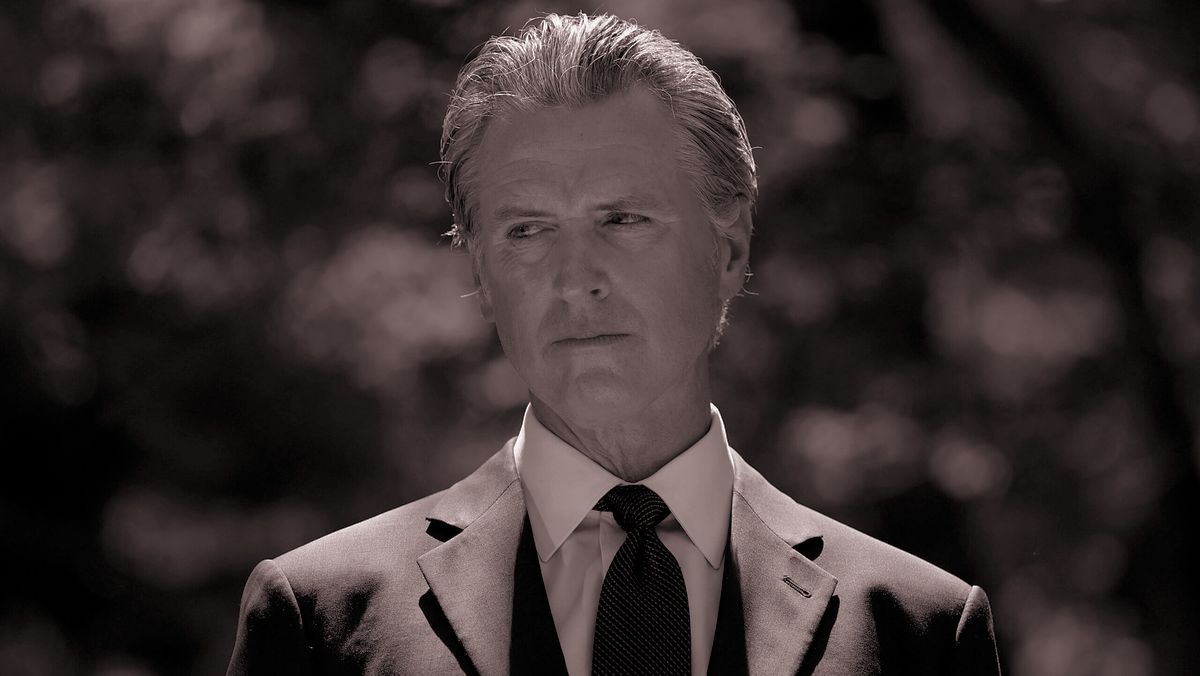
over what’s said about them. Fox, after all, is now struggling with a case brought by California Governor Gavin Newsom. His $787 million suit just survived a motion to dismiss, meaning a politician currently polling as a plausible presidential contender is heading into discovery against the highest-rated cable news network. Why isn’t this getting more attention?
The case stems from Fox’s coverage of civil unrest in Los Angeles. At a June 10, 2025, White House press
conference, a reporter asked Trump when he last spoke with Newsom. “A day ago,” Trump said. Newsom quickly fired back on X: “There was no call. … Americans should be alarmed that a President deploying Marines onto our streets doesn’t even know who he’s talking to.” Trump later showed Fox’s John Roberts a screenshot of a call on June 7, and Fox reported that the conversation had in fact occurred, with Jesse Watters adding, “Why would Newsom lie and claim Trump
never called him?”
Newsom says that crossed the line. His point was that he was disputing Trump’s claim of a call “a day ago,” not denying that they’d spoken at all. The call happened—just not when Trump said it did. Is that really the stuff of a $787 million defamation claim? Count me skeptical.
Yet in an April 30 opinion, a Delaware judge allowed the case to
proceed. First of all, why Delaware? The court’s answer was essentially, why not Delaware? (The more practical explanation, of course, is that Newsom saw a favorable forum in a state where Fox previously fought Dominion.) Then, peering through a notably permissive jurisdictional lens, Judge Sean Lugg concluded it was at least “reasonably conceivable” that an average viewer could take Fox’s reporting as a false statement about Newsom’s honesty, and one made with actual
malice.
I’ll be blunt: It’s a thin reed. If Trump were suing CNN on the same basis, I suspect the media reaction would be far more severe. To be sure, the California governor has been engaging in a bit of Trumpian theater himself, and this lawsuit may be as much about political signaling—projecting toughness to his base and turning the tables on conservative media—as legal vindication.
Still, there’s a strategic question lurking here. Suits like this risk normalizing the very
playbook that many in the press have criticized, handing Trump and his associates an easy talking point that both sides are using litigation to police speech. F.C.C. chair Brendan Carr has already pointed to Newsom’s lawsuit, amplifying the rancorous public feud between the two men. That alone suggests this deserves a closer look. |
Thanks, Eriq. I’ll see everyone on Thursday.
Matt |
|
|
|
Puck founding partner Matt Belloni takes you inside the business of Hollywood, using exclusive reporting and insight to explain
the backstories on everything from Marvel movies to the streaming wars. |
|
|
|
Ace media reporter Dylan Byers brings readers into the C-suite as he chronicles the biggest stories in the industry: the future
of cable news in the streaming era, the transformation of legacy publishers, the tech giants remaking the market, and all the egos involved. |
|
|
|
Need help? Review our
FAQ page or contact us for assistance. For brand partnerships, email ads@puck.news.
You received this email because you signed up to receive emails from Puck, or as part of your Puck account associated with {{customer.email}}. To stop receiving this newsletter and/or manage all your email preferences, click here. |
Puck is published by Heat Media LLC. 107 Greenwich St., New York, NY 10006 |
|
|
|
|