 |
| Welcome back to What I’m Hearing, where the stars have been unleashed and we’re prepping for a week of real Oscar campaigning. Congrats to the Holdovers team for sending what appeared to be the first post-strike press release on Thursday, touting a chance to “mix and mingle” with stars Paul Giamatti and Da’Vine Joy Randolph. Leo and Lily Gladstone are rumored to be surprise guests at Scorsese’s Q&A with Spielberg at the DGA on Monday night. (A little weird because Steven’s an E.P. on the Killers rival Maestro; speaking of, Bradley Cooper is making the Q&A rounds in New York this week, then to L.A. with Carey Mulligan for screenings and all the trade roundtables this weekend.)
Also tomorrow, the Oppenheimer campaign is showing a making-of propaganda video in a theater, with Chris Nolan and the crew attending. (Robert Downey Jr. will begin his charm offensive elsewhere.) French voters will be the first to be confused by Joaquin Phoenix’s accent in Napoleon at its Tuesday premiere in Paris, and at the Ace Hotel in L.A., internet heartthrobs Jacob Elordi and Barry Keoghan will attempt to seduce Academy voters for Saltburn. Emma Stone is able to officially campaign now, so she’ll be at tastemaker screenings of Poor Things at the Bungalows and WME. Jeffrey Wright is doing the Bungalows screening thing for American Fiction this week, too.
And on Thursday alone, there’s the unveiling of The Color Purple with Oprah and the cast; the L.A. premiere of May December with Natalie Portman and Julianne Moore at the Academy Museum, GQ Men of the Year at Bar Marmont, and that Holdovers “mix and mingle.” What a time to be alive.
Programming note: This week on The Town, Lucas Shaw and I debated the logic of licensing DC movies to Netflix; Oscar-ologist Kyle Buchanan parsed how the strike has impacted awards season; and Duncan Crabtree-Ireland gave me his first interview after SAG-AFTRA settled with the studios. Subscribe here and here.
Was this email forwarded to you? Click here to become a Puck member. Got a news tip or an idea for me? Just reply to this email.
Discussed in this issue: Fran Drescher, David Zaslav, Tom Rothman, Kevin Feige, Pam Abdy, Jeffrey Katzenberg, James Burrows, Bill Damaschke, Alan Horn, Dave Green, Justine Bateman, Franklin Leonard, John Cena, and… Jon & Vinny’s Larchmont everything emporium.
But first… |
| Who Won the Week: Jessica Berman |
|
Amid a spike in attendance and ratings for the National Women’s Soccer League, its commissioner scored major four-year TV deals with CBS, Amazon, ESPN, and Scripps worth a total of $240 million, per ESPN. The value of the league’s previous TV deal? $1.5 million per year.Runners-up: Anna Boden and Ryan Fleck, the Captain Marvel directors, who smartly declined to return for The Marvels after having a bad experience on the first pic. Opening weekend dropped from $153.4 million to just $47 million domestic for the sequel this weekend.
A little more on Marvel…
Back in the fall of 2019, right after Avengers: Endgame grossed $2.8 billion worldwide, I had this exchange with Alan Horn, who was running Disney’s film unit:
Me:
American Idol
-
was No. 1 for many years in a row and its audience was 30 million viewers a night. The president of NBC at the time, I believe it was
Jeff Zucker
-
, said, “Someday it will not be cool to watch
American Idol
-
.” Do you think about when that day comes for the Marvel movies?
Horn: The answer is no. If the film has a compelling storyline, if it has heart and humor, two things that I insist on, and it’s terrifically well executed, I think there is an audience. But who knows? |
| Well, now we know. Four years later, that day has come. Marvel is no longer cool, or at least it’s lost that automatic connection with the casual movie fan. Any other studio would gladly take Marvel, even in its diminished form. But when Disney C.E.O. Bob Iger was addressing the recent film woes on Wednesday, his “We lost some focus” comment was aimed squarely at Marvel. That’s a bit rich, of course, because it was Iger himself who initiated the glut of Marvel content, fueling Disney+ and movie theaters to the point that Marvel has essentially become an “always on” franchise. “I’ve always felt that quantity can be actually a negative when it comes to quality,” Iger said. Really? Iger pushed Marvel to three movies a year and multiple shows; Iger announced Lucasfilm would make one new Star Wars movie a year, a pace that Kathleen Kennedy and the team clearly couldn’t handle; Iger pressured John Lasseter and Ed Catmull at Pixar to increase its cadence. It goes on.But regardless, the upshot of superhero overproduction by Disney and Warner Bros. is that “today, audiences no longer take DC and MCU films on blind faith,” analyst David Herrin wrote this week to his Quorum clients. And that’s an industry-wide problem, considering men (and women) in tights have kept the lights on at three of the major studios. If I’m Tom Rothman at Sony, sitting on Kraven the Hunter, Madame Web, Venom 3, and other lesser, non-MCU titles that have grafted off the MCU’s success, I’m really sweating this Marvels situation, too. (Though Rothman spends a lot less on his MCU Lite.)
Superheroes aren’t dead. It took 33 MCU movies for an opening weekend to dip below $50 million in box office. One hell of a consistent run. And next summer’s Deadpool 3 will likely be huge, just a start to Marvel’s suddenly embattled Kevin Feige getting his hands on the Fox properties, like X-Men and Fantastic Four. That could lead to a rebirth, a reinvention, a re-engagement of the original Avengers, whatever spark is needed to recover.
But it will almost certainly be a lesser recovery. Like American Idol, which is still cranking out new seasons and does okay now that it lost its super-rich Fox deal and moved to ABC, Marvel has officially entered an era of reduced expectations. So Feige probably needs to be more judicious, take fewer swings on marginal characters, and spend less. With a $275 million production budget, Marvels must gross about $700 million worldwide to see profits. But was the audience needed to breach that barrier actually asking for another Captain Marvel? After 2019, most of the seven “Phase 4” movies did fine. But none of the sequels outgrossed its Phase 3 predecessor, and the two attempts at new sub-franchises—Shang-Chi ($432 million worldwide) and The Eternals ($402 million)—did not justify follow-ups. The CinemaScores have come down, the characters and storylines have been embraced less, and the saturation of Disney+ shows that must be watched to fully enjoy/understand what’s going on has caused Marvel films to lose relevance to the casual fans needed to get to a billion. In short, as Richard Brody pointed out in The New Yorker, Marvel, the outcast nerd that shocked and conquered Hollywood, has become boring: “It never ceases to amaze me that the chief Marvel producer, Kevin Feige, with his lifelong love and deep knowledge of comic books, became the Man.”
Now a little news… |
| Warners Reversing Course After Coyote Fight |
|
| I’m told Warner Bros. will now let the filmmakers of Coyote vs. Acme shop the movie to other potential distributors. That’s a big about-face from earlier this week, when Warners said that the long-finished $70 million Looney Tunes film, directed by Dave Green and starring John Cena, Will Forte and a C.G.I. Wile E. Coyote, would be shelved indefinitely, à la the infamous Batgirl and Scoob! sequel.Warners declined to comment, but a good source tells me the decision was made this weekend by Warners film chiefs Mike De Luca and Pam Abdy, along with new animation head Bill Damaschke, after the online outcry by filmmakers and the animation community, as well as some heated back-and-forth between the studio and reps for the director and stars. Warners had agreed to pay the top talent their streaming bonuses despite the film being scrapped, but obviously, everyone involved in this project wants it to be released by someone.
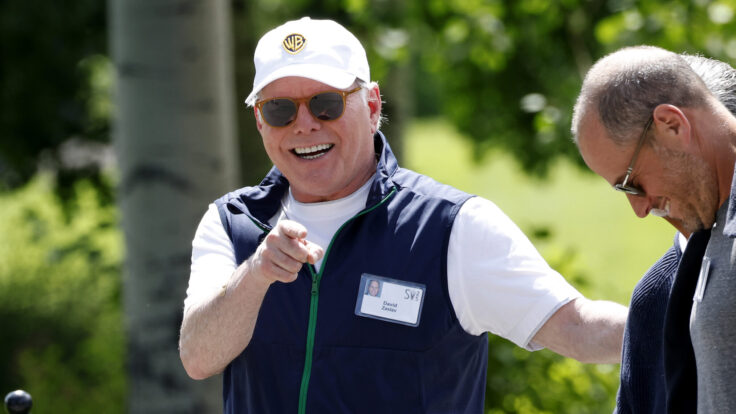
Coyote vs. Acme is another sign of these weird times, one of those caught-in-the-middle-of-two-strategies movies that was greenlit by Toby Emmerich back in December 2020, when the mandate from WarnerMedia leadership was to make as much product as possible for streaming, cost be damned. When current C.E.O. David Zaslav took over, $70 million direct-to-Max movies went bye-bye, so Warners pivoted to theaters. But some internally questioned whether the film played theatrically enough. Contrary to Green’s claim on social media that the film “was embraced by test audiences who rewarded us with fantastic scores,” it actually didn’t test that well, I’m told. And Damaschke, who is formulating his own strategy for Looney Tunes, feared the brand damage of an underperforming film, especially on the heels of Space Jam: A New Legacy grossing only $163 million worldwide. So they scrapped it. Another source who’s seen the movie said it’s definitely good enough to take a swing in theaters, but Warners is understandably gun-shy these days, given its financial situation.
On that point, these whackings of finished films invariably get chalked up to “tax” savings, but there’s actually not that much benefit to the company. I’m no tax avoidance expert, but everyone I’ve talked to on this subject has said that it’s basically a question of when the losses on a film are taken. Maybe scrapping Coyote will accelerate a possible deduction, which is beneficial for a company like Warner Bros. Discovery that is drowning in debt now, but it’s not a big benefit, maybe in the single-digit millions. In other words, not something Warners would do if its executives believed in the film.
But maybe some other studio or streamer will take the risk, so Warners is gonna help the filmmakers test the market. I’m not sure how many buyers there are for a $70 million live-action/CGI hybrid Looney Tunes movie. And Warners, already fearful of brand damage, probably won’t take a $50 million loss in a deal just to make John Cena happy, though the studio is in business with him on The Peacemaker and other stuff. But at least now Warners is giving its creatives the chance. And if no buyers emerge, De Luca, Abdy, and Damaschke can at least say they let them try. |
|
|
| “In the good old days, when I made an animated movie, it took 500 artists five years to make a world-class animated movie. I think it won’t take 10 percent of that. Literally, I don’t think it will take 10 percent of that three years from now.” —Jeffrey Katzenberg, the former DreamWorks Animation C.E.O., causing much anxiety in the animation community with his A.I. comments at a Bloomberg conference.“Back when I started, there were three networks and 30 great comedy writers. Now there are 300 networks and 30 great comedy writers.” —James Burrows, the TV director legend, dropping the mic on The Business. |
|
|
| My colleague Bill Cohan thinks Warner Bros. Discovery, despite its 19 percent stock collapse after Wednesday’s earnings reveal, “is in better shape than it’s getting credit for.” [Puck]The Great Rebundling meets The Great Ad Push: Verizon’s “myPlan” customers will soon be able to get the advertising tiers of Netflix and Max bundled for $10, down from $17. [WSJ]
Taylor Lorenz reports that it’s not too late to send your teen to YouTube creator camp next summer. Much more practical than theater camp or an internship in the UTA mailroom. [WaPo]
Some unreal details in this Kelce-free report from the Argentina stop on Taylor Swift’s Eras Tour, including interviews with fans who camped out for five months. [NY Times]
Black List founder Franklin Leonard’s 74-item post-strike wish list for Hollywood has some great suggestions that will likely be ignored, including “transparent reporting on viewership, earnings, expenses and fees,” “non-monopolistic/oligopolistic ownership of industry trade publications,” and “basic human decency.” I know, Fantasyland. [THR]
Now Jonathan goes inside the SAG-AFTRA deal with exclusive details and analysis… |
 |
| What the Actors Really Won on A.I. |
| A detailed look at the tentative SAG-AFTRA deal, from streaming residuals to health benefits to the extraordinary restrictions on the use of A.I. |
|
|
|
| The summary alone of the tentative deal between SAG-AFTRA and the studios runs to 18 pages of detail, and the Memorandum of Agreement is about 128 pages. I’ve now read the summary and the A.I. provisions of the M.O.A., though the summary won’t be released publicly until Tuesday when eligible members receive ratification ballot materials (the M.O.A. release is as yet unscheduled), with votes due back by Dec. 5.In the meantime, let’s take a look at the major achievements—and the key compromises—that led to the strike-ending, billion-dollar deal. We’ll save A.I. for last since its 16 pages of contract language are by far the most intricate provisions in the new agreement. (By contrast, the DGA had only one page on A.I. and the WGA 2.5.)
Basic wages: The union initially wanted a 15 percent increase in the first year of the three-year deal, as a catch-up for inflation, while the studios and streamers were offering 5 percent—same as the Directors Guild and Writers Guild achieved. This issue was particularly important for the companies because, as I previously reported, the basic wage increase is upward of 85 percent of the cost of the entire package. What’s more, the bump in this contract will affect expectations in coming renegotiations of the SAG-AFTRA NetCode, IATSE crew, and Teamsters truck drivers deals, which all expire mid-2024, as well as the Teamsters casting directors deal, which expires at the end of that year.
Those factors made cost containment on basic wages a key goal for management in the SAG-AFTRA negotiations. The parties narrowed the bid-ask to 7 percent vs. 9 percent, and the union blinked, accepting a 7 percent increase for principal performers in return for gains in streaming residuals, A.I. restrictions, and several dozen other issues too weedy for us to get into.
Notably, background actors got an 11 percent bump in the first year. And the second- and third-year bumps (4 percent and 3.5 percent) for principals and background are also noteworthy, in that they occur on July 1, 2024, and 2025, respectively, the anniversary of the scheduled expiration of the previous three-year agreement. The companies had pushed to delay those increases to November of each year (i.e., the anniversary of ratification of the new agreement), I’ve learned, but the union fended off those delays.
Streaming residuals: The union obtained the same increase in foreign streaming residuals won by the DGA and then WGA, and improved on the WGA bonus streaming residual, with a twist. The WGA formulation pays a 50 percent bonus residual to writers on “successful” made-for-streaming shows, meaning that a writer on a one-hour Netflix episode who might see a first-year residual of $27,000 would get a $13,500 bonus if the season is watched by 20 percent of a streamer’s subscribers. SAG-AFTRA held out for and won a 100 percent bonus, meaning that an actor on that same show who was set to receive a $3,000 residual would be looking at a $3,000 bonus.
But here’s the twist: The actor only receives 75 percent of the bonus ($2,250). The other 25 percent ($750, in this example) goes into a newly created fund administered by a joint management-labor board of trustees that will determine how the money is distributed. The intent, although not stated in the summary, is for the monies to go to actors on shows that don’t meet the stringent “success” criteria (which are identical to those in the WGA deal). Those criteria are so narrow that the bonus is estimated likely to generate only $20 million per year for the WGA, which translates to $40 million a year for SAG-AFTRA, of which a paltry $10 million per year will go to the fund.
That’s not much, but establishing such a fund means that its ambition can be expanded in future negotiating cycles. Moreover, the fund is outside the realm of pattern bargaining, at least for now, which may make it easier in the future for SAG-AFTRA to counter the usual company objection that giving the actors an improved residual would require giving the writers and directors the same improvement. Breaking pattern was a key goal for SAG-AFTRA president Fran Drescher and chief negotiator Duncan Crabtree-Ireland, and they achieved it here (even as they abandoned revenue sharing and per-subscriber fee proposals), as well as in the basic wage increase.
The union also got a range of other improvements related to residuals, including strict limitations on the amount of initial compensation that can be deemed an advance payment of residuals.
Pension & health: The union achieved increases in P&H contribution caps that had been static for four decades. Also, in the often-overlooked Strike Suspension Agreement, the union and companies agreed to recommend to the affiliated health plan that eligibility be extended by one calendar quarter for eligible active participants who would otherwise lose coverage due to the strike, and an entire year for similarly situated active retirees. COBRA benefits were also recommended for a three-month extension. |
|
|
| Artificial Intelligence: The union achieved, in my view, some extraordinary restrictions on the use of A.I., including a requirement that in most cases actors be paid at their contracted rate for any time the production saves by using an employment-based digital replica (EBDR) of the actor. That is, if the actor would have worked seven days but only worked five because the EBDR was used to do what would otherwise have taken two more days, the actor generally has to be paid for all seven days. This creates a significant disincentive to displace human labor, since it generally eliminates any cost savings that might result.The exception to the payment rule is actors who are paid more than $80,000 for a movie, for example (other figures apply to television series). That carveout for “Schedule F” performers is a big one, and sweeps in both major stars, who have leverage to negotiate their own protections, and those who don’t. However, it’s consistent with a host of existing exceptions for highly compensated actors, which is why one source told me that actors refer to Schedule F as “Schedule Fucked.” But accepting the carveout is also consistent with the negotiators’ focus on working- and middle-class performers. And the $80,000 threshold is itself an improvement over the previous “money break” that defined Schedule F.
But what are EBDRs? They’re digital replicas that are created while employing the principal performer (non-extra actor) in question. Background actor digital replicas (BADRs) are similar, but for background actors. Those contrast with independently created digital replicas (ICDRs), which are DRs that are created in advance of a particular project and licensed to the studio by the performer or an agency. The fact that the union obtained jurisdiction over such usages is a surprising achievement, since there’s no employment relationship involved, which is generally the touchstone of union rights.
A fourth category of digital creations are called synthetic performers (SP) in the contract. These are completely synthetic humanoids that are created using generative A.I., which most likely will have been trained on past human performances. SPs are permitted, but the studio has to give the union notice “and an opportunity to bargain in good faith over appropriate consideration, if any.” Here again, the absence of an employment relationship makes this a noteworthy accomplishment. The notice requirement, although not as protective as a consent requirement, allows the union to monitor the development of generative A.I. technology, which is still nascent in the area of completely synthetic performers, and come fully informed to negotiations in the next triennial cycle.
The agreement requires consent and compensation for creation and use of EBDRs and BADRs (including residuals for use of EBDRs), and consent and compensation for use of ICDRs (subject to a First Amendment carveout)—and consent and compensation for use of SPs that incorporate “a principal facial feature (i.e., eyes, nose, ears and/or mouth) that is recognizable as that of a specific natural performer.” Consent is also required for digital alteration of a human actor’s performance. In all cases, consent requires a “reasonably specific description of the intended use.” Blanket consent (e.g., “any movie” or “any Star Wars movie or series”) is not permitted for EBDRs: instead, specific projects must be identified.
It’s true that the union did not manage to prohibit the use of DRs and SPs, which led actor-producer Justine Bateman—who was among the people the union consulted regarding A.I.—to assail the deal as a job-killer that will destroy the soul of the profession. “I’m very disappointed that the SAG leadership and committee did not take my guidance on the #AI issues,” she wrote.
But to me, her position seems unrealistic: Some of her objections cite alterations that studios already make using CGI technology, and her overarching goal of prohibiting DRs, and especially SPs, was most certainly a bridge too far for the companies, I’m told, who fear the rise of startup studios unconstrained by union agreements. That fear is likely even more pronounced for video game companies, against whom SAG-AFTRA is still on strike, with A.I. being a key issue.
Could the union really have maintained a strike for at least another two months, through the winter holidays, and in the face of growing discontent within the membership, industry, and general public, in hopes of blocking the use of new technology? That seems like wishful thinking.
Consider a cautionary tale: In the 1940s, in an effort to fight what it called “canned music,” the American Federation of Musicians maintained a two-year “recording ban” during wartime, notwithstanding F.D.R.’s pleas and a furious Congress and enraged public. The radio and record industries finally caved, and the strike for compensation was successful, but the larger, quixotic battle against recording technology was one of the reasons for the AFM’s sharp decline in relevance and power. Sometimes, the best is the enemy of the good, and the perfect, the enemy of the best. What SAG-AFTRA achieved feels close to the best possible deal on A.I. and may even be a model in its nuance and detail. |
|
|
| The strike is over, let the hot takes begin. Plenty of criticism of both the studios and the SAG-AFTRA leadership in my inbox, plus some pants-wetting about the coming labor wars…“You were exactly right in your conversation with Duncan Crabtree-Ireland when you posited that A.I. is to 2023 what ‘webisodes’ were to 2007. When and if the fears become tangible reality is the time to address them, because the solutions will be more accurately tailored to the real problem. Holding up an entire industry for months to negotiate what is at this point science fiction was just morally reckless.” —An executive
“Fran’s speech on Friday [according to the NYT, “a 28-minute monologue that touched on Veterans Day, Bela Lugosi’s Dracula costume, her parents, the Roman Empire, studio stubbornness, Buddhism, Frederick Douglass and her dog] tells you everything to know about why this strike lasted as long as it did. This was the role of Fran’s life and she wasn’t about to let it end.” —An agent
“I’m afraid these C.E.O.s will just go back to business as usual. When the spring TV slate is bare and the summer movie schedule is a disaster, their shareholders need to ask: Why did it take until November to make a deal you could have made in July?” —An actor
“You’re losing the plot, which is something Duncan Crabtree-Ireland lost a while ago. The issue for all the talent unions was flat wages since the last strike, and importantly, the reason for those flat wages was the archaic 22-episode exclusivity being applied to the new, short-order streaming world. They did not address that, so by definition these agreements are failures.
“You will note that stars like Reese Witherspoon and John Goodman got that exclusivity eliminated by their agents and attorneys, allowing them to work on two shows (that collectively total close to 22 episodes for each). Actors like those two obviously have a lot of leverage and also have good representation that can fight for that. But it’s the union’s job to fight for their members that don’t have such representation and they failed them. So the stars will be fine, and the middle-class actor will just continue to be fucked.” —Another agent
“You don’t mention VFX workers. While they don’t pose an immediate threat, in 2025 and 2026 they will. IATSE is working with DNEG employees in Canada to fill out IATSE VFX union support cards. Interest is so high they have set up two new locals. Artists at other companies are watching and waiting to join them. Animation and VFX workers in the U.K. are trying to unionize through BECTU. In the U.S., Marvel VFX workers joined IATSE and voted to unionize last month, and this month Walt Disney Pictures VFX workers voted to unionize. The bitterness felt by VFX workers over the writers and SAG–AFTRA strikes leaving them out of work and feeling like no one has their backs is energizing them to unionize. Gamers are unionizing in smaller numbers, but with over 6,000 layoffs this year they are taking notice, too.” —An executive
“I am very curious to see if IATSE will make the entire industry fall to its feet like they had to do when the writers and the actors got the spotlight this year. Or will they think they’ve already suffered enough and try to close a deal as fast as possible so that their members don't starve and lose their homes?” —A crewmember |
|
|
After a break during the strike, producer and foodie Jamie Patricof is back with another L.A. restaurant tip. To get Jamie’s excellent food newsletter, click here.Jamie’s pick: Cookbook Larchmont
- Location: 310 N. Larchmont
- Close to: Netflix, Paramount, Sunset Gower, Macro, Media Res, Good Fear, and Hunting Lane (my company!)
- The pitch: Larchmont is slowly becoming a hotspot: Clark Street, Great White, Sua, Levain, and of course Larchmont Wine and Cheese. But the opening we’ve been waiting for is Cookbook, from local kingpins Jon Shook, Vinny Dotolo, and Helen Johannesen. This place solves every problem: an Eastside coffee; pick up food to bring back to the office; power lunch with a filmmaker; breakfast with the kids; even groceries to make dinner. They just opened, but I’ve been there almost every day.
- Best dish: For breakfast, the pancakes are not to be missed; for lunch or dinner, go with the arugula salad, chicken paillard, or mezze maniche (a.k.a. rigatoni with tomato sauce).
- Jamie’s tip: Order lunch from the café in the back, get a number, seat yourself, and then add a turkey sandwich from the counter. It is arguably the best I have ever had.
|
|
|
| Have a great week,
MattGot a question, comment, complaint, or a secret screening of Coyote vs Acme? Email me at Matt@puck.news or call/text me at 310-804-3198. |
|
|
|
| FOUR STORIES WE’RE TALKING ABOUT |
|
|
|
|
|
 |
|
|
| Need help? Review our FAQs
page or contact
us for assistance. For brand partnerships, email ads@puck.news. |
| You received this email because you signed up to receive emails from Puck, or as part of your Puck account associated with . To stop receiving this newsletter and/or manage all your email preferences, click here. |
| Puck is published by Heat Media LLC. 227 W 17th St New York, NY 10011. |
|
|
|