 |
 |
|
Welcome back to What I’m Hearing, hitting send as the Dodgers go up 3-0 on the Yankees. Bad for TV ratings, but good for me! Thanks to everyone who came out to the live recording of The Town on Thursday night at NeueHouse Hollywood. We were sold out and the crowd was lively! Tonight I’ve got some highlights from our conversation with FX C.E.O. John Landgraf, plus an update on Netflix’s ongoing Greta Gerwig situation and Scott Mendelson’s plea to studios to stop pretending Chris Hemsworth is a movie star.
Programming note: On The Town, Lucas Shaw and I updated the studio/streamer rankings, and TV writer Bruce Eric Kaplan explained why he took over Netflix’s Nobody Wants This despite all the on-set drama. Subscribe here and here.
Got a news tip or an idea for me? Just reply to this email or message me anonymously on Signal at 310-804-3198.
Discussed in this issue: Ted Sarandos, Tony Vinciquerra, Pauline Kael, Gavin Newsom, Chris Hemsworth, Greta Gerwig, Lily Allen, Emerald Fennell, Jeff Bridges, Adam Aron, Chris Pratt, Bela Bajaria, Chris Pine, Rich Gelfond, Ari Emanuel, Richard Gadd, and… Tony Hinchcliffe’s agents (for now).
But first…
|
| Who Won the Week: Nobody (sorry) |
|
| Instead, an update on the Netflix Narnia standoff…
I broke the news on Twitter/X today that Greta Gerwig and Netflix have found a potential compromise over her desire for a meaningful theatrical release of her planned Chronicles of Narnia movie. It’s still just conversations, but under the scenario being discussed, Imax would release the big-budget film in up to 2,000 theaters worldwide over an exclusive period, possibly three to five weeks, after which it would drop on Netflix. So if Narnia is a holiday movie, it could be in Imax on Thanksgiving, then on Netflix for Christmas. Gerwig would get the prestige and the premium screens she was largely denied on Barbie (thanks to Oppenheimer), and Netflix would keep its big event movie and the ability to say it didn’t cave on its aversion to theaters because Imax is niche and premium. Plus, for Netflix, this would prevent the potential disaster scenario of an A-list filmmaker bailing on a potential franchise over the theater issue.
Netflix has been presented with scenarios like this before and has ultimately refused to budge. But co-C.E.O. Ted Sarandos, who hates putting Netflix movies in any theaters, is said to be on board at least in principle with the Gerwig plan, as are chief content officer Bela Bajaria and film head Dan Lin, whose religion on theaters is not as orthodox. (Netflix declined to comment.) And Imax chief Rich Gelfond would love a big exclusive. But as Bloomberg noted, securing sign-off from exhibitors—most importantly, my good friend Adam Aron and his AMC Theatres, which houses many Imax screens—is hardly automatic. AMC and Netflix are sworn enemies, so any potential arrangement with Netflix will be a test of how much influence Gelfond has over AMC. The longer the theatrical window, of course, the more likely the theater chains would sign off.
Then there’s the question of what the deals look like: the revenue splits, the potential backend/box office bonuses for Gerwig, and what kind of marketing spend Netflix would guarantee for the theatrical release. Plus, Bajaria and Lin would need to message this to the creative community in a way that prevents every filmmaker with leverage from demanding their own version of The Greta Deal.
But the fact that Netflix is willing to acquiesce at all from Ted’s “not our model” stance shows how much this issue matters, both to filmmakers and, ultimately, to Netflix. No disrespect, but Lin just lost an Emerald Fennell movie to Warner Bros. over the theaters issue, despite offering tons more cash up front, and Amazon is getting more aggressive about pitching both streaming scale and a theatrical window. So if Netflix plans to stay in the event/prestige film business while making mostly TV movies, some kind of hybrid model makes a lot more sense than just trying to placate people with money. |
|
|
“Imagine being an artist and having nearly 8 million monthly listeners on Spotify, but earning more money from having 1,000 people subscribe to pictures of your feet.”
—Lily Allen, explaining on her podcast that she earns more from posting “beautiful” foot pics on her OnlyFans page than from her streaming royalties, adding, “Don’t hate the player, hate the game.”
Runner-up: “Imagine bombing so hard you save America from fascism.” —Zack Bornstein, the comedy writer-producer, tweeting about comic Tony Hinchcliffe’s hate-filled routine at last night’s Trump rally in New York.
More: Still no word on whether UTA will cut ties with client Hinchcliffe after he called Puerto Rico a “floating island of garbage.” That line definitely did not go over well with the world’s most famous Puerto Rican, Bad Bunny, who also happens to be represented by… all together now… UTA. An added wrinkle here: UTA rival WME actually cut ties with Hinchcliffe over a previous racist incident in 2021, after which UTA picked him up.
Now Scott Mendelson is back with an expanded version of a take from his Substack on Hollywood’s baffling reliance on a certain star… |
 |
| Chris Hemsworth’s Box Office Poison |
| Why is Disney considering the Thor actor for ‘Prince Charming’ despite prodigious evidence that he has failed to lure audiences to theaters outside of his Marvel movies? |
|
|
|
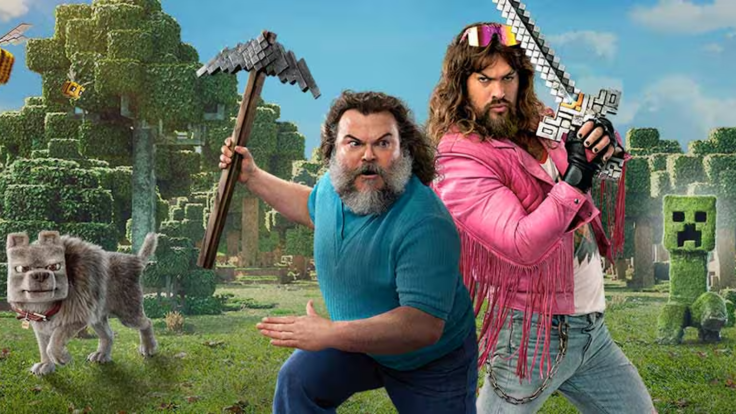
| Making a Prince Charming movie seems like the kind of half-joking idea that comes up when Disney executives realize they’ve run out of A-level cartoons to reboot. Disney Studios is indeed developing a film project based on the one-dimensional bachelor prince from Cinderella, slated to be directed by Paddington and Wonka filmmaker Paul King, based on his idea. And they’re talking to Chris Hemsworth to play a version of Prince Charming himself, though it’s unclear what that would entail—especially coming from King, who has mixed live-action and CGI animation in the past.
Capitalizing on a female-focused piece of I.P. by emphasizing the dude is precisely the kind of self-defeating thinking Hollywood allegedly outgrew in the late 2010s. After Bad Moms broke out, STX never actually made Bad Dads. But casting Hemsworth in yet another I.P./tentpole-style picture, despite his poor track record outside the Marvel Cinematic Universe, would be more than old-fashioned strategizing. It seems like a sign of comparative indifference on Disney’s part. Thirteen years after his breakout role in Thor, he remains defined by his singular marquee character, more so than many of his superhero peers. And the box office numbers are not kind. |
|
A MESSAGE FROM OUR SPONSOR
|
 |
|
An audacious fever dream that defies genres and expectations from Director Jacques Audiard (Rust and Bone, A Prophet), starring Karla Sofía Gascón, Zoe Saldaña, and Selena Gomez.
Set against a backdrop of original songs and dance, Emilia Pérez is an odyssey that follows four remarkable women in Mexico, each pursuing their own happiness. Cartel leader Emilia (Karla Sofía Gascón) enlists Rita (Zoe Saldaña), an unappreciated lawyer, to help fake her death so that she can finally live authentically as her true self.
In Select Theaters November 1
On Netflix November 13
WATCH THE TRAILER · GET TICKETS
|
|
|
|
|
| Notwithstanding talent, charisma, and presumed decency, Hemsworth is not a butts-in-seats draw. He might have been a movie star in a prior generation when actors were bigger lures than marquee characters. However, his top-grossing, non-MCU movie is Snow White and the Huntsman, in 2012—his first effort as a franchise actor outside Marvel. That movie grossed $401 million worldwide—less than his Thor stand-alones, but a minor success on a $170 million budget—and he got second billing between Twilight-era Kristen Stewart and Charlize Theron. But when Hemsworth took over the franchise in 2016, The Huntsman: Winter’s War tanked, with just $165 million worldwide on a $115 million budget.
That would become part of a near-unbroken streak of non-Marvel box office bombs for Thor. Whether it is a well-reviewed flick (Bad Times at the El Royale, Furiosa) or a less-embraced offering (Men in Black: International, In the Heart of the Sea), few, if any, have been a theatrical success. At this point, whether playing a “man in black” or voicing a young Optimus Prime, Hemsworth is closer to box office poison.
Alas, the 6-foot-3 Hemsworth is more closely associated with his marquee role than many of his aughts-era peers. Chris Pratt, a TV character actor turned movie star, has transcended Guardians of the Galaxy by headlining so many family-friendly franchises (Jurassic World, The Lego Movie, Super Mario Bros., Garfield, etcetera). Ryan Reynolds also followed up Deadpool with often kid-friendly hits like Pokémon: Detective Pikachu, and Free Guy—to say nothing of all-quadrant streaming flicks like Red Notice, The Adam Project, and Spirited.
Another comp, Chris Pine, may not successfully topline I.P.-driven tentpoles—last summer’s Dungeons & Dragons: Honor Among Thieves grossed only $200 million worldwide despite solid reviews and buzz—but he has won fans both for Star Trek and his co-starring turns in Wonder Woman and Into the Woods. And, relatively speaking, he made retroactively popular earlier appearances in the likes of The Princess Diaries 2.
But Hemsworth, an unknown Australian actor before his big Marvel break, remains identifiable as Thor, period. It’s a stiff irony that this definitive, not-a-theatrical-draw actor found his most considerable non-I.P. success in the two Extraction movies, arguably Netflix’s best English-language action franchise. Would those films have performed theatrically? We’ll never know, but the total combined global box office for Hemsworth’s post-Thor and non-MCU output—from Cabin in the Woods in 2012 to Transformers One in 2024—has been $1.77 billion worldwide on a combined budget of $1.15 billion.
We can debate whether Rush ($98 million on a $35 million budget in 2013) or 12 Strong ($67 million/$35 million in 2018) were ultimately profitable. Regardless, that’s still a miserable track record, especially for someone still mentioned as an A-level box office draw. Meanwhile, his big-budget flicks—including Men in Black: International ($253 million worldwide on a $110 million budget in 2019 with bad reviews and indifferent buzz)—have tended to flame out.
Yes, the 2010s were littered with handsome white guys heralded as the next Tom Cruise. Yet you don’t see Taron Egerton, Taylor Kitsch, or Garrett Hedlund still getting big-budget franchise opportunities. For some reason, Hollywood still treats Hemsworth like a 1980s Harrison Ford.
Commercially speaking, making a Mad Max: Fury Road prequel without Charlize was as dumb an idea as trying to extend the Men in Black franchise without Will Smith. The fact that Hemsworth is rumored for Paramount’s Transformers + G.I. Joe film and is talking to Disney about Prince Charming, so soon after the animated Transformers One (in which he provided no more of a commercial boost to that film than Chris Evans did when replacing Tim Allen as Buzz Lightyear in Lightyear) joined Furiosa as one of this year’s most predictable flops, risks turning him into a poster boy for white guys failing upward. One hopes studios will realize their errors, and Hemsworth will make more movies like Rush and Bad Times at the El Royale, where his talent is more important than his imaginary drawing power. |
|
|
| Gavin Newsom’s proposal to double California film incentives to $750 million a year sounds great for the crippled local industry. But, at least so far, there’s no mention of improving the percentage rebate, fixing the permitting bureaucracy, and other hurdles. [NY Times]
Ari Emanuel is selling a bunch of Endeavor assets to… himself—or, rather, to Endeavor’s subsidiary, TKO. Bill Cohan sounds a bit suspicious. [Puck]
Netflix just gave teens an easy way to share sex scenes—sorry, favorite moments—from shows and movies. [TechCrunch]
Disney was dreading the Journal’s Kamala-Dana friendship story, but it turned out pretty harmless—a nice deep dive on their dual rises and, importantly, how they have distanced themselves since Walden took over ABC. [WSJ]
Just like Leo DiCaprio and your buddy’s high school band, this World Series is huge in Japan. [AP]
Lorne gave John Jurgensen pretty extensive access to the week of the SNL premiere, but the story still doesn’t explain why Shane Gillis isn’t playing Trump this season. [WSJ]
Now for some highlights from the Landgraf talk… |
| Pearls of TV Wisdom from John Landgraf |
|
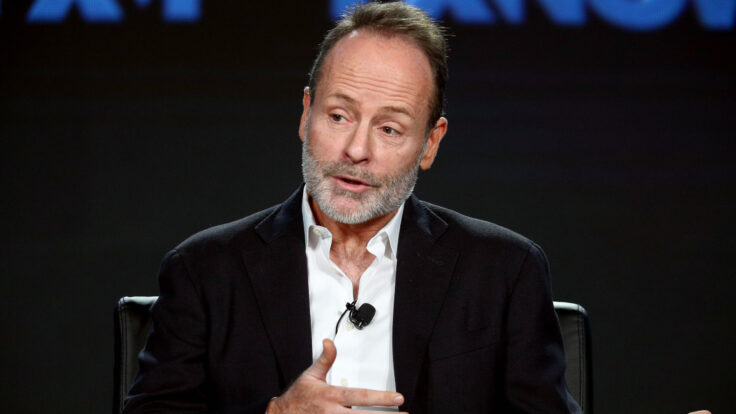
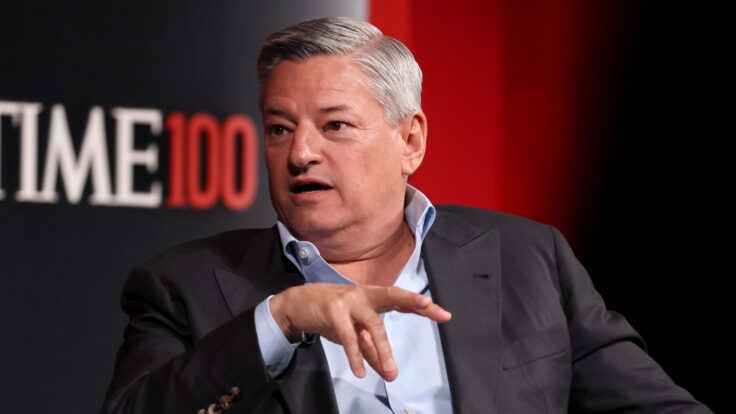
| John Landgraf speaking engagements are the definition of must-see TV for me. Landgraf, the longtime C.E.O. of FX Networks, the so-called Mayor of Television, and the coiner of the phrase “Peak TV,” has long been one of the smartest people in town and isn’t afraid to call B.S. He’s had a great year, with record-breaking Emmy wins for both Shogun and The Bear, so he was a natural choice for our first live event in L.A. for my podcast, The Town, last Thursday at NeueHouse Hollywood. The first half of the chat with me and Bloomberg’s Lucas Shaw posted today, the second half will be live tomorrow, and tonight I thought I’d pull out some choice nuggets from the conversation, which I edited for length and clarity… |
|
|
| On the next era of television after Peak TV…
Landgraf: Someone suggested “Peaked TV.” It was 180 [shows] in 2002. It was a little under 300 in 2012. And it was 600 in 2022. It was just obvious that that was not sustainable. This year we’re probably going to be around 500, and that, unfortunately—I wish it weren’t too many shows—but it’s just too many shows.
On the Ellisons owning Paramount…
If it’s a new entity owned by somebody worth $200 billion, it can spend whatever it wants to chase after the streaming future. They just made a consulting deal with [former Netflix TV chief] Cindy Holland, and she’s damned good. So, if you give her resources—she’s got good taste—all of a sudden something that isn’t really a major competitor today could be one tomorrow.
On whether volume has killed quality in TV…
It’s just really hard to make a good television show. It takes an enormous amount of time and energy and courage and devotion. And the whole industry ramped up beyond the capacity to devote that amount of time. Also, famously, streaming companies want it now, right? Because they’re trying to hit this very rapid cadence.
Quality is what people love and want to watch. And I haven’t felt that the industry in the Peak TV era was particularly focused on that. So you get someone like Richard Gadd to make Baby Reindeer outside the system, but the dominant output of those hundreds and hundreds of television shows is more about speed and the algorithm than taking the time. I’m not denigrating anybody’s talents involved in them. I’m saying it just takes time. You have to be patient, and that’s hard when you’re fighting for your life.
On who’s to blame for the production exodus from L.A…
I don’t tend to single out individuals. I try to look at system dynamics or ecosystem dynamics. You can’t multiply from 180 to 600 television shows and then break the system by which there was a way of measuring profitability for television shows. That’s what “cost-plus” is. You can say who put the cost-plus model in place. I won’t do that. [Ed. note: It was Netflix.]
So now we have no way of measuring, other than the super-secret sauce of data and statistics that are held by these platforms. And we don’t have any way of allocating capital and talent to eyeballs. We can’t sell into multiple markets because the markets are distorted. We had an ecosystem for a long time where there were all these major studios, none of which were ever gonna destroy any of the others. They were all gonna be there forever. And so they could afford to sell to each other.
When you have entities like Apple and Amazon and, frankly, Netflix, that could run away with it all, you can’t just sell to them because they can afford to overpay for years, decades, right? So it breaks the market. Meanwhile, you’re going down from 22 [episodes] to 18 to 15 to 13 to ten to eight. And you can’t make a show like Shogun without writing all the scripts in advance. It’s like a $200 million feature film. You don’t go into production with the first act written and guessing what acts two and three are going to be. So then you break the relationship between the writers room and the production, which is a key factor in how writers learn to be producers and directors, and how they learn to run shows. |
|
|
| Silicon Valley vs. Hollywood |
|
| On Silicon Valley’s criticism of Hollywood…
I was really frustrated for a long time because what I heard is a lot of shit and a lot of shade from Silicon Valley. They crapped on Hollywood and its excesses. I want to know what that group of people have put into the culture—okay?—that is the parallel of what this town has made over 100 years.
On how the tech players are influencing entertainment…
They’re going to push for capital efficiency in their model. And that capital efficiency breaks a lot of the traditional apprenticeship, and the union structure, and the production structure, and a whole lot of things that were a part of what undergirded the quality of our industry. I don’t think we’re struggling for quality because we lack talent. I think we’re struggling for quality because we lack the training and support system that allows the best talent to emerge and take the time and aim high.
On using data in the casting process…
Look, Jeff Bridges is one of our national treasures. He’s an absolutely great actor. But what makes magic is the connection between an actor and a role. Jeff Bridges is not great in every role he ever played. What is the algorithm going to tell you about that? “Put Jeff Bridges in this part, and this is going to be one of his iconic roles.” It can tell that, yes, Jeff Bridges is popular. That’s a shit reason to make a decision about why to cast somebody in a part. It just is.
On whether Big Tech can monopolize the content industry…
I’m not sure they’ve given up on that dream, but I don’t think they can do it. I don’t think Disney’s going anywhere.
On what Apple is doing in entertainment…
I have no idea. I mean, I know all the people over there. They’ve made some good things. They have a lot of money. And they’ve been committed to it for a long time. But I don’t know. I don’t understand their business model. That’s part of the problem with predicting the future. You can start to predict the future if you have an understanding of the relationship between “this money goes in” and “that value comes out.”
But a billion dollars is a billion dollars, right? [If you’re Apple], how do you measure whether to put in $3 billion, $4 billion, or $5 billion? Maybe they know something that we don’t. You could end up easily with tens of billions of dollars spent more than is actually efficient in the system, because how do you measure that efficiency? |
|
|
| On where FX would be if Disney hadn’t bought it in 2019…
It would be dead.
On HBO’s issues with a financially challenged corporate parent…
I wouldn’t count them out. There have been a lot of people with really good taste there. I think it’s about a process, and that process is about a willingness to work hard from the ground up on ideas, concepts, characters, and scripts. Take the time it takes to get something right, then figure out how to get it right in production, how to cast it, how to make it in the right place, how to put the resources behind it, how to market it. That process still exists at HBO.
On whether Disney will keep the FX brand or sunset it into Disney+ or Hulu…
Well, that’s a $64,000 question. I have a point of view, and whether my point of view is right or will prevail, I don’t know. Ultimately, if there are a limited number of brands, if you get down to the point where there’s Apple and HBO and FX that signify a certain kind of ambition or quality, then a brand starts to become relevant again. So, what I’ve been trying to do is survive through that brutal culling to get to the other side.
On the bifurcated process at the streamers…
You have the business power, the decision-making power, the power about money and strategy disconnected from the creative authority. That’s what Silicon Valley has brought as a model into our business, and I don’t agree with that. I think you have to connect the creative authority and the business authority because they’re one and the same. You take care of business by making good creative products.
On whether he’d have been fired if Shogun flopped…
I’m not sure about that one.
On whether greenlighting and filming most of seasons three and four of The Bear back to back impacted how the not-very-well received Season 3 came out…
No, because Nick Grad and I sat with [creator] Chris [Storer] at lunch, and Josh Senior, his partner. We said, “You’re at the point now where if you want more than one season of pickup, we can do it. And it may help you, because you have actors that are movie stars now; they’re going to want to go do other things, and you can figure out when you’re going to make the shows and when to release them.” And they said, “No, we can’t work that way. We only want one season.” So we picked up one.
And then they got into making it, and they called us and said, “Yeah, we think we have two seasons here. Can you change the one-season pickup into a two-season pickup?” I think that the third season of the show, which is the one you referenced as not as well received, is absolutely exactly the season of television that Chris Storer wanted to make. It is a very deeply personal show. That’s part of why it’s great. There are a lot of reasons it’s great, but one of them is the relationship between the creator, the author, and the characters, and he’s been stuck a lot at times in his life, and he wanted to make a season about stuckness. I’ve been doing this a long time. I was well aware that stuckness is not necessarily the most riveting [thing to watch]. But I also think there are so many things in that [season] that are just absolute masterpieces. And I will say, knowing what I do know about the upcoming season, for those that have stayed with it, they’re going to be really well rewarded. Because after stuckness comes unstuckness.
On the industry-wide impact of the Netflix model…
Take away that incentive and make everything a cost-plus [model], and there’s no pot of gold anywhere. In fact, the only way you’re even measuring the value of this thing is that you have a giant portfolio of content that a trillion-dollar company made, and then you’re measuring somewhere in the bowels of that company whether that portfolio created a return on investment. That doesn’t incentivize the empowerment of creative people because even a massive hit doesn’t really change the trajectory of Netflix. The Bear and Shogun did change the trajectory of FX. Not only the creators, but the brand, and the value of the brand.
On his YouTube diet…
Nothing.
Listen to the full conversation here. |
|
|
| Thursday’s interviews with mostly optimistic Kamala supporters sparked skeptical responses, as did my criticism of Sony Pictures C.E.O. Tony Vinciquerra and his commentary blaming Hollywood unions for driving production overseas. Some examples of both…
“Speechless at the naiveté of Hollywood. Did any of these people comment to you how poorly Harris has done the past three weeks in her interviews or the CNN town hall? She can’t connect with undecided voters. The Hollywood crowd are in for a surprise. Trump’s going to win and win comfortably.” —An executive
“The right bemoans the flyover perspective of the mainstream media. Your interviews with the Hollywood hoi polloi reinforces that P.O.V. Reminds me of the swell Pauline Kael quote that she ‘didn’t know anyone who voted for Nixon.’” —A professor
“Tony’s point (which I completely agree with) revolves mostly around the IATSE increases. Productions aren’t leaving the U.S. due to increases in SAG/WGA [wages and benefits]. Those are drops in the ocean compared to the increases in the new IATSE deal. For example, I recently ran a budget for a film here in California. I couldn’t get the budget below $19 million. With those same above-the-line costs and amount of shooting days, we had a budget run for the U.K. and it came out to $9 million. On my film that I am a week out from shooting now, the new IATSE deal increased the [fringe benefits] alone by six figures. For an independent film, that increase requires the production to reduce the shoot by multiple days. Something’s gotta give—the quality of the film shouldn’t be the thing to suffer.” —A producer
“It’s not just the unions that are an issue in L.A. Our firm works with a lot of the major YouTubers and streamers, and L.A. is coming after them for not having filming permits in their homes. The city’s policies are a huge problem. They could be getting this young talent’s money; instead, they’re all moving to Austin and Florida. It’s idiotic.” —A publicist |
|
|
Have a great week,
Matt
Got a question, comment, complaint, or beautiful feet pics? Email me at
Matt@puck.news or call/text me at 310-804-3198. |
|
|
|
| FOUR STORIES WE’RE TALKING ABOUT |
 |
|
 |
| Wall Street Truthers |
| How left-leaning Wall Street bigwigs are bracing for Trump 2.0. |
| WILLIAM D. COHAN |
|
 |
|
 |
|
|
|
|
|
 |
|
|
|
Need help? Review our FAQs
page or contact
us for assistance. For brand partnerships, email ads@puck.news.
|
|
You received this email because you signed up to receive emails from Puck, or as part of your Puck account associated with . To stop receiving this newsletter and/or manage all your email preferences, click here.
|
|
Puck is published by Heat Media LLC. 227 W 17th St New York, NY 10011.
|
|
|
|