 |
|
Welcome back to What I’m Hearing, coming at you from TIFF, where I’m hosting a Puck private dinner tonight with great filmmakers, producers, and execs from Universal/Focus, Neon, A24, Bleecker Street, Cinetic, WME, 30West, and more.
Lots of calls tonight on the Showrunner alliance forming… I expect that will be a big story this week…
Programming note: I’m back on CNBC Squawk Box at 6:50 a.m. Eastern tomorrow. This week on The Town: Lucas Shaw and I discussed why the Charter/Disney standoff is like Taylor Swift, and TIFF C.E.O. Cameron Bailey explained how Toronto audiences pick Oscar winners. Subscribe here and here.
Was this email forwarded to you? Click here to become a Puck member for 25 percent off.
Discussed in this issue: François Henri-Pinault, Bob Iger, Ken Griffin, Jimmy Fallon, Dana Walden, Tom Rothman, Taylor Swift, Duncan Crabtree-Ireland, Robbie Brenner, Steve Schwarzman, Teddy Schwarzman, Richard Lovett, Mila Kunis, and the most Hollywood Times correction of the year.
But first…
|
|
|
| (Friday’s WGA/AMPTP exchange was too depressing)
Now, a fascinating story I stumbled on here at TIFF… |
| Ken Griffin’s Secret War on ‘Dumb Money’ |
|
| I was in Roy Thomson Hall on Friday night here in Toronto for the world premiere of Dumb Money, the very fun Craig Gillespie film about the GameStop meme-stock frenzy of 2021. If you recall, during the height of Covid, retail investors ran up the share prices of GameStop and others, eventually inflicting a “squeeze” on irate institutional investors who had shorted the stocks. As the credits rolled and the audience applauded, I wondered what Ken Griffin—the Wall Street titan, billionaire proprietor of the Citadel hedge fund, and an alleged villain of the GameStop saga—thought of the film. You won’t believe this, but he’s not a fan.
Like, really not a fan. I’ve since learned that Griffin is locked in a nasty behind-the-scenes legal fight with Sony Pictures over his depiction in Dumb Money, which is set to begin its theatrical roll-out on Friday. Griffin has hired at least two separate law firms and sent multiple threatening letters, one of which I obtained, and he’s consulting with crisis P.R. people to push back aggressively on his depiction by actor Nick Offerman and the filmmaking team. Griffin claims the movie “crosses the line into the knowingly false and defamatory portrayal of Ken and Citadel Securities,” according to the letter sent to Sony Pictures general counsel Leah Weil by well-known media attorney Tom Clare, who is joined by Quinn Emanuel partner Bill Burck.
My first thought was… really? Like I said, I saw the film, and no, the depiction of Griffin certainly isn’t positive—ditto the portrayal of other GameStop players, like Gabe Plotkin (Seth Rogen), whose fund lost billions shorting the troubled game retailer, and Steve Cohen (Vincent D’Onofrio), whose Point72 fund helped prop up Plotkin (and who, of course, is wearing a Mets hat in the film). But to my eye, the sharp script, written by former financial journalists Rebecca Angelo and Lauren Schuker Blum, doesn’t stretch the key facts beyond the widely circulated news headlines about the GameStop frenzy and the S.E.C. investigation, or the source material book, The Antisocial Network, by Ben Mezrich. And I know it was vetted heavily by both Sony and producer Black Bear Pictures, which hired the Jassy Vick Carolan firm.
Griffin seems most upset at the supposed suggestion that Citadel Securities, his e-trading firm that executed stock trades for the Robinhood app, colluded with Robinhood’s co-founder Vlad Tenev (Sebastian Stan) to halt trading on GameStop and other meme stocks during the height of the short squeeze chaos, which led to losses for many small, retail investors. The film “revives and amplifies this many times debunked collusion narrative” and “effectively accuses Griffin of committing perjury when he denied colluding with Robinhood during his congressional testimony on the matter,” the Griffin letter states.
Well, not really. The film is pretty careful to note that collusion between Citadel and Robinhood was never proven; it doesn’t show Griffin and Tenev talking about halting trading; and a post-script title card notes that a lawsuit over the subject was dismissed and the SEC probe cleared Citadel. That’s actually kinda the point of the movie: Griffin and his cohorts didn’t have to do anything illegal here because the Wall Street players who control the stock market enjoy broad—and legal—discretion over how they operate.
The film does, however, lean on facts alleged in that lawsuit by GameStop investors, which included private conversations among Robinhood executives that showed they did speak with Citadel Securities in the days before trading was halted. According to the Journal, “while the communications don’t make it clear what the firms discussed, they indicate the talks were acrimonious. In an internal chat message dated Jan. 27, the president of Robinhood’s brokerage arm, Jim Swartwout, said ‘you wouldnt believe the convo we had with Citadel. total mess.’” Lawyers for the GameStop investors then argued that the communications showed Citadel Securities pressured Robinhood to curb small investors’ trading.
So, yeah, Griffin’s position seems kinda weak to me, and he doesn’t help himself by basing the letters not on the final film, but on an early draft of the script and the trailer. For instance, he takes particular offense at one line, “retail investors always lose,” that the lawyers say Griffin would never say because, of course, he loves retail investors. But Griffin doesn’t actually say that in the film, Plotkin does. And even if he did say it in the film, some light googling reveals Citadel has a looong history of fines for manipulating the markets in ways that help his firm and harm other investors, like failing to report short interest positions. All Wall Street firms are fined, but Investorturf.com has helpfully put together a list of the Citadel fines here, and there’s even a change.org petition to ban Citadel from trading and “investigate Ken Griffin for fraud.”
Whatever, Griffin certainly isn’t the first rich guy to try to bully a Hollywood studio over an unflattering movie—though it’s definitely funny that he’s bullying by claiming he’s not a bully. He’s also pissed about, as the letter states, “the suggestion that Ken purchased paintings by DeKooning and Picasso to keep them away from Steve Cohen, when, in fact, it was a DeKooning and a Jackson Pollock, which he bought for reasons having nothing to do with Steve Cohen.” Yeah…
Sony chairman Tom Rothman, who is said to really like the film, hasn’t wavered in defending it, and studio lawyers have fired back at Griffin’s team. Sony declined to comment. In a statement to me, Zia Ahmed, a rep for Griffin, seems happy the dig at retail investors is not said by his client in the final cut: “We respect those involved with the film, but it was important for us to clarify a couple of important misrepresentations in it. We appreciate the studio addressing our primary concerns and hope the audience enjoys this movie about a fascinating moment in the financial markets.”
There are a couple other amusing narratives here. One is that Black Bear, the $30 million film’s financier and producer, is run by Teddy Schwarzman, son of Blackstone chief and Wall Street legend Steve Schwarzman. Asked if his dad or any of his dad’s friends had complained about Dumb Money, Teddy shook his head no, according to a report in the Times. And Teddy only got involved because MGM, which was developing the film, was bought by Amazon, which put it in turnaround. Perhaps not coincidentally, Griffin is friendly with Jeff Bezos and paid $8 million for two seats on Bezos’ Blue Origin rocket (he donated both).
And, of course, Sony is no stranger to these controversial fact-based movies: The Social Network, about Mark Zuckerberg, which led to a prolonged back-and-forth; Zero Dark Thirty, which Senate Intelligence Committee chairs Dianne Feinstein and John McCain called “grossly inaccurate and misleading;” and, of course, The Interview, which also featured Seth Rogen, and whose depiction of North Korea’s Kim Jong Il is said to have led to the Sony hack. Captain Phillips, 21, Moneyball, the list goes on. My friends in legal kinda love these fights because, The Interview notwithstanding, a) the law is so heavily on the studios’ side, and b) when the dispute inevitably leaks, as it is here, the media attention helps put butts in seats.
Finally, Griffin’s letter admonishes Sony that if the studio doesn’t “correct” the movie, “viewers will wrongly believe that Ken and Citadel Securities conspired with Robinhood to end the GameStop short squeeze and stick it to retail traders—and then covered it up with false testimony to Congress.” And he’d be within his right to sue for defamation. We’ll see if he follows through. Griffin seems unaware of the Streisand Effect, but perhaps his P.R. person can explain it to him. |
|
|
| “As a role model, Danny has consistently been an excellent one.” –Ashton Kutcher, basically begging to be destroyed online along with wife Mila Kunis for vouching for the character of their TV co-star and convicted double-rapist Danny Masterson. (They apologized.)
More Masterson: Scientology was in the background of this case from the beginning, so I’ve been wondering, will this verdict impact the church at all, or is it just more bad P.R.? I asked Scientology chronicler Tony Ortega, who emails:
“It’s hard to say for sure. But I am keeping a couple of things in mind. First, there’s the story I broke early in the second trial, that the Deputy D.A. revealed to Judge Olmedo that the grand jury looking at the Masterson case is still ongoing—more than five years after it began. Also, based on what witnesses have said, federal agents have been involved in the investigation. Now, will any of this result in additional charges against Scientology figures and not just Masterson? I don’t know, but it’s something the victims and I have wondered for years.”
Now for Jonathan’s take on the latest WGA-AMPTP back and forth from Friday… |
 |
| Will the AMPTP Crack? |
| With the dual strikes causing real damage and the companies pursuing divergent goals, holding the Hollywood management alliance together may be impossible. |
|
|
|
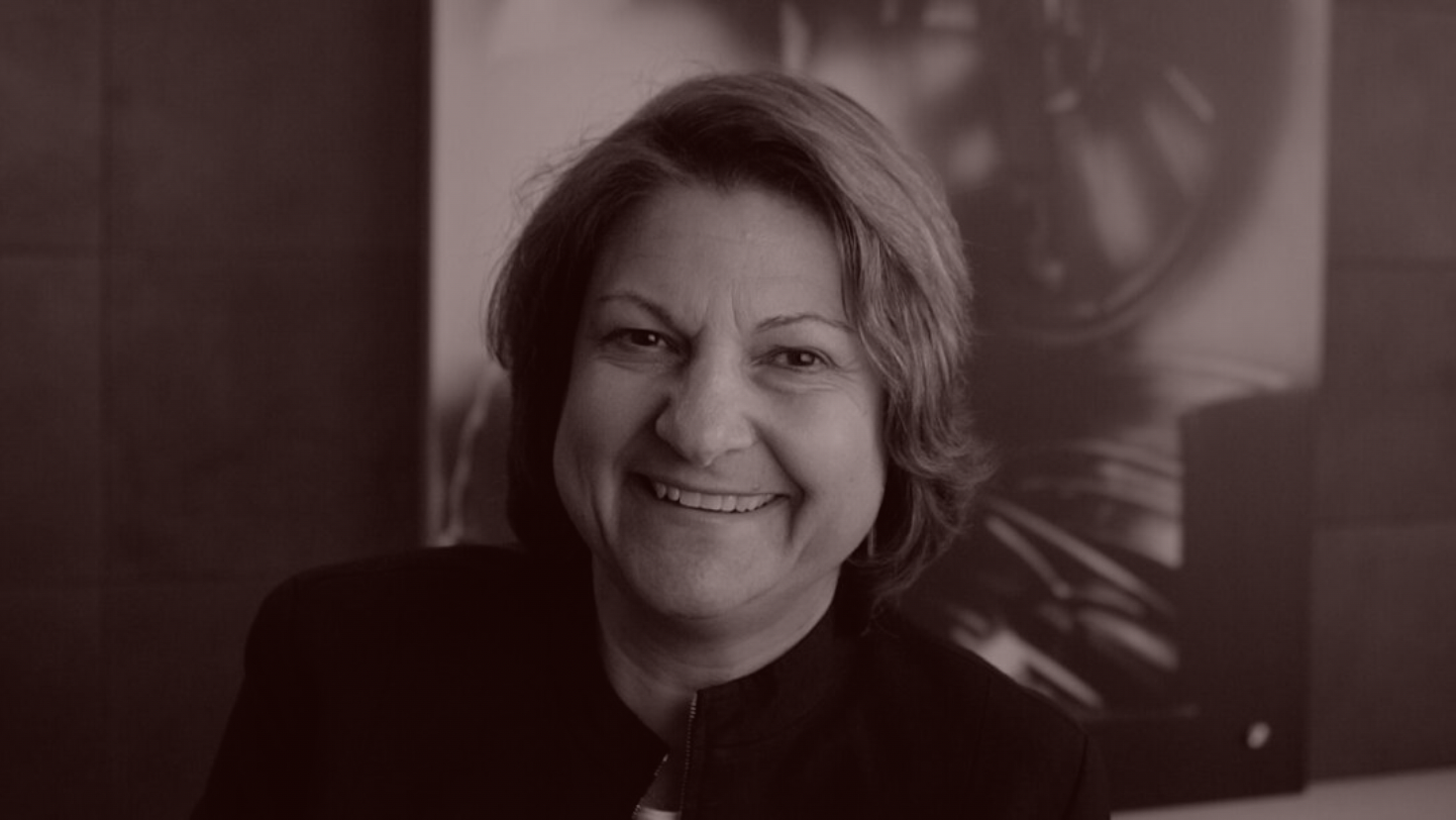
| Hollywood as we know it is falling to pieces—and with it perhaps goes the AMPTP, the streamers and studios’ official bargaining unit. It’s not just this summer’s two seemingly endless strikes, probably soon to be joined by a SAG-AFTRA vs. video game walkout (more about that below). Nor is it just the latest back-and-forth between the WGA and AMPTP: while the guild told members on Friday that individual companies are willing to negotiate separately, the alliance, led by Carol Lombardini, responded frostily that it is “unified.” Her response flicks at a requirement—perhaps tucked away in its elusive bylaws—that the organization will act only given unanimous agreement by the AMPTP’s eight so-called Class A members. That empowers the organization to more readily say no than yes.
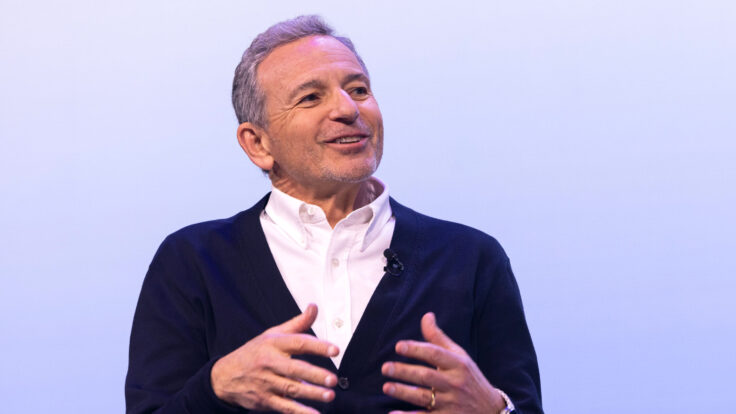
Of course, this is all just the labor tip of the iceberg. Two months ago, Disney C.E.O. Bob Iger said publicly what should be obvious to everyone: linear networks aren’t core to his company’s business. And now he’s in a dispute with Chris Winfrey’s Charter Communications that will either bring higher carriage fees to Disney, or lead Charter to abandon the cable TV business altogether to focus on its internet service provider operations. This business is getting scary for the traditional studios.
Streaming is where the action is, but to compete, the legacy studios have to build what Netflix built—a global scripted television channel. But Netflix had no fewer than seven advantages that now elude Disney, Warner Bros. Discovery, Comcast NBCUniversal and Paramount Global. (We’ll look at Sony Pictures separately.)
First, of course, Netflix had first-mover advantage. Second, the legacy companies gave Netflix a decade-long head start. Third, the legacy companies actually helped build Netflix by supplying it with content. Fourth, Netflix enjoyed a built-in direct-to-consumer relationship with audiences thanks to its mail-order DVD rental business. Fifth, the company was able to raise money as a tech company. Sixth, Netflix sought capital at a time when investors were willing to pay for growth and were not demanding profits. And seventh, Netflix was seeking funds at a time when the overall economic climate was more robust.
Apple and Amazon, powerhouses in other businesses, can keep running their content services as they wish, and Sony can afford to do the same with its Sony Pictures unit, which it operates primarily as a supplier (which is why mentioning Sony Pictures in the same breath as the other legacy studios is misleading). Disney is hurting financially but remains highly diversified in theme parks and consumer products. Of course, the vague notion of Apple buying Disney adds an additional wrinkle. And, as everyone has speculated, a Comcast-WBD merger seems likely, and if it requires divestment of NBC’s broadcasting assets—perhaps while retaining the NBC News/MSNBC operations and merging those with CNN—so be it. That leaves Paramount, however diminished, which will exist as long as Shari Redstone wants it to exist.
And back to labor: SAG-AFTRA already has a separate deal with Netflix, dating to 2019, but one that was renewed in 2022, two years after Netflix joined the AMPTP Class A membership. That separate deal modifies the SAG-AFTRA/AMPTP deal, and could be the model that leads to an AMPTP split.
If so, it wouldn’t be the first time. The AMPTP we know today was founded in 1982, in the wake of a political dispute in the old AMPTP, which stood for the Association (not Alliance) of Motion Picture and Television Producers. That dispute, between Universal chief Lew Wasserman, a longtime powerhouse in Hollywood labor relations, and AMPTP board chair and Fox C.E.O. Dennis Stanfill, led Wasserman to pull Universal from the old AMPTP and Paramount C.E.O. Barry Diller to withdraw his company as well, forming a new organization called “The Alliance”—which several years later became the nucleus for today’s AMPTP. In the meantime, one result was two separate WGA agreements in 1977, one with eight companies and the other with the (old) AMPTP.
In short, history tells us that when the WGA hints at separate bargaining, it’s pressing some very sensitive buttons at the AMPTP. And when the now tech-executive Diller publicly suggests, as he has, that the legacy studios split off from the streamers, he’s talking about a road similar to one he himself tread in his salad days 45 years ago. But this time the ingredients are different: Apple, Amazon and Sony are on one plate; Disney, Comcast NBCU and WBD on another; Netflix is somewhere in between; and Paramount is served at the kids table alongside non-members Lionsgate and AMC.
The result might not just be a split in the AMPTP, but a complete fracturing into multiple independent bargaining units or company-by-company bargaining, with the unions targeting the weakest or most compliant players first. That’s the evident strategy behind the WGA’s missive, and the AMPTP’s response can’t mask how brittle are the ties that bind the companies. Those ties may hold for now, but the AMPTP’s unanimity requirement paralyzes the organization and may ultimately be its downfall.
And now, a little more on the video game negotiations… |
| How Likely Is a Second Actors Strike? |
|
| Meanwhile, SAG-AFTRA may be leveling up to a second strike, this one against the video game industry, with concerns focusing on voice and performance capture actors. After nearly a year of talks, strike authorization ballots are due on Sept. 25. The performers are seeking wage increases—as with the AMPTP negotiations, the union wants an 11 percent inflation-catchup increase in the first year, while game companies are offering five percent—and, yes, the biggest enemy is A.I. “Voice and performance capture A.I. are already among the most advanced uses of A.I.: the threat is here and it is real,” SAG-AFTRA’s Duncan Crabtree-Ireland told members. Representing the game companies is Bill Zuckerman, who declined comment. However, Scott Witlin, who repped the industry during its last major negotiations in 2016-17, told me he expects that A.I. issues “will be especially complicated for the companies,” given that non-union competitors face no such A.I. limitations. So, will they strike? SAG-AFTRA'S 2016-17 video game walkout lasted an epic 340 days. This time, a strike would affect ten companies, including Disney, EA, Take 2, Warner Bros. Discovery, and Activision Blizzard. At least two more days of talks are scheduled Sept. 26-27, but given how tightly the issues are intertwined with the TV/theatrical strike, a walkout seems likely and, with it, more rallies, picket lines, and even more crew and others sidelined as NPCs in a season of strikes. —Jonathan Handel |
|
|
| It’s tough picking the most interesting detail from Alex Sherman’s 11,000 word Disney succession opus: Bob Chapek swearing at Bob Iger? Iger and Chapek both signing off on the infamous statement trashing Scarlett Johansson, each believing it was the other’s responsibility? Iger making a racially insensitive joke about a Black executive at a company retreat? Chapek petting a hippo while his team was figuring out how to spin terrible earnings? Dana Walden setting up a fake Brentwood walk with Iger so he’d be available for the call to ask him back? Great stuff. [CNBC]
Fanatics C.E.O. and party-throwing press whore Michael Rubin finally got his Vanity Fair profile, and it’s as vomit-inducing as you’d expect. [VF]
I hope you’re sitting down: The RottenTomatoes Tomatometer, owned by Warner Bros. and NBC Universal, is easily manipulated by studios. [Vulture]
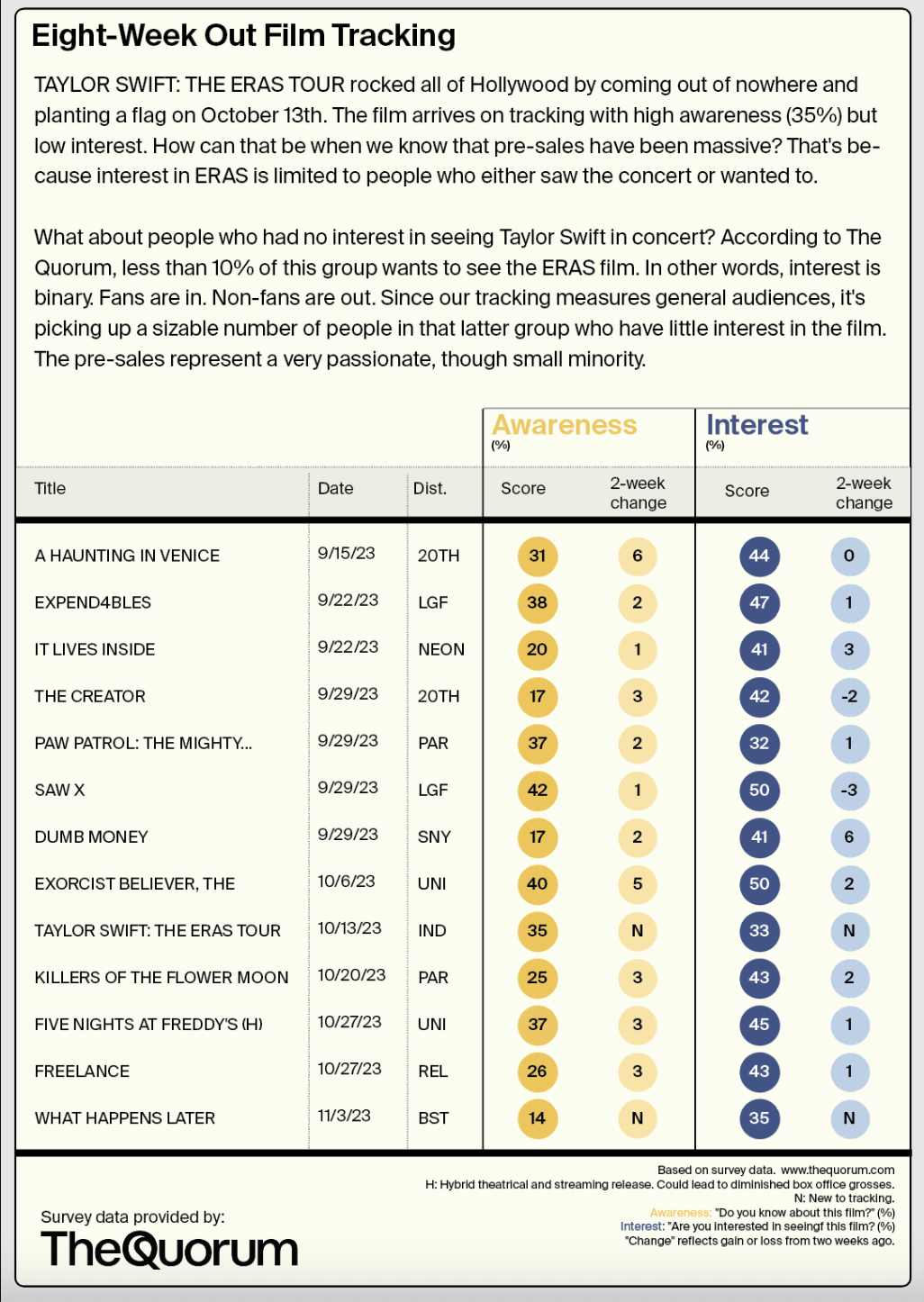
Will the Taylor Swift concert film attract any non-superfans? Does it matter? [The Quorum]
France’s Deezer is testing an overdue concept in music: the artists that fans actually search for will be valued more in streaming. [Financial Times]
What’s most surprising to me about Krystie Lee Yandoli’s takedown of the terrible culture at Jimmy Fallon’s Tonight Show is how many widely known Fallon anecdotes aren’t in the story. [Rolling Stone]
If you can’t get enough of the Disney/Charter standoff, Ben Thompson goes waaaay deep. [Stratechery]
James B. Stewart’s Barbie origin story comes with one of the most hilariously only-in-Hollywood corrections at the end. I actually feel bad for all the publicists having to navigate the credit grabs on this movie:
An earlier version of this article misidentified one of the people who discussed shades of pink in London. It was Greta Gerwig and Ynon Kreiz, not Robbie Brenner and Mr. Kreiz. The article also misidentified one of the people who discussed that the film “Barbie” was a potential hit. It was Ms. Brenner and Mr. Kreiz, not Margot Robbie and Mr. Kreiz. [NYT] |
|
|
| Lots of opinions on CAA, thanks to my Thursday/Friday analysis of its sale to French billionaire François-Henri Pinault. Plus a dash of Bob Iger’s fight with Charter…
“You’re right to wonder why Pinault is buying CAA at the very top of the market. All those massive streamer buyouts are going to pull way back after the strike, the TV networks are in a death spiral, sports salaries will necessarily decline with TV revenue, and nobody under 40 watches more than one or two movies a year in theaters. This will all materially impact the talent agencies, and none more than CAA because of its size and lack of diversification. If he’d waited a year, Pinault could have taken this asset off TPG’s hands for far less.” –An investor
“I’m surprised you’re taking CAA’s word that it will distribute some of the huge proceeds of this deal to employees. Ari [Emanuel] took $300 million out of this place [Endeavor] when it went public, and what our people got was really disappointing.” –A WME employee
“CAA buying UTA? No way the government allows that.” –A lawyer
“[Richard] Lovett is one of the great mysteries of Hollywood: the entire town will burn down and somehow he will emerge unscathed.” –An agent
“Thanks for not tearing into Richard. That’s lazy, and not the experience of those of us who actually work here.” –A CAA employee
“Is Lovett living rent free in your head? No way the Kering people tolerate his cost vs. his return.” –An agent
“Completely perplexed by the Iger missteps here. Announce to the world you’re going to break out ESPN from linear right before your negotiation deadline with Charter, giving them only more leverage. Then to counter that, advertise and boast about your live TV subscription service [Hulu+LiveTV], increasing its value just before negotiations begin in earnest on that deal. These moves combined could end up costing billions. Can’t believe Iger didn’t consider these implications. But maybe he did and is just throwing up his hands? Or has a much larger play in mind?” –An executive |
|
|
| The Taylor Swift movie debuts onThe Quorum early tracking chart with high awareness and low interest. Her fans are in… everyone else?? |
|
|
Have a great week,
Matt
Correction: On Thursday I mentioned that STX Entertainment was a money-loser for private equity firm TPG. Sources at both companies say TPG actually eked out a small profit on its investment in STX. Apologies!
Got a question, comment, complaint, or an 8-minute standing ovation? Email me at Matt@puck.news or call/text me at 310-804-3198. |
|
|
|
| FOUR STORIES WE’RE TALKING ABOUT |
|
|
|
|
|
 |
|
|
|
Need help? Review our FAQs
page or contact
us for assistance. For brand partnerships, email ads@puck.news.
|
|
You received this email because you signed up to receive emails from Puck, or as part of your Puck account associated with . To stop receiving this newsletter and/or manage all your email preferences, click here.
|
|
Puck is published by Heat Media LLC. 227 W 17th St New York, NY 10011.
|
|
|
|