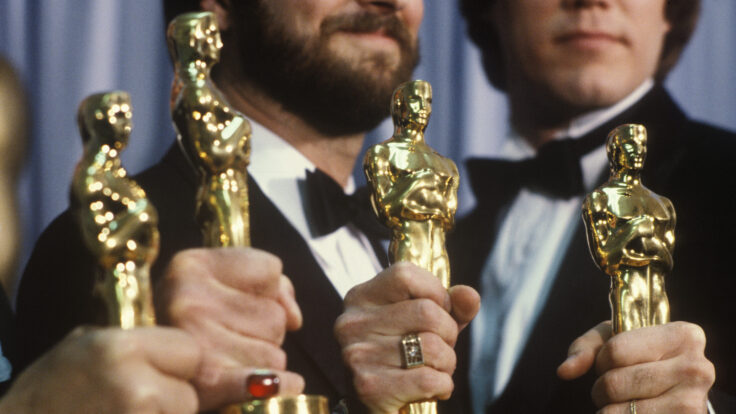
Welcome back to What I’m Hearing, and a reminder to Oscar voters: Submit your ballot by 5 p.m.
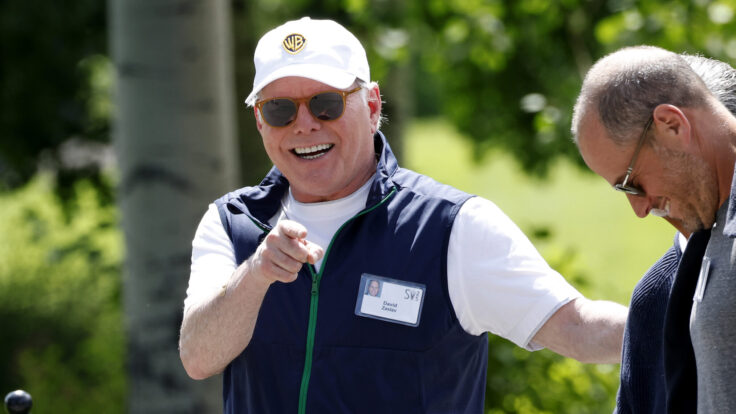
tomorrow or Bruce Vilanch will come to your house and slap you in the face. That goes for David Ellison, too, even though the Paramount owner is busy this week trash-talking Netflix to any European regulator who will listen.
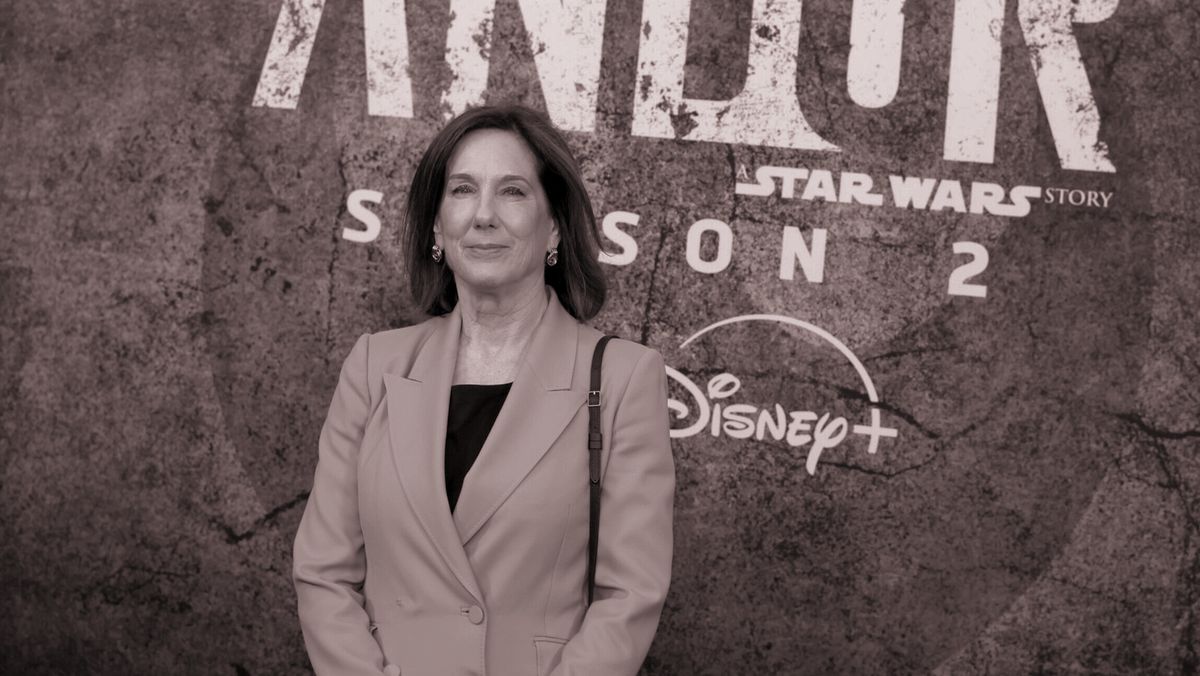
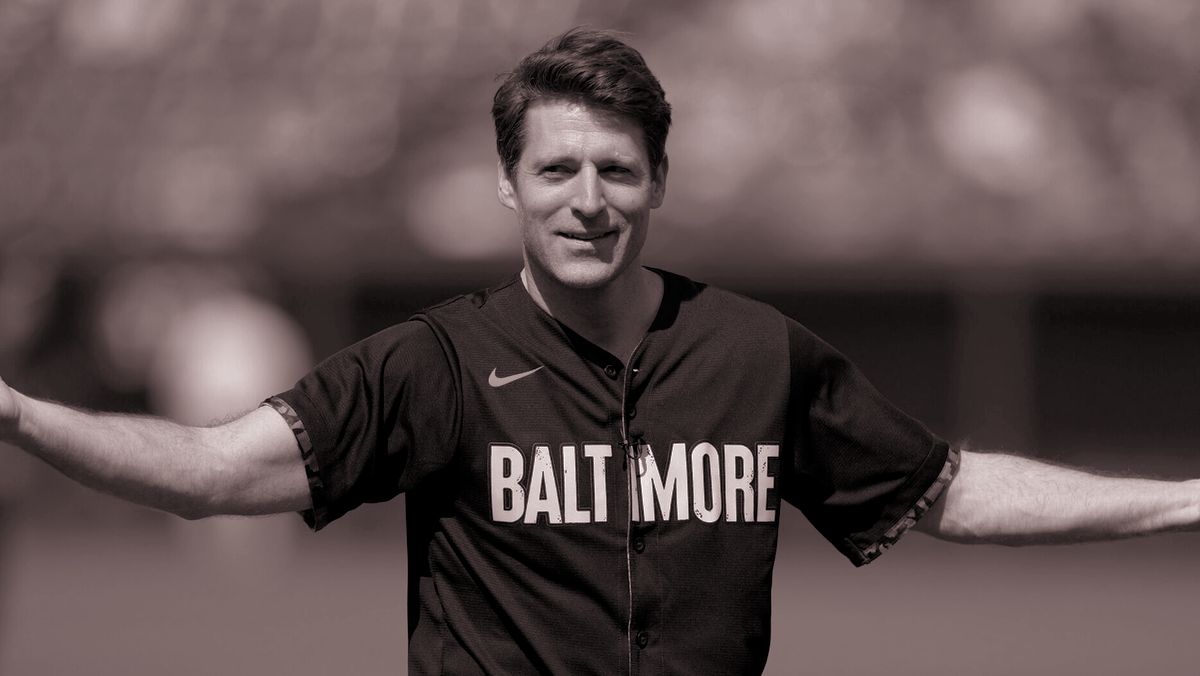
Tonight, some thoughts on Kathleen Kennedy’s exit (finally!) and the future of Lucasfilm. Plus, news on former Paramount co-C.E.O. Brian Robbins’s next venture, the Netflix deal that explains a
lot about why Ted Sarandos covets Warner Bros., and more.
💫💫 P.S.A.: Monday’s issue will arrive on Tuesday due to the M.L.K. holiday weekend.
Mentioned in this issue: Kathleen Kennedy, Ted Sarandos, Brian Robbins, Sydney Sweeney, Shawn Levy, Dave Filoni, Taylor Sheridan, Lynwen Brennan, George
Cheeks, Patty Jenkins, Bari Weiss, Donald Glover, the Murdochs, Simon Kinberg, James Mangold, David Ellison, Tatiana Siegel, Chris McCarthy, and… the Julia Roberts factor.
Not a Puck member yet? Just click here. Got a news tip or
an idea for me? Just reply to this email, text me, or message me on Signal at 310-804-3198.
Let’s begin… |
- Brian
Robbins’s post-Paramount company with Sony: Remember when George Cheeks was considered the “winner” among the three Paramount co-C.E.O.s because he was asked by the Ellisons to stay on and run CBS? Now Cheeks is enduring daily Bari Weiss dustups at CBS News and figuring out how to cut costs everywhere else. At the same time, I’m told Brian Robbins, who exited Paramount last fall after running the film group since 2021, is
raising about $100 million for a new production company, and he’s closing a first-look deal at Sony Pictures for movies in the family animation and live-action/animation genres. Sony will put money into the new company, joining CAA and a few venture capital firms (those deals aren’t done), according to three sources. The plan is for Robbins to develop new and existing I.P. via digital platforms—meaning, for instance, seeding shortform content on YouTube to determine the audience and stoke
fandom—then adapt the most popular properties into longform films that Sony will distribute.
Seems like a good fit for both sides. Robbins had success at Paramount with its Nickelodeon I.P. like Paw Patrol and SpongeBob, as well as Ninja Turtles and Sonic the Hedgehog movies. And before that he launched Awesomeness, which was doing shortform digital content for the youth market way back in 2012, and sold it to DreamWorks Animation. Sony, which lacks the
family franchises of Disney or Warner Bros., seems intent on stocking that cupboard. It just bought the Peanuts franchise, and now in Robbins it will have a development engine and a reliable producer who brings his own money to the table.
As for the other former Paramount co-C.E.O., Chris McCarthy started this week as a producer at NBCUniversal, where he’ll develop his own projects and reunite with Taylor Sheridan. Remember, while Sheridan is
contracted to Paramount for TV through 2028, he can start to make movies for Universal in March. And since Sheridan’s obligation to Paramount’s Call of Duty film is mostly to oversee and polish the script, I’m guessing he dives into movies at Universal pretty quickly.
|
|
|
A MESSAGE FROM OUR SPONSOR |
IS THIS THING ON? Will Arnett &
Laura Dern “are magnetic” in this “beautifully observed comic drama about marriage and standup” Director Bradley Cooper joins stars Will Arnett, Laura Dern, and Andra Day in conversation to discuss the inspiration, process, and behind the scenes experience of making this "brilliant and profound exploration of marriage.”
[WATCH NOW] |
|
|
- Sony
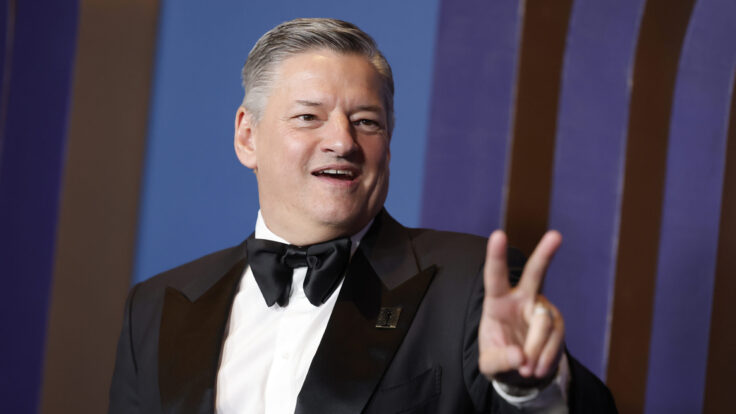
proves the value of global movie streaming: In case you were wondering why Netflix was willing to pay $72 billion for most of Warner Bros. Discovery, co-C.E.O. Ted Sarandos offered great evidence today via the new Pay One deal to keep Sony movies on the service until 2032. It’s a global deal, the first one ever, meaning the Sony movies will come off Sky in the U.K. and HBO Max in Latin America, and it’s worth as much as $8 billion if the movies perform in theaters.
(The arrangement essentially has two parts: a huge license fee for old Sony titles, and then added fees to get the new movies for 18 months in the U.S.—usually 12 months internationally—after their theatrical and home video windows. Those fees are determined by a rate card that values films based on how much box office they generate in the U.S., so the more Spider-Mans and Anyone But Yous, the more Sony makes from Netflix.)
Because this deal is for all
territories (no China or Russia, obviously, and it excludes anime titles that come from Sony’s Crunchyroll unit), for the first time we’re getting a look at what a studio movie slate is worth globally. And it’s a lot. By packaging worldwide rights, Sony was able to get about 40 percent more from Netflix than in the previous deal, in 2021. (Amazon was also interested, and many of the local platforms bid aggressively to keep their rights.) As any peek at the Netflix top 10 reveals, legacy
studio movies are huge on the platform, and Sarandos thinks he can extract even more value from the titles by playing them in all markets.
Which, of course, is why he wants Warner Bros. That library, exploited in all territories, and with far more known franchises than Sony offers, would be incredibly valuable to Netflix. It would also lessen the need to pay billions of dollars to rent Sony movies, though Netflix would likely argue that its willingness to pony up for the next six
years now, when it has a closed deal for Warners, is evidence that it will still pay for third-party content going forward. We’ll see…
It’s funny: We all obsess over box office, but the success of the entertainment business has always been about distributing content in many windows. Sony’s studio had a pretty bad 2025 in theaters, but that library is what keeps the lights on through tough years, and unlike rivals, it doesn’t have its own streaming platform to service. Jury’s
still out on whether owning and operating one of those is a good business for legacy studios, but distributing a 100-year-old movie catalogue that is constantly supplemented by new titles that are heavily marketed… that’s a good business. - The Globes’s Julia Roberts factor: Golden Globes ratings may have dropped another 7 percent, to just 8.7 million viewers (if you predicted that dip on Polymarket, the Exclusive Prediction Market Partner of
the Golden Globes, you’re a winner!), but an awards show shout-out from America’s Sweetheart still matters. Viewing minutes of A24’s Sorry, Baby on HBO Max shot up 110 percent from the 10 days before the Globes to two days after, per Luminate, thanks to Roberts’s onstage endorsement.
- Sweeney causes premature sequel-ation: Lionsgate, which would very much like someone to buy them, announced a quickie sequel to The Housemaid on January
6, just two weeks after the hit thriller debuted. One problem: Star Sydney Sweeney was not signed to return, so her reps now have the studio over a barrel in negotiations for a follow-up to a $35 million drama that’s grossed $200 million and counting. That sequel budget is about to go up significantly.
- Murdochs go Penske-poaching: The Murdochs’ long-gestating foray into L.A. media, The California Post, is set
to launch at the end of the month, and for Hollywood coverage they’re picking up talent from the ailing Penske Media empire. Tatiana Siegel, currently of Variety, and Peter Kiefer of Hollywood Reporter, both veteran reporter/writers that I worked with at THR, are joining California Post as part of an entertainment team that includes Tim Baysinger (Axios) and Katcy Stephan (Variety).
- Box office over/under: Sony’s 28 Years Later: The Bone Temple has come down a bit in tracking, to about $18 million for the four-day weekend. I’ll still take the over, based on the $30 million debut for June’s predecessor.
|
Now to the big news in the Star Wars galaxy… |
|
|
As president of Lucasfilm, the producer oversaw five Star Wars films, a wave of TV
shows… and a galaxy’s worth of abandoned projects and jilted filmmakers. With her exit finally official, is the franchise better off now than it was 14 years ago? |
|
|
You can almost hear the filmmakers celebrating tonight in their treetop homes, banging giant drums and
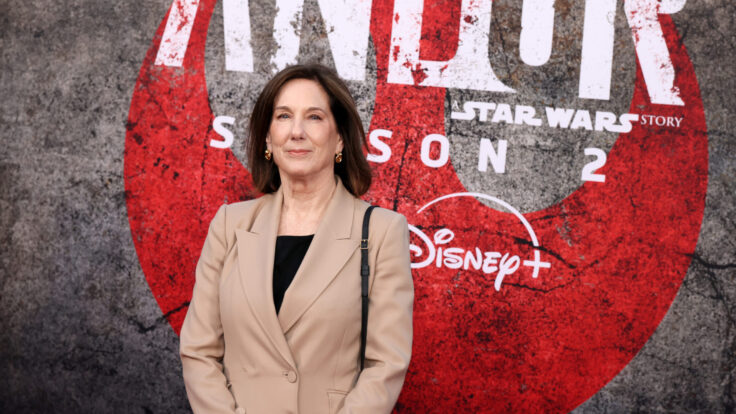
singing the “Yub Nub” song like the Ewoks in Return of the Jedi. So many writers and directors have been jerked around by Kathleen Kennedy on Star Wars projects, hired with great fanfare, only to be squeezed and second-guessed and eventually fired without much explanation, that her exit as president of Lucasfilm today could be seen as almost cathartic. We all knew it was coming—hell, I told you it was coming
last year and again at the beginning of the month—but if you’ve still got P.T.S.D. … breathe out…
Readers seem to want me to stomp on Kennedy, to revisit the 14 years of aborted film projects and boring fan service and missed opportunities with perhaps the most beloved I.P. in Hollywood history. Yes, she grossed more than $6 billion from five films, three Skywalker
movies and the spinoffs Rogue One and Solo. And the Disney+ output was fine; a huge, platform-defining hit in The Mandalorian and two legitimately great seasons of Andor, and then… mostly expensive, middling performers and some outright clunkers (The Acolyte, The Book of Boba Fett). But the film franchise was essentially run into the ground as the three increasingly nonsensical Episode movies—the Force can inhabit anyone… until it
can’t; Emperor Palpatine is dead… until he isn’t—left nowhere to go after Rise of Skywalker in 2019. Kennedy managed the most high-profile trilogy in decades, yet didn’t seem to know where the story was headed from one movie to the next. |
|
|
A MESSAGE FROM OUR SPONSOR |
IS THIS THING ON? Will Arnett &
Laura Dern “are magnetic” in this “beautifully observed comic drama about marriage and standup” Director Bradley Cooper joins stars Will Arnett, Laura Dern, and Andra Day in conversation to discuss the inspiration, process, and behind the scenes experience of making this "brilliant and profound exploration of marriage.”
[WATCH NOW] |
|
|
Seven years between Skywalker and May’s The Mandalorian and Grogu is an inexcusable
eternity in franchise filmmaking, and the projects Kennedy abandoned during that stretch could fill a Sarlacc pit. She announced new films with Rian Johnson, and Damon Lindelof and Sharmeen Obaid-Chinoy, and the Game of Thrones guys, and Josh Trank, and Taika Waititi, and Patty Jenkins (that one came with a
hype video). She sidelined Gareth Edwards for Tony Gilroy in the middle of Rogue One, and fired Lord and Miller while they were shooting Solo despite signing off on their vision for a more comedic prequel. She booted Colin Trevorrow from Rise of Skywalker and paid a
fortune for J.J. Abrams to undo Johnson’s creative choices in The Last Jedi because some nerds online were pissed. That’s just the stuff that became public. Over and over, sources pointed to a chaotic process at Lucasfilm. Now Donald Glover, Simon Kinberg, and James Mangold are awaiting the fate of their projects. Only Star Wars could keep convincing these Charlie Browns to line up to kick Kennedy’s football.
|
Yesterday, Disney announced that the Galaxy’s Edge portion of Disneyland would “pivot” its theme, which is
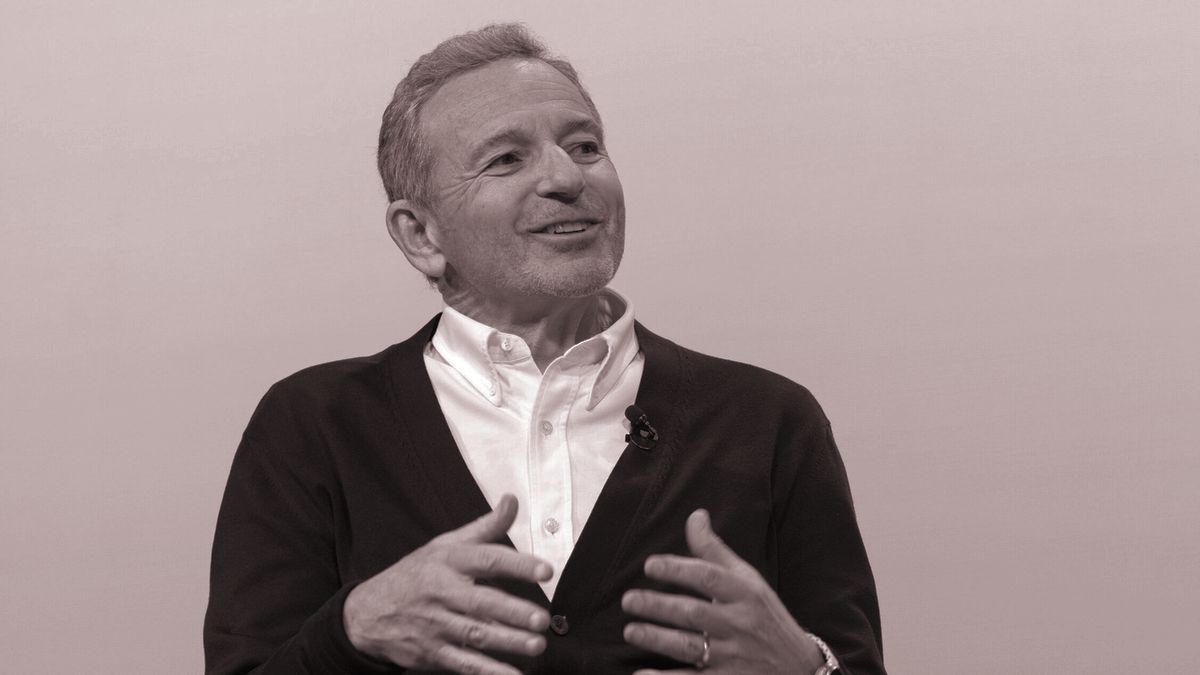
pegged to the Kennedy-era movies, and now incorporate Darth Vader, Princess Leia, and the first two trilogies. That’s what the fans want because they don’t connect to her movies and their characters, certainly not as much as Disney C.E.O. Bob Iger had hoped. And outside of Star Wars, Kennedy managed to spend $350 million on an Indiana Jones movie that essentially killed that film franchise, too.
So honestly, there’s not much more to say. If you can
suppress your gag reflex long enough to read Kennedy’s exit interview with her leashed poodle at Deadline, you’ll notice she cites the constraints of the Star Wars I.P., and the sometimes toxic fan base, and the Disney of it all. “Anything’s a possibility if somebody’s willing to take a risk,” she said, all but blaming the company for not allowing more interesting filmmaking in the Star Wars universe, like Steven Soderbergh’s recently scrapped project with
Adam Driver. It’s true that under Iger, many Disney units suffer from that unwillingness to take creative chances, especially with the big I.P. (I urge you to show the live-action Moana trailer to a kid and ask whether it’s different in any way from the animated movie.) Kennedy is one of the most accomplished movie producers of all time, with that incredible track record going all the way back to Raiders of the Lost Ark and the Amblin movies and all those
Spielberg projects. She knows good material… she just couldn’t translate that into a pipeline of good Star Wars movies. She seems to have a hard time looking in the mirror, but clearly, a lot of factors contributed to that problem.
So in that sense, it’s a bit unfair that, among the fans, Kennedy has become a villain of sorts, especially when it comes to Disney’s place in the culture wars. A couple years ago, South Park painted her as a social justice
warrior, screaming “Put a chick in it!” and “Make her lame and gay!” That characterization was a rare miss for Matt and Trey. Kathy’s not really woke, whatever that means, nor does she think much outside the box, especially compared to some Disney execs, past and present. Star Wars became more diverse because it needed to bring in new audiences. Most Lucasfilm people I talk to say diversity in filmmakers and casting is not something Kennedy talks about
a lot.
Now the challenge for Dave Filoni, the chief creative officer and Star Wars producer who is taking over Lucasfilm with business-side exec Lynwen Brennan, will be to balance his goodwill among the fans with those realities of producing a slate of Disney blockbusters and attempting to expand the fickle fan base. Despite being handpicked by George Lucas, Kennedy was never considered “one of us” by the Star Wars
obsessives. The speculation—and they were probably right—was that she’d prefer producing more important films, or the Spielberg projects, and that she took the Lucasfilm job only out of loyalty to George. Now, at 72, she’ll get to go back to doing that.
And Filoni will benefit from the dual-executive structure that Disney has employed at other creative units. Jared Bush runs creative for Disney Animation with Clark Spencer handling the business
side. Pete Docter and Jim Morris divide duties similarly at Pixar. Kennedy, via her stature and her relationship with Iger, commanded a great deal of autonomy. Insiders do not foresee Filoni and Brennan enjoying that same deference.
Is Kennedy’s tenure atop Lucasfilm a failure? Certainly not. The machine chugs along, and one big hit movie—whether it’s Mandalorian and Grogu from Jon Favreau in May or Starfighter from
Shawn Levy next year—and Star Wars will be “back.” But with this type of executive, you ask whether the franchise she inherited is in a better or worse place today than when she got the job. After five movies and 14 years, Star Wars must essentially start over as a film franchise. That’s not where you want to be. |
See you Tuesday,
Matt
Correction: David Zaslav was
thanked one time at the Globes (I said he wasn’t on Monday). It was a quick “David” from producer Sara Murphy during her One Battle After Another speech. Thank you to the eagle-eyed Zaz superfan who caught it.
Got a question, comment, complaint, or an aborted Star Wars script? Email me
at Matt@puck.news or call/text me at 310-804-3198. |
|
|
Puck fashion correspondent Lauren Sherman and a rotating cast of industry insiders take you deep behind the scenes of this
multitrillion-dollar biz, from creative director switcheroos to M&A drama, D.T.C. downfalls, and magazine mishaps. Fashion People is an extension of Line Sheet, Lauren’s private email for Puck, where she tracks what’s happening beyond the press releases in fashion, beauty, and media. New episodes publish every Tuesday and Friday. |
|
|
Ace media reporter Dylan Byers brings readers into the C-suite as he chronicles the biggest stories in the industry: the future
of cable news in the streaming era, the transformation of legacy publishers, the tech giants remaking the market, and all the egos involved. |
|
|
Need help? Review our
FAQ page or contact us for assistance. For brand partnerships, email ads@puck.news.
You received this email because you signed up to receive emails from Puck, or as part of your Puck account associated with {{customer.email}}. To stop receiving this newsletter and/or manage all your email preferences, click here. |
Puck is published by Heat Media LLC. 107 Greenwich St., New York, NY 10006 |
|
|
|