Welcome back to What I’m Hearing, home in L.A. and a little early tonight because the
Superman premiere is supposedly starting at 6 p.m., which probably means 7:30 p.m., but that’s earlier than the usual 7:30 p.m., which often means 9 p.m.
As usual, I won’t be in Sun Valley this week gawking at the moguls and their vests, but my colleague Dylan Byers will be there, so say hi. And in a last-minute move, I’m told soon-to-be-Paramount mogul David Ellison will also be in attendance and taking meetings. Up until last week, he
was a pass. That was before the Trump settlement, of course.
Programming note: This week on The Town, Lucas Shaw and I delved into the South Park streaming rights standoff, Brian Stelter
parsed Paramount’s Trump settlement fallout, and producer Jason Blum offered his no-B.S. take on Blumhouse’s recent struggles. (More
on that below.) Subscribe here and here.
Not a Puck member yet? Just click here. Got a news tip or an idea for me? Just reply to this email or
message me on Signal at 310-804-3198.
Discussed in this issue: Donna Langley, Jay Penske, Steven Spielberg, David Zaslav, Dakota Johnson, Helen Hoehne, Reynolds Cafferata, Jerry Bruckheimer, Gareth Edwards, Diddy, Dr. Phil, Scooter Braun, Cedric Burnside,
Todd Boehly, David Koepp, Jason Blum, David Geffen, Jim Jarmusch, and… the possibly fake news you missed last week.
But first…
|
Who Won the Week:
David Ellison
|
Shari Redstone will soon get her sale money, but the Skydance C.E.O. benefits most from
Paramount’s $16 million settlement of the Trump litigation and the now-likely F.C.C. approval of the $8 billion transaction. The president even called David a “fantastic young man”—though we won’t know for a while if that’s because Ellison quietly agreed, as Trump said, to additional P.S.A.s. (Paramount denies it will provide anything more; Skydance has remained silent.)
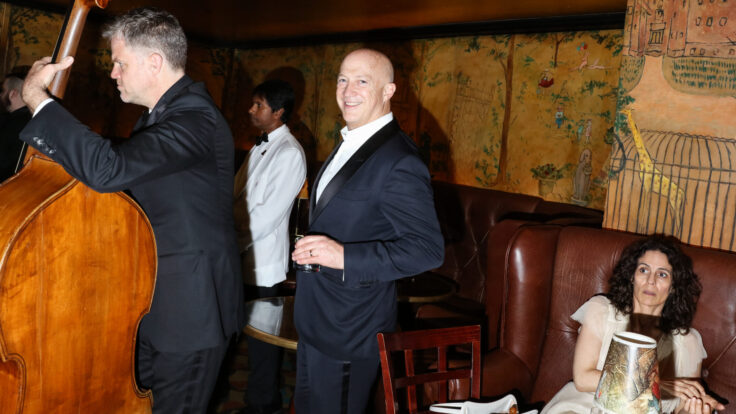
Honorable mention: Scooter Braun, who announced his removal as Hybe America
C.E.O.—sorry, his mutually agreed-upon and long-discussed transition to an advisory position—via Zoom into a company meeting from a private yacht (presumably David Geffen’s, per this pic).
|
Quote of the Week
(Jason Blum Edition)
|
I got a ton of responses to my Tuesday interview with Blumhouse founder and M3GAN 2.0
producer Jason Blum on The Town, mostly because it’s so rare to hear a top Hollywood person discuss a very public failure in the moment it’s happening. (Note to risk-averse publicists: The response has been universally positive; Blum was smart to take public ownership of the misfire.) The full episode is here, and I’m excerpting a few takeaways
below…
On why he spoke out…
“If Blumhouse is in a slump, I’d like to tell that story. I don’t want other people to tell that story, number one. And number two, one of the things that is so annoying about our business is everyone says, ‘Oh, I learned so much from failure.’ But when they’re actually in a situation where things are not going well, they sweep it under the rug, they pretend it’s not happening.”
On why M3GAN 2.0 flopped…
“We all thought
M3GAN was like Superman. We could do anything to her. We could change genres. We could put her in the summer. We could make her look different. We could turn her from a bad guy into a good guy. And we kind of classically overthought how powerful people’s engagement was with her.” Blum also cited the “rushed” production schedule.
On the glut of horror movies…
“We’re used to a market that can absorb 12 to 15 horror movies [a year], where you get these singles and doubles. I
think that’s gone. … If you look at last year, one movie did over $100 million that was a low-budget horror movie: Longlegs. That’s it! It’s virtually impossible to do Get Out, to make a movie for $4.5 million and have it do $250 million. You need theatrical events, and that’s a big thing that we are looking at.”
On his feared impact of the misfire…
“I hope M3GAN 2.0 doesn’t discourage other people who make sequels to now make them too close
to the first. There are some sequels that are very different and that do work. I really hope that people continue to take creative risks within the walls of their franchises. Otherwise, the movies will all feel the same.”
|
60 million
Views of Netflix’s Squid Game Season 3 in its first
three days of release, making it the streamer’s biggest launch to date, per its own data. [Netflix]
14 Percent
Share of Gen Z who watch anime daily, with 50 percent watching weekly. Which explains why Netflix is
doubling down, and L.A.’s Anime Expo and Sukeban Japanese wrestling sold out this past weekend. (Dentsu via Emarketer)
778 percent
Increase in streams for electric blues artist
Cedric Burnside in the week following Sinners’ release. ( Luminate)
17 percent
Share of North American movie ticket purchases for horror films so far this year, up from 4 percent a decade ago, thanks to way more titles and breakouts Sinners and Final Destination:
Bloodlines. ( Comscore for Reuters)
8 Percent
Share of Americans who say they have a cable or satellite TV subscription but no streaming service memberships.
[ Pew Research Center]
Now here’s Scott on the secret Jurassic formula…
|
|
|
With ‘Jurassic World: Rebirth,’ Universal once again proves that there’s more than one way
for Hollywood to build a blockbuster franchise.
|
|
|
So, what does it take to maintain a blockbuster theatrical franchise in a post-Marvel universe? The secret
ingredients in the Jurassic recipe seem to be consistency and, crucially, scarcity. Universal and Amblin’s Jurassic World: Rebirth opened with a bang over the five-day Independence Day weekend, netting $147.8 million domestically in the Wednesday-Sunday frame and $322.6 million worldwide. While not nearly as large an opening as the last “reboot” installment, 2015’s Jurassic World ($208.8 million), the domestic weekend numbers for the seventh film in the
Jurassic franchise were remarkably similar to the Friday-Sunday debuts of Jurassic World: Fallen Kingdom ($148 million), in 2018, and Jurassic World: Dominion ($145 million), in 2022.
Whether director Gareth Edwards’s $180 million dino flick, with a screenplay by Jurassic Park writer David Koepp, tops out at $400 million domestic and $1 billion worldwide or closer to $300 million here and $800
million everywhere, the franchise’s consistent performance makes it stand out amid the past decade of I.P.-mania. The films always rank among the year’s top grossers despite garnering far less attention (social, search, pop culture punditry, etcetera) than DC/Marvel films and other geek-focused fantasy franchises. But the franchise thrives because regular, non-obsessive, and at least somewhat offline moviegoers continue to show up.
So, despite a full cast swap,
meh word of mouth, mixed-to-negative reviews, and losing Imax screens to Brad Pitt’s F1, Jurassic World: Rebirth found its people and again affirmed its brand as near the very top of the tentpole food chain. A seventh installment of an unapologetically pulpy action-horror series concerning folks running from (or into) dinosaurs may not qualify as a win for cinema. But with a likely over/under $900 million global finish, it’s undoubtedly a win for
cinemas.
|
Consider, for a moment, what moviegoers—young and old, obsessive and casual—all seem to want in a
Jurassic movie: a big-budget, P.L.F.-worthy adventure with a mild imprint of Steven Spielberg and featuring movie stars (Chris Pratt in 2015, Scarlett Johansson in 2025) playing regular people, often with children in tow, who encounter (and are occasionally eaten by) dinosaurs. Every Jurassic sequel delivers on that promise. Each one protects the brand and reassures future audiences (including kids who just want to see
dinosaurs) that the next PG-13 iteration of a Tyrannosaurus run amok will also meet the franchise-specific minimum of entertainment value.
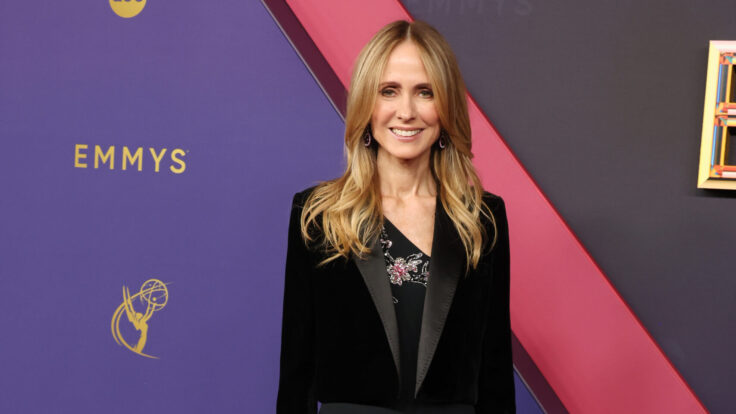
No one expects Donna Langley and her Universal team to break creative ground with these movies. In fact, it’s debatable how far the franchise needs to venture into uncharted waters. Jurassic World: Rebirth involves an evil Big Pharma exec who hires mercenaries to heist a miracle drug from an island of dinosaurs. This latest
version offers quirky characters, crowd-pleasing spectacle, audiovisual razzle-dazzle and— gasp—was even shot on film. That might not be enough by itself to compete in a tentpole theatrical ecosystem, except Hollywood has left Jurassic essentially alone on the field to run up the score.
Aside from a brief period between March 2017 and May 2019, with Kong: Skull Island, Rampage, Pacific Rim: Uprising, Jurassic World: Fallen Kingdom, The Meg, and Godzilla: King
of the Monsters, Jurassic has been the only game in town for event movies that a) feature giant monsters/creatures and b) don’t center on branded superheroes, or one-man-army killing machines. Hollywood spent the post- Avengers decade trying to turn every franchise ( Star Wars, Transformers, Mission: Impossible, etcetera) and every would-be franchise ( King Arthur, The Dark Tower, The Mummy, etcetera) into a
superhero vehicle and/or a cinematic universe. Jurassic, with its one theatrical movie every few years and two human protagonists, has thrived as the anti- Avengers.
|
Scarcity Cures Franchise Fatigue
|
In fact, each of Universal’s three biggest franchises has mostly ignored the siren call of expanded universes
and streaming offshoots. There is almost zero nontheatrical Illumination content of note (no disrespect to Sing: Thriller on Netflix), and the long-rumored Fast & Furious premium streaming show has yet to materialize. A Jurassic spinoff for Peacock would make sense, but Universal has avoided it, while Disney+ has aired seven live-action Star Wars shows and 12 live-action MCU shows. Same with theatrical spinoffs: Jurassic has zero, and Fast
generated just one, Fast & Furious Presents: Hobbs & Shaw.
In the kids’ realm, Fast begat Spy Racers and Jurassic birthed Camp Cretaceous and Chaos Theory (the same show/plotline with the title change mostly to note the aging up of its teen protagonists), but each exists in the same world as the respective source material. Still, viewers don’t need to have seen any of the films, so they function less like homework, and more like a
gateway drug. Hollywood seems to be taking notice.
Disney is mostly pulling back from using Marvel and Star Wars as Disney+ content mills. We’ve had just one non-mandatory (and relatively charming) Knuckles spinoff for Paramount+ amid three theatrical Sonic the Hedgehog movies. And Amazon MGM Studios has, so far, not announced a deluge of James Bond prequels, spinoffs, or streaming shows. And if Denis Villeneuve delivers a franchise revival on
par with GoldenEye and Casino Royale (tips hat to Martin Campbell twice), the SPECTRE of online shopping may be content to let Bond’s adventures remain a semiregular theatrical event.
Jurassic World: Rebirth is the only all-quadrant, non-superhero franchise tentpole in theaters until Tron: Ares arrives in October, and Wicked for Good in November. It may run the tables alongside Apple’s F1 as the event movie of
the season for grown-ups and non-geeks. That will be especially true overseas, where Jurassic often outperforms all but the biggest Avengers team-up films, and potentially even in North America if Superman and Fantastic Four prove to be, like the latter Hunger Games and Twilight sequels, “for fans only.” The internet claims everyone hates the Jurassic Worlds and wonders aloud why Universal keeps making them, but (not unlike the
obviously more acclaimed and even more successful Avatar films) everyone still sees them.
|
The nearly-disbanded Hollywood Foreign Press Assn. finally got the Times to cover their effort to
revisit the shady deal with Todd Boehly and Jay Penske that led to their demise and the billionaires absconding with their valuable Golden Globes brand. [NY Times]
More Globes: Last week’s vote to investigate the transaction and remove Helen Hoehne, the HFPA president
turned for-profit Globes figurehead and Benedict Arnold of the whole situation, might make HFPAers feel better about their chances of ultimately getting an answer to the What the hell happened? question (and maybe even their awards show and their philanthropic arm back). But it’s all noise until Rob Bonta, California’s attorney general, decides to do something, or the HFPA can leverage its accusations of self-dealing and conflicts of interest to somehow
reopen the transaction. To that end, the fact that a nonprofit lawyer, Reynolds Cafferata, has agreed to represent the group and organize/spearhead its efforts is probably the more significant development here. This seems headed for litigation.
How the Feds blew their case against Diddy. [ NY
Mag]
John Ourand reports that the NFL may want to renegotiate its media deals in 2028, a year earlier than its TV partners expected. [ Puck]
Dr. Phil should probably lose the lawsuit over his bankrupt TV network because he started a linear TV network in 2024.
[ LA Times]
What does it say about Warner Bros. Discovery that the owner of Condé Nast, a magazine company, is dumping $1 billion worth of WBD stock? [ Yahoo]
Ritz-Carlton came up with a way to get B-list celebrities to participate in a branded cruise: Call it a “superyacht.” [ The Cut]
|
My Thursday
crosstalk on A.I. with Ian Krietzberg and Eriq Gardner drew some thoughtful responses…
“I’m actually slightly less terrified after reading this. So thank you??” — An actor
“A.I. shorts are all over YouTube and social media, which means just like streaming, today’s kids are growing up in a whole different world of cinema. Thus, I
respectfully disagree with Ian Krietzberg. We are very near ‘a fully A.I. film or TV series (that) breaks through and finds an audience comparable to traditional movies or shows.’ The floodgates are open, and it won’t be long before we see A.I. features because thousands of creators outside the Hollywood infrastructure are coming up with original ideas. The ‘human touch’ is in the wide and wild variety of ideas that are being created.” — A producer
“I agree that
the ‘China excuse’ is one of the weakest [for allowing A.I. to trump I.P. rights]. In fact, regulating licensed A.I. models for commercial use would prevent the unlicensed models from competing on the same playing field. The illegitimate Chinese A.I.s would become unviable in the U.S. market (as they are in some European countries), and the financial impact would slow the development.” — A filmmaker
|
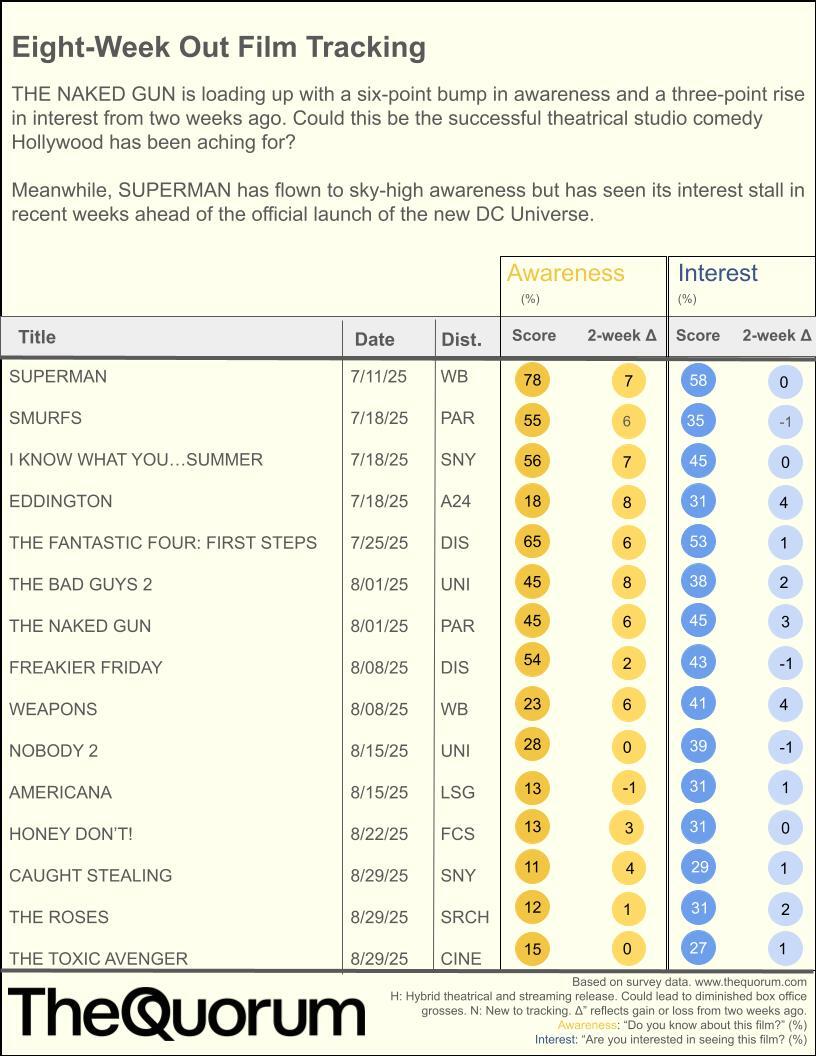
More momentum for Paramount’s The Naked Gun reboot, according to the latest early film tracking
chart from The Quorum…
|
Finally finally, one
fun thing… The News You Missed…
|
With most of the industry checked out over the July Fourth week, literary manager Matt Rosen of
Navigation Media Group (whose humorous Instagram I enjoy) agreed to summarize what happened while you weren’t paying attention…
The F.C.C. cleared Skydance’s purchase of Paramount, but David Ellison called it off after a companywide screening of Smurfs. … Mattel officially greenlit the erotic thriller Uno. Dakota
Johnson stars. … Amazon invested $100 million in an A.I. initiative to make action movies with every white male actor, living and dead. … Universal greenlit live-action remakes of Shrek, Sing, and Minions: The Rise of Gru, with plans to reboot them as animated remakes of the remakes. … Netflix premiered The Rich Caucasians, a limited series about generationally wealthy white women living in Southampton. In this one, a murder doesn’t happen
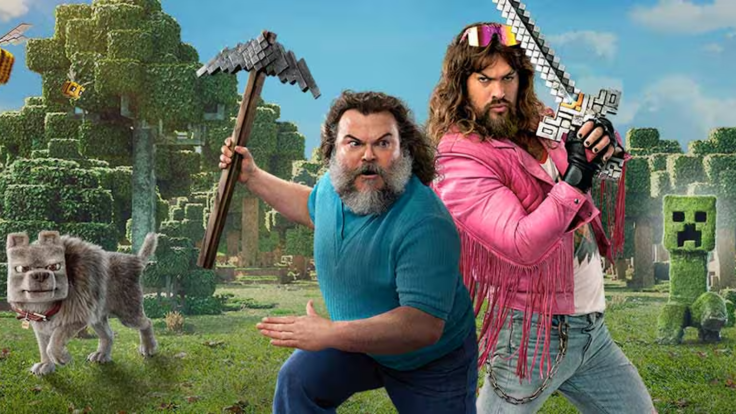
until the second minute of the pilot. … Warner Bros. fast-tracked A Sinners Minecraft Movie for 2026. It will be directed by Jim Jarmusch and cost $300 million. … Apple and F1 producer Jerry Bruckheimer announced PBR, a high-stakes action drama set in the world of Professional Bull Riders. … David Zaslav gave another inspiring commencement speech, leaving the audience in tears with his final
quote: “We use the I.P. to reverse the I.P. to then double-reverse the I.P., which is reversible I.P. proof.”
|
Have a great week,
Matt
Got a question, comment, complaint, or suggestions for Scooter Braun’s
next job? Email me at Matt@puck.news or call/text me at 310-804-3198.
|
|
|
The industry's go-to source for unflinching reporting on the trillion-dollar business of artificial intelligence - perhaps the
single most important technology of our time. Ian Krietzberg, the powerhouse journalist behind The Deep View, delivers twice-weekly insights into the latest dealmaking and breakthroughs in A.I., and how the intersecting worlds of finance, entertainment, media, and politics are being transformed in its wake.
|
|
|
Finally, a media podcast about what’s actually happening in the media—not the oversanitized,
legal-and-standards-approved version you read online. Join Dylan Byers, Puck’s veteran media reporter, as he sits down with TV personalities, moguls, pundits, and industry executives for raw, honest, sometimes salacious conversations about the business of media and its biggest egos. New episodes publish every Tuesday and Friday.
|
|
|
Need help? Review our FAQ page or contact us for assistance. For brand partnerships, email ads@puck.news.
You received this email because you signed up to receive emails from Puck, or as part of your Puck account associated with {{customer.email}}. To stop receiving this newsletter and/or manage all your email preferences, click here.
|
Puck is published by Heat Media LLC. 107 Greenwich St, New York, NY 10006
|
|
|
|