Welcome back to What I’m Hearing, coming to you during a short break in the holiday
party circuit. Christmas can’t come soon enough.
Tonight, a respite of sorts from the battle for Warner Bros., with a new study on whether the awards season media blitz actually matters. (Spoiler: It doesn’t.) Plus, Disney hops into bed with OpenAI… What could go wrong?
Discussed in this issue: Timothée Chalamet, Cynthia Erivo, Jamie Lee Curtis, Alejandro G. Iñárritu, Kieran Culkin,
Natalie Portman, Ted Sarandos, A. S. Hamrah, Bob Iger, Anthony Hopkins, Charlie Rivkin, Karla Sofía Gascón, Demi Moore, Bela Bajaria, James L. Brooks, David Ellison, Josh Kushner, Sam Altman, and… the David Zaslav book cover.
Not a Puck member yet? Just click
here. Got a news tip or an idea for me? Just reply to this email, text me or message me on Signal at 310-804-3198.
|
-
Paramount vs. Netflix: The waiting game: Gotta love David Ellison going full scorched-earth on Netflix, right? As we all wait for Warner Bros. Discovery to officially reject Paramount’s effort to undo the $83.7 billion sale of its studio and HBO Max, Ellison has really ramped up the rhetoric. He’s feverishly working the phones and pitching WBD shareholders, calling out everything from the Netflix stock drop to its delay in submitting the required pre-merger
notification. (Those forms were actually filed tonight.) In a staff meeting, I’m told he characterized the battle for Warners as an “existential” moment in the history of the theatrical movie business, with—shocker—Ellison and Paramount as the only possible saviors that can stand up to Netflix. And yesterday he fired off a delightfully
over-the-top letter urging them to strongly consider his $108 billion bid. “IT IS NOT TOO LATE TO REALIZE THE BENEFITS OF PARAMOUNT’S PROPOSAL IF YOU CHOOSE TO ACT NOW AND TENDER YOUR SHARES.” Man, all caps is one level of literary screaming, but all
caps and italics and bolding?? That’s like a megaphone to every shareholder’s face. At this point, would anyone be surprised to see Ellison outside the Warners lot on Barham Boulevard, holding a boombox playing “In Your Eyes” above his head like John Cusack from Say Anything? David’s a pilot, maybe he could commandeer the Marty Supreme blimp and crop-dust pro-Paramount pamphlets all over the Warners lot. None of that matters, of course. This
will all come down to the cash that Paramount or Netflix is willing to cough up. But until then, we can look forward to millions of dollars being spent on the lobbying.
- Speaking of Paramount and Netflix…: I’m told today’s Motion Picture Association meeting among the seven studio/streamer members was business as usual. But that’s gotta be awkward with two members of the lobbying group, Netflix and Paramount, openly fighting to control a third member,
Warner Discovery. Netflix’s Bela Bajaria didn’t even show up today, sending two lawyers instead. And whoever wins this auction, MPA chief Charlie Rivkin knows he will be down a member soon. Maybe Apple will finally step up and join.
- Speaking of studio fights…: The jockeying among the Warners combatants has now extended to—gasp—the publicists. FGS Global, the big corporate communications consulting firm, was
recently hired by Netflix in connection with the Warners deal. Alas, FGS also represents Paramount, as Par leadership helpfully reminded FGS. “Since 2009, FGS has been a consultant to Paramount, and has worked with us on the Warner project from the outset,” a Par rep tells me. Sounds like someone’s getting a talking-to.
- Why Disney greenlighted Mickey vs. Darth Vader deathmatches: At first sniff, this Disney/OpenAI partnership stinks pretty
bad. C.E.O. Bob Iger is lending The Brand to a notorious shit-stirrer and copyright infringer, rewarding Sam Altman for launching the video generation app Sora by allowing users to run rampant with I.P. and images of actors… only backing off after lawyers predicted a copyright apocalypse. Not surprisingly, downloads of Sora (and, presumably, user growth) have slowed significantly since it disallowed videos of, say, Wednesday Addams
trading jokes with Peter Griffin. Now Disney is the first major content licensing partner on the platform, and the three-year deal includes more than 200 characters—a huge and much-needed win for Altman and fans of Yoda dance videos and Moana vs. Minnie Mouse slap-fights. Embarrassing.But… if the goal of the Hollywood studios is not to crush A.I.—at this point, that
three-eyed horse has left the digital barn—but to leverage it, and, most importantly, to influence the rules of the development road, this deal likely furthers that agenda. Disney and the other studios failed to own a major piece of the user-generated content business, even though fans love to interact with Hollywood characters and stories. Now subscribers of Disney+ will soon be able to watch franchise-based user-generated videos on the platform—and eventually make their own. Is that worth
taking 100 percent of the brand risk? We don’t know what OpenAI is paying Disney for its characters, and early reports suggest it’s not much, but this deal “directly improves and boosts its position in a fast-growing UGC avenue and potentially in social media as well,” the Evercore analysts Kutgun Maral and Erica Nie wrote today.
And at least ostensibly, protections are in place. The deal allows the use of characters, but not talent likenesses or
voices. OpenAI also can’t train its models on Disney I.P., and Altman said on CNBC today that “guardrails” will prevent, say, Ariel’s shell bikini from being removed by pervy fans. Do we believe him? Maybe not, but Disney has basically brought OpenAI into its tent, choosing partner and profit over ignore, compete, or sue. And Iger gets to draw a distinction between ChatGPT/Sora and Google’s Gemini, a contrast hammered home by a cease-and-desist letter
over copyright infringement sent the same day the OpenAI deal was announced.
If OpenAI is to artificial intelligence what YouTube was to streaming video, better for Disney to move now rather than ignore or waste time in litigation, the thinking goes. Plus, Disney will take a $1 billion stake in OpenAI, a tiny slice but at least some upside if Altman can eventually take OpenAI public. Is that worth slopifying the Disney I.P.? Debatable, but I think that’s why the Disney stock was up about
2.5 percent today.
|
|
|
A MESSAGE FROM OUR SPONSOR
|
Puck sponsors include the Paramount+ drama
series
LANDMAN
starring Billy Bob Thornton, Demi Moore, Andy Garcia, Ali Larter, and Sam Elliott
TV’s biggest phenomenon is back, with an explosive new season navigating the intersection of money, power, and politics in the modern energy boom. Critics Choice Award Nominee Billy Bob Thornton leads
an all-star ensemble as fortunes rise and fall overnight, and the line between the boardroom and the rig gets blurrier by the day.
For Your SAG Award Consideration in all categories including Best Ensemble in a Drama Series
Now Streaming, only on Paramount+
EXPLORE MORE
|
|
|
-
More: It’s easier to understand Iger’s OpenAI deal when you remember that between Disney stints he was a “venture partner” at Thrive Capital, the investment firm founded by Josh Kushner. Thrive, of course, is a major backer of OpenAI, and many believe Iger will return to the firm when he finally hangs up the mouse ears next year (if he leaves, of course). To that end, this deal, while potentially groundbreaking, is not without a huge ick factor. That’s probably
why neither Iger, nor his two apprentices Josh D’Amaro and Dana Walden, have mentioned it on their social feeds.
- Box office over/under: Disney’s Ella McCay, the ultimate favor movie for 85-year-old Simpsons producer James L. Brooks, is tracking for a paltry $4 million debut in 2,500 theaters. Still, let’s take the under. Sad, but at least Brooks is making another
Simpsons movie for 2027.
|
Now to some very important research…
|
|
|
Every year, awards contenders and pretenders have been mounting
unbridled and financially unchecked press campaigns in the hopes of boosting their chances. A new data analysis reveals that they maybe shouldn’t have bothered.
|
|
|
Back when I was running The Hollywood Reporter, it never ceased to amaze me how
downright available stars and filmmakers became this time of year. Leo DiCaprio, Ben Affleck, Jennifer Lawrence… actors whose P.R. teams wouldn’t allow us within smelling distance during most of the year were suddenly clamoring for covers and roundtable slots or, if their race was tight, any coverage, really. “What can we do?” was not an infrequent question.
That’s despite the fact that we were never able to prove that
the attention we offered was actually meaningful to their campaigns. Awards media blitzes have been a thing in Hollywood since even before Harvey Weinstein was bringing stars to L.A. for “the season” back in the ’90s. And the goal remains to create “buzz” that convinces the various voting bodies to a) watch your movie, b) talk about your movie, and c) vote for your movie. But THR’s website traffic suggested that, with rare exceptions, the awards coverage during Oscar
and especially Emmy season generated relatively little reader interest. Still, it was simply accepted by the various awards consultants and campaigners that more interviews led to being “in the conversation,” and in turn, a better shot at earning a coveted award. Hence the firehose of awards media during “Phase One” of the campaigns, when everyone and their publicist thinks they’re a contender. You almost feel bad for people like the typically media-shy Ryan Coogler, who sat for
a Times piece this week as part of the Sinners campaign, or DiCaprio, who always looks like he’d rather be mining coal or socializing with a woman over 30 than doing press.
So let’s ask the question: Is there a correlation between the volume of media coverage and who ultimately wins awards? In short, does more press equal a better shot at an Oscar?
To explore it, I asked researcher Stephen Follows, who was recently on The Town
discussing whether standing ovations at film festivals lead to better outcomes for movies, to evaluate every acting and directing nominee from 2010 to 2024 and map how often each was mentioned in the press during the six months leading to the Oscars. As a trackable indicator of all media coverage, Follows used the Penske trades ( Variety, THR,
Deadline), plus London-based Screen International, to capture the international angle. By comparing the nominee’s share of coverage with eventual outcomes, we can attempt to gauge how much that coverage matters. Yes, this might be the most important research project ever undertaken.
|
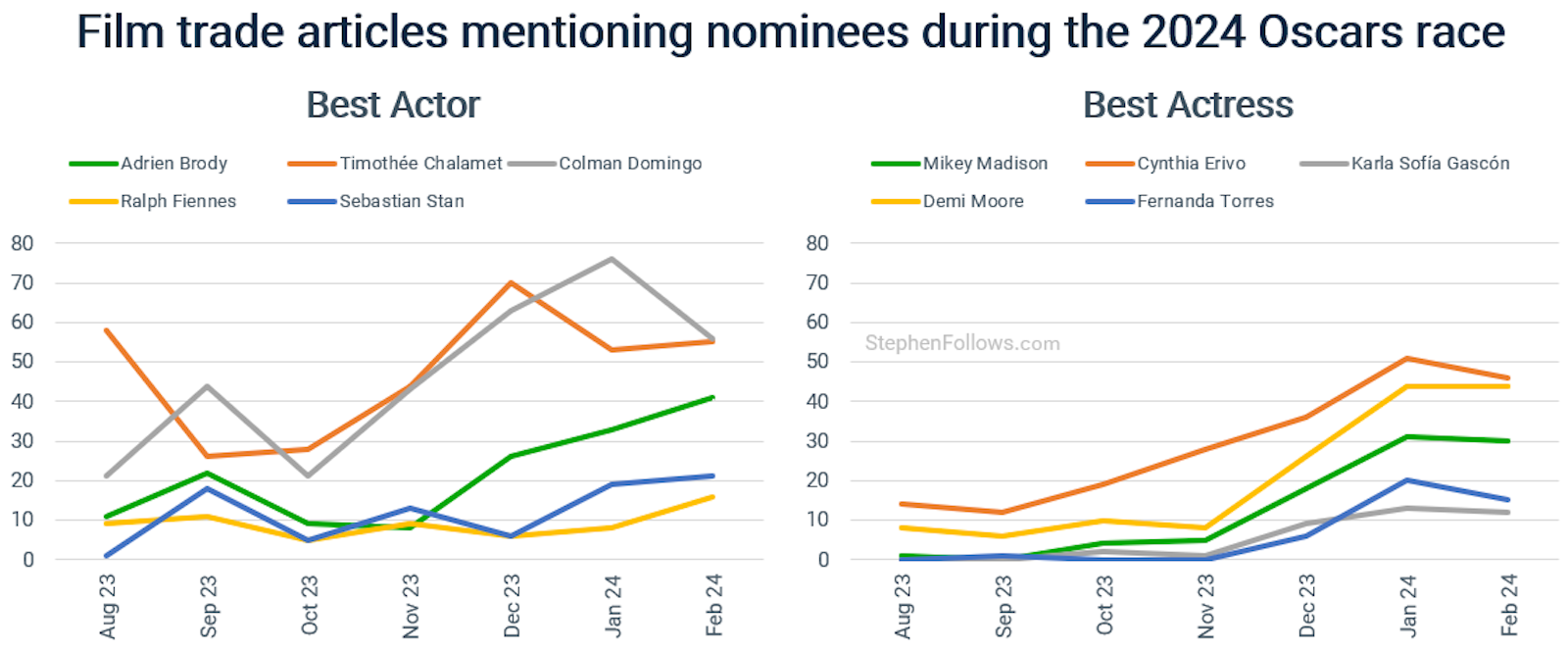
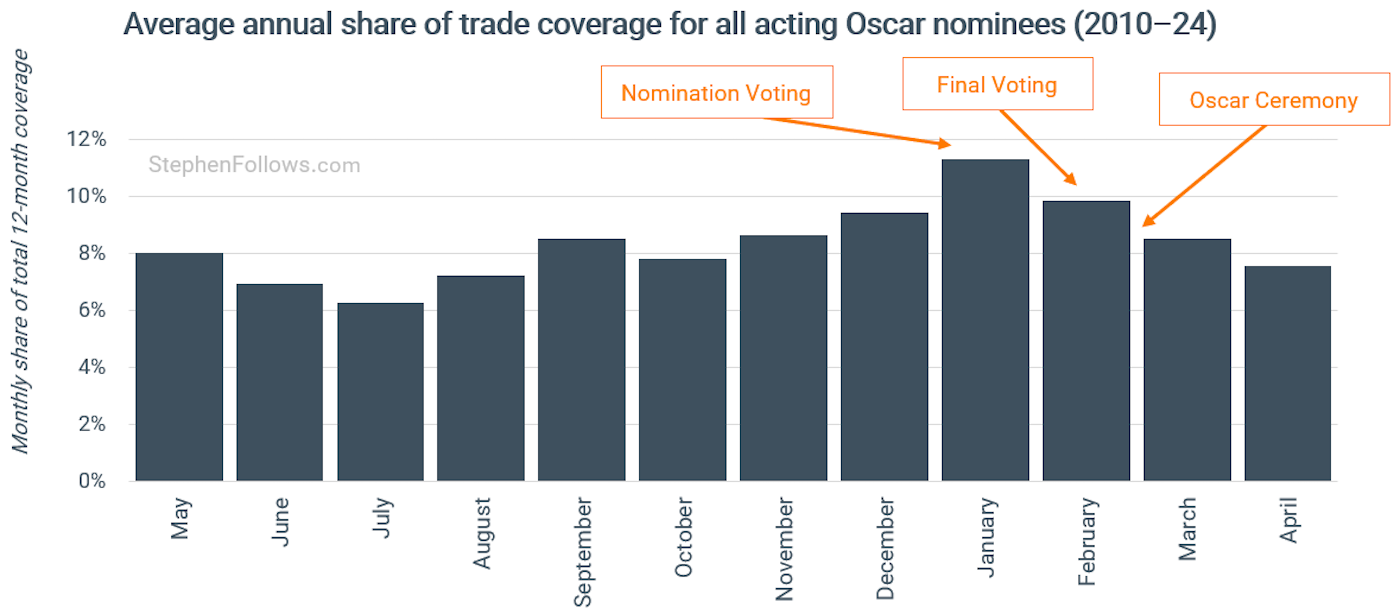
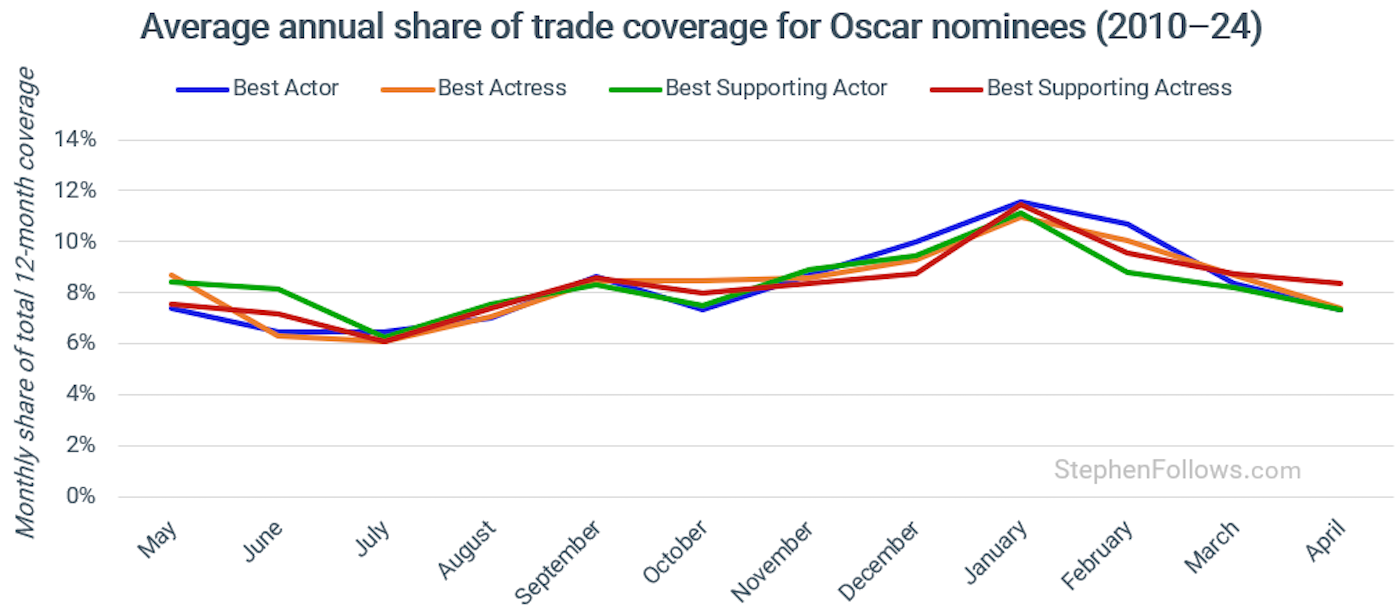
The monthly stats on coverage of each nominee reveal a strong uptick as the ceremony
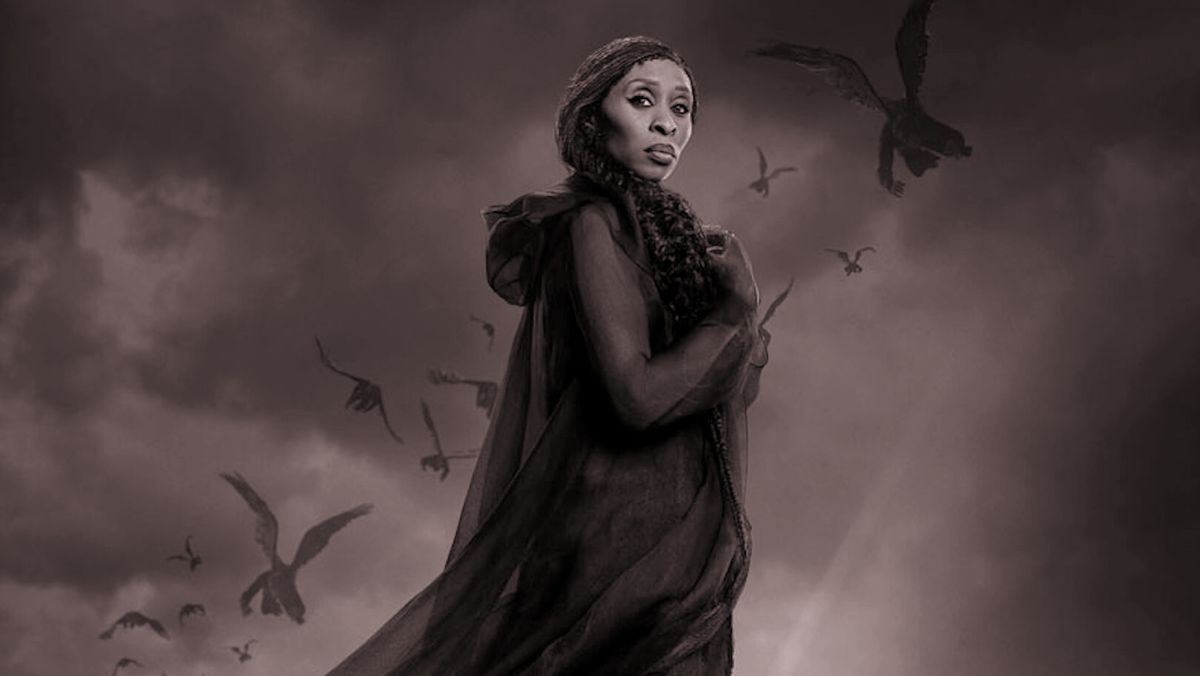
nears, of course. In last year’s race, the most intense month of coverage for all five lead actress nominees (Cynthia Erivo, Karla Sofía Gascón, Mikey Madison, Demi Moore, Fernanda Torres) was January, which coincided with Phase One voting and the eventual reveal of nominations. For lead actors, three generated the most coverage in February (Adrien Brody, Ralph
Fiennes, Sebastian Stan), which matches the Phase Two voting for winners; one got the most in January (Colman Domingo); and one in the preceding December (Timothée Chalamet). This pattern repeats each year and is consistent across all four acting categories.
|
So nominees do more press when it matters to voters—great. We kinda knew that. But is
there a useful link between the coverage and outcome?
|
|
|
A MESSAGE FROM OUR SPONSOR
|
Puck sponsors include the Paramount+ drama
series
LANDMAN
starring Billy Bob Thornton, Demi Moore, Andy Garcia, Ali Larter, and Sam Elliott
TV’s biggest phenomenon is back, with an explosive new season navigating the intersection of money, power, and politics in the modern energy boom. Critics Choice Award Nominee Billy Bob Thornton leads
an all-star ensemble as fortunes rise and fall overnight, and the line between the boardroom and the rig gets blurrier by the day.
For Your SAG Award Consideration in all categories including Best Ensemble in a Drama Series
Now Streaming, only on Paramount+
EXPLORE MORE
|
|
|
According to Follows, there are two questions to ask:
1. How often is the
most-covered nominee the eventual winner?
Almost never. Over the 15 years, across all four acting categories, it happened just 8.3 percent of the time.
|
- Best Actor: 0 out of 15
- Best Actress: 1 out of 15 (Natalie Portman, 2010)
- Supporting Actor: 2 out of 15 (Ke Huy Quan, 2022, and Kieran Culkin, 2024)
- Supporting Actress: 2 out of 15 (Anne Hathaway, 2012, and Jamie Lee Curtis, 2022)
|
So no, we can’t use media coverage to predict winners. For much of last year’s campaign,
for instance, Brody did almost no trade press and still won. Same with Frances McDormand during the 2017 season. So maybe the awards consultants should pump the brakes on pitching every possible media interview
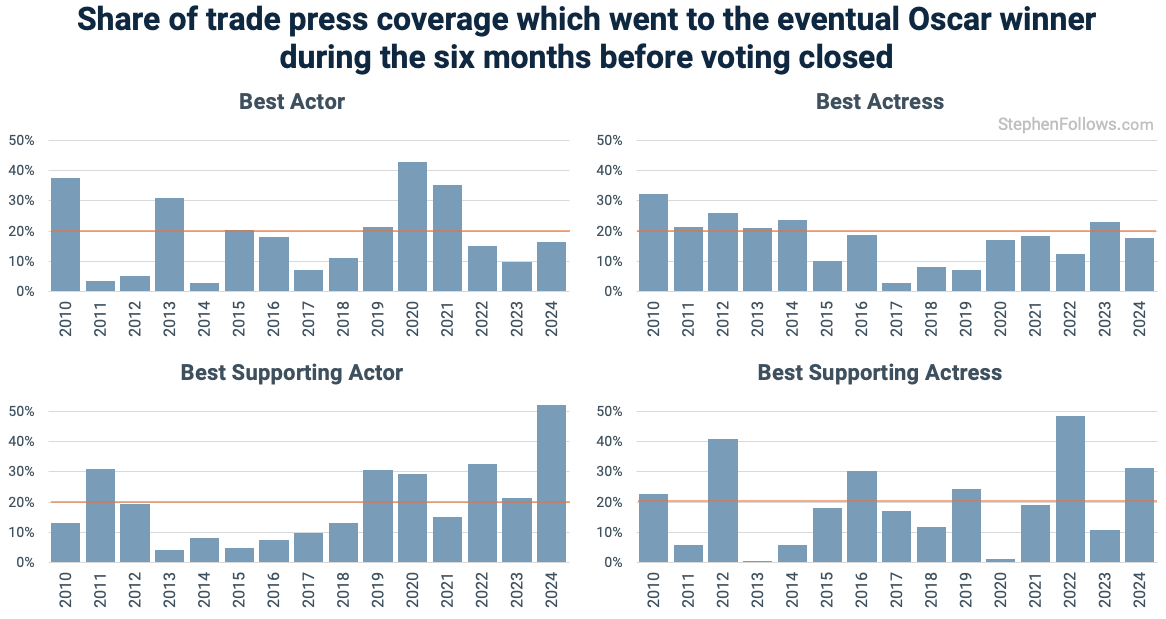
2. Does the eventual winner get a disproportionate amount of coverage in the lead-up to the awards?
Also no. All things being equal, each nominee should receive 20 percent of all mentions in a five-person field, right? That’s almost never
the case, but across all acting nominations, the winners accounted for just shy of their expected share, 18.6 percent of the coverage.
|
Anthony Hopkins (The Father) dominated the 2020 coverage, as
did Will Smith (King Richard) the following year. (No, this study did not track coverage of contenders after their win, which I’m betting would favor Smith, uh, significantly.) Also, congrats to Culkin for crushing more than half of the media mentions during last year’s campaign for A Real Pain, and Curtis for nearly matching him in the 2022 season for Everything Everywhere All at Once. But those are outliers. Gary
Oldman (Darkest Hour) won for the 2017 season with less than 10 percent of the coverage. Eddie Redmayne (The Theory of Everything) won the 2014 prize with even less media attention.
|
The correlation for best director is even weaker. The winner generates an average of
15.3 percent of the trade media mentions—way under the 20 percent mark if coverage were evenly distributed. Only twice did the buzziest director go on to win the award—Alejandro G. Iñárritu (The Revenant) in 2015 and Sean Baker (Anora) in 2024. In every other year, the nominee who dominated the coverage did not win.
Clearly that’s because the most coverage is usually given to the most famous filmmakers. Whenever the
field of nominees includes a Nolan, a Spielberg, a Scorsese, etcetera, they will generate the greatest amount of coverage. (Though interestingly, Nolan did not spur the most press when he won in the 2023 season.) Put simply, the effect of being an Oscar nominee is not enough to overcome the normal power dynamics of the industry.
|
So, does this mean that doing a mountain of press won’t actually help you win an Oscar?
Not necessarily. There’s no evidence suggesting a media blitz hurts a contender’s chances. This study also doesn’t parse the kind of coverage, meaning a general awards season interview with a Penske trade might carry far less influence than a Vogue cover, or something like DiCaprio participating in a Time “Entertainer of the Year” feature that gets picked up everywhere. It also doesn’t account for the messaging of the various campaigns. (Chalamet,
currently campaigning for Marty Supreme, might consider shutting up about his “top-level shit” performances over the past “seven or eight years.”) Last year’s Gascón scandal over her racist and Islamophobic social media posts generated a lot of coverage but decidedly did not help her campaign.
But Follows is comfortable saying there is no strong evidence that nominees should seek every media opportunity they can, purely in an attempt to increase their
chances of winning. “It’s possible that added coverage has a more subtle effect (raising awareness, sustaining momentum, etcetera) but it’s not evident in the data alone,” he told me. So the lesson for Oscar contenders and the teams that guide their campaigns is pretty simple: Do press if you want, but press alone is not gonna win you that Oscar.
|
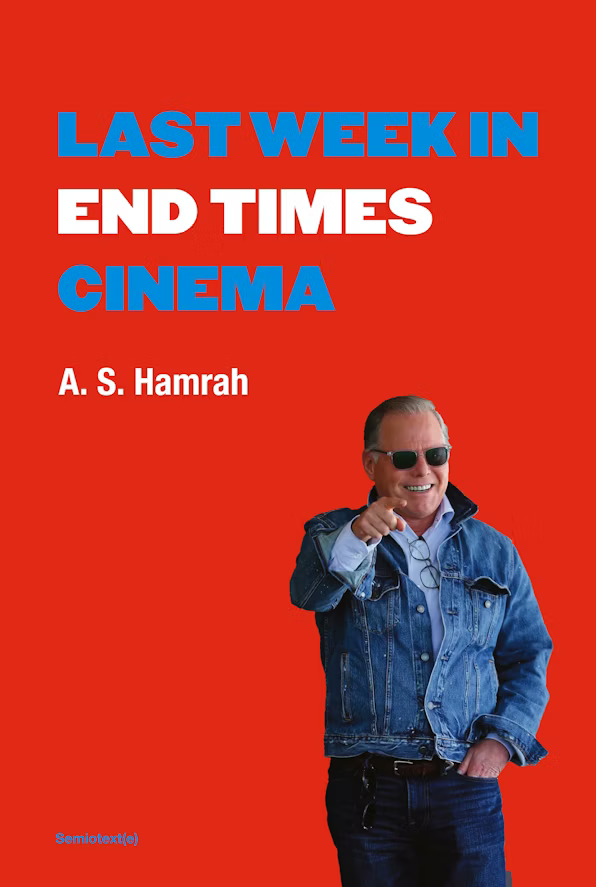
In Monday’s analysis of David Zaslav’s outrageous fortune from the
Warner Bros. sale, I predicted, “When the book about late-stage Hollywood is written, Zaslav has secured his spot on the cover.” Well… a couple readers noted that the film critic A. S. Hamrah just published a book about late-stage Hollywood titled Last Week in End Times Cinema. The cover...
|
See you Monday,
Matt
Correction: Netflix’s Ted
Sarandos didn’t actually campaign for Kamala Harris, as I mentioned on Monday. Apologies.
Got a question, comment, complaint, or better titles for books with Zaslav on the cover? Email me at Matt@puck.news or call/text me at 310-804-3198.
|
Need help? Review our FAQ page or contact us for assistance. For brand partnerships, email ads@puck.news.
You received this email
because you signed up to receive emails from Puck, or as part of your Puck account associated with {{customer.email}}. To stop receiving this newsletter and/or manage all your email preferences, click here.
|
Puck is published by Heat Media LLC. 107 Greenwich St., New York, NY 10006
|
|
|
|