Welcome back to What I’m Hearing, thankfully avoiding the sweatiest (literally and figuratively) advertising people in Cannes this week, while monitoring if anything will come from last Friday’s heated mediation day in the Paramount/Trump case. And also watching Ohtani pitch.
Tonight, Kim Masters is here with an in-depth look at the complicated third act of producers Brian Grazer and Ron Howard after Grazer angered his collaborators with his recent Trump flip. Will anyone buy their Imagine Entertainment?
Also, a P.S.A.: Thursday I’m doing a Mail Room issue, so email me any burning questions you’d like answered.
Programming note: This week on The Town, Lucas Shaw and I debated the most overcovered industry narratives of 2025, Debra Birnbaum explained how much a proper Emmy campaign now costs, and UTA’s David Kramer revealed the growth areas for his agency. Subscribe here and here…
Not a Puck member yet? Just click here. Got a news tip or an idea for me? Just reply to this email or message me on Signal at 310-804-3198.
Discussed in this issue: Brian Grazer, Ted Sarandos, Sydney Sweeney, Dean DeBlois, Ron Howard, Tim Cook, Tom Hanks, Brett Ratner, Ryan Coogler, Jamie Dimon, Jon Feltheimer, Lorne Michaels, Michael Rosenberg, Ana de Armas, Chris McCarthy, Justin Wilkes, Eminem, J.D. Vance, Mark Guiducci, and… the Bezos- Sánchez wedding blockade.
But first…
|
Who Won the Week: Donna Langley
|
|
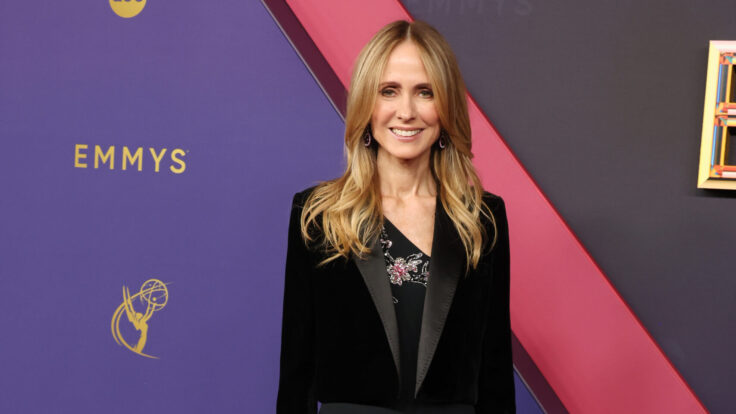
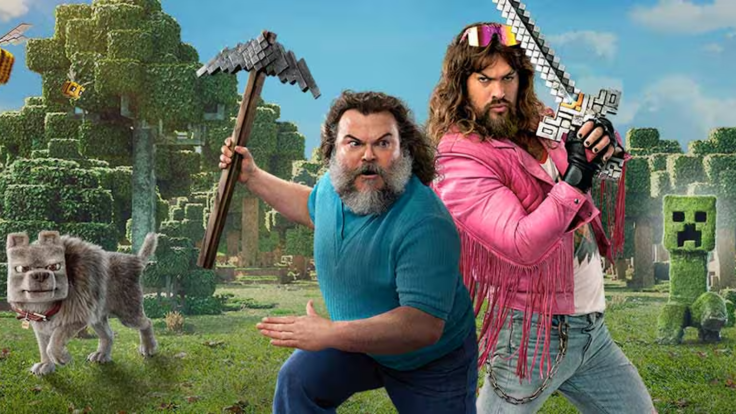
Given the second How to Train Your Dragon redux was already greenlit, and its theme park land just debuted, the Universal studio head really needed the first one to work in theaters (and prove she can play Disney’s game). A $200 million global debut and strong audience responses confirmed that.
Runner-up: Tony Gilroy, whose Andor topped the Nielsen streaming chart for the week ending May 18, just as Emmy voting began. (The Disney+ three-episodes-at-a-time release strategy likely compressed viewing and lifted the ranking, but still…)
|
“We elected not to go out and procure a catalog. I know that’s a faster way into the business, but it didn’t feel like Apple at the end of the day.”
— Tim Cook, the Apple C.E.O., in Variety, attempting to justify the low viewership on Apple TV+—and dashing the long-shot hopes of everyone from David Zaslav at Warner Bros. Discovery to Jon Feltheimer at Lionsgate that Apple will buy them.
Runner-up: “Today, we can do that exact film better for a fraction.”
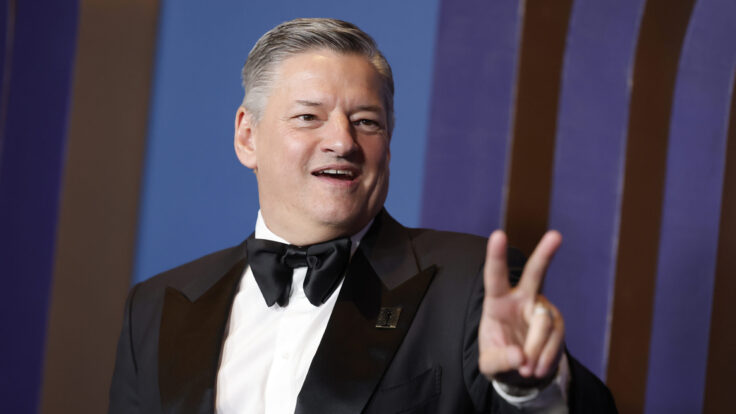
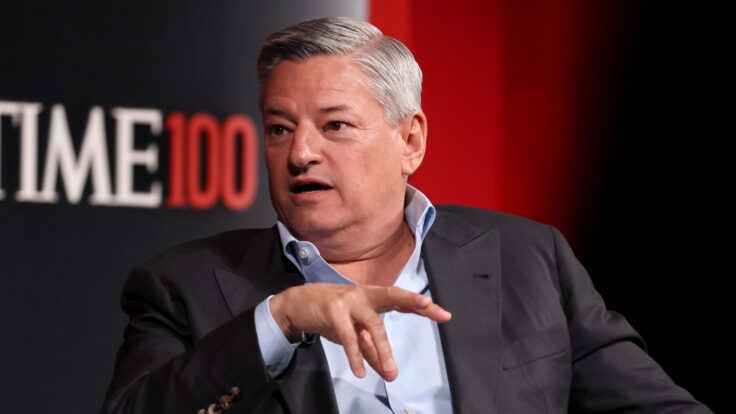
—Netflix co-C.E.O. Ted Sarandos, praising A.I. on the WTF podcast and practically salivating over the cost-cutting possibilities on projects like the VFX-heavy The Irishman
VERY honorable mention: “We will line the streets with our bodies, block the canals with lifesavers, dinghies and our boats.” — Federica Toninello, a Venice resident, to the Times, in their story on a growing protest movement against the lavish Jeff Bezos-Lauren Sánchez wedding, which is set to take over the canal city next week.
|
570 million
Minutes viewed in the U.S. of Gunsmoke, which ended 50 years ago, placing it in the streaming top 10 for acquired series during the week ending May 4. That’s likely due to Paramount licensing it as a companion to Yellowstone. [ Nielsen, via LA Times]
$184.9 billion
Projected content creator–generated ad revenue this year, up 20 percent from 2024. The segment is expected to more than double by 2030. [ WPP Media]
60 percent
The difference in time viewers spend searching for something to watch on streaming (8.7 minutes) versus cable (5.5 minutes). [ McKinsey]
73 percent
Share of U.S. YouTube viewers’ time spent watching long-form videos (30 minutes or more), an 8 percent increase from October 2023. [Digital i via UTA IQ]
10,000
Soup dumplings served every day at the Din Tai Fung in Disneyland. [ SF Gate]
Now here’s Kim on the challenges at Imagine Entertainment…
|
|
|
|
The longtime Democratic donor’s sudden political conversion comes at a delicate time for Imagine Entertainment, enraging his partners but potentially smoothing new business with Amazon MGM—and unlocking new avenues for relevance. “I’m sure Brian wasn’t a Republican until it became convenient,” said one producer who has known Grazer for decades. “He was obviously a Democrat B.B.—before Bezos.”
|
|
|
|
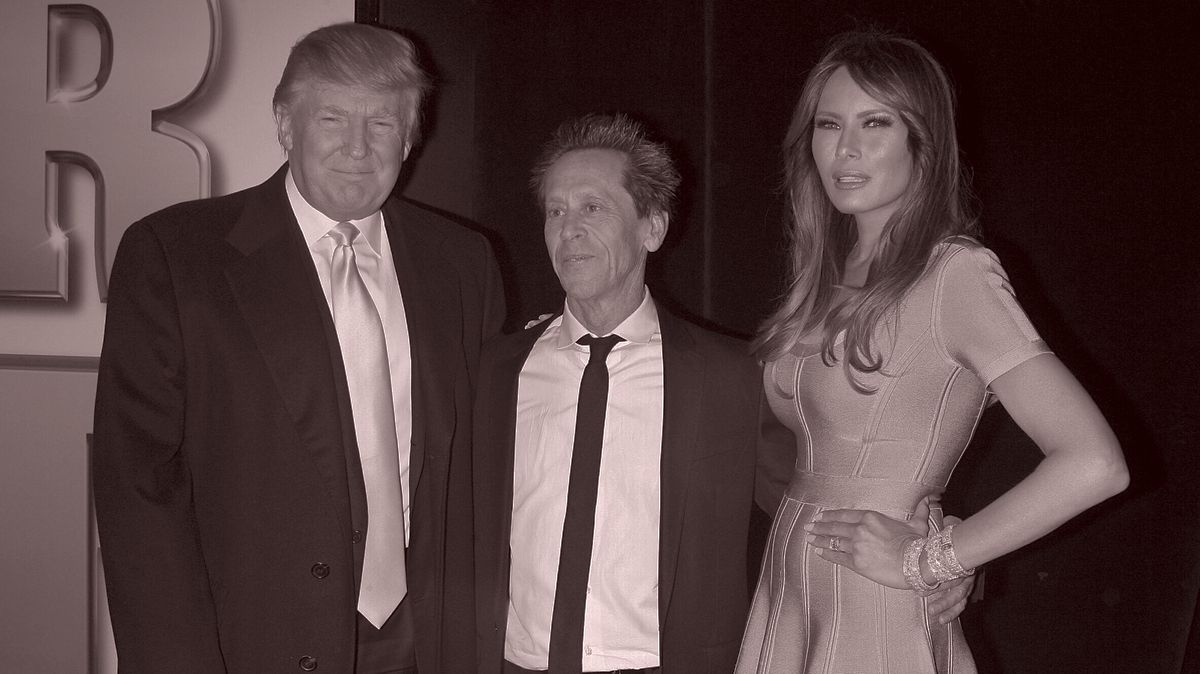
Maybe it shouldn’t be so shocking that a man who seemed to be the Zelig of Hollywood would suddenly shape-shift. But many industry veterans were gobsmacked when Brian Grazer, the well-known Democratic donor and longtime partner of Ron Howard in Imagine Entertainment, revealed in a Fox Nation documentary (of all places) that he had voted for Donald Trump in the 2024 election. Grazer made that announcement while being filmed in a V.I.P. box with Trump during last December’s Army-Navy football game. He added that he felt like he was getting “canceled” when he told some women he knew about his vote.
Sources have told me the news that Grazer had, um, flipped came as a blow to Howard, as well as many others, including Tom Hanks, whose professional relationship with the duo dates back to Splash in 1984 and continued through three Da Vinci Code movies. Yes, obviously Grazer and Howard made 2020’s Hillbilly Elegy, based on the memoir by J.D. Vance, but both men have long been known as staunch Democrats. (Remember when Howard reunited with Andy Griffith to make a Mayberry-throwback ad for Obama? And Howard has said that he was “very surprised and disappointed” by rhetoric that has since emerged from Vance.)
|
|
|
|
A MESSAGE FROM OUR SPONSOR
|
|
For your consideration: Sponsors include Max, presenting THE LAST OF US. In 2003, a parasitic fungal infection ravaged the planet, turning people into violent creatures known as the Infected. Twenty years later, Joel—played by Pedro Pascal—is hired to smuggle 14-year-old Ellie, played by Bella Ramsey, to the rebel Fireflies. Season 2 picks up five years later, as Joel and Ellie’s past resurfaces, drawing them into conflict with each other—and a world even more dangerous than the one they left behind. Don’t miss the series The Hollywood Reporter calls “THRILLING & ADDICTIVE.” Emmy-eligible for Outstanding Drama Series and all other categories. Now streaming on Max.
|
|
|
When The New York Times reached Grazer, his explanation hardly helped: “As a centrist, it was because I could feel and see Biden’s deterioration and the lack of direction in the Democratic Party at that time.” A centrist? This did nothing to soothe Grazer’s colleagues. “When this thing happened, they were beside themselves,” a well-placed source told me. Executives at the company “were getting calls from around town—they’re all mortified.”
A high-level source at another company, who has known Grazer for years, was among the aghast. “It is amazing to me that Brian Grazer would go to that football game and never have it pass through his head that [his comments] would be problematic for his partner and people in business with him,” this person said. And then there was the timing—the revelation of Grazer’s vote came as Trump was ordering a military occupation of Los Angeles. This exec added, “I would like to ask Brian if he got what he wanted.” A veteran producer was also shaking his head at Grazer’s public embrace of Trump. “Why would anybody do that in this town, when every major celebrity campaigned for Harris?” he asked.
Grazer has long been known for approaching the world’s most accomplished people, including Obama, Princess Diana, Norman Mailer, Jonas Salk, and Isaac Asimov, for his “curiosity conversations.” He’s put these experiences to good use as a producer: A chat with Eminem turned into the culture-shaping film 8 Mile. When it comes to the Town, people tend to “stay in his world until they get fired or lose their job or he finds a bigger fish,” said a source who has worked with Grazer for years.
One very big fish is the world’s third-richest man. Grazer and his fourth wife, Veronica, have become hanging-out-on-the-yacht close with Jeff Bezos and fiancée Lauren Sánchez—so much so that Veronica appeared in the May issue of Vogue as one of 11 women who joined Sánchez on her bachelorette trip to Paris. ( Katy Perry, Eva Longoria, Kris Jenner, and Kim Kardashian were also invited.) A producer who has known Grazer for decades said, “I’m sure Brian wasn’t a Republican until it became convenient. He was obviously a Democrat B.B.—before Bezos.”
|
Imagine’s relationship with Amazon has certainly proved more than convenient. In 2023, the production company—which already had projects set up at Amazon MGM Studios—formally struck a first-look deal there. Four of Imagine’s next six movies will be released by Amazon MGM, including Howard’s next feature directing gig, Alone at Dawn. Imagine also has a deal to get first crack at material generated by The Washington Post, which Bezos owns.
Sticking with his finger-in-the-socket spiky-hair look through the decades, Grazer, who will be 74 in July, is one of the industry’s most recognizable producers among those who neither write nor direct. In the 2000s, he was named one of Time’s 100 Most Influential People and was profiled in The New Yorker. For decades, he’s seemed almost ubiquitous—amassing prestigious credits in film and TV and turning up at A-list parties, where he used to secrete a framed photo of himself in the host’s house, apparently as a sort of quirky, “Kilroy was here” gesture. (He also left photos at the now-defunct Palm restaurant and in the lobby lavatory at Chateau Marmont.)
Back when life in Hollywood was good, Imagine had an enviable deal with Universal that came with a lot of overhead and a very nice cut of the backend. “Brian’s genius was always being able to package and come with talent attached, whether it was Jim Carrey, Eddie Murphy, or whoever,” said an exec who was at Universal at the time. Two different industry vets used the term “heat-seeking missile” to describe Grazer’s gift for finding material and talent that hit the zeitgeist and sometimes turned into cultural phenomena. Imagine’s hits included Apollo 13, Bowfinger, Liar Liar, Parenthood, A Beautiful Mind, Frost/Nixon, and more. There was a long list of television credits, too, including Arrested Development, Friday Night Lights, and Empire.
A prodigious networker, Grazer appeared at the tech industry’s Breakthrough Prize in April, and yes, he has again secured his place on the guest list for Herbert Allen’s annual Sun Valley retreat. One industry source marveled that Grazer had befriended JPMorgan Chase C.E.O. Jamie Dimon, who tried to help nudge along a deal for Imagine. “What the fuck is Jamie Dimon fucking around with this for?” this person asked. (Dimon did not respond to a query about that.)
As lucrative as Imagine’s lavish backend deal was, the issue has long been that the company didn’t own its films and television shows. While Imagine has a nice steady stream of revenue from its profit participations, ownership matters—as Ryan Coogler recently demonstrated. (Ironically, in his 2015 book, A Curious Mind, Grazer recounted that, as a very junior newcomer in Hollywood, he wrangled a brief meeting with mogul Lew Wasserman, who told him, “The only way you can be anything in this business is if you own the material. You have to own it.”)
|
|
|
|
A MESSAGE FROM OUR SPONSOR
|
|
FOR YOUR CONSIDERATION: SPONSORS INCLUDE MAX, PRESENTING THE HBO ORIGINAL CONAN O’BRIEN MUST GO. In Season 2 of the Emmy® Award-winning travel series, Conan O’Brien experiences local cultures and connects with fans — including Javier Bardem and Taika Waititi. EMMY ELIGIBLE. NOW STREAMING ON MAX
|
|
|
Imagine has been on a long and winding financial road, going public in the mid-1980s before going private in 1993. The company has made several efforts to sell itself over the years, without success. When its deal with Universal finally wound down, Imagine snagged a $100 million-plus investment from Raine Group, in 2016, with the intention of growing the company. In the past couple of years, sources said, Raine has been looking for an exit. (Raine declined to comment.) A fresh deck has circulated recently with a hefty price tag that one investor called “laughable.”
Howard, 71, hasn’t directed a hit movie in some years. His most recent film, Eden, with Jude Law, Ana de Armas, and Sydney Sweeney, was independently financed and couldn’t find a domestic distributor after it debuted at the Toronto Film Festival last fall. Howard had to settle for a late August release from Vertical, a company that typically distributes films that are homeless. It’s still unclear how wide a release it will get, but one source told me it would be “minimal.”
|
“It Wasn’t Something I Had to Do”
|
|
In January 2023, Imagine elevated Justin Wilkes, who had joined the company in 2018 to build its now-thriving documentary business, to president. Longtime co-chairman Michael Rosenberg, who had been seen as a steadying hand at the company, began to step back and quietly retired at the end of 2024. “Michael Rosenberg isn’t there to pull everyone along,” said a former Universal executive. “Michael’s ability to keep the train on the tracks was not insignificant.” (Rosenberg declined to comment.)
Business has picked up at Imagine since the strikes ended, and sources say the company has a steady annual revenue of about $20 million from its backend participations and several million more from its ongoing activities. It has been building up some momentum in film and TV, with new projects in the pipeline. But it’s more than fair to wonder about the longevity of Howard and Grazer’s nearly 40-year partnership. Their contracts are up in January, and if Raine can’t find an exit and the two principals can’t come to terms with their main investor, one source believes that the “odds are better than 50-50 that they drop out” of Imagine—not that they would retire. An Imagine insider says there are no plans at this time for either of them to leave the company.
I reached out to both men by phone and text. Unsurprisingly, Howard did not respond. “Ron is the greatest partner in the world,” said one associate. “He’ll never talk to anyone outside the inner circle.” Grazer sent me a text, but didn’t address my questions, either about his vote or his plans. “I’m in this business to celebrate artists and to make movies and television with the intention of inspiring and entertaining people,” he wrote, adding that he had once produced the Academy Awards ceremony even though “it wasn’t something I had time to do” because he wanted “to celebrate the hard work of all the men and women that made wonderful films that year.” (That happened in 2011, after Brett Ratner was forced to resign from the gig for using a gay slur.) He continued, “In the last year and a half, I’ve worked hard to get right back into the making of movies after strikes, Covid, and other industry setbacks.” Grazer added that he was proud of the company’s slate of upcoming films.
One player who was approached to invest in or buy the company observed that whatever happens, Grazer, Howard, and Imagine are in fine shape—much better shape than a lot of other independent production companies navigating these treacherous Hollywood rapids. “They could actually shut the whole thing down and collect the receivables,” this person said. “I don’t think Grazer’s out there desperately flogging it. For Brian, it’s about being relevant. These TV shows—it’s dinner conversation for him. The company’s healthy, they’ve got a shitload of development, they have a whole infrastructure of people, especially in TV.”
Another executive who worked closely with Grazer and Howard over the years thinks that whatever happens, neither man plans to ride off into the sunset. “People like Ron and Brian and Steven and Marty—they just don’t want to stop,” he says. “The economic structures have changed and they still want to tell stories. I find it quite admirable. They don’t need the money.”
As for whether Grazer’s new political convictions will be a hindrance for him in dealing with talent, times may be too challenging in the industry for anyone to turn down a gig on principle. Socializing with the old Hollywood guard may be a different matter. One executive, when asked about his prospects, had a quick response: “I think it will be fine—if he wants to go to lunch every day with Jon Voight.”
|
Wait, shareholder outrage actually matters? David Zaslav’s Warner Discovery pay will be “significantly” reduced, “including lowering his annual cash compensation opportunity and reorienting the total pay mix toward long-term incentives,” per an S.E.C. filing. That means his cash bonus opportunity will drop from $22 million to $6 million. Cue the violins. [ 8-K]
A little more: Too little, too late, of course. But finally reining Zaslav in—and avoiding the embarrassing $52 million salary headlines while the company has lost 60 percent of its value since launch—should at least change a little of the narrative around Warner Discovery. And if Zaz can actually engineer a turnaround for all shareholders, the new deal will reward him handsomely.
A Stanford/USC student group surveyed their Gen Z peers on how they feel about A.I., and the highly unscientific results are… terrifying. More than 70 percent already use A.I. creation tools daily. [ Creative Compass]
Paramount’s Chris McCarthy really promised a new South Park deal on an earnings call before he actually had one?! Shades of Jon Feltheimer touting Knives Out sequels right before Netflix snatched them. [ LA Times]
Speaking of cash grabs… Tough break for the SmartLess guys, launching a Mint Mobile rip-off phone service the same week the Trumps announced their own. [ Bloomberg]
Lauren Sherman has a good assessment of why Condé Nast picked Mark Guiducci, a 36-year-old Friend of Anna, as the new editor of Vanity Fair. [ Puck]
Until I saw the billboard for The Snake on the Fox lot, I wasn’t aware how many knockoffs of The Traitors exist now. [ Guardian]
Seth Meyers said he thinks Lorne Michaels has already decided who will replace him at SNL. [ Talk Easy (52-minute mark)]
It’s amusing/depressing to see Dragon director Dean DeBlois try to justify to himself— during an interview—why he remade his own movie: “I understand it’s a risk-averse environment, that these are huge, expensive movies.” [ Animation Magazine]
|
|
My Monday and Thursday missives on David Zaslav and the demise/split of Warner Bros. Discovery lit up my inbox. Some examples…
“Splitting them from the declining (but still cash flow generating) linear assets may be the best path for WBD to unlock the greatest value of its portfolio,” MoffettNathanson wrote in a note to clients today. There’s no better analyst than Michael Nathanson, but it’s amazing how this is put forward as a statement in a vacuum. Someone has to run that ‘portfolio’ as an actual operating company… with humans… that make movies and TV shows. Zaslav has failed in every respect other than deleveraging—and he had to destroy the underlying enterprise to do it. Michael knows this, of course, but that statement is prima facie evidence of how Wall Street destroyed Hollywood long before the tech companies showed up.” —An executive
“In hindsight, would’ve been easier to sell off CNN and the Turner nets rather than forcing that WBD merger and destroying the company’s value. He basically kept what was already there.” —A publicist
“Truly ironic that the guy who built his career on cable somehow doesn’t end up running the cable channels. Just a remarkable ability to fail up.” —A professor
“Giving the spinco a 20 percent stake in the streamer is quite a clever idea, I think. It helps to justify laying a majority of the debt on them. It gives Gunnar [Wiedenfels] some opportunity to talk about having an upside to participate in. And it solves the issue of how the spinco gets paid for content that it supplies to the streamer.” —A retired executive
“How come we all saw the handwriting on the wall and he didn’t? I guess he always did, but he wanted a few more years to get his astronomical comp packages. With his luck, he’ll find a buyer that makes him even wealthier than he is right now. What a business!” —A producer
“Wonder if Zaz knew that that ‘stuff that dreams are made of’ quote from Maltese Falcon was about how the dream was fake, and the falcon was made of pewter. Oh well.” —A writer
|
|
Have a great week,
Matt
Got a question, comment, complaint, or Michael Kassan’s expense report from Cannes? Email me at Matt@puck.news or call/text me at 310-804-3198.
|
|
|
Need help? Review our FAQ page or contact us for assistance. For brand partnerships, email ads@puck.news.
You received this email because you signed up to receive emails from Puck, or as part of your Puck account associated with . To stop receiving this newsletter and/or manage all your email preferences, click here.
|
|
Puck is published by Heat Media LLC. 107 Greenwich St, New York, NY 10006
|
|
|
|