 |
| Welcome back to a jam-packed What I’m Hearing on this momentous day for both the Paramount Global entertainment conglomerate and the offspring of testy billionaires. Tonight, my take on the landscape-altering David Ellison-Shari Redstone deal, plus takeaways from my chat with Ellison and RedBird Capital’s Gerry Cardinale.
Programming note: I’m back in L.A. and, like Ellison, I won’t be at the Sun Valley mogul conference this week. But my partner Dylan Byers will be there, so say hi to Dylan at the Konditorei. And a pro tip: If CNBC asks you to do an on-camera interview amid a picturesque backdrop about layoffs and the onerous cost of labor, don’t do it.
Not a Puck member yet? Click here to fix that problem. Got a news tip or an idea for me? Just reply to this email or message me anonymously on Signal at 310-804-3198.
💫 PSA: If you have opinions about how we do things at What I’m Hearing or Puck—and I bet you do—please participate in our new study. We want to make the member experience even better.
Discussed in this issue: Shari Redstone, Kevin Bacon, Willow Bay, Charlie Ergen, Dick Wolf, Chris McCarthy, Sherry Lansing, Michael B. Jordan, Kevin Mayer, Gerry Cardinale, Barry Diller, Michael Rubin’s White Party... and Ben Sherwood’s Caesar salad journalism.
But first… |
| Who Won the Week: David Ellison |
|
| Of course. Let’s skip the pleasantries and jump right into the main event… |
 |
| Money Wins Paramount |
| Skydance’s David Ellison reveals plans for the storied studio as he leverages his father’s Oracle fortune and the motivation to reinvent a dying company amid questions about his promised tech fixes: “This is what I wanna do for the rest of my life.” |
|
|
|
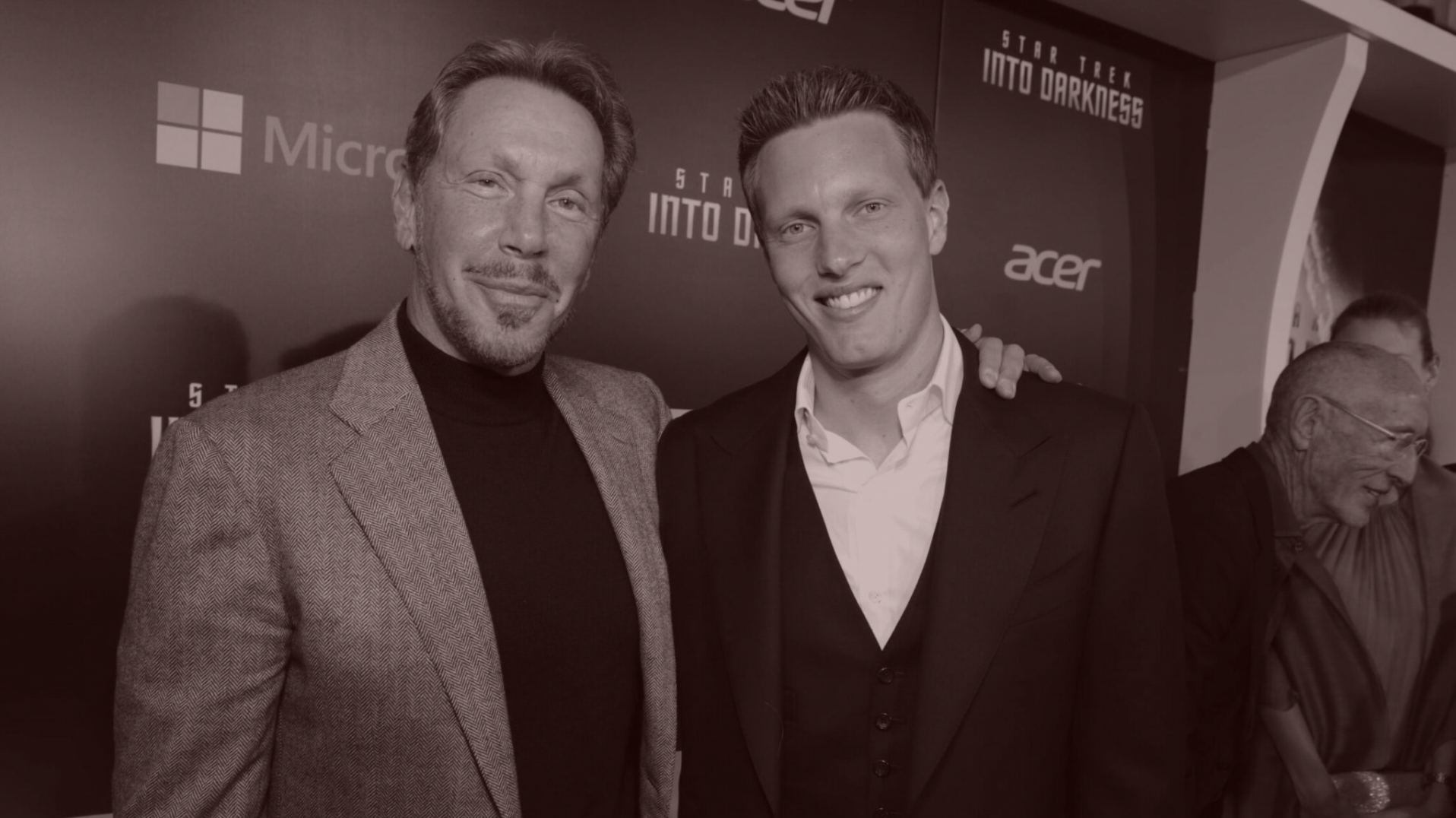
| Has Hollywood ever rooted harder for one billionaire’s kid to buy a company from another billionaire’s kid? With apologies to HBO’s Girls, David Ellison’s on, off, then on-again deal to merge his Skydance Media with Shari Redstone’s Paramount Global is almost certainly Peak Nepo Baby, right?Still, I think there was a bit of an exhale around town last night as the press releases hit. Barring some unlikely regulatory hiccup or an alternative suitor—like Barry Diller or Edgar Bronfman Jr. or Apollo Global taking advantage of the 45 day “go-shop” provision to make the Paramount special board committee a better offer—the home of the Paramount studio, CBS, the cable channels, and streamers is being sold to someone who actually wants to be in this business for a while. Like I’ve been saying for months now, this is probably the best-case scenario for these assets—and for Hollywood, a business in secular decline that just got a major boost from the billionaire class.
Think about it: The Ellison family and RedBird Capital are investing more than $8 billion in a company that the public market is valuing at only about that much as a whole, minus debt. That’s $6 billion from Larry’s $160 billion Oracle fortune and $2 billion from RedBird—$1.5 billion to pay down that $14 billion or so in debt, $4.5 billion in Paramount shares, and about $1.75 billion for National Amusements, the Redstone holding company, which is valued in this deal at $2.4 billion (including debt). No offense to the other suitors of varying seriousness (even Byron Allen!), but who other than the Ellisons are willing to put that kind of personal money into a company that makes most of its revenue from linear television?
This isn’t quite a Jeff Bezos buying the Washington Post charity mission, but the Ellisons were certainly motivated buyers. David wanted this; Shari wanted someone who would keep her dad’s legacy relatively intact; David’s father, as the 10th-richest person in the world and pushing 80 years old, is in the position to buy this company for his son; so… deal done. For a transaction so financially complex, it’s not that complicated.
That’s the reason I never thought the Skydance-Paramount deal was totally dead, even when both Skydance and Paramount told us all last month that it was totally dead. It’s the same reason I took the Ellison overture seriously when I first revealed it to What I’m Hearing readers back in early December. And it’s the same reason I named Ellison the Hollywood “hero of the year” in 2022, the year of the Top Gun: Maverick bonanza: It’s the money.
He’s got as much as it takes. Yes, so do the usual suspects of tech companies and P.E. firms, but Ellison has the money and the extreme motivation. That’s the first thing you realize when you meet with him. Whether it’s the insecurity of the only son of a self-made billionaire, or simply a personal obsession with the entertainment business, Ellison—by design, of course—comes across as the furthest thing from a vanity producer. This is a guy who was willing to lose his shirt on a Terminator movie… and then make another Terminator movie! He watched as his sister Megan became the queen of indie film, turning her house in the hills into an Algonquin for the Erewhon crowd and breaking an Oscars record with two best picture nominations in the same year—just before her spectacular financial flameout. David kept building, spending family money and bringing in investors like RedBird and KKR and Tencent, biding time until an opportunity like Paramount presented itself.
“I’m overjoyed by this,” Sherry Lansing, the pioneering former Paramount studio head and producer, told me this afternoon, reflecting what I think is the sentiment around town. Yes, creative people naturally salivate around rich guys willing to spend on art. But it’s more than that. “The loss of another legacy studio would have been tragic,” Sherry said. “I think David works hard and loves making good movies. He’d rather be in an editing room than with the bankers. Failure is not an option to him. He will keep going, and he will have the resources to keep going. It’s a fantastic outcome.”
Time will tell whether it’s a smart outcome, and likely litigation will determine whether it’s a good deal for the non-Redstone Paramount shareholders. The market didn’t love the announcement, punishing the PARA stock today by 5 percent. “When combined with the length of time to close and relatively high valuation compared to media peers (6.8x the company’s 2026 outlook vs. 5.7x at Fox and 5.6x at Warner Bros. Discovery), we expect investor enthusiasm to remain tempered,” Guggenheim analyst Michael Morris wrote today. But I think the market is short-sighted. As the smallest of the stand-alone legacy studio conglomerates, Paramount’s challenge was always getting through this period of digital transition without getting killed or eaten. Yes, $2 billion in synergies (layoffs) are coming, as is (they hope) reduction of debt to a net leverage ratio of 2.9 times by 2026, down from the current leverage ratio of 4.3 times. But given these challenges, the Ellison money is at least a plausible bridge to the future. |
|
|
| I spoke to Ellison and Gerry Cardinale of RedBird today for a bit. After 15 years running Skydance, David still doesn’t seem totally comfortable talking to the media. I’m guessing that growing up the son of an outspoken and conservative tech mogul has instilled in him a healthy discomfort with outsiders, in general, and the press, in particular.Anyway, you can listen to the full chat here, but I left the conversation with five big takeaways:
1. Change will be swift, despite the regulatory process: Remember, when Comcast bought the NBC broadcasting license, the FCC took 14 months to vet and approve the deal. This transaction is far less fraught: Skydance doesn’t own cable carriers, and broadcasters are far less important now than they were even in 2010. But Paramount may not survive another 14 months of inaction, and Ellison made clear to me that the changes will start before the Skydance merger is official. That means some version of the cost-cutting and asset-shedding plan articulated by Shari’s three placeholder C.E.O.s—including, I’m surmising, the massive layoffs, the planned sale of BET Media, I.P. deals (I’m told Paramount is already talking to Jamie Salter and his Authentic Brands Group about exploiting its lesser kids characters), and a streaming joint venture with Amazon, NBCUniversal, or another player. “No, it has not stopped,” Ellison told me of the Redstone-endorsed strategic plan, “within all the regulatory bounds.” Skydance will have “the appropriate seat at the tables,” he continued, “and we have confidence in that team.”
So, basically, Ellison and his president, former NBCU C.E.O. Jeff Shell, will be as involved as allowed legally over the next year or so. And George Cheeks, Chris McCarthy, and Brian Robbins will go about cutting costs, selling assets, and doing joint ventures with the tacit approval of the new owners? “Correct,” Ellison told me.
2. Big cuts in linear: Shell will almost certainly gut the linear TV assets even further. “They are very profitable businesses that do need to be managed differently,” Ellison told me. “They need to be managed for cash flow.” That’s been happening for a while now, of course—the unscripted/game show boom in broadcast, the McCarthy Ridiculousness strategy of airing endless repeats on each cable network to supplement a signature franchise that kinda maybe justifies the channel’s existence. The risk, obviously, is that further content cuts will jeopardize carriage fees. Distributors are clearly coming into these negotiations with knives out. Paramount has a big negotiation with Dish coming up, for instance, and Charlie Ergen would probably love to drop channels like MTV and VH1 or extract major concessions. CBS has 16 scripted shows on its fall schedule. ABC has just five. It probably won’t take long for Shell to winnow that CBS number down, Dick Wolf be damned.
3. The hybrid streaming strategy (at least in the U.S.): Ellison didn’t expressly say so, but I got the sense that he’s committed to Paramount+ in the U.S., while overseas, he’ll likely pursue the “arms dealer” strategy and pull back from owned or co-owned streaming platforms. “It’s too early to make any definitive declarations, but you should absolutely evaluate whether or not a licensing approach makes sense on the international side,” he told me. According to a knowledgeable source, Paramount+ actually reached profitability in the U.S. in two recent quarters, so that progress may play a role.
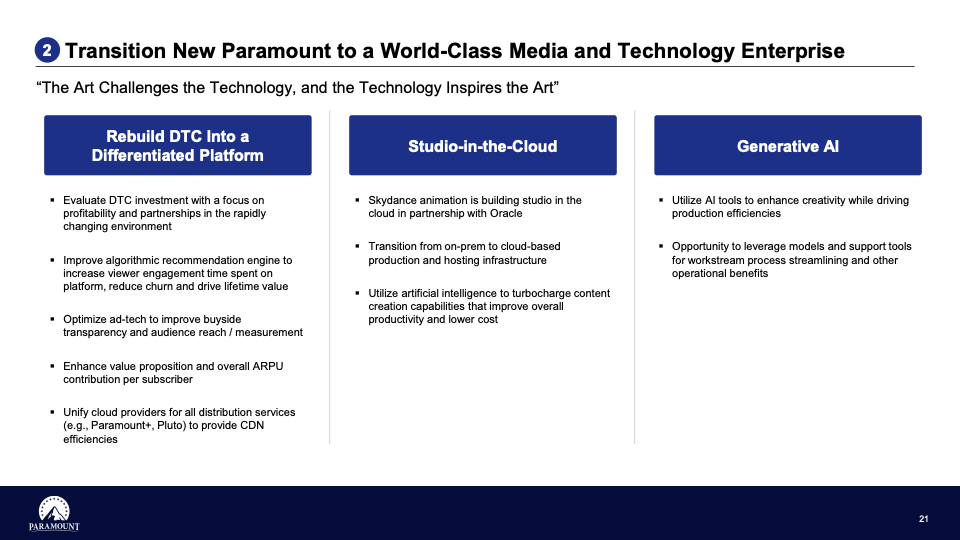
Obviously, figuring out a money-making streaming strategy is key to this entire deal, which is why Ellison is really pushing the angle that he’s a unique hybrid of tech guy and Hollywood creative. If you’re into PowerPoint porn (no judgment!), here’s the full deck, but this slide discusses the tech strategy: |
|
|
| Does that convince you that the home of Adolph Zukor and William Paley and Bob Evans will soon be a cutting-edge technology company? Yeah… big question mark there. A better interface for Paramount+ would certainly help, as would using A.I. more extensively and moving more production to the cloud (via Oracle!), as Ellison promises. But these aren’t necessarily solutions to the scale problem. Plus, as I’ve written, the investment needed to pull Paramount even with Netflix on the tech front would be substantial—and likely at odds with the overall cost-cutting strategy to get to profitability.Throughout the sale process, and today with me, Ellison kept returning to a version of “the future is the combination of art and technology.” In our chat, Ellison was very quick to deploy tech analogies, especially when I expressed skepticism. “I remember when people said similar things about Oracle,” he said, reminding me that he worked there briefly. “I remember the stories that Oracle was a dinosaur. I remember the stories that Oracle … could never manage the cloud and SaaS revolution. And today it’s trading at all-time highs.”
He wasn’t done. “When you think about what Next was when it went into Apple… what Pixar was when it went into Disney… you can take the pure-play content engine that we’ve built at Skydance, plug that into Paramount, and the already very significantly talented leadership team and artists that are working there, and really rejuvenate and reinvigorate the company,” he said. Yes, Skydance is the Steve Jobs company in this analogy, so take that for what it’s worth.
4. Movies in theaters still matter: Top theater-owner lobbyist Michael O’Leary said today he’s “encouraged” by Skydance’s history with franchises like Mission: Impossible and Terminator. When I asked Ellison bluntly whether he’s planning to increase or decrease the Paramount theatrical output, he said, “Yes, we will absolutely make more movies [for] theaters.” But, I pointed out, most of the Skydance non-franchise movies recently, like Ghosted and Luck for Apple, and The Adam Project and Heart of Stone for Netflix, have been made for streamers. “That’s definitely true,” he said. “I would say Covid factored into a significant amount of that. I don’t believe in a one-size-fits-all approach. It’s always a case-by-case decision on, ‘What is the best decision for this movie with this filmmaker and this story in this particular moment in time?’” So… more movies in theaters, unless it doesn’t make sense to put them in theaters.
5. Finally, this isn’t a flip: “I’m definitively in this for the long term,” Ellison told me. “We’re 15 years into Skydance and, very simply, this is what I wanna do for the rest of my life.”
So here we are. Honestly, I’m not going to crap on Shari. The Redstones had a nice run. In 2000, Viacom was worth about $70 billion and Sumner was the king of content. It was a long, slow, and much-chronicled descent. Yes, Shari took over twin companies together worth $30 billion and orchestrated a flawed strategy and an epic period of overall value destruction.
And yet, she had the good sense to recognize what is, in my view, an ideal buyer for the family company. Ideal for her, sure, because Ellison is taking on National Amusements in a deal that values it well above what a company with a 10 percent economic interest in an $8 billion company—plus some movie theaters—should expect. Whether the aggrieved B shareholders realize it now or not, Ellison and his deep well of family money will almost certainly be better for this company and its shareholders in the long run. Money wins, and for now, as the age of media moguls has transitioned to the era of the tech mogul, the Ellison money is probably the best an old Hollywood studio could hope for. |
|
|
| “Have the financials borne out the way we would like, … to support the prices that we paid? Probably not.”
—Kevin Mayer, the Candle Media co-founder, talking to Semafor about the astronomical $900 million valuation on Reese Witherspoon’s Hello Sunshine and other widely criticized acquisitions from 2021-22. But, he said: “Talk to us in two or three years.”Runner-up: “I was like, ‘This sucks. I want to go back to being famous.’” —Kevin Bacon, perfectly summing up his “experiment” of walking in public while disguised. |
|
|
| A delightful account of how the NDAs you make everyone sign took over Hollywood (and everywhere else). [New York]Bob Iger and Willow Bay are putting $50 million into the Angel City women’s soccer team, and Dylan Byers wonders if it’s an eventual vehicle for the sporty Iger offspring Max and Will. [Puck]
The eternal binge-or-no-binge debate, seen through the prism of the high “decay rates” on The Bear. [Wired]
Lauren Sherman’s report on the progress of a Devil Wears Prada sequel actually makes it sound… good? [Puck]
When former Disney/ABC chief Ben Sherwood took over The Daily Beast with Joanna Coles, I’m guessing he didn’t envision having to write an article about the 100th anniversary of the Caesar salad. [Daily Beast]
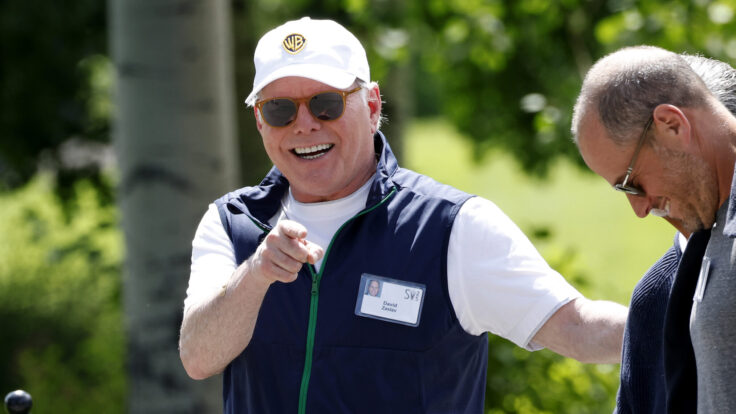
Looks like the Hollywood executives and non-Leo/Tobey stars mostly avoided Michael Rubin’s annual invitation to dress up in a silly white outfit and become part of his personal branding videos. Everyone except David Zaslav, of course. [Instagram]
Now Scott Mendelson’s take on the Despicable Me 4 box office… |
| Can Hollywood Make Old Franchises New Again? |
|
| Perhaps the most revealing statistic from Despicable Me 4’s strong holiday weekend domestic debut ($75 million Fri-Sun and $122 million Wed-Sun) is how much the movie lured younger demographics: A whopping 74 percent of the audience was under age 35. Yes, obviously, this is a kids’ movie, but the heightened percentage suggests that young adults were also reconnecting with Gru, the minions, the Pharrell soundtrack, and characters of their own youths. This continues a pattern for most of the year’s big box office successes: Out of generational nostalgia, young audiences are flocking to franchises that were birthed during the 2010s.During the past year, the most successful films have included new installments of Kung Fu Panda and The Hunger Games. Inside Out 2 has been an outsized hit ($1.21 billion and counting) partially because of nostalgia for the original, from 2015, which became a generational Pixar touchstone—just like Finding Nemo and Toy Story before it. Likewise, Despicable Me was an entirely new animated comedy in the summer of 2010, pitched at young kids even as it told a tale of midlife crisis. Minions, its summer 2015 spinoff, grossed $1.1 billion amid an all-quadrant franchise revival, and now Despicable Me 4 is marching toward at least $700 million worldwide, and probably much more, on a $100 million budget.
Deadpool & Wolverine, coming out later this month, seems poised to draft on the same nostalgia kick. In 2016, Deadpool became a blockbuster mostly because audiences who otherwise couldn’t have picked Deadpool, Deadshot, and Deathstroke out of a lineup found the notion of Ryan Reynolds playing a fourth-wall-breaking antihero in an R-rated rom-com superhero parody largely irresistible. If the kids who grew up on Inside Out and Despicable Me were too young to see Deadpool and Deadpool 2 in theaters, they’re old enough now to see the third film.
The other definitive trend this year has been reincarnations of older franchises, like Bad Boys: Ride or Die, that intentionally played as new to...
Continue reading online... |
|
|
| Light feedback this week, but I got a thoughtful email from a prominent Hollywood donor to Joe Biden and other Dems who isn’t comfortable going public with his anger post-debate but wanted to articulate why he feels betrayed by fundraising co-chair Jeffrey Katzenberg… “What bothers me about Jeffrey isn’t that he downplayed Joe’s condition. He’s the money-raiser… his job is to stoke excitement to raise money. What’s unforgivable is that Jeffrey tried to spin [the president’s] age as his ‘superpower.’ He used that word often, and other words like ‘asset’ and ‘secret weapon.’ To me, that goes beyond simply acknowledging and minimizing what we now know he knew to be a huge problem. He was treating the president like one of his movies—a troubled project that loses its star or director, which must be spun not as a negative but as a positive. ‘Forget what you’ve read and heard, I’ve seen the test scores and Biden tested through the roof.’ The problem is we all saw this movie for ourselves. No amount of marketing and spin can change that.” —An executive |
|
|
| Have a great week,
MattGot a question, comment, complaint, or a recipe for a good watermelon salad? Email me at Matt@puck.news or call/text me at 310-804-3198. |
|
|
|
| FOUR STORIES WE’RE TALKING ABOUT |
 |
|
 |
|
 |
| Biden’s Hill Blues |
| Navigating the president’s plunging support in Congress. |
| ABBY LIVINGSTON |
|
 |
|
|
|
|
|
 |
|
|
| Need help? Review our FAQs
page or contact
us for assistance. For brand partnerships, email ads@puck.news. |
| You received this email because you signed up to receive emails from Puck, or as part of your Puck account associated with . To stop receiving this newsletter and/or manage all your email preferences, click here. |
| Puck is published by Heat Media LLC. 227 W 17th St New York, NY 10011. |
|
|
|