Welcome back to a jam-packed What I’m Hearing, extra late tonight because the Emmys kept me out
past midnight, I slept through a Morning Joe appearance (sorry!), and then spent the rest of the day trying to catch up…
🚨🚨 Hard to believe it, but Puck is 4 years old this week. Amazing to think this all started with an email I fired off to 300 industry friends. For our anniversary sale, new subscribers get 20 percent off an annual membership, or upgrade to the Inner Circle tier
for a discount. Do it!
Tonight, some news on another big hire at New Paramount, plus a breakdown of how HBO Max and Paramount+ might fit together (if, you know,
hypothetically they were one company). And yes, some odds and ends from Emmy weekend—sorry in advance, Nate…
Programming note: This week on The Town, Lucas Shaw, Rich Greenfield and I gave our odds on whether the Ellisons buy Warner Discovery; Julia Alexander
revealed the most and least popular Emmy nominees on streaming, and Jim Rutenberg explained why the Murdoch kids agreed to take the money and
run. Subscribe here and here.
Not a Puck member yet? Just click here. Got a news tip or an idea for
me? Just reply to this email, or text me or message me on Signal at 310-804-3198.
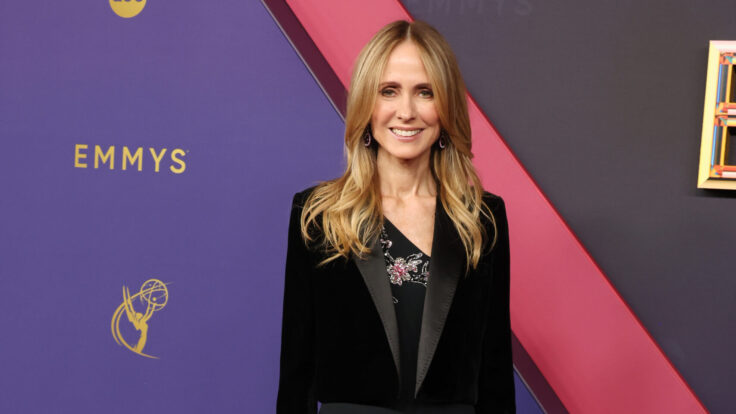
Discussed in this issue: David Zaslav, Nate Bargatze, Cameron Crowe, David Ellison, Cindy Holland, Jay Penske, Jesse Collins, Ted Sarandos, Josh Goldstine, Emma Stone,
Shannon Buck, Alan Bergman, Melissa Nathan, Jeff Shell, Allison Rawlings, Mark Ruffalo, Melissa Zukerman, Lynette Rice, Dana Goldberg, Terra Potts, and… the Tom Cruise mini-cakes.
But first… |
Who Won the Week: Haruo Sotozaki
|
Yep! The Emmy dominators are the usual suspects, with Netflix tying HBO Max at 30 wins each. (Honestly, maybe
FX’s John Landgraf, last year’s king, should win the week for avoiding Sunday’s event when he knew his shows weren’t winning—big flex.) Let’s instead go for the director of Demon Slayer: Kimetsu No Yaiba Infinity Castle and maestro of the franchise, which added $70 million domestic to its nearly $300 million global haul, becoming Sony’s biggest debut since the most recent Spider-Man.
Related question: Is it time for Disney to buy a big anime
studio? Global animation tastes are changing, and while the company that invented feature cartoons does partner with various anime outfits, it could be caught behind the curve if it doesn’t hire or buy its way into owning a piece of that market.
A little more from Emmys weekend… |
- Zaz’s
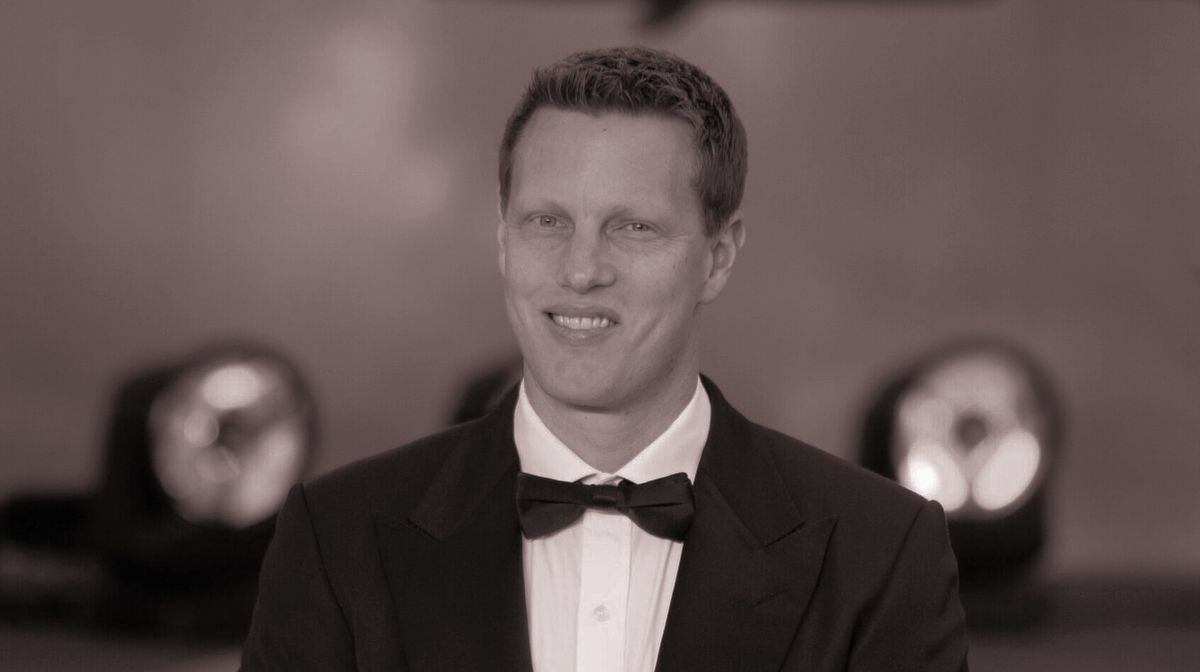
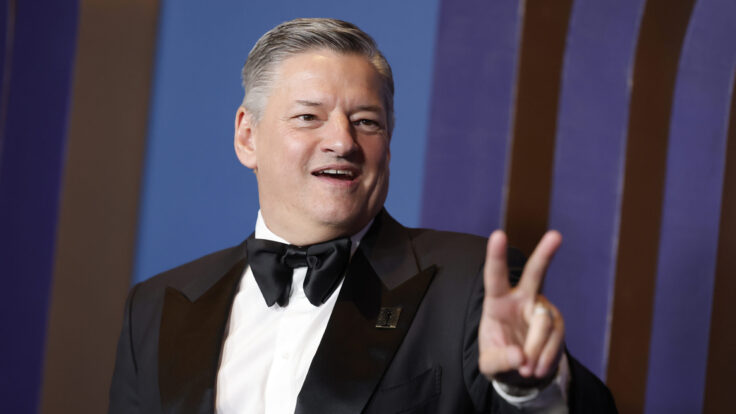
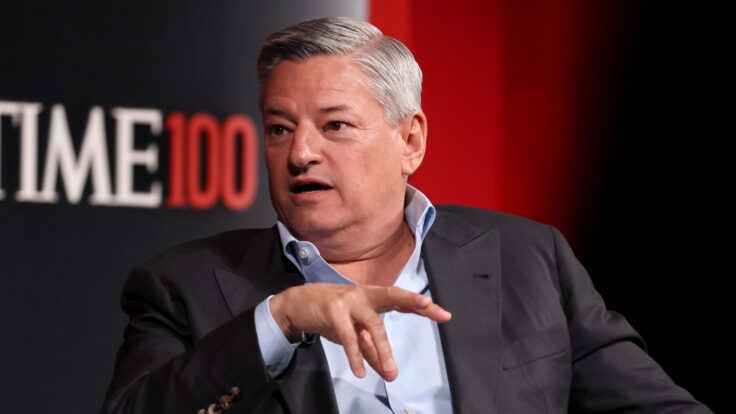
ringside spotlight: Yes, that was David Zaslav sitting right next to Ted Sarandos at the big Crawford–Álvarez fight in Vegas on Saturday night. The leaders of Warner Bros. Discovery and Netflix are friends, of course, and Sarandos told me last night that he invited Zaslav to join him just for fun. But it’s hard not to see Zaz coveting the optics of the situation, namely that maybe, someday, in some fantasy world of his, his
buddy Ted and Netflix would emerge as a suitor to buy all or part of Warner Discovery.
No, it’s not likely to happen. Is Amazon, Apple, Comcast, or anyone seriously interested, even if the company is split in two? Especially when David Ellison brings infinite money and a Trump bromance to any supposed bidding war? But Zaslav seems to have spent most of Emmy weekend explaining to people why continuing the current path makes more sense than selling
the whole thing now to the Ellisons. That’s an empty argument until the Ellisons make their formal bid, but one insider I talked to this weekend believes that the WBD board would be irresponsible not to accept a bid in the $30-per-share range. Unfortunately, I showed up too late to the HBO Max Emmy party last night to ask Zaz what he thought of that fate. - It was Bargatze all along: Yeah, Nate Bargatze kinda flailed as Emmys host,
relying on the one increasingly cringey speech-shortening bit and flubbing several jokes and names. In the room, it was annoying to see people rush their speeches awkwardly, but the ratings ticked up to 7.4 million viewers, per CBS, so Bargatze gets credit for some of that (as does a bad SNF game). And the Emmys are tough because the show rotates among broadcast networks, which don’t want to spend money on a periodic asset that is essentially a three-hour commercial to not
watch broadcast. But with an inexperienced host like Bargatze, lead E.P.s Jesse Collins, Dionne Harmon, and Jeannae Rouzan-Clay kinda gotta step in and save him. There had to be better material from the 17 credited writers than simply riffing endlessly on the charity ticker.
- Disney’s upside-down year: Here’s an amazing stat: Disney’s film unit generated more Emmys this year than its actual
television division, with Lucasfilm’s Andor and Music by John Williams, and Disney Studios’ Beatles ’64 together picking up seven wins, more than the six Creative Arts statues for Welcome to Wrexham, Jeopardy!, the Oscars telecast, an ABC News doc, and Who Wants to Be a Millionaire?. A nice little flex for film chief Alan Bergman.
- Amazon’s white board of doom: No big disappointment
for Amazon last night—Prime Video and its massive content budget wasn’t even nominated, so there was no chance for Mike Hopkins & Co. to win. And although the streamer earlier picked up five Creative Arts Emmys, the frustration was evident this morning in messages left on an elevator white board on the Culver City lot. “Only 4 [sic] Emmys SMH,” read the note in blue ink for all to see, including a tipster who sent pics. “Back to Drawing Board.” A separate note, this one
in red ink, added with an arrow to the first note: “Layoffs coming.” Another author agreed, “Ditto,” with an arrow pointing to yet another message lamenting all those Apple TV+ wins: “Can’t believe we lost to a phone company.”
|
Now a little exec news…
David Ellison’s Paramount continues to take shape. The latest: I’m
told Josh Goldstine, the veteran marketing executive, is negotiating with new studio leaders Dana Goldberg and Josh Greenstein for a big role in marketing and distribution. The deal isn’t done, and the impact on the legacy team is T.B.D., but it’s happening, and Goldstine is considered one of the top gets in this area. He was at Warner Bros. until January, when he lost a finger-pointing battle with studio chiefs Mike De Luca and
Pam Abdy over the 2024 flops. And he famously scored a $20 million settlement from Universal when the studio—then run by Jeff Shell, who is now the number two at Paramount—falsely accused him of “inappropriate conduct.” |
165.5 minutes
Average time that U.S. men aged 18-24
spend each day on YouTube, over an hour more than women 18-24 do. [Digital i]
38.6 million
Unique accounts viewing the official Saturday Night Live YouTube channel in the first half of 2025, most in the U.S. SNL content was also the
most searched-for topic on YouTube domestically so far this year. [Digital i]
41.4 million
Global viewers for Saturday’s Crawford–Álvarez fight on Netflix, a big audience but less than half the 108 million that watched
Jake Paul vs. Mike Tyson in November. [ESPN]
35 percent
Decrease in output of U.S. film and TV studios in 2024 from its peak in 2022. Production fell another 12 percent in the first half of 2025
[ProdPro/Bloomberg]
8 percent
Rise in share price (to about $13) of Utah-based Sound of Freedom distributor Angel Studios in its NYSE debut on Thursday. Heavenly!
[LAT] |
Instead of Feedback, here’s a new monthly segment called Spin Doctors, chronicling the wins, losses, and
news in the world of Hollywood P.R. and media. This is written and reported by The Spin Doctor, an anonymous P.R. pro who obsesses over this stuff (with help from me, of course)… |
- The
strategy behind Paramount’s Gaza war: How often does a Hollywood studio take a public political position directly in opposition to thousands of stars and creators it might like to work with? Besides never? Yet on Friday, Paramount ripped the 4,000 actors and others—mostly unknown but including Emma Stone, Mark Ruffalo, and Javier Bardem—who pledged to boycott Israeli film institutions that they see as being complicit in the
abuse of Palestinians. “Silencing individual creative artists based on their nationality does not promote better understanding or advance the cause of peace,” read the statement, carefully written to oppose the boycott of Israelis as a group, irrespective of their views on the war. The Paramount leadership knew the statement might inflame detractors, especially as many stars were poised to walk an Emmys red carpet broadcast by Paramount’s own CBS. (Bardem and Hacks winner Hannah
Einbinder both took the opportunity to fire back last night.)
But Israel is shaping up as a major cause for the company’s C-suite, from David Ellison, who is said to have discussed that support extensively with Shari Redstone when negotiating to buy Paramount; down to his communications chief, Melissa Zukerman, who helped organize the Nova Music Festival Exhibition; and studio heads Dana Goldberg and Josh
Greenstein. They all thought a response from the company was appropriate, and it’s consistent with Ellison’s first moves at CBS News, which have included empowering ardent Israel backers Bari Weiss of The Free Press and Ken Weinstein as ombudsman. Question: Will Ellison continue to act without fear of “the optics”? - Who bought the billboards?: The hunt is on for the person or persons behind
those bizarre billboards off Sunset urging talent to pay their personal P.R. reps more. Most sources believe it’s gotta be a large firm that could afford to drop tens of thousands of dollars on the stunt campaign, but prime suspects at ID PR and Sunshine Sachs have denied involvement and joined the search for the culprit. (A likely tactic…)
Could it be a consortium of smaller firms? Or maybe it’s a buzz-seeking filmmaker, like the guy behind this stunt last month. Email us at SpinDoctors@puck.news with tips.
- P.R. Win of the Month: Gotta be Disney for spinning the demise of Hulu. The service is going away as a stand-alone app, but
you wouldn’t really know that from the messaging. During the most recent earnings call, C.E.O. Bob Iger mentioned only that the brand would fold under Star internationally, but the fine print in the press release also acknowledged that Hulu will become part of Disney+ domestically. This had been rumored, but hiding the ball prevented Iger from having to answer questions about whether Disney should have paid Comcast more than $9 billion to own a service that will become
merely a tile.
- Unreported hirings, firings, and P.R. moves: Former NBC communications chief Allison Rawlings is negotiating for the coveted top comms role at FX Networks, the job long held by John Solberg until his retirement this year. … With Terra Potts going in-house to handle P.R. at Ryan Coogler’s Proximity Media, the filmmaker has left ID PR. … The Lede Company is beefing up its
corporate client list, signing South Korean studio Hybe away from Baldoni-embroiled Melissa Nathan, as well as Legendary Entertainment and Peter Chernin’s North Road, both of which were handled by Zukerman before she took the top comms job at Paramount. … Former Peacock comms chief Shannon Buck is moving to Paramount as streaming chief Cindy Holland’s spokesperson. … Ryan Faughnder of the
Los Angeles Times is taking the L.A. bureau chief job at The Wall Street Journal. … THR senior film editor Rebecca Keegan today became the latest to exit Penske Media, joining NBC News as senior Hollywood reporter. Lynette Rice of Deadline will be next, ending her role as senior TV writer to focus on her pop culture books. … Speaking of Penske, with its strict return-to-office mandate, will Deadline’s famously homebound Mike
Fleming be forced to show up in the company’s NYC office?
|
Now here’s Julia with a look at how Paramount+ and HBO Max might fit together… |
|
|
Buying Warner Bros. Discovery would give Paramount 150 million streaming subscribers and big
theatrical I.P. But scale alone won’t turn the Ellisons’ Hollywood foray into a legit Netflix rival. Could two studios become more than the sum of their parts? |
|
|
You’d think that David Ellison might be a little more apprehensive about acquiring Warner
Bros. Discovery, given the somewhat ill-fated history of the Warners media assets. Since 1990, they’ve passed from Time Inc. to AOL, back to Time Warner, then to AT&T, and finally to Discovery Communications, only to become potential fish food for the newly merged Paramount Skydance. After all, it was only a few years ago that Warner Discovery C.E.O David Zaslav fantasized about challenging Netflix by combining populist networks like HGTV and TLC with the prestige of HBO. Now
here comes Ellison, with his own Hollywood dream and a nearly unfathomable family fortune, chasing even greater scale.
There are a few reasons to think that, yes, this time might be different. A combined WBD-PSKY would unite Paramount+, with 79 million global subscribers, and HBO Max, which is on target to hit 150 million by the end of next year. Together, they would account for 3.4 percent of total TV viewing in the U.S., per Nielsen’s most recent Gauge report, ahead of free platforms
like Tubi and the Roku Channel but still behind Prime Video (3.8 percent), Disney+ and Hulu (4.7 percent), and Netflix (8.8 percent). (Yes, that 3.4 percent includes Discovery+ and Pluto TV.)
But the industry has largely moved past the scale-for-scale’s-sake mentality that once defined the streaming wars. Now everyone is focused more on engagement than sub growth. And a number of intriguing data points suggest that Paramount+ and HBO Max have largely complementary portfolios.
According to a report from Parrot Analytics, in May of last year, there was less than 1 percent of overlap between the content available on Paramount+ and HBO Max. That’s compared to a 20 percent overlap between Paramount+ and Prime Video, and a 5 percent overlap between Paramount+ and Netflix. Meanwhile, that same report found that 13.8 percent of audiences who watched a film or TV show on Paramount+ then went on to watch something on Max. By comparison, some 13.4 percent of viewers
who watched something on Paramount+ later watched a Netflix title. Considering Netflix has a much broader and larger content offering, the proximity of these data points could be interpreted as evidence of strong audience-interest overlap between HBO Max and Paramount+.
The two platforms could offset each other’s weaknesses, too. Paramount+ is theoretically great at engaging viewers—last year, it had four of Nielsen’s 10 most-streamed titles in the U.S. (Criminal Minds,
SpongeBob SquarePants, NCIS, and Young Sheldon)—but isn’t so hot at customer acquisition. Outside of the Taylor Sheridan shows and the NFL, there hasn’t been enough high-profile content to bring in new audiences. Meanwhile, HBO Max isn’t generating as much engagement (only The Big Bang Theory appeared in Nielsen’s top 10 last year) but is much better at acquiring customers thanks to buzzy HBO titles.
Interestingly, none of the most-streamed
Paramount+ shows were exclusive to that platform—so much of that engagement may have come from licensing deals with Netflix and Hulu that Ellison might want to one day claw back. As for sports, Paramount has the NFL, college football, and golf events like The Masters. WBD has the NHL, some MLB, and NASCAR, among others. They both have some rights to March Madness and the UEFA Champions League. (One less-talked-about benefit to the deal for Ellison could be WBD’s international sports
rights.) |
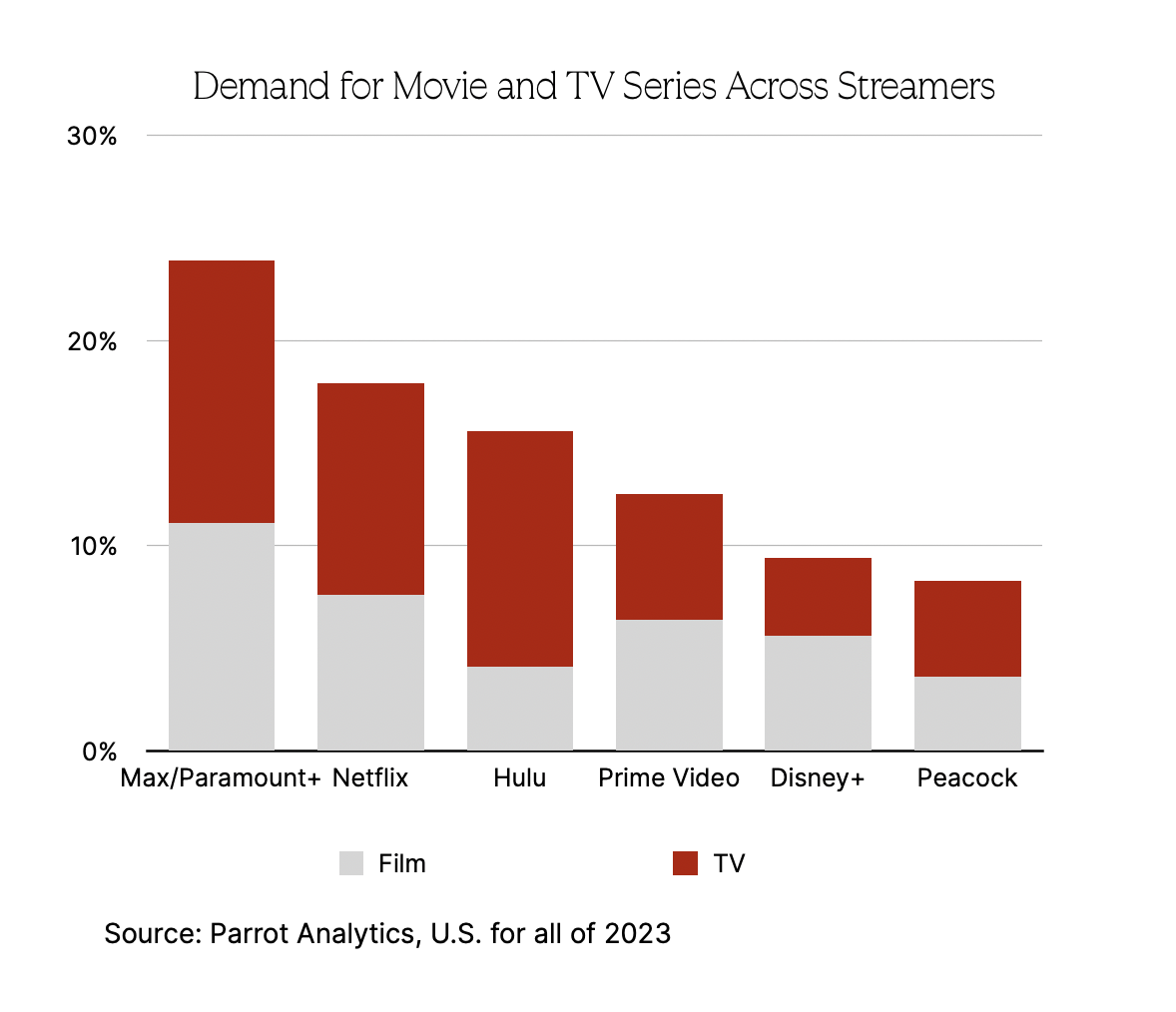
With their streaming portfolios combined, Paramount+ and HBO Max would have accounted for just under a
quarter of all audience “demand” in the U.S. in 2023, per Parrot Analytics, whose demand metric is based on a combination of viewership and social media activity. That’s greater than Netflix (17.9 percent), Hulu (15.6 percent), Prime Video (12.5 percent), or Disney+ (9.4 percent). The merged film library, in particular, would create a major competitive advantage, accounting for an 11.1 percent demand share, more than double the demand for Hulu or Peacock’s respective movie
catalogs.
Though a metric like demand doesn’t correlate 1:1 with viewership or subscriptions, a combined Paramount-WBD would have a few levers to pull to connect the two—including clawing back the Paramount and Warner Bros. Discovery content that together comprises 12 percent of total Netflix viewing hours, per Owl & Co. For now, it makes economic sense for both companies to generate extra revenue by licensing select titles to larger platforms. But that calculus will potentially
change if Paramount can bulk up with HBO Max, creating a combined platform that has the scale to take advantage of the demand for their titles. |
Slapping HBO Max and Paramount+ together won’t solve all of their problems, of course. Both tend to skew
older, per Parrot, so Ellison and his streaming chief Cindy Holland will still need to lure a younger audience. Netflix and Hulu remain the go-to platforms for the youngs—with Hulu notching one of the youngest cohorts in the U.S., per a recent Pew Research report. And as for streaming originals, the global audience demand for Netflix would still far outpace a combined PSKY-WBD by 4x, according to Parrot’s metric.
But in a world of rising streaming prices, bundled services
and merged libraries and price itself are the key to locking in audiences. Currently, customers in the U.S. are spending about $83 per month on streaming services, only a few dollars less than the total they claim they’re willing to pay, according to Hub Research’s streaming monetization report. Meanwhile, Peacock raised its prices by up to 40 percent this year, Apple TV+ is introducing a 30 percent hike, and HBO Max plans to follow Netflix’s lead and crack down on password
sharing. We’re now in a cycle where customers say cost, not content, is the top factor driving their subscription behavior, again per Hub.
A combined PSKY-WBD streamer would need to offer significant cost savings to truly unleash the power of the bundle. Right now, the standard ad-free tier of HBO Max costs $17 a month, while the ad-free version of Paramount+ costs $13 a month. (HBO Max’s ad tier is $10 versus Paramount+’s $8.) A combined offering would probably need to be priced
competitively with Disney+ and Hulu, which currently costs $11 a month with ads, or $20 a month without ads, to earn a permanent place in the average household’s monthly budget. While Par+ and HBO Max have moderate churn—both sitting around 6 percent in July—that would likely drop significantly if the two services were merged. Paramount could also continue to use Pluto TV, its free, ad-supported streamer, as a top-of-funnel channel to drive audiences to a combined offering. |
Of course, Ellison would need a massively improved user interface and recommendation engine to compete with
Netflix, to say nothing of YouTube. Audience attention is more fragmented than ever: As analyst and former Time Warner exec Doug Shapiro has noted, YouTube offers about 20,000 times more hours of content annually than traditional studios. Social video comprises roughly 25 percent of all video viewing in the U.S. Ellison’s potential acquisition of WBD won’t solve any of these issues.
Ellison seems to understand he needs a better mousetrap. Yes, he wants PSKY to
bulk up—hence spending $7.7 billion on UFC rights and $1.5 billion on the South Park guys, and giving Timothée Chalamet $25 million. All of which should also help bring in a younger, more male-skewing demo: More than 60 percent of UFC’s audience in the U.S. is made up of Gen Z and Millennials, per
Luminate. But all the content in the world doesn’t matter if audiences aren’t finding it. Presumably that’s why Ellison is so intent on investing in technology, too. In his open letter about Paramount Skydance’s future, the word technology appeared 10 times—more than streaming (seven), television/TV
(seven), film (five), or entertainment (three), by my count.
It remains to be seen whether Ellison can actually transform Paramount by focusing on tech, or if that’s just the naive fantasy of a Silicon Valley billionaire heir. But there’s no doubting his ambition, or his resources. The real masterstroke would be if Ellison realizes his goal of absorbing WBD and his father acquires TikTok, potentially allowing the family to fuse the world’s most powerful
discovery algorithm with one of its largest content libraries. Combining the most watched broadcast network, two of the five legacy film studios, 200 million-plus streaming subscribers, and some Chinese secret sauce may just create the kind of global competitor that David envisioned when he first called Shari Redstone two years ago. |
Bill Cohan looks at why Wall Street is so damn excited about a Paramount–Warner Discovery
combination. [Puck]
Roy Price has some interesting theories about how to combine the WBD-PSKY assets (and execs).
[Price
Point]
Just because: Happy two-year anniversary to TKO, home of WWE and UFC, which launched at $100 a share has since doubled in value. Kinda amazing.
Cameron Crowe attempts to explain in a fun way why he’s been in Director Jail for a decade. [The Interview]
Nate
Bargatze “turned in one of the most awkward awards-show hosting performances in recent memory.” [Vulture]
Amusing to see trade media monopolist Jay Penske sue Google on antitrust grounds, but Jay’s not wrong that A.I. summaries are “a fire that threatens PMC’s entire publishing business.”
[WSJ] |
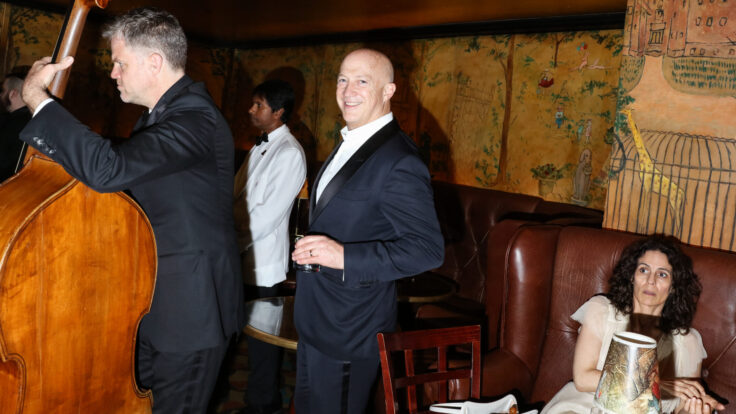
Just for fun, the mini Tom Cruise coconut cakes from Doan’s Bakery at last night’s Emmys
Governors Ball… |
Have a great week,
Matt
Maya Tribbitt contributed research for today’s
issue.
Got a question, comment, complaint, or potential strike signs for new SAG-AFTRA president Sean Astin that riff on “Goonies never say die”? Email me at Matt@puck.news or call/text me at 310-804-3198. |
|
|
Ace media reporter Dylan Byers brings readers into the C-suite as he chronicles the biggest stories in the industry: the future
of cable news in the streaming era, the transformation of legacy publishers, the tech giants remaking the market, and all the egos involved. |
|
|
Puck sports correspondent John Ourand and a rotating cast of industry insiders take you inside the executive suites and owners
boxes where the decisions that shape the entire sports business are made. You’ll hear interviews with players, network execs, and everyone in between. The Varsity is an extension of John’s private email for Puck by the same name. New episodes publish every Wednesday and Sunday. |
|
|
Need help? Review our FAQ page or contact us for assistance. For brand partnerships, email ads@puck.news. You received this email because you signed up to receive emails from Puck, or as part of your Puck account associated with {{customer.email}}. To stop receiving this newsletter and/or manage all your email preferences, click here. |
Puck is published by Heat Media LLC. 107 Greenwich St, New York, NY 10006 |
|
|
|