 |
 |
| Welcome back to What I’m Hearing, and thanks to all who submitted pics for our Best Strike Sign contest. After much deliberation, the Top 10 are revealed below. You’ve got until Thursday at 5 p.m. to vote (once!) for your favorite, and the winner gets some Puck merch. Good luck to the finalists!
Cast your vote here.
Programming notes: This week on The Town, Lucas Shaw and I broke down the 5 early narratives of the writers strike, Ben Smith wandered down the memory lane of digital media, and Mike Schur made his case for preserving the career path of TV writers. Subscribe here and here.
Thanks to the Inner Circle members who joined Jonathan Handel and myself for our strike chat on Friday. No Cannes film fest for me this year, but I’ll be at Stanford’s Future of Arts, Media and Entertainment conference on Wednesday, and the BofA Media in Montauk event May 31-June 2.
Discussed in this issue: Bill Kramer, Jon Avnet, Ben Affleck, Bob Iger, Shari Redstone, Ted Sarandos, Todd Phillips, Jodi Comer, Aaron Sorkin, Lesli Linka Glatter, Tucker Carlson, and Tom Cruise’s unsubtle publicist play.
But first… |
|
|
| It’s depressing out there, so let’s get right to… |
| Hulu: Iger’s Best of a Bad Situation |
|
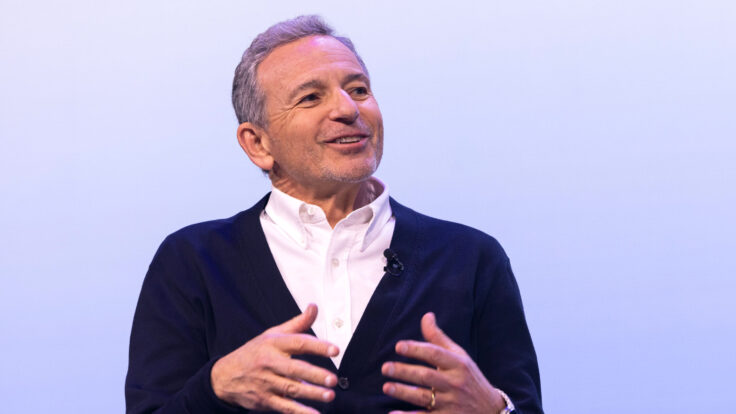
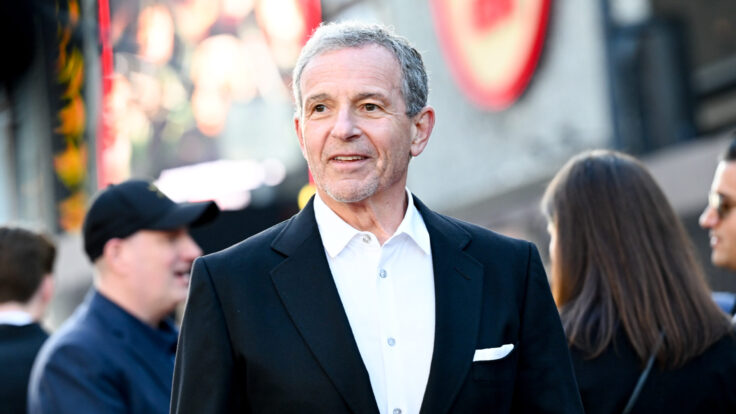
| Bob Iger has gotta be thinking, I came back for THIS?? Disney stock tanked after its Wednesday reveal of cratering TV revenue and declines in streaming subscribers. It wasn’t the worst of the recent media earnings—yes, Paramount’s market cap dipped below $10 billion this week, which means the Redstones’ economic stake in the company may be worth less than $1 billion—and I’m not ready to declare “the streaming wars are over,” as CNBC did. But it’s still kinda shocking to see Iger presiding over a Walt Disney Co. that is clearly in big trouble.
My Puck colleague Bill Cohan is correctly calling this “an existential moment for Iger and his legacy,” and Hulu will play a starring role in how the Iger 2.0 tenure is judged. Amid extreme pressure on streaming expenses, profitability, and free cash flow, Disney will likely have to spend $9 billion or so to buy out Comcast’s stake in Hulu. To that end, it was surprising to see many Disney observers characterize the company’s mini-about-face on Hulu and adult-oriented content as Iger “choosing” to keep the service and integrate it into Disney+.
That assumes Iger has a choice here. Most signs suggest he doesn’t. He put the appropriate feelers out in February, saying “everything is on the table” for Hulu and calling its content “undifferentiated.” He hired Goldman Sachs to figure out what to do. That’s basically flashing a PLEASE BUY HULU sign from the Seven Dwarfs Building in Burbank.
It hasn’t happened. So now Iger seems to be on to Plan B, a Disney+ and Hulu combo platter app, which he called a “very strong combination” while walking back the “undifferentiated” line and revealing he’s had “cordial” talks with Brian Roberts about buying out Comcast. (As if anything between longtime nemeses Iger and Roberts is truly cordial.) “I can’t really say where they end up, only to say that there seems to be real value in having general entertainment combined with Disney+,” Iger said. “And if ultimately Hulu is that solution, we’re bullish about that.” Doesn’t exactly sound enthusiastic, does it? |
|
|
| “Does the state want us to invest more, employ more people, and pay more taxes, or not?” –Iger, continuing his high-heeled dance all over Florida’s Ron DeSantis on the Disney earnings call.
Runner up: “RIP to one of the best places I ever worked.” –Aline Brosh McKenna, the Crazy Ex-Girlfriend showrunner, eulogizing the CW, whose new owner Nexstar continues to replace scripted originals with reality and cheap foreign pickups. |
| The Tonys’ Showstopping Fail |
|
| Lots of furious lobbying this weekend by playwright members who are pissed at the WGA for refusing to grant a strike waiver for the Tony Awards. Tomorrow’s emergency meeting should be heated, and I’ll be surprised if the guild makes an exception, even though postponing the Tonys would likely cause several shows to close. A waiver would suggest a softening of the guild’s scorched-earth strategy and haunt it when others request the same.
The real mystery here is why the Broadway League and the American Theatre Wing, which jointly put on the show, didn’t get ahead of this and negotiate some kind of deal before the writers walked out. I’m told there was zero dialogue pre-strike, even though we all knew it was likely happening. Plus, there’s precedent: The 1988 Tonys got a WGA strike waiver. Now the show likely will either get pushed to fall (or beyond?) or do some kind of press conference on June 11, followed by a “celebration” later, if CBS is on board. A total disaster.
Now our labor expert Jonathan Handel analyzes the strike story of the week: What the directors might do… |
|
|
| With just three weeks of crucial negotiations between the Directors Guild and the studios remaining before the actors’ talks begin, some observers are speculating that the DGA and AMPTP might not reach a deal, considering the rocky pre-negotiation posturing. I’m more optimistic, given the guild’s history of successful negotiations.
A DGA deal is especially critical this cycle: the residuals provisions and probably also the wage increases will set a pattern for SAG-AFTRA and ultimately the WGA. And if the directors and actors reach deals, that will put pressure on the writers, though whether enough to end the strike remains to be seen. Some observers think so; I’m less confident.
But reaching a deal that satisfies the DGA will require addressing thorny issues laid out in a bullet-point list by negotiating committee chair Jon Avnet and co-chairs Todd Holland and Karen Gaviola. They’re the key players, along with executive director Russell Hollander. The committee itself consists of more than 80 guild members across all categories, genres and geographic areas, in addition to a separate creative rights negotiating committee conducting additional talks on undisclosed creative issues. That’s led by Christopher Nolan and Jonathan Mostow (features) and Thomas Schlamme and Nicole Kassell (television).
With that in mind, let’s Windex the crystal ball and consider what a Directors Guild pact might look like. Here are the key issues: |
| A MESSAGE FROM OUR SPONSOR |
 |
| Huzzah! Chaos reigns in the all-new season of Hulu’s EMMY®-nominated series The Great. Catherine (Elle Fanning) and Peter (Nicholas Hoult) attempt to navigate marriage, parenthood, and each other … all while ruling a very unruly country and fighting off threats from all sides. It’s a balancing act.
|
|
|
| Wage Increases: The negotiating committee says it wants wage increases that “address inflation.” But that wasn’t the WGA’s approach. The writers proposed only a 6 percent raise in the first year and 5 percent raises in years two and three of the contract. Although those numbers are higher than the more customary 2 percent to 3 percent per year—as the AMPTP pointed out—so was, and is, inflation: We had back-to-back years of 7 percent and 6.5 percent, with 2023 still running hot at 5 percent.
In contrast, 2020’s inflation figure was 1.2 percent. I expected the WGA’s demand to be 10 percent or more in the first year as a catchup, and at least 6 percent in the subsequent years. Why the tame proposal? The WGA didn’t respond to an inquiry, though the union might have thought it would get further on the key issues surrounding so-called mini-rooms if they didn’t push the boundaries on basic wages.
Will the directors feel constrained by the sister guild’s modest ask? That would be a first. I’m guessing the DGA is demanding better. (And why not just index the increases to inflation once and for all?)
Pension & Health: The DGA said it wants to ensure the “strength and sustainability” of its benefit plans. That means higher employer contributions, which are usually structured as a diversion from wage increases—another reason 6 percent and 5 percent bumps would be inadequate.
Streaming Residuals: DGA president Lesli Linka Glatter has said the guild wants both residual “increases” and “structural [formula] changes.” A brief review: The domestic streaming residual is an annual payment calculated as Residual Base x Subscriber Factor x Exhibition Year Percentage. That is, the residual depends on dollar figures spelled out in the contract (that’s the way it works for the WGA and DGA; the SAG-AFTRA Residual Base is determined differently); and on the size of the platform; and on the aging of the episode or movie.
Thus, the DGA search for “increases” most certainly means increases to residual bases—the dollar amounts specified in the union agreement that drive the domestic residual calculation. Those increases would probably mirror the increases in basic wages, but could be higher.
The guild might also seek increases in the exhibition year percentages that are applied to the residual base to calculate the annual payment. Those percentages decline year-by-year for each year an episode is available on a platform, starting at 45 percent in Exhibition Year 1 and declining to a measly 1.5 percent in Year 13 and beyond. There’s room here for real improvement.
There’s also the “subscriber factor”—platforms are categorized into one of five tiers based on the number of domestic (U.S. and Canada) subscribers. The guild might seek to increase those percentages too, which would increase the resulting residual.
Also in play is the foreign streaming residual, which is simply calculated as 35 percent of the domestic residual. That percentage used to decline year by year (to a floor of 10 percent) when the streaming residual was established in 2014, but was pinned at 35 percent starting in 2020. Those percentages reflect a lesser level of foreign business, and that’s become an obsolete assumption.
Indeed, notice that the number of foreign subs does not factor into the formula, and that itself is a problem. As domestic growth stalls for Netflix and other streamers, foreign has become the growth market. The DGA and other guilds want that accounted for, while the companies counter that subscription fees in many territories are lower than in the U.S.—sometimes much lower, like Netflix in India, which starts at under $2 per month. Indeed, in February, the company cut prices in more than 30 countries.
But this objection shouldn’t be insurmountable: the foreign subscriber count could be weighted by the subscription price. In an ideal scenario, we’d look at the number of subs in each territory and the mix of different plans: in other words, the weights would be based on the average revenue per user (ARPU) multiplied by sub count in each territory. But this would require more data than the streamers want to disclose—and it also could easily become unmanageable as Netflix, for instance, operates in 190 countries and offers as many as five differently priced plans.
Still, one could put countries into, say, five buckets based on per capita income (as a proxy for ARPU, because wealthier people presumably buy more expensive plans) and then weight by the total number of subs in the bucket. That still would require disclosure of data, but much less granular, and less sensitive, than country-by-country ARPU and subs.
But given how touchy the streamers are about releasing any data, the simplest approach would be to bump up that 35 percent figure to something higher. I’m looking at 50 percent, since anything less wouldn’t move the needle much.
Another issue is a success metric—a streaming residuals overlay that would increase the payout for successful shows. Currently, every original series on a given platform pays the same residual rate: the Netflix hit Wednesday pays no more than a hypothetical flop, like Tuesday. But success metrics are data-driven and the streamers are as tight as quahog clams. Rather than fight that transparency battle, I’m told, the DGA has decided to forego the concept, at least for this cycle.
Hovering over all this is a unique challenge that HBO presents. The DGA’s residuals formula for HBO originals is excruciatingly complex, but is essentially a per-subscriber fee. It‘s far more lucrative than SAG-AFTRA’s formula (a percentage of license fee) or the WGA’s (a fixed amount), and is more rewarding than the streaming residual formula. But as HBO’s linear identity becomes more and more subsumed by Max, the streaming service soon-to-be-formerly known as HBO Max, that robust formula becomes endangered. The union will need to persuade the companies to bridge the gap.
Directors’ Primacy: The guild says another priority is “protecting the role and vision of directors.” That could cover a multitude of issues, but the most notable may be A.I. The tech community has already demonstrated first steps towards using generative A.I. to make movies, and those primitive efforts are expected to accelerate. That’s got to be a concern, and I’m looking for the guild to demand that the companies forego displacing directors with A.I. software. |
|
|
| Foreign Jurisdiction: The guild also identifies “protecting our jurisdiction over projects produced abroad for U.S. audiences” as a priority. Currently, the DGA has jurisdiction over productions “based in” the U.S. and “performed in” the U.S. and Canada, and also productions based outside the U.S. if the director is “employed in” or transported from the U.S. or if the director’s deal is negotiated with a representative, agent or attorney in the U.S. It’s unclear if the DGA is seeking to expand this jurisdiction or if the existing provision needs clarification.
Other Issues: Additional concerns include safety, D.E.I., and “looking out for” below-the-line members—assistant directors, unit production managers and others. We’ll see what the DGA achieves in these areas.
All of this adds up to a five-course meal. I don’t think the directors will be satisfied with appetizers; they’re looking for adult portions on each of their key issues, and it’s not clear where the compromises will come. Said DGA negotiations committee co-chair Holland in a video message, “there will be conflict.” But will there also be a deal? We’ll probably know in three weeks. |
|
|
| Ben Affleck’s Hypnotic is now his new lowest wide opener, with just $2.4 million on more than 2,000 screens. (Gigli actually opened to $3.8 million in 2003, or $6.3 million today.) Kudos to Mark Gill and Jeff Robinov, of the defunct Solstice Studios and the barely-there Studio 8, respectively, for getting foreign pre-sales to pay for a bunch of the $65 million budget. [THR]
On the positive side: If Amazon pushes Air for Oscars, Affleck won’t get Norbit-ed by Hypnotic. Unless distributor Ketchup Entertainment backs a December re-release as punishment. After all, is there a bigger middle-finger to a studio than refusing to promote your own movie but being extensively photographed at your wife’s Netflix premiere the same week? No, there is not.
It begins: Netflix, the profitable streamer, plans to cut spending by $300 million this year. The delayed password-sharing crackdown is cited, but when free cash flow is the goal, cost-cuts are usually the means. [WSJ]
Tara Palmeri talked to sources in the room for the CNN Trump town hall and says it played very differently there [Puck], while Dylan Byers reveals CNN boss Chris Licht went after his own media reporter for harsh coverage of the event. [Puck]
Why is Apple bleeding executives in the division that houses AppleTV+? [Bloomberg]
Before she bailed to become Twitter C.E.O., Linda Yaccarino repeatedly asked for more responsibility at Comcast and didn’t get it under recently-ousted NBCUniversal C.E.O. Jeff Shell. [WSJ]
Would Fox go for an injunction against Tucker Carlson? Brian Stelter looks at the pay-or-play dynamic. [Vanity Fair]
Note: Puck’s Eriq Gardner will have more on this topic in Monday’s Rainmaker. Sign up here.
Actor/filmmaker/coder Justine Bateman has a great tweet thread on why “AI has to be addressed now or never” by SAG-AFTRA. [Twitter]
Inkoo Kang amusingly dives into HBO’s lucky juxtaposition of the final season of Succession with the ongoing meltdown at Fox News. [New Yorker]
“I remember taking Treach from Naughty by Nature to the Republican National Convention.” The oral histories of the recently euthanized MTV News are nostalgic enough to warm any cold Gen X heart. [THR, NY Times]
Points to Amanda Lundberg, Tom Cruise’s publicist, for the mini-news cycle around him being photographed with Shakira at F1 in Miami. “‘There is chemistry,’ says the source.” Fantastic stuff. [Page Six] |
| The Academy’s “Hindering Creativity” Debate |
|
| The film Academy held a town hall on Wednesday to explain the controversial “inclusion standards” that go into effect for next year’s Oscars. C.E.O. Bill Kramer, president Janet Yang and crew didn’t do themselves any favors on the Zoom, according to members I spoke with, relying mostly on the notion that all of this year’s best picture contenders would have qualified under the rules. The leadership then clarified in an email that the standards “were carefully designed to provide options and support that encourage equitable representation on and off screen while not hindering creativity.”
That last part, “not hindering creativity,” is the sticking point here, with members like Richard Dreyfuss saying the rules “make me vomit” because “it’s an art. No one should be telling me as an artist that I have to give in to the latest, most current idea of what morality is.” Okay… but has Dreyfuss actually read the rules? They’re hardly forcing Spielberg to cast Black actors as his family in The Fabelmans. The four prongs allow distributors with even a little executive diversity—which counts LGBTQ+ and even female publicity and marketing executives as diverse—and some inclusive internship programs to qualify their films, without requiring any actual representation in front of or behind the camera.
We can debate whether an arts organization should be trying to legislate the makeup of the industry it honors, but the Academy did nothing for decades and ended up with a membership in 2012 that was 94 percent white and 77 percent male. Having decided to fix that, these new inclusion standards are literally the least they could be requiring of the best picture contenders. |
|
|
| Raising issues that don’t align with the WGA strike narrative will fill my inbox with angry writer responses, but I also got some nice mail about Thursday’s warning of a possible class war among striking writers…
“Fuck you and the hand of Ted Sarandos, which is clearly so far up your ass that he can type out that AMPTP propaganda.” –A writer
“What good does it do us to hear from two out-of-touch kings in their castles [Todd Phillips and Aaron Sorkin] looking down on us serfs trying to make a living wage. Maybe the reason why so many of us are unemployed is because the studios are throwing money at aging gasbags still coasting on what they did 20 years ago.” –Another writer
“FINALLY, somebody covers the gray area of the strike and not just the Kool Aid part! Your latest article has been some of the best coverage of the strike that I've seen. AND it tied perfectly with your roundtable from 2010. Some classic quotes from Phillips and Sorkin.” –A producer
“You may have a point that the most successful 1 percent of writers may have different stakes than others, and you’ve pulled out some very interesting historical quotes as examples, but I was surprised to see you imply that these same sentiments will apply to the current situation without commenting on how different the environment and conditions are now from what they were in 2007-10… For example, I would have expected you to comment on the laughable irony of Todd Phillips’ argument saying ‘that’s what we have agents for’ given the fact that the agencies’ interests and revenue streams since 2010 increasingly became about packaging fees rather than commissions. As you know, the result was that agencies couldn’t be depended on to make the best deal for writers when their income was generated from packaging… It’s true that our guild has a varied and unique blend of needs within our membership. However, what was not noted was the fact these divisions are based as much on age and experience as anything else. In other words, when the more successful of us are asked to strike on behalf of the others, we’re not just striking for some nondescript ‘rank-and-file’—we’re striking for younger writers and for future generations. … Most importantly, I also would have expected you to point out that in today’s television landscape, it’s not only the ‘rank-and-file’ writers who need and will benefit from the structural changes demanded by the guild. According to guild data, twenty-five percent of showrunners are making scale due to the lack of proper span protections and the proliferation of mini-rooms… While I do see a world where some of the high and ultra-high earners will have different agendas than the greater guild, and there may be fissures that arise between various sub-groups as pressure mounts, the circumstances of this strike are vastly different from what they were in 2007. This time the vibe is completely different—solidarity seems far greater and the stakes feel existential. This is what should be noted in future writing on the subject of guild ‘class wars.’” –A writer-producer
“You hit the nail on the head. Everyone is rah-rah, shoulder-to-shoulder now and all the below-the-line folks are all in, but let’s see how they feel in a month or two when credit card payments balloon and folks are writing checks without an income. All the craftsmen and craftswomen may not be honking quite as loudly when they drive by, and instead might start grumbling that the WGA made their point and please start moving toward solutions instead of hurling what might be construed as selfish grenades.” –Another producer
“The writers say they fear their profession falling victim to a ‘gig economy.’ Doesn’t everyone in this town work gig to gig? I know I do.” –A production staffer
No fun stuff today, it’s too bleak out there! |
|
|
| Have a great week,
Matt
Got a question, comment, complaint, or the script for the Travolta-Heigl rom-com that’s selling at Cannes? Email me at Matt@puck.news or call/text me at 310-804-3198. |
|
|
|
| FOUR STORIES WE’RE TALKING ABOUT |
 |
|
 |
|
 |
|
 |
| Debt Ceiling Soaps |
| Xi and Putin are spinning the bejeezus out of the debt ceiling crisis. |
| JULIA IOFFE |
|
|
|
|
|
 |
|
|
| Need help? Review our FAQs
page or contact
us for assistance. For brand partnerships, email ads@puck.news. |
|
| Puck is published by Heat Media LLC. 227 W 17th St New York, NY 10011. |
|
|
|