 |
|
Welcome back to What I’m Hearing, a little early tonight because I’m at the big Paley Center event for Curb Your Enthusiasm, which I’m now openly pushing for the comedy series Emmy.
🚨🚨 D.C. readers! I’ll be there next week for Puck’s White House Correspondents’ Dinner week event with WME and Snap. (My colleague Peter Hamby and I are interviewing Aaron Sorkin, who’s always a great talker.) It’s a quick trip, but please say hi at the various parties if you see me.
As always, if you were forwarded this email or are new to the WIH community, click here to become a Puck member.
Let’s begin…
|
|
|
- So now Sony wants in on Paramount?!: I guess Lina Khan is now David Ellison’s best friend. The Times reported today that Sony Pictures is talking to Apollo about joining its bid for Paramount Global. I confirmed that’s true, but it’s early. Good news for Apollo, whose $26 billion overture has so far been rejected by Paramount controlling shareholder Shari Redstone in favor of exclusive talks with Ellison’s Skydance and its backers. (And remember, Apollo-backed Legendary Pictures already has an output deal with Sony.)
But let’s be honest: This is potentially horrible news for Hollywood, for consumers, and for a Biden administration that cares a lot about competition. If Sony Pictures essentially merges with Paramount, financed by private equity, there goes another major studio—we’d be down from six in 2019 to four, plus the streamers. One fewer buyer for film and TV projects, thousands of jobs lost, the movie exhibition business hollowed out even further… a lot more industry-wide damage than if the Ellisons simply replace the Redstones as owners of Paramount. Would Khan and her activist F.C.C. let this happen? How about the D.O.J.? With a Tokyo-based company? Maybe Sony’s Tony Vinciquerra is betting on a more lenient Trump administration.
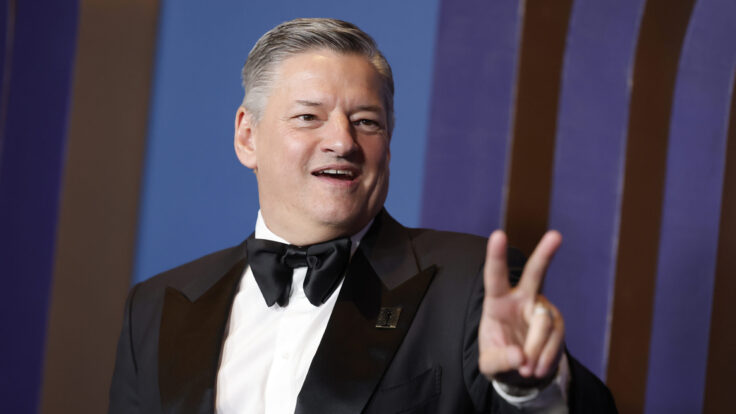
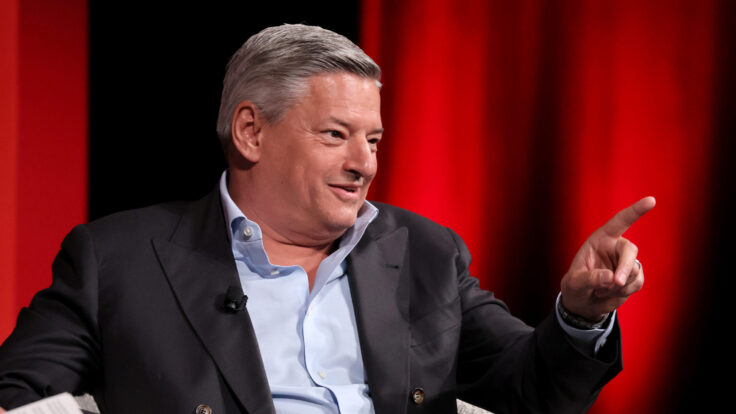
- So much for that new era of Netflix transparency: A couple theories about why Netflix, after blowing past predictions with 9.3 million new subscribers, announced today that it will stop reporting subscriber additions: First, Netflix already won the streaming wars, so it doesn’t need to brag each quarter about how many subs it added. Second, its traditional metrics, like revenue and profit, are gonna be better than its rivals in streaming, so why not shine a light there? Third, with so many tiers of membership and pricing structures worldwide, not all subscribers are equal. So why announce a number as if they are? (That’s essentially what co-C.E.O. Greg Peters said today.) But I’m betting the real reason is that Peters and Ted Sarandos know how much the password-sharing crackdown is juicing subs right now, and they want to get ahead of what happens when that effort runs its course.
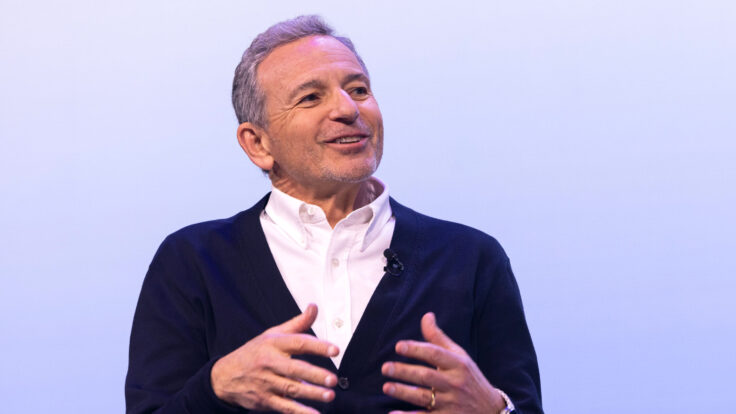
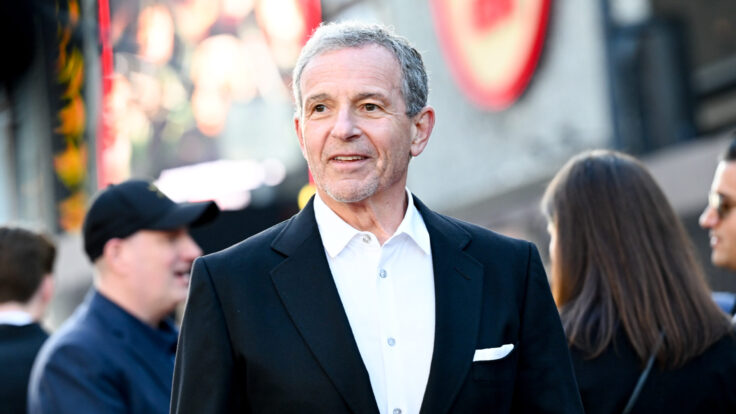
- Kamp Katzenberg ’24: Congrats to Jeffrey Katzenberg on another successful mogul conference in Montecito (and for keeping it out of the media). No Elon this year, but the event at the Rosewood drew a ton of top people in media (Bob Iger, David Zaslav, Eddy Cue… plus Adam Silver, which is interesting since NBA rights hit the market next week), YouTube’s Neal Mohan, Oprah, Leo DiCaprio, Tyler Perry, Robert Downey Jr. Okay, I’ll stop.
- The Disney succession angle (because now there’s always a Disney succession angle): At the Katzenberg event, Iger interviewed Nike C.E.O. John Donahoe, and TV chief Dana Walden was there. But no Alan Bergman, Jimmy Pitaro, or Josh D’Amaro. Which means nothing (this is Jeffrey’s guest list, not Disney’s)… and yet, you will likely bring this detail up at lunch tomorrow as if it might mean something.
- Sundance’s runaway production: Depending on whether you believe Sundance would actually leave Park City in 2027 or is simply negotiating publicly for a new deal (I’m in the latter camp), where should it go? Can’t be Florida or Texas because of the political optics. The city can’t be too small or too remote, like Telluride, because you need to lure fickle L.A. people; and it needs at least eight to 10 decent theaters; plus it can’t price out regular people or young filmmakers. My vote is to pivot and move it to Palm Springs: Far enough from L.A., resort-y, lots of venues, nice hotels yet accessible… and nobody gets frostbite.
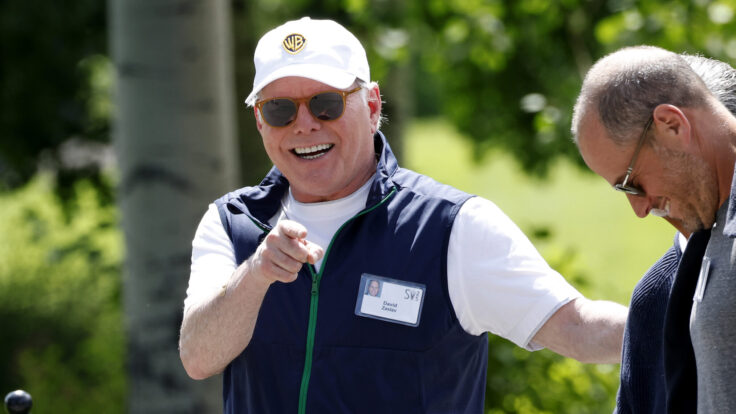
- David Zaslav BonusWatch ’24: We’re almost there! I’m told the Warner Bros. Discovery C.E.O.’s highly anticipated pay package is set to be unveiled in the next week. It’s about time. We’re now almost three weeks past the date last year when Zaz’s $39 million 2022 comp was revealed, including nearly $22 million in bonuses despite a major stock decline. Considering that his pay is now tied to free cash flow, the metric he’s been able to deliver far more successfully than shareholder value, the number could be huge.
- Box office over/under: The very creepy-looking Abigail is tracking at about $10 million. I’ll bet on the Universal marketing machine and a Latina lead in Melissa Barrera (Latinos over-index for horror), and take the over.
|
| Now for the backstory on a major implosion… |
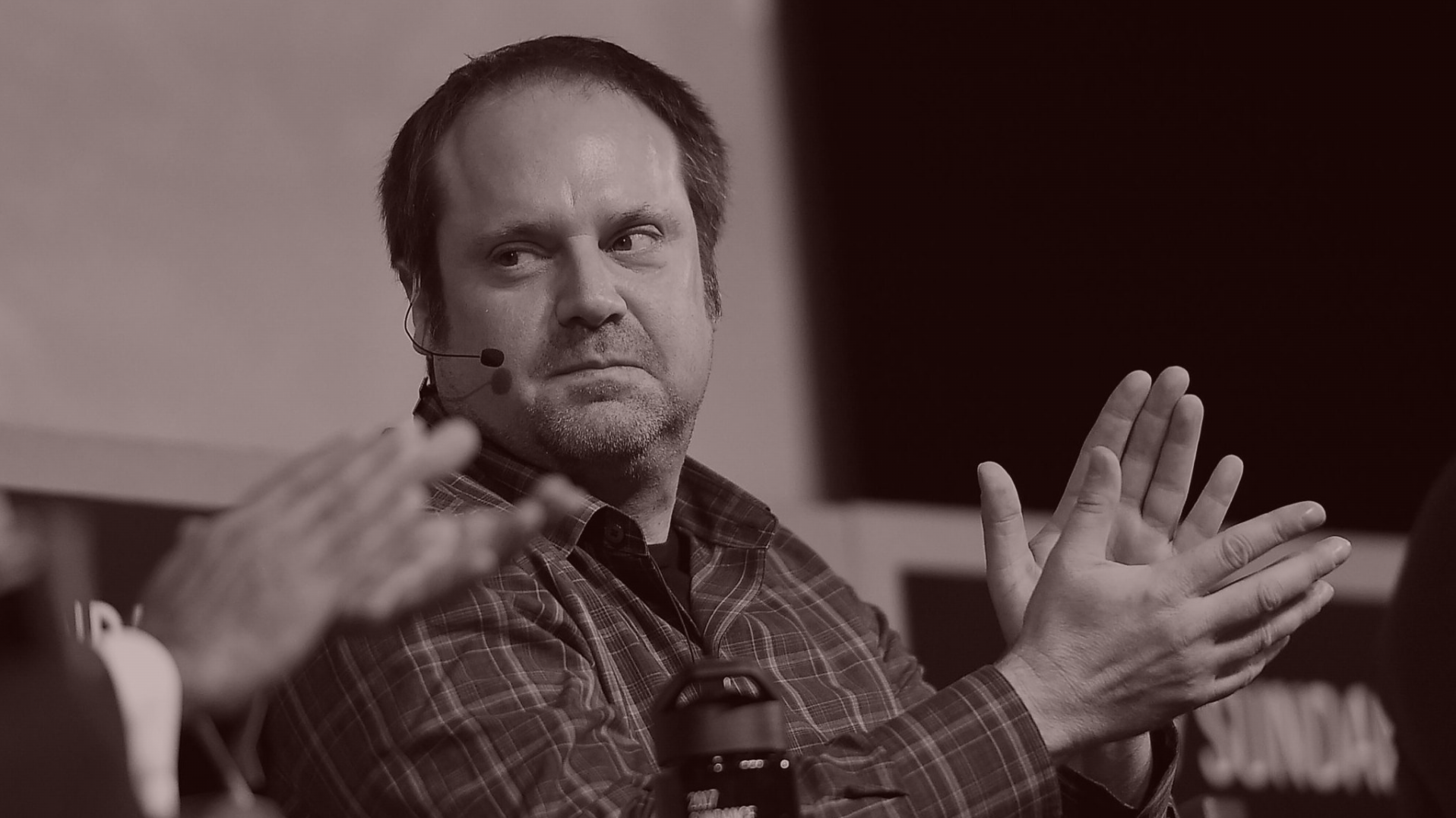 |
| Death of a Hollywood Savior |
| Jeff Skoll, the eBay billionaire behind Participant Media, was happy to take risks and lose money on “important” projects like Oscar winners ‘Spotlight’ and ‘Green Book.’ But after a year of trying to sell, including a potential lifeline from Eric and Wendy Schmidt that went south, he shut the company down. Why? |
|
|
|
| For a lot of people in town, the shuttering of Participant Media this week felt abrupt and out-of-nowhere—a sucker punch to Hollywood by an impulsive tech mogul. But it wasn’t. Talking to finance sources this week, I learned that Jeff Skoll, the eBay billionaire and philanthropist who started Participant 20 years ago to make top-quality content with a social-impact agenda, actually hired Goldman Sachs last spring to run a last-ditch sale process. The pitch deck sent to prospective buyers touted Participant as a “category-defining” business “focused on timely and emotionally transformational stories which speak to the world’s most important issues.”
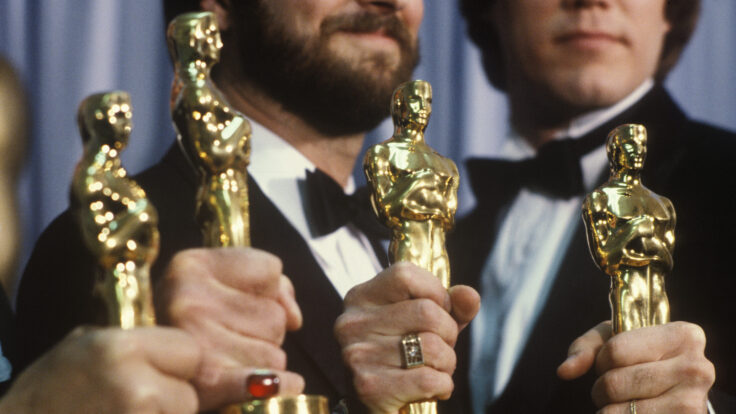
That was certainly accurate. An acquirer of Participant would get the company behind everything from Al Gore’s An Inconvenient Truth and the great RBG documentary to Spielberg’s Lincoln and Cuarón’s Roma—all told, films that generated 86 Oscar nominations and 21 wins, including two best pictures, Spotlight and Green Book. On the TV side, they’d get Ava DuVernay’s When They See Us and Steve James’s City So Real, 44 Emmy nominations and 11 wins. In short, a company “driving world change” with an “unrivaled reputation for quality,” the pitch went.
What that Goldman deck didn’t include, however, was a single piece of financial information. That’s likely because Participant, with its 100 employees and divisions for both film and TV production and social engagement, was losing tens of millions of dollars a year, per three sources familiar with the financials. Despite its fancy awards and the fact that its owner had been Employee No. 1 at eBay, Participant was kinda set up to fail—at least financially. It was not a majority stakeholder or a distributor of most of its content. Its deals varied, but while the company would develop or co-develop its own material, it would also board already packaged projects that aligned with a social cause, bringing a financial investment plus the promise of an accompanying “engagement” campaign in exchange for a fee or the opportunity to share in the upside of hits.
That’s an okay model if the volume is there, but the films—and, in recent years, TV series—ultimately reside in another company’s library, with Participant owning only a small slice, often alongside other producers. And as profit backends were mostly replaced with buyouts, Participant often found itself in the production fee business, not a great place to be with large overhead, about 40 percent of which was devoted to the “impact” team and other non-revenue-generating endeavors. Good for social change, bad for business.
All of which was tolerated for years by Skoll. Unlike most rich guys, he came to Hollywood accepting that he would almost certainly lose his ass, or at least he set up a structure to justify the losses by valuing the “social impact” of a project equally with the box office or ratings. That dual bottom line got way out of control under the eight-year leadership of Jim Berk—so much so that, in 2015, Skoll stepped in and ordered a McKinsey review of the business. He fired Berk about a month later. Flops like The Soloist or The Beaver were fine if the accompanying social campaign helped the homeless or promoted mental health awareness. But at one point, Participant had 300 employees, the Times reported, an astronomical number for a niche company making mostly niche content. I’m told Skoll considered selling or shuttering Participant several times over the years.
Under David Linde, the former Universal executive who took over as C.E.O. in 2015, those losses (and the headcount) came down—though if you work in the film business, you’ve had lunches with Linde where he hits the dual mandate hard, insisting that his job is not just to make money. Must be nice, I remember thinking during one of those meals. (Linde declined to comment, as did Participant.)
That’s why Participant was considered such a hero and a savior to so many producers and talent. Not because of the politics and philanthropy. Please. This is Hollywood. Even if most people agree with the progressive worldview, all anyone really cares about is, Can this company actually get my movie made? And with Participant, the answer was often yes. I’ve heard an agent talk about hitting the “Participant angle” in a sales pitch—some social justice hook, however manufactured, that might lure the company in. Roma is a virtuoso filmmaker’s autobiographical family drama, but it’s also about the plight of domestic workers: Boom, Participant’s in. A Monster Calls is J.A. Bayona’s adaptation of a popular children’s book, but it’s also anti-bullying: Good enough, though Participant execs were trained to sniff out the most tenuous, bullshitty stuff.
But Participant’s dual mandate essentially allowed it to do what so many others could not: take risks. And it led to some great movies and shows (along with some awful, overly preachy message vehicles). That’s why we’re seeing all the eulogizing online, especially from the indie film community. Ira Deutchman, the New York producer, called the closure “earth shattering.” “This wasn’t just a job for us but a calling,” Michael Kelly, the company’s V.P. of impact and engagement, wrote on LinkedIn. “And it couldn’t be more evident by how we all are rallying around each other during this incredibly difficult and sad time.” |
|
|
| Did Participant have to die? Obviously, its immediate future was only going to get tougher post-Great Netflix Correction and the overall pullback in the adult and often political content that was Participant’s ambit. But there’s certainly value in its assets and brand. Internally, Linde was considered a good manager, but the company lost two of its key creatives with the 2019 exit of Jonathan King, the longtime president of film and TV, and the 2021 death of documentary chief, Diane Weyermann, from lung cancer.
Plus, Participant isn’t the only stalwart struggling these days. Bron, the prolific Canadian production-finance company, essentially went out of business last year. Hasbro recently offloaded most of its production studio, eOne, to Lionsgate, which is itself attempting to split its studio from its streaming arm to better position it for a sale. Tough times.
So beginning last summer, Skoll’s bankers started talking to a bunch of potential saviors. Laurene Powell Jobs’ Emerson Collective heard the pitch but didn’t end up bidding. Madison Wells, Gigi Pritzker’s production-finance company, engaged a bit more, I’m told. Pritzker wouldn’t comment on whether she made an offer, but she emailed me, “We continue to be passionate about both the importance of good storytelling and a healthy independent ecosystem. We would have loved to have aligned with Participant in that pursuit, and in their absence will continue to look for opportunities to join forces with like-minded partners.”
Negotiations did get pretty far along with Hillspire, the family office of former Google C.E.O. Eric Schmidt and his wife, Wendy. Hillspire has backed organizations like 11th Hour Racing, a sailing group that seeks to “harness the power of sport and philanthropy.” Wendy has also produced some docs. I’m told she was willing to take Participant off Skoll’s hands and preserve the mission and brand.
Her offer was low, but it would have covered operating expenses going forward. Participant had lost so much money that Hillspire considered it generous, and most importantly, it would save the company and the jobs of those 100 employees. This was a way for Skoll to get out clean and preserve his legacy in Hollywood, and avoid the messiness of a shutdown. The Hillspire people were pretty sure Skoll would take the deal. (Hillspire declined to comment.)
Instead, Skoll thought the offer wasn’t good enough, so he decided to pull the plug, surprising Wendy and others. Why? It’s still not totally clear, and Skoll has declined to talk about it beyond his Tuesday email to staff, which thanked them but failed to explain his rationale beyond, “It is the right time for me to evaluate my next chapter and approach to tackling the pressing issues of our time.” Okay…
One source close to Skoll told me he’s just wary of the whole entertainment business, given the crappy economics of streaming, and he felt it was time for others to step up. He also didn’t love some of the content Participant produced in recent years, I’m told, and he was focused on other endeavors, like his foundation and the Skoll World Forum.
He’s also had health issues, and he moved from California to Florida in 2021, citing smoke from that year’s wildfires as the primary reason. Two people at Participant speculated he might have fallen in with the Palm Beach billionaire crowd, which could have shifted his opinion on owning a prolific yet money-losing progressive content/advocacy machine. That’s just speculation, so I guess we’ll have to see whether Skoll explains his rationale publicly, maybe in a column for Bari Weiss’s The Free Press entitled “Why I Killed My Woke and Broke Hollywood Studio.”
For now, the former Participant employees are living through the nightmare scenario for anyone working at a company floated by one person: Here today, gone tomorrow, a charity case without charity. |
|
|
See you Monday,
Matt
Got a question, comment, complaint, or a favorite Curb fight? Email me at Matt@puck.news or call/text me at 310-804-3198. |
|
|
|
| FOUR STORIES WE’RE TALKING ABOUT |
 |
| Greene Inferno |
| Digging into M.T.G.’s motion-to-vacate theatrics. |
| TINA NGUYEN |
|
 |
| Diller’s Gambit |
| Evaluating the Daily Beast resuscitation strategy. |
| DYLAN BYERS |
|
 |
|
 |
| A Paramount Epiphany |
| On the deal dynamics underpinning the Ellison-KKR-RedBird bid. |
| WILLIAM D. COHAN |
|
|
|
|
|
 |
|
|
|
Need help? Review our FAQs
page or contact
us for assistance. For brand partnerships, email ads@puck.news.
|
|
You received this email because you signed up to receive emails from Puck, or as part of your Puck account associated with . To stop receiving this newsletter and/or manage all your email preferences, click here.
|
|
Puck is published by Heat Media LLC. 227 W 17th St New York, NY 10011.
|
|
|
|