{{ 'now' | timezone: 'America/New_York' | date: '%b %d, %Y' }} |
|
|
|
Welcome back to What I’m Hearing, Tuesday edition, with Eriq Gardner at the helm.
Tonight, Eriq has exclusive updates on two of the wildest Hollywood trials in years (and how they’re connected). Plus, Disney’s coming choice in the latest Kimmel/Trump dust-up, and a CAA television star claims he should’ve been paid like Jon Hamm.
All yours, Eriq (and send him tips at Eriq@puck.news).
Not a Puck member yet? Never too late. Just click
here.
Also mentioned in this issue: Kevin Spacey, Camille Vasquez, Charlotte MacInnes, Bryan Freedman, Beyoncé, Blake Lively, Melissa Nathan, Justin Baldoni, Jeremiah Reynolds, Heidi Fleiss, Amanda
Ghost, James Blunt, Terrence Howard, Michael Katcher, Rebel Wilson, James Bryant, Ghislaine Maxwell, Lewis Liman, and more…
This issue was created with contributions from Maya Tribbitt.
Let’s begin… |
|
|
|

| Eriq Gardner
|
|
- Will Disney play offense or
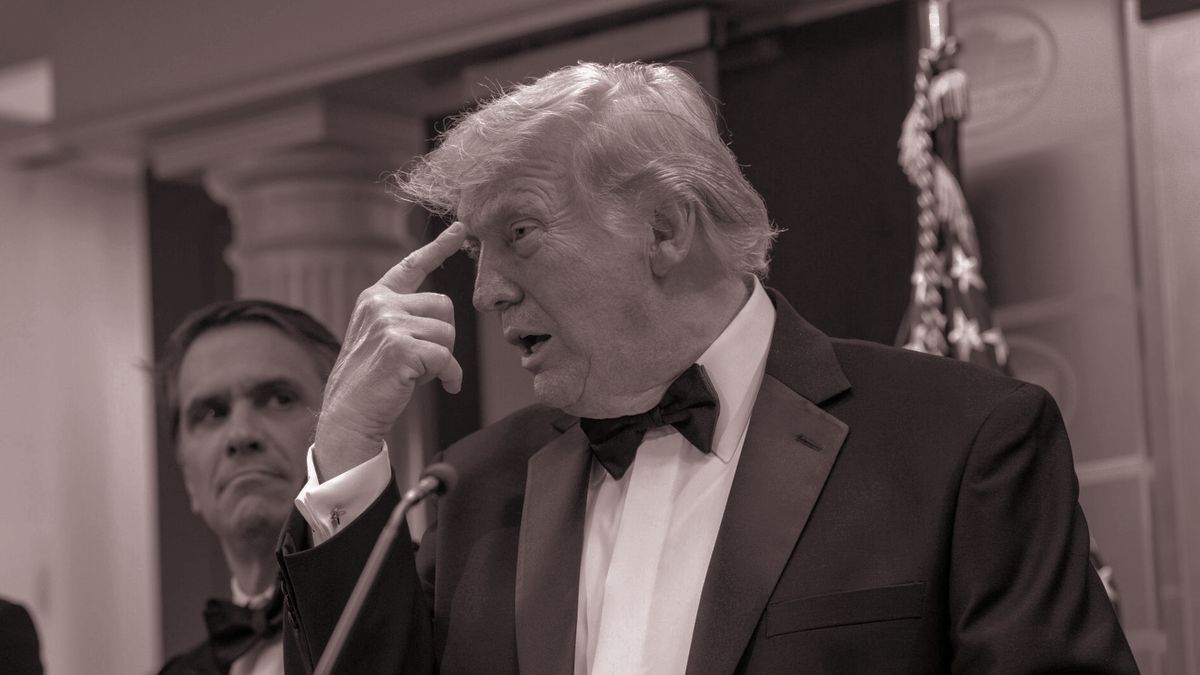
defense against Carr?: You’ve no doubt heard about the F.C.C. opening up an early review of Disney’s TV licenses, including the eight ABC stations it owns and operates in cities like New York and Chicago. This one ostensibly focuses on Disney’s D.E.I. policies. That framing, of course, is doing a lot of work. In the shadow of Trump’s latest broadsides
against Jimmy Kimmel, over a “hateful” Melania joke, plenty of observers will view this less as routine oversight and more as content-adjacent retaliation.
Either way, it’s an early stress test for Disney’s new C.E.O., Josh D’Amaro. The instinct in these situations may be to play defense, ride out the process, and hope the “public interest” standard stays as elastic as ever. But Disney doesn’t actually have to sit still. If the company
wants to go on offense, the selective timing and targeting of the review could itself tee up a First Amendment claim that F.C.C. chair Brendan Carr is leveraging the licensing regime to police speech by proxy. A preemptive suit, even a bid for declaratory relief, isn’t out of the question.
The real issue is less legal than strategic: Whether this iteration of Disney sees value in drawing that line in court—or decides, for political reasons, that discretion is still the
better part of valor. Just don’t mistake inertia for inevitability. This process only drags if Disney lets it. - ‘Empire’ star strikes back at CAA: If Terrence Howard’s lawsuit against CAA makes it to trial this summer, as scheduled, it could offer a rare look at what top television actors really earn, and whether their agents truly maximize those deals. But that’s a big if. Howard is claiming that
CAA let conflicts get in the way of maximizing his pay across six seasons of Fox’s Empire. Meanwhile, CAA just filed for summary judgment, aiming to short-circuit the whole thing before anyone starts comparing notes in open court.
For one, CAA claims that Howard technically lacks standing because his Empire deal ran through a loan-out company, and he waited too long to sue, given that he raised conflict concerns as far back as 2019. Then CAA gets to the
substance: By the time Empire ended, in 2020, Howard was making about $325,000 per episode, paid into a family trust with a relatively modest annual draw. When he pushed for more in 2018, CAA’s then head of television, Michael Katcher, showed him comps. According to Howard, that list—dominated by actors earning less—persuaded him to drop the issue, at least temporarily.
Now he’s back with a different view. Howard claims he should have been making closer to
$750,000 per episode, pointing to Jon Hamm on Mad Men and Kevin Spacey on House of Cards—both of whom, he notes, headlined shows with smaller audiences. CAA’s response: It did try to get him more money in 2018, but Fox wouldn’t reopen the deal. “Howard cannot now speculate and seek damages based on a hypothetical different outcome of those efforts to renegotiate,” CAA’s outside counsel Jeremiah Reynolds writes. Howard’s lawyer,
James Bryant, has yet to weigh in, but a response is due next month ahead of a July 14 hearing. - Blake’s salary details spill in Baldoni pretrial fight: The legal teams for Blake Lively and Justin Baldoni were in court this morning as they gear up for a May 18 trial before Judge Lewis Liman. For now, the spectacle is very much on. Both sides told Liman they’ll need three
to four weeks to try the case—ambitious, but not out of the question, especially since they appear to have narrowed the scope. The expected he-said, she-said over what happened on the set of It Ends With Us—namely, whether there was sexual harassment—seems like it’ll take a back seat, with the parties largely agreeing it’s off the table. Instead, the trial is shaping up to focus on whether Baldoni’s production company retaliated because Lively complained—and, if so, what that’s
worth.
Even within that frame, there’s plenty of intrigue. Was the social media backlash against Lively organic, or was something more coordinated at play? Both sides have experts ready to testify, and Lively’s expert Dr. Dina Mayzlin apparently used A.I. tools to sift through more than 1 million comments in search of manipulation. Is that kind of analysis reliable enough for a jury? Liman isn’t ready to say. He’s ordered a sort of trial dry run next week, putting the
experts on the stand to test their methods before deciding whether they make the cut.
Then there’s damages, where the numbers start to stretch. Today’s hearing surfaced that Lively earned about $21 million from her film work over the past eight years, including A Simple Favor and It Ends With Us. Her expert Richard Marks, who once worked for Disney and Universal and now frequently appears in Hollywood accounting battles testifying about industry customs,
uses that baseline to project roughly $132 million in lost earnings over the next five years tied to the alleged retaliation. Baldoni’s team pounced. If that’s the track record, where does that optimistic projection come from? What about a sequel? Both sides seemed to agree It Ends With Us was a hit (it grossed $350 million worldwide), but Baldoni’s camp insisted a follow-up is “not going to happen”—not, it was suggested, when Sony executives apparently view Lively as a “terrorist.”
Liman, for now, is deferring a decision on damage calculations. - A bit more on Lively…: A consequential ruling late last week by Liman risks getting lost in the shuffle. The judge had previously held that publicist Melissa Nathan couldn’t be liable for aiding and abetting retaliation against Lively. Now he’s determined that Nathan’s firm, The Agency Group, will remain in the case and must face trial.
In
getting there, Liman rejected the cramped view that California’s workplace-retaliation law is limited to hiring, firing, pay, demotion, and conditions on the office floor. In an industry built on “personal and professional marketability,” he made clear, a reputational takedown campaign can qualify, too. And while Nathan escaped individual liability—because the statute doesn’t reach agents in that capacity—the court found room to hold a business entity like TAG accountable for allegedly helping
carry out the retaliation.
Translation: The crisis management playbook may now come with real legal exposure. P.R. shops that operate in the grey zone between advocacy and attack might want to take a closer look at where that line actually sits.
|
|
|
|
That leads me to this week’s main story… |
|
|
|
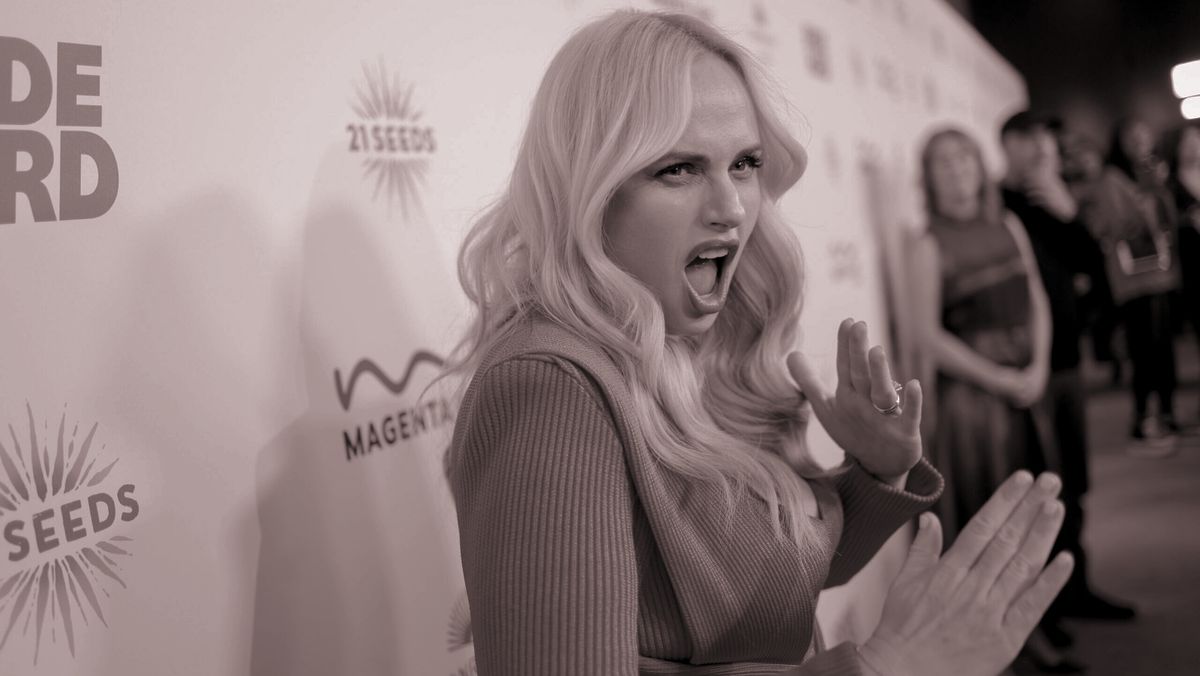
The escalating dispute between director and star Rebel Wilson and the producers of The
Deb has evolved into a cross-continental legal battle, featuring allegations of reputational harm via “smear sites,” an unconventional defamation claim, and—perhaps not coincidentally—the involvement of two key figures in the upcoming Blake Lively–Justin Baldoni trial. |
|
|
|
Have you been paying attention to the colorful trial unfolding in Australia, where Charlotte
MacInnes, an actress on The Deb, is suing the film’s director and star, Rebel Wilson, for defamation? Apart from being an amuse-bouche of sorts to next month’s Blake Lively–Justin Baldoni spectacle—yes, smear sites make an appearance—the Deb affair is also an elegant study in how different legal systems grapple with false speech. The case also illuminates how the ground has shifted since the height of #MeToo, when
defamation suits largely involved the accused pushing back. Here, MacInnes is suing over being falsely cast as a victim.
A brief rewind. MacInnes is suing the Pitch Perfect and Bridesmaids star for public statements Wilson made suggesting The Deb producer Amanda Ghost sexually harassed MacInnes—something MacInnes says never happened—as part of Wilson’s wider campaign against Ghost. The crux is a battle between Wilson and the
film’s producers over control of The Deb, an Australian musical comedy that’s been stuck in limbo since its 2024 Toronto International Film Festival debut. What began as a mundane dispute over writing credits between Wilson and a group of producers—including Ghost, a record executive with ties to Beyoncé and James Blunt—quickly devolved into allegations of embezzlement, sexual harassment, and assorted misconduct, spawning lawsuits and arbitrations
across multiple jurisdictions.
Wilson initially retained the same hard-charging duo most recently associated with Baldoni: litigator Bryan Freedman and publicist Melissa Nathan of The Agency Group. Their tactics have since become the subject of litigation in their own right. Documents spilling out of the Lively–Baldoni case have also bled into this one, including evidence suggesting that bespoke smear sites were part of Wilson & Co.’s playbook.
In
court papers, MacInnes says Wilson drafted her, unwittingly, into a scorched earth campaign against Ghost—she posits a coordinated effort that allegedly included smear sites, such as AmandaGhostSucks.com, which characterized Ghost as the “Indian Ghislaine Maxwell” and implied that MacInnes kept silent about Ghost’s supposed sexual harassment for the sake of her career.
Regarding the alleged sexual misconduct, Wilson’s version appears to be that Ghost forced MacInnes to
share a bath in a Sydney apartment. In a Sydney courtroom this past week, the competing narratives sharpened. Wilson’s lawyer emphasized that MacInnes did, in fact, raise concerns about a bathroom incident during production. MacInnes’s legal team responded with text messages suggesting Wilson knew MacInnes had “zero issues” with Ghost’s behavior. They also introduced text exchanges between Wilson’s own P.R. team, painting a portrait of a spiteful Wilson orchestrating a smear campaign.
One message described her as “fucking nuts.” |
Lively-Baldoni
Cross Talk
|
It’s not clear yet how MacInnes’s defamation claim will hold up in court. Does being
falsely accused of being the victim of sexual harassment even carry defamatory sting? In most contexts, no. But here, MacInnes says the harm wasn’t the allegation itself so much as the insinuation that she leveraged it for career gain. That’s a narrower—and, frankly, stranger—theory. Still, MacInnes can point to a career that, by her own telling, has stalled.
Then there’s the forum. In Australia, the case has raced ahead of adjacent disputes to reach trial first. That matters. Under
Australian law, once a plaintiff establishes that a statement is capable of being defamatory—and isn’t, say, opinion—the burden shifts to the defendant to prove its truth. Contrast that with the United States, where MacInnes, if deemed a public figure, would need to demonstrate the falsity of what was published and that Wilson had acted with actual malice (i.e., knowledge of falsity or reckless disregard for the truth). Instead, MacInnes enjoys the advantage of being presumed
the truth-teller.
The trade-off comes on the back end. Australia caps general damages at roughly $500,000 (AUD), though plaintiffs can pursue special damages and aggravated damages for things like repetition or failure to retract. Those categories can be slippery, though. (Wilson learned that firsthand in 2018 when, after winning $4 million in a defamation case against Bauer Media over articles that she said portrayed her as a serial liar, an Australian court reduced the damages to
$600,000 and ordered her to pay back $3.5 million plus interest.) So the contrast is stark: in Australia, a better shot at winning; in the U.S., a bigger payoff if you win. Which raises a question I’ve pondered in the past: Would free speech absolutists swap the actual malice standard for tighter damage caps?
Meanwhile, the saga of The Deb is heating up on another front—this time in Los Angeles. A key hearing is set for May 5, where Ghost has countersued Wilson for defamation
tied to those smear sites. Wilson has moved to strike under California’s anti-SLAPP law, swearing under penalty of perjury that she had no role in creating the sites. To the extent her liability rests on reposting them, her lawyers argue she’s protected by Section 230 of the Communications Decency Act, which shields platforms, and in many cases users, who repost third-party content.
On paper, the issue is familiar: When does reposting become responsibility? But the case may turn on a more
modern wrinkle—whether what looks like amplification was actually orchestration. Thanks to spillover from the Lively-Baldoni case, Ghost’s lawyers can now introduce texts from Melissa Nathan stating, “Rebel wants one of those sites,” along with testimony about efforts to brand Ghost as the “new Heidi Fleiss.” If credited, that evidence could recast Wilson’s not as a passive user, but an active participant. “TAG [The Agency Group] was plainly involved, and plainly acting on
behalf of Wilson,” writes Ghost’s lawyer, Camille Vasquez,arguing that Wilson may be liable for the acts of her agents. The theory is straightforward: You can’t outsource a smear campaign and then deny responsibility.
An L.A. judge will now decide whether the case survives. Expect Wilson’s lawyer Allyson Thompson to argue that much of this newer material falls outside Ghost’s original cross-complaint and shouldn’t be allowed to
sidestep California’s anti-SLAPP protections for First Amendment activity. Whether it’s enough to derail a trial slated for October is another question.
What stands out is how much hinges on venue. In Australia, the case centers on whether the allegations are true. In California, the same conduct is filtered through anti-SLAPP and Section 230—less about what was said than who can be held accountable for saying it. Same facts, different courts, entirely different
questions. For the Deb saga, forum may be fate. |
Thanks, Eriq. See everyone on Thursday.
Matt |
|
|
|
Puck founding partner Matt Belloni takes you inside the business of Hollywood, using exclusive reporting and insight to explain
the backstories on everything from Marvel movies to the streaming wars. |
|
|
|
Ace media reporter Dylan Byers brings readers into the C-suite as he chronicles the biggest stories in the industry: the future
of cable news in the streaming era, the transformation of legacy publishers, the tech giants remaking the market, and all the egos involved. |
|
|
|
Need help? Review our
FAQ page or contact us for assistance. For brand partnerships, email ads@puck.news.
You received this email because you signed up to receive emails from Puck, or as part of your Puck account associated with {{customer.email}}. To stop receiving this newsletter and/or manage all your email preferences, click here. |
Puck is published by Heat Media LLC. 107 Greenwich St., New York, NY 10006 |
|
|
|
|